

 Image 1 of 5
 Image 2 of 5
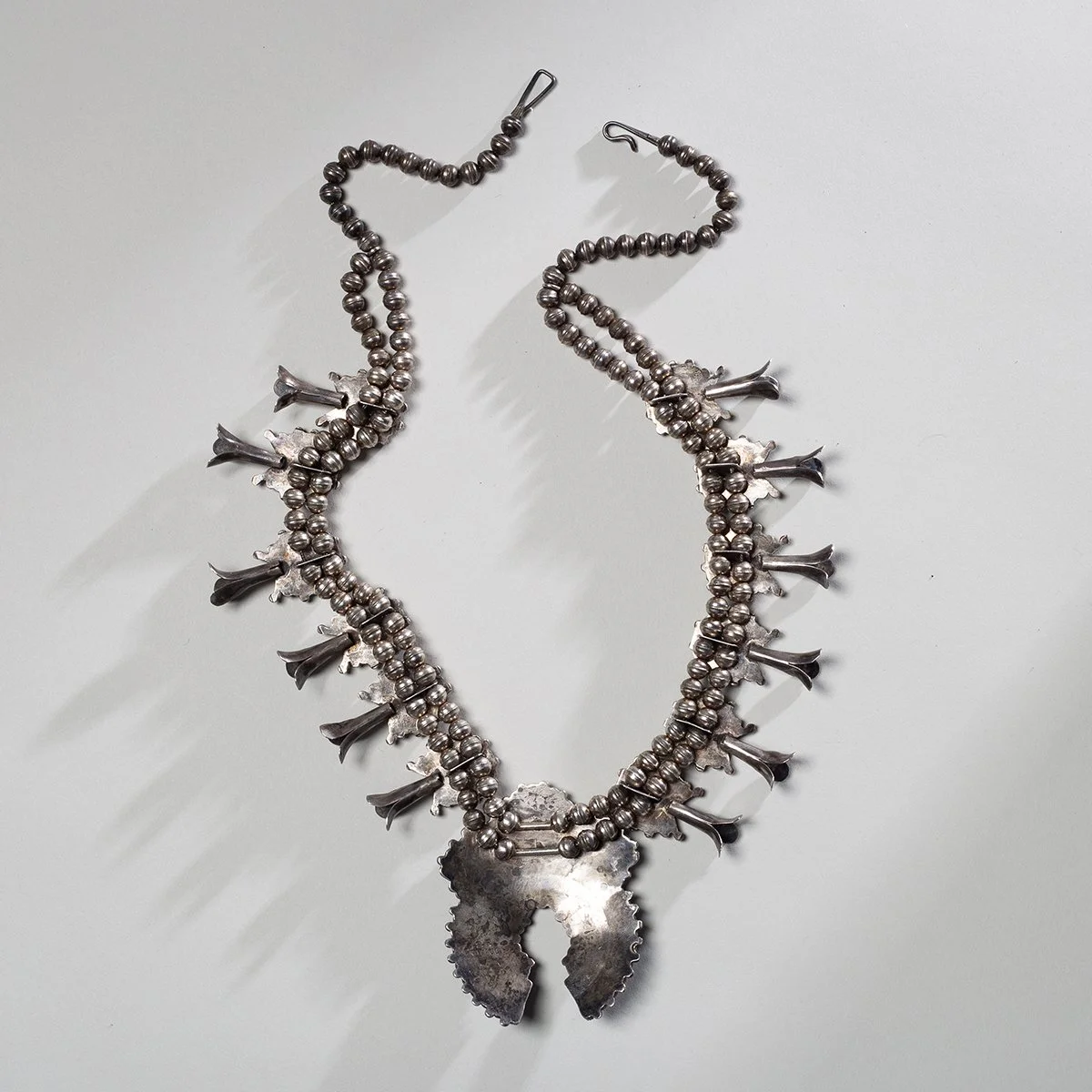 Image 3 of 5
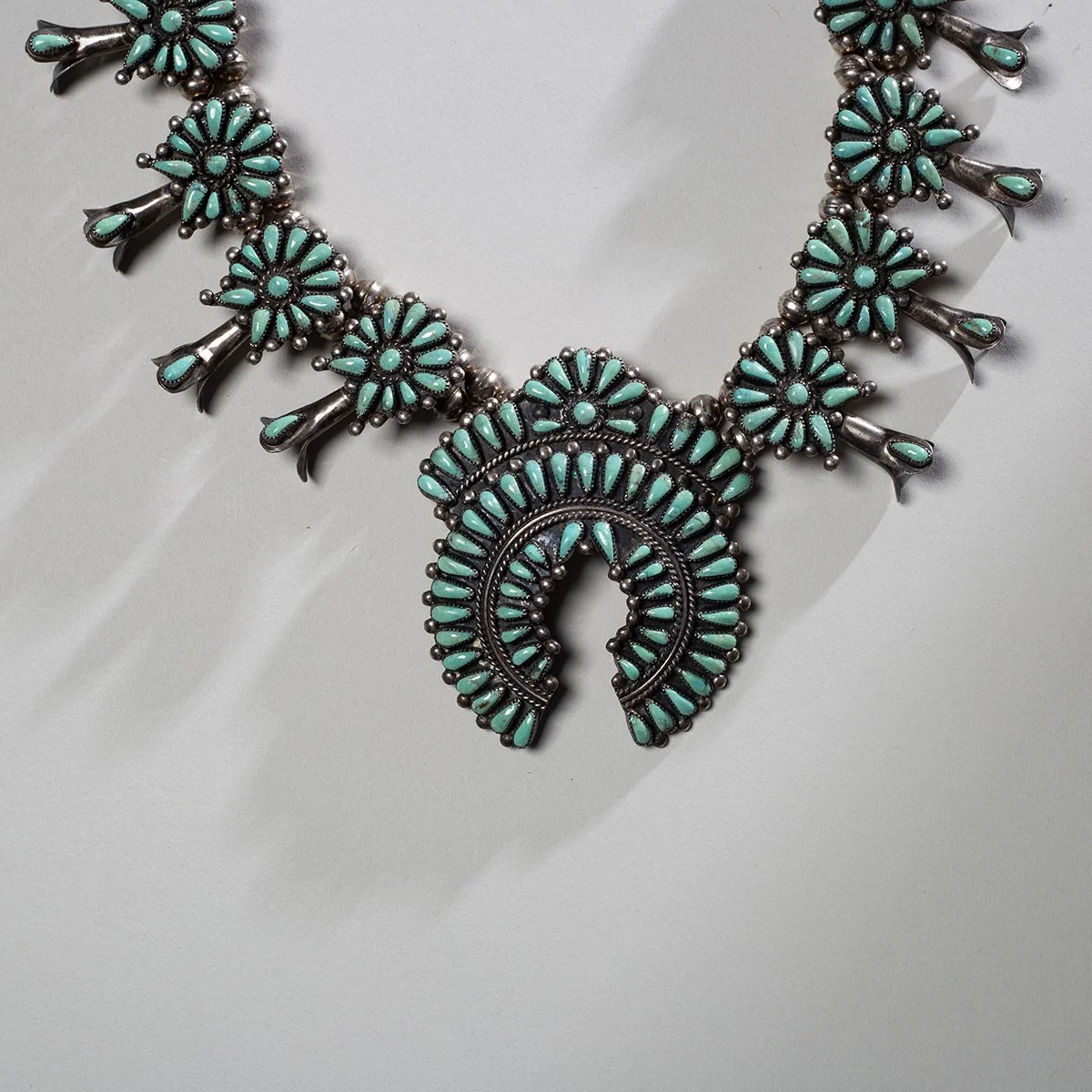 Image 4 of 5
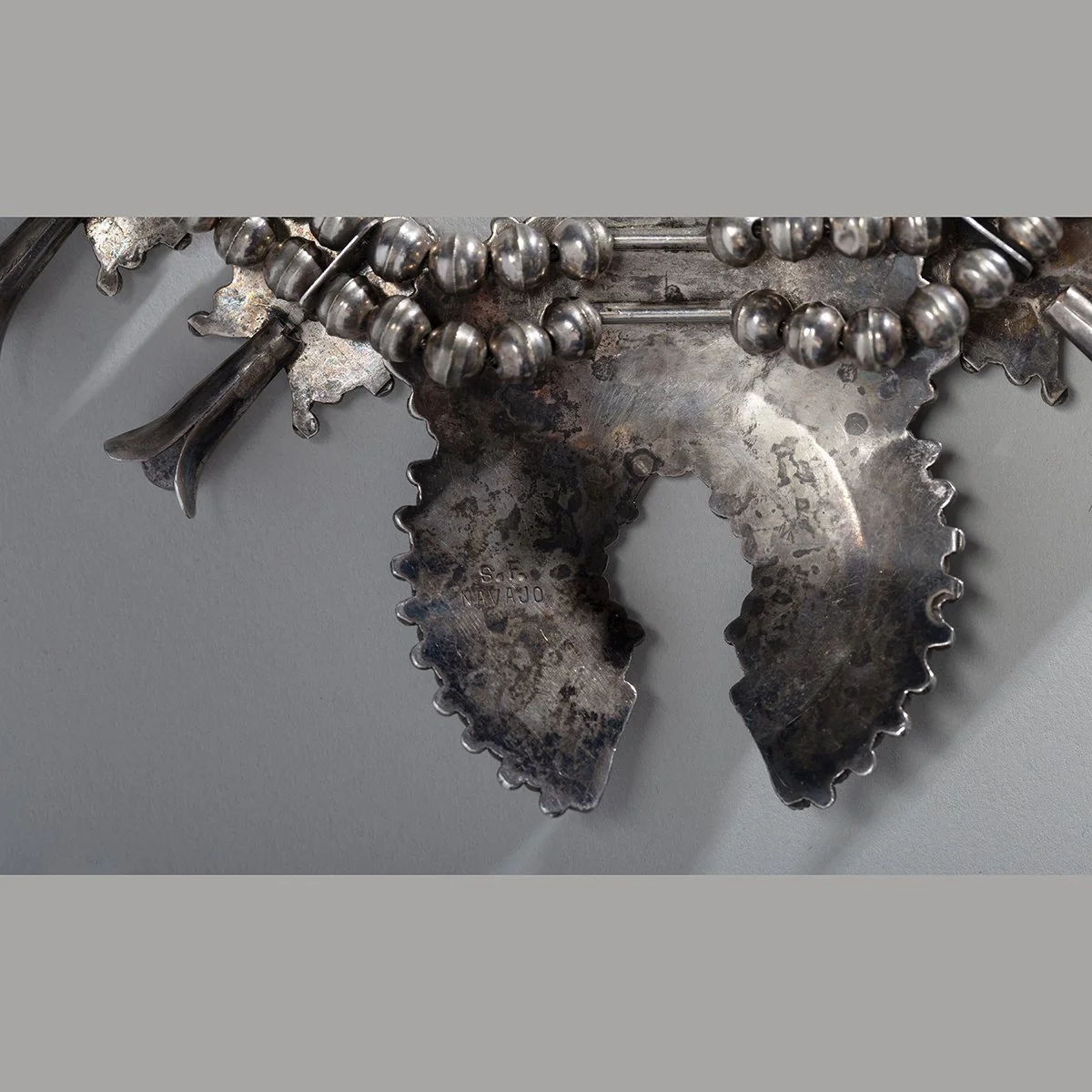 Image 5 of 5
Navajo
American Southwest
1960
Sterling silver and natural turquoise
Length 27 in / 68.6 cm
Naja 1 3/4 x 2 in / 4.4 x 5.1 cm
Marked S.F. Navajo
111.12 grams
Provenance: Albuquerque, New Mexico trade
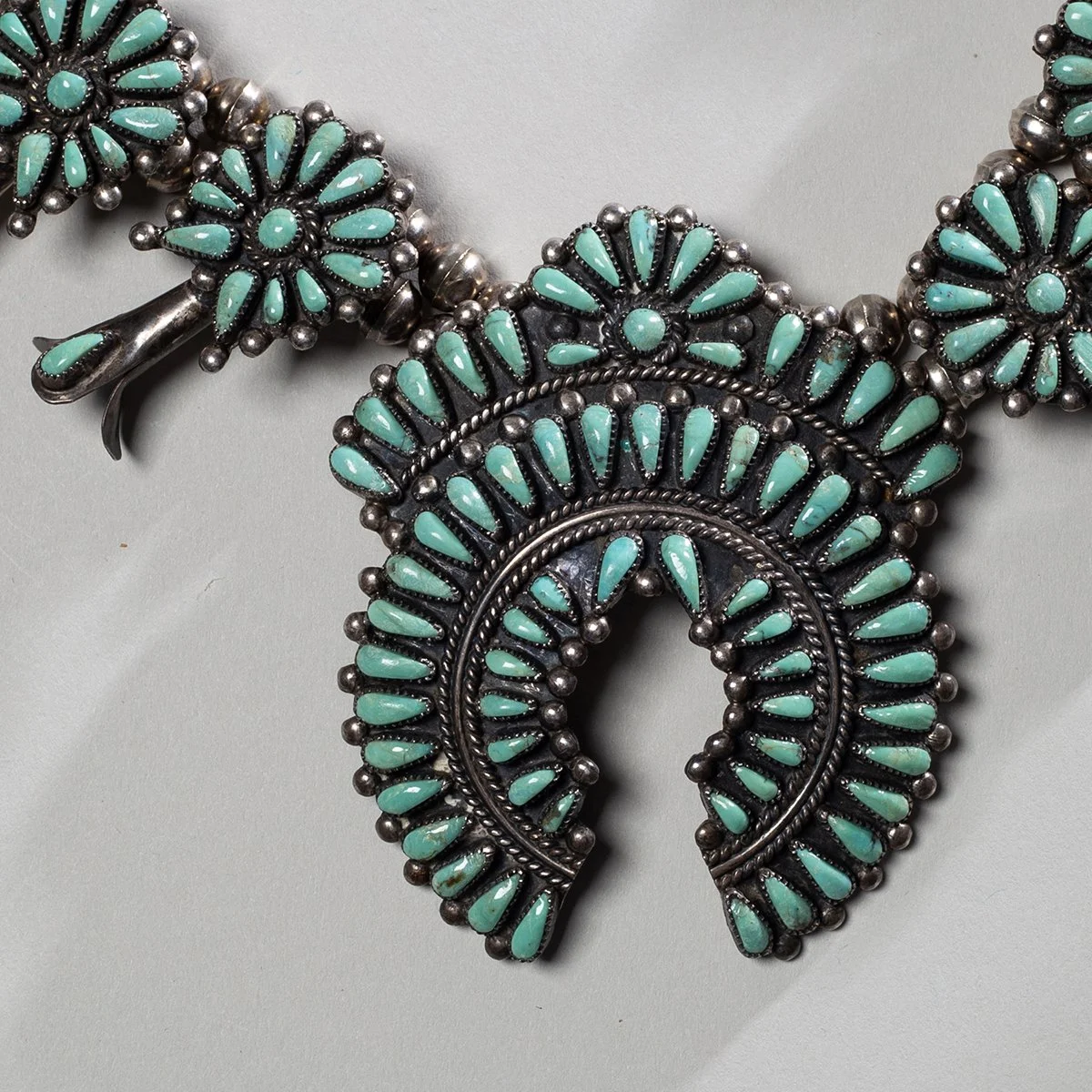
This necklace is worked in petit point, each station a radiating rosette of small turquoise stones set around a center, with silver drops between the blossoms. A larger rosette frames a naja at the center front, repeating the same clustered petit point setting across the pendant. The piece is marked S.F. Navajo on the reverse.
Petit point relies on precise stone cutting, with dozens of small turquoise individually shaped and set to build each blossom. The setting uses uniform stones across every station, a labor intensive technique brought to a high level in mid twentieth century Southwestern silverwork. At 27 inches the necklace is a full length, its weight carried in the stonework rather than the silver.
We ship free anywhere in the world, fully insured, packed by hand.
Navajo
American Southwest
1960
Sterling silver and natural turquoise
Length 27 in / 68.6 cm
Naja 1 3/4 x 2 in / 4.4 x 5.1 cm
Marked S.F. Navajo
111.12 grams
Provenance: Albuquerque, New Mexico trade
This necklace is worked in petit point, each station a radiating rosette of small turquoise stones set around a center, with silver drops between the blossoms. A larger rosette frames a naja at the center front, repeating the same clustered petit point setting across the pendant. The piece is marked S.F. Navajo on the reverse.
Petit point relies on precise stone cutting, with dozens of small turquoise individually shaped and set to build each blossom. The setting uses uniform stones across every station, a labor intensive technique brought to a high level in mid twentieth century Southwestern silverwork. At 27 inches the necklace is a full length, its weight carried in the stonework rather than the silver.
We ship free anywhere in the world, fully insured, packed by hand.