

 Image 1 of 3
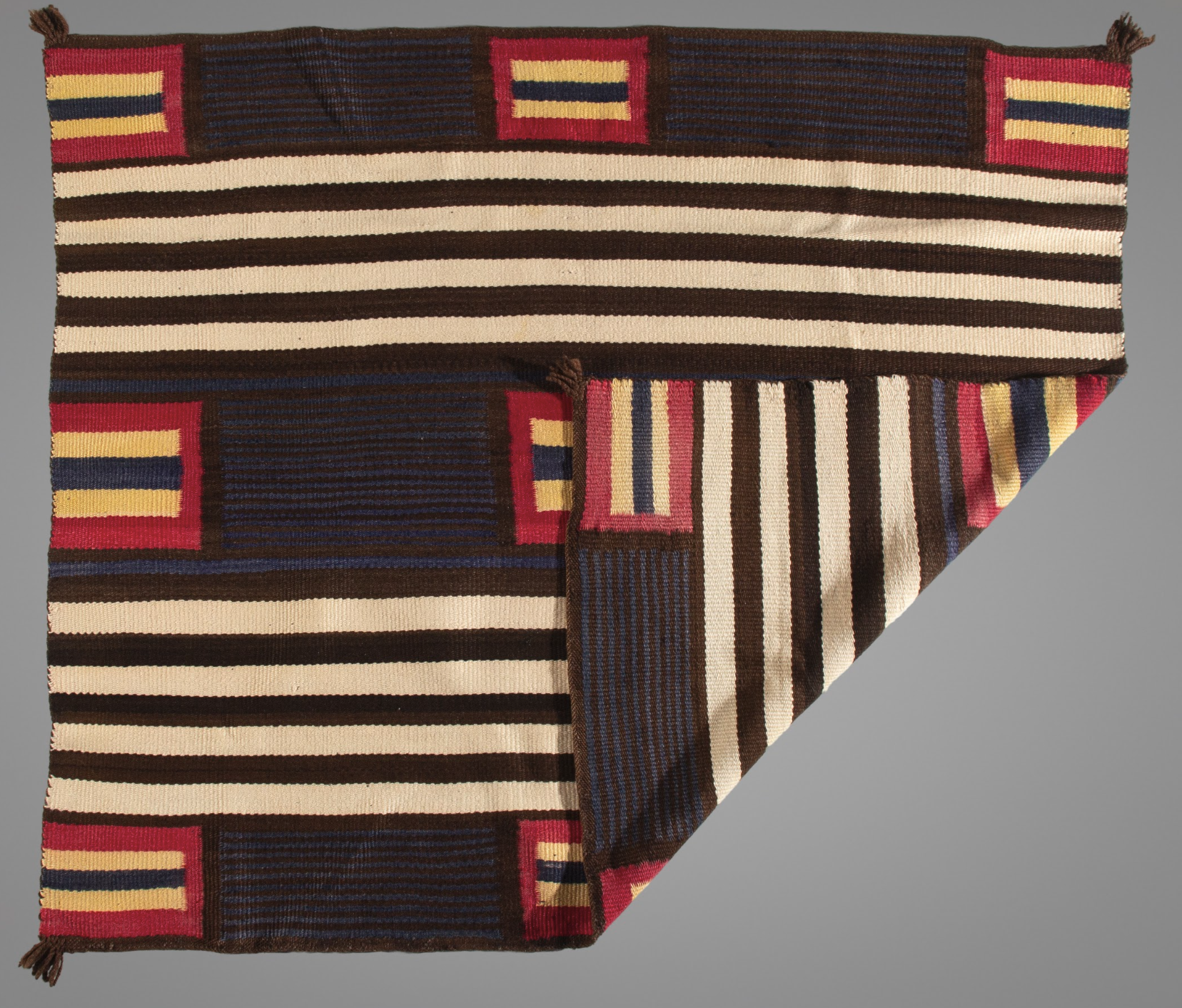 Image 2 of 3
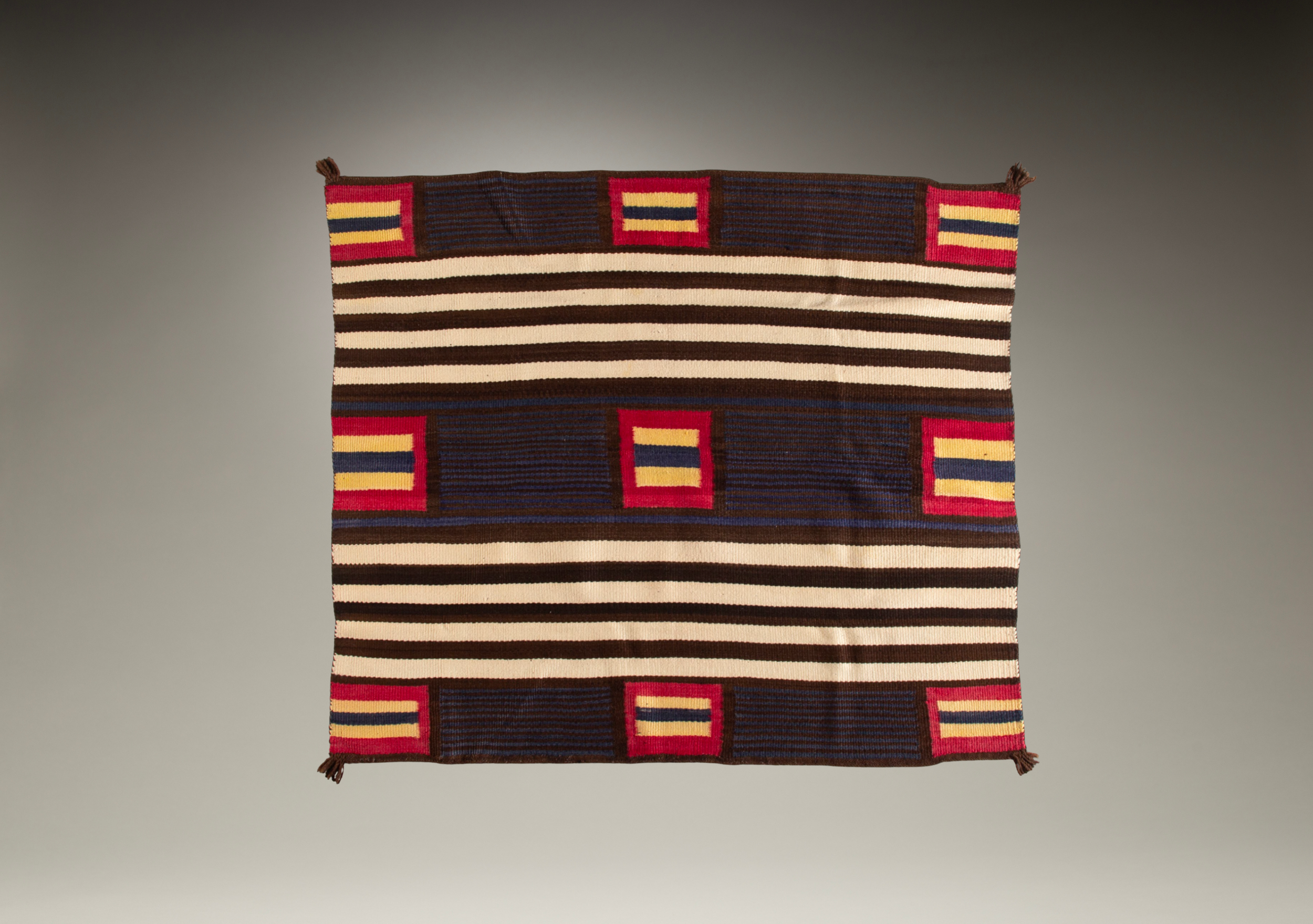 Image 3 of 3
Navajo
Southwest, United States
Circa 1890
Handspun wool with natural indigo and dyed commercial yarn
45 x 55 1/2 inches (114.3 x 141 cm)
Provenance: Private California collection
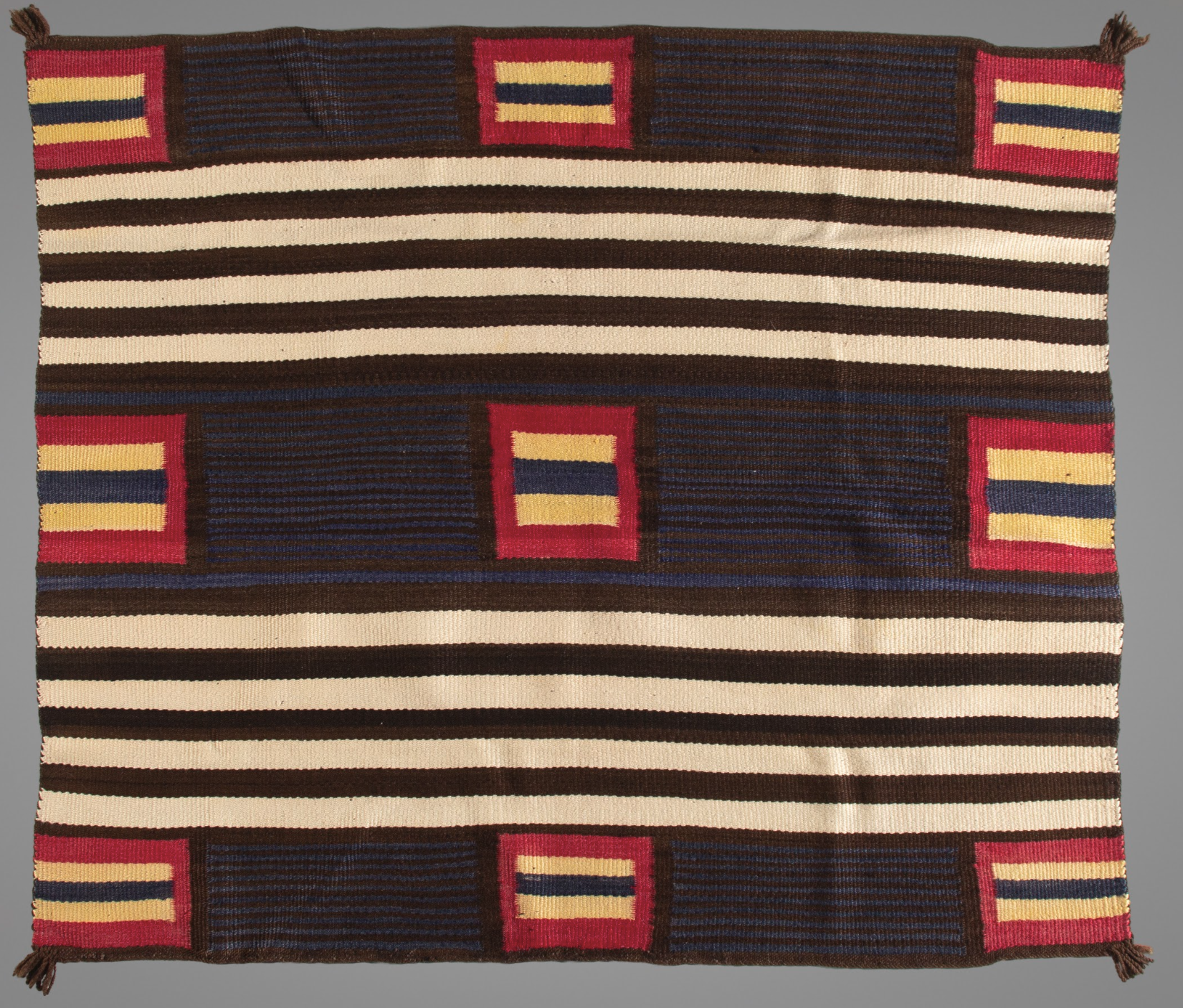
Second phase chief blankets developed out of the banded first phase wearing blanket in the mid nineteenth century, when weavers began setting rectangular blocks into the striped ground. The layout here follows that scheme, with blocks placed at the corners, along the side edges, and at the center so the pattern reads as a whole when the blanket is worn across the shoulders. Its circa 1890 date places it after the classic period, when weavers continued the second phase format using commercially available yarns alongside their own handspun.
The ground alternates narrow bands of dark brown and ivory with wider bands of indigo and brown worked in a speckled single weft alternation. Each block is built as a red rectangle enclosing stacked bars of yellow, indigo, and yellow, repeated across three horizontal registers. The weave is tight and even, with corner tassels intact at all four corners.
Blankets of this type were worn as shoulder robes rather than laid on the floor, which is why the width across the body exceeds the length. They carried standing among Plains and Southwest buyers who acquired them through trade, and that trade is the origin of the collector term chief blanket rather than any Navajo office. The condition is sound throughout, with no loss or repair visible in the images.
We ship free anywhere in the world, fully insured, packed by hand.
Navajo
Southwest, United States
Circa 1890
Handspun wool with natural indigo and dyed commercial yarn
45 x 55 1/2 inches (114.3 x 141 cm)
Provenance: Private California collection
Second phase chief blankets developed out of the banded first phase wearing blanket in the mid nineteenth century, when weavers began setting rectangular blocks into the striped ground. The layout here follows that scheme, with blocks placed at the corners, along the side edges, and at the center so the pattern reads as a whole when the blanket is worn across the shoulders. Its circa 1890 date places it after the classic period, when weavers continued the second phase format using commercially available yarns alongside their own handspun.
The ground alternates narrow bands of dark brown and ivory with wider bands of indigo and brown worked in a speckled single weft alternation. Each block is built as a red rectangle enclosing stacked bars of yellow, indigo, and yellow, repeated across three horizontal registers. The weave is tight and even, with corner tassels intact at all four corners.
Blankets of this type were worn as shoulder robes rather than laid on the floor, which is why the width across the body exceeds the length. They carried standing among Plains and Southwest buyers who acquired them through trade, and that trade is the origin of the collector term chief blanket rather than any Navajo office. The condition is sound throughout, with no loss or repair visible in the images.
We ship free anywhere in the world, fully insured, packed by hand.