Middle Hills, Nepal
Early 20th century or before
Wood
Heights 15 1/2 in (39.4 cm) and 16 3/4 in (42.5 cm)
Provenance: London trade
These two carved wood ancestor figures from the middle hills of Nepal originate within the animist traditions of the Magar or Gurung ethnic groups, communities whose spiritual life centers on the veneration of ancestors and the propitiation of local spirits. The figures, likely once a revered presence in a modest family home shrine, carry the formal simplicity and directness characteristic of Himalayan folk carving, with schematic facial features and columnar bodies that project presence through reduction rather than elaboration. The amber patina developed across both figures speaks to long periods of handling, offering, and ritual attention.
Ancestor figures of this type functioned as dwelling places for the spirits of the deceased, maintained within the household shrine as protective presences and consulted during moments of family decision or crisis. The Magar and Gurung peoples of the middle hills developed distinct artistic traditions largely separate from the Buddhist and Hindu iconographic programs of the Kathmandu Valley, rooted instead in an older substratum of animist belief that persists alongside later religious influences. This pair, with its ritual patina and London trade provenance, represents a grounded example of Nepalese highland ancestor veneration in material form.
We ship free anywhere in the world, fully insured, packed by hand.
Middle Hills, Nepal
Early 20th century or before
Wood
Heights 15 1/2 in (39.4 cm) and 16 3/4 in (42.5 cm)
Provenance: London trade
These two carved wood ancestor figures from the middle hills of Nepal originate within the animist traditions of the Magar or Gurung ethnic groups, communities whose spiritual life centers on the veneration of ancestors and the propitiation of local spirits. The figures, likely once a revered presence in a modest family home shrine, carry the formal simplicity and directness characteristic of Himalayan folk carving, with schematic facial features and columnar bodies that project presence through reduction rather than elaboration. The amber patina developed across both figures speaks to long periods of handling, offering, and ritual attention.
Ancestor figures of this type functioned as dwelling places for the spirits of the deceased, maintained within the household shrine as protective presences and consulted during moments of family decision or crisis. The Magar and Gurung peoples of the middle hills developed distinct artistic traditions largely separate from the Buddhist and Hindu iconographic programs of the Kathmandu Valley, rooted instead in an older substratum of animist belief that persists alongside later religious influences. This pair, with its ritual patina and London trade provenance, represents a grounded example of Nepalese highland ancestor veneration in material form.
We ship free anywhere in the world, fully insured, packed by hand.


 Image 1 of 8
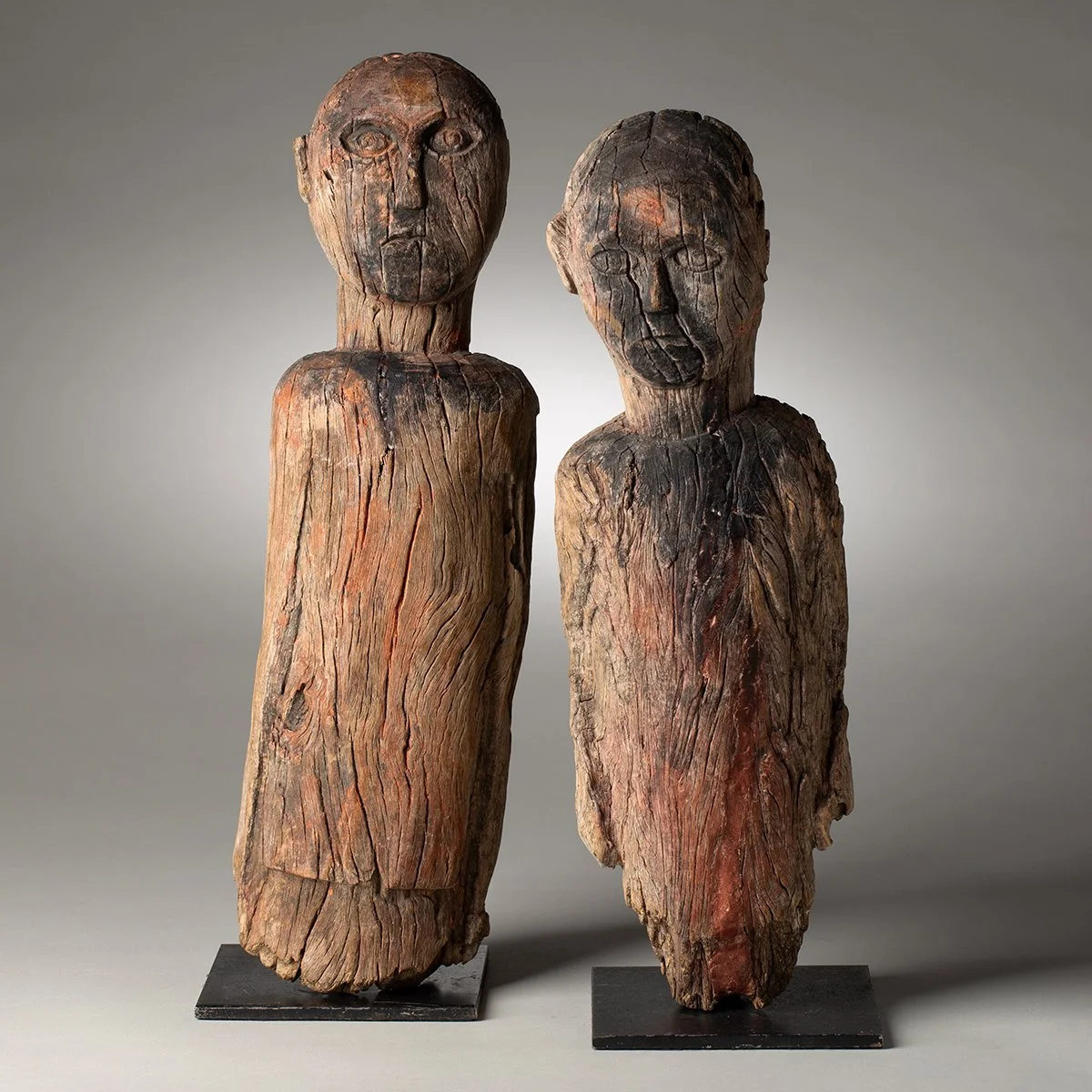 Image 2 of 8
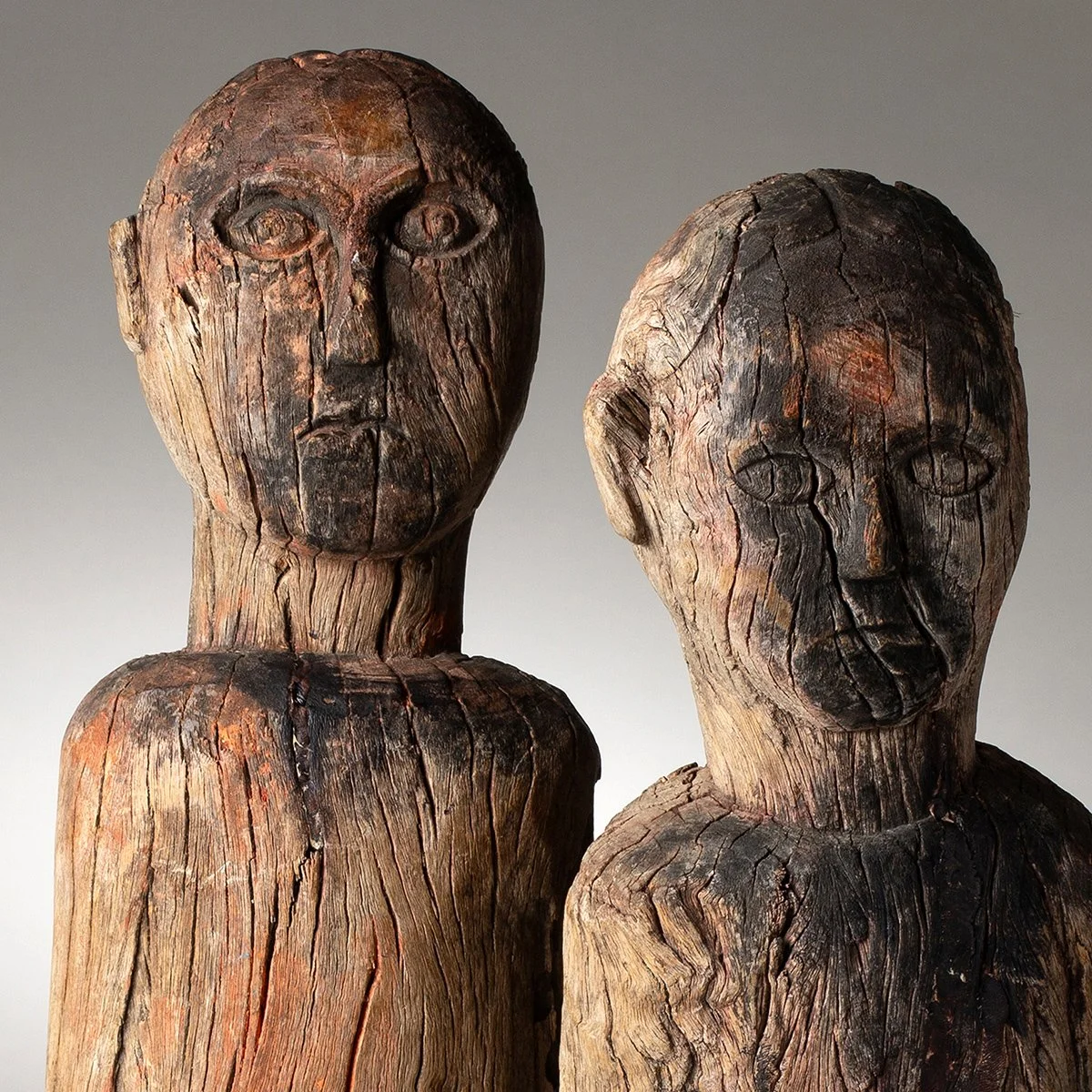 Image 3 of 8
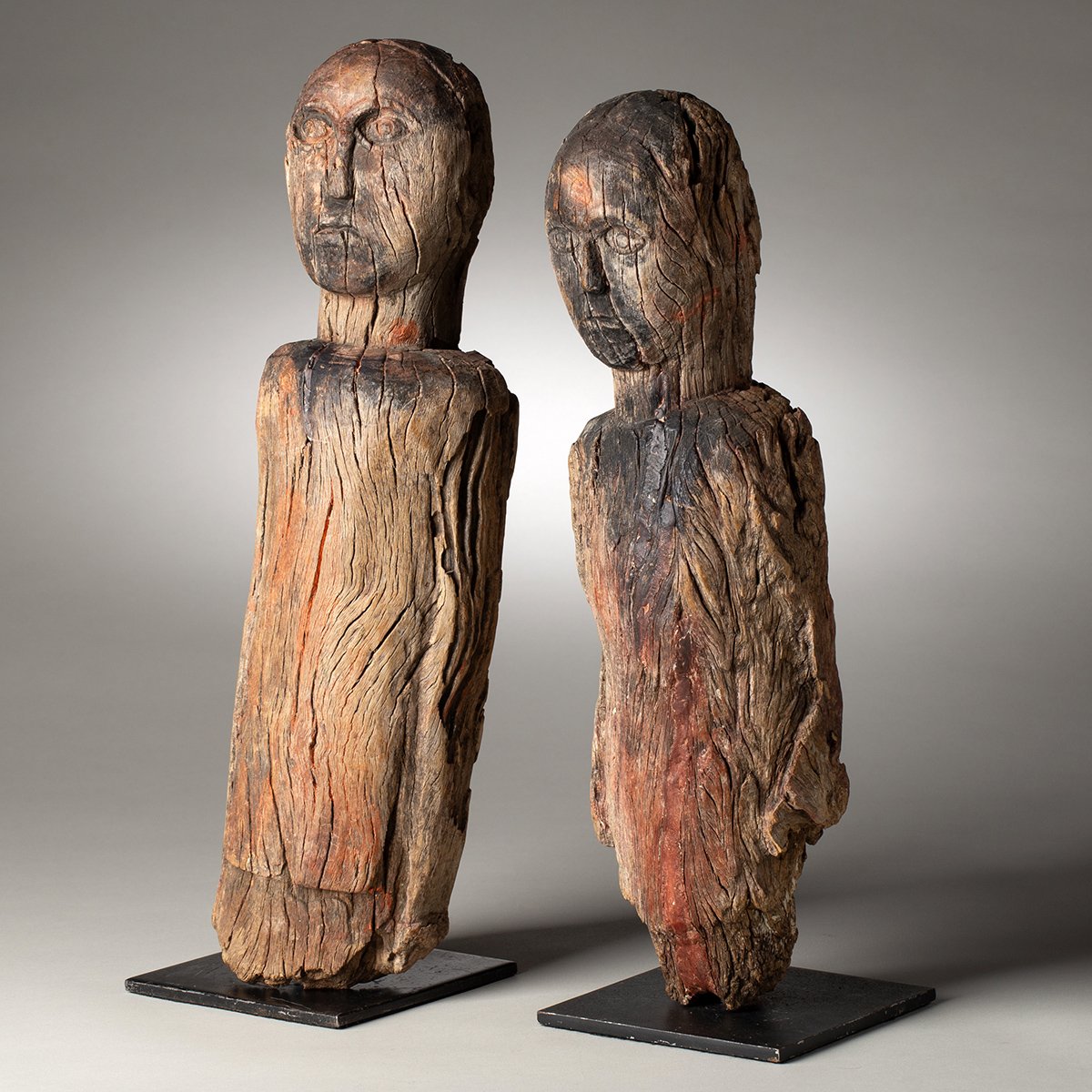 Image 4 of 8
 Image 5 of 8
 Image 6 of 8
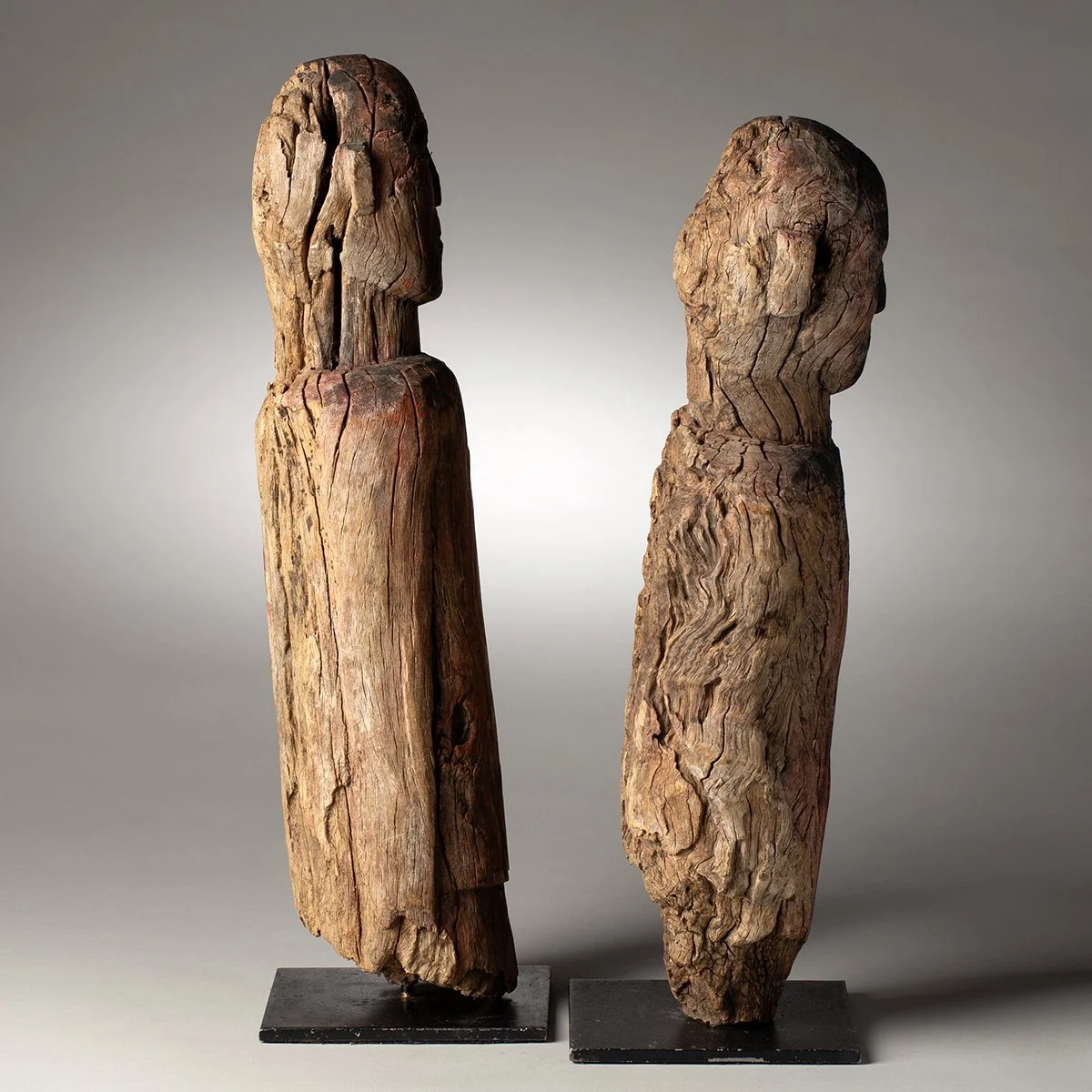 Image 7 of 8
 Image 8 of 8