Northern New Ireland, Bismarck Archipelago, Papua New Guinea
19th century
Wood, natural pigments, opercula shell
Length: 22¾ in (57.8 cm)
Provenance: Collection of Joop Moesman (1909–1988), Dutch Surrealist painter; Galerie Lemaire, Amsterdam; Art Loss Register certificate #S00249328
Malangan is the name given in northern New Ireland both to the mortuary ceremonies that honor the dead and to the sculptures commissioned for them, objects that served as temporary vessels for the souls of the deceased during ceremonies designed to release those souls to the realm of the dead. The possession of rights to specific malangan images conferred social prestige, and skilled carvers were commissioned to produce complex sculptures that encoded clan identity, kinship, and the spirit world within their imagery. Upon completion of the ceremony, the sculptures were burned or left to decay — unless sold to colonial traders, a practice that allowed many 19th-century examples to survive in collections.
The fish depicted in this malangan represents the rock cod, or awam, a hermaphroditic species that transitions from male to female with age and was understood as a symbol of fertility and the matrilineal structure of New Ireland clan life. The surface is painted in red ocher, black charcoal, and white lime applied with fine pandanus seed fibers, a technique specific to 19th-century malangan production in which the paint was understood as the element that brought the sculpture to life. The opercula shell eyes, which closely resemble the human eye, were the final element added by the carver, the moment at which the soul of the deceased was believed to enter the work.
This sculpture passed through the collection of Joop Moesman, the foremost Surrealist painter in the Netherlands, who is documented working among his malangans in a 1973 studio photograph in which this fish sculpture is visible on the left. The elaborate, multi-layered symbolism of New Ireland malangan captured the Surrealists' imagination precisely because it operated outside Western rationalism, and André Breton and other movement leaders owned and exchanged examples. It is likely through these exchanges that this piece entered Moesman's collection. The subsequent holding at Galerie Lemaire in Amsterdam and the Art Loss Register clearance complete a provenance chain that spans from 19th-century New Ireland through the heart of the European Surrealist movement.
We ship free anywhere in the world, fully insured, packed by hand.
Northern New Ireland, Bismarck Archipelago, Papua New Guinea
19th century
Wood, natural pigments, opercula shell
Length: 22¾ in (57.8 cm)
Provenance: Collection of Joop Moesman (1909–1988), Dutch Surrealist painter; Galerie Lemaire, Amsterdam; Art Loss Register certificate #S00249328
Malangan is the name given in northern New Ireland both to the mortuary ceremonies that honor the dead and to the sculptures commissioned for them, objects that served as temporary vessels for the souls of the deceased during ceremonies designed to release those souls to the realm of the dead. The possession of rights to specific malangan images conferred social prestige, and skilled carvers were commissioned to produce complex sculptures that encoded clan identity, kinship, and the spirit world within their imagery. Upon completion of the ceremony, the sculptures were burned or left to decay — unless sold to colonial traders, a practice that allowed many 19th-century examples to survive in collections.
The fish depicted in this malangan represents the rock cod, or awam, a hermaphroditic species that transitions from male to female with age and was understood as a symbol of fertility and the matrilineal structure of New Ireland clan life. The surface is painted in red ocher, black charcoal, and white lime applied with fine pandanus seed fibers, a technique specific to 19th-century malangan production in which the paint was understood as the element that brought the sculpture to life. The opercula shell eyes, which closely resemble the human eye, were the final element added by the carver, the moment at which the soul of the deceased was believed to enter the work.
This sculpture passed through the collection of Joop Moesman, the foremost Surrealist painter in the Netherlands, who is documented working among his malangans in a 1973 studio photograph in which this fish sculpture is visible on the left. The elaborate, multi-layered symbolism of New Ireland malangan captured the Surrealists' imagination precisely because it operated outside Western rationalism, and André Breton and other movement leaders owned and exchanged examples. It is likely through these exchanges that this piece entered Moesman's collection. The subsequent holding at Galerie Lemaire in Amsterdam and the Art Loss Register clearance complete a provenance chain that spans from 19th-century New Ireland through the heart of the European Surrealist movement.
We ship free anywhere in the world, fully insured, packed by hand.


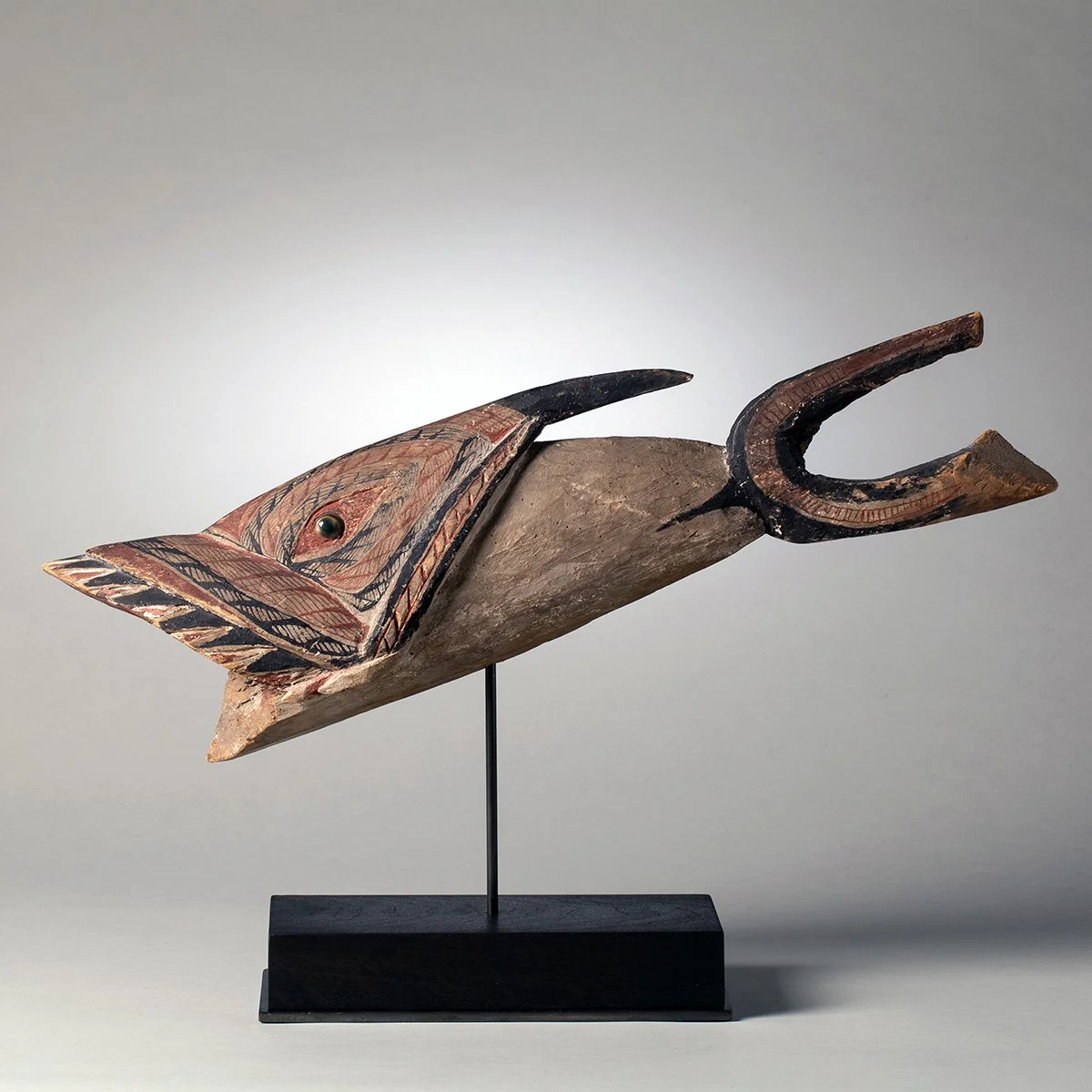 Image 1 of 8
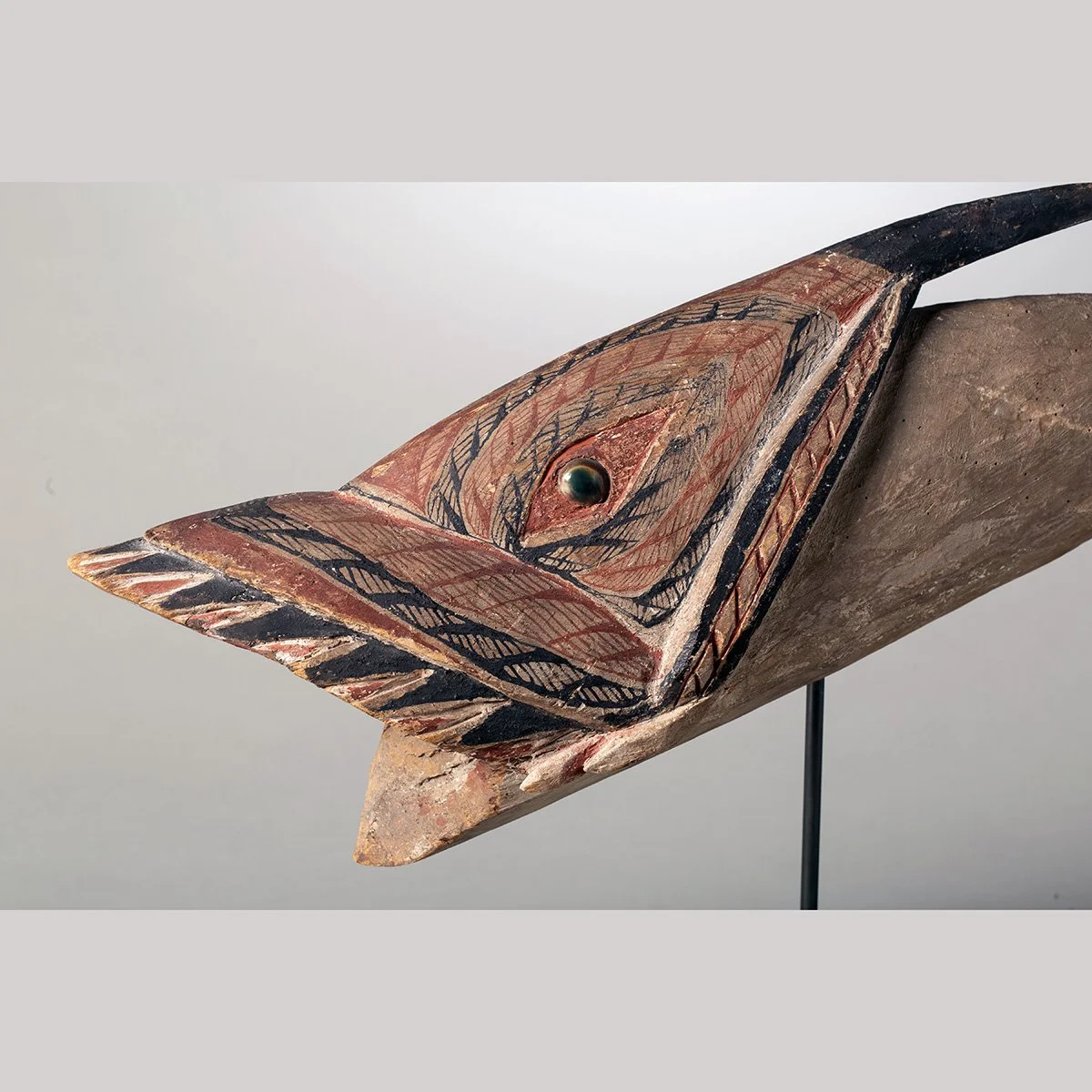 Image 2 of 8
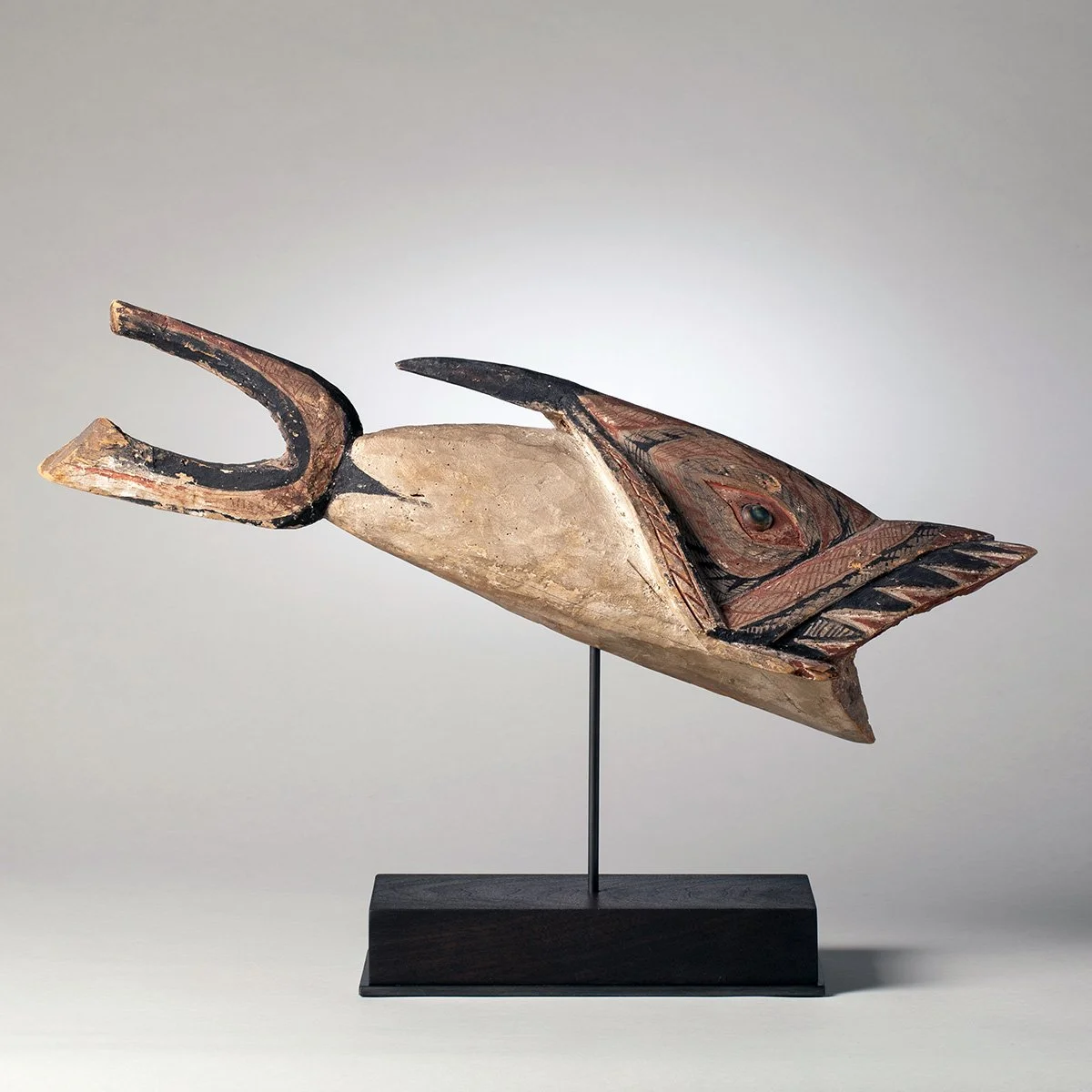 Image 3 of 8
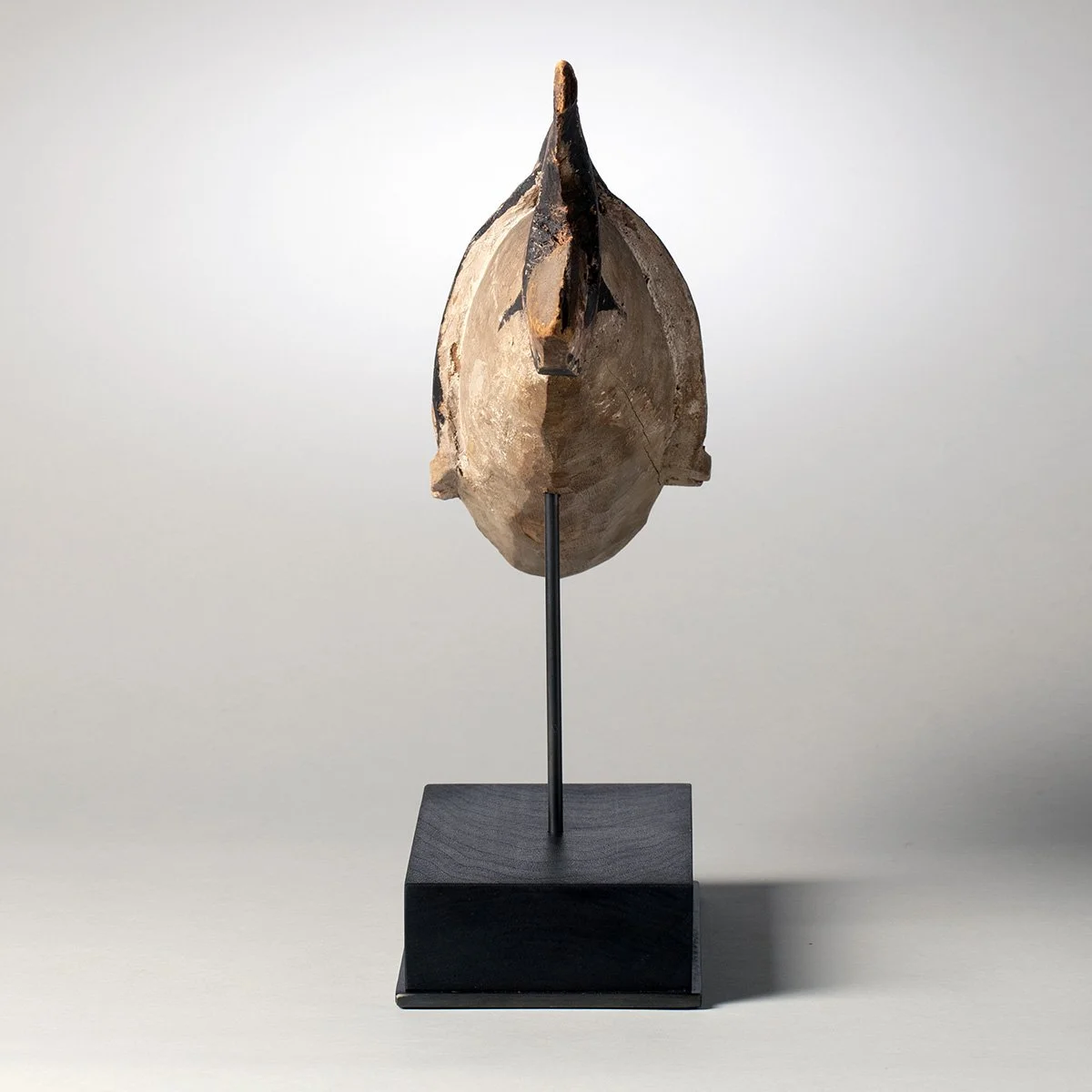 Image 4 of 8
 Image 5 of 8
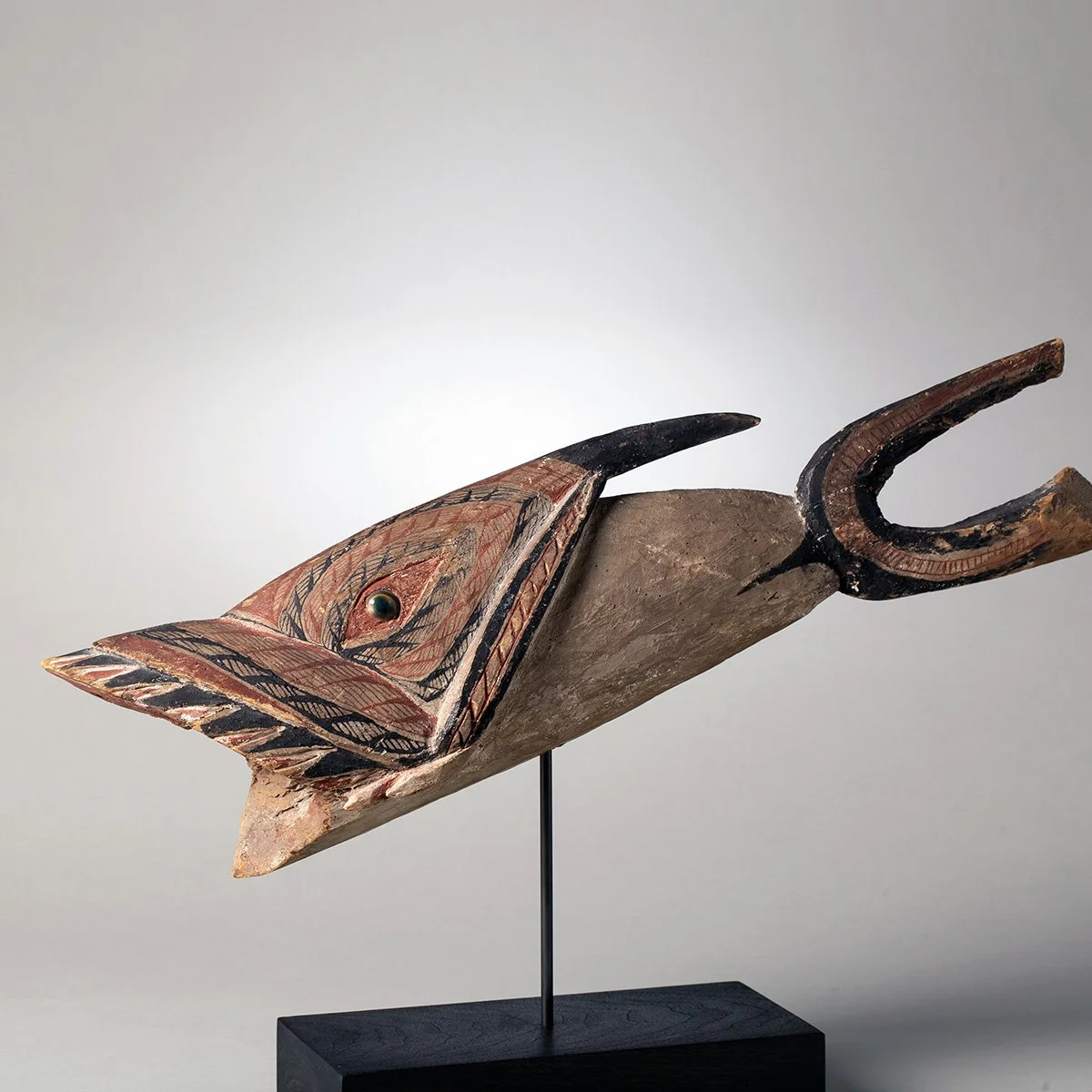 Image 6 of 8
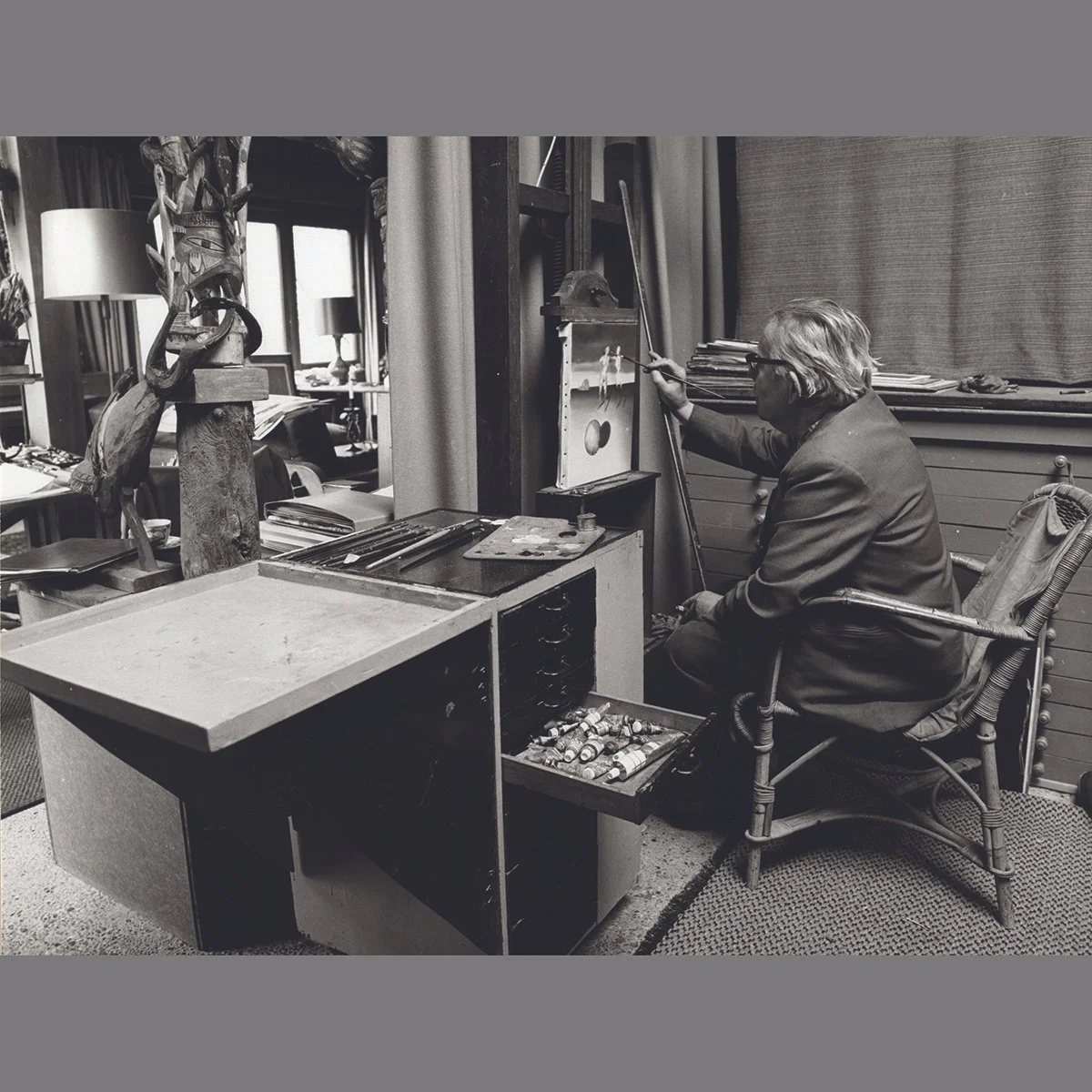 Image 7 of 8
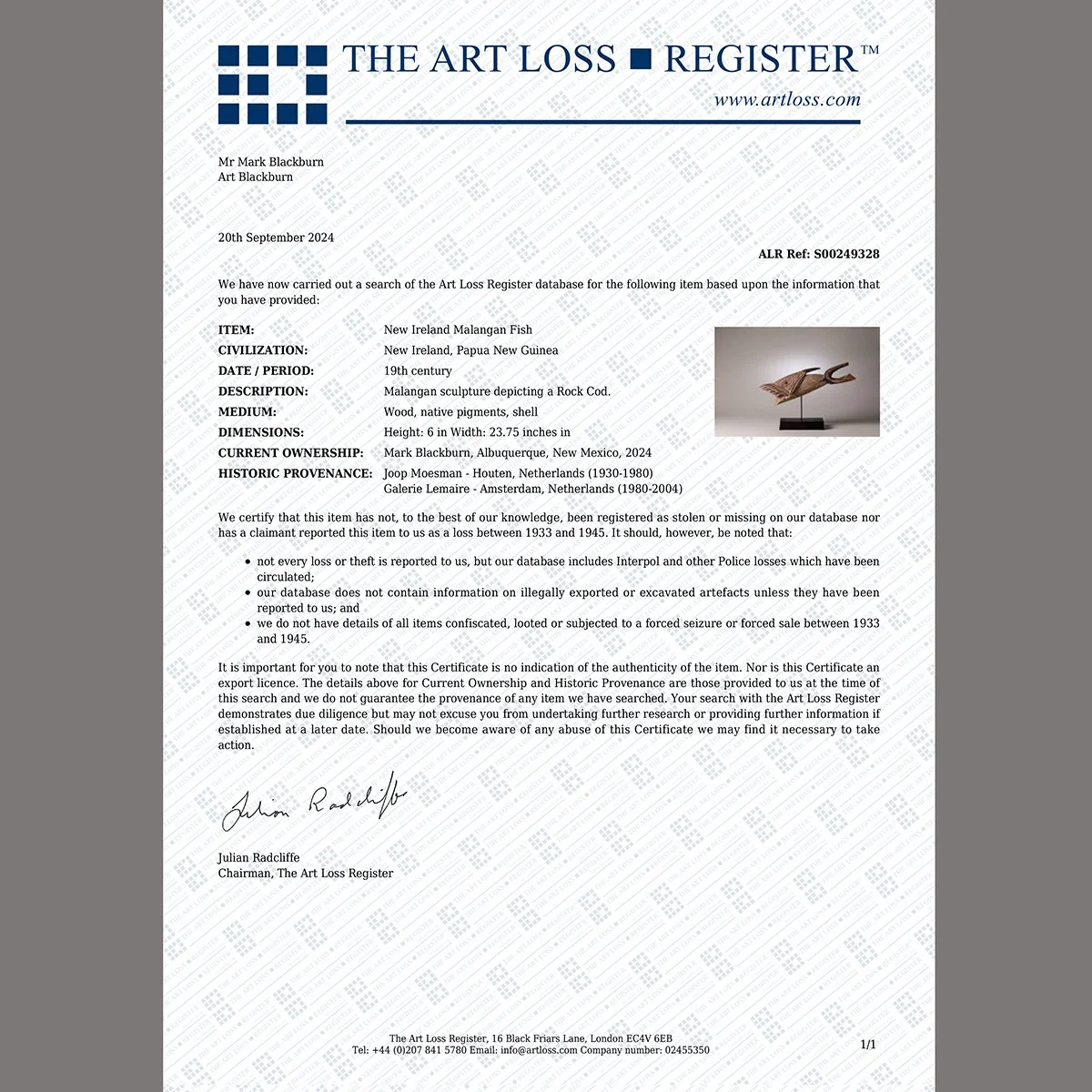 Image 8 of 8