

 Image 1 of 2
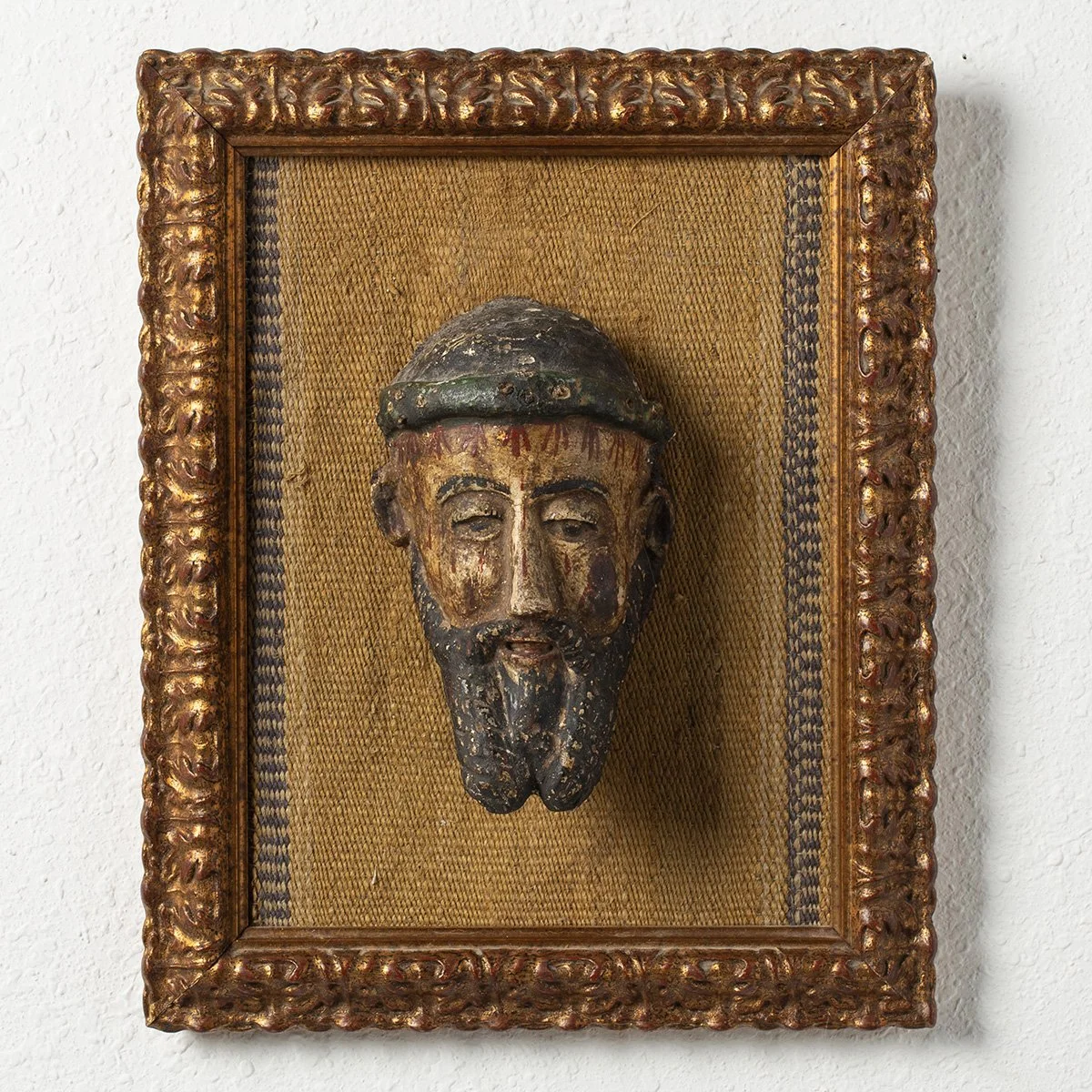 Image 2 of 2
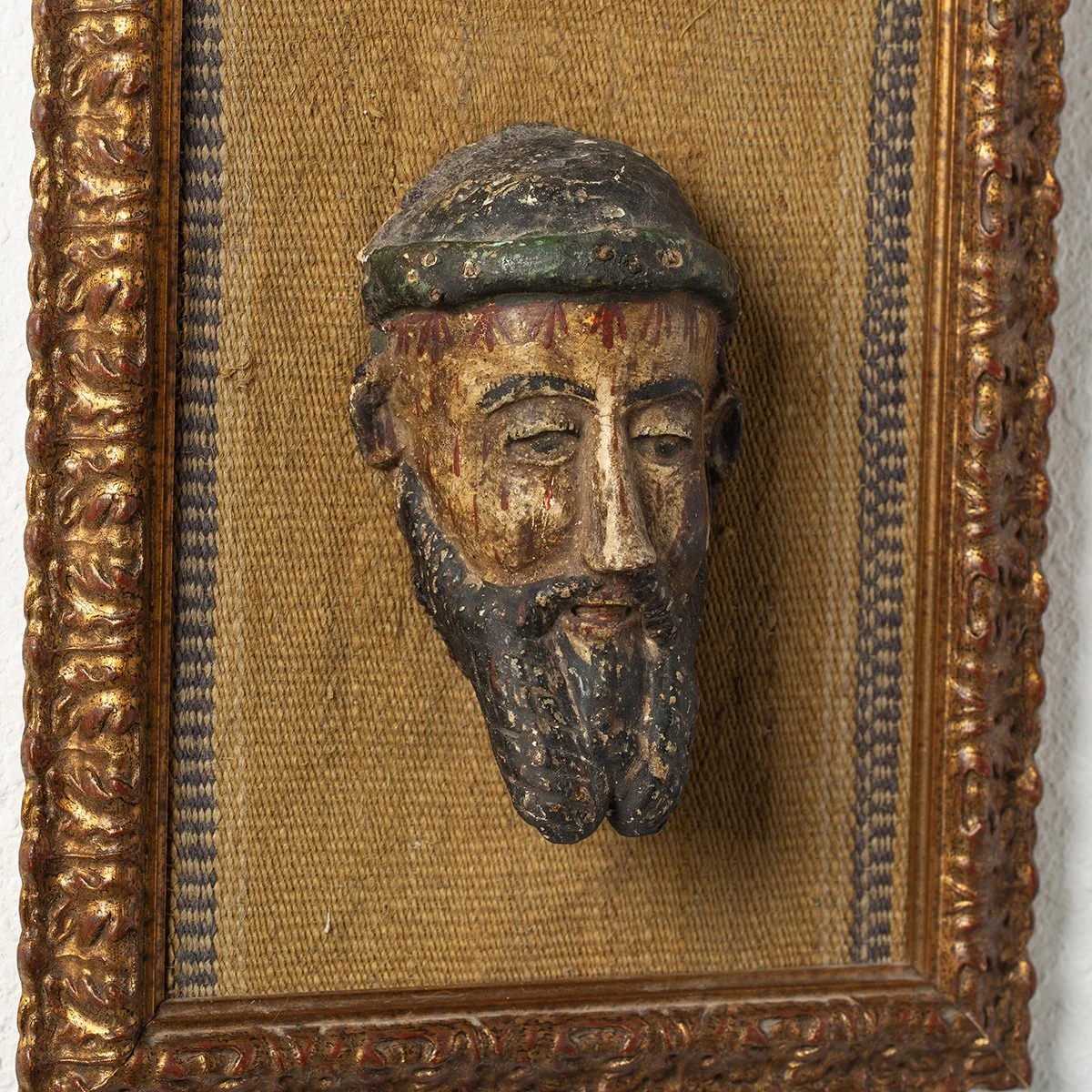
Jose Benito Ortega (1858 to 1941)
circa 1880
Carved cottonwood, gesso, pigment
Height 6 in (15.2 cm); Frame: Height 12 1/2 in, Width 10 in
Provenance: J. Frederick Caine, St Petersburg, FL
Jose Benito Ortega was the last of the great late 19th century New Mexican santeros, traveling throughout northern New Mexico and southern Colorado making santos for small chapels, meeting houses, village homes, and for Penitentes from the 1870s to the early 1900s. His figures were created from scrap mill board and calico rags upon which he applied prepared gesso, working in the remote villages near Mora using cottonwood gathered from nearby trees. He continued producing traditional images at a time when the clergy was attempting to replace santos with mass-produced plaster statues, making his work an act of cultural preservation.
A Cristo head of this type is among the rarest forms in Ortega's output, described in the existing literature as a special commission for a patron of note. Ortega traveled between villages on foot with a small bundle of tools, staying with families until he completed their commissions, and stopped making santos after the death of his wife in 1907, moving to Raton where he died in 1941. The St Petersburg, Florida provenance through J. Frederick Caine places this piece within the serious American collector market for New Mexican religious art.
We ship free anywhere in the world, fully insured, packed by hand.
Jose Benito Ortega (1858 to 1941)
circa 1880
Carved cottonwood, gesso, pigment
Height 6 in (15.2 cm); Frame: Height 12 1/2 in, Width 10 in
Provenance: J. Frederick Caine, St Petersburg, FL
Jose Benito Ortega was the last of the great late 19th century New Mexican santeros, traveling throughout northern New Mexico and southern Colorado making santos for small chapels, meeting houses, village homes, and for Penitentes from the 1870s to the early 1900s. His figures were created from scrap mill board and calico rags upon which he applied prepared gesso, working in the remote villages near Mora using cottonwood gathered from nearby trees. He continued producing traditional images at a time when the clergy was attempting to replace santos with mass-produced plaster statues, making his work an act of cultural preservation.
A Cristo head of this type is among the rarest forms in Ortega's output, described in the existing literature as a special commission for a patron of note. Ortega traveled between villages on foot with a small bundle of tools, staying with families until he completed their commissions, and stopped making santos after the death of his wife in 1907, moving to Raton where he died in 1941. The St Petersburg, Florida provenance through J. Frederick Caine places this piece within the serious American collector market for New Mexican religious art.
We ship free anywhere in the world, fully insured, packed by hand.