Ngbandi, Democratic Republic of the Congo, early 20th century
Iron, wood, fiber binding
Height 27 1/2 inches (69.9 cm)
Provenance: Private collection, Albuquerque, New Mexico
The blade runs up from the grip as a broad tapering spine, its outer edge cut with a series of stepped projections that decrease in size as they rise, and finishes in a long crescent that hooks back over itself to a fine point. Fine parallel striations run the length of the iron from the forging, and the surface is a dark grey brown throughout with no bright edge showing. The grip is bound with tight coils of fiber over a wooden core and terminates in a turned pommel of stacked conical discs, and the whole reads as a single continuous curve from pommel to point.
Blades of this form belonged to the Ngbandi of the northern Congo along the Ubangi River, carried as prestige and status objects and displayed at ceremony rather than used for cutting. The stepped projections along the spine and the hooked crescent are the identifying features of the type, and they place the object among the throwing and ceremonial knives of the region rather than among tools. Weapons of this class were forged by smiths whose standing came from the work, and the finish here is even along the full length with the pommel and binding intact.
We ship free anywhere in the world, fully insured, packed by hand.
Ngbandi, Democratic Republic of the Congo, early 20th century
Iron, wood, fiber binding
Height 27 1/2 inches (69.9 cm)
Provenance: Private collection, Albuquerque, New Mexico
The blade runs up from the grip as a broad tapering spine, its outer edge cut with a series of stepped projections that decrease in size as they rise, and finishes in a long crescent that hooks back over itself to a fine point. Fine parallel striations run the length of the iron from the forging, and the surface is a dark grey brown throughout with no bright edge showing. The grip is bound with tight coils of fiber over a wooden core and terminates in a turned pommel of stacked conical discs, and the whole reads as a single continuous curve from pommel to point.
Blades of this form belonged to the Ngbandi of the northern Congo along the Ubangi River, carried as prestige and status objects and displayed at ceremony rather than used for cutting. The stepped projections along the spine and the hooked crescent are the identifying features of the type, and they place the object among the throwing and ceremonial knives of the region rather than among tools. Weapons of this class were forged by smiths whose standing came from the work, and the finish here is even along the full length with the pommel and binding intact.
We ship free anywhere in the world, fully insured, packed by hand.


 Image 1 of 10
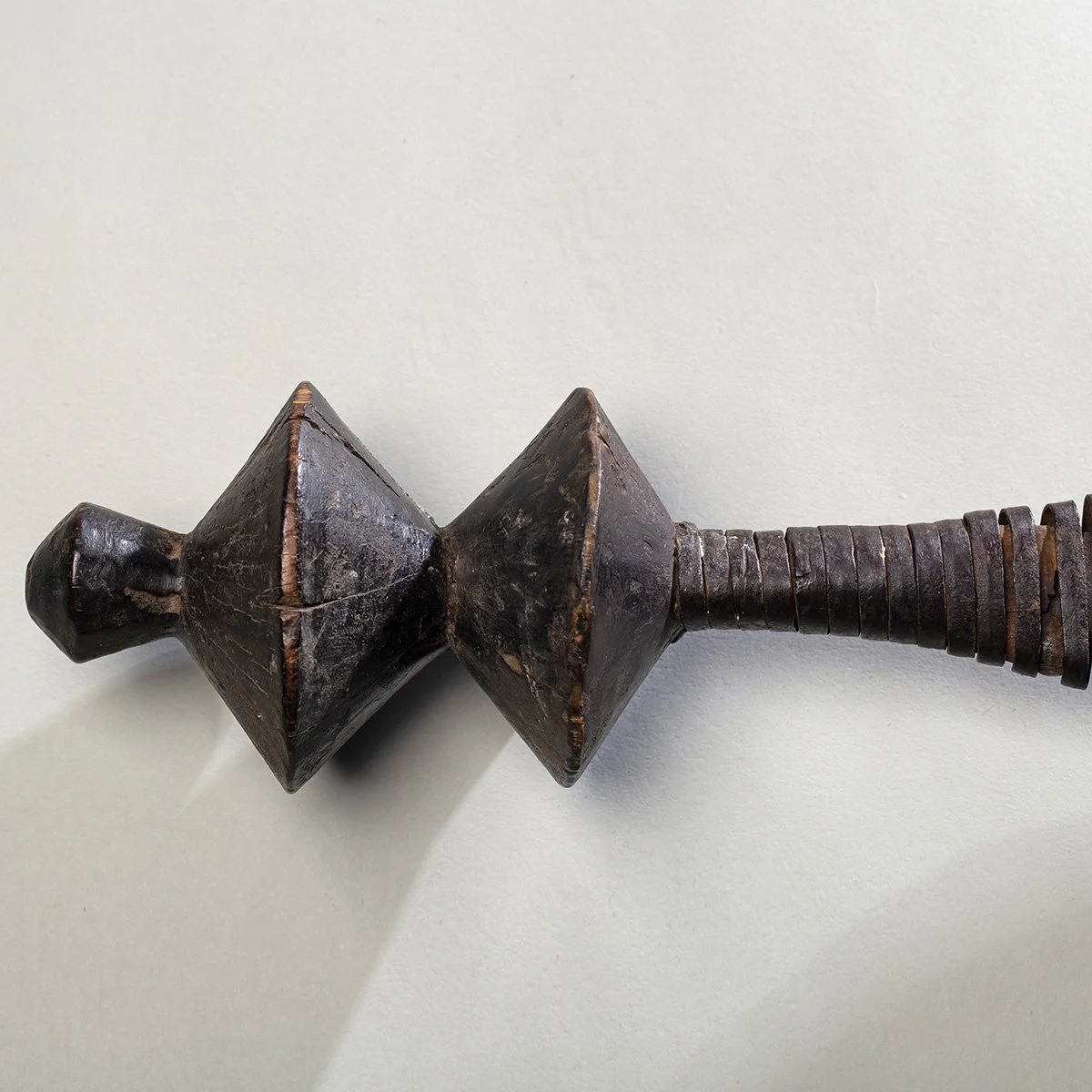 Image 2 of 10
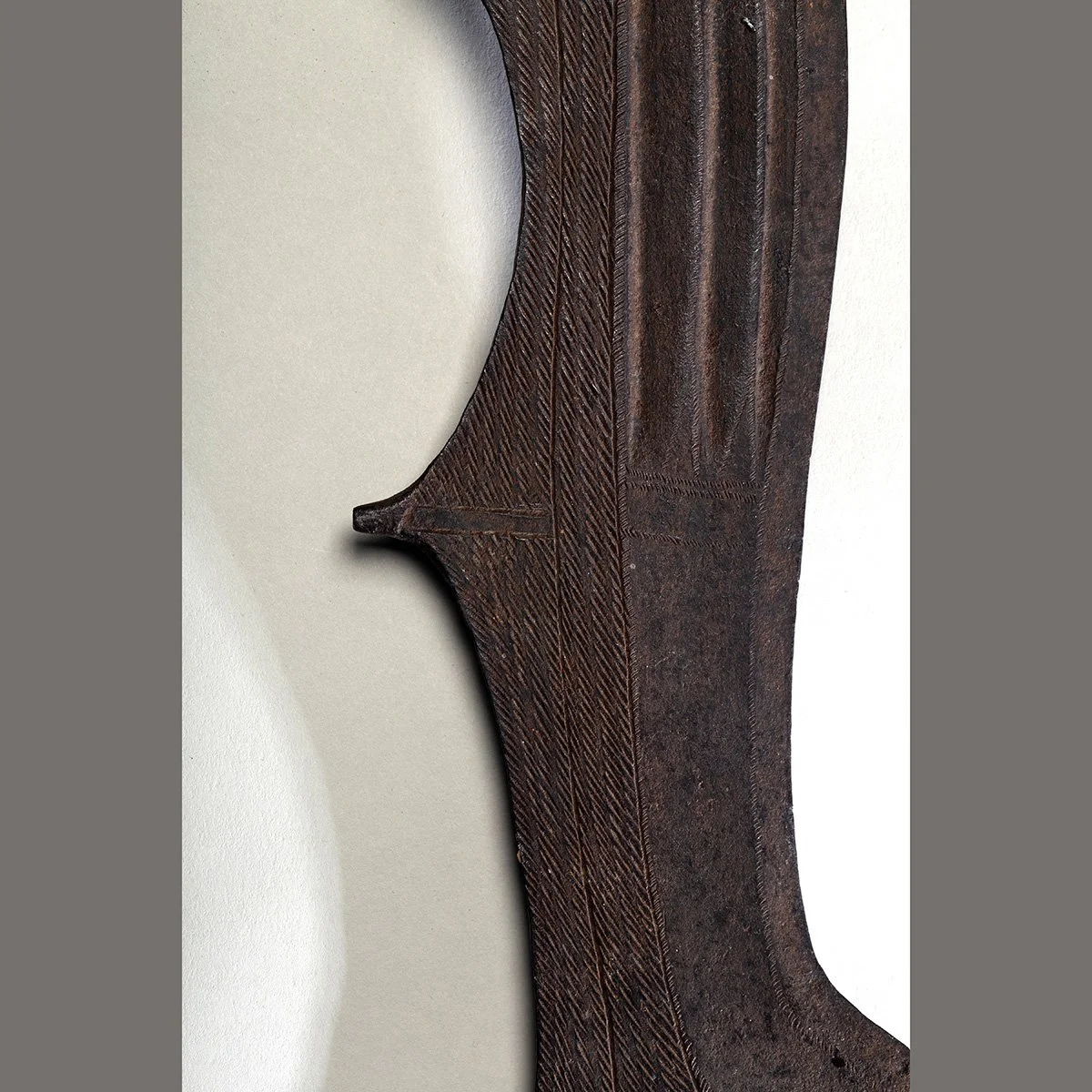 Image 3 of 10
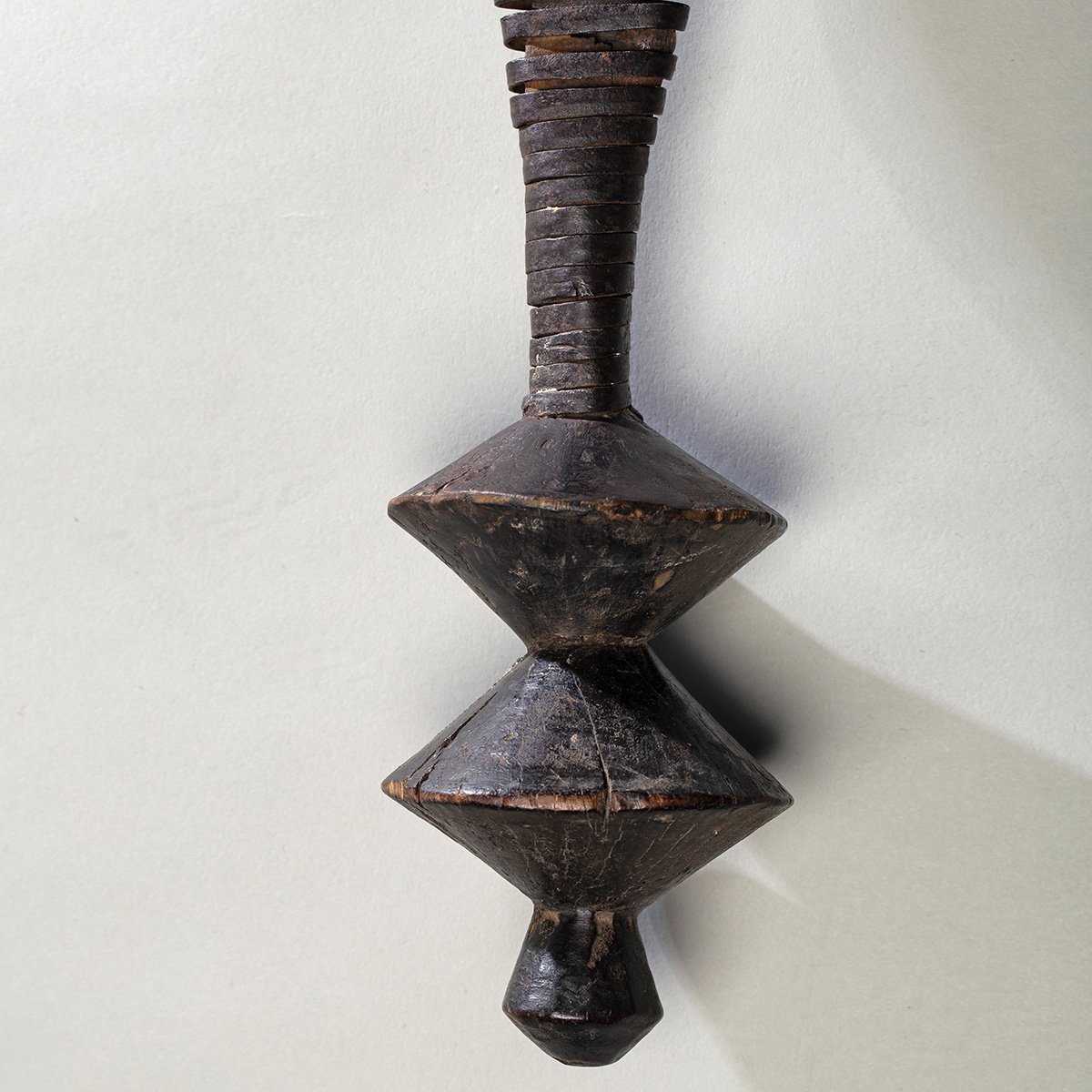 Image 4 of 10
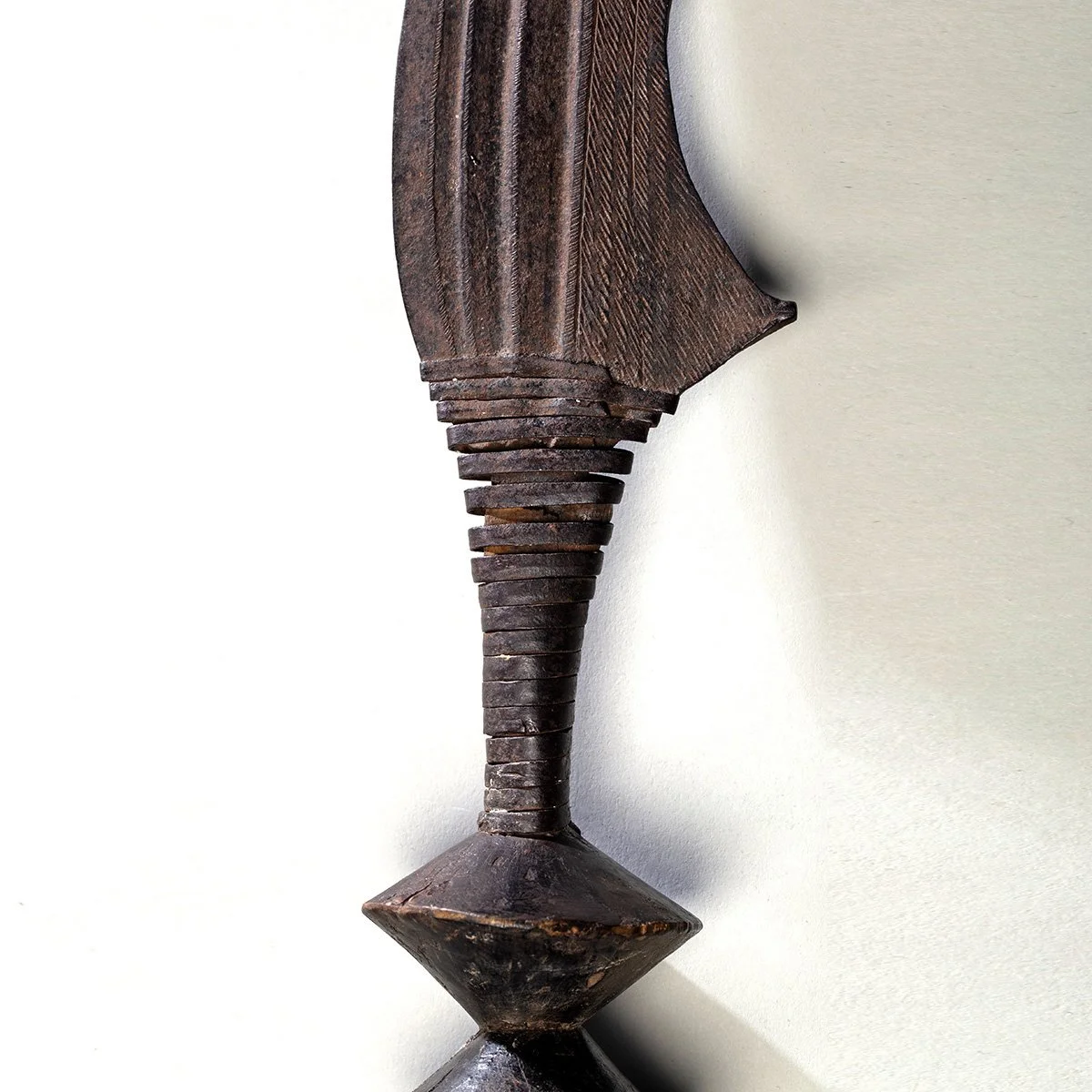 Image 5 of 10
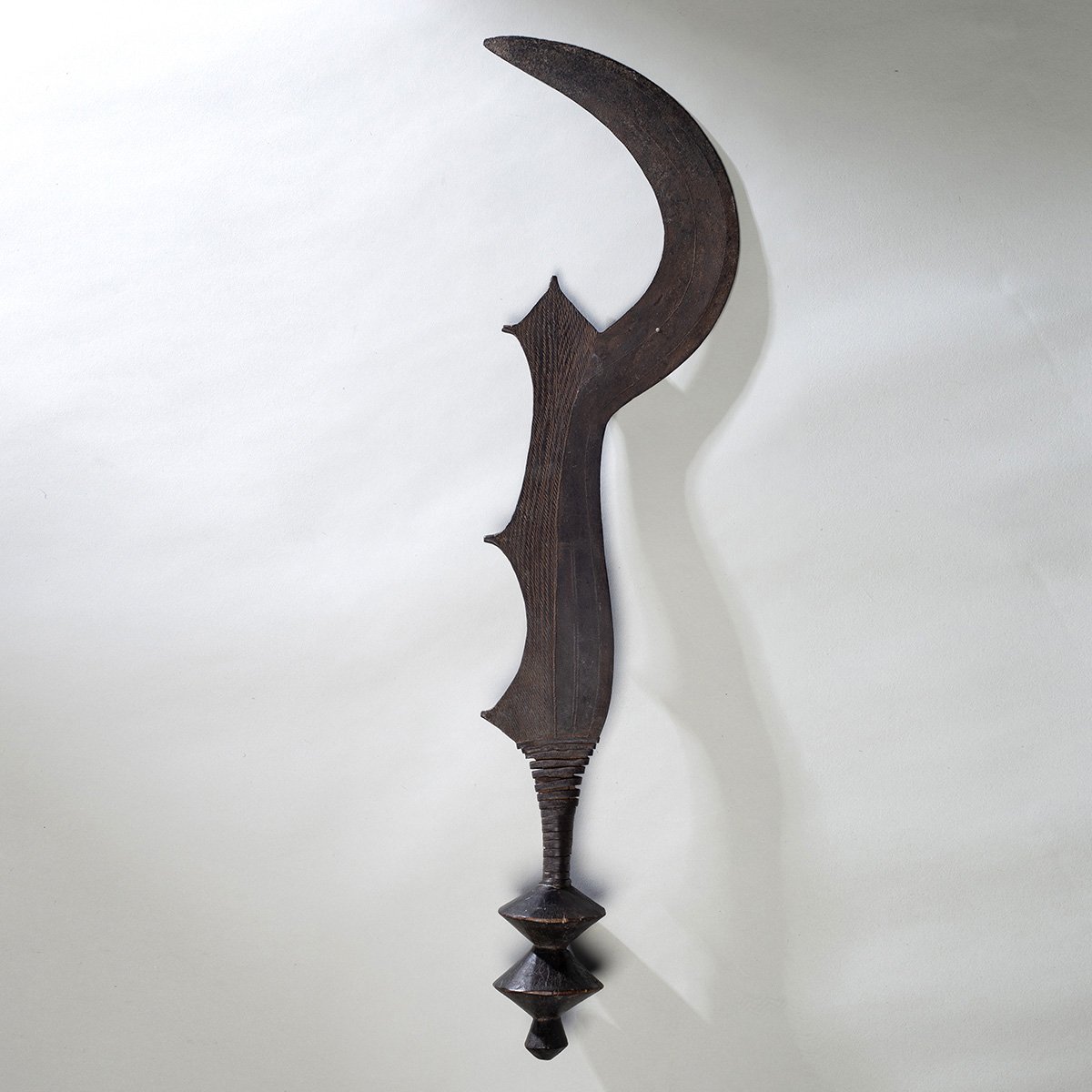 Image 6 of 10
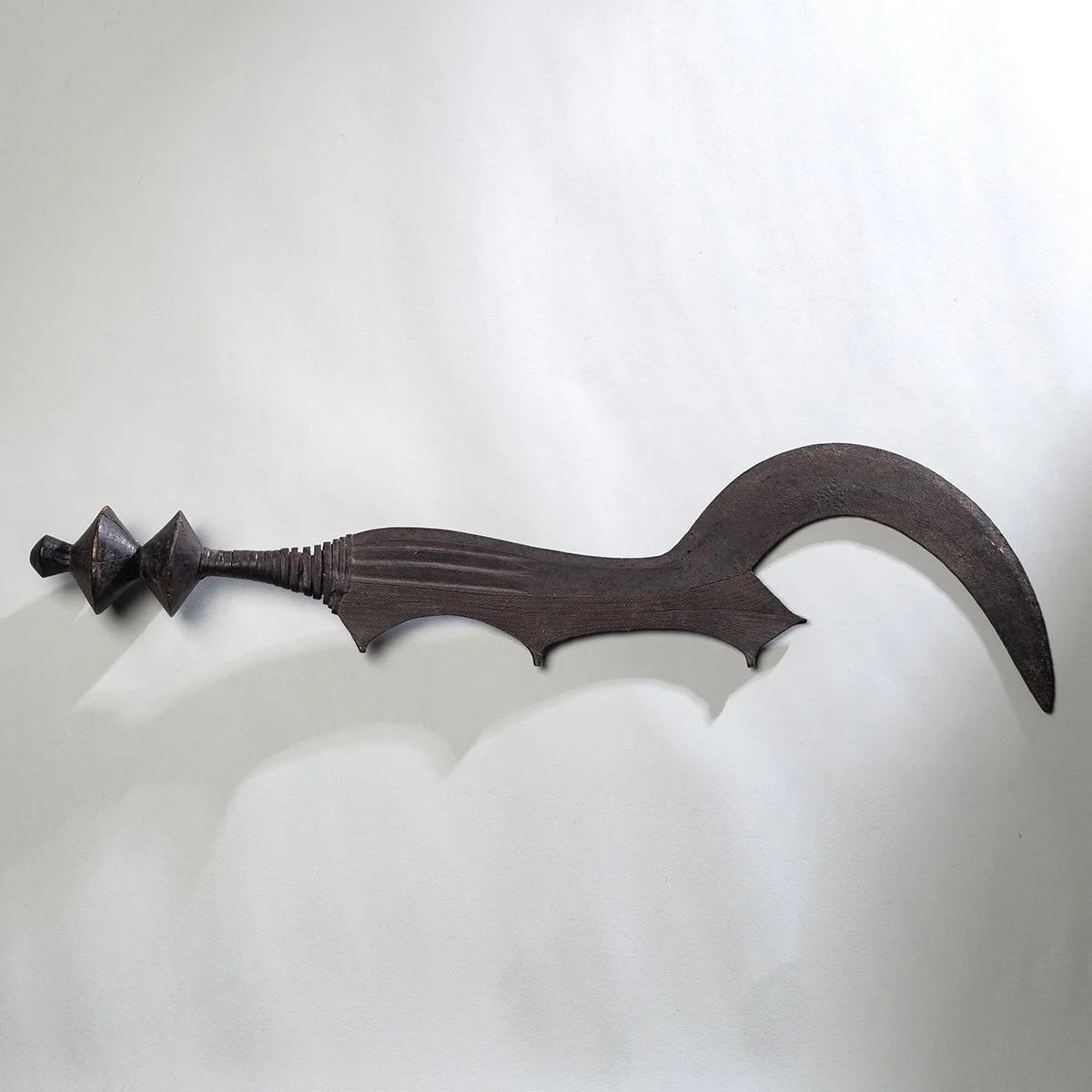 Image 7 of 10
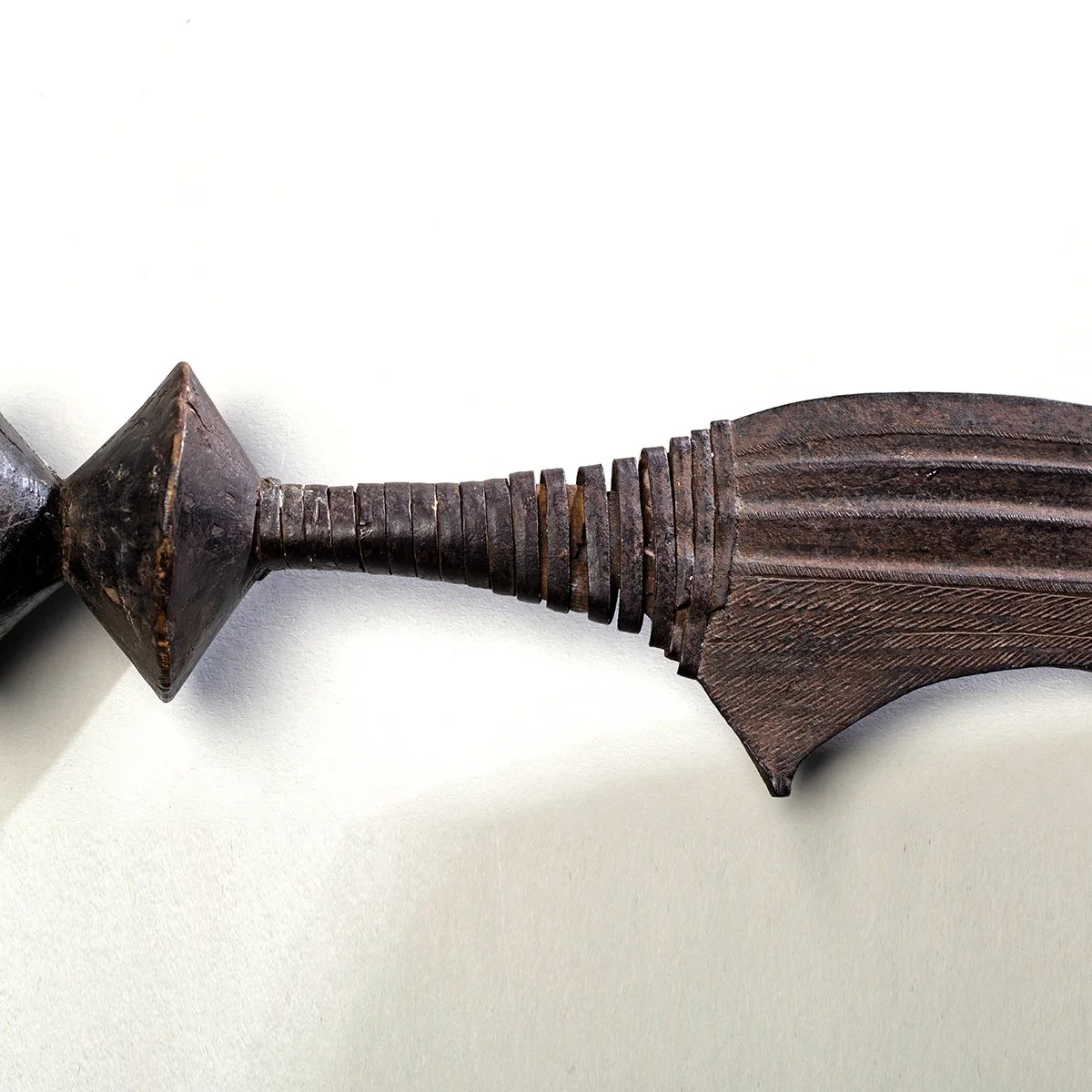 Image 8 of 10
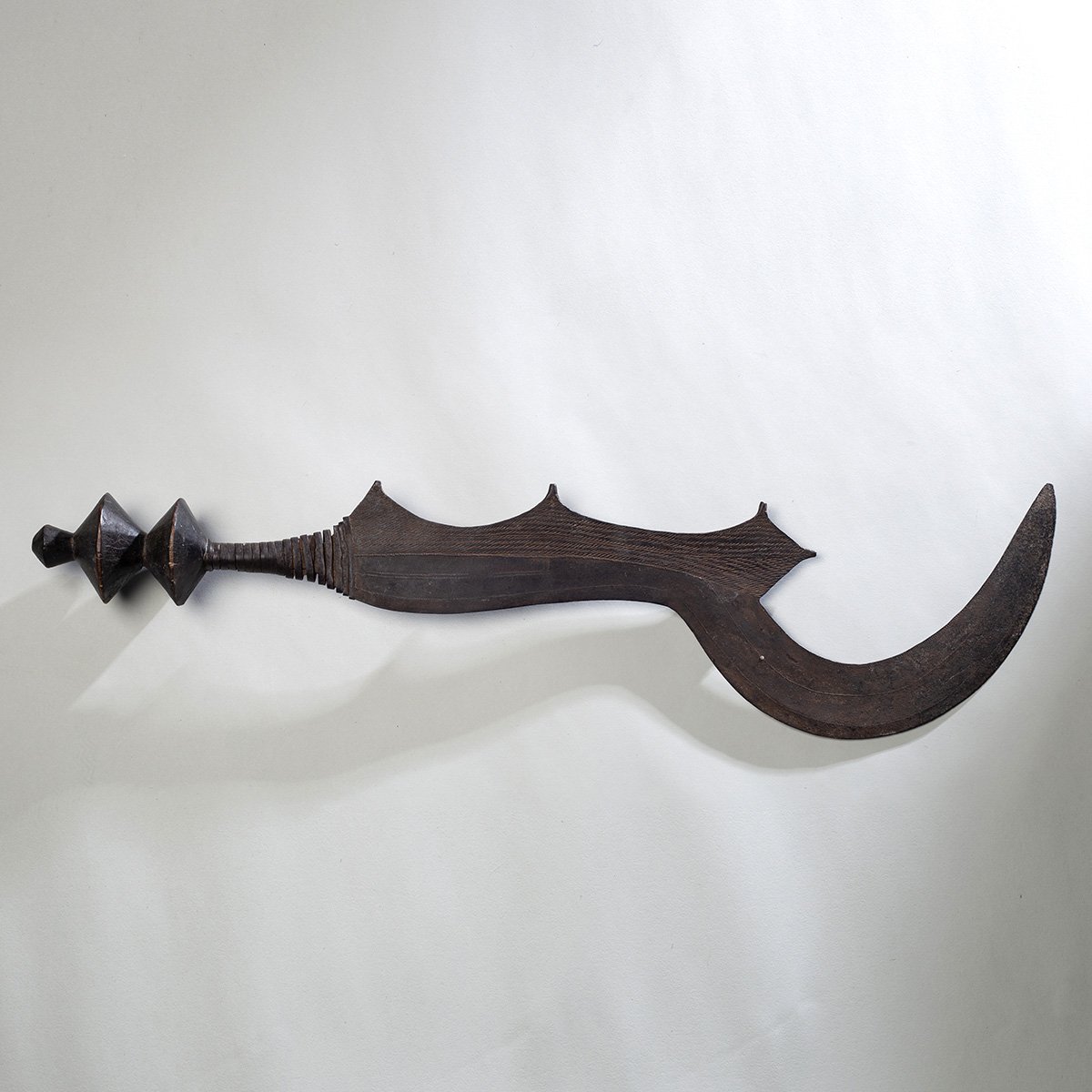 Image 9 of 10
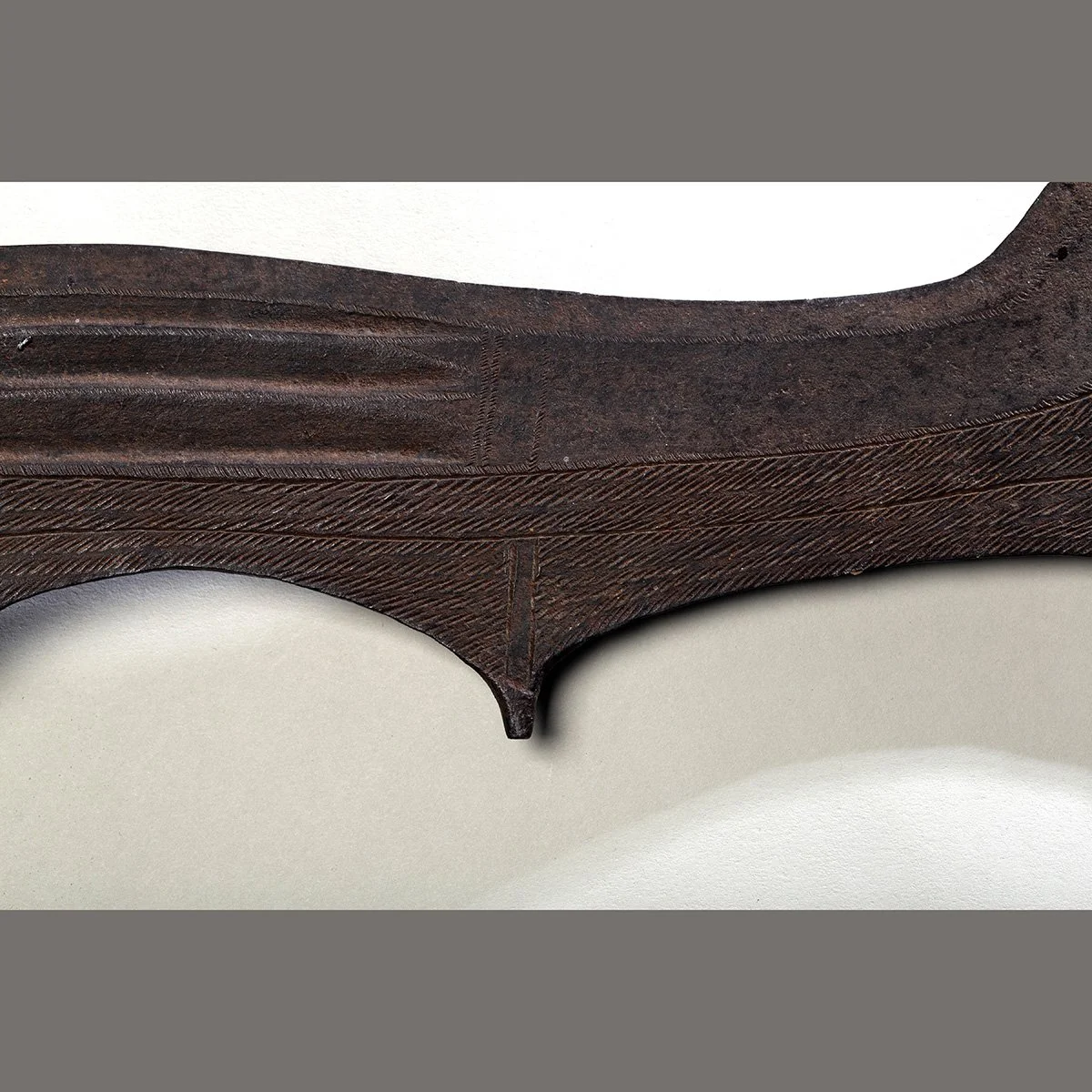 Image 10 of 10