Iran, Nishapur, Khorasan region
10th century
Earthenware with slip and manganese painted decoration
Diameter 8 in (20.3 cm), Height 3 1/2 in (8.9 cm)
Provenance: Professors Abe and Paula Rosman, New York
Nishapur in northeastern Iran was one of the principal centers of early Islamic ceramic production, and Sari Ware represents a distinctive regional output characterized by bold painted designs in dark manganese and red slip on a buff earthenware body. This dish displays a large bird rendered in confident, gestural brushwork surrounded by foliate scrolls and abstract vegetal ornament, a decorative vocabulary common to Nishapur workshops of the 10th century. The bird motif carried auspicious associations in early Islamic visual culture and appears frequently on ceramics produced for prosperous urban households in the Samanid period.
We ship free anywhere in the world, fully insured, packed by hand.
Iran, Nishapur, Khorasan region
10th century
Earthenware with slip and manganese painted decoration
Diameter 8 in (20.3 cm), Height 3 1/2 in (8.9 cm)
Provenance: Professors Abe and Paula Rosman, New York
Nishapur in northeastern Iran was one of the principal centers of early Islamic ceramic production, and Sari Ware represents a distinctive regional output characterized by bold painted designs in dark manganese and red slip on a buff earthenware body. This dish displays a large bird rendered in confident, gestural brushwork surrounded by foliate scrolls and abstract vegetal ornament, a decorative vocabulary common to Nishapur workshops of the 10th century. The bird motif carried auspicious associations in early Islamic visual culture and appears frequently on ceramics produced for prosperous urban households in the Samanid period.
We ship free anywhere in the world, fully insured, packed by hand.


 Image 1 of 6
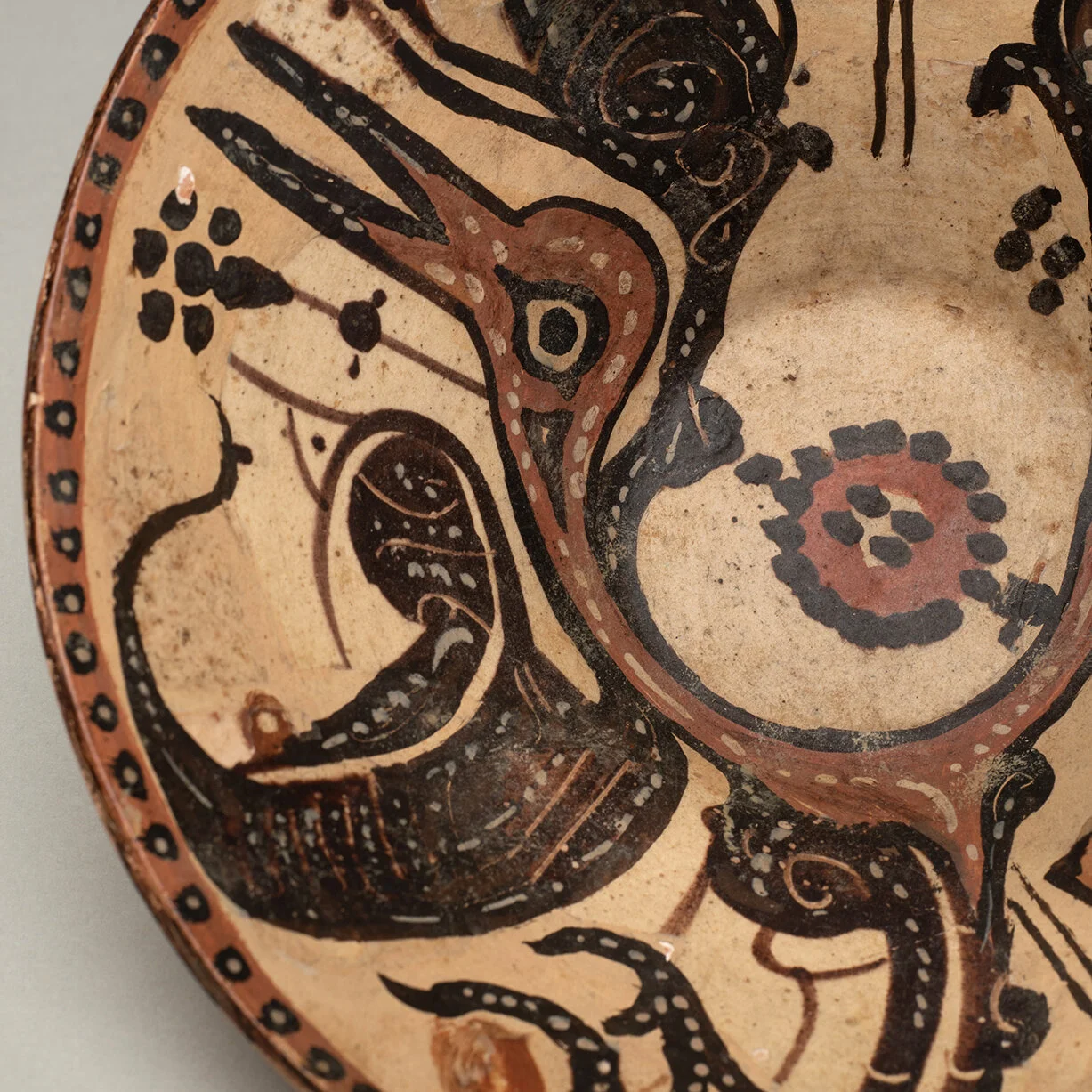 Image 2 of 6
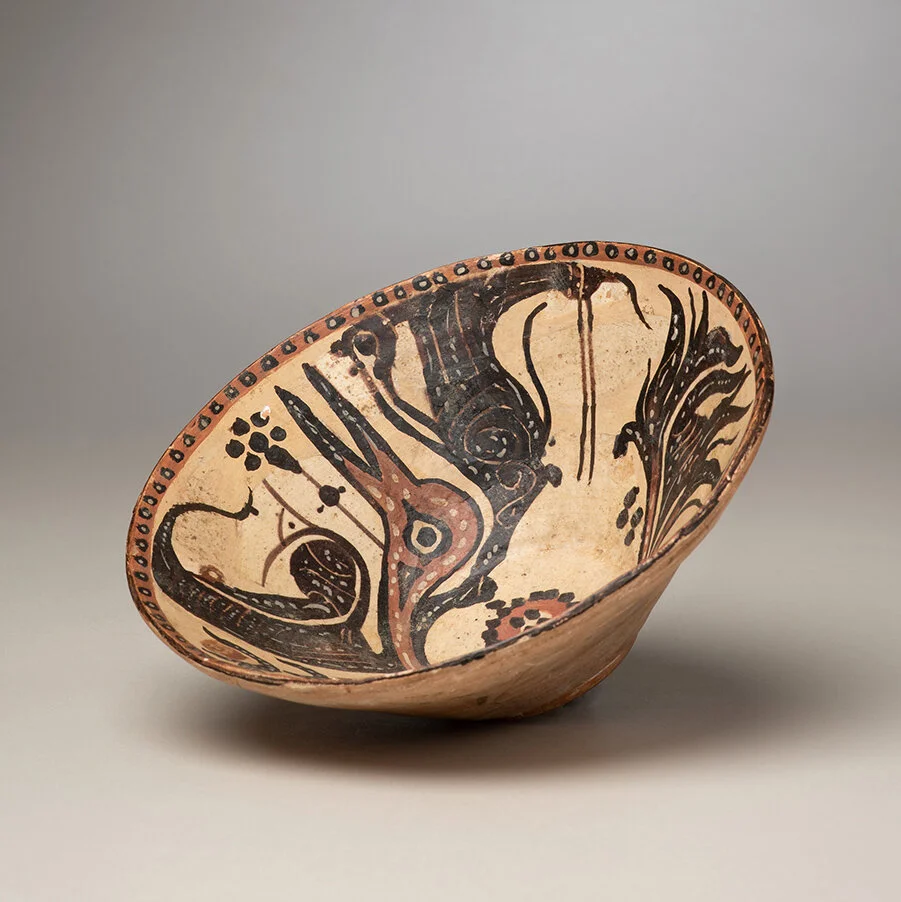 Image 3 of 6
 Image 4 of 6
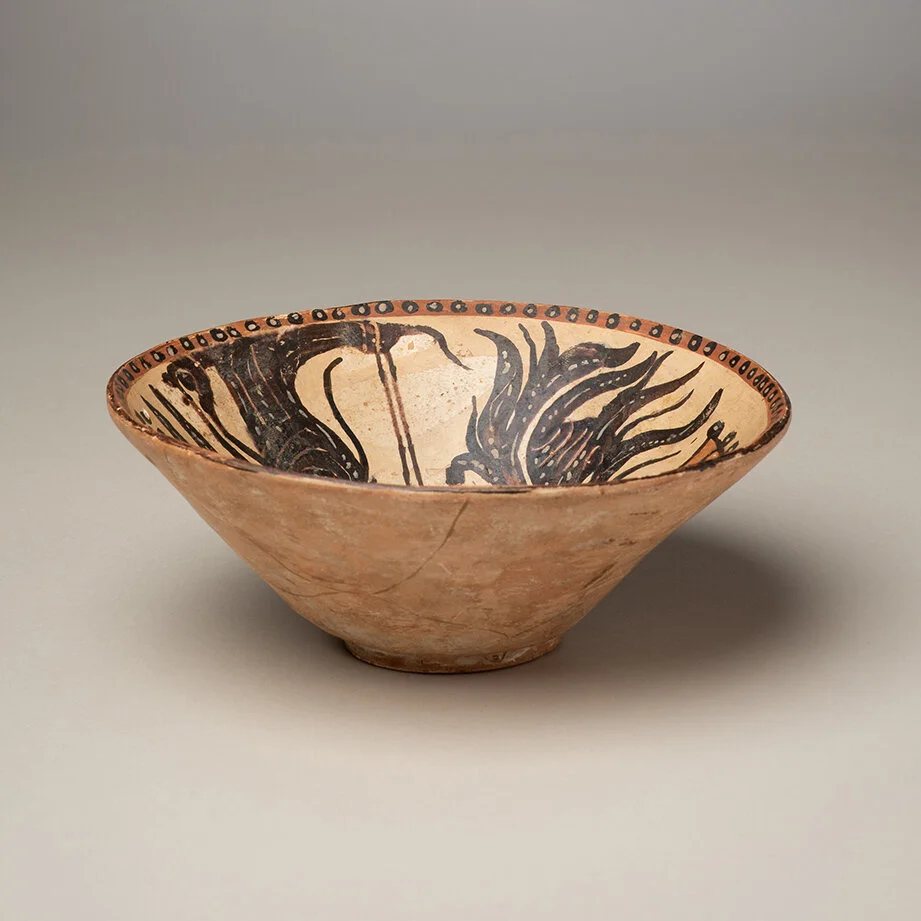 Image 5 of 6
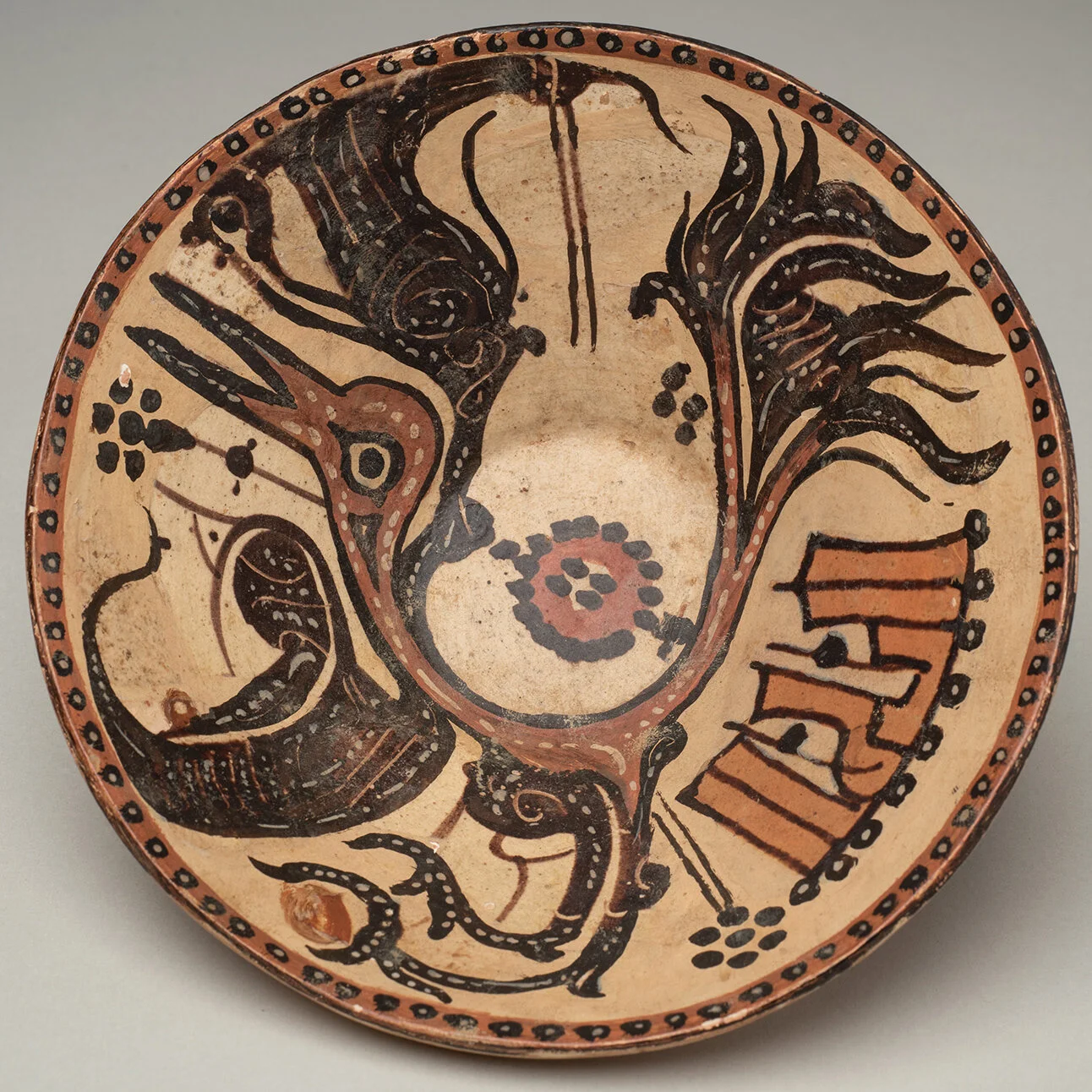 Image 6 of 6