Ojibwe, Great Lakes region
Circa 1860s
Glass beads, trade cloth
Height 36 1/2" (92.7 cm) Width 10 3/4" (27.3 cm)
Provenance: Private collection, Montana
This Ojibwe bandolier bag is worked in glass seed beads using both loom beading and spot stitching, with a geometric design vocabulary covering the strap and pouch in dense, precise patterning. The composition combines structured angular motifs on the strap with a floral lower panel, a pairing characteristic of Great Lakes beadwork in the 1860s when geometric and naturalistic traditions were both actively practiced. The bags themselves are constructed from trade cloth, a material that had largely replaced traditional hide and fiber by this period.
Bandolier bags served as prestige objects within Great Lakes communities, worn to complete ceremonial outfits and displayed as markers of skill and social standing. They were beaded by women and considered among the most culturally significant objects produced within the tribes that made them. This example, from a Montana private collection, is a well preserved representative of a form that reached its fullest development in the latter half of the nineteenth century.
We ship free anywhere in the world, fully insured, packed by hand.
Ojibwe, Great Lakes region
Circa 1860s
Glass beads, trade cloth
Height 36 1/2" (92.7 cm) Width 10 3/4" (27.3 cm)
Provenance: Private collection, Montana
This Ojibwe bandolier bag is worked in glass seed beads using both loom beading and spot stitching, with a geometric design vocabulary covering the strap and pouch in dense, precise patterning. The composition combines structured angular motifs on the strap with a floral lower panel, a pairing characteristic of Great Lakes beadwork in the 1860s when geometric and naturalistic traditions were both actively practiced. The bags themselves are constructed from trade cloth, a material that had largely replaced traditional hide and fiber by this period.
Bandolier bags served as prestige objects within Great Lakes communities, worn to complete ceremonial outfits and displayed as markers of skill and social standing. They were beaded by women and considered among the most culturally significant objects produced within the tribes that made them. This example, from a Montana private collection, is a well preserved representative of a form that reached its fullest development in the latter half of the nineteenth century.
We ship free anywhere in the world, fully insured, packed by hand.


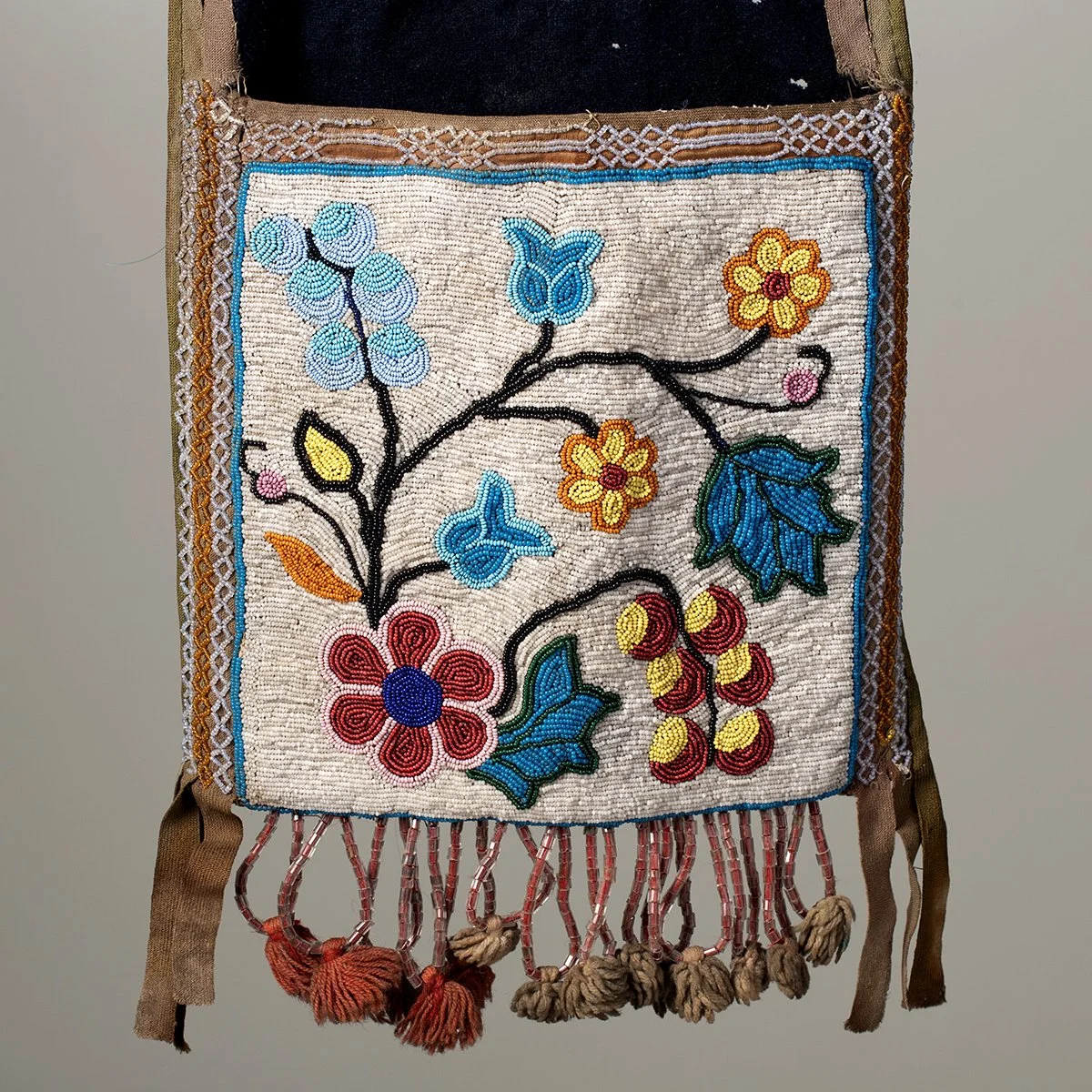 Image 1 of 6
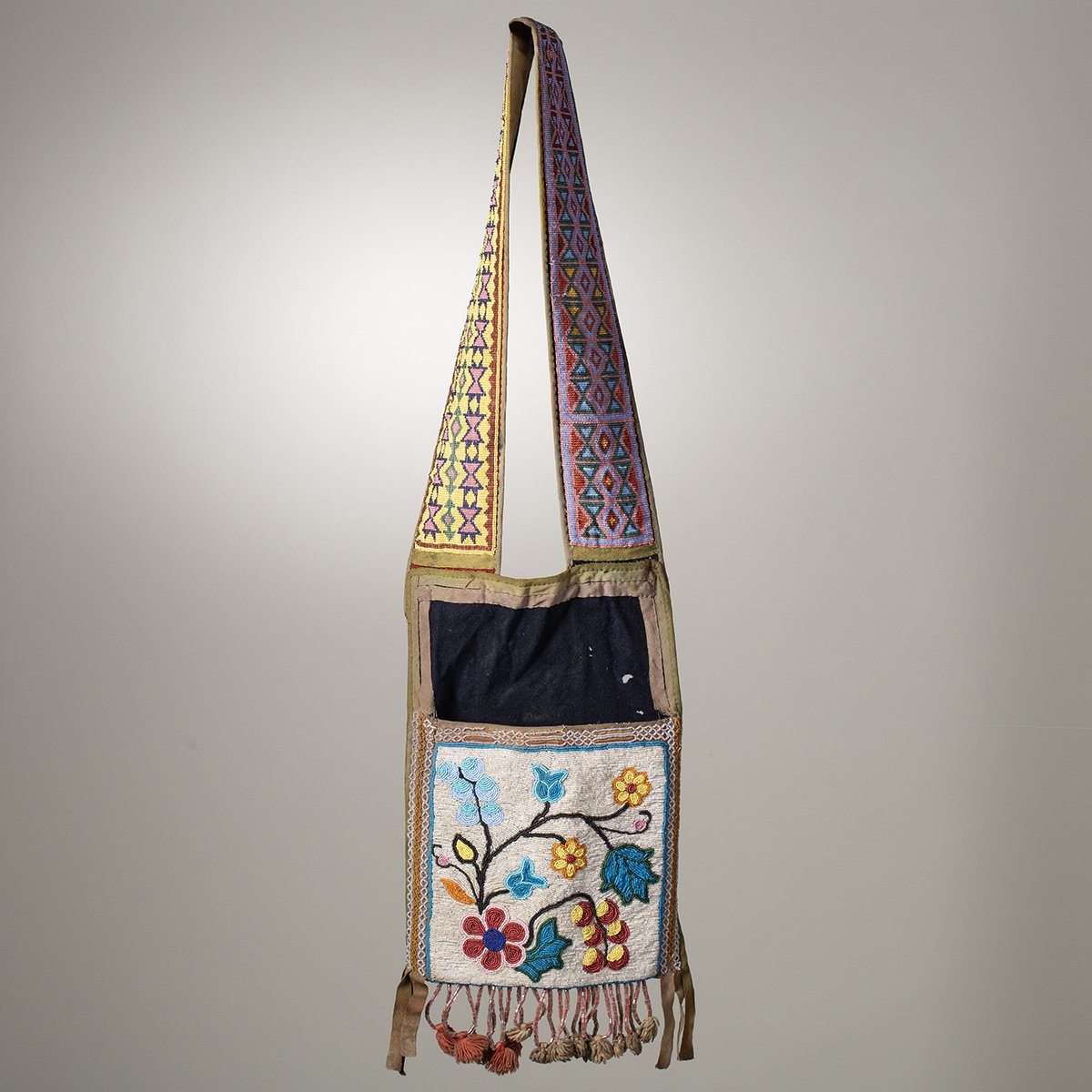 Image 2 of 6
 Image 3 of 6
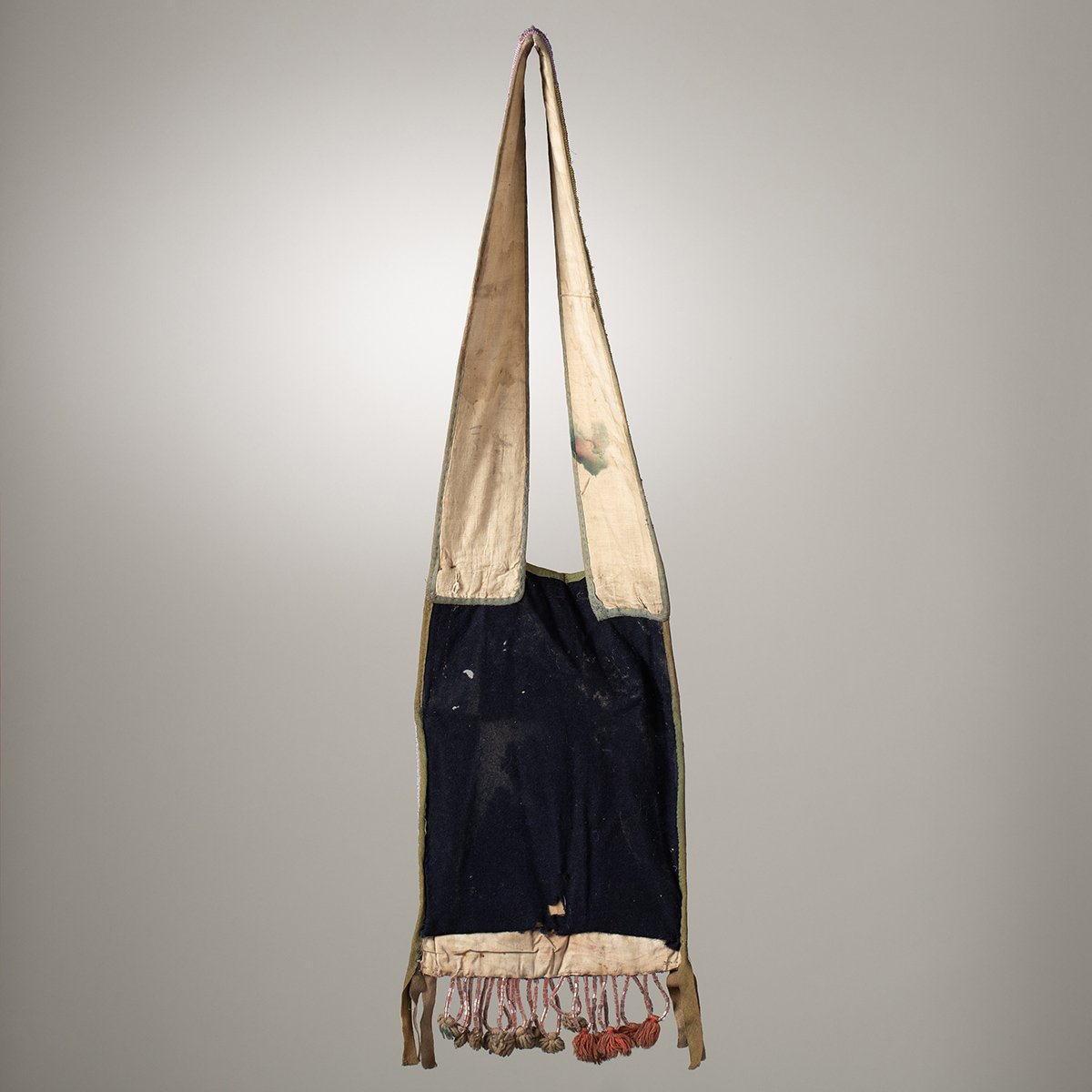 Image 4 of 6
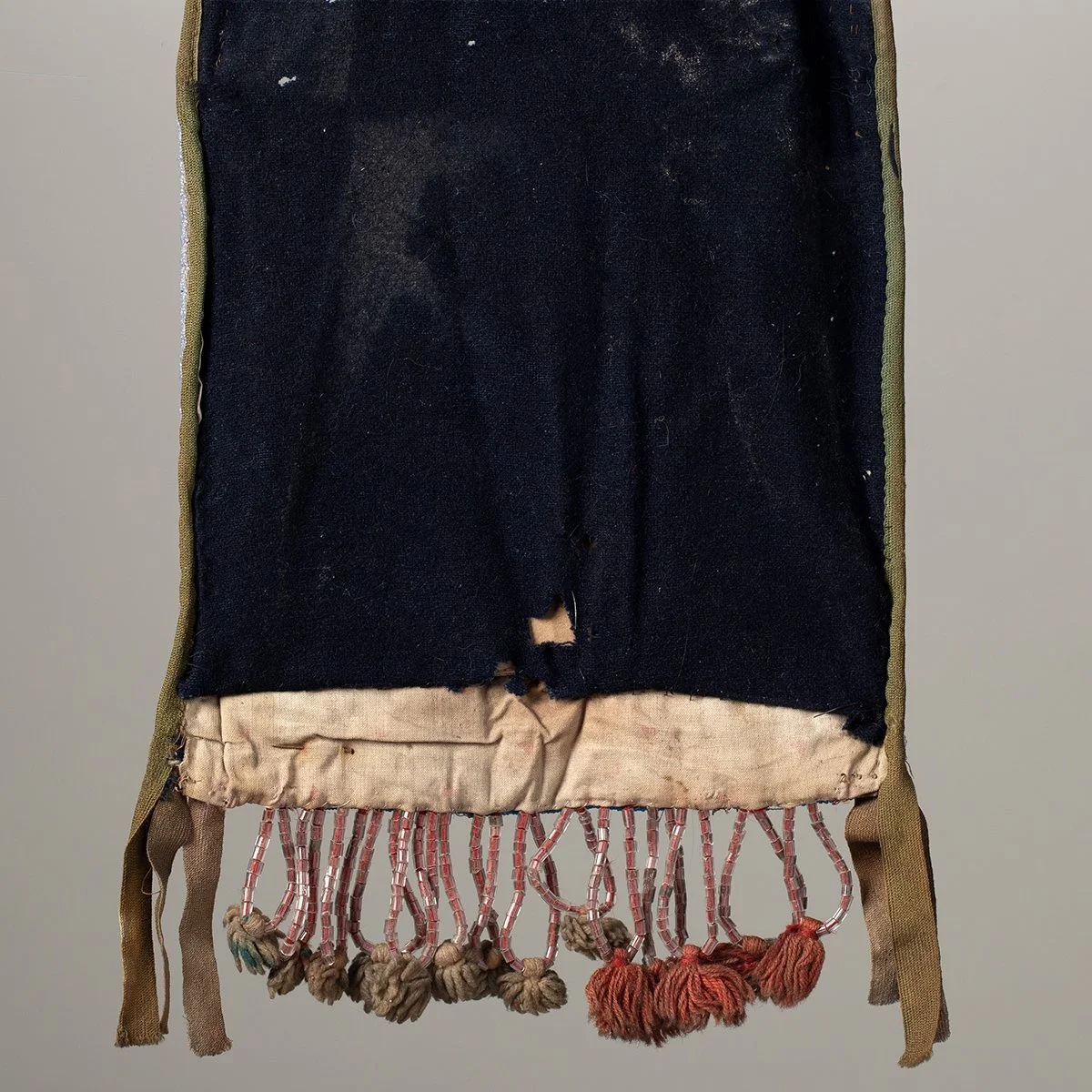 Image 5 of 6
 Image 6 of 6