

 Image 1 of 5
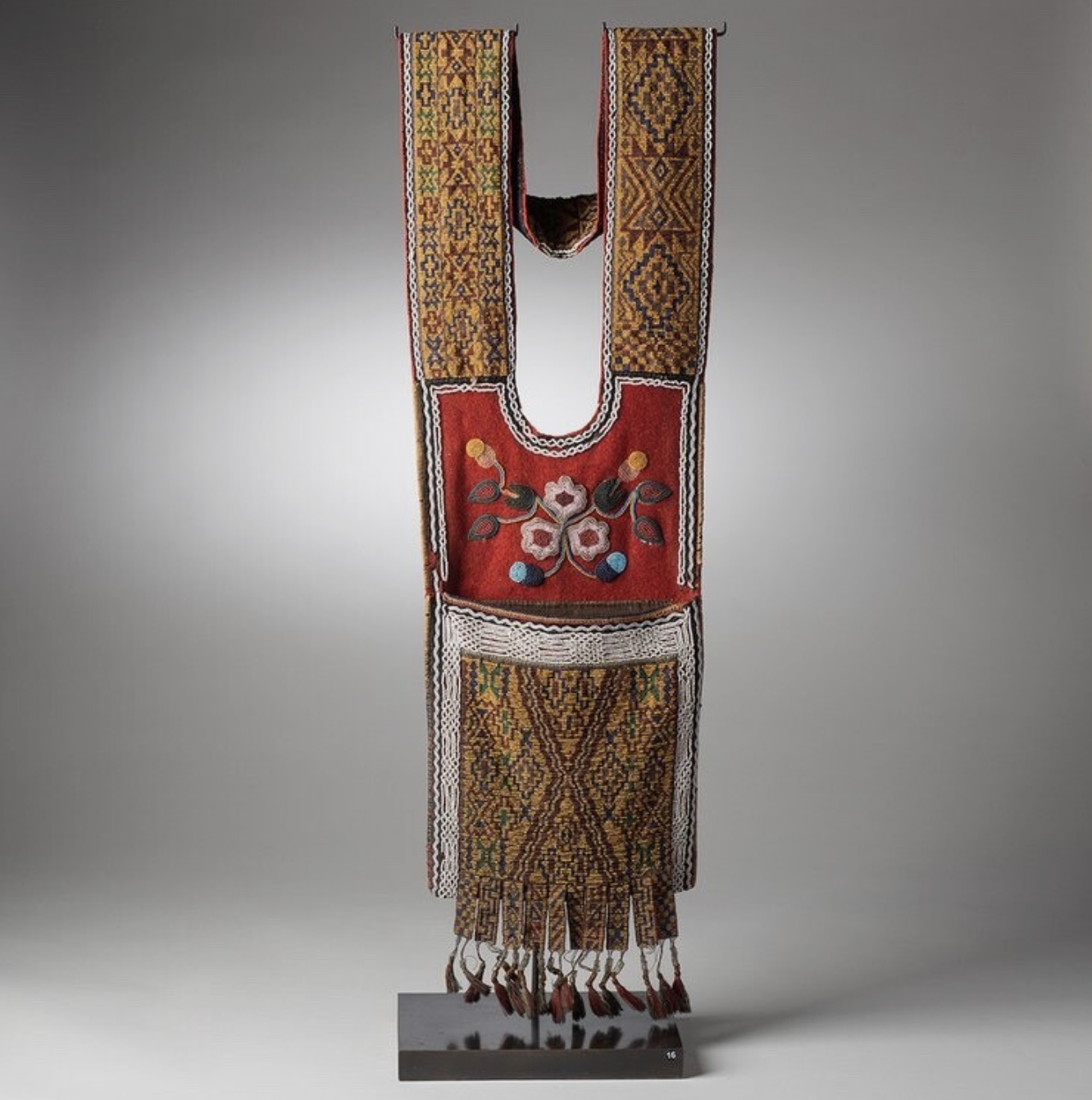 Image 2 of 5
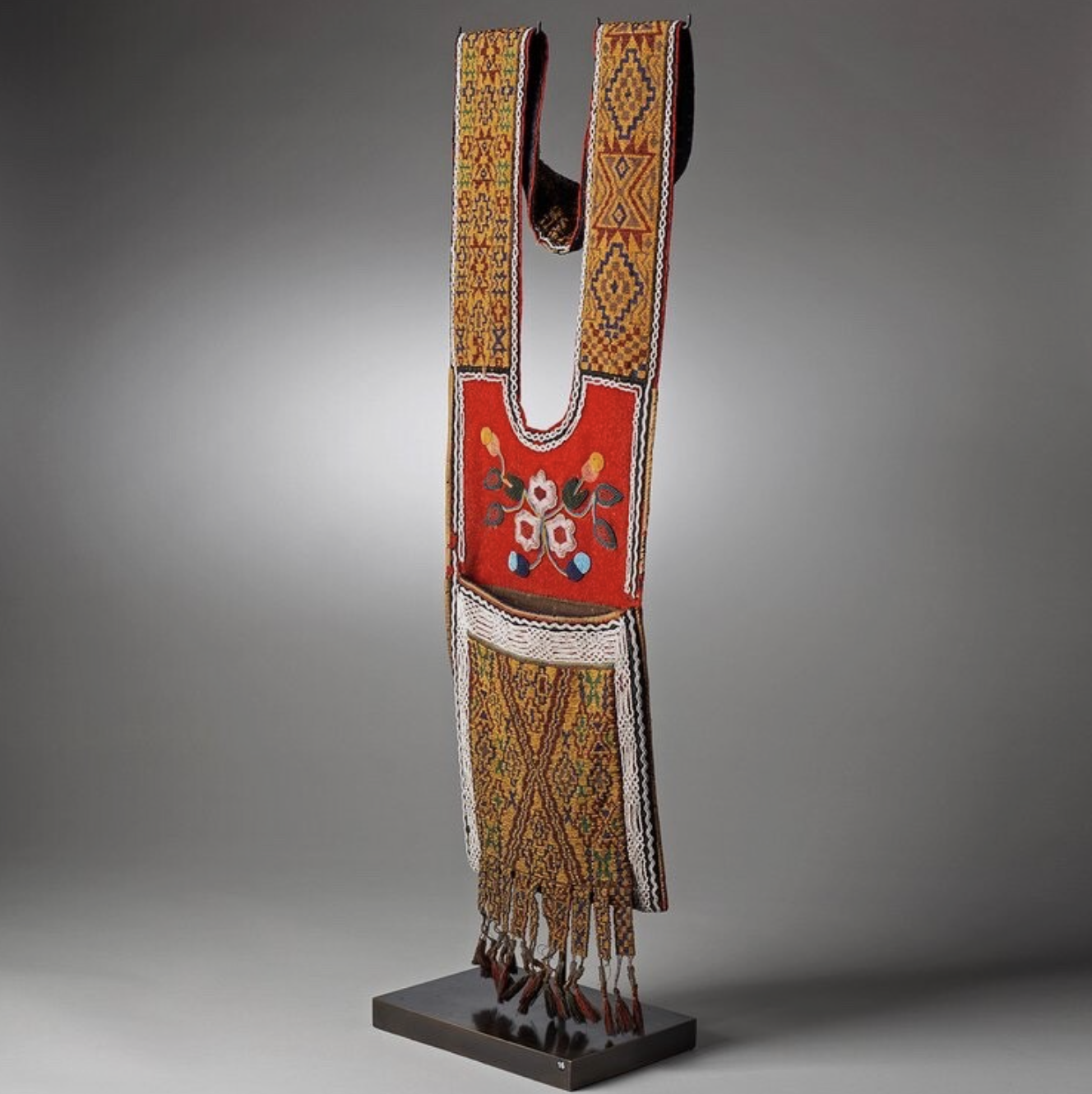 Image 3 of 5
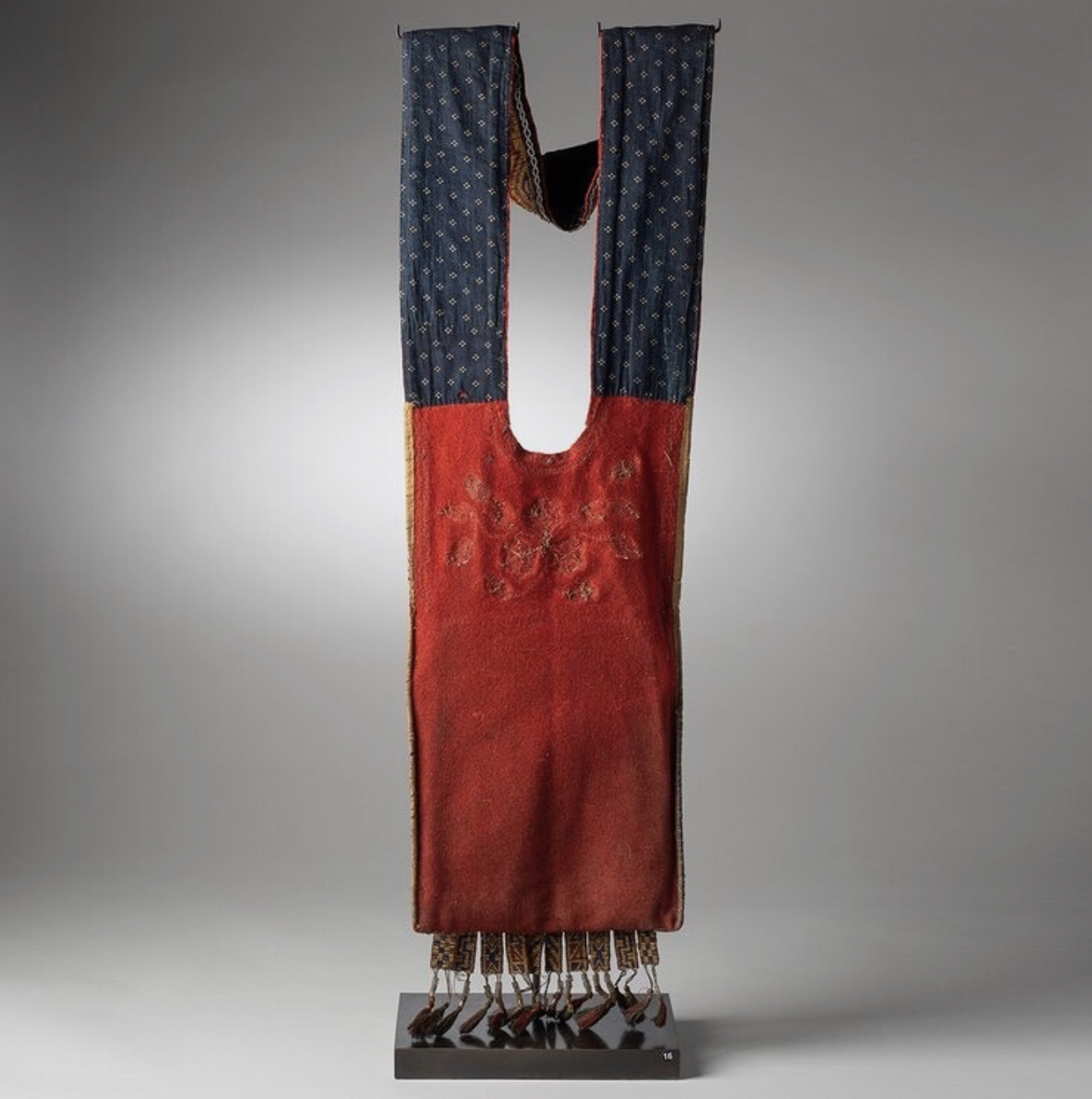 Image 4 of 5
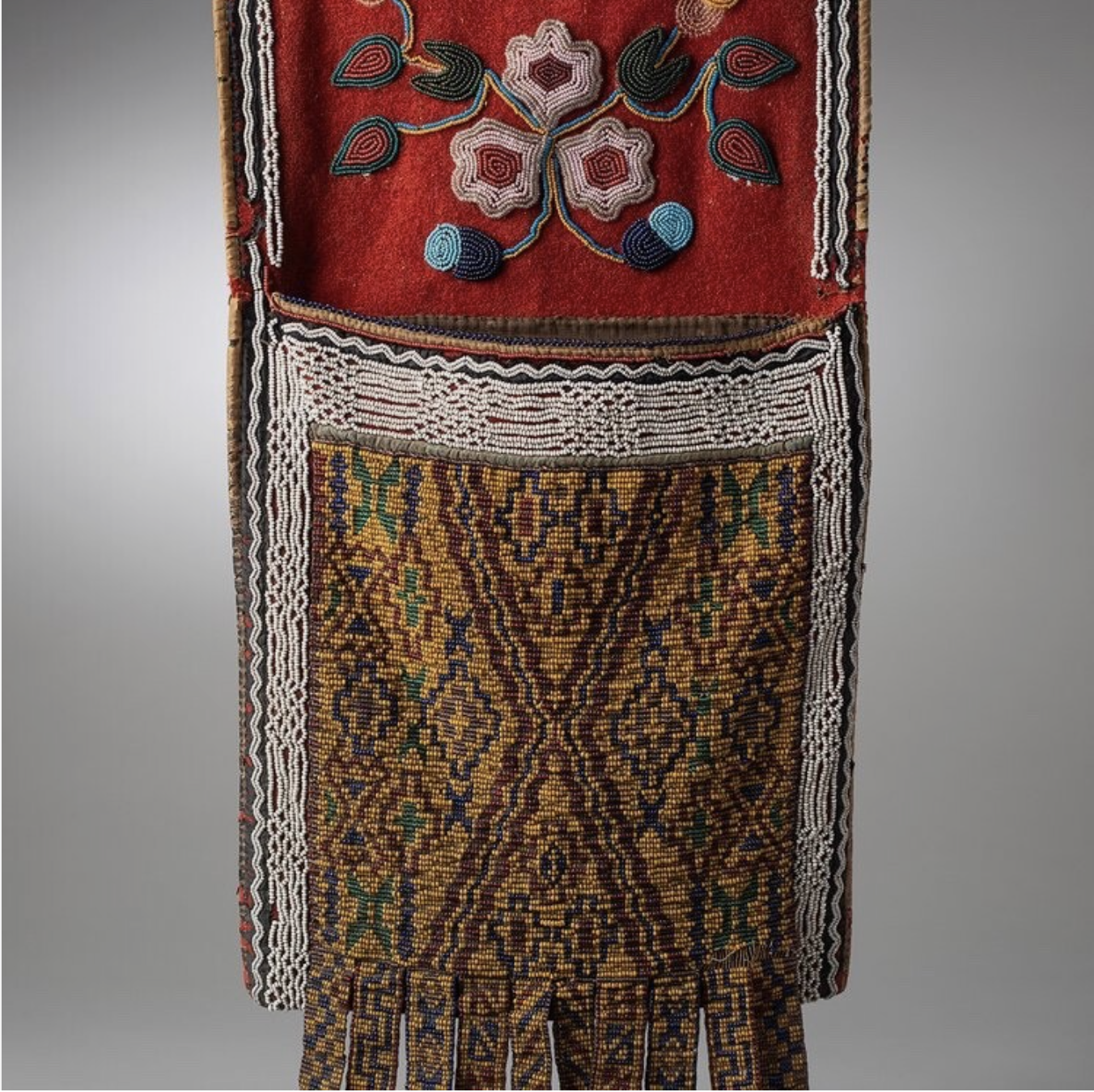 Image 5 of 5
Ojibwe, Great Lakes region
Circa 1860
Glass beads on trade cloth with wool and leather elements
Height 37½ in. (95.3 cm), width 8¾ in. (22.2 cm)
Provenance: Provincial English Auction; correspondence from the British Museum included
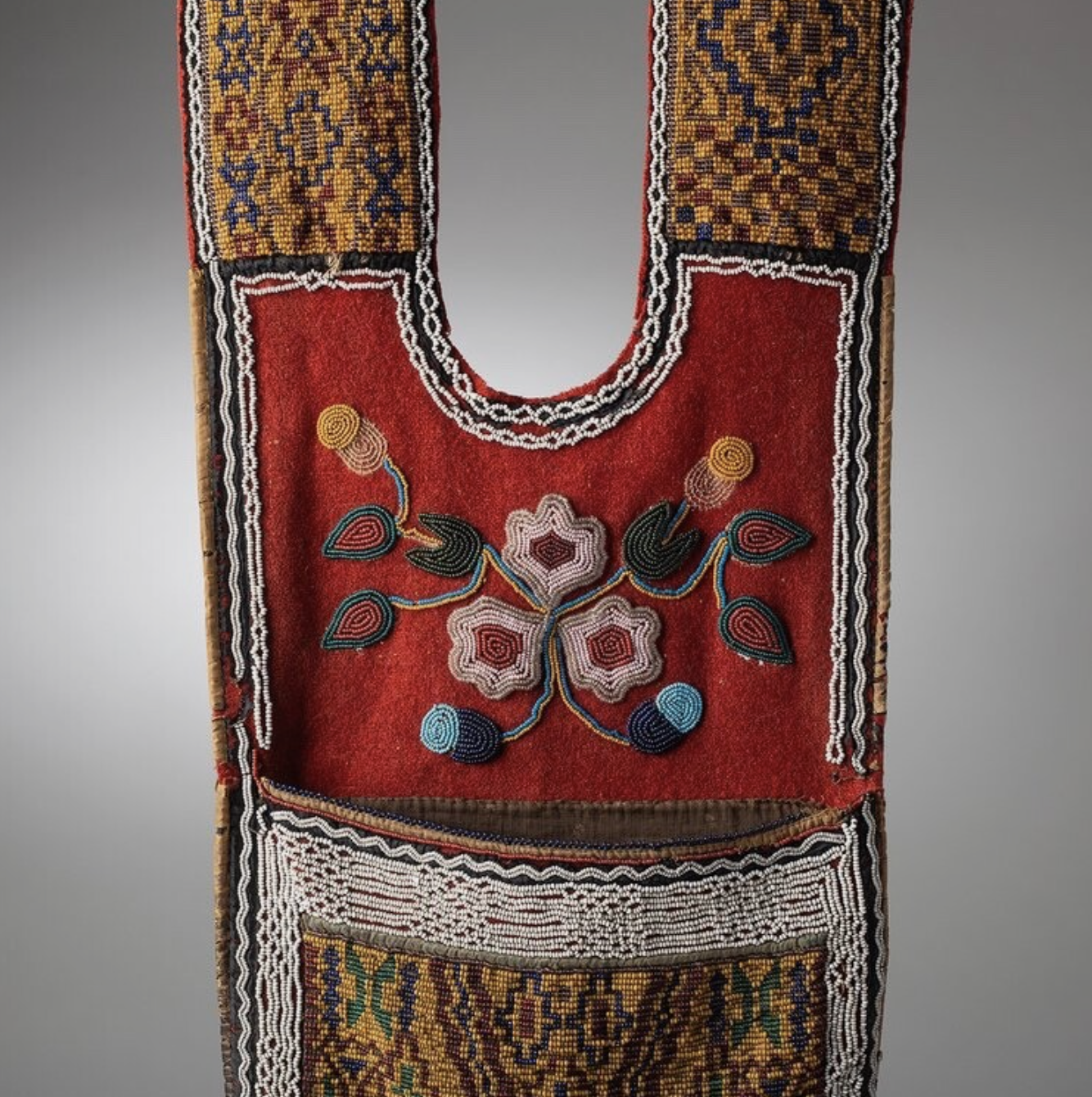
Bandolier bags were prestige objects worn diagonally across the shoulder by both men and women at ceremonial occasions, and among the most technically demanding beaded objects produced by Great Lakes peoples. This child's example follows the standard form of a large beaded pouch with shoulder strap, scaled for a young wearer, making it an uncommon survival within a form that is itself relatively scarce in child's sizes. The beaded design combines dense geometric patterning on the strap with floral and foliate elements on the bag panel, rendered in the spot stitch technique characteristic of Ojibwe work from the mid nineteenth century.
Great Lakes beaded bandolier bags of this period represent the full flowering of a tradition that emerged in the early nineteenth century as glass trade beads replaced porcupine quill decoration, with floral design vocabularies becoming dominant by mid century. The construction uses trade cloth in red as the ground material, with wool and leather elements consistent with materials available in the Great Lakes region during this period. The included British Museum correspondence adds an unusual layer of documentary interest to the piece and suggests the bag entered European scholarly attention at some point in its collecting history.
We ship free anywhere in the world, fully insured, packed by hand.
Ojibwe, Great Lakes region
Circa 1860
Glass beads on trade cloth with wool and leather elements
Height 37½ in. (95.3 cm), width 8¾ in. (22.2 cm)
Provenance: Provincial English Auction; correspondence from the British Museum included
Bandolier bags were prestige objects worn diagonally across the shoulder by both men and women at ceremonial occasions, and among the most technically demanding beaded objects produced by Great Lakes peoples. This child's example follows the standard form of a large beaded pouch with shoulder strap, scaled for a young wearer, making it an uncommon survival within a form that is itself relatively scarce in child's sizes. The beaded design combines dense geometric patterning on the strap with floral and foliate elements on the bag panel, rendered in the spot stitch technique characteristic of Ojibwe work from the mid nineteenth century.
Great Lakes beaded bandolier bags of this period represent the full flowering of a tradition that emerged in the early nineteenth century as glass trade beads replaced porcupine quill decoration, with floral design vocabularies becoming dominant by mid century. The construction uses trade cloth in red as the ground material, with wool and leather elements consistent with materials available in the Great Lakes region during this period. The included British Museum correspondence adds an unusual layer of documentary interest to the piece and suggests the bag entered European scholarly attention at some point in its collecting history.
We ship free anywhere in the world, fully insured, packed by hand.