

 Image 1 of 5
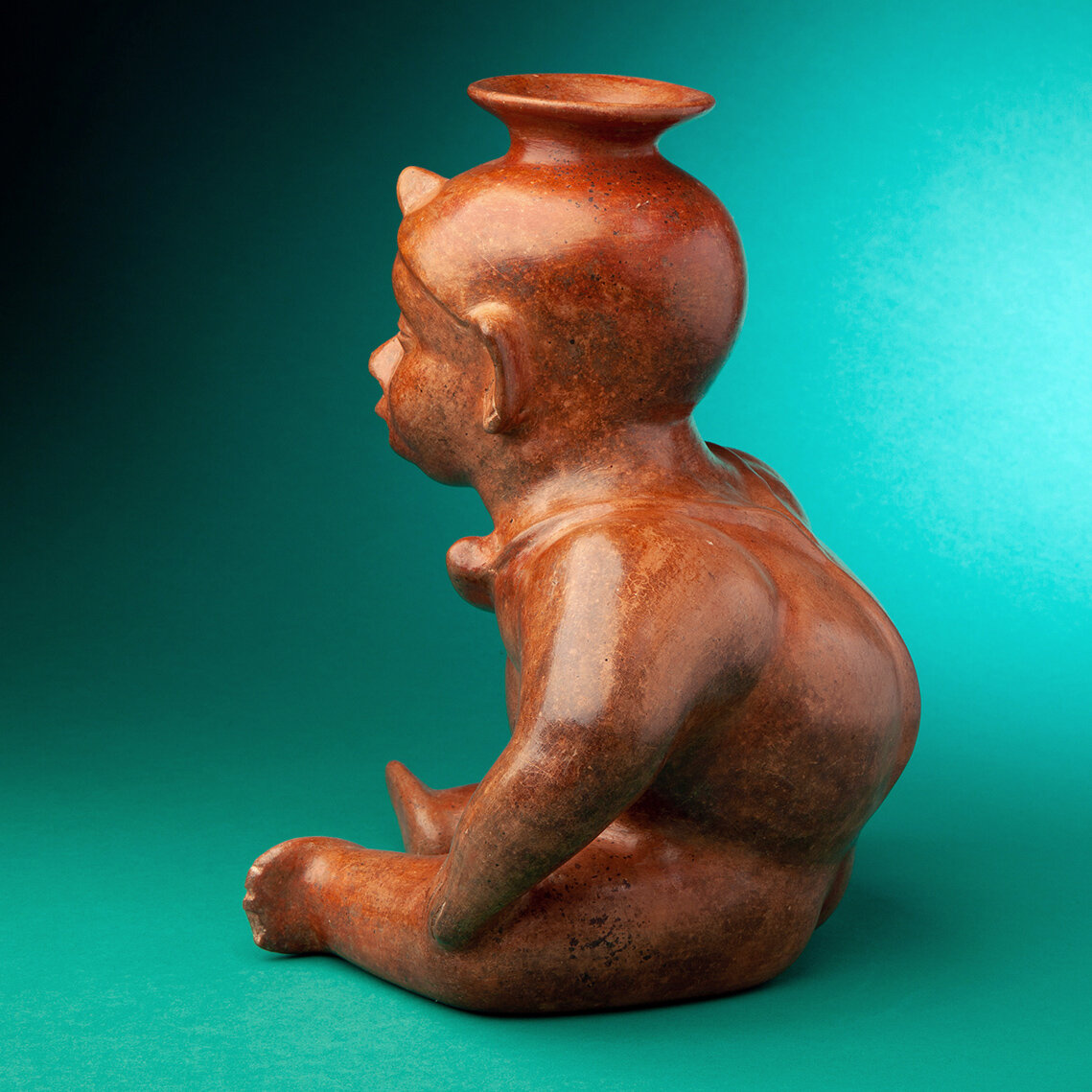 Image 2 of 5
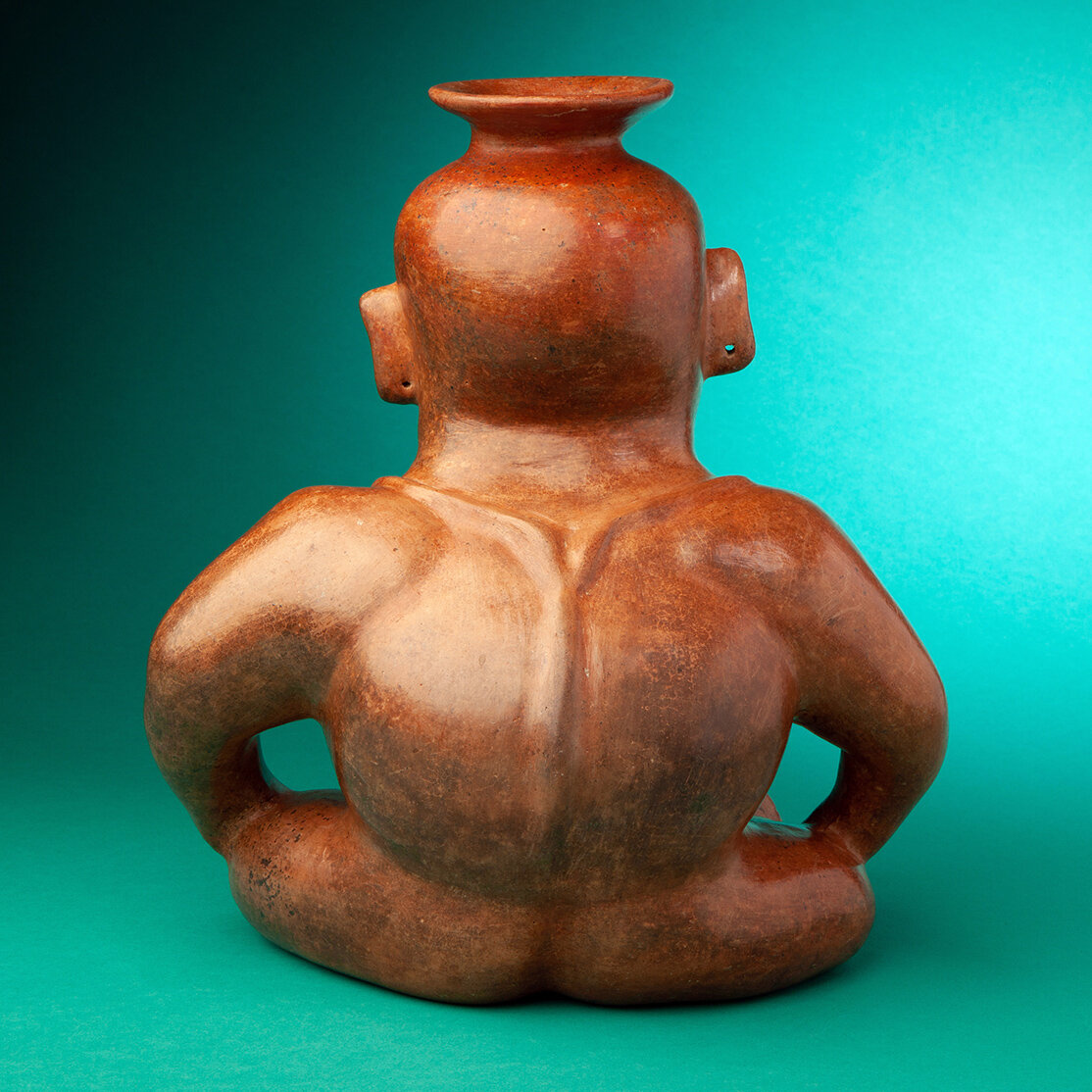 Image 3 of 5
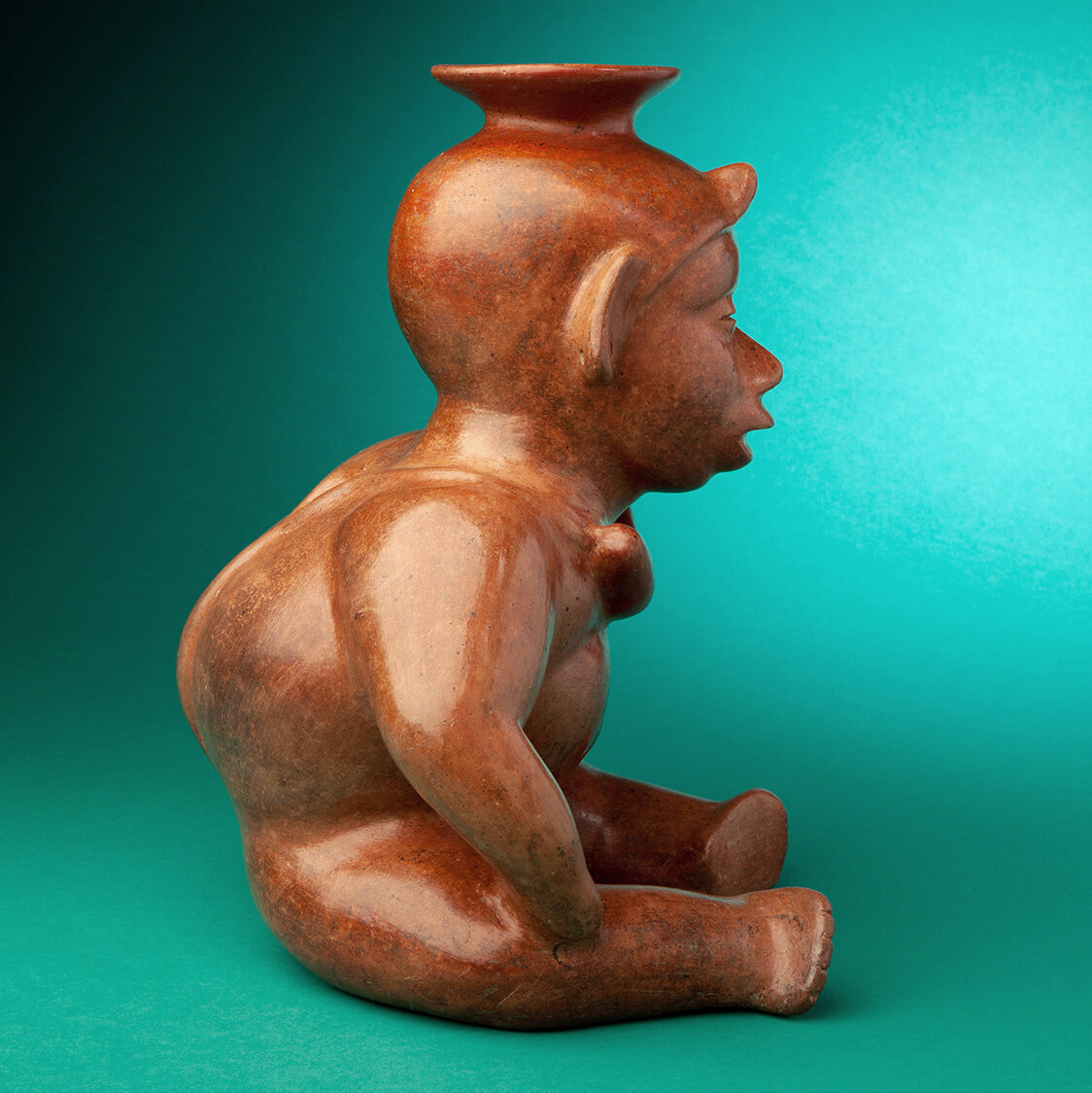 Image 4 of 5
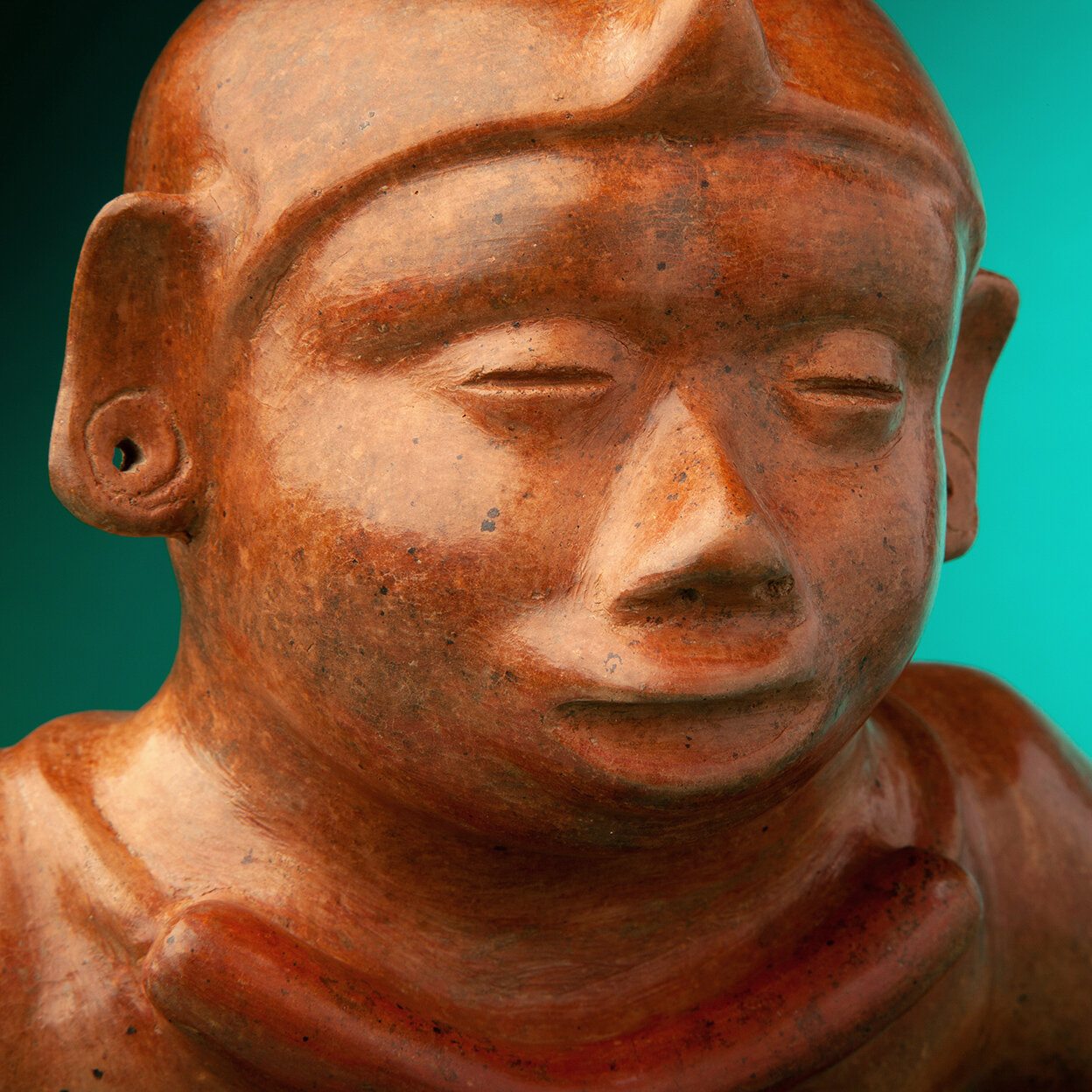 Image 5 of 5
Colima (Comala style)
West Mexico
100 BC–250 AD
Ceramic
Height 11.8"
Provenance: Earl Stendahl, Los Angeles, 1960s
This Colima Comala-style hunchback vessel depicts a seated figure with a pronounced dorsal hump clearly visible from the back, hands resting at the hips, and a globular vessel mouth rising from the top of the head with a flared rim. The face in profile shows a broad forehead, defined nose, and small ear, with the head merging into the rounded vessel body above, and small square ear ornaments are visible at either side of the head from the rear. The red-brown burnished surface shows mottled darker tones across the back and lower body.
Hunchback figures appear across several ancient Mesoamerican ceramic traditions and have been interpreted as representations of individuals with physical deformities who held ritual or shamanic roles in pre-Columbian society. The Comala type within the Colima tradition is distinguished by its high-quality burnished surfaces and the smooth, continuous treatment of volume. A comparable example is in the collection of the Art Institute of Chicago, and the piece comes from the inventory of Earl Stendahl of Los Angeles.
We ship free anywhere in the world, fully insured, packed by hand.
Colima (Comala style)
West Mexico
100 BC–250 AD
Ceramic
Height 11.8"
Provenance: Earl Stendahl, Los Angeles, 1960s
This Colima Comala-style hunchback vessel depicts a seated figure with a pronounced dorsal hump clearly visible from the back, hands resting at the hips, and a globular vessel mouth rising from the top of the head with a flared rim. The face in profile shows a broad forehead, defined nose, and small ear, with the head merging into the rounded vessel body above, and small square ear ornaments are visible at either side of the head from the rear. The red-brown burnished surface shows mottled darker tones across the back and lower body.
Hunchback figures appear across several ancient Mesoamerican ceramic traditions and have been interpreted as representations of individuals with physical deformities who held ritual or shamanic roles in pre-Columbian society. The Comala type within the Colima tradition is distinguished by its high-quality burnished surfaces and the smooth, continuous treatment of volume. A comparable example is in the collection of the Art Institute of Chicago, and the piece comes from the inventory of Earl Stendahl of Los Angeles.
We ship free anywhere in the world, fully insured, packed by hand.