Polychrome glazed ceramic
Late 16th century
Sizes approximately 4 1/4" to 10"
Provenance: Fortuna Arts, New York, NY
This group of three Ottoman Damascus tiles displays the polychrome floral and foliate decoration characteristic of late sixteenth-century Syrian tilework produced under Ottoman patronage. Two tiles are painted in cobalt, turquoise, and yellow on a white ground with scrolling floral motifs and geometric border elements; the third is decorated in cobalt blue on white with densely interlaced arabesque foliage. Tiles of this type and design are closely related to examples documented on the Dome of the Rock in Jerusalem, retiled on the instructions of Sultan Suleiman the Magnificent around 1545, and on several buildings in Aleppo including the Umayyad Mosque and the Khosrowiyya Mosque.
The group is published in relation to comparable examples in Arthur Milner, Damascus Tiles, Munich, London, and New York, 2015, pp. 182, 205, figs. 4.74, 4.85, and 4.105. Damascus tiles of this period were produced in the kilns of Iznik and Damascus and distributed across the Ottoman world for use in mosques, public buildings, and private residences. The three tiles are offered together as a group.
We ship free anywhere in the world, fully insured, packed by hand.
Polychrome glazed ceramic
Late 16th century
Sizes approximately 4 1/4" to 10"
Provenance: Fortuna Arts, New York, NY
This group of three Ottoman Damascus tiles displays the polychrome floral and foliate decoration characteristic of late sixteenth-century Syrian tilework produced under Ottoman patronage. Two tiles are painted in cobalt, turquoise, and yellow on a white ground with scrolling floral motifs and geometric border elements; the third is decorated in cobalt blue on white with densely interlaced arabesque foliage. Tiles of this type and design are closely related to examples documented on the Dome of the Rock in Jerusalem, retiled on the instructions of Sultan Suleiman the Magnificent around 1545, and on several buildings in Aleppo including the Umayyad Mosque and the Khosrowiyya Mosque.
The group is published in relation to comparable examples in Arthur Milner, Damascus Tiles, Munich, London, and New York, 2015, pp. 182, 205, figs. 4.74, 4.85, and 4.105. Damascus tiles of this period were produced in the kilns of Iznik and Damascus and distributed across the Ottoman world for use in mosques, public buildings, and private residences. The three tiles are offered together as a group.
We ship free anywhere in the world, fully insured, packed by hand.


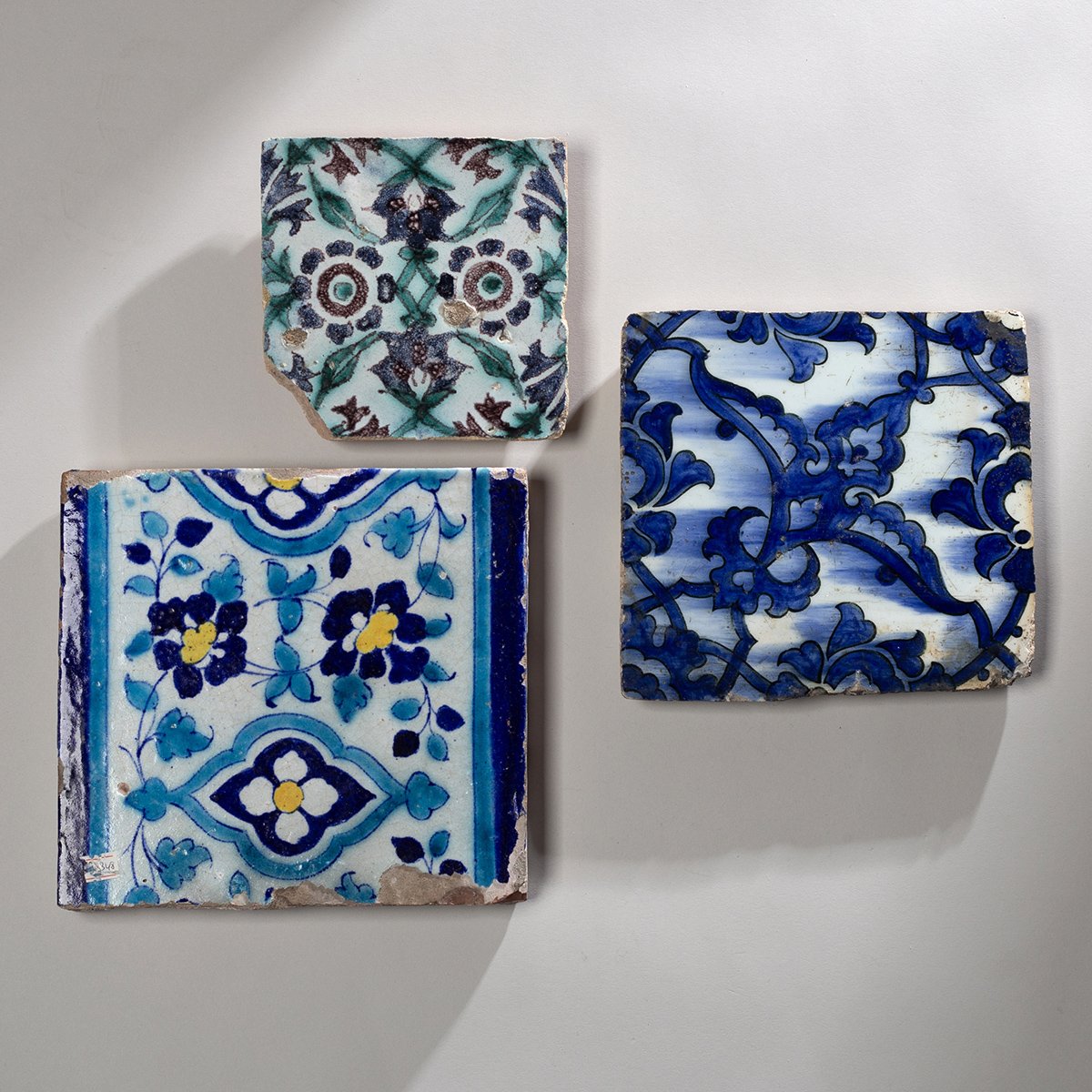 Image 1 of 8
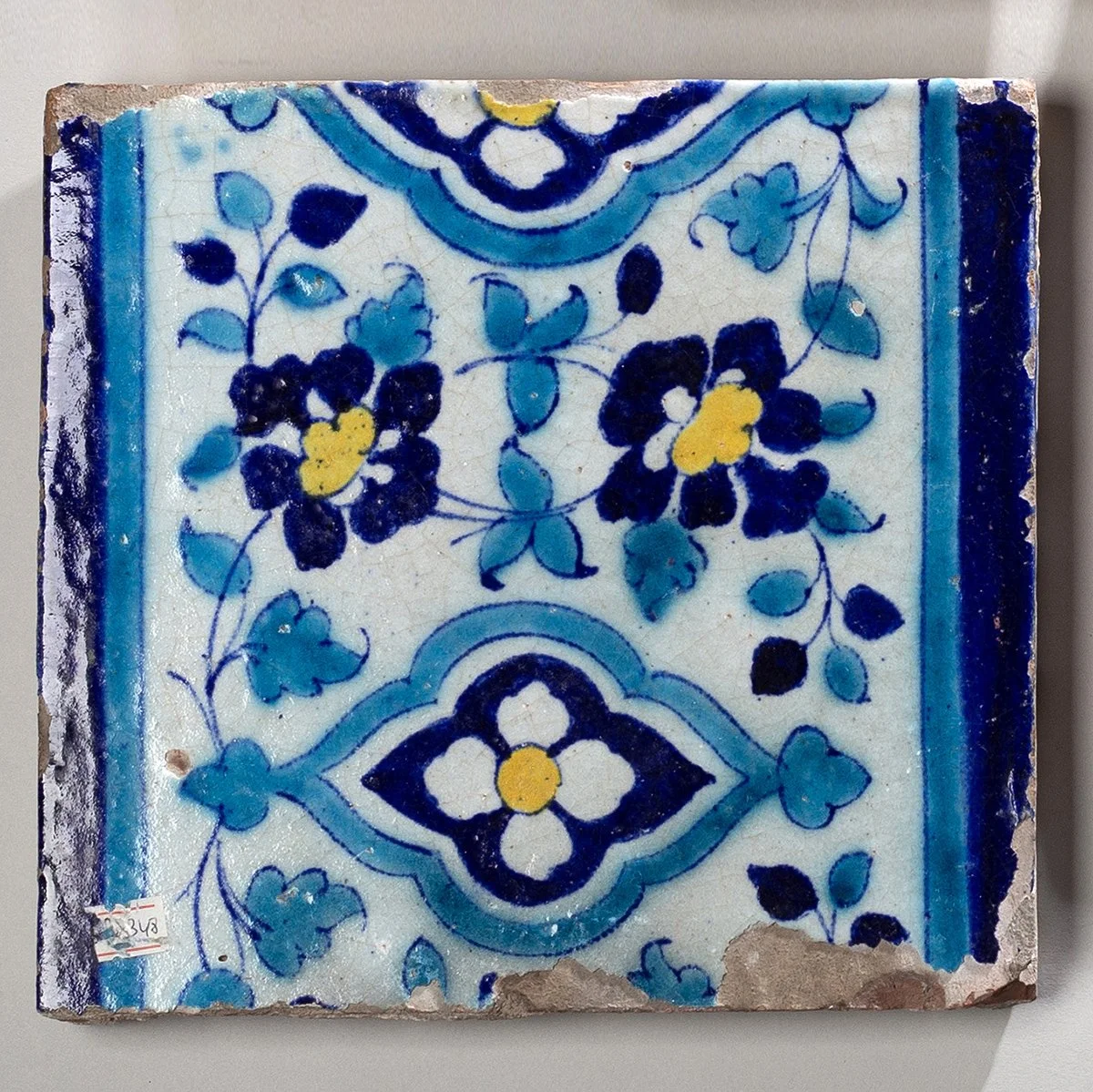 Image 2 of 8
 Image 3 of 8
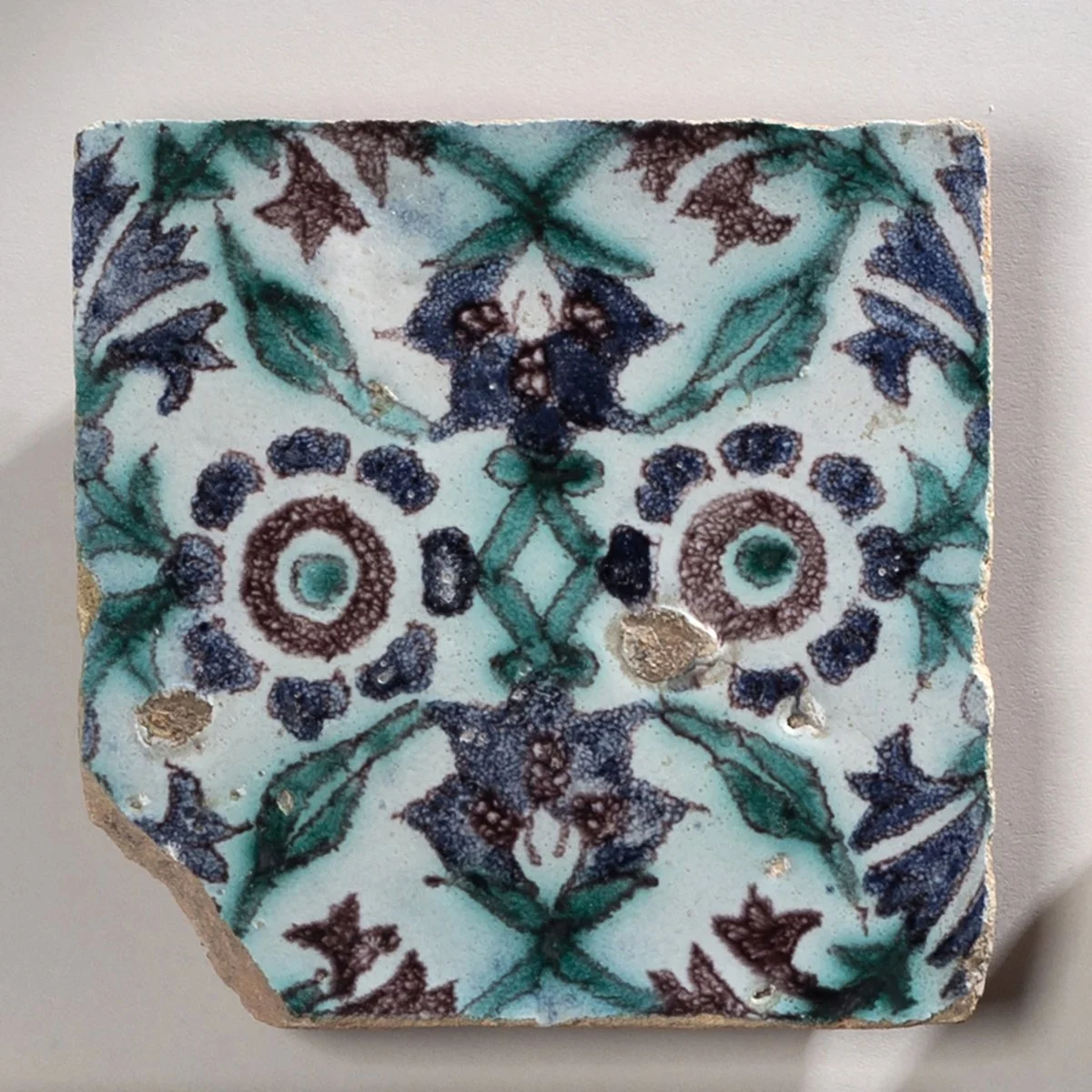 Image 4 of 8
 Image 5 of 8
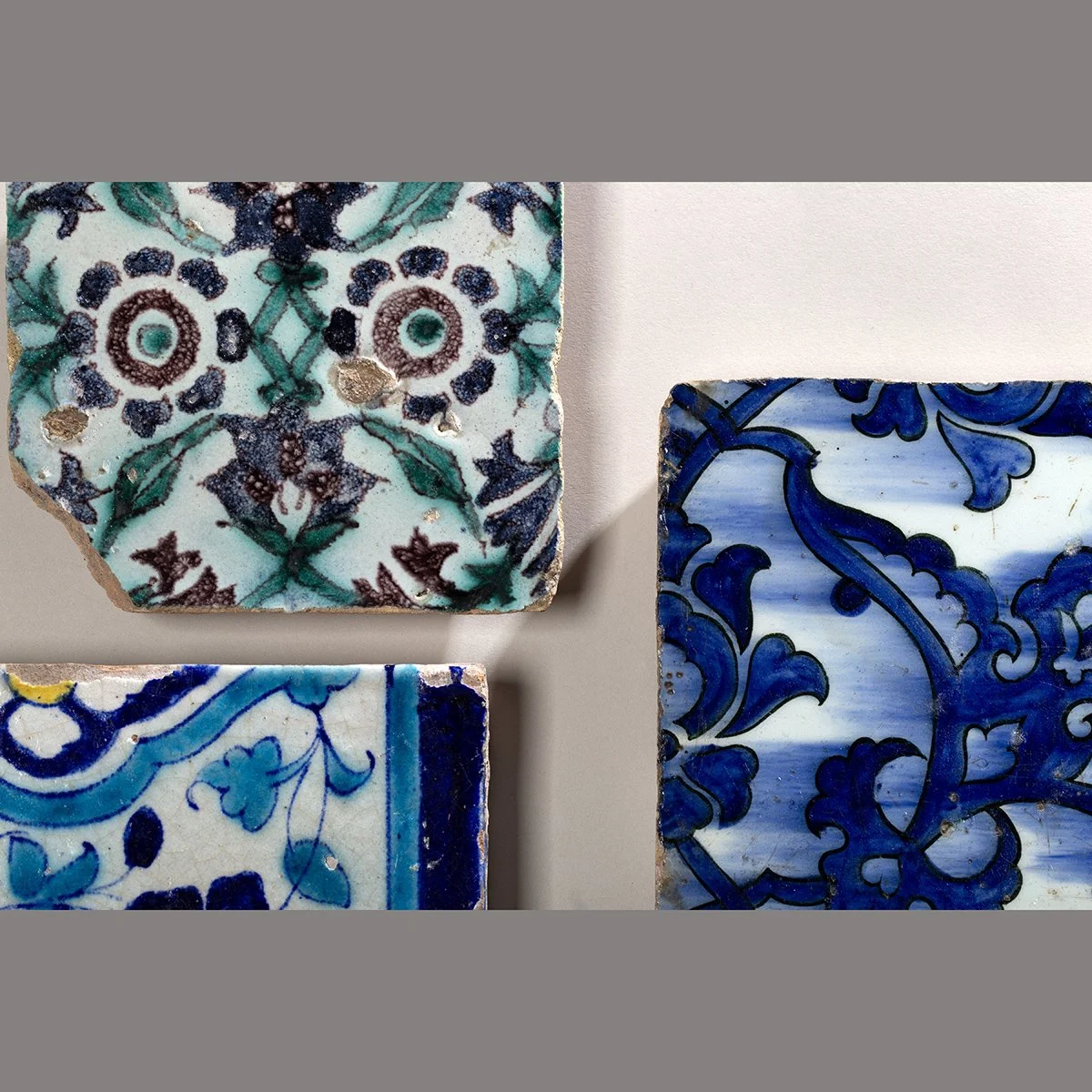 Image 6 of 8
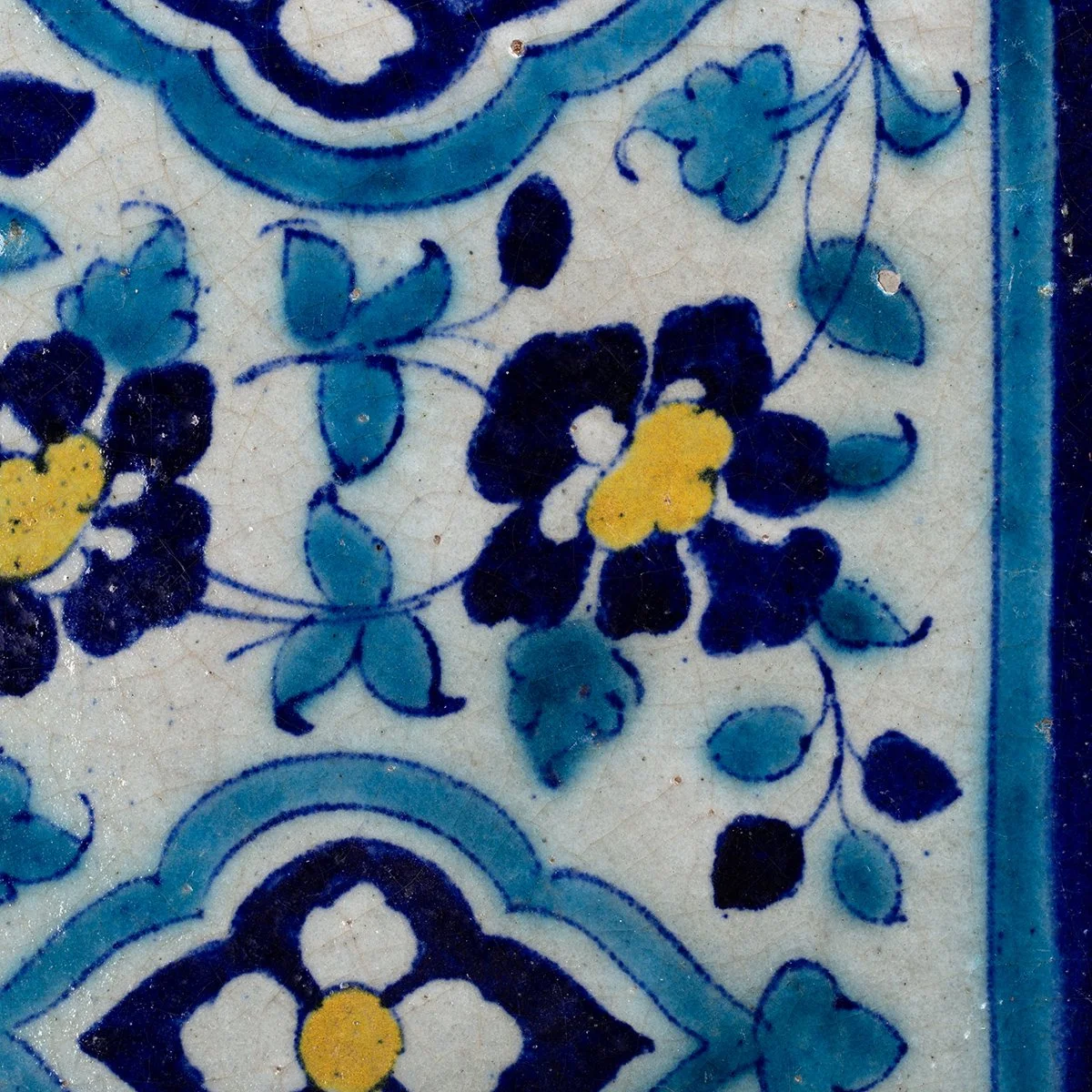 Image 7 of 8
 Image 8 of 8