

 Image 1 of 3
 Image 2 of 3
 Image 3 of 3
Attributed to the santero known as Molleno
New Mexico
1830s
Water-based paint and gesso on pine panel
9.75 x 7 inches (24.8 x 17.8 cm)
Private collection, Tucson, Arizona
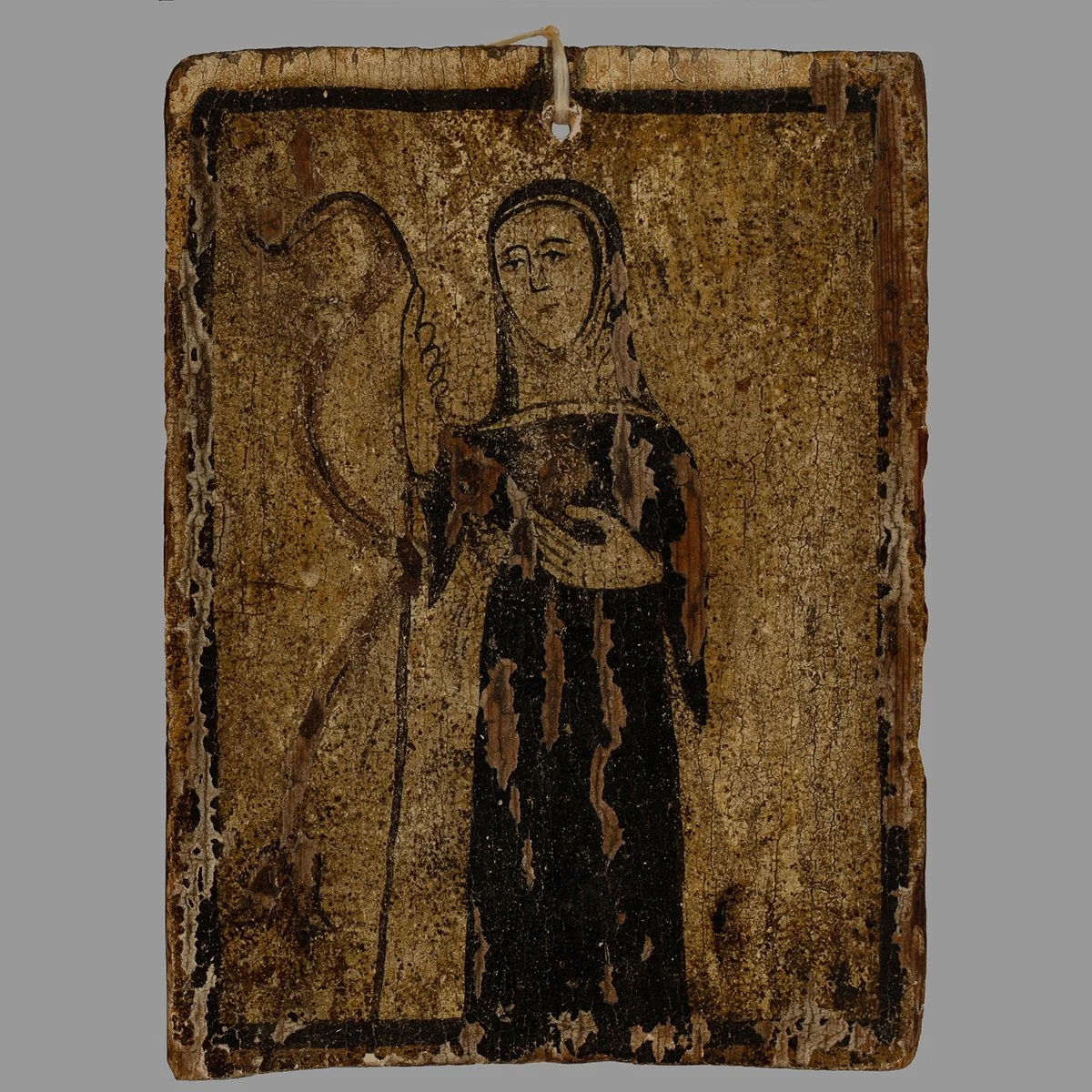
The Virgin stands crowned on a bank of dark cloud, holding the Christ Child on her left arm against a body of yellow drapery, her red gown drawn tight at the waist and set within a red bordered panel. The image follows Nuestra Señora del Refugio, Our Lady of Refuge, a Marian subject widely painted in the New Mexican santero tradition for home and chapel devotion. The yellow drapery is unusual for early New Mexican retablo painting, where the color appears less often, and it gives this small panel a strong presence.
The retablo is attributed to the santero known as Molleno, one of the most recognizable painters working in northern New Mexico in the early nineteenth century, sometimes called the Chile Painter for the curling chile-like forms in his drapery. His true name is not recorded, and his work is known through the body of hand painted panels made for the region's homes, chapels, and village churches. Panels associated with his hand are held in institutional collections of Spanish colonial and New Mexican devotional art.
We ship free anywhere in the world, fully insured, packed by hand.
Attributed to the santero known as Molleno
New Mexico
1830s
Water-based paint and gesso on pine panel
9.75 x 7 inches (24.8 x 17.8 cm)
Private collection, Tucson, Arizona
The Virgin stands crowned on a bank of dark cloud, holding the Christ Child on her left arm against a body of yellow drapery, her red gown drawn tight at the waist and set within a red bordered panel. The image follows Nuestra Señora del Refugio, Our Lady of Refuge, a Marian subject widely painted in the New Mexican santero tradition for home and chapel devotion. The yellow drapery is unusual for early New Mexican retablo painting, where the color appears less often, and it gives this small panel a strong presence.
The retablo is attributed to the santero known as Molleno, one of the most recognizable painters working in northern New Mexico in the early nineteenth century, sometimes called the Chile Painter for the curling chile-like forms in his drapery. His true name is not recorded, and his work is known through the body of hand painted panels made for the region's homes, chapels, and village churches. Panels associated with his hand are held in institutional collections of Spanish colonial and New Mexican devotional art.
We ship free anywhere in the world, fully insured, packed by hand.