Alaska, Inuit
19th century
Walrus ivory, sinew, wood
Oblong: 24 1/2" x 7 1/4" x 6 3/4" (62.2 x 18.4 x 17.1 cm)
Large: 19 3/4" x 11 1/4" x 9" (50.2 x 28.6 x 22.9 cm)
Provenance: Paul and Mary Thiry, Seattle, WA
Bent wood boxes of this type were essential storage and work containers in Inuit domestic life, constructed from a continuous piece of steamed and bent wood with the seam sewn at the back through walrus ivory reinforcements. The covers are held in place by sinew sewn into the back and a tie caught by a walrus ivory band at the front, and the boxes are grooved around the top and lower part for both structural and decorative effect. Handles fashioned from old harpoon heads, tied through holes in the cover, reflect the Inuit practice of repurposing hunting equipment into domestic objects.
This pair represents two distinct forms, an oblong and a larger oval, both constructed with the same sinew-sewn walrus ivory reinforcement technique and grooved decoration consistent with 19th century Inuit production. The ivory spur functioning as a catch on the cover and the harpoon head handle are intact on both pieces, with the dark patina on the wood surfaces indicating long use and age. Provenance traces to Paul and Mary Thiry of Seattle, Washington, and the pair is sold together.
We ship free anywhere in the world, fully insured, packed by hand
Alaska, Inuit
19th century
Walrus ivory, sinew, wood
Oblong: 24 1/2" x 7 1/4" x 6 3/4" (62.2 x 18.4 x 17.1 cm)
Large: 19 3/4" x 11 1/4" x 9" (50.2 x 28.6 x 22.9 cm)
Provenance: Paul and Mary Thiry, Seattle, WA
Bent wood boxes of this type were essential storage and work containers in Inuit domestic life, constructed from a continuous piece of steamed and bent wood with the seam sewn at the back through walrus ivory reinforcements. The covers are held in place by sinew sewn into the back and a tie caught by a walrus ivory band at the front, and the boxes are grooved around the top and lower part for both structural and decorative effect. Handles fashioned from old harpoon heads, tied through holes in the cover, reflect the Inuit practice of repurposing hunting equipment into domestic objects.
This pair represents two distinct forms, an oblong and a larger oval, both constructed with the same sinew-sewn walrus ivory reinforcement technique and grooved decoration consistent with 19th century Inuit production. The ivory spur functioning as a catch on the cover and the harpoon head handle are intact on both pieces, with the dark patina on the wood surfaces indicating long use and age. Provenance traces to Paul and Mary Thiry of Seattle, Washington, and the pair is sold together.
We ship free anywhere in the world, fully insured, packed by hand


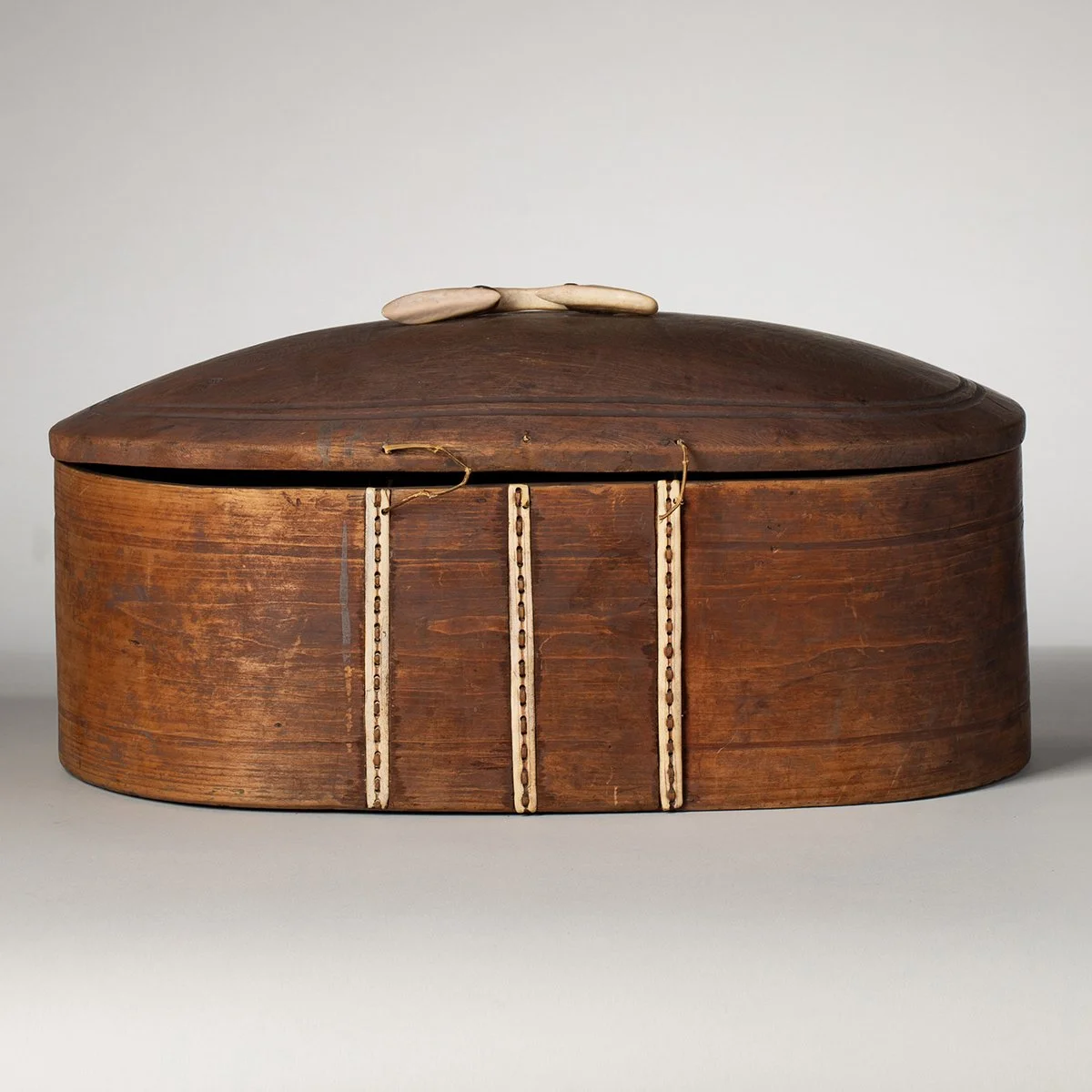 Image 1 of 12
 Image 2 of 12
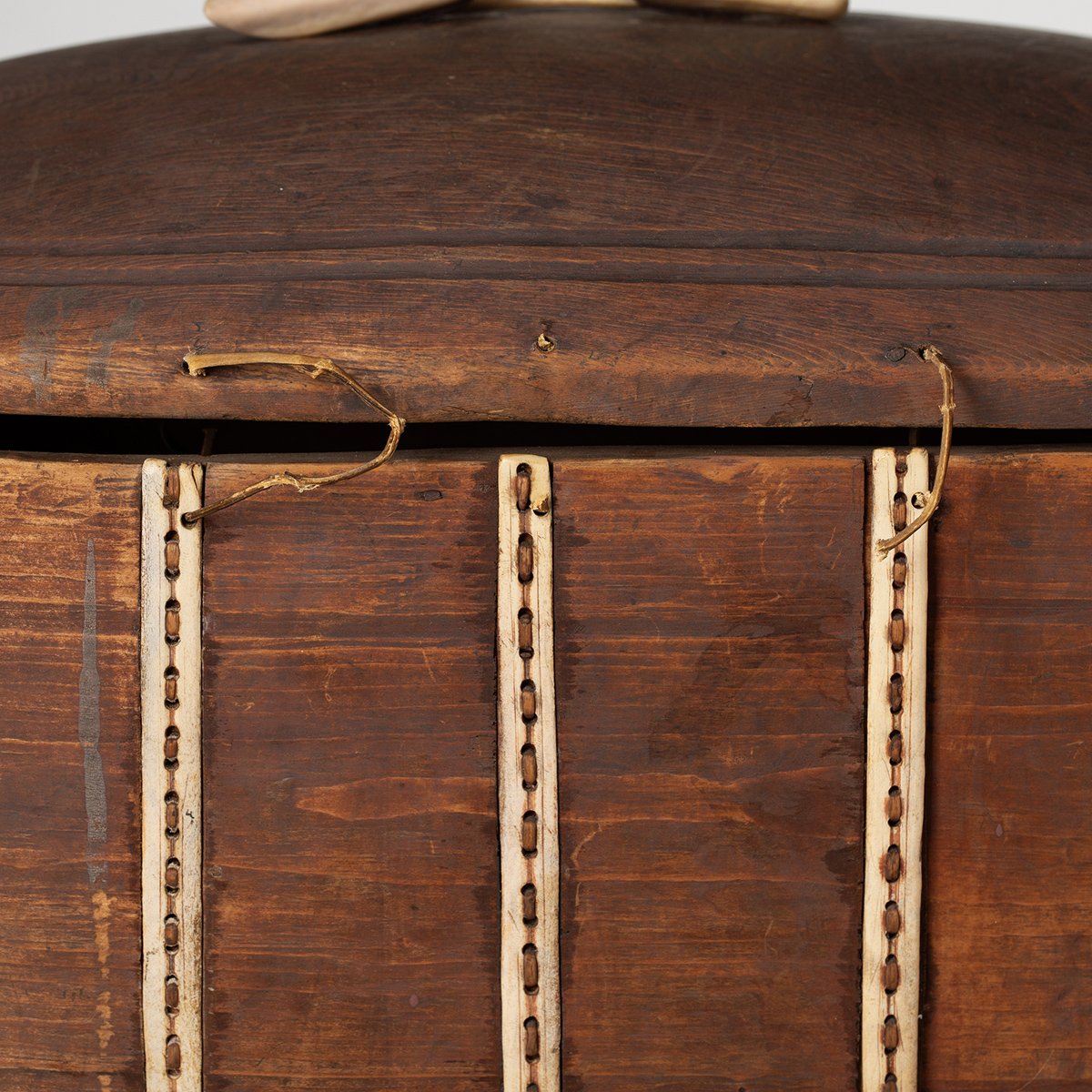 Image 3 of 12
 Image 4 of 12
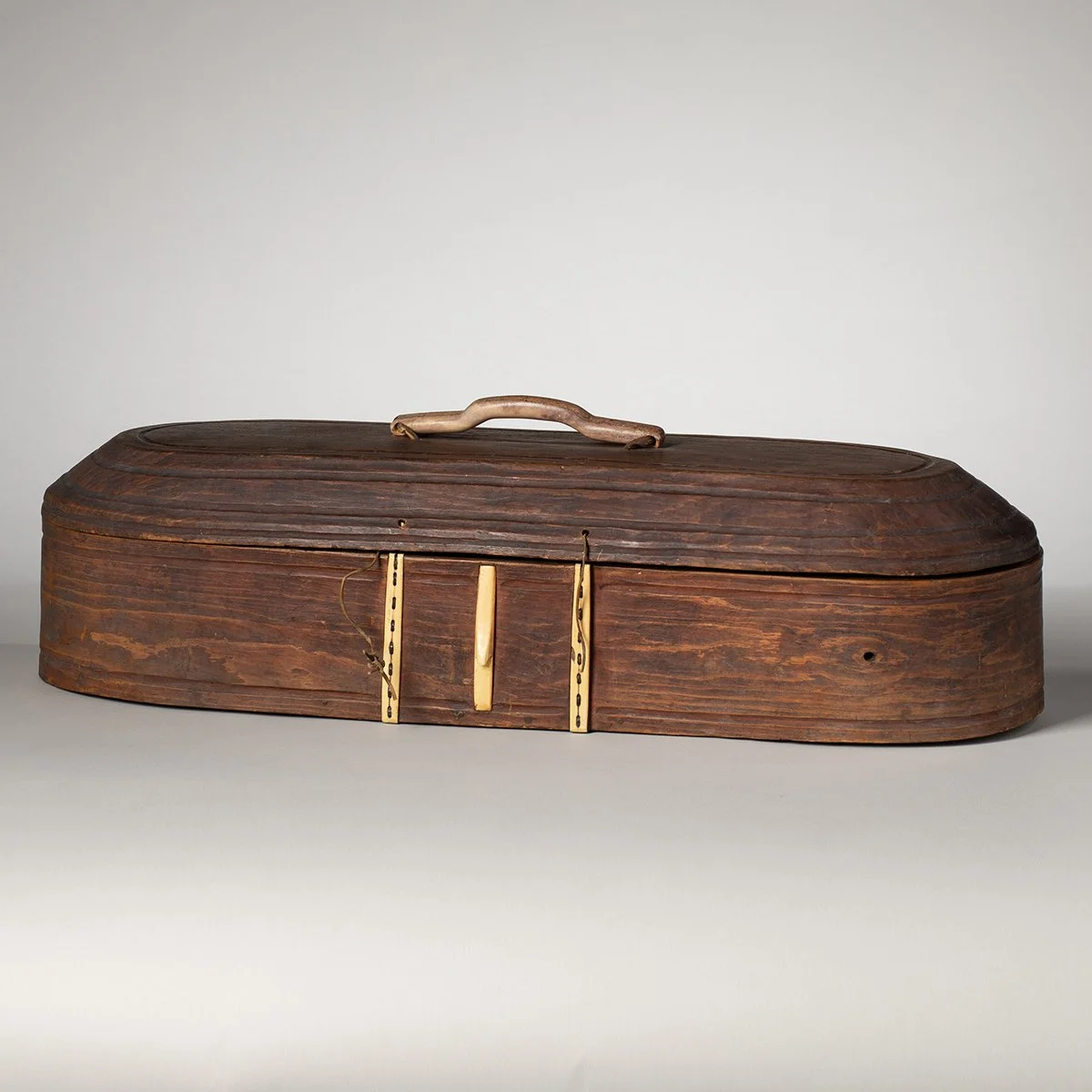 Image 5 of 12
 Image 6 of 12
 Image 7 of 12
 Image 8 of 12
 Image 9 of 12
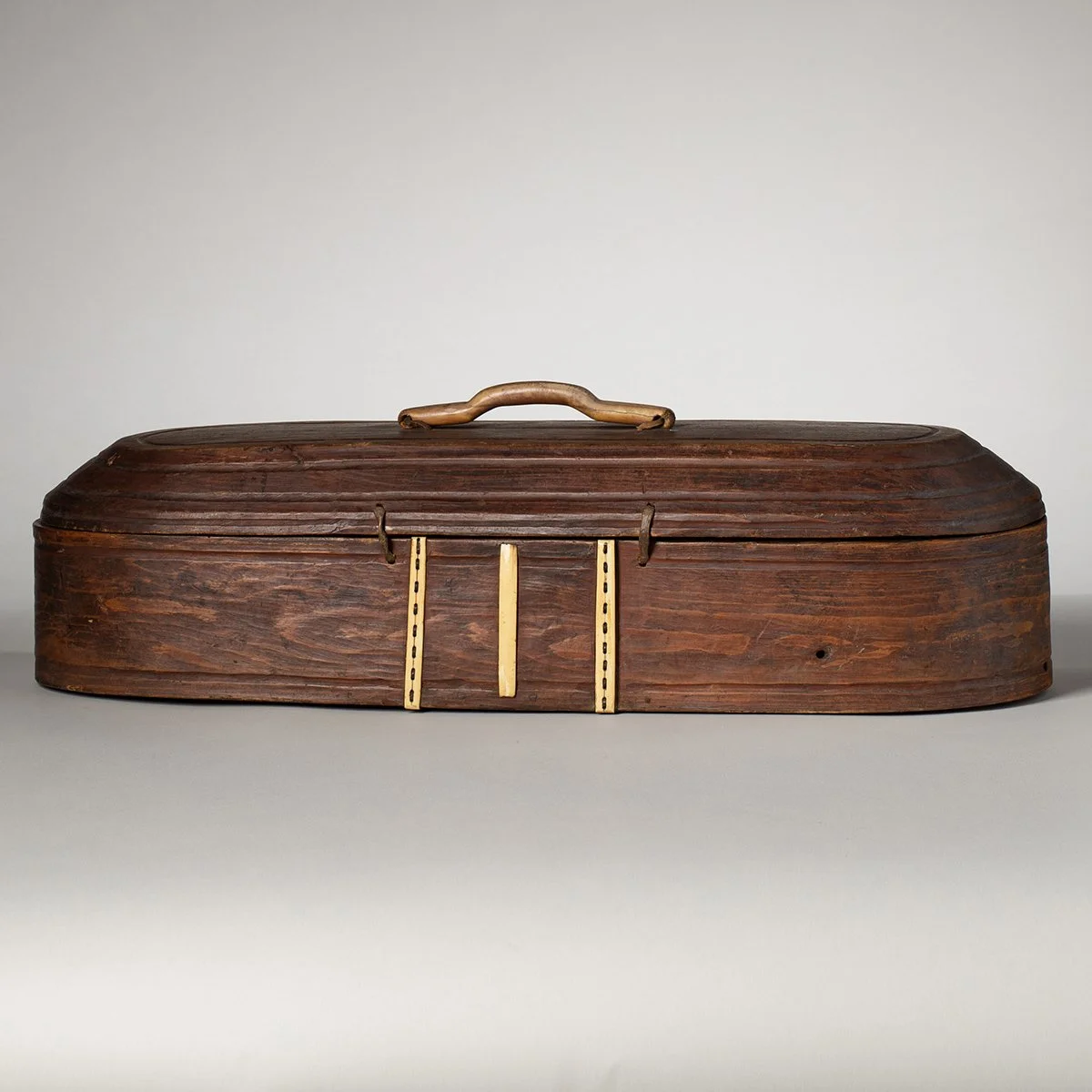 Image 10 of 12
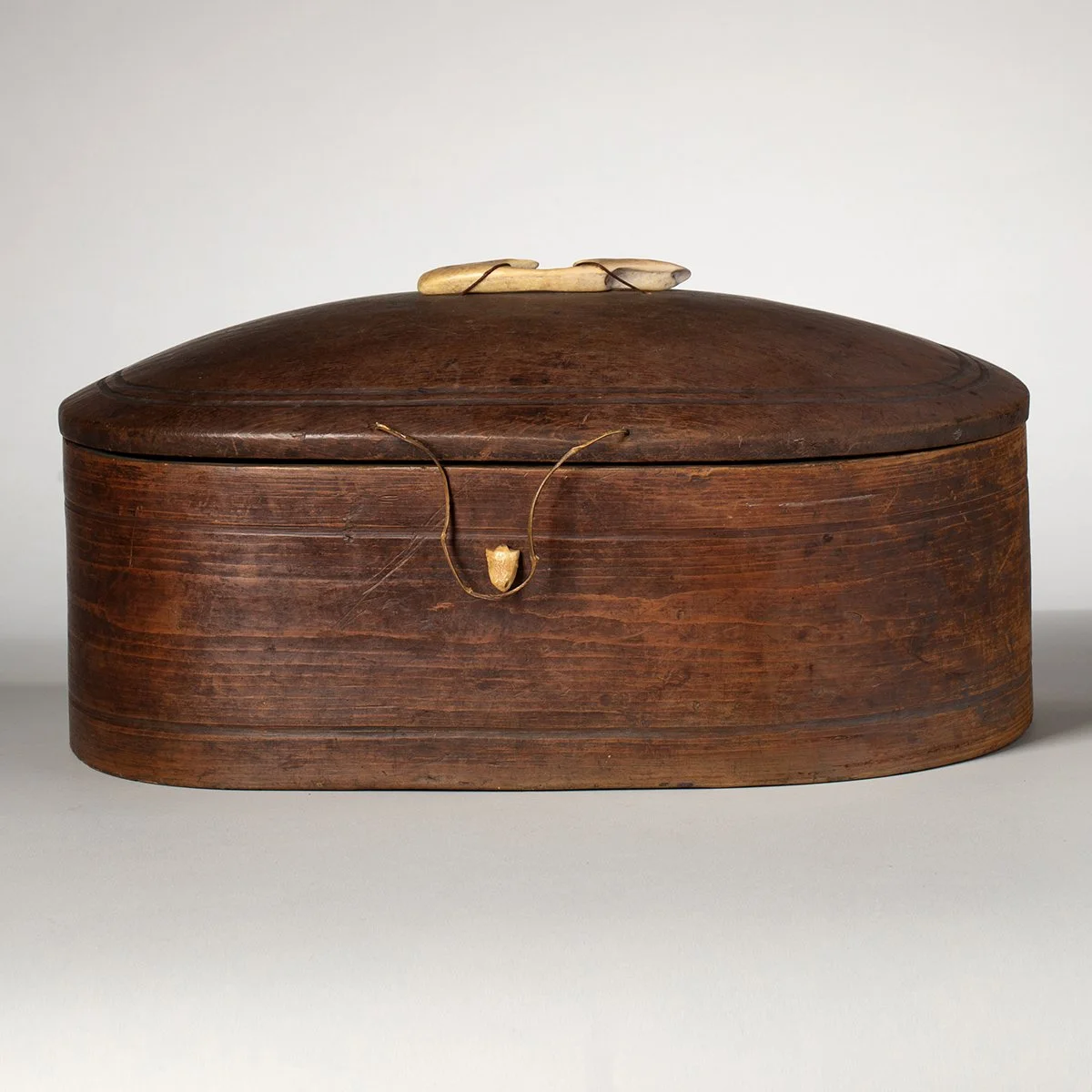 Image 11 of 12
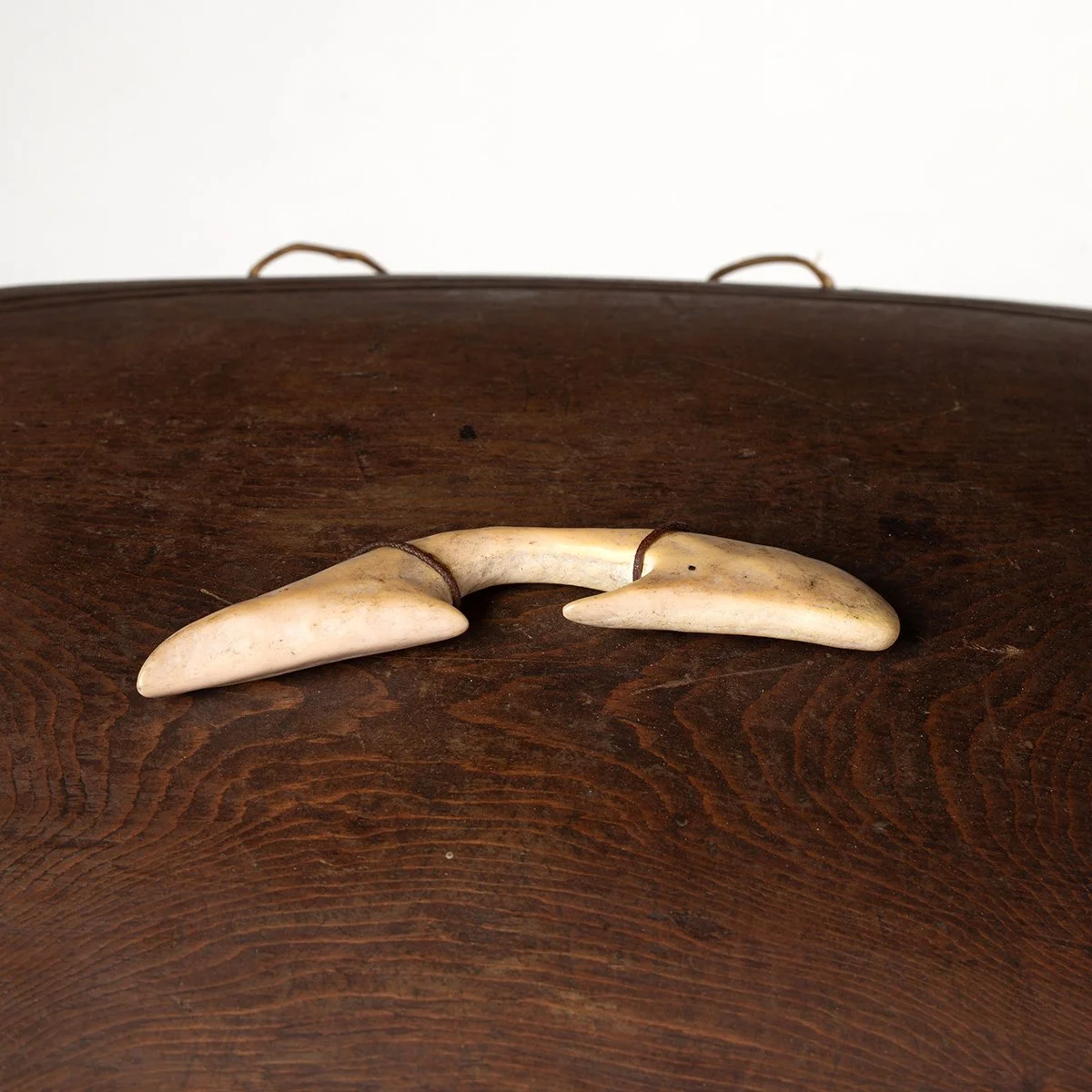 Image 12 of 12