Republic of Palau (Belau), Micronesia
Late 19th century
Turtle shell
Height: 4½ in (11.4 cm); Width: 7¼ in (18.4 cm); not including museum mount
Provenance: Sheik Saud Bin Mohammed Bin Ali Al-Thani
On the island of Belau (Palau), turtle shell objects known as toluk function as a traditional form of women's currency, exchanged between women to mark significant moments in their lives including birth, marriage, and death. Originally used as serving vessels, these shallow oval bowls evolved into ceremonial valuables whose worth derived from the quality of the shell, the skill of the maker, and the history of exchange each piece carried. The process begins with the heating of individual shell plates in freshwater and their formation over a wooden mold, after which the surface is polished and ornamental projections are carved around the edges.
Decoration on toluk is intentionally restrained, kept minimal to highlight the natural patterning of the turtle shell itself — the amber, brown, and black markings that vary across each plate and cannot be replicated. The carved projections around the edge of this example are understood to represent the wings of a frigate bird in flight, connecting the object to the broader symbolic vocabulary that the frigate bird carries across Micronesian and Pacific cultures. The piece was formerly in the collection of Sheik Saud Bin Mohammed Bin Ali Al-Thani, one of the most significant private collectors of tribal and ethnographic art assembled in the early 21st century.
Please note: This is an ESA antique-exempt piece of turtle shell. It cannot be sold internationally or to buyers residing in California, Hawaii, Illinois, Nevada, New Hampshire, New Jersey, New York, Oregon, or Washington. The piece is guaranteed to predate 1972.
We ship free anywhere in the world, fully insured, packed by hand.
Republic of Palau (Belau), Micronesia
Late 19th century
Turtle shell
Height: 4½ in (11.4 cm); Width: 7¼ in (18.4 cm); not including museum mount
Provenance: Sheik Saud Bin Mohammed Bin Ali Al-Thani
On the island of Belau (Palau), turtle shell objects known as toluk function as a traditional form of women's currency, exchanged between women to mark significant moments in their lives including birth, marriage, and death. Originally used as serving vessels, these shallow oval bowls evolved into ceremonial valuables whose worth derived from the quality of the shell, the skill of the maker, and the history of exchange each piece carried. The process begins with the heating of individual shell plates in freshwater and their formation over a wooden mold, after which the surface is polished and ornamental projections are carved around the edges.
Decoration on toluk is intentionally restrained, kept minimal to highlight the natural patterning of the turtle shell itself — the amber, brown, and black markings that vary across each plate and cannot be replicated. The carved projections around the edge of this example are understood to represent the wings of a frigate bird in flight, connecting the object to the broader symbolic vocabulary that the frigate bird carries across Micronesian and Pacific cultures. The piece was formerly in the collection of Sheik Saud Bin Mohammed Bin Ali Al-Thani, one of the most significant private collectors of tribal and ethnographic art assembled in the early 21st century.
Please note: This is an ESA antique-exempt piece of turtle shell. It cannot be sold internationally or to buyers residing in California, Hawaii, Illinois, Nevada, New Hampshire, New Jersey, New York, Oregon, or Washington. The piece is guaranteed to predate 1972.
We ship free anywhere in the world, fully insured, packed by hand.


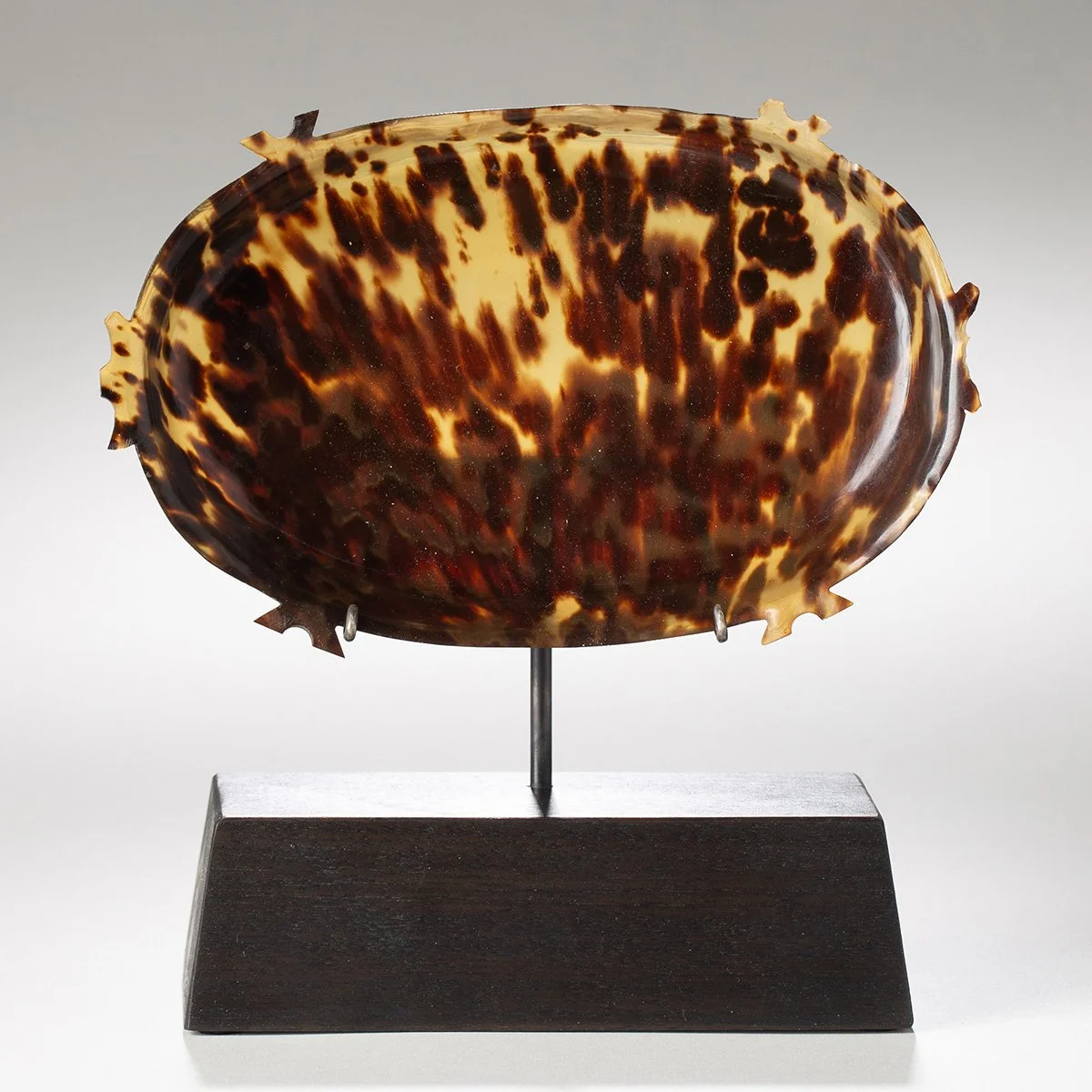 Image 1 of 6
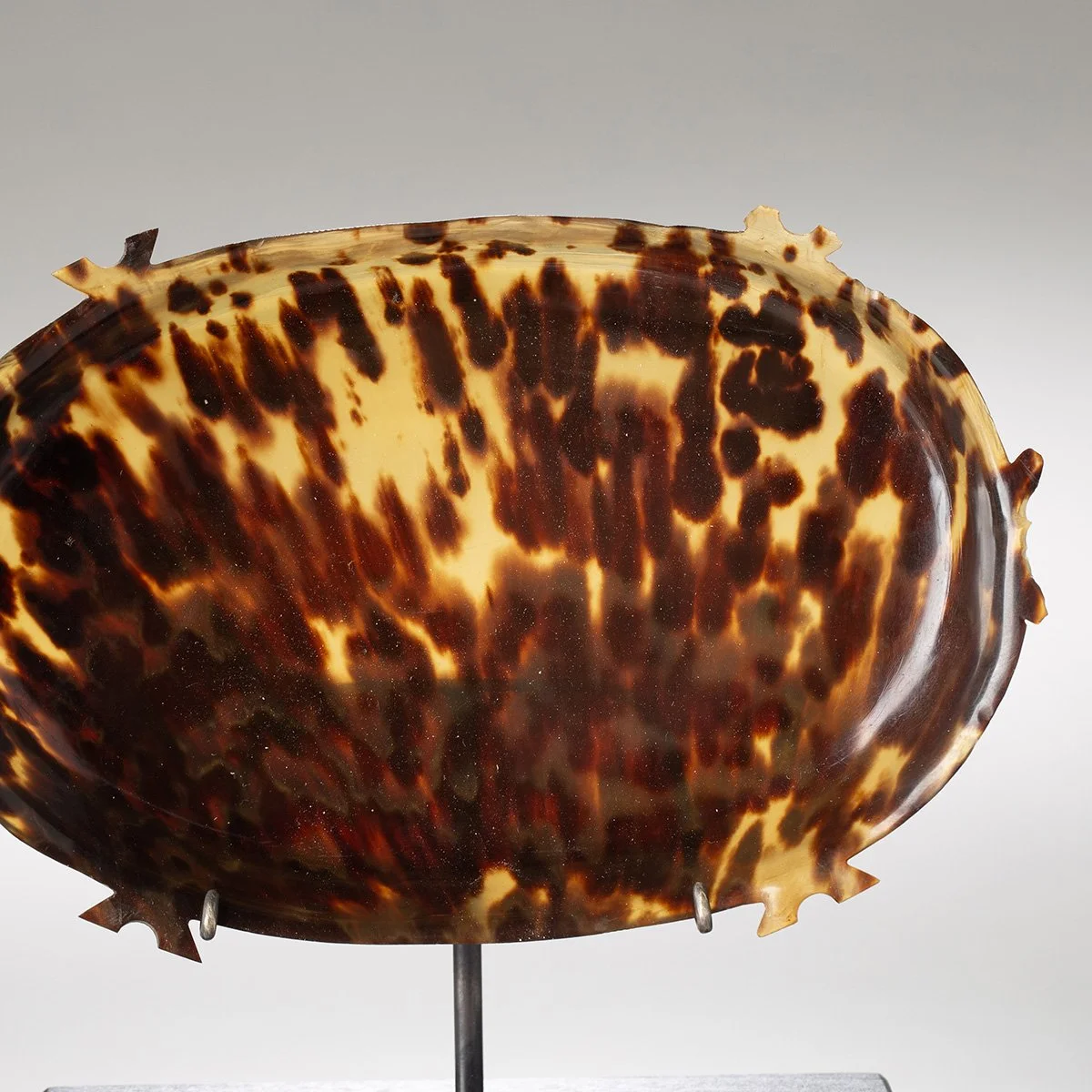 Image 2 of 6
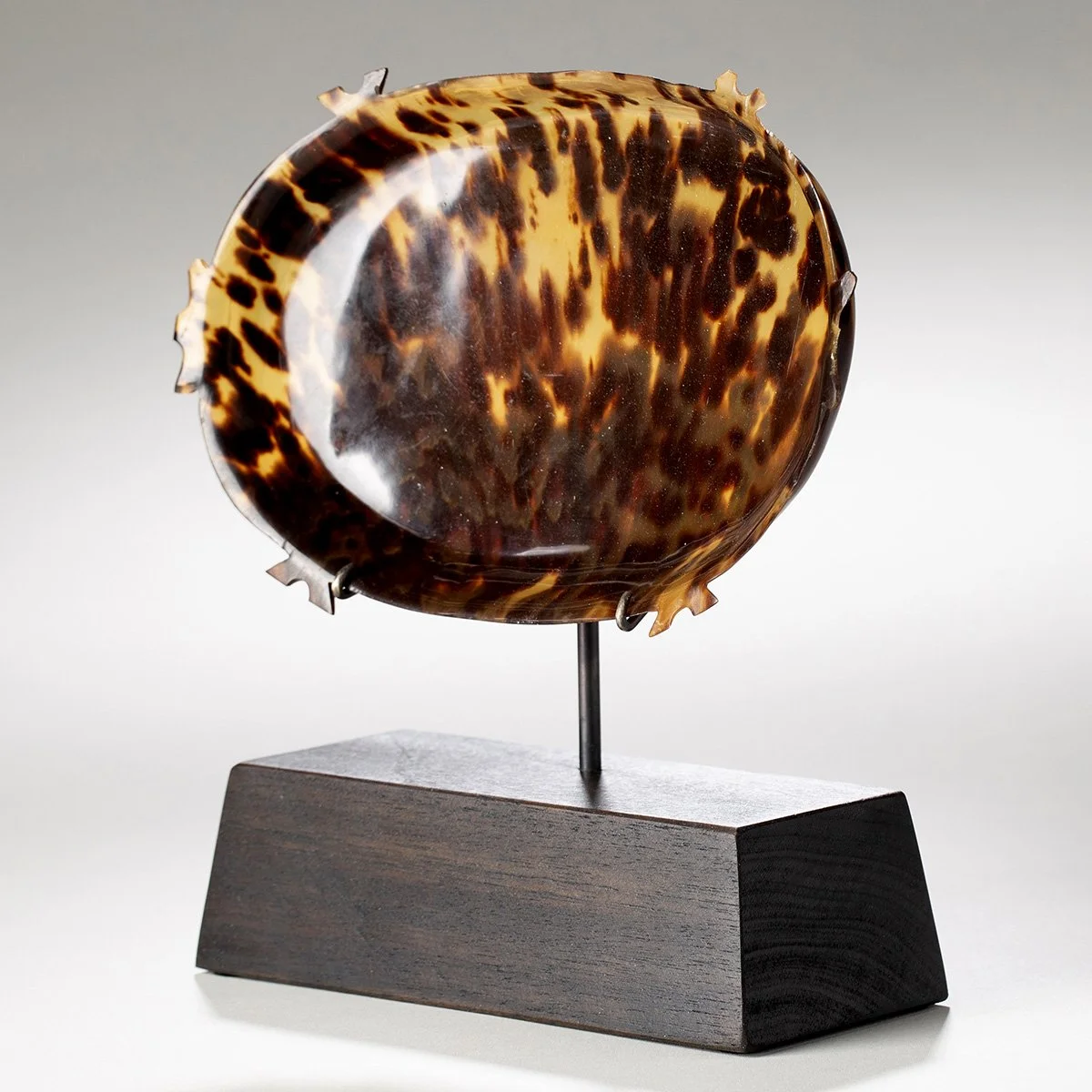 Image 3 of 6
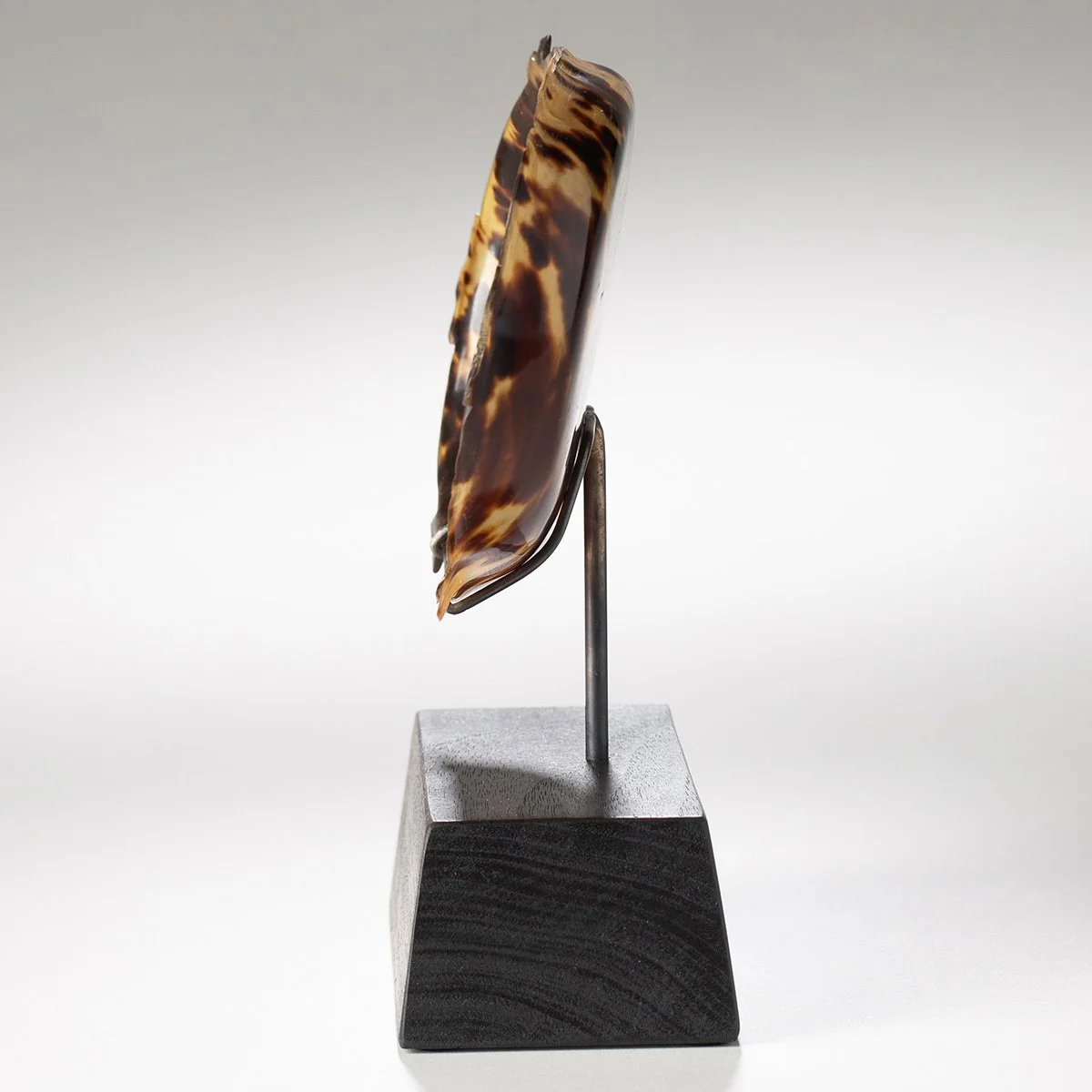 Image 4 of 6
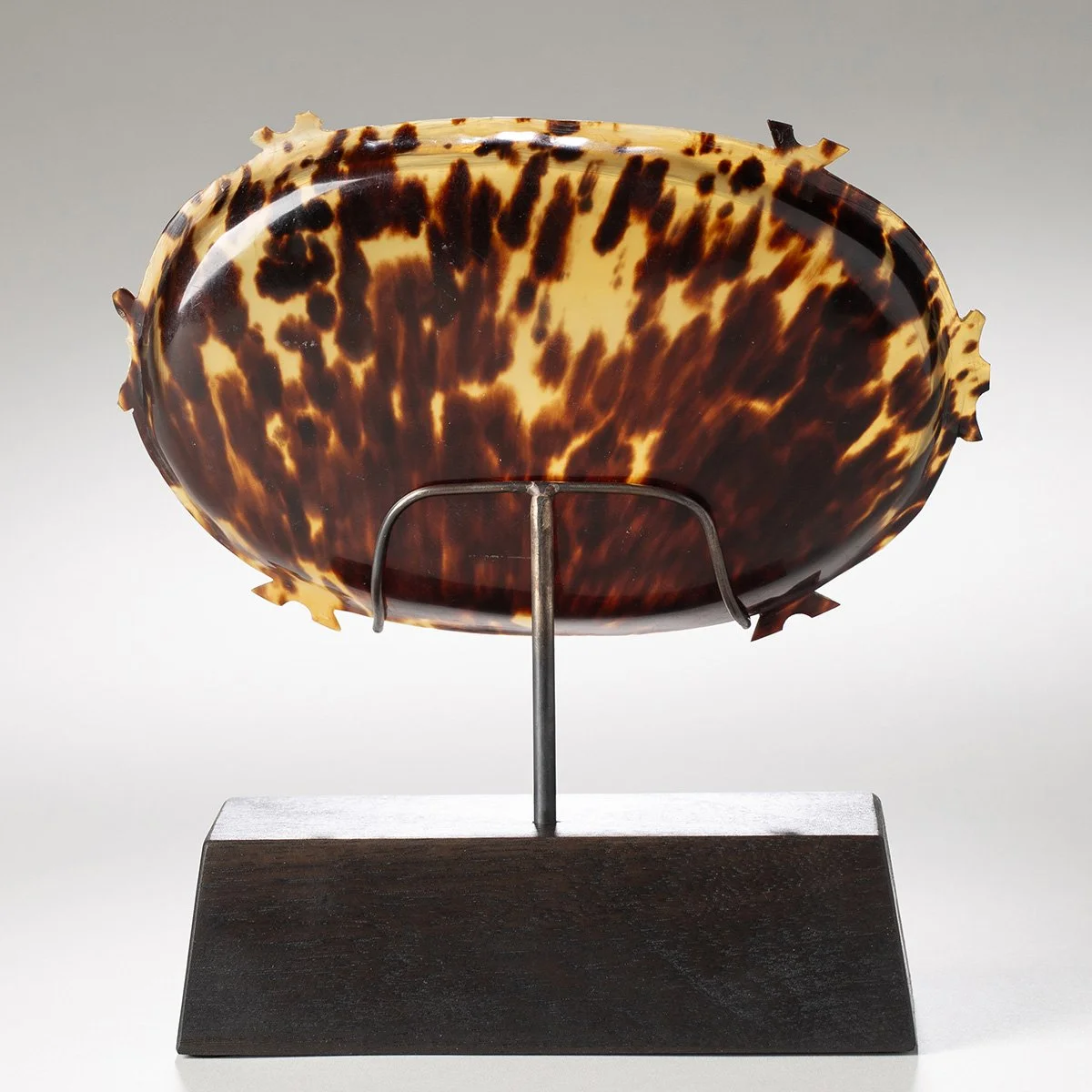 Image 5 of 6
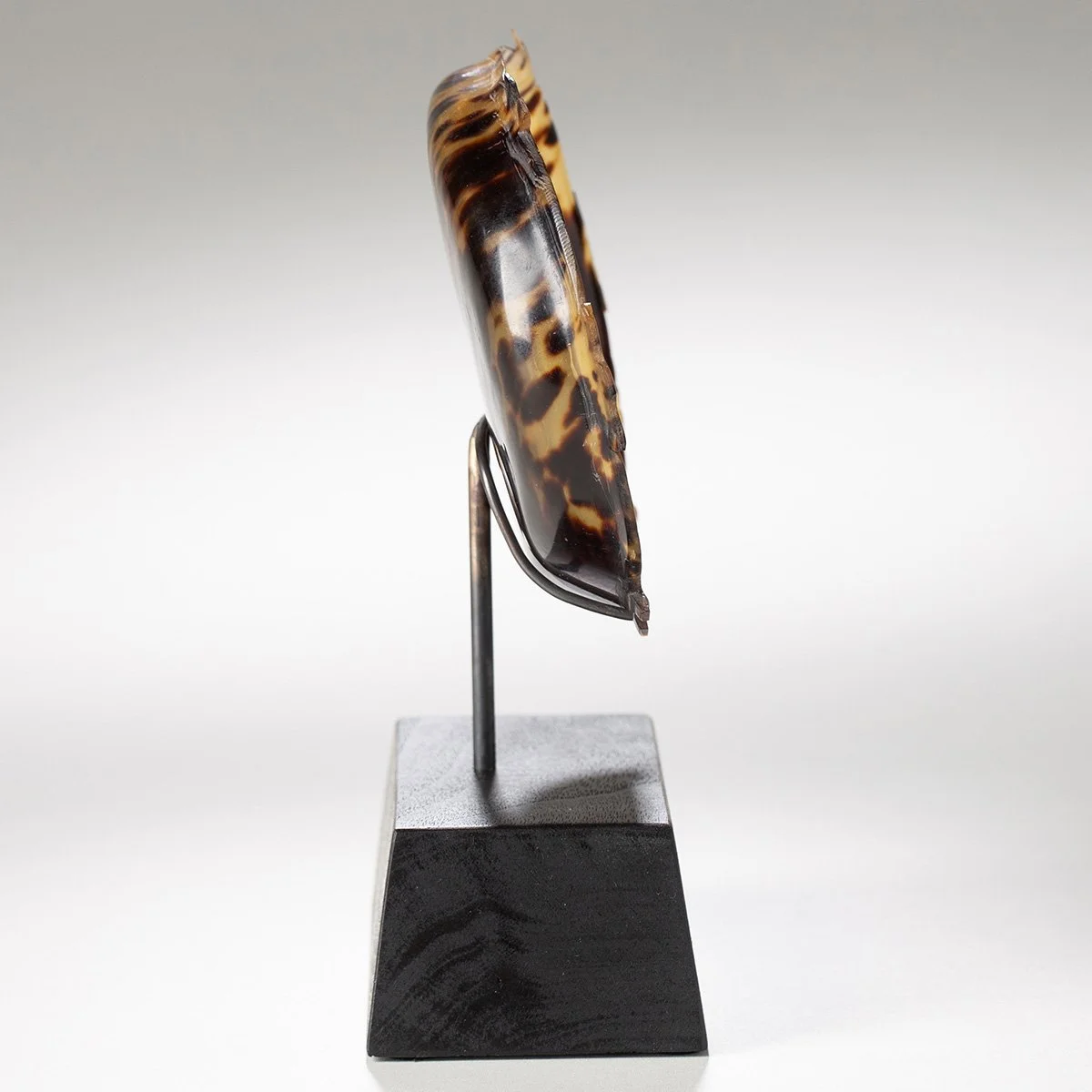 Image 6 of 6