Papua New Guinea; Sepik and Ramu River regions
19th to early 20th century, with one example circa 1930
Cassowary bone, human bone, fiber binding
Heights range from 9 3/4 in to 15 in / 24.8 cm to 38.1 cm
Private collection, Australia; individual examples found in Australia, New York, and Sydney; one collected by Douglas Newton in the 1960s and later in the John Friede collection; one collected by Christian Claussen between 1934 and 1936
A collection of Papua New Guinea bone daggers from the Sepik and adjacent river regions, including both cassowary bone and human bone examples. Bone daggers of this kind were valued as weapons, prestige objects, and carriers of personal or ancestral power, and they vary considerably by region in form, carving style, and symbolic emphasis. This group includes examples attributed to the Iwam, Wogamusch, Murik Lakes, Boiken, Kwoma, and Ramu River areas, showing a wide range of abstract, facial, and deeply carved pommel designs.
Taken together, the group offers a strong view of the artistic and ritual range of this form. Several examples retain fine pommel binding, several are described as human bone, and a number preserve notable collecting histories, inscriptions, or evidence of ritual use. The group is particularly strong in the May River and Sepik material, where bone daggers could embody paternal lineage, warrior identity, and supernatural protection.
Left to right:
Abstract design. Iwam people, May River, West Sepik Province. Pommel relates to the praying mantis. Found in an Australian antique shop in 2010. Height 14 in. Circa 1930.
Iwam or Wogamusch people, West Sepik Province. Fine binding. Human bone. Found in Bendigo, Victoria, in 2002. Height 14 1/2 in. 19th century.
With facial elements, Murik Lakes people, East Sepik Province. Found in Melbourne, Victoria, in 2006. Old inscription on reverse, “Asor,” the native name for this type of dagger. Height 15 in. Early 20th century.
Facial design, Murik Lakes people, East Sepik Province. Found in New York in 2006. Darkened reverse at lower blade from ritual use, when daggers were placed in the ground of the owner’s house and shell rings were placed over the dagger. Height 12 1/4 in. 19th century.
Fine string binding to pommel. Iwam people, May River, West Sepik Province. Human bone with female designs related to headhunting. Height 9 3/4 in. 19th century.
Abstract design and human bone. Very fine binding on pommel. Iwam or Wogamusch people, May River, West Sepik Province. Height 14 3/4 in. 19th century.
Human face design, Boiken people, East Sepik Province. Found in Sydney in 2003. Height 12 3/4 in.
Abstract face with ancient patina. Kwoma people, East Sepik Province. Collected by Douglas Newton in the 1960s, ex John Friede collection, and given to cover a debt in 2007. Human bone. These daggers are called Apa and are made by the owner’s father; they are understood as embodiments of the father’s spirit and as sources of supernatural strength. Height 14 in. 19th century.
Abstract face, deeply carved, with ancient patina. Kwoma people, East Sepik Province. Height 14 in. Early 20th century.
Facial design with ancient patina. Ramu River, East Sepik Province. Collected by Christian Claussen between 1934 and 1936. Claussen was a carpenter working in the region who later retired to Queensland. Acquired from D’ian Davidson in 2004. Height 12 in. 19th century.
Large human bone dagger with deep dark patina. Height 12 1/4 in. 19th century.
We ship free anywhere in the world, fully insured, packed by hand.
INQUIRE HERE
Papua New Guinea; Sepik and Ramu River regions
19th to early 20th century, with one example circa 1930
Cassowary bone, human bone, fiber binding
Heights range from 9 3/4 in to 15 in / 24.8 cm to 38.1 cm
Private collection, Australia; individual examples found in Australia, New York, and Sydney; one collected by Douglas Newton in the 1960s and later in the John Friede collection; one collected by Christian Claussen between 1934 and 1936
A collection of Papua New Guinea bone daggers from the Sepik and adjacent river regions, including both cassowary bone and human bone examples. Bone daggers of this kind were valued as weapons, prestige objects, and carriers of personal or ancestral power, and they vary considerably by region in form, carving style, and symbolic emphasis. This group includes examples attributed to the Iwam, Wogamusch, Murik Lakes, Boiken, Kwoma, and Ramu River areas, showing a wide range of abstract, facial, and deeply carved pommel designs.
Taken together, the group offers a strong view of the artistic and ritual range of this form. Several examples retain fine pommel binding, several are described as human bone, and a number preserve notable collecting histories, inscriptions, or evidence of ritual use. The group is particularly strong in the May River and Sepik material, where bone daggers could embody paternal lineage, warrior identity, and supernatural protection.
Left to right:
Abstract design. Iwam people, May River, West Sepik Province. Pommel relates to the praying mantis. Found in an Australian antique shop in 2010. Height 14 in. Circa 1930.
Iwam or Wogamusch people, West Sepik Province. Fine binding. Human bone. Found in Bendigo, Victoria, in 2002. Height 14 1/2 in. 19th century.
With facial elements, Murik Lakes people, East Sepik Province. Found in Melbourne, Victoria, in 2006. Old inscription on reverse, “Asor,” the native name for this type of dagger. Height 15 in. Early 20th century.
Facial design, Murik Lakes people, East Sepik Province. Found in New York in 2006. Darkened reverse at lower blade from ritual use, when daggers were placed in the ground of the owner’s house and shell rings were placed over the dagger. Height 12 1/4 in. 19th century.
Fine string binding to pommel. Iwam people, May River, West Sepik Province. Human bone with female designs related to headhunting. Height 9 3/4 in. 19th century.
Abstract design and human bone. Very fine binding on pommel. Iwam or Wogamusch people, May River, West Sepik Province. Height 14 3/4 in. 19th century.
Human face design, Boiken people, East Sepik Province. Found in Sydney in 2003. Height 12 3/4 in.
Abstract face with ancient patina. Kwoma people, East Sepik Province. Collected by Douglas Newton in the 1960s, ex John Friede collection, and given to cover a debt in 2007. Human bone. These daggers are called Apa and are made by the owner’s father; they are understood as embodiments of the father’s spirit and as sources of supernatural strength. Height 14 in. 19th century.
Abstract face, deeply carved, with ancient patina. Kwoma people, East Sepik Province. Height 14 in. Early 20th century.
Facial design with ancient patina. Ramu River, East Sepik Province. Collected by Christian Claussen between 1934 and 1936. Claussen was a carpenter working in the region who later retired to Queensland. Acquired from D’ian Davidson in 2004. Height 12 in. 19th century.
Large human bone dagger with deep dark patina. Height 12 1/4 in. 19th century.
We ship free anywhere in the world, fully insured, packed by hand.
INQUIRE HERE


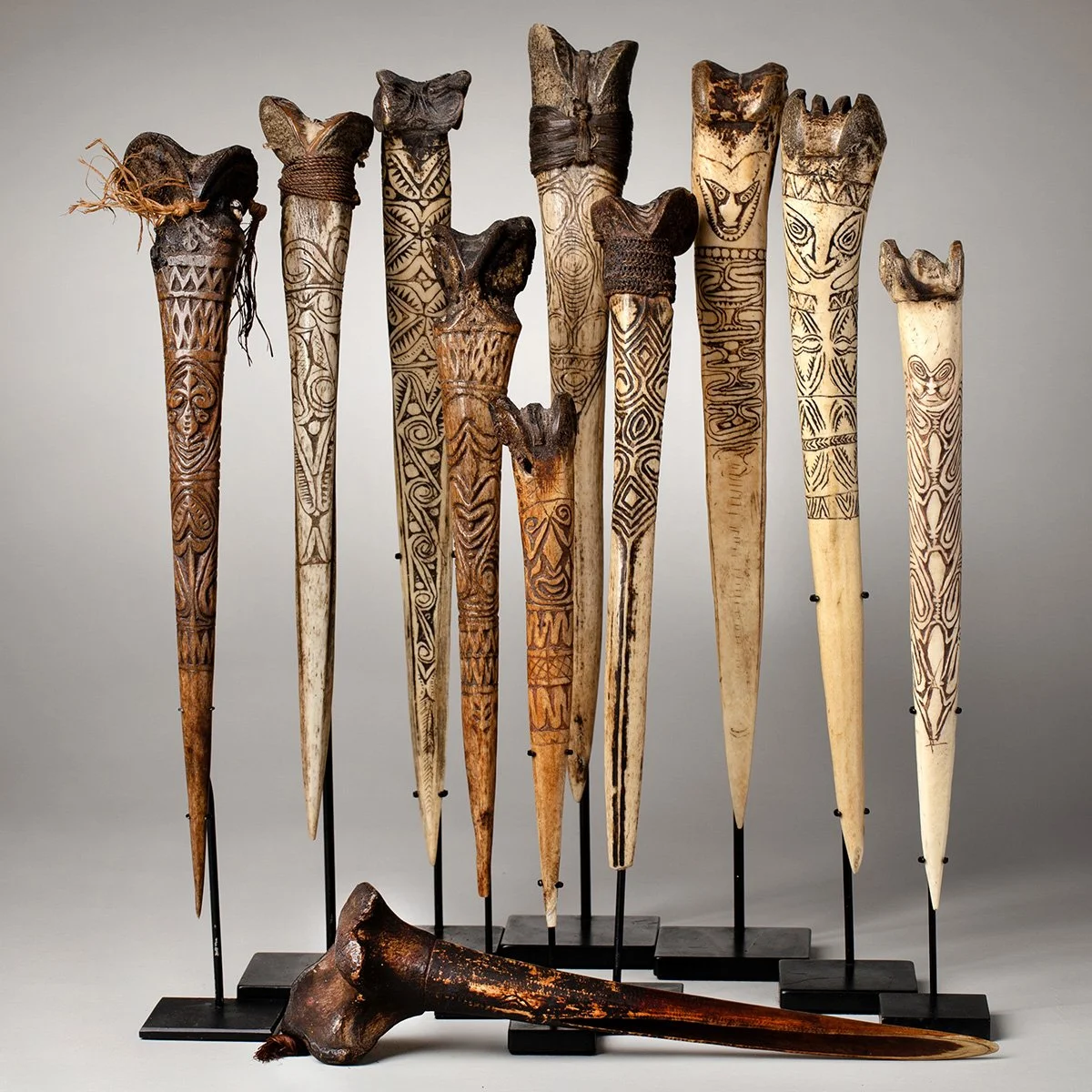 Image 1 of 11
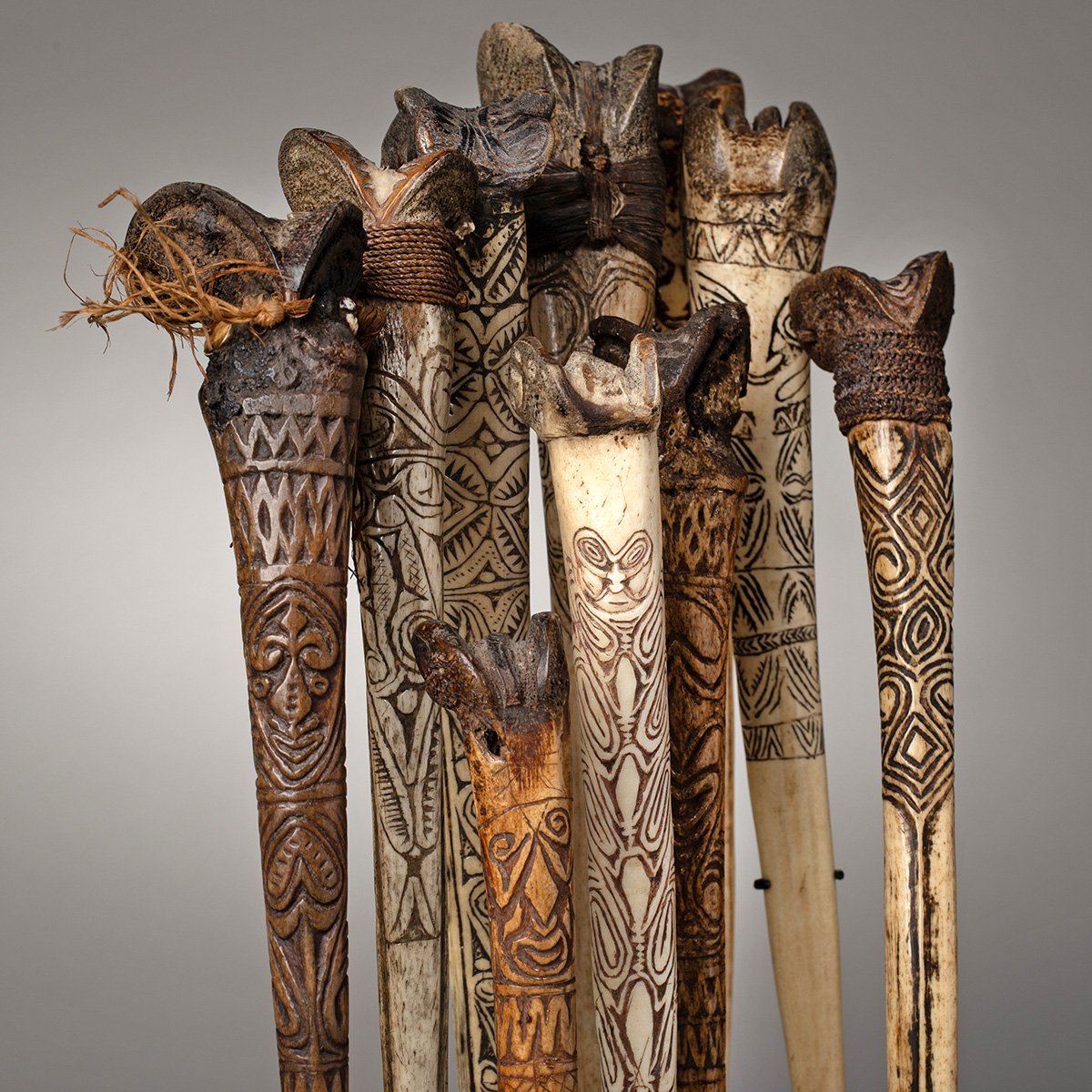 Image 2 of 11
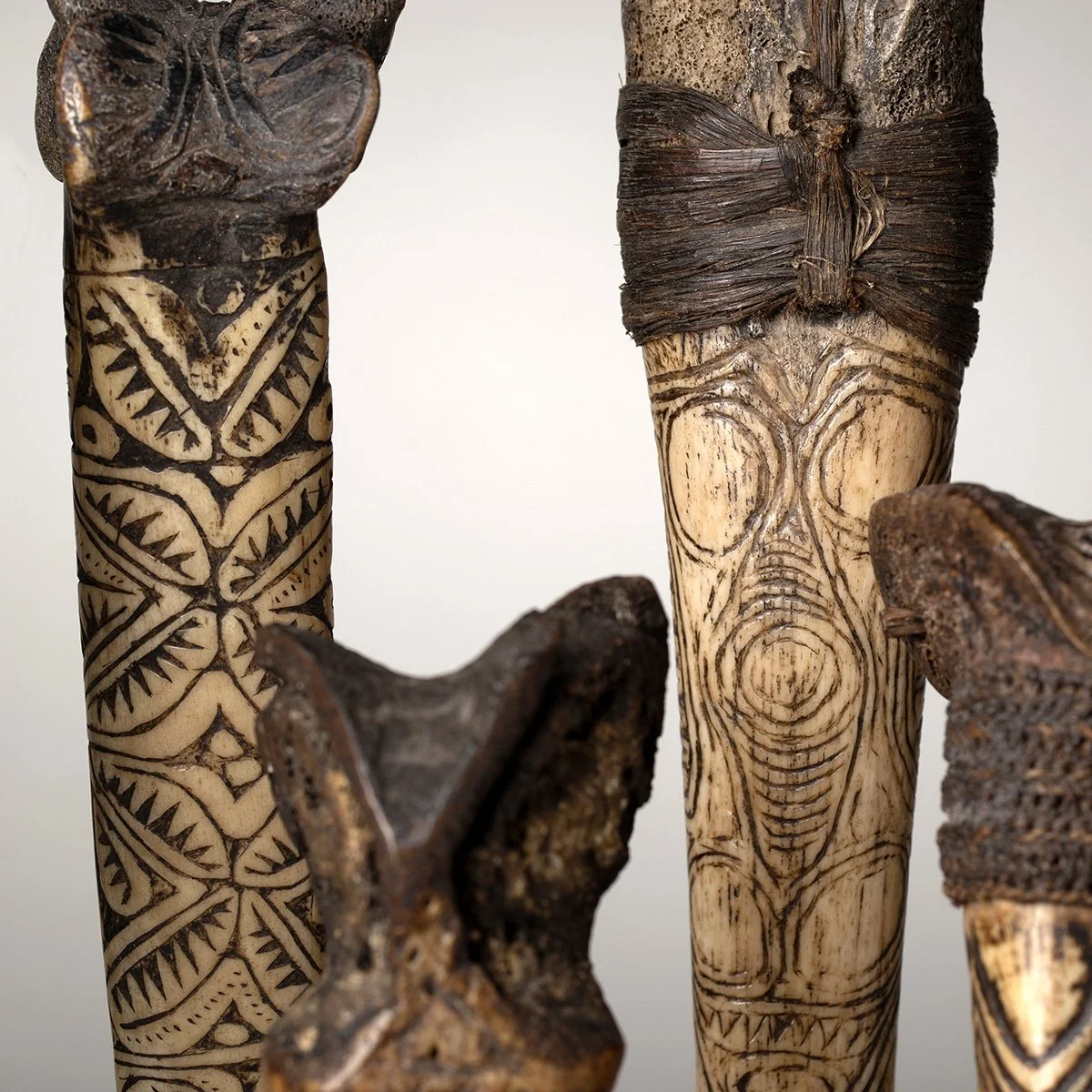 Image 3 of 11
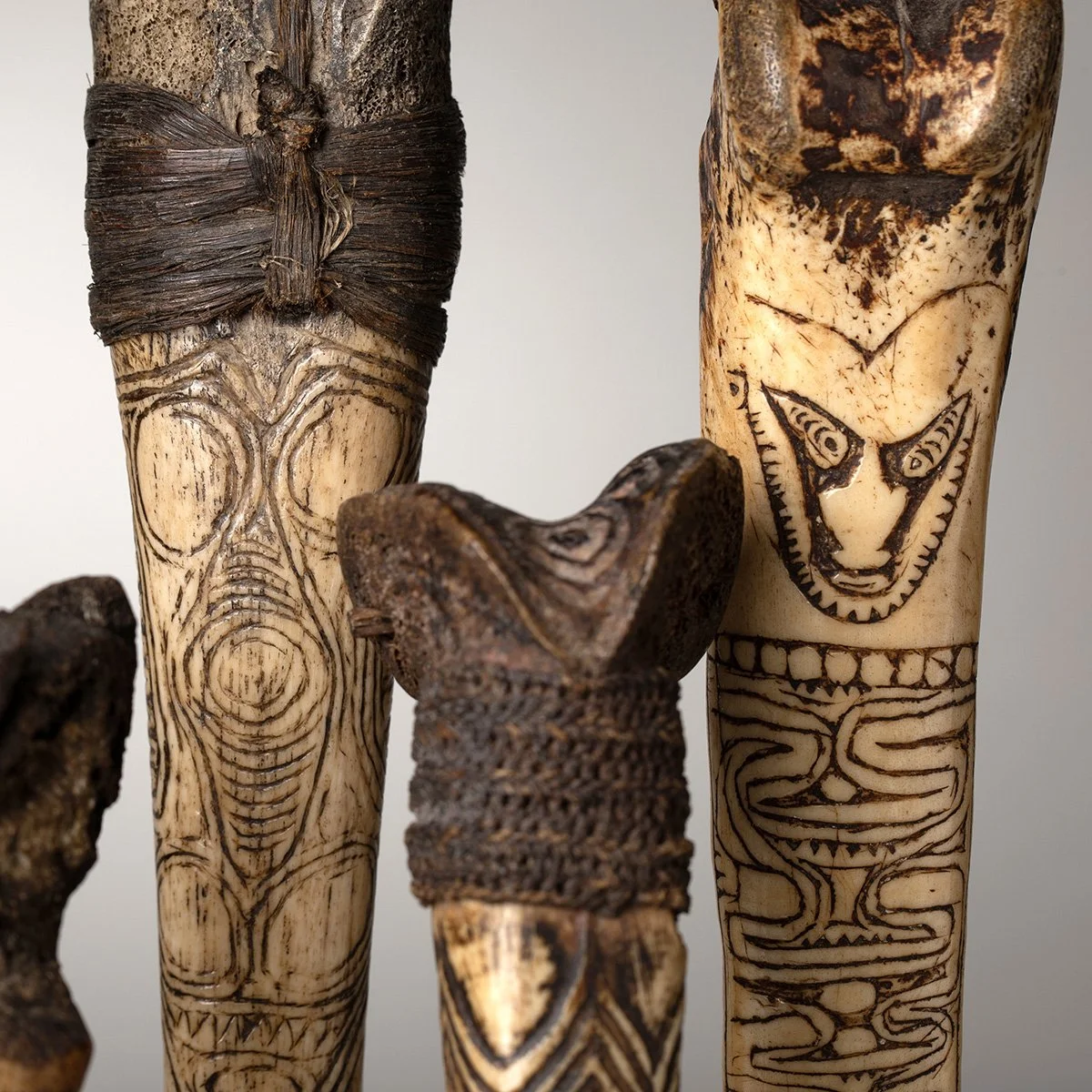 Image 4 of 11
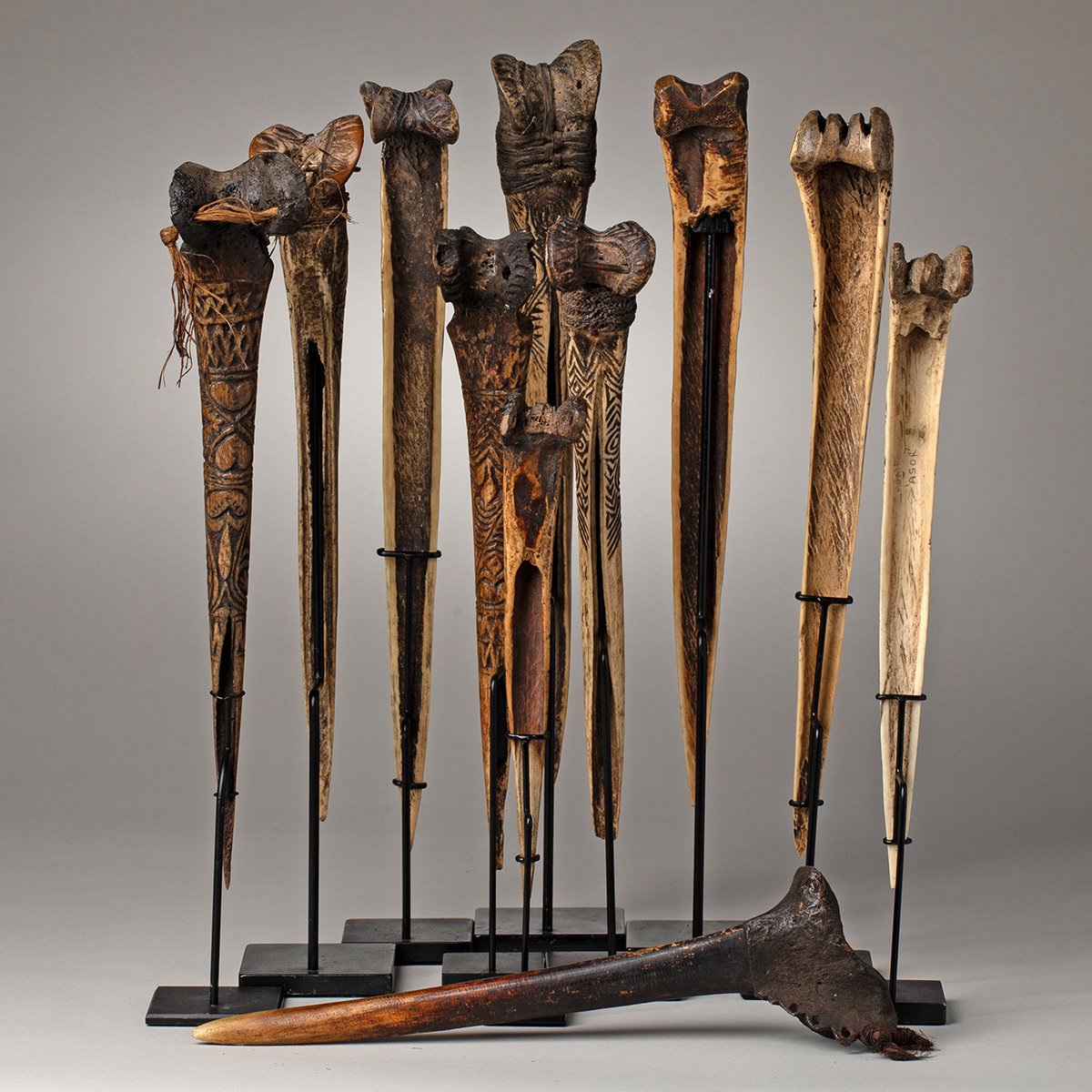 Image 5 of 11
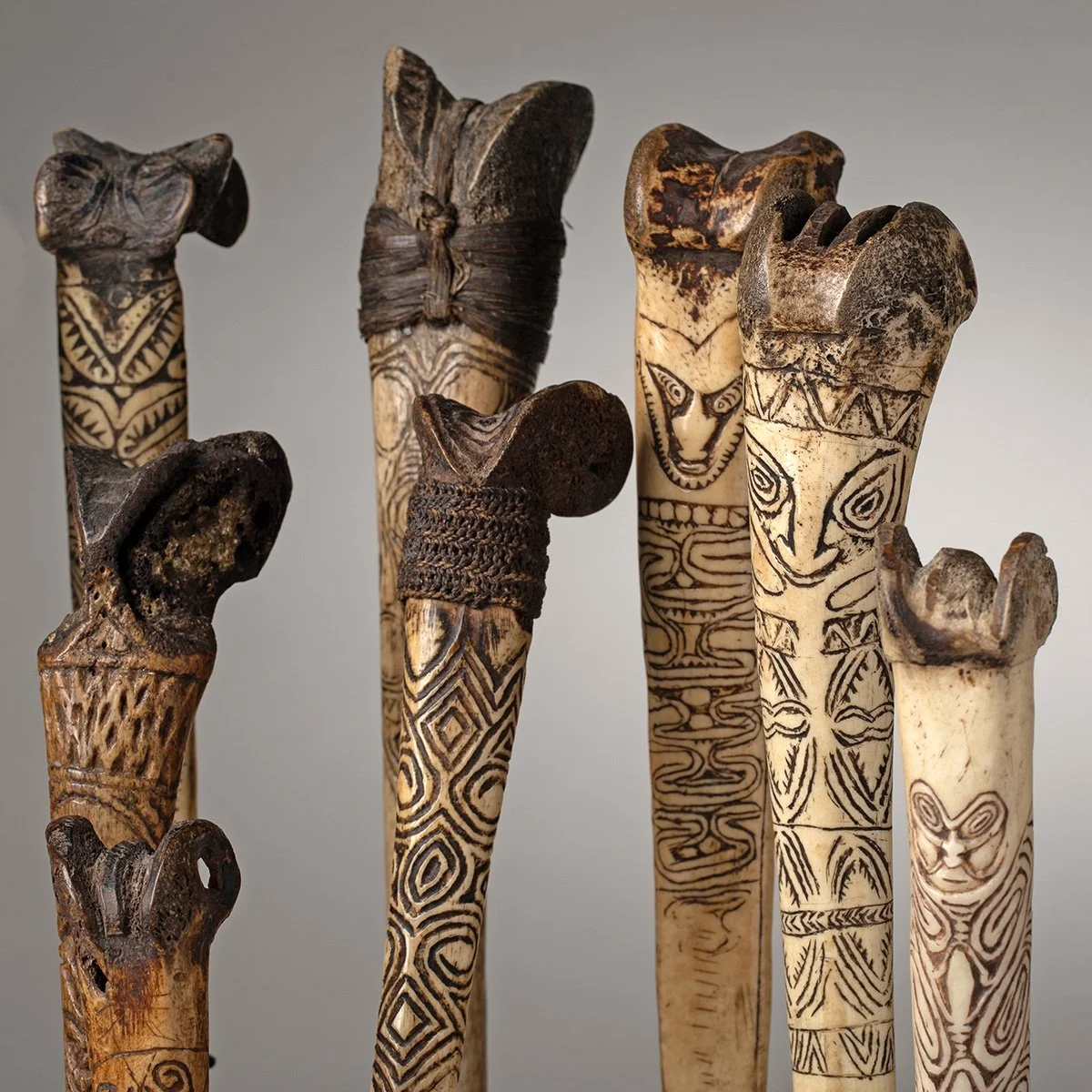 Image 6 of 11
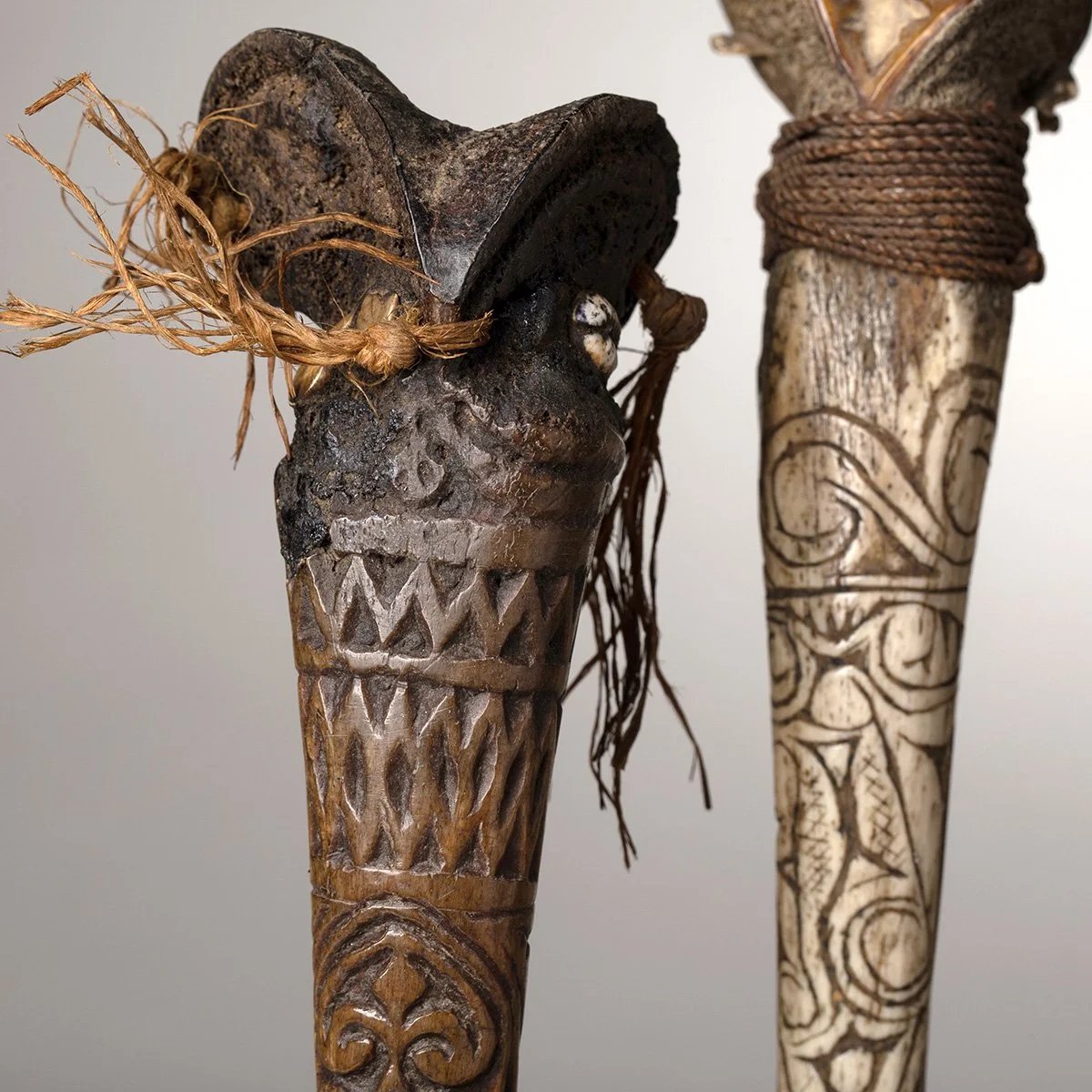 Image 7 of 11
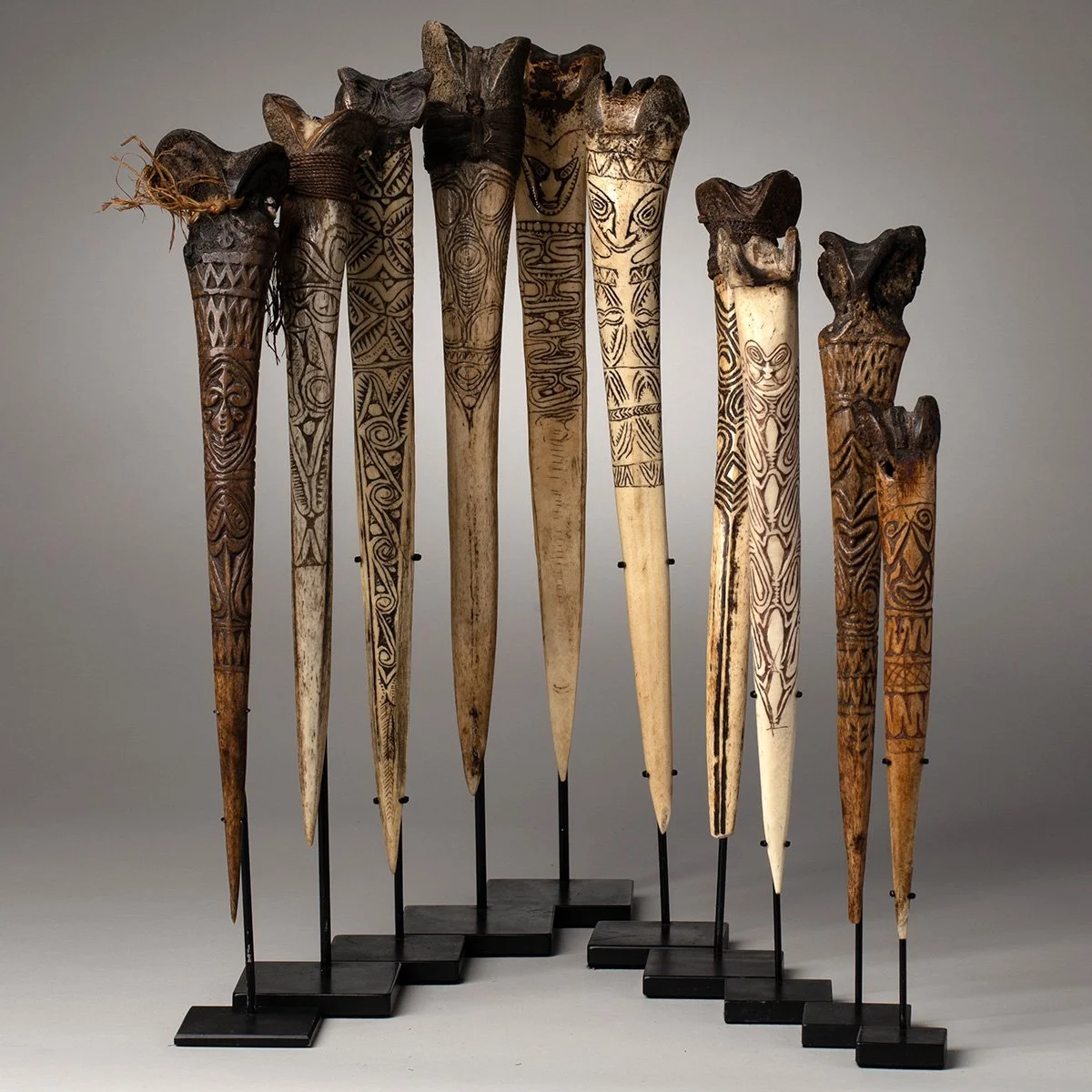 Image 8 of 11
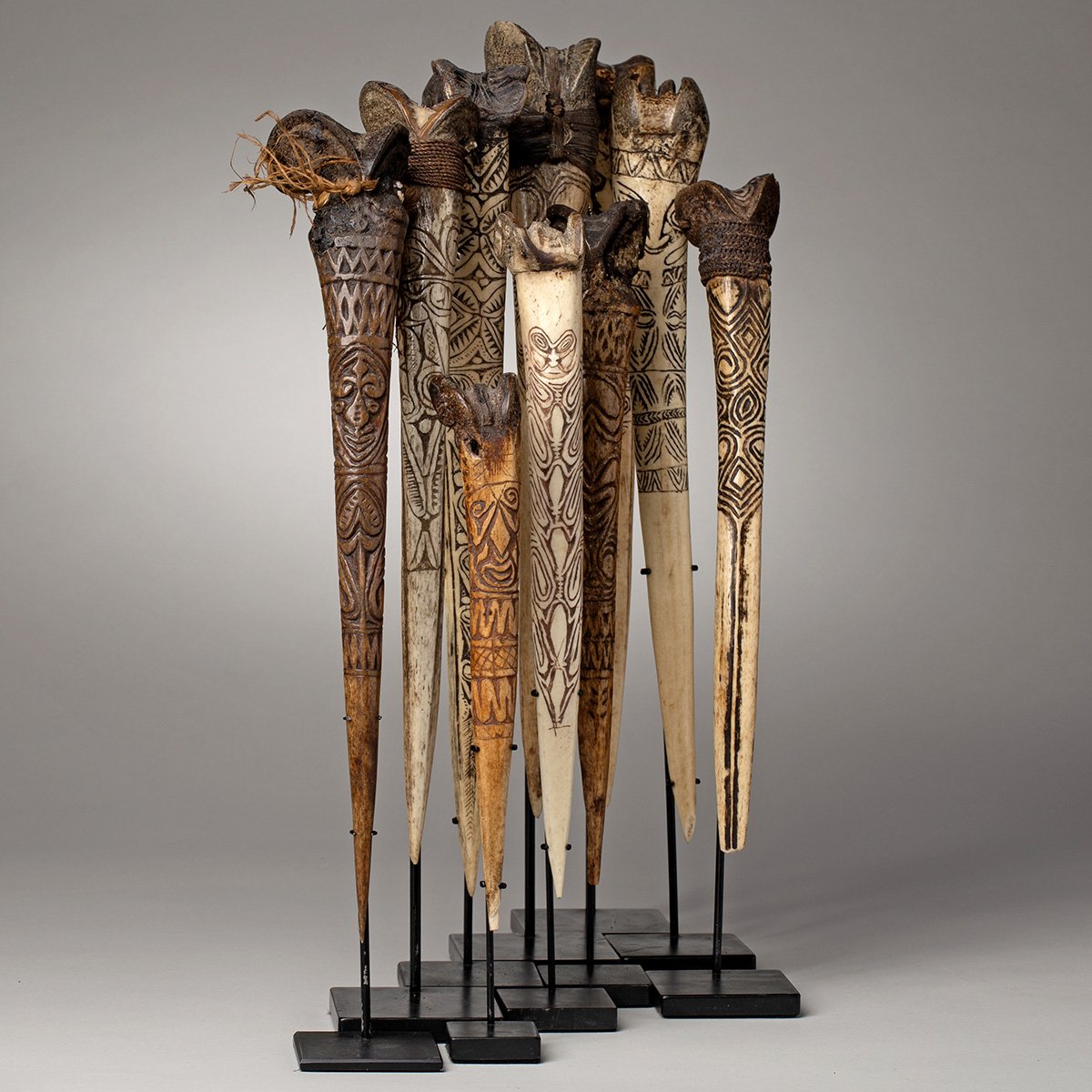 Image 9 of 11
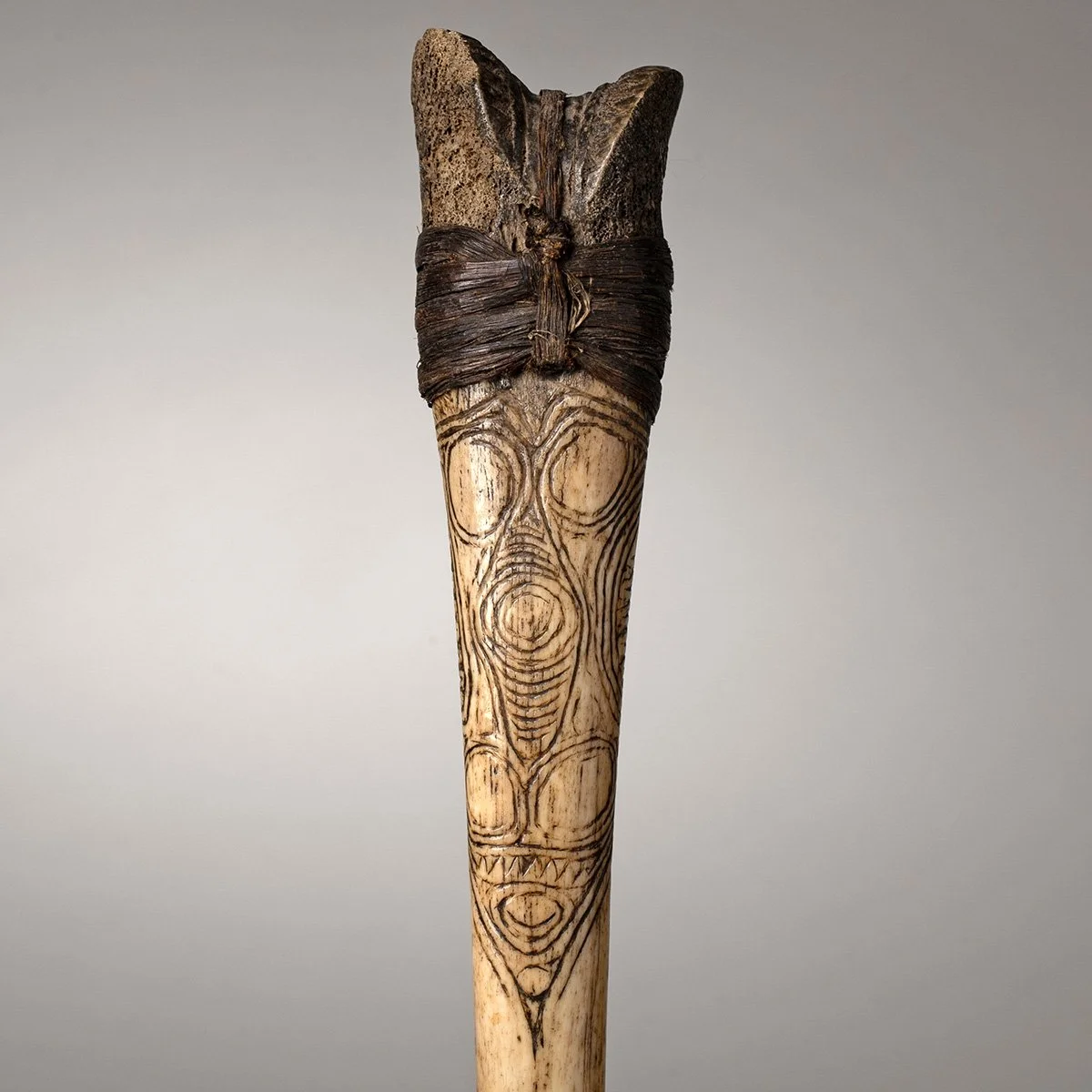 Image 10 of 11
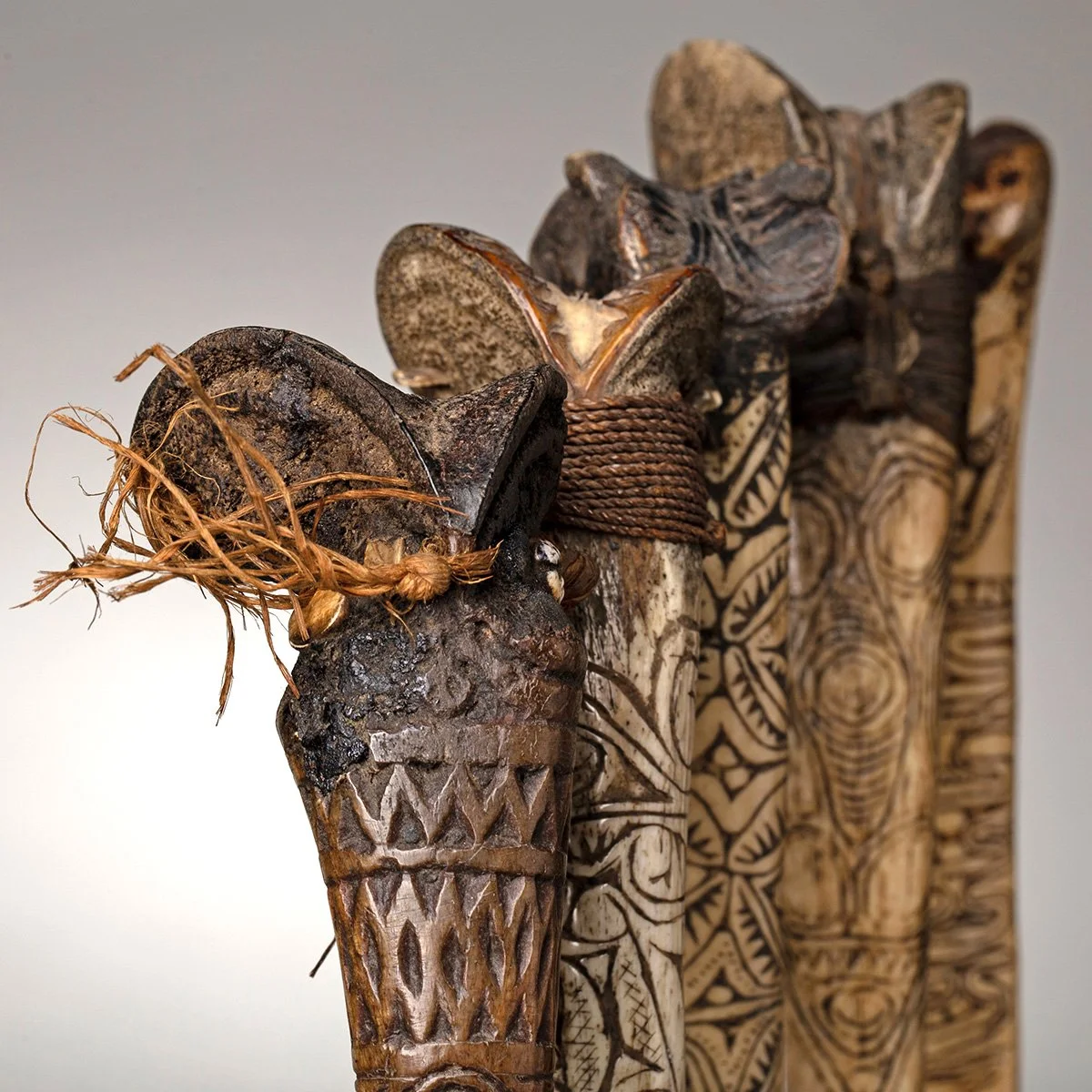 Image 11 of 11