Sepik and Ramu River regions, Papua New Guinea
19th to early 20th century; one example circa 1930
Cassowary bone, human bone, fiber binding
Heights: 9¾ in to 15 in (24.8 cm to 38.1 cm)
Provenance: Private collection, Australia; individual examples found in Australia, New York, and Sydney; one collected by Douglas Newton in the 1960s, later in the John Friede collection; one collected by Christian Claussen between 1934 and 1936
Bone daggers from the Sepik and adjacent river regions of Papua New Guinea were carried as weapons, prestige objects, and embodiments of personal and ancestral power, their form and carving style varying significantly across the Iwam, Wogamusch, Murik Lakes, Boiken, Kwoma, and Ramu River cultures represented in this group. Among the Kwoma, daggers known as apa were made by a man's father and understood as embodiments of the father's spirit, sources of supernatural strength that passed from one generation to the next. The range of pommel designs across this collection, abstract, facial, and deeply carved, reflects the full breadth of regional variation within the form.
The provenance histories embedded in this group are among the most varied and documented of any comparable collection: one example was collected by Douglas Newton in the 1960s and passed through the John Friede collection before being deaccessioned; another was collected by Christian Claussen between 1934 and 1936 during his years as a carpenter working in the region. Several examples carry old inscriptions, evidence of ritual use, or field-collection notes that place them within the active period of ceremonial life in the Sepik Basin. The group includes confirmed human bone examples, examples with fine original fiber binding intact, and one with a darkened lower blade consistent with the documented practice of planting daggers in the ground of the owner's house with shell rings placed over them.
Taken as a collection, these eleven daggers offer a sustained view of the artistic and ritual range of a form that remains underrepresented in the specialist market relative to its cultural significance. The May River and West Sepik material is particularly strong, with several Iwam examples showing the praying mantis pommel form and female headhunting designs characteristic of the region. Each piece is presented on a custom stand, and the full individual provenance and dimensional data for each dagger is listed below.
We ship free anywhere in the world, fully insured, packed by hand.
Sepik and Ramu River regions, Papua New Guinea
19th to early 20th century; one example circa 1930
Cassowary bone, human bone, fiber binding
Heights: 9¾ in to 15 in (24.8 cm to 38.1 cm)
Provenance: Private collection, Australia; individual examples found in Australia, New York, and Sydney; one collected by Douglas Newton in the 1960s, later in the John Friede collection; one collected by Christian Claussen between 1934 and 1936
Bone daggers from the Sepik and adjacent river regions of Papua New Guinea were carried as weapons, prestige objects, and embodiments of personal and ancestral power, their form and carving style varying significantly across the Iwam, Wogamusch, Murik Lakes, Boiken, Kwoma, and Ramu River cultures represented in this group. Among the Kwoma, daggers known as apa were made by a man's father and understood as embodiments of the father's spirit, sources of supernatural strength that passed from one generation to the next. The range of pommel designs across this collection, abstract, facial, and deeply carved, reflects the full breadth of regional variation within the form.
The provenance histories embedded in this group are among the most varied and documented of any comparable collection: one example was collected by Douglas Newton in the 1960s and passed through the John Friede collection before being deaccessioned; another was collected by Christian Claussen between 1934 and 1936 during his years as a carpenter working in the region. Several examples carry old inscriptions, evidence of ritual use, or field-collection notes that place them within the active period of ceremonial life in the Sepik Basin. The group includes confirmed human bone examples, examples with fine original fiber binding intact, and one with a darkened lower blade consistent with the documented practice of planting daggers in the ground of the owner's house with shell rings placed over them.
Taken as a collection, these eleven daggers offer a sustained view of the artistic and ritual range of a form that remains underrepresented in the specialist market relative to its cultural significance. The May River and West Sepik material is particularly strong, with several Iwam examples showing the praying mantis pommel form and female headhunting designs characteristic of the region. Each piece is presented on a custom stand, and the full individual provenance and dimensional data for each dagger is listed below.
We ship free anywhere in the world, fully insured, packed by hand.


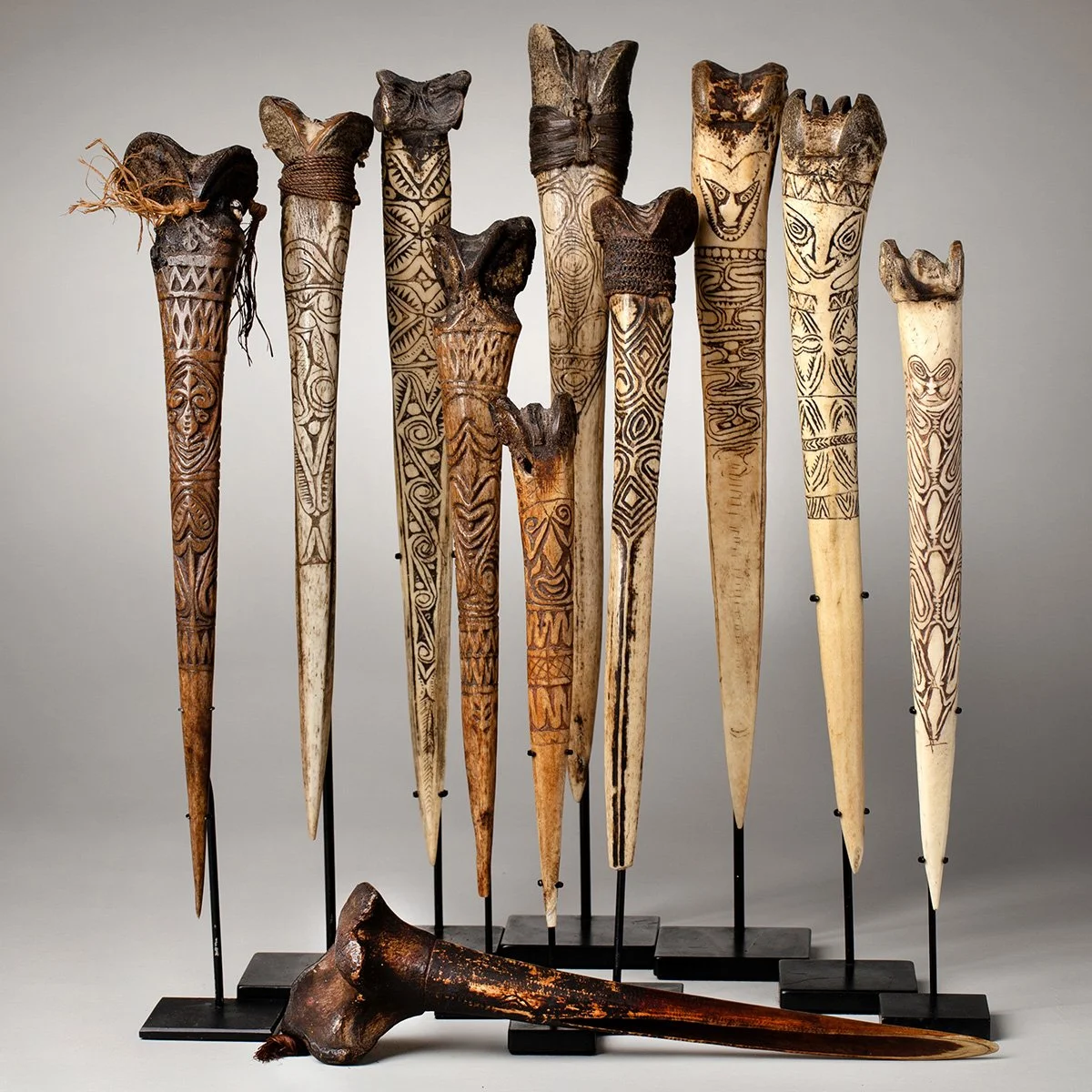 Image 1 of 11
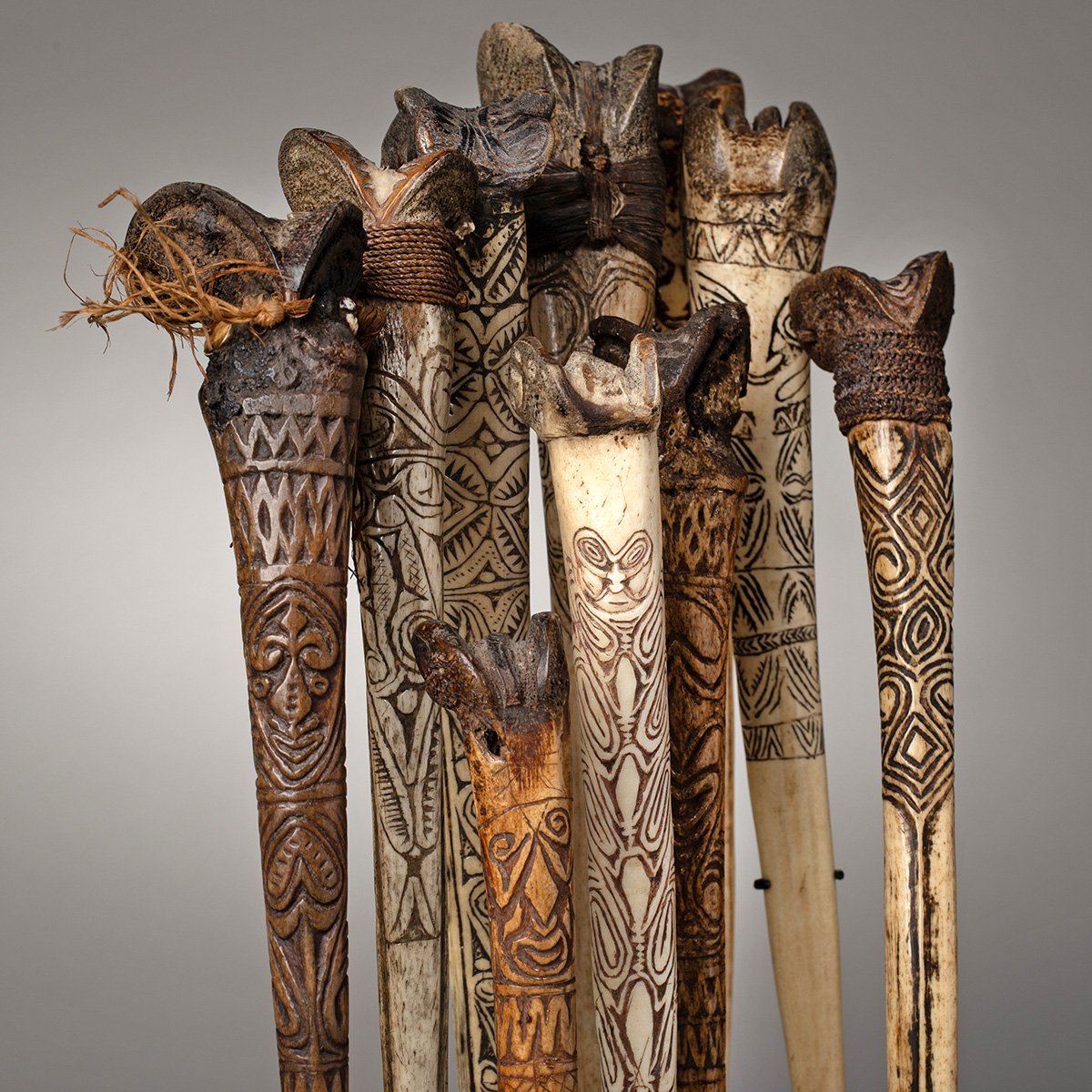 Image 2 of 11
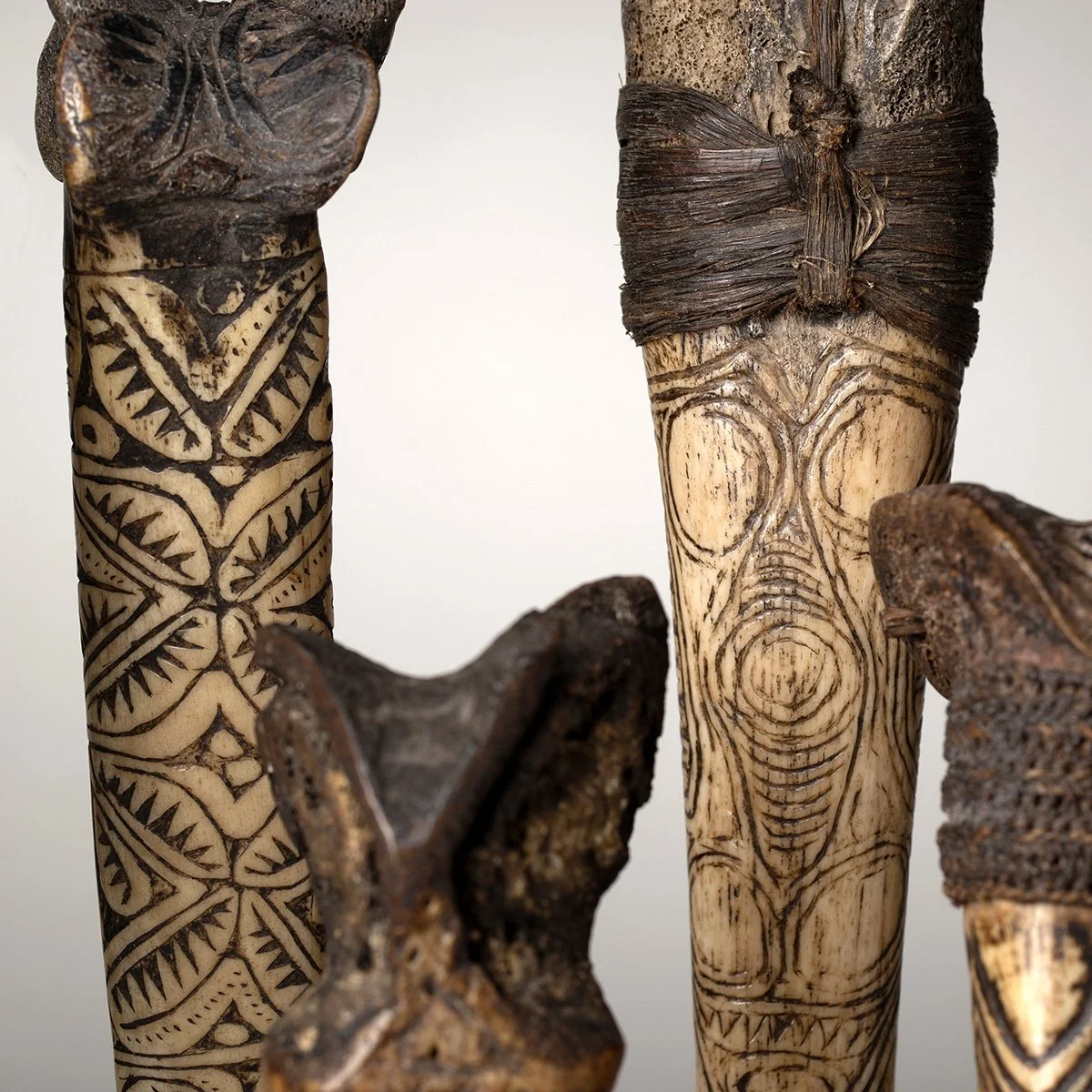 Image 3 of 11
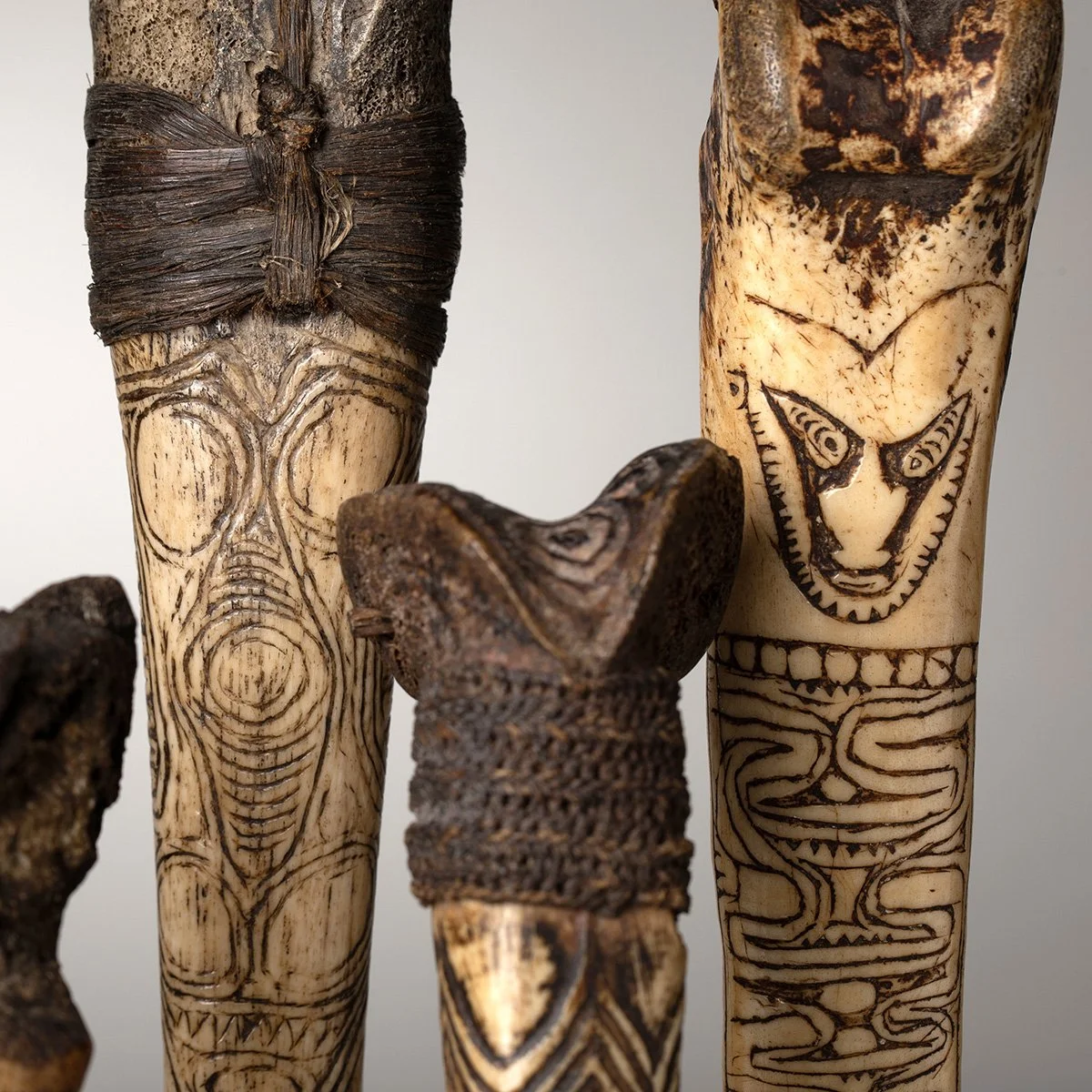 Image 4 of 11
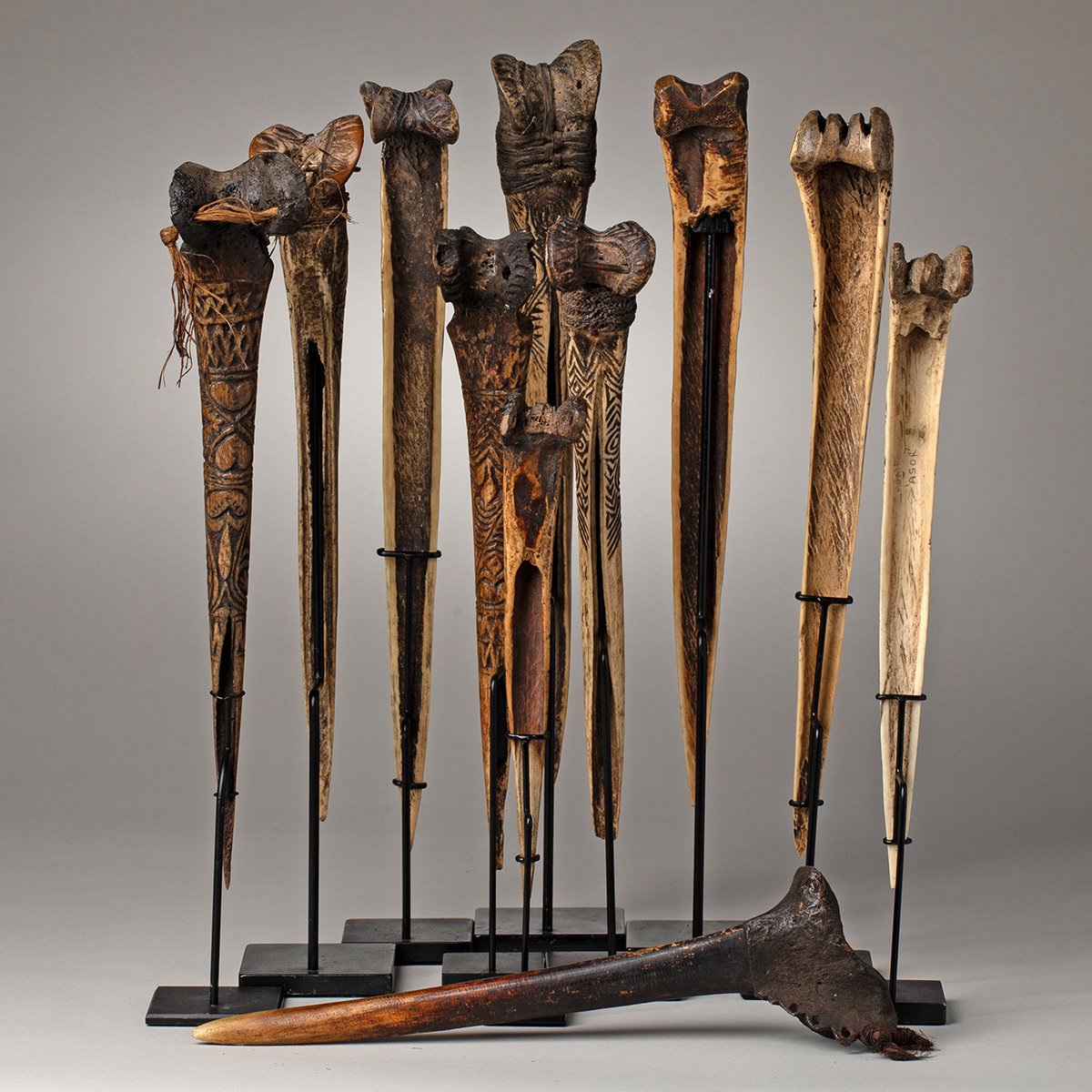 Image 5 of 11
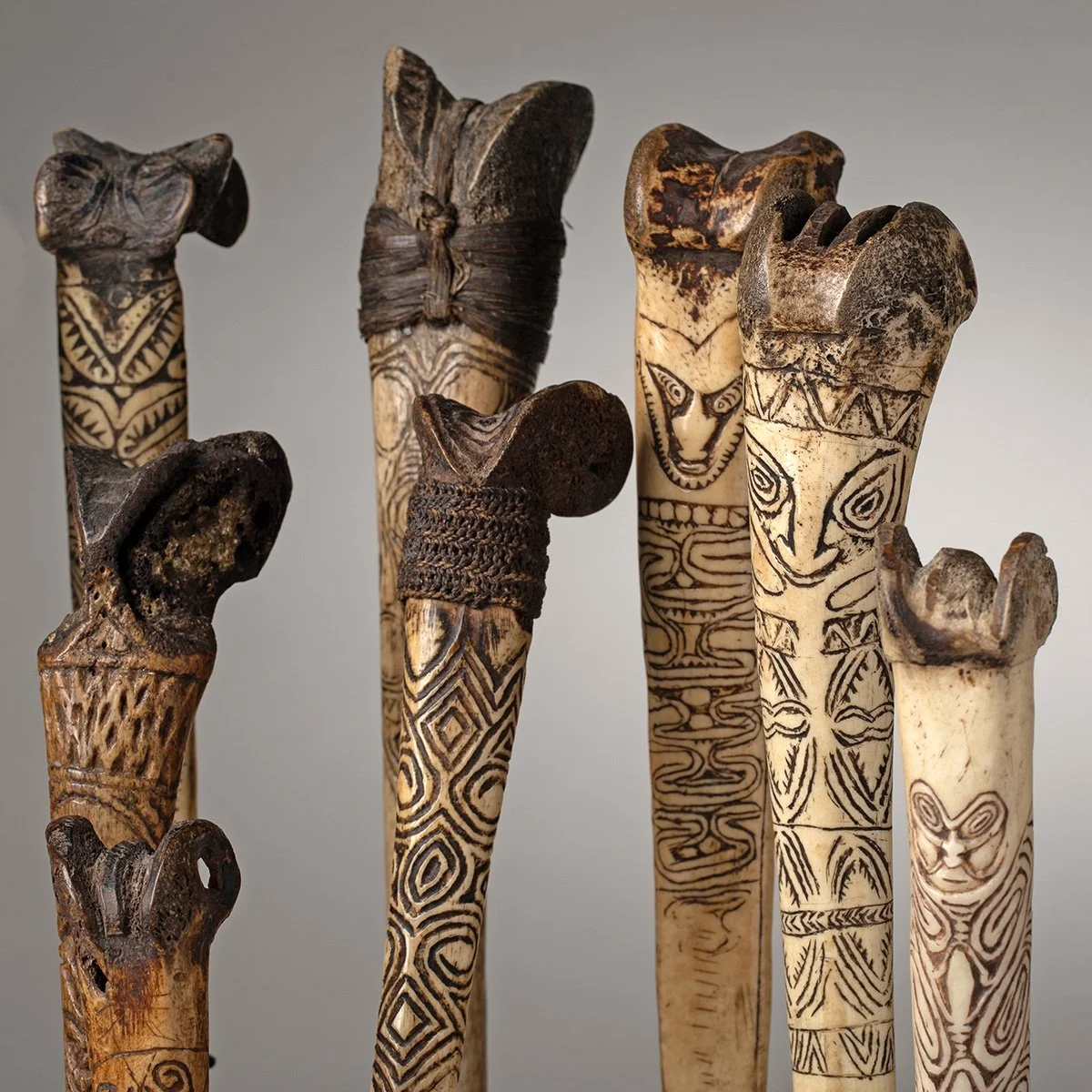 Image 6 of 11
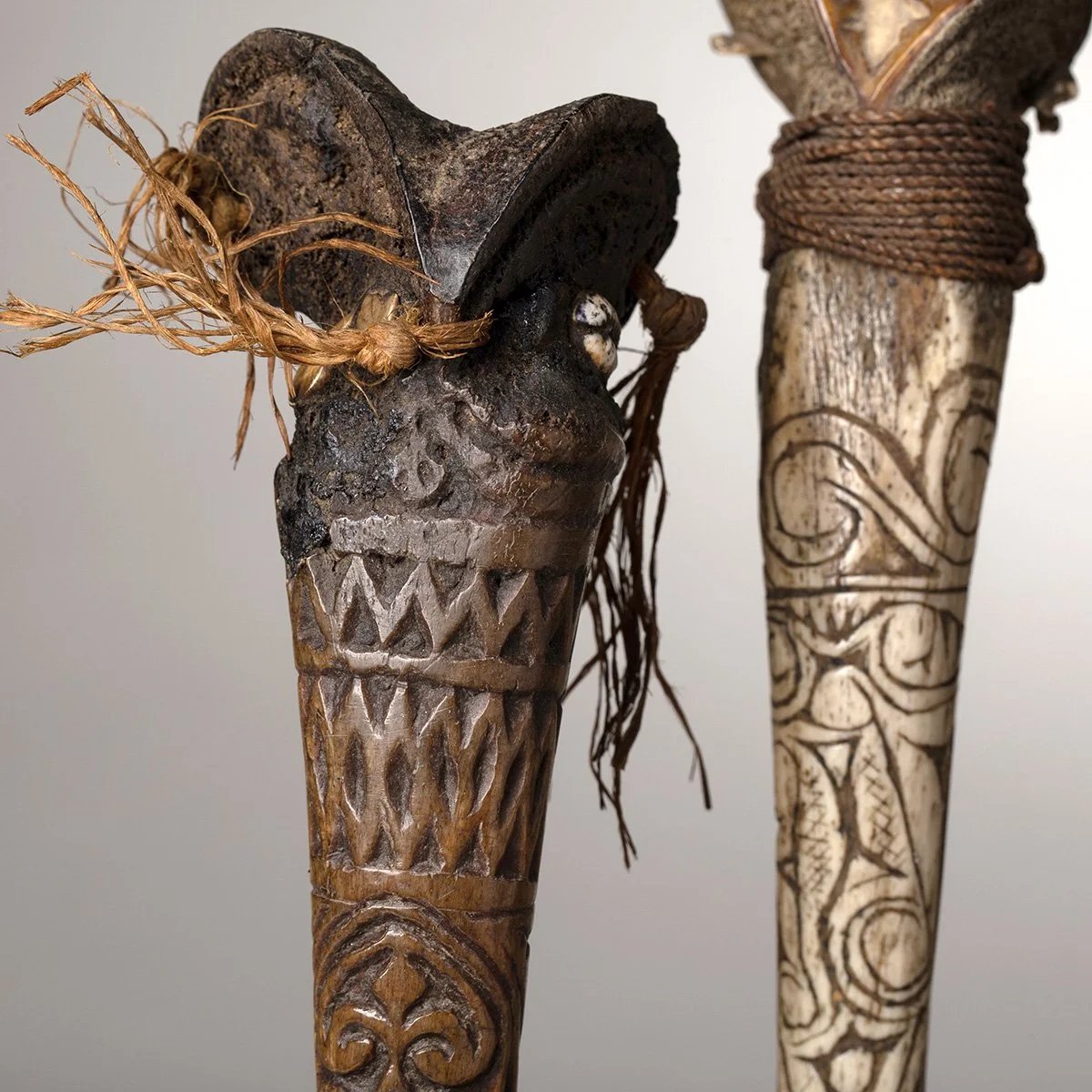 Image 7 of 11
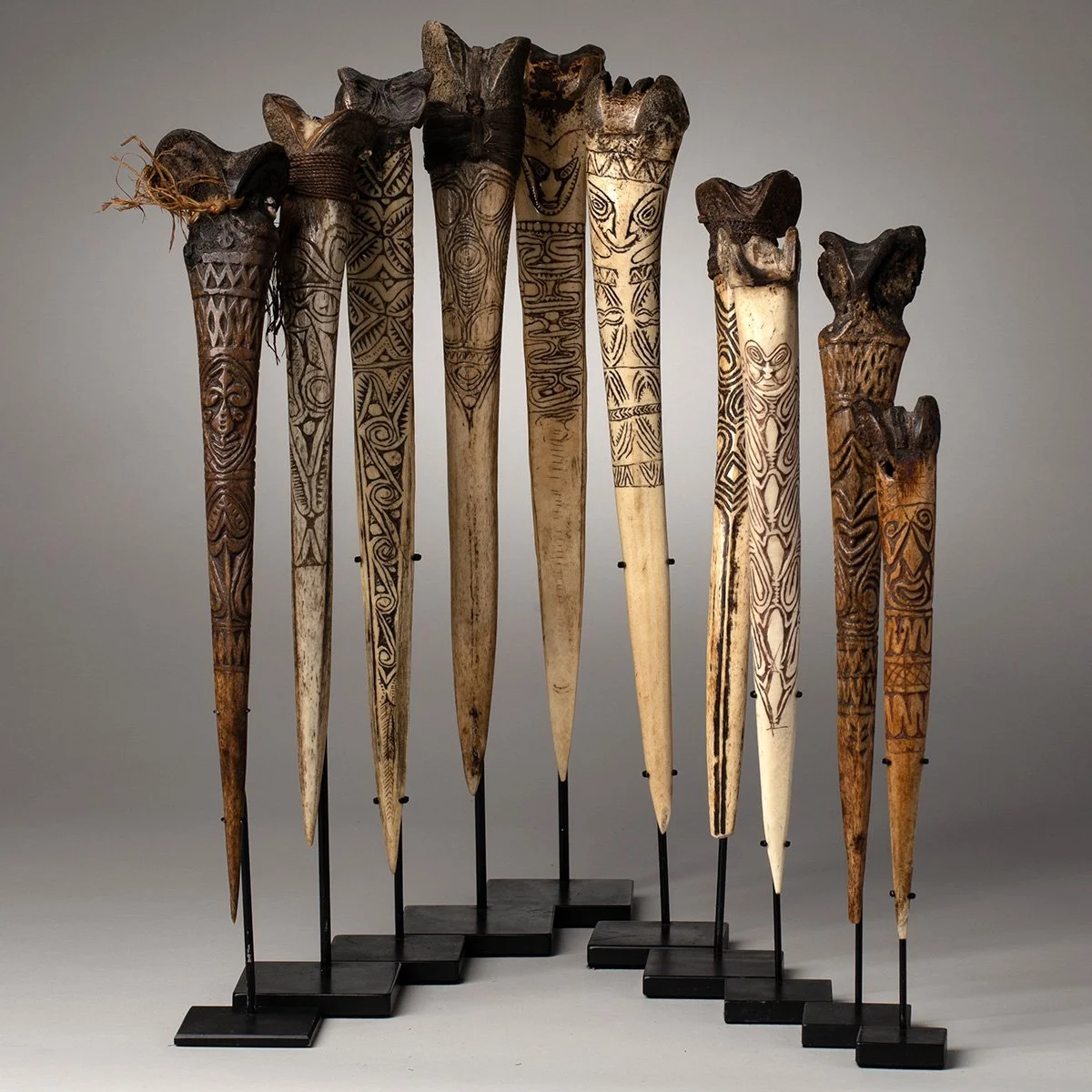 Image 8 of 11
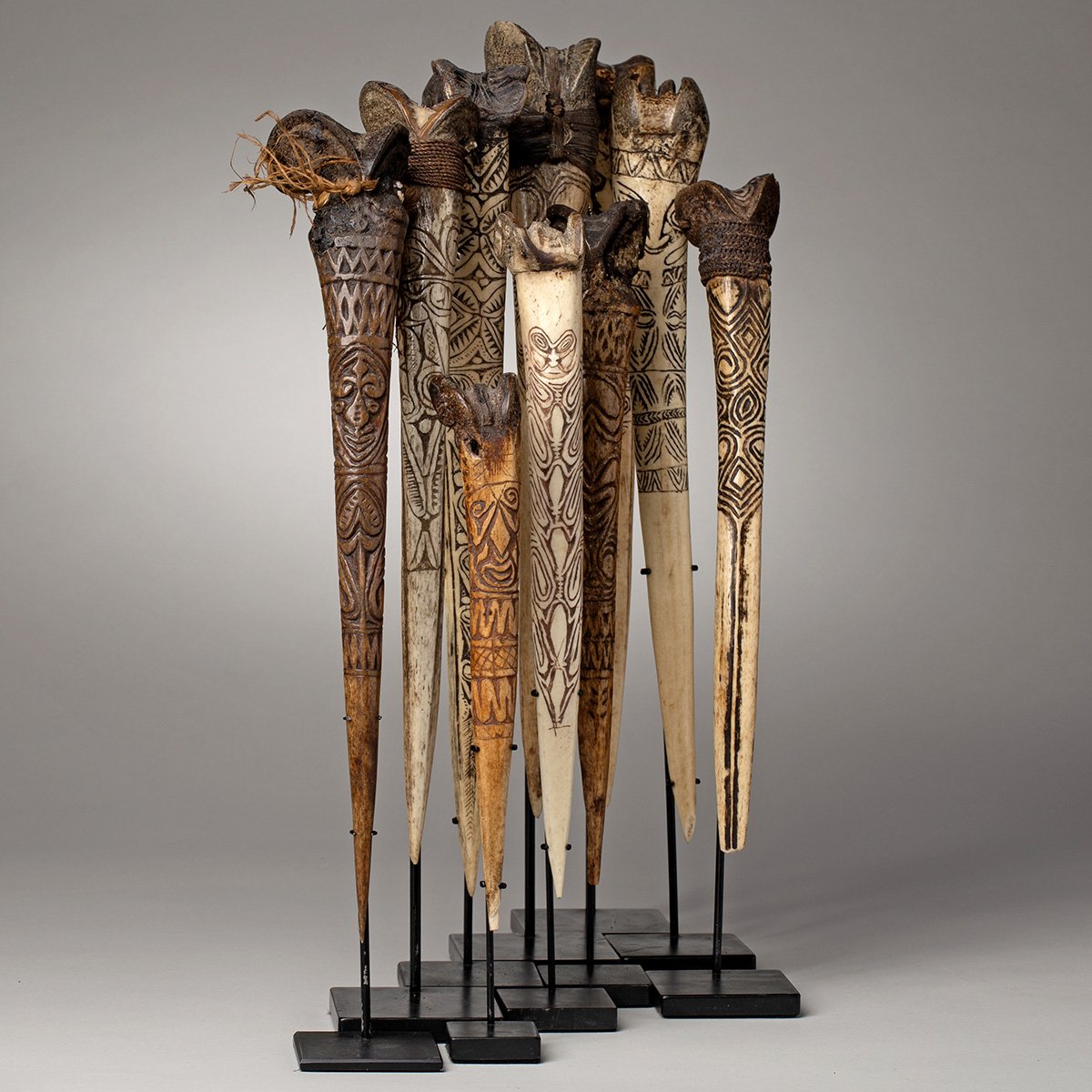 Image 9 of 11
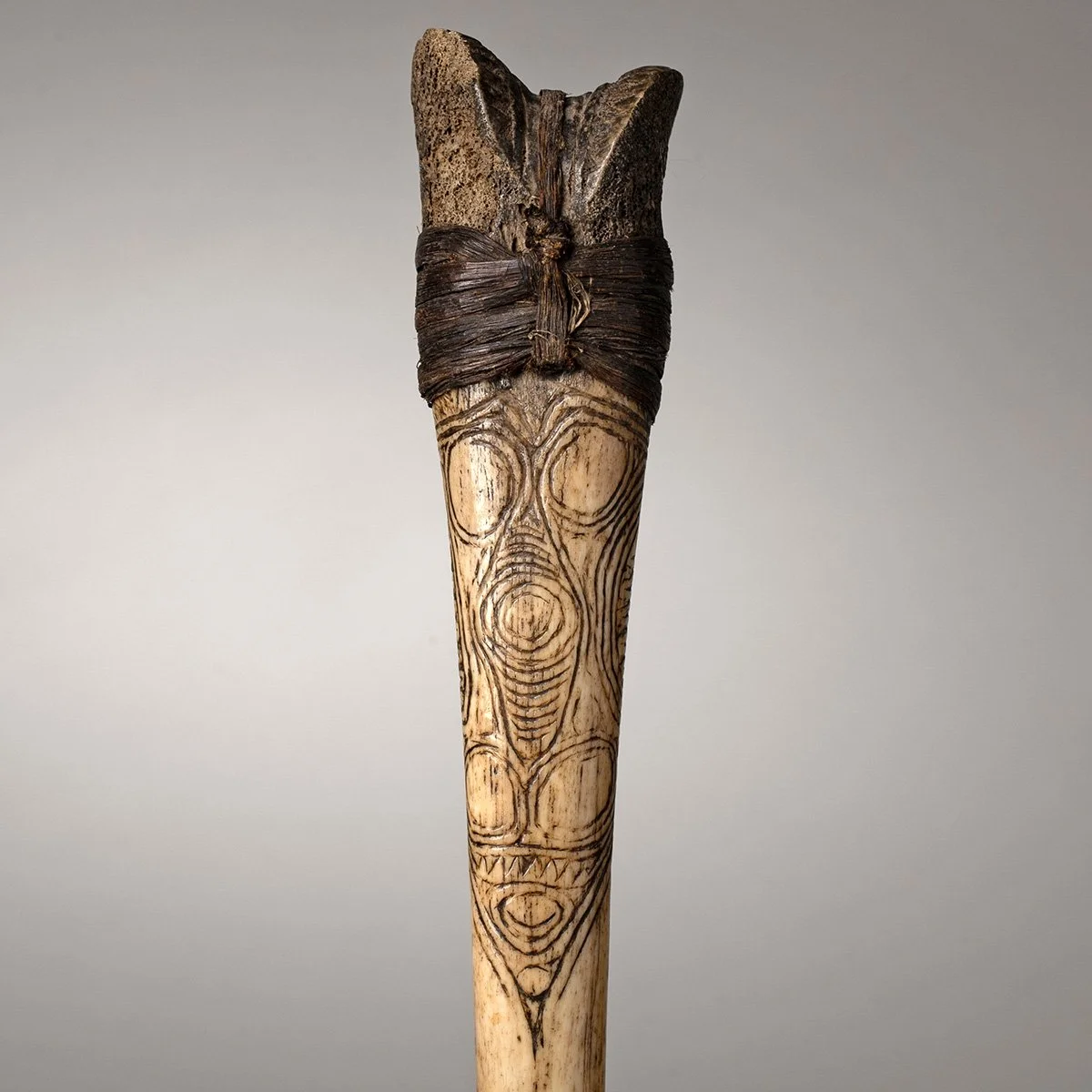 Image 10 of 11
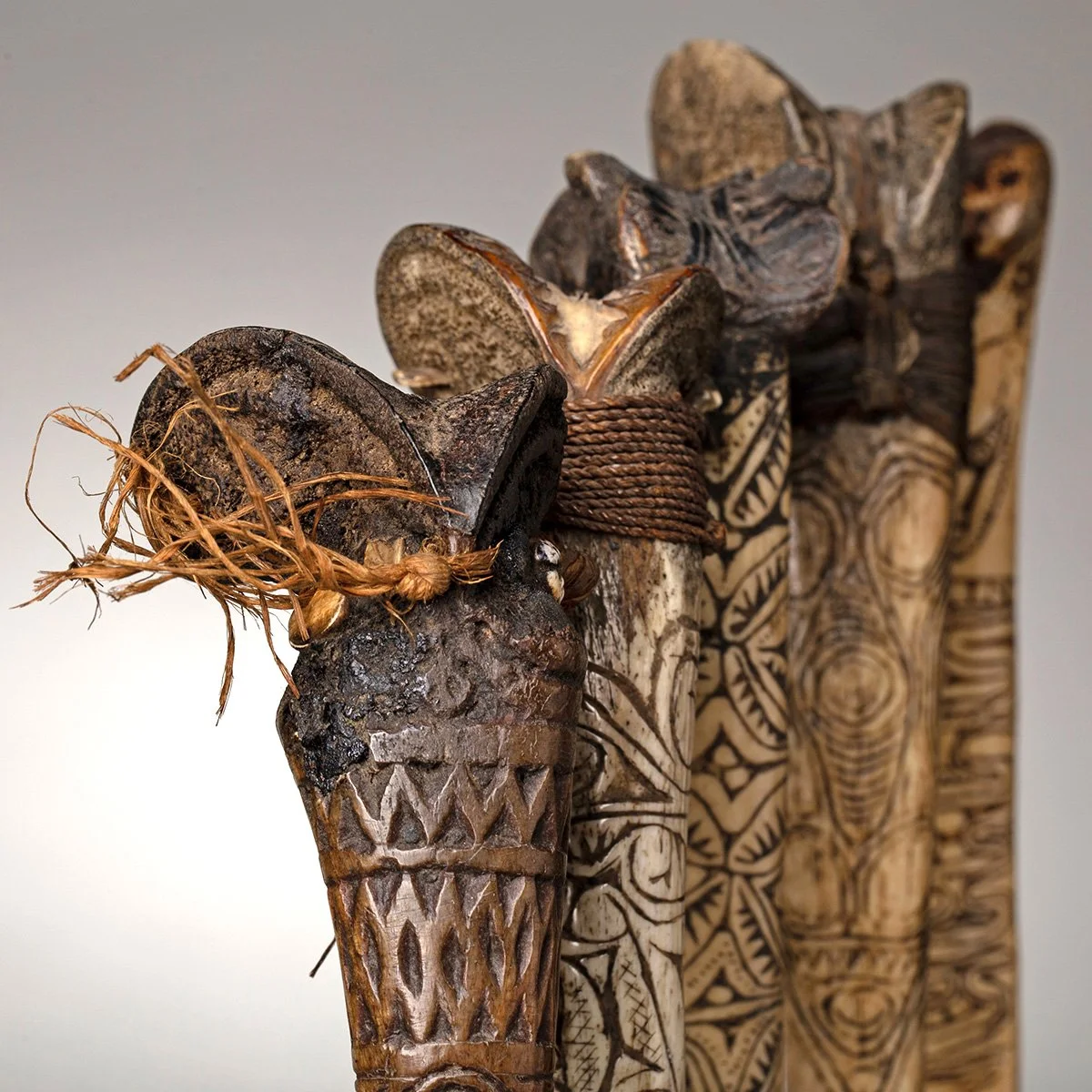 Image 11 of 11