Papuan Gulf, Papua New Guinea
1870s
Bark, natural pigments
Height: 3½ in (8.9 cm)
Provenance: Reverend James Chalmers, London Missionary Society (printed label on inside); Kennedy Collection
Reverend James Chalmers (1841–1901) was a Scottish missionary of the London Missionary Society who spent nearly three decades in Papua New Guinea, charting previously unrecorded regions including the Fly River area and establishing peaceful contact with communities across the Gulf Coast during the 1870s and 1880s. Known as the "Livingstone of New Guinea," Chalmers was among the earliest Europeans to document and collect objects from the Papuan Gulf, and pieces that passed through his hands carry a provenance from the opening years of documented contact in the region. He was martyred on Goaribari Island in 1901, and objects from his collection are among the earliest datable examples of Gulf Coast material to enter European hands.
This engraved bark belt, with its printed London Missionary Society label intact on the inside, is among the most directly traceable examples of Gulf Coast bark work from this period, the label providing physical evidence of its collection history rather than a reconstructed attribution. The surface is engraved with curvilinear motifs characteristic of Papuan Gulf decorative traditions, the incised lines carrying the depth and clarity of well-executed work. The form, scale, and surface treatment are consistent with the bark belts documented from the Gulf Coast in the late nineteenth century, and the belt subsequently entered the Kennedy Collection before reaching the current holding.
We ship free anywhere in the world, fully insured, packed by hand.
Papuan Gulf, Papua New Guinea
1870s
Bark, natural pigments
Height: 3½ in (8.9 cm)
Provenance: Reverend James Chalmers, London Missionary Society (printed label on inside); Kennedy Collection
Reverend James Chalmers (1841–1901) was a Scottish missionary of the London Missionary Society who spent nearly three decades in Papua New Guinea, charting previously unrecorded regions including the Fly River area and establishing peaceful contact with communities across the Gulf Coast during the 1870s and 1880s. Known as the "Livingstone of New Guinea," Chalmers was among the earliest Europeans to document and collect objects from the Papuan Gulf, and pieces that passed through his hands carry a provenance from the opening years of documented contact in the region. He was martyred on Goaribari Island in 1901, and objects from his collection are among the earliest datable examples of Gulf Coast material to enter European hands.
This engraved bark belt, with its printed London Missionary Society label intact on the inside, is among the most directly traceable examples of Gulf Coast bark work from this period, the label providing physical evidence of its collection history rather than a reconstructed attribution. The surface is engraved with curvilinear motifs characteristic of Papuan Gulf decorative traditions, the incised lines carrying the depth and clarity of well-executed work. The form, scale, and surface treatment are consistent with the bark belts documented from the Gulf Coast in the late nineteenth century, and the belt subsequently entered the Kennedy Collection before reaching the current holding.
We ship free anywhere in the world, fully insured, packed by hand.


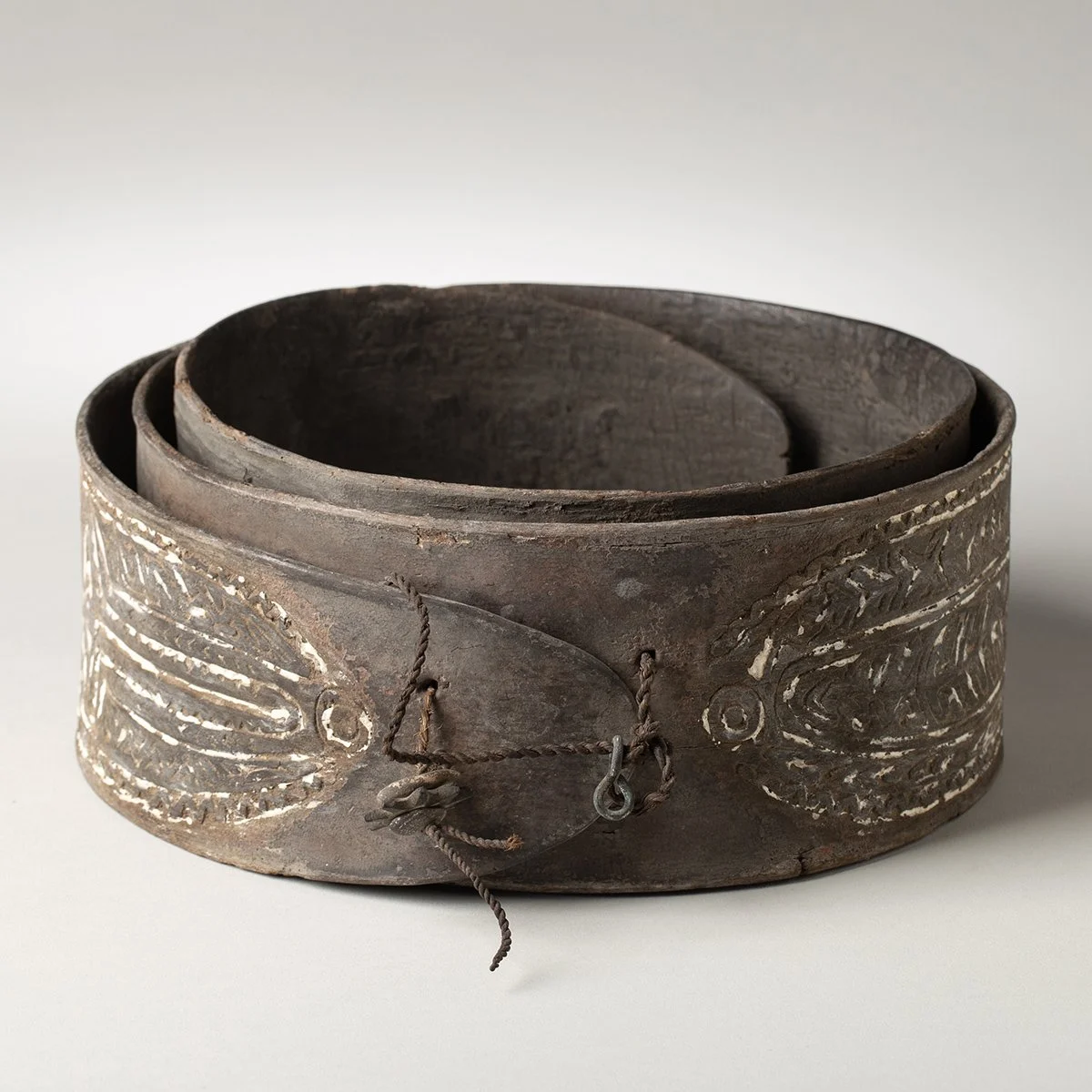 Image 1 of 6
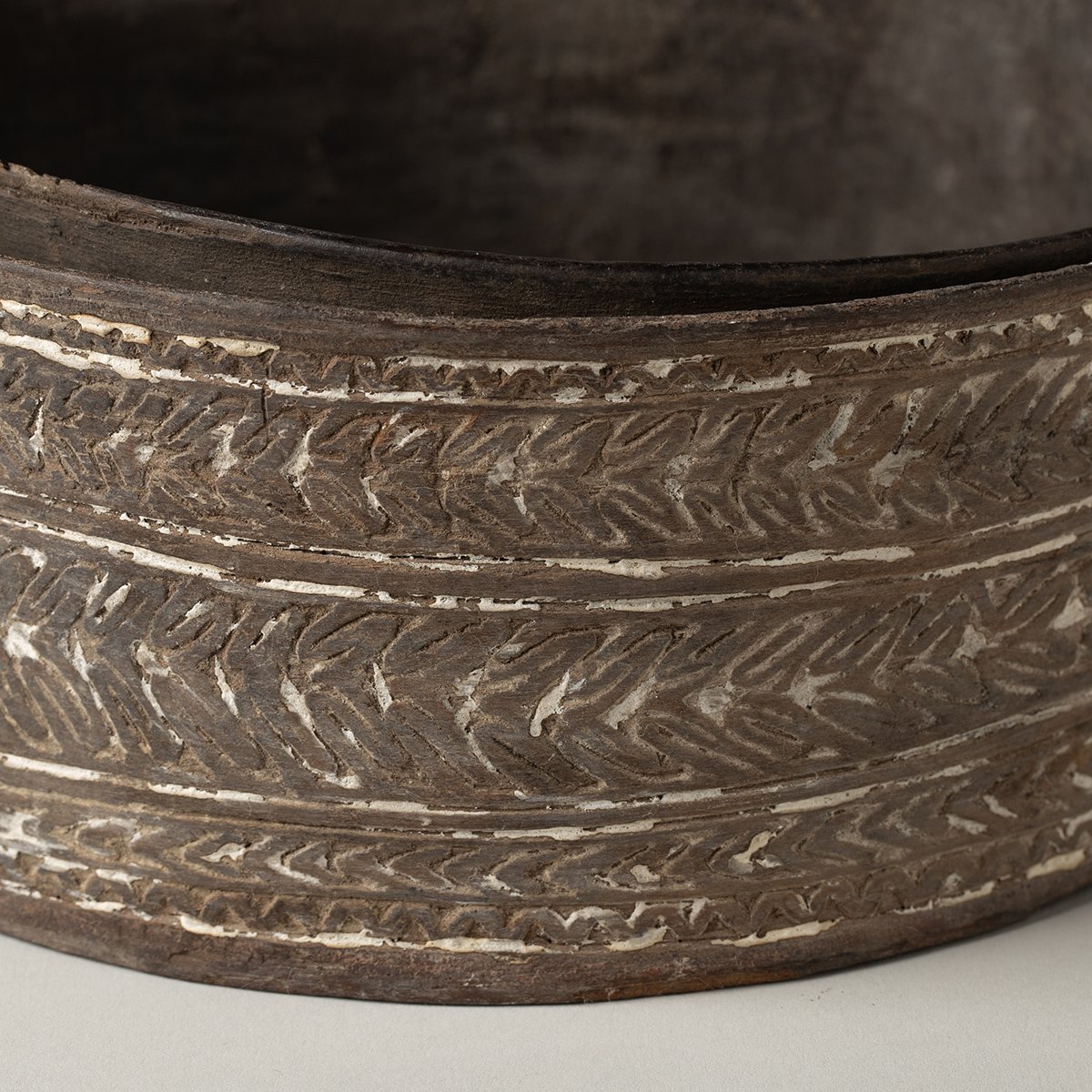 Image 2 of 6
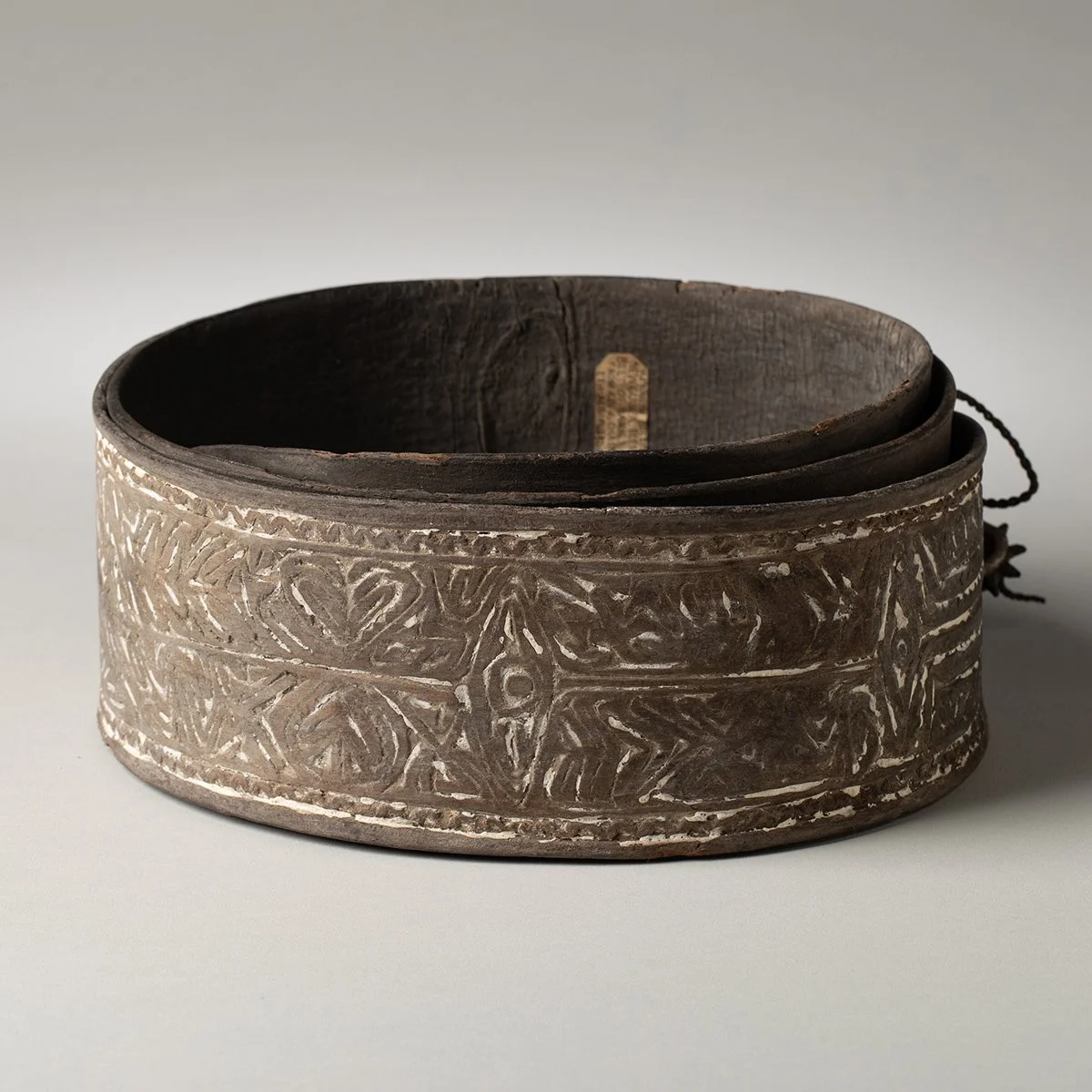 Image 3 of 6
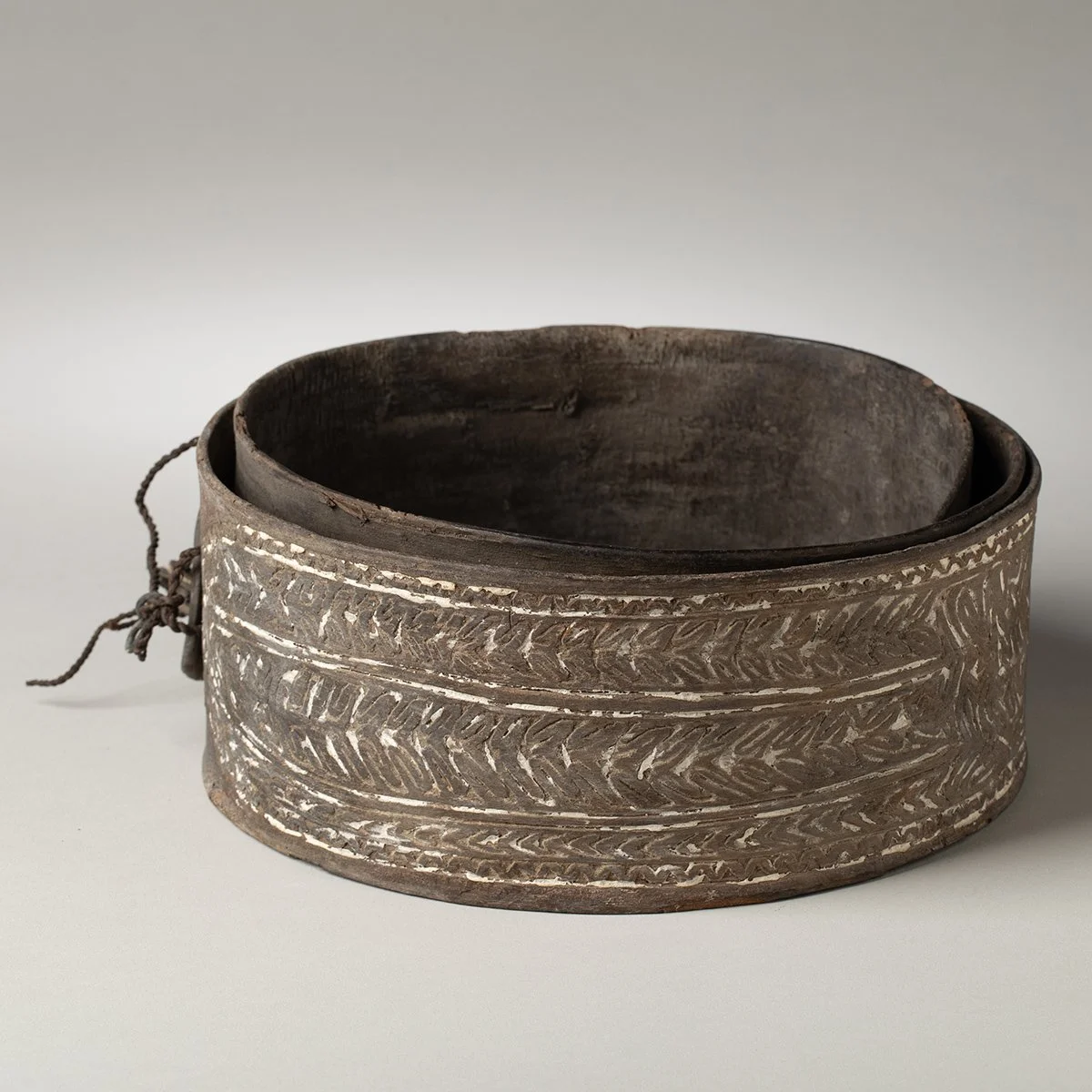 Image 4 of 6
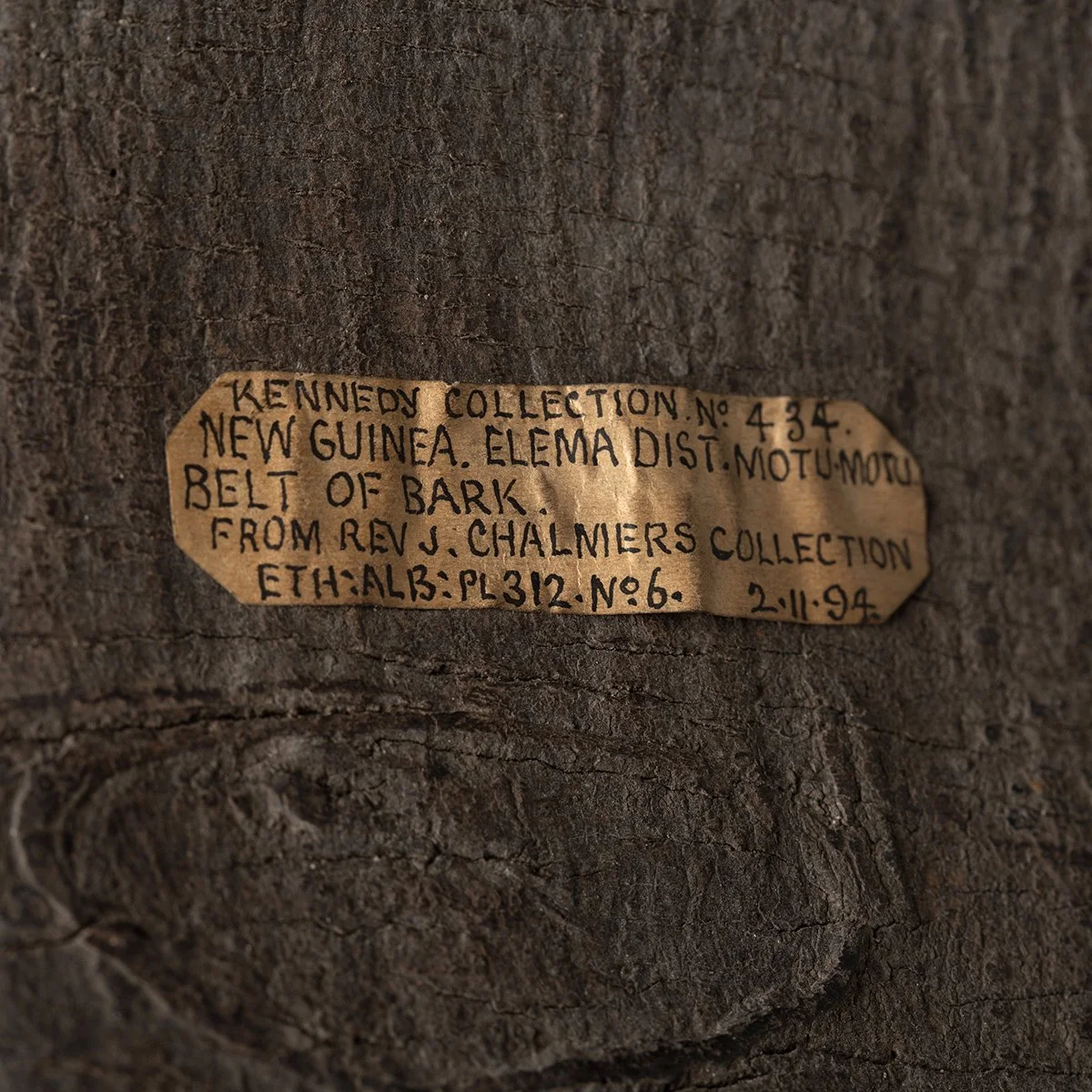 Image 5 of 6
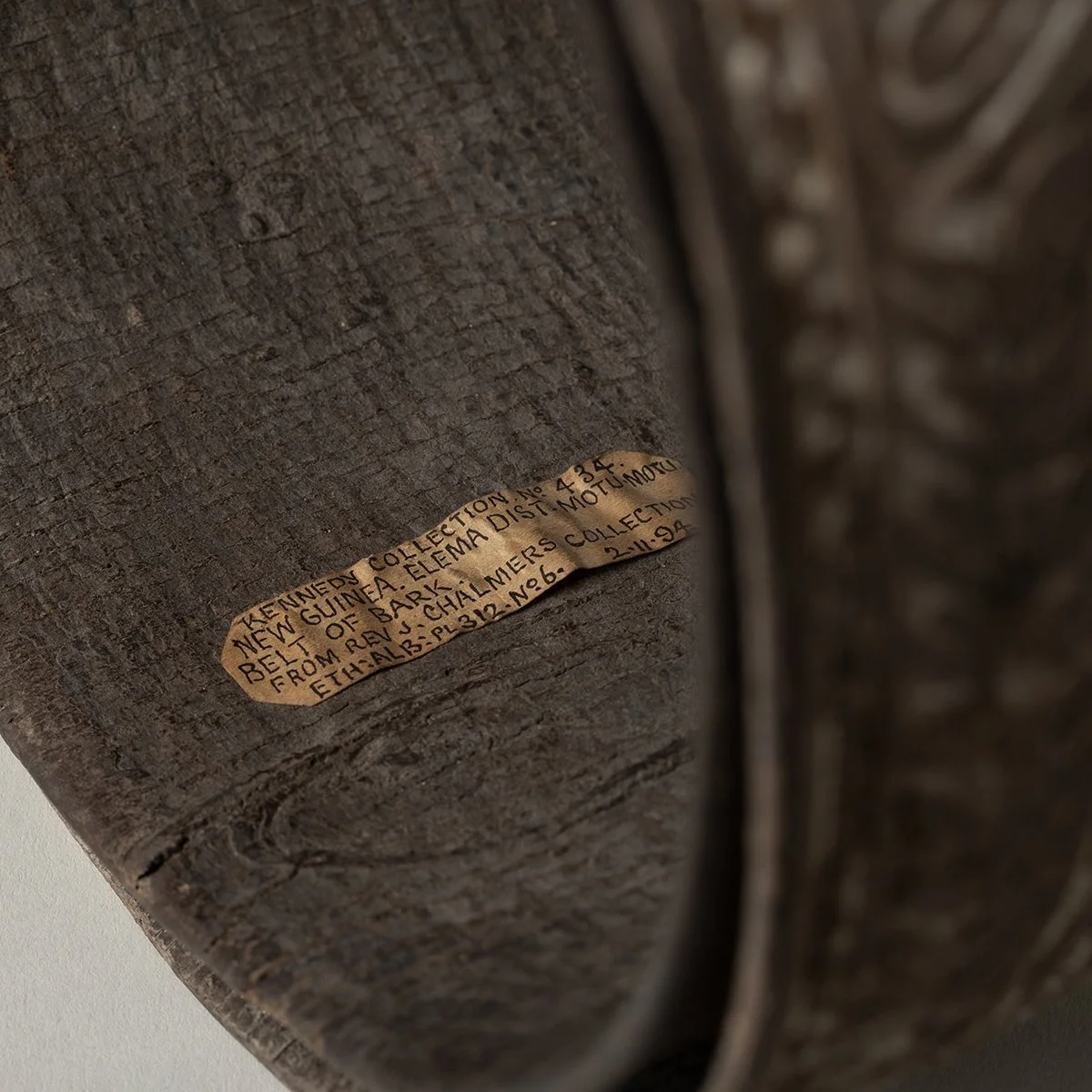 Image 6 of 6