

 Image 1 of 5
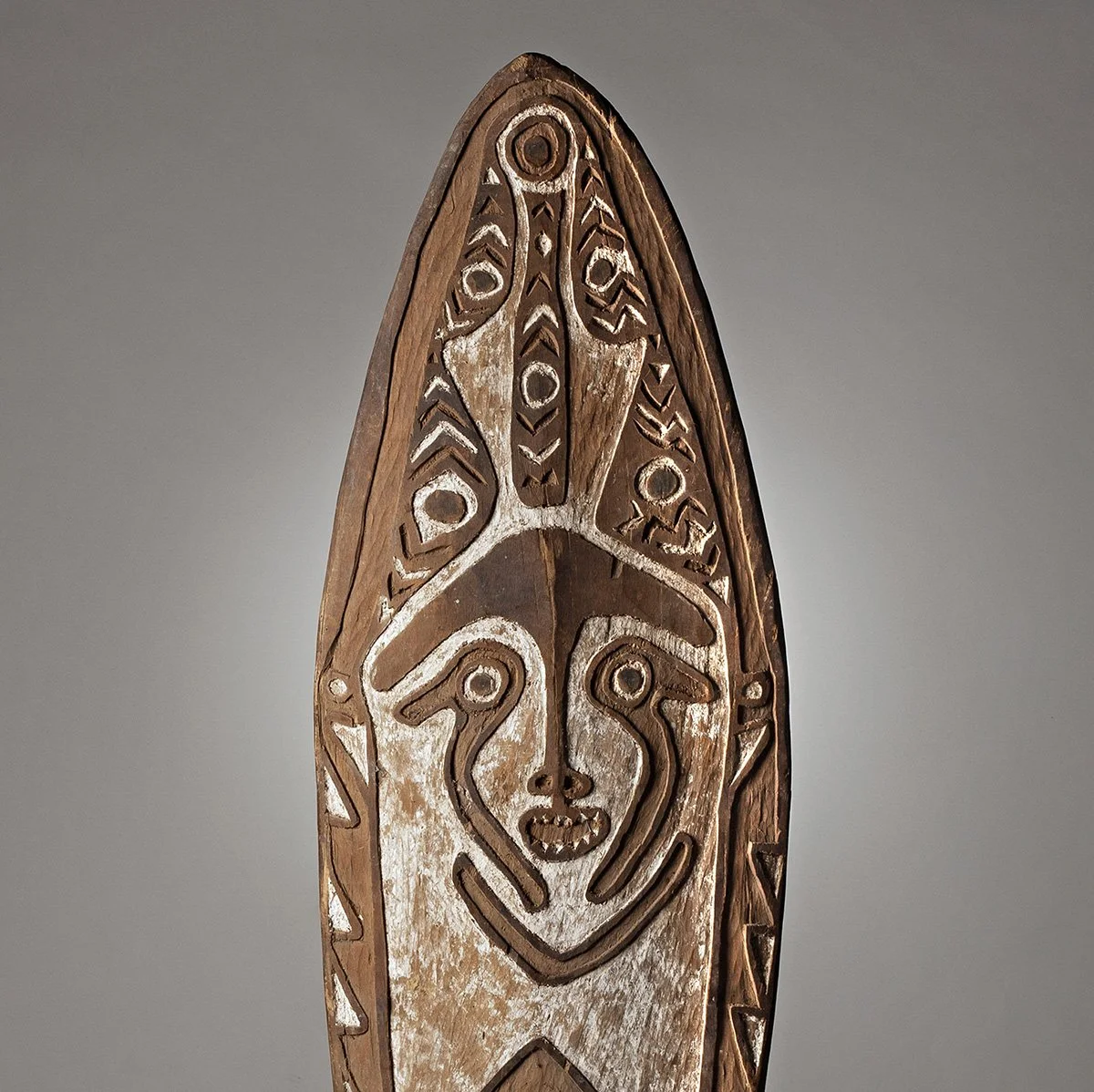 Image 2 of 5
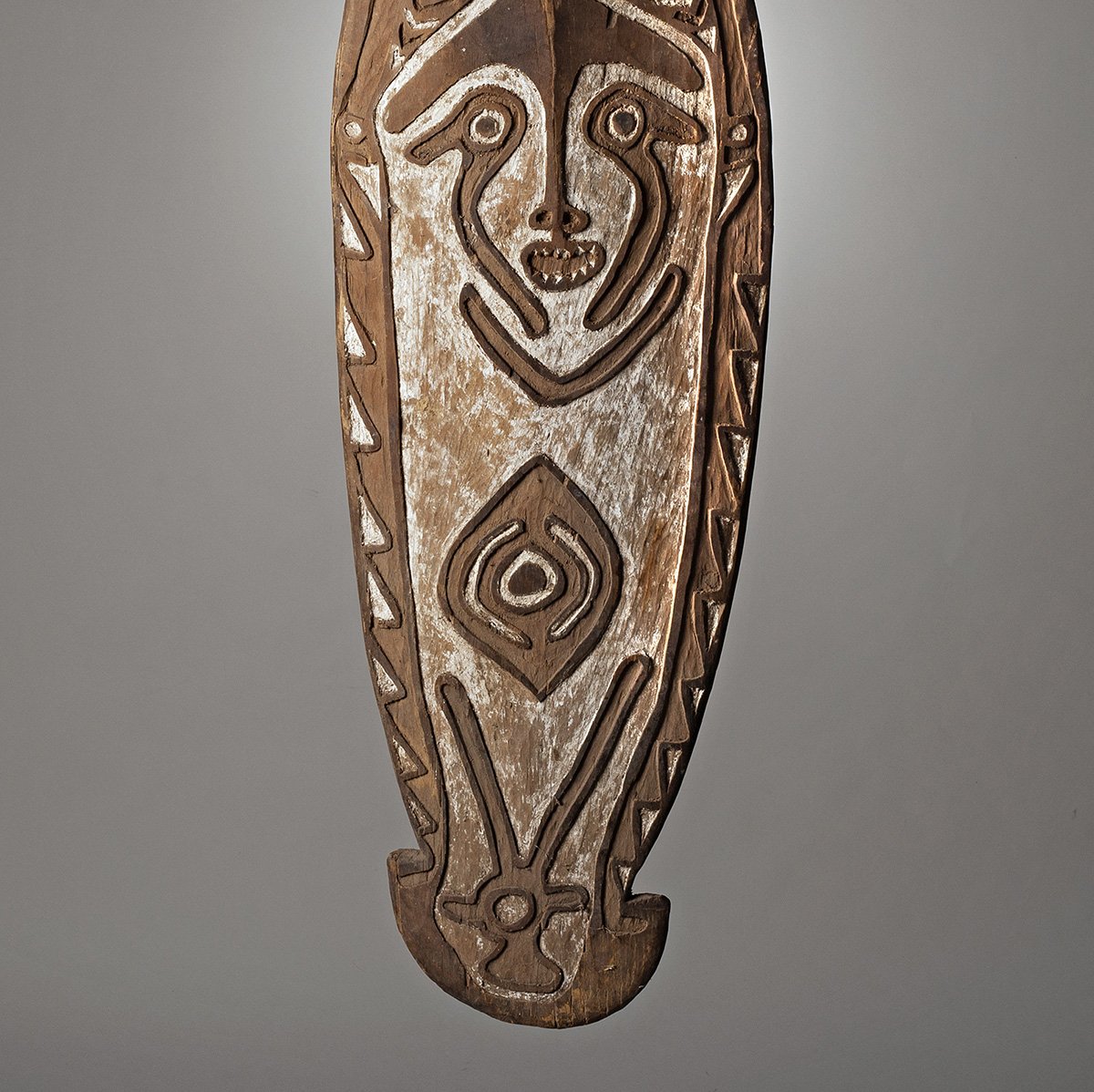 Image 3 of 5
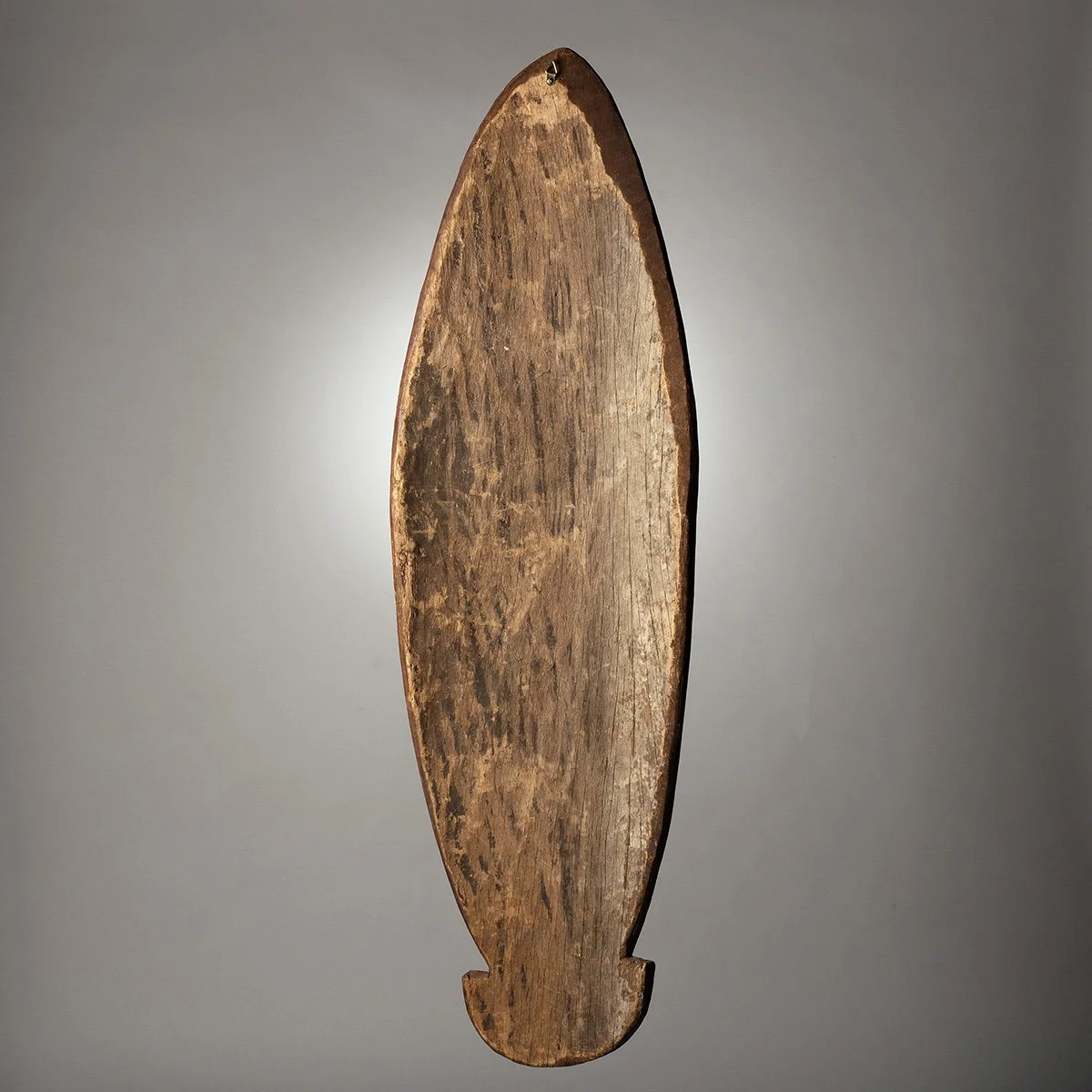 Image 4 of 5
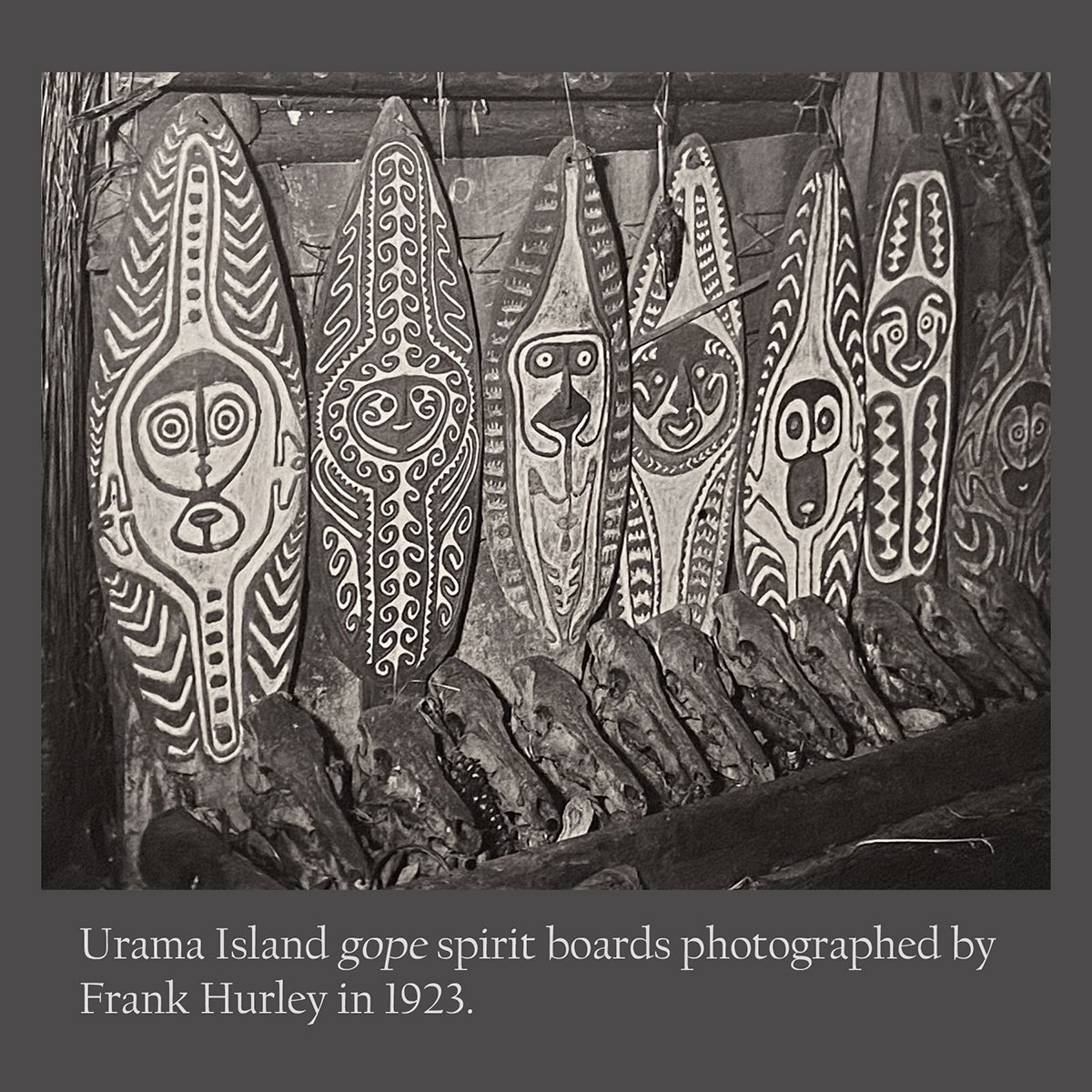 Image 5 of 5
Urama Island, Papuan Gulf, Papua New Guinea
Early 20th century
Wood, white lime, ocher, black charcoal
Height: 47¼ in (120 cm); Width: 15 in (38 cm)
Provenance: Private collection, Perth, Australia; Chris and Anna Thorpe, Sydney, Australia
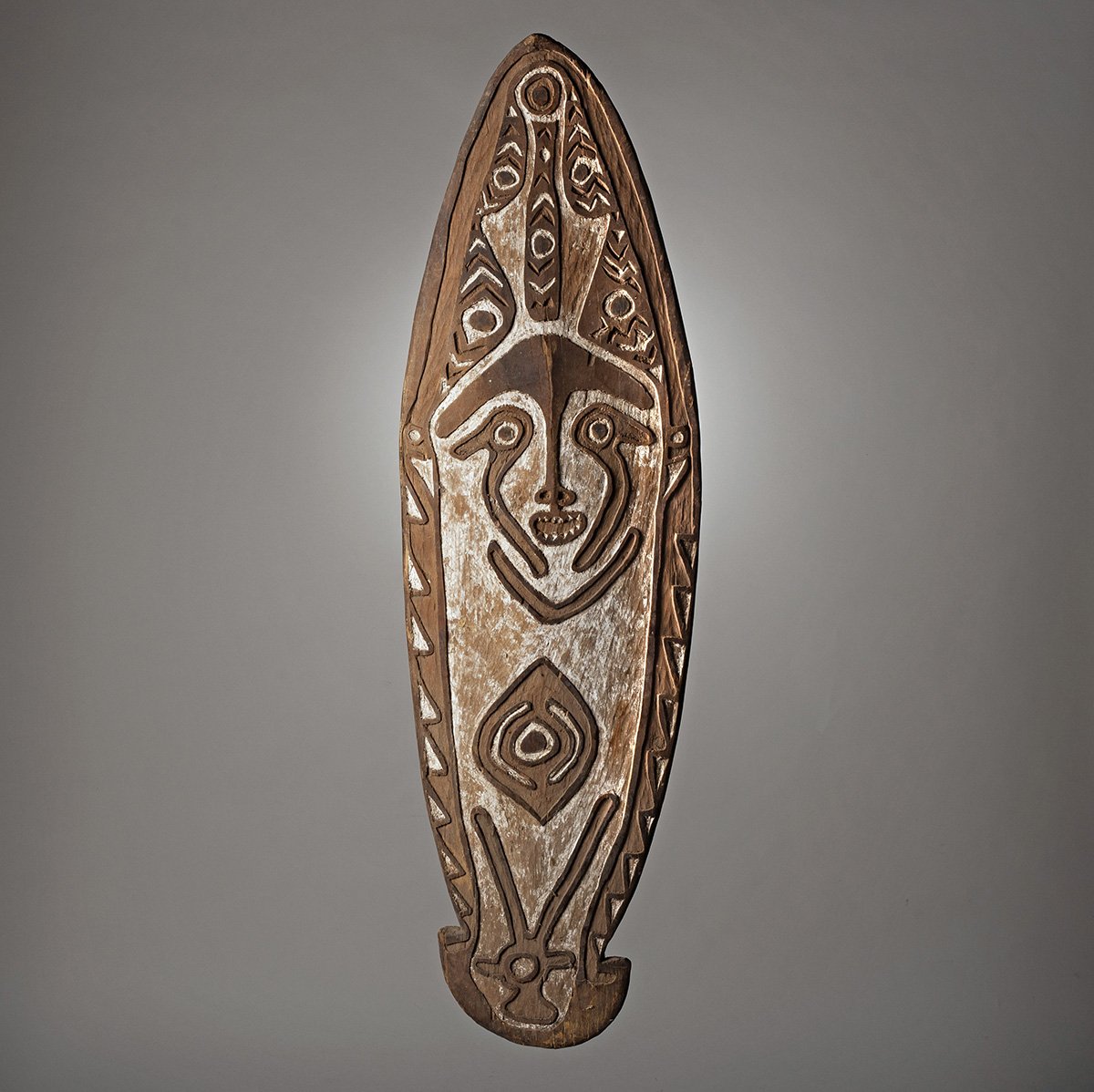
Spirit boards of the Papuan Gulf — known as gope among the Kerewa, Urama, Era, and Turama peoples, kwoi among the Purari, and hohao among the Elema — were created as dwelling places for individual spirits called imunu, each associated with a specific feature of the landscape and linked to the clan within whose territory it resided. The boards were kept in clan shrines within the communal longhouse, massed together with figures and skulls, where their accumulated supernatural power was understood to ensure the fertility, prosperity, and military success of the clan. The navel, always present at the center of a spirit board, was the portal through which the imunu entered the object and the element understood to supernaturally enliven it.
Urama Island was a recognized center of spirit board production in the western Papuan Gulf, its carvers known for a more ovoidal form and abstract compositional style relative to other regional groups, and many early boards in collections today were originally traded from the island. This board is typically carved from an old war canoe — which itself embodied clan essence — and the subtle concave surface of the reverse is consistent with that origin. The relief-carved geometric motifs are highlighted with white lime, ocher, and black charcoal; the prominent navel is framed by concentric arcs; and a V-shaped motif below likely encodes references to reproductive power and prosperity within the clan's oral tradition.
We ship free anywhere in the world, fully insured, packed by hand.
Urama Island, Papuan Gulf, Papua New Guinea
Early 20th century
Wood, white lime, ocher, black charcoal
Height: 47¼ in (120 cm); Width: 15 in (38 cm)
Provenance: Private collection, Perth, Australia; Chris and Anna Thorpe, Sydney, Australia
Spirit boards of the Papuan Gulf — known as gope among the Kerewa, Urama, Era, and Turama peoples, kwoi among the Purari, and hohao among the Elema — were created as dwelling places for individual spirits called imunu, each associated with a specific feature of the landscape and linked to the clan within whose territory it resided. The boards were kept in clan shrines within the communal longhouse, massed together with figures and skulls, where their accumulated supernatural power was understood to ensure the fertility, prosperity, and military success of the clan. The navel, always present at the center of a spirit board, was the portal through which the imunu entered the object and the element understood to supernaturally enliven it.
Urama Island was a recognized center of spirit board production in the western Papuan Gulf, its carvers known for a more ovoidal form and abstract compositional style relative to other regional groups, and many early boards in collections today were originally traded from the island. This board is typically carved from an old war canoe — which itself embodied clan essence — and the subtle concave surface of the reverse is consistent with that origin. The relief-carved geometric motifs are highlighted with white lime, ocher, and black charcoal; the prominent navel is framed by concentric arcs; and a V-shaped motif below likely encodes references to reproductive power and prosperity within the clan's oral tradition.
We ship free anywhere in the world, fully insured, packed by hand.