

 Image 1 of 3
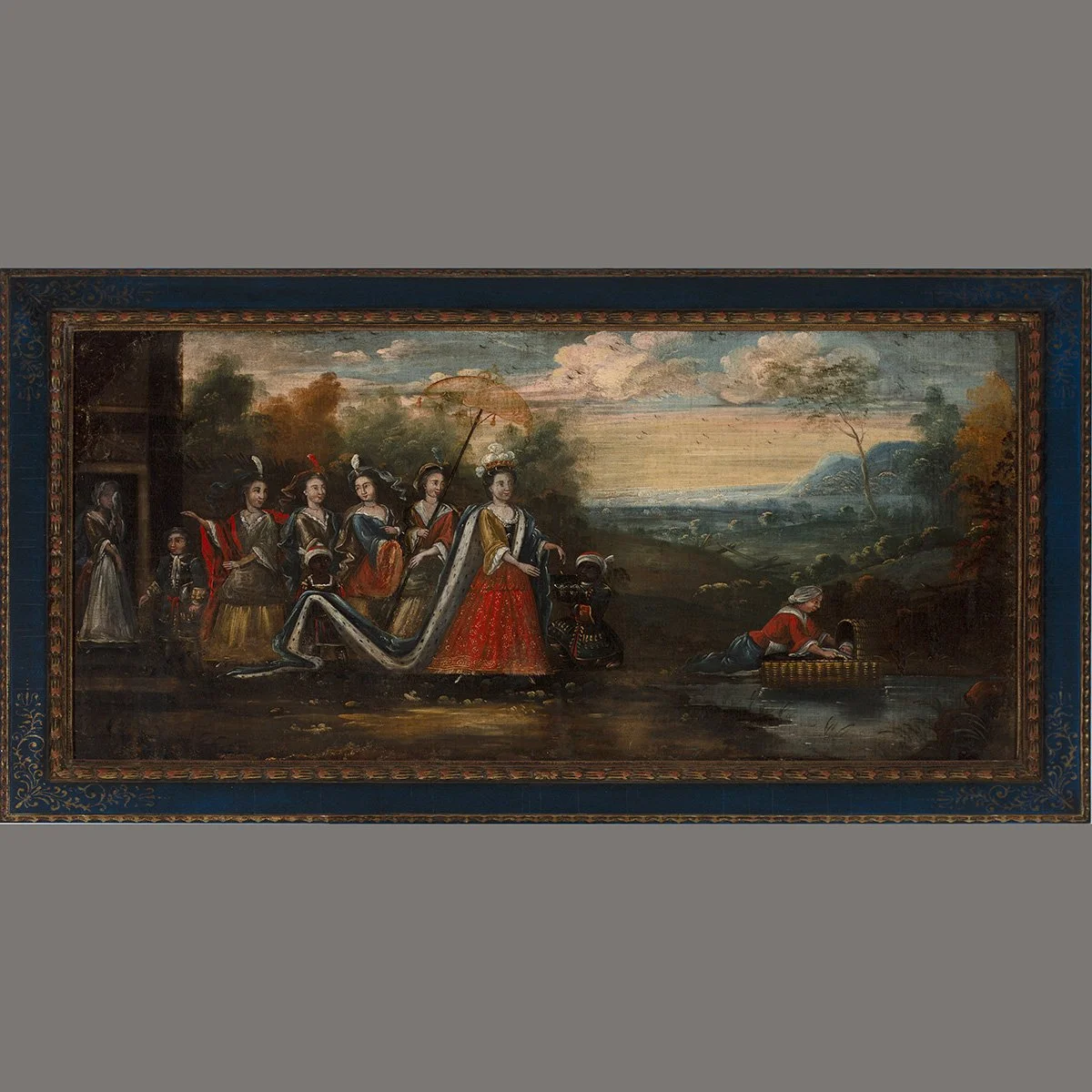 Image 2 of 3
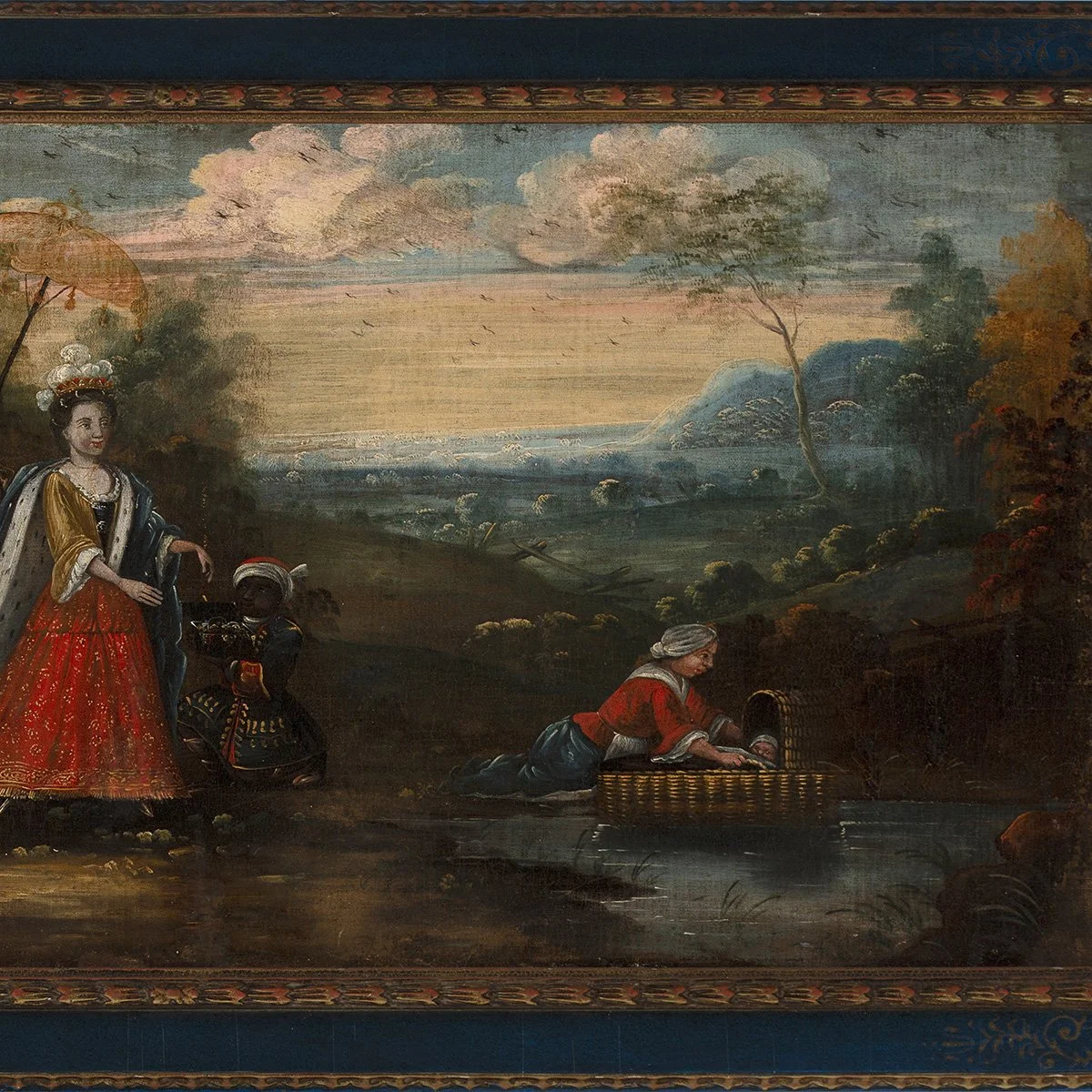 Image 3 of 3
Viceroyalty of Peru
Late 17th century
Oil on canvas, relined
Height 29" (73.7 cm); width 47" (119.4 cm) including frame
Provenance: George Brown, Toronto
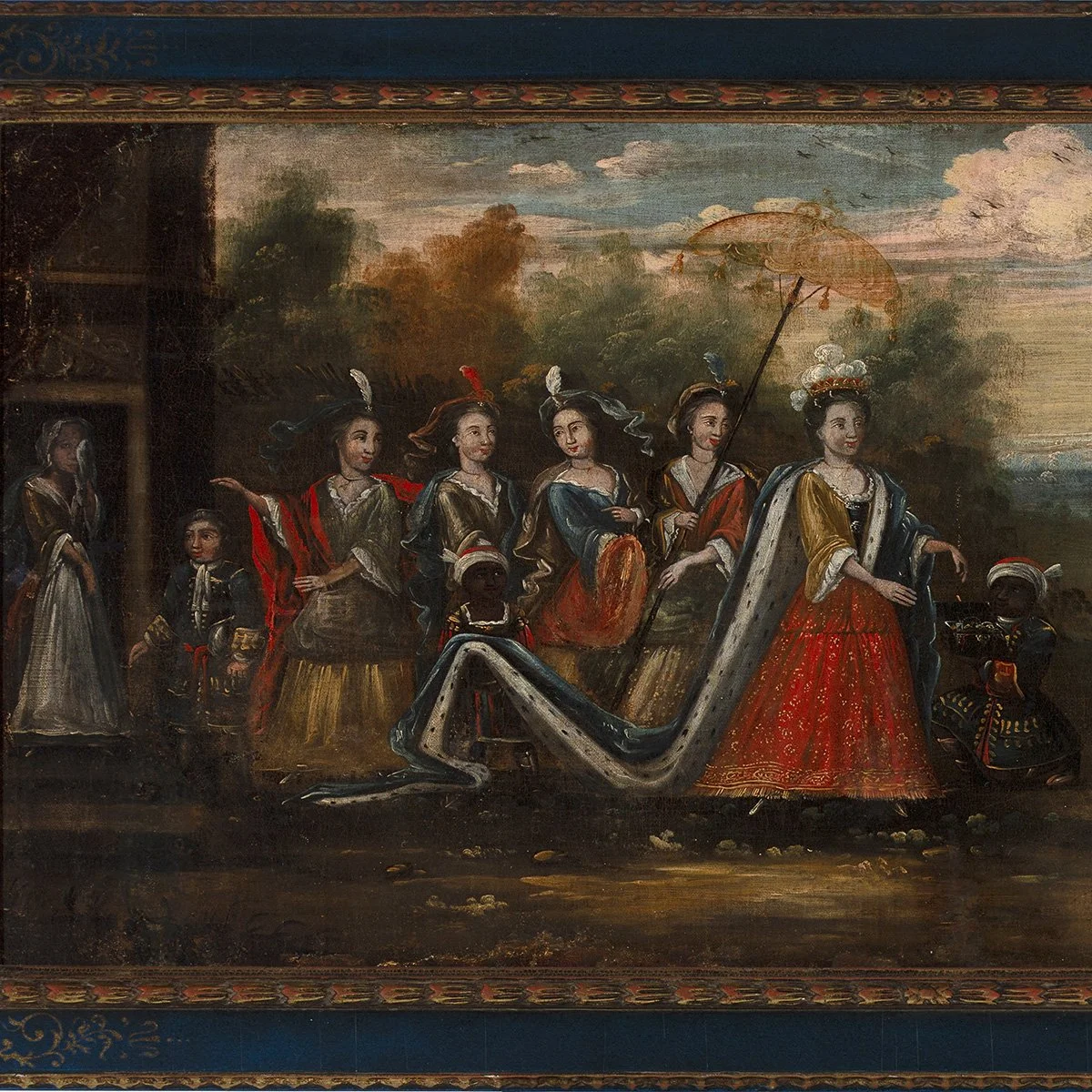
This late 17th century Peruvian colonial painting depicts the Finding of Moses, drawn from the Book of Exodus, in which Pharaoh's daughter discovers the infant Moses set adrift on the Nile by his mother to escape the decree ordering the killing of Hebrew male children. In this composition, Pharaoh's daughter and her attendants are dressed in Inca royal garments, a deliberate visual transposition that was characteristic of Viceroyalty of Peru painting, in which Biblical figures were rendered in indigenous Andean dress to make sacred narratives legible and immediate to local audiences. The presence of a young Black servant in the retinue further reflects the multiethnic social world of colonial Peru, where African, indigenous, and Spanish populations coexisted under the viceregal system.
The practice of dressing Old and New Testament figures in Andean costume was a distinctive feature of Cusco School and broader Peruvian colonial painting, rooted in the Jesuit and Franciscan missionary strategy of making Christian iconography accessible through visual cultural translation. The substitution of Inca royal dress for Egyptian court costume also reflects the colonial tendency to equate Andean nobility with the ancient civilizations of the Old World, a rhetorical move that simultaneously elevated indigenous status and subordinated it within a Christian framework. Works of this type occupy a specific and well documented place within the scholarship on colonial Latin American art.
The canvas has been relined, a standard conservation procedure that preserves the original paint layer, and retains a frame by Gold Leaf Framers of Santa Fe. The Toronto provenance through George Brown places the painting within the category of Spanish Colonial works that entered North American private collections in the 20th century outside the major dealer networks. The late 17th century date and Peruvian colonial origin give the work a position within one of the most actively studied periods of Andean painting production.
We ship free anywhere in the world, fully insured, packed by hand.
Viceroyalty of Peru
Late 17th century
Oil on canvas, relined
Height 29" (73.7 cm); width 47" (119.4 cm) including frame
Provenance: George Brown, Toronto
This late 17th century Peruvian colonial painting depicts the Finding of Moses, drawn from the Book of Exodus, in which Pharaoh's daughter discovers the infant Moses set adrift on the Nile by his mother to escape the decree ordering the killing of Hebrew male children. In this composition, Pharaoh's daughter and her attendants are dressed in Inca royal garments, a deliberate visual transposition that was characteristic of Viceroyalty of Peru painting, in which Biblical figures were rendered in indigenous Andean dress to make sacred narratives legible and immediate to local audiences. The presence of a young Black servant in the retinue further reflects the multiethnic social world of colonial Peru, where African, indigenous, and Spanish populations coexisted under the viceregal system.
The practice of dressing Old and New Testament figures in Andean costume was a distinctive feature of Cusco School and broader Peruvian colonial painting, rooted in the Jesuit and Franciscan missionary strategy of making Christian iconography accessible through visual cultural translation. The substitution of Inca royal dress for Egyptian court costume also reflects the colonial tendency to equate Andean nobility with the ancient civilizations of the Old World, a rhetorical move that simultaneously elevated indigenous status and subordinated it within a Christian framework. Works of this type occupy a specific and well documented place within the scholarship on colonial Latin American art.
The canvas has been relined, a standard conservation procedure that preserves the original paint layer, and retains a frame by Gold Leaf Framers of Santa Fe. The Toronto provenance through George Brown places the painting within the category of Spanish Colonial works that entered North American private collections in the 20th century outside the major dealer networks. The late 17th century date and Peruvian colonial origin give the work a position within one of the most actively studied periods of Andean painting production.
We ship free anywhere in the world, fully insured, packed by hand.