

 Image 1 of 5
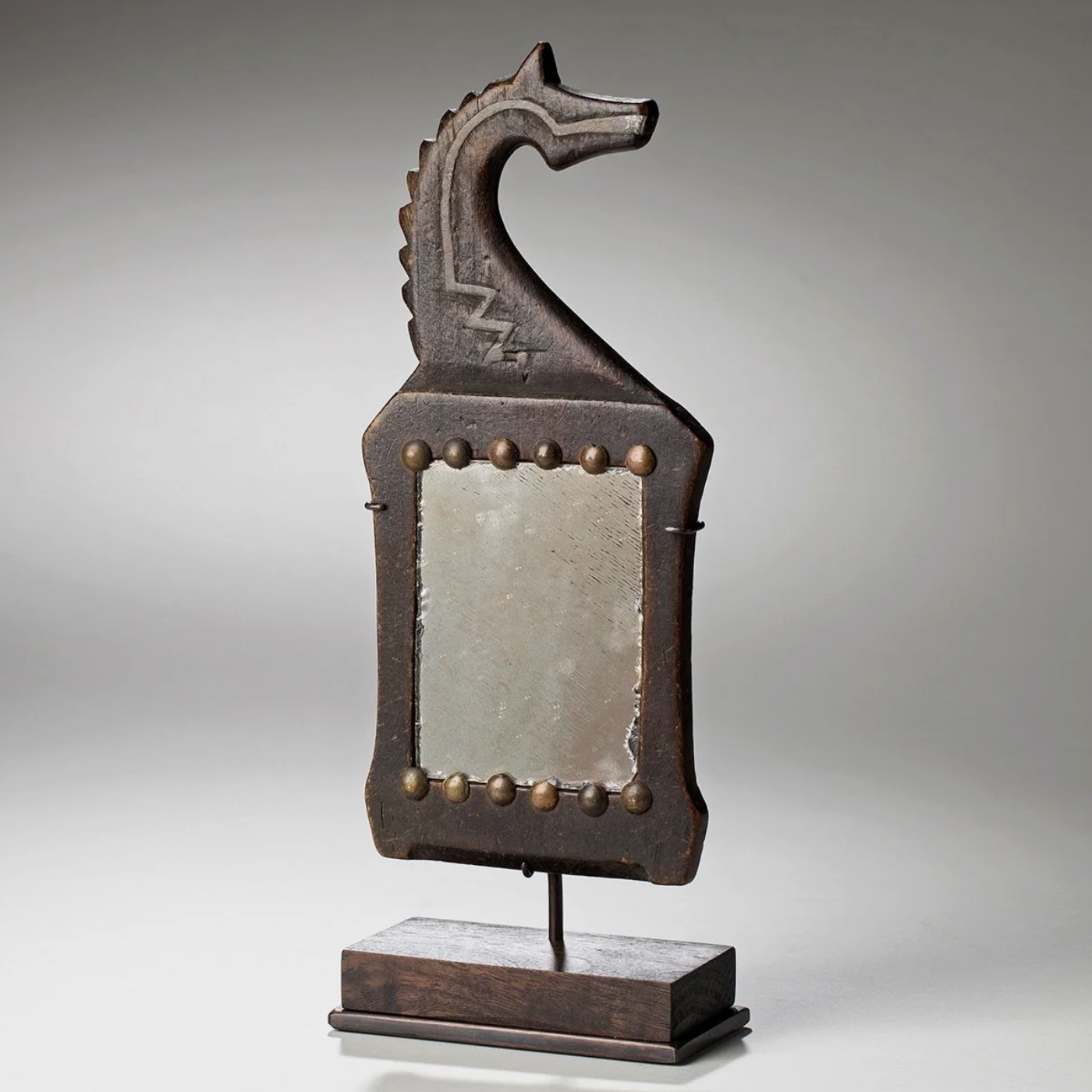 Image 2 of 5
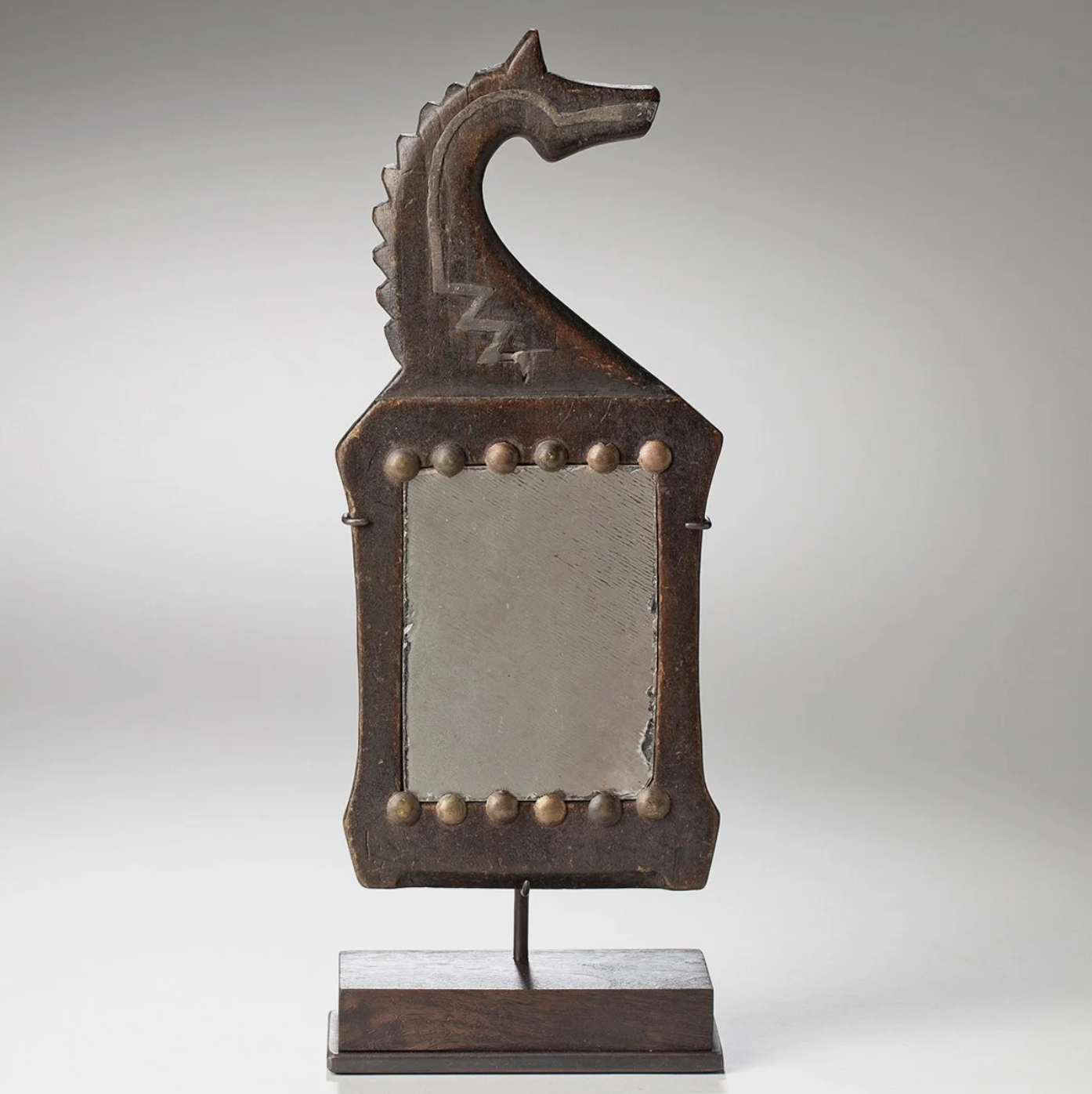 Image 3 of 5
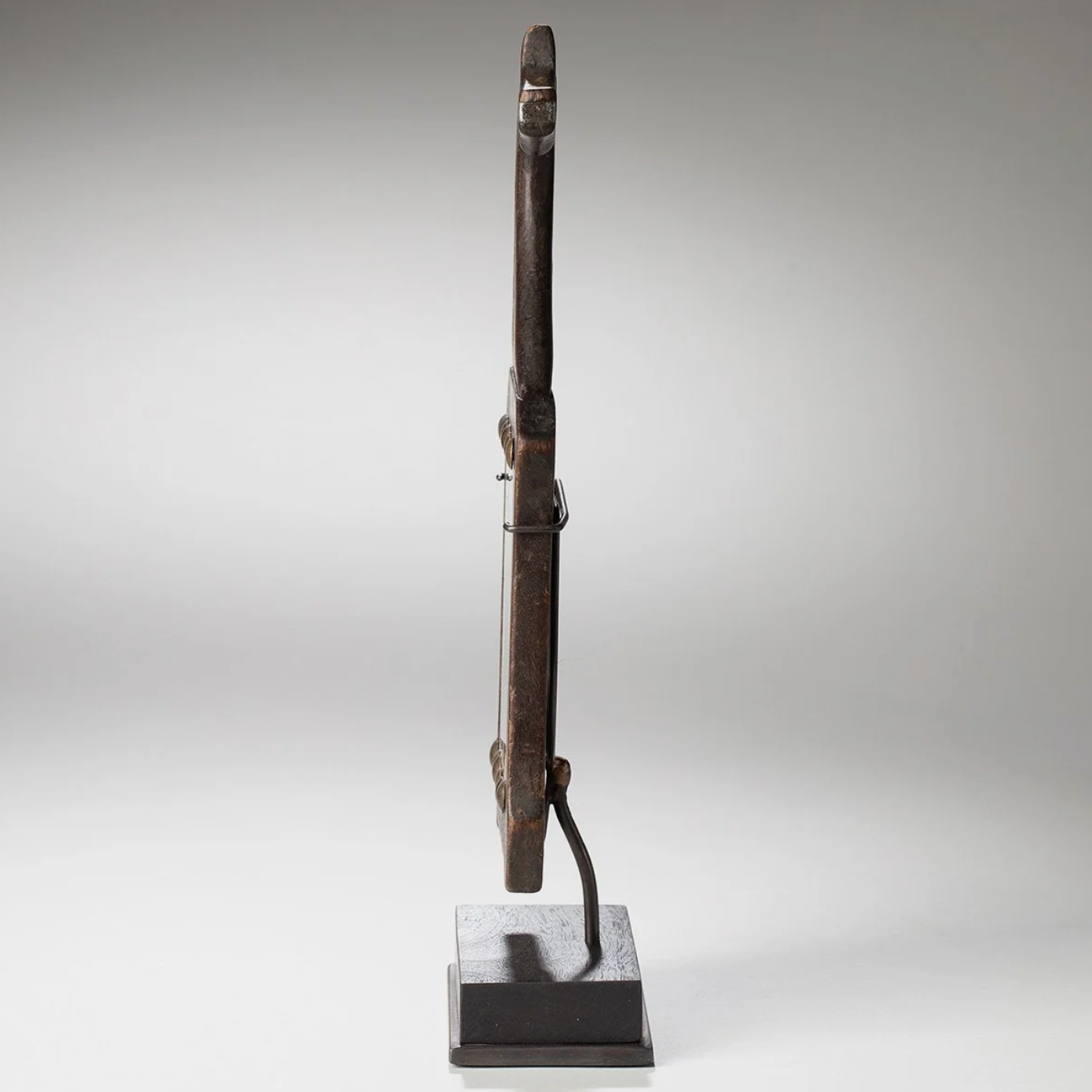 Image 4 of 5
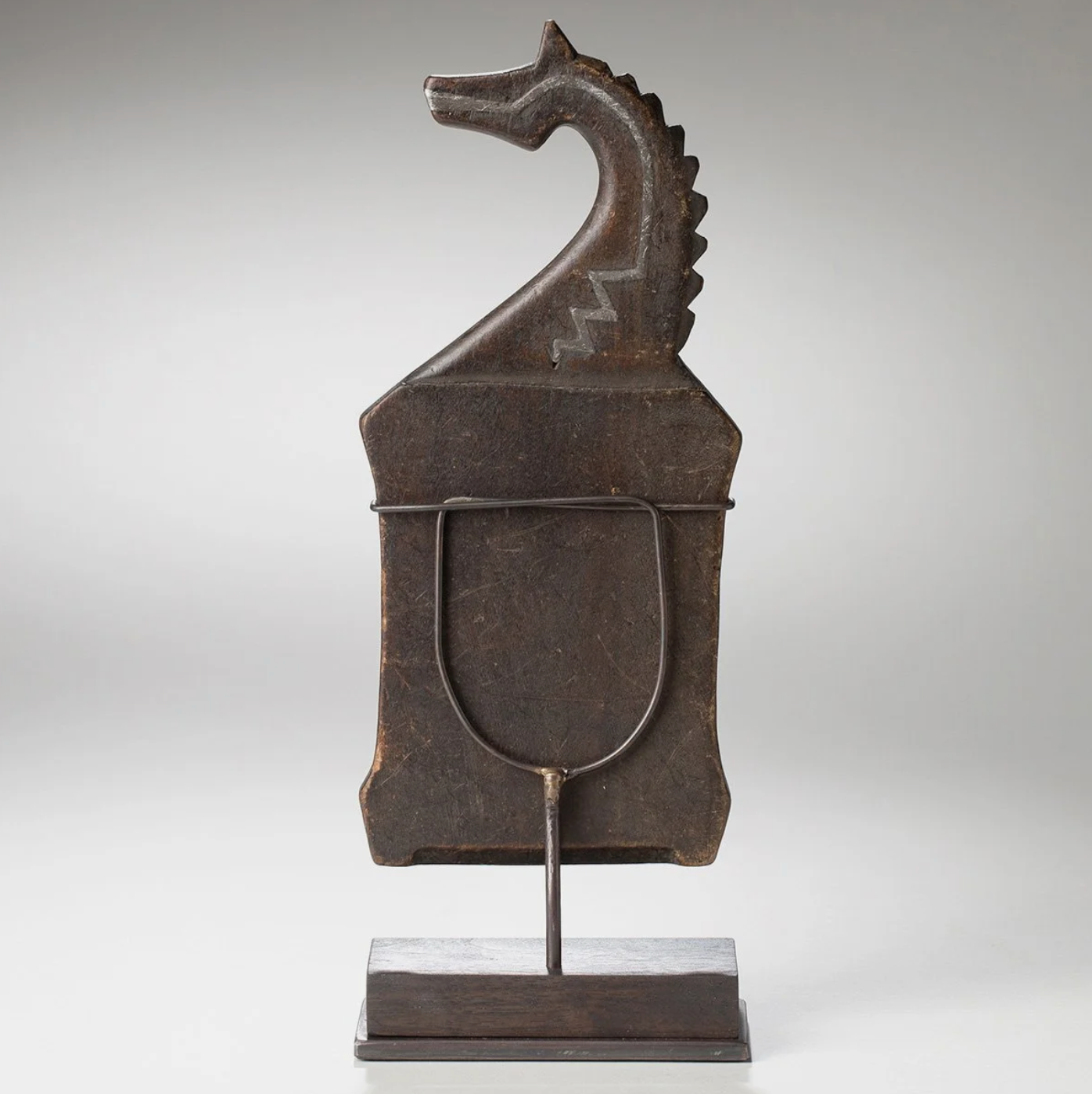 Image 5 of 5
Plains, Native America
Circa 1860
Wood, brass tacks, lead inlay, trade mirror
Height 10½ in. (26.7 cm)
Provenance: Wisconsin trade
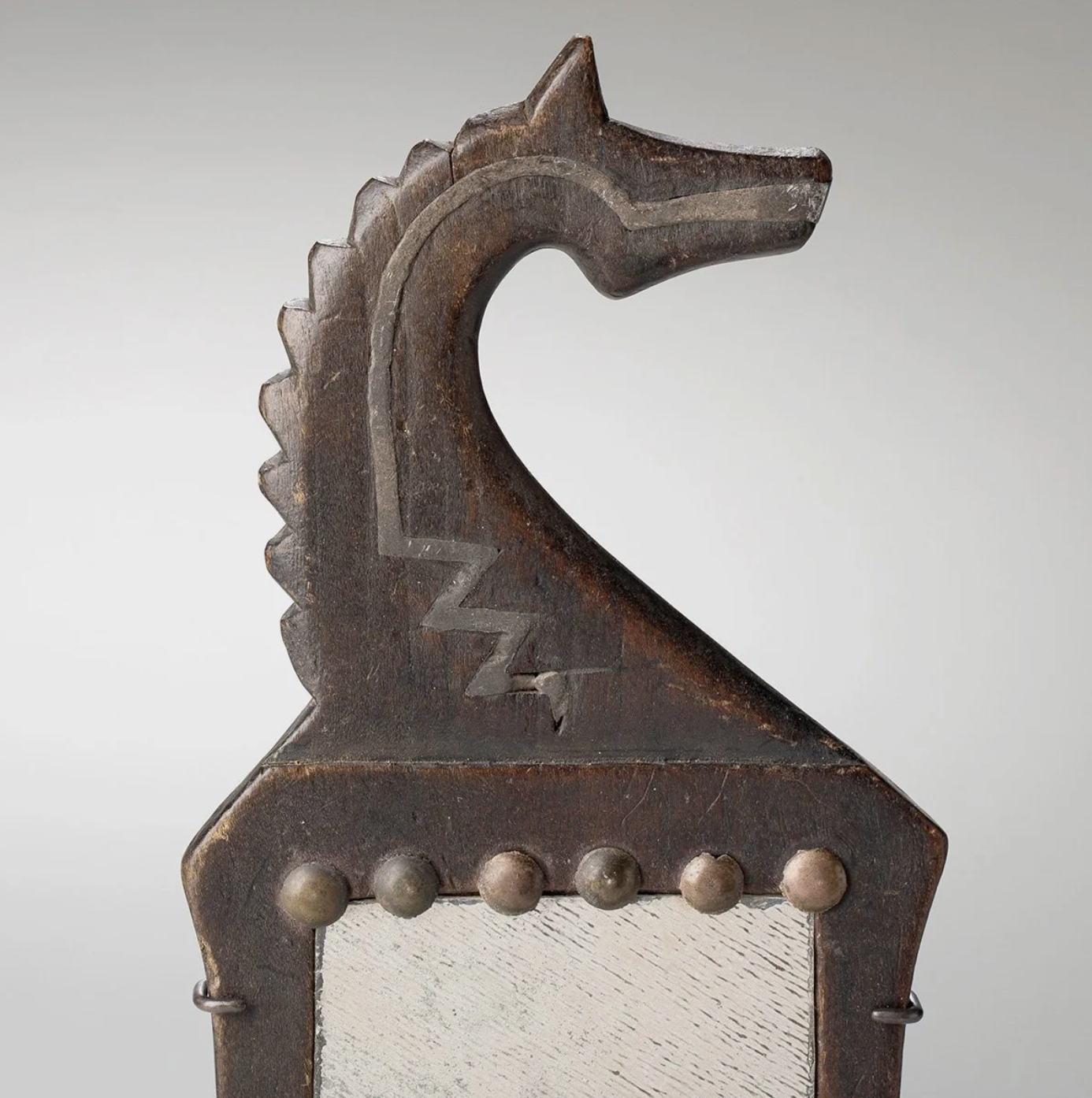
Mirror boards of this type were carried by Plains warriors and horsemen as prestige objects, reflecting both European trade goods and indigenous craft traditions. The rectangular mirror frame is surmounted by a carved horse head finial, with zigzag incised decoration at the neck, a motif found across Plains decorative arts. Brass tack borders frame the mirror on both upper and lower edges, and a wire bail on the reverse allowed the board to be carried or suspended.
Mirror boards were closely tied to Plains horse culture, where personal adornment and display played a central role in social identity. The horse head finial speaks directly to that tradition, linking the object to the centrality of the horse in Plains life and warfare. This example shows a deep, even patina consistent with age and use, and the carved finial elevates it above the utilitarian.
The majority of mirror boards appearing on the market today are not period examples; this one bears the material and surface evidence of genuine age. Lead inlay on the carved neck further distinguishes this piece as the work of a skilled hand. It is accompanied by Wisconsin trade provenance, consistent with the documented movement of Plains objects through Great Lakes intermediaries in the mid-nineteenth century.
We ship free anywhere in the world, fully insured, packed by hand.
Plains, Native America
Circa 1860
Wood, brass tacks, lead inlay, trade mirror
Height 10½ in. (26.7 cm)
Provenance: Wisconsin trade
Mirror boards of this type were carried by Plains warriors and horsemen as prestige objects, reflecting both European trade goods and indigenous craft traditions. The rectangular mirror frame is surmounted by a carved horse head finial, with zigzag incised decoration at the neck, a motif found across Plains decorative arts. Brass tack borders frame the mirror on both upper and lower edges, and a wire bail on the reverse allowed the board to be carried or suspended.
Mirror boards were closely tied to Plains horse culture, where personal adornment and display played a central role in social identity. The horse head finial speaks directly to that tradition, linking the object to the centrality of the horse in Plains life and warfare. This example shows a deep, even patina consistent with age and use, and the carved finial elevates it above the utilitarian.
The majority of mirror boards appearing on the market today are not period examples; this one bears the material and surface evidence of genuine age. Lead inlay on the carved neck further distinguishes this piece as the work of a skilled hand. It is accompanied by Wisconsin trade provenance, consistent with the documented movement of Plains objects through Great Lakes intermediaries in the mid-nineteenth century.
We ship free anywhere in the world, fully insured, packed by hand.