Plains, North America
1850
Buffalo hide, pronghorn antelope horns, quillwork
Height 11 1/2" (29.2 cm)
Provenance: Rober Nooter, Washington DC
Headdresses incorporating pronghorn antelope horns were among the most prestigious forms of Plains ceremonial regalia, worn exclusively by men of demonstrated valor and leadership within their communities. George Catlin, among the earliest outside observers of Plains ceremonial life, noted that only those of exceeding valor, worth, and power wore headgear with animal horns attached, identifying them as emblems of the highest social and martial distinction. Objects of this type from the mid-19th century represent the period of most active Plains warrior culture, before the disruptions of the reservation period altered the ceremonial life they expressed.
This headdress is constructed on a buffalo hide base fitted with paired pronghorn antelope horns and decorated with quillwork and hide fringe elements, consistent with Plains ceremonial headgear of the 1850s. The pronghorn, one of the fastest animals on the Great Plains, carried associations of speed and alertness valued in a warrior context, distinguishing this type from the more widely documented buffalo horn war bonnet. Robert Nooter of Washington DC was one of the most respected collectors of tribal art in the United States, his collection regarded by scholars and dealers as a benchmark of connoisseurship across African, Native American, and Oceanic material.
We ship free anywhere in the world, fully insured, packed by hand.
Plains, North America
1850
Buffalo hide, pronghorn antelope horns, quillwork
Height 11 1/2" (29.2 cm)
Provenance: Rober Nooter, Washington DC
Headdresses incorporating pronghorn antelope horns were among the most prestigious forms of Plains ceremonial regalia, worn exclusively by men of demonstrated valor and leadership within their communities. George Catlin, among the earliest outside observers of Plains ceremonial life, noted that only those of exceeding valor, worth, and power wore headgear with animal horns attached, identifying them as emblems of the highest social and martial distinction. Objects of this type from the mid-19th century represent the period of most active Plains warrior culture, before the disruptions of the reservation period altered the ceremonial life they expressed.
This headdress is constructed on a buffalo hide base fitted with paired pronghorn antelope horns and decorated with quillwork and hide fringe elements, consistent with Plains ceremonial headgear of the 1850s. The pronghorn, one of the fastest animals on the Great Plains, carried associations of speed and alertness valued in a warrior context, distinguishing this type from the more widely documented buffalo horn war bonnet. Robert Nooter of Washington DC was one of the most respected collectors of tribal art in the United States, his collection regarded by scholars and dealers as a benchmark of connoisseurship across African, Native American, and Oceanic material.
We ship free anywhere in the world, fully insured, packed by hand.


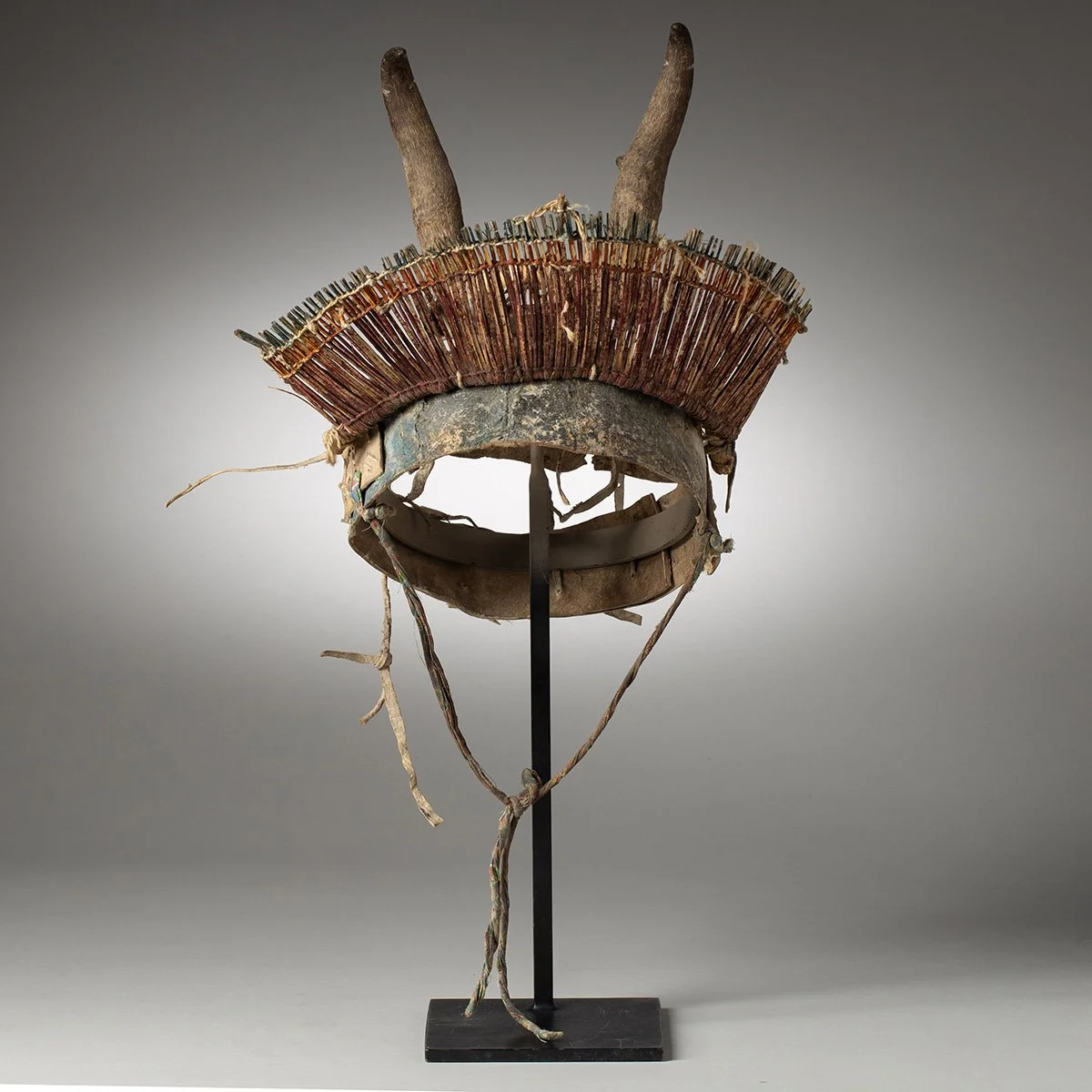 Image 1 of 9
 Image 2 of 9
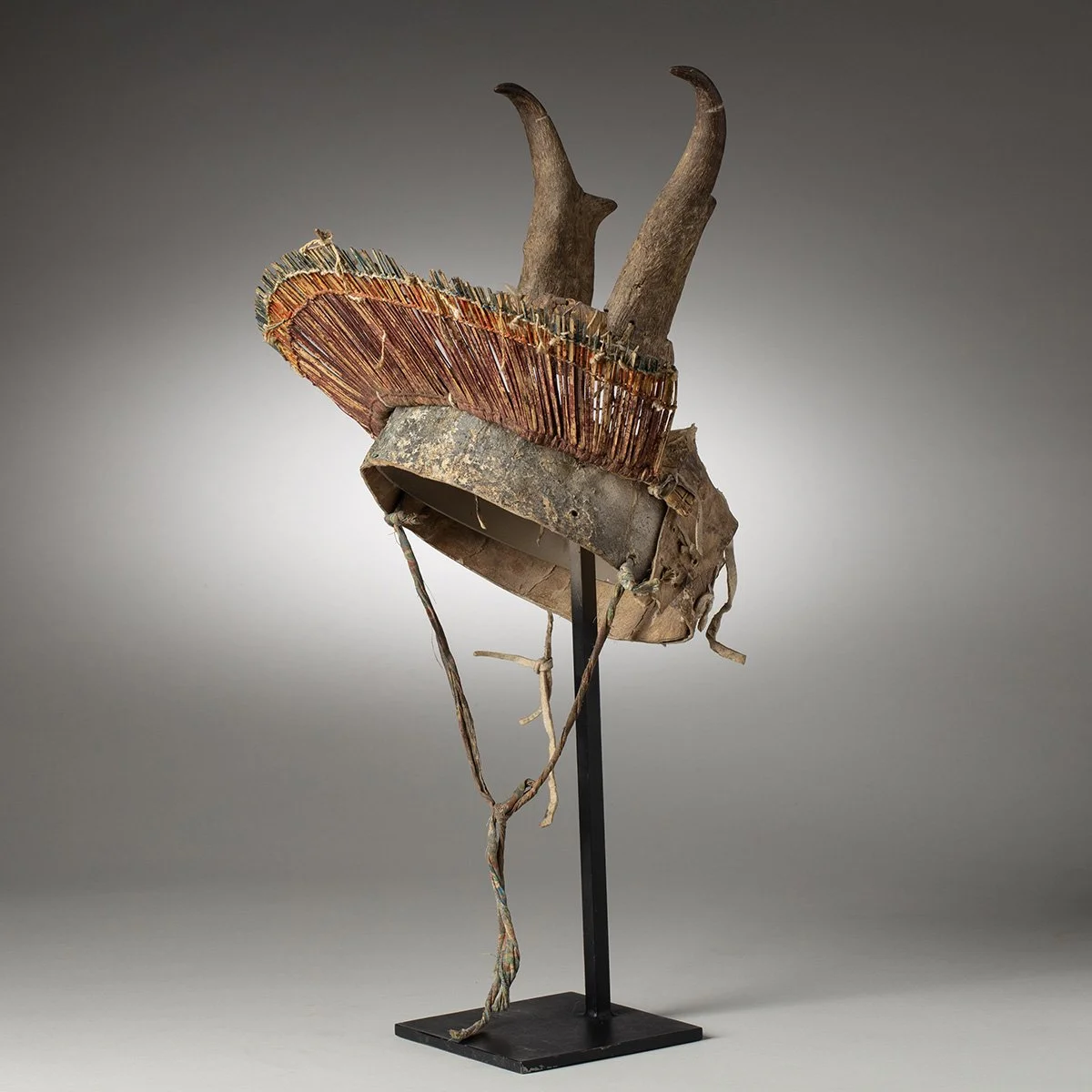 Image 3 of 9
 Image 4 of 9
 Image 5 of 9
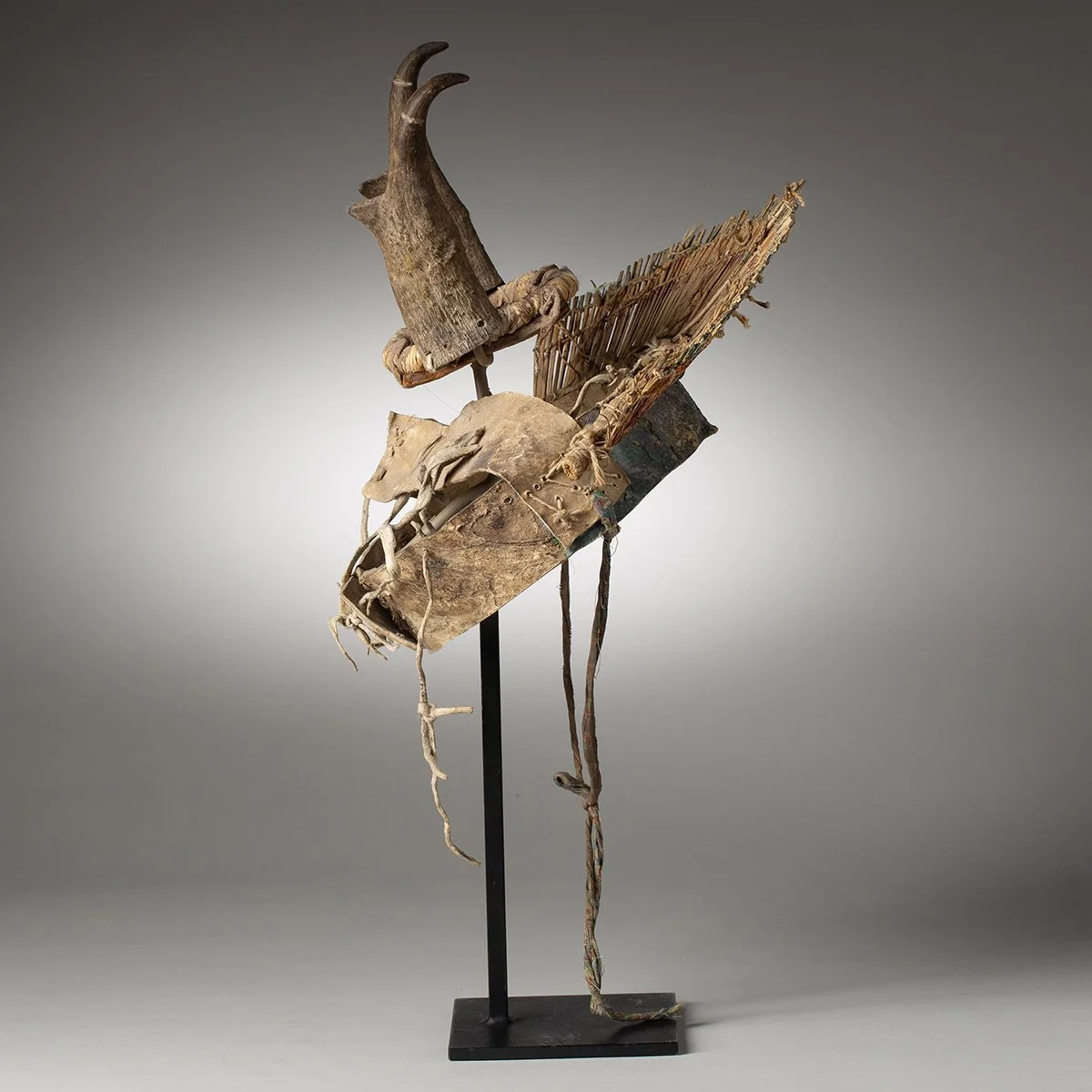 Image 6 of 9
 Image 7 of 9
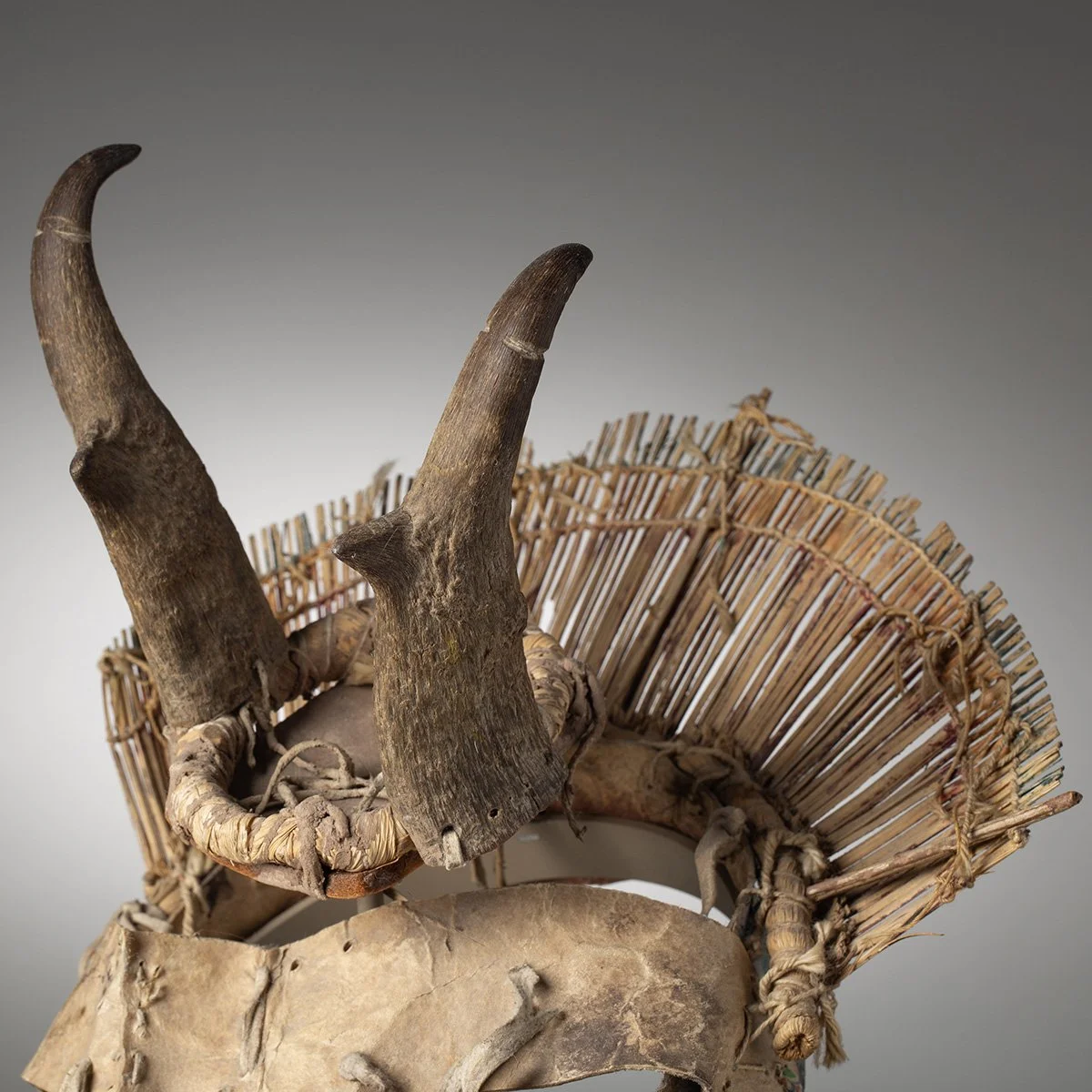 Image 8 of 9
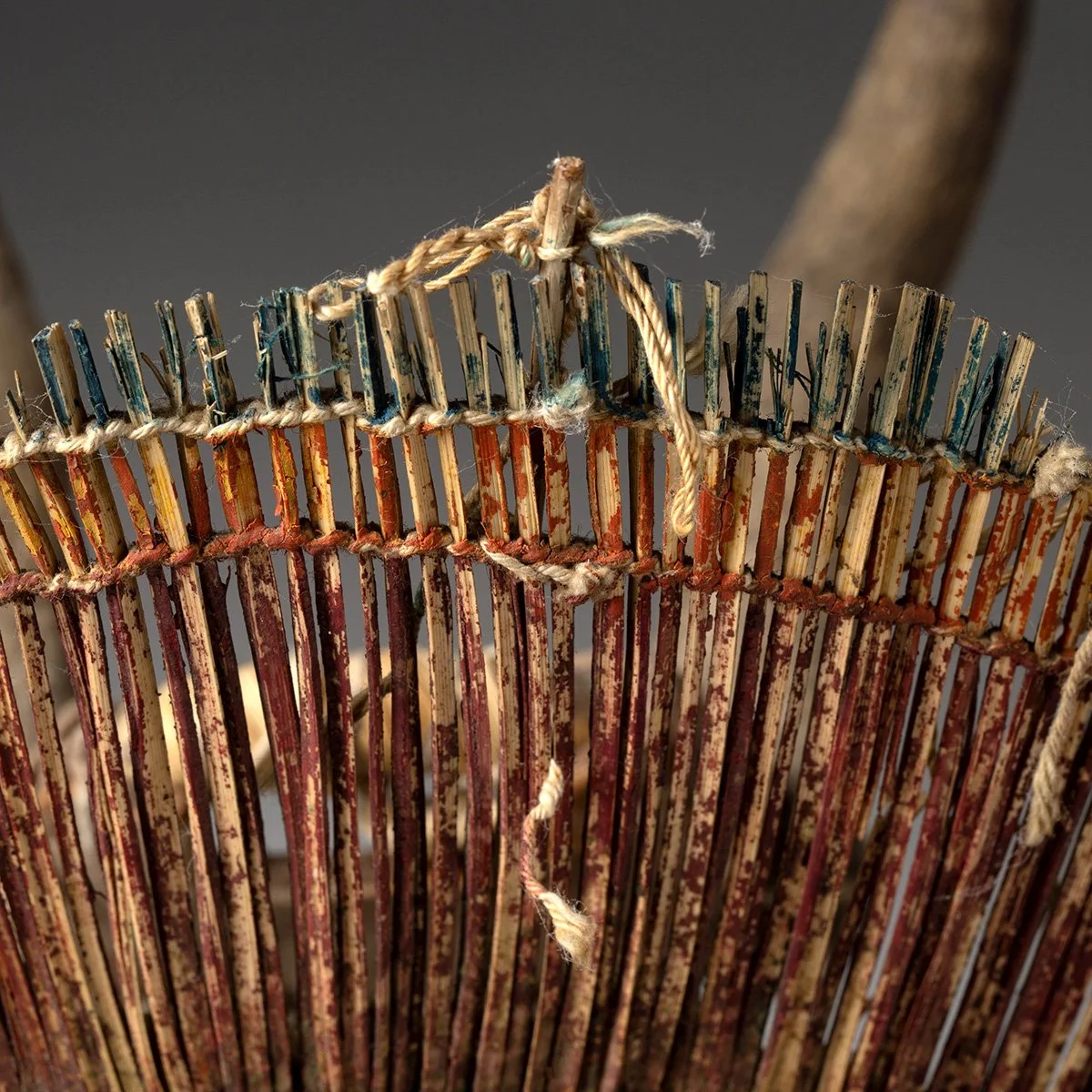 Image 9 of 9