

 Image 1 of 4
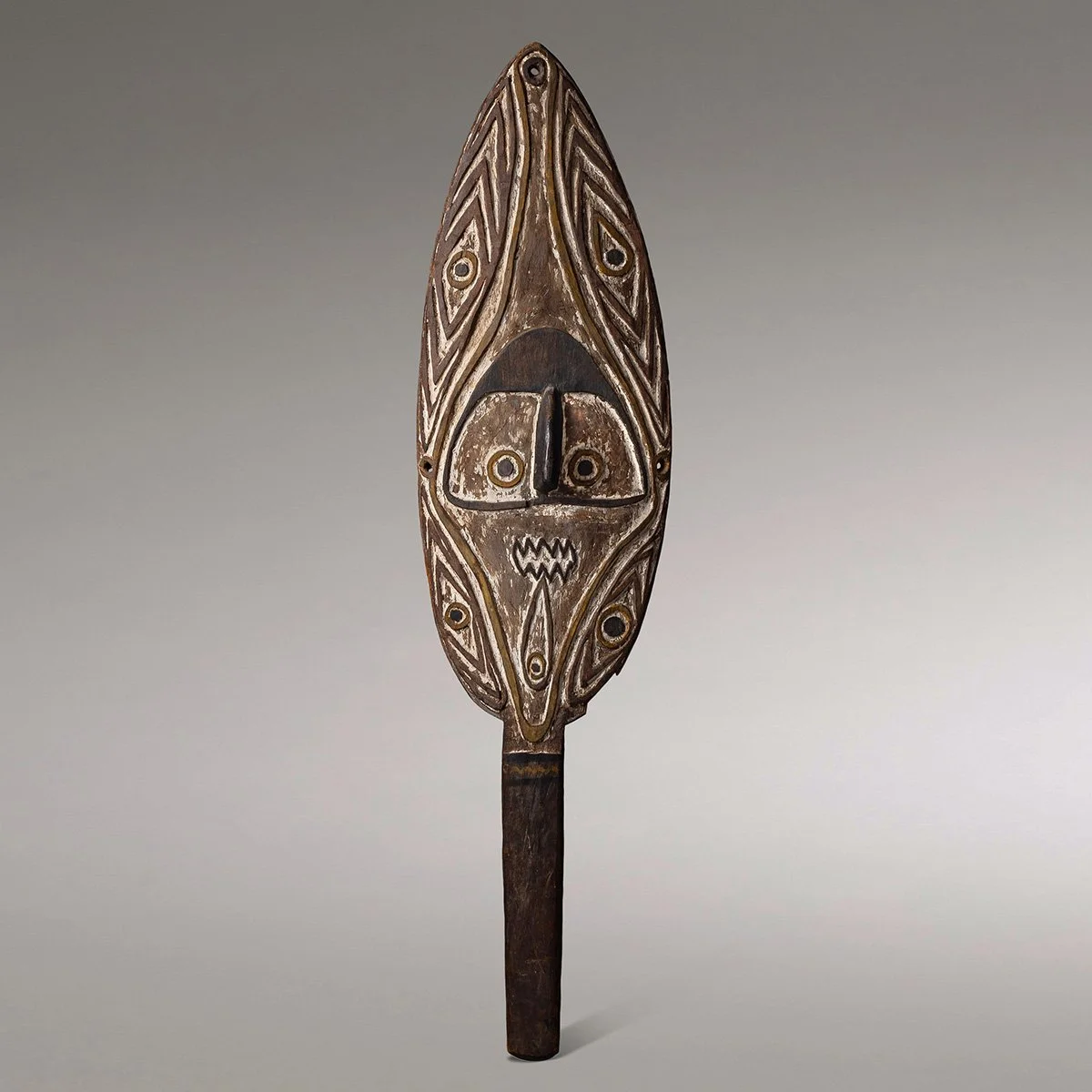 Image 2 of 4
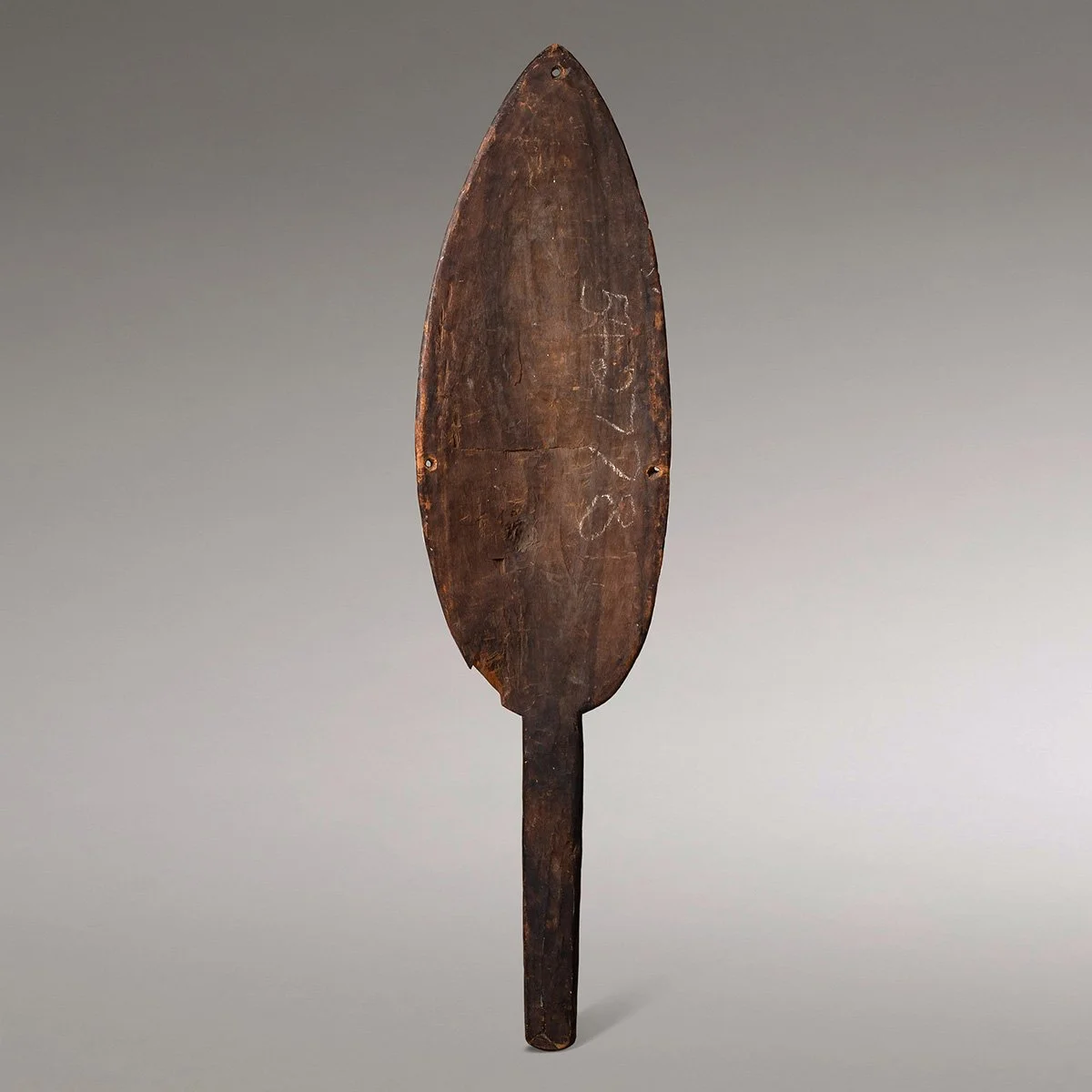 Image 3 of 4
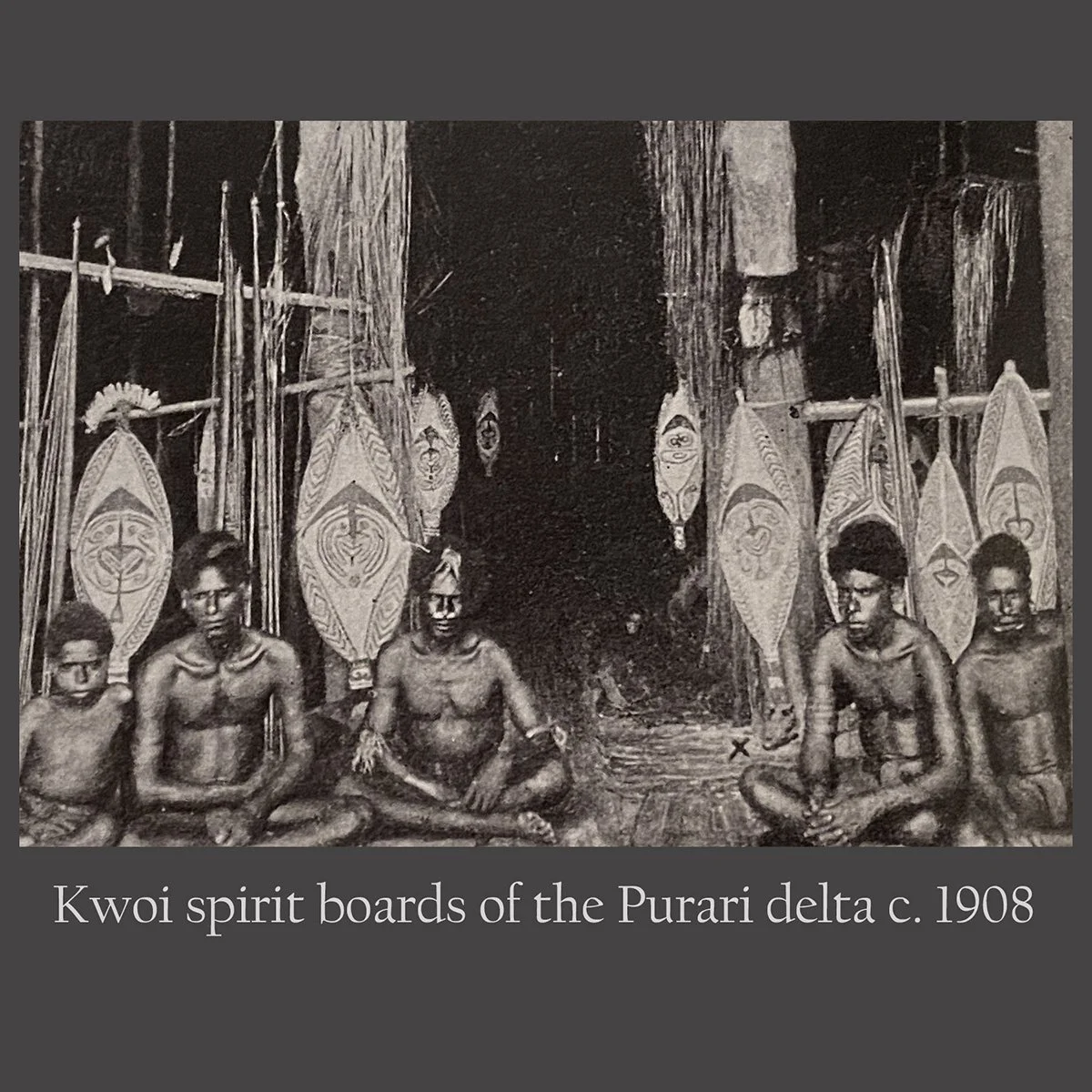 Image 4 of 4
Purari Delta, Papuan Gulf, Papua New Guinea
19th century
Wood, native pigments
Height: 44 in (112 cm); Width: 11½ in (29 cm); Depth: 3¼ in (8 cm)
Provenance: Robert Bleakley, head of Sotheby's Australia; Sotheby's, London, 1975; Chris and Anna Thorpe, Sydney, Australia
Among the Purari people of the central Papuan Gulf, spirit boards known as kwoi were created as dwelling places for individual spirits, or imunu, whose images appear on their surfaces and whose presence was understood to ensure the fertility, prosperity, and protection of the clan. Kept within clan shrines in communal longhouses alongside figures and ancestral skulls, these boards formed part of a larger ritual environment in which the accumulated power of the imunu gazed down upon the living. The navel motif at the center of the board functioned as a spiritual portal through which the imunu was understood to enter and animate the object.
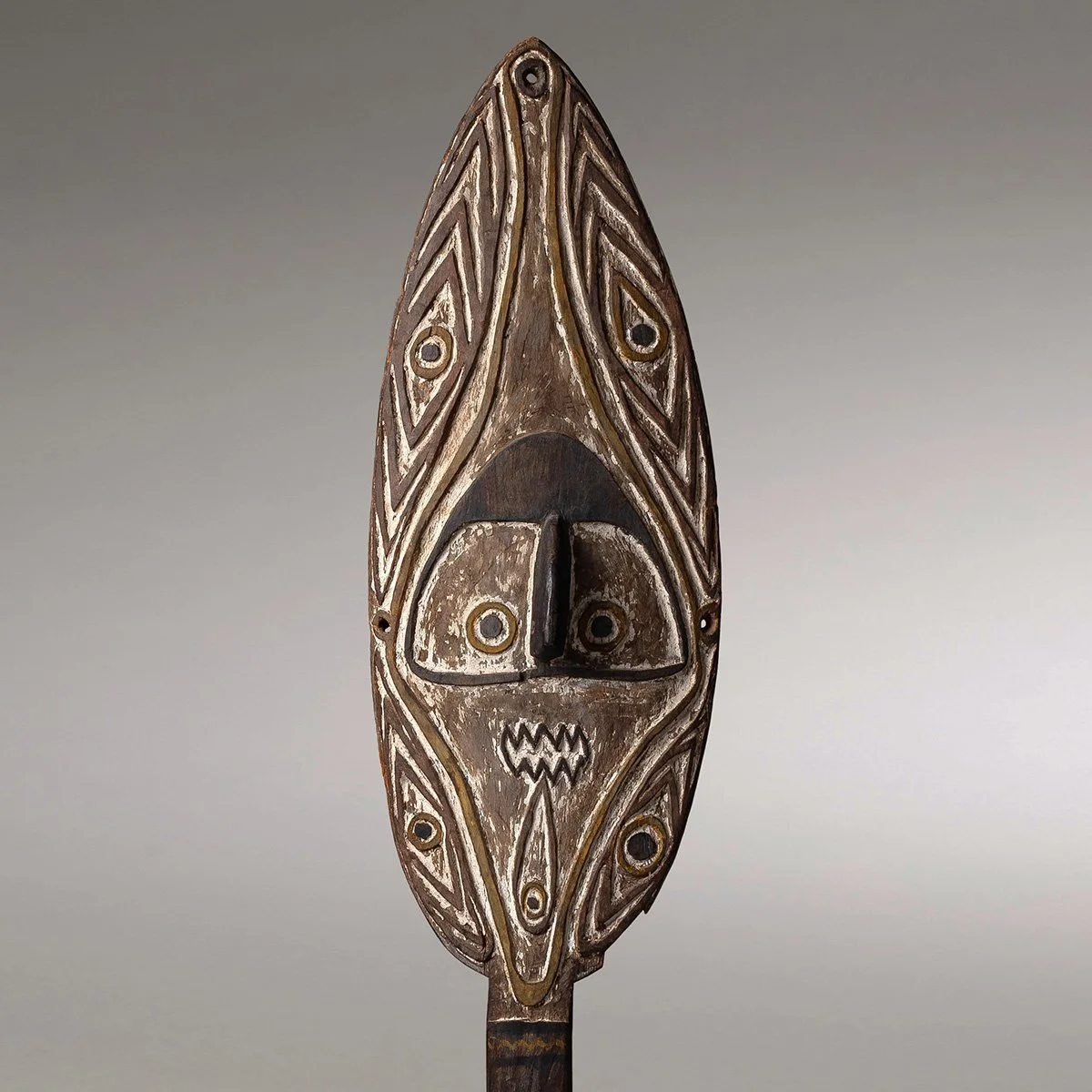
This 19th-century kwoi is carved with a large central stylized face surrounded by curvilinear motifs, the relief deep and the composition organized with an architectural clarity that distinguishes the Purari boards from the more overtly figurative spirit boards of neighboring Gulf groups. The native pigments retain their tone within the recessed areas of the carving, the oxidized dark surface of the wood carrying the depth of age and sustained ceremonial handling over many decades. The depth of the carving at 3¼ inches gives the board a physical presence that reads well from a distance, the face projecting forward from the field of curvilinear patterning with a directness that few flat-carved boards achieve.
The provenance through Robert Bleakley, who served as head of Sotheby's Australia, and the appearance at Sotheby's London in 1975 place this board within the generation of significant Papuan Gulf material that entered the specialist auction market during the 1970s, when the field was first being rigorously assessed by dealers and scholars. The subsequent holding in the Chris and Anna Thorpe collection in Sydney — a collection that contributed numerous important Sepik and Oceanic objects across this inventory — confirms a continuous chain of informed ownership from the auction room to the present. A 19th-century Purari kwoi of this scale, surface integrity, and provenance depth represents the Papuan Gulf tradition at its most fully realized.
We ship free anywhere in the world, fully insured, packed by hand.
Purari Delta, Papuan Gulf, Papua New Guinea
19th century
Wood, native pigments
Height: 44 in (112 cm); Width: 11½ in (29 cm); Depth: 3¼ in (8 cm)
Provenance: Robert Bleakley, head of Sotheby's Australia; Sotheby's, London, 1975; Chris and Anna Thorpe, Sydney, Australia
Among the Purari people of the central Papuan Gulf, spirit boards known as kwoi were created as dwelling places for individual spirits, or imunu, whose images appear on their surfaces and whose presence was understood to ensure the fertility, prosperity, and protection of the clan. Kept within clan shrines in communal longhouses alongside figures and ancestral skulls, these boards formed part of a larger ritual environment in which the accumulated power of the imunu gazed down upon the living. The navel motif at the center of the board functioned as a spiritual portal through which the imunu was understood to enter and animate the object.
This 19th-century kwoi is carved with a large central stylized face surrounded by curvilinear motifs, the relief deep and the composition organized with an architectural clarity that distinguishes the Purari boards from the more overtly figurative spirit boards of neighboring Gulf groups. The native pigments retain their tone within the recessed areas of the carving, the oxidized dark surface of the wood carrying the depth of age and sustained ceremonial handling over many decades. The depth of the carving at 3¼ inches gives the board a physical presence that reads well from a distance, the face projecting forward from the field of curvilinear patterning with a directness that few flat-carved boards achieve.
The provenance through Robert Bleakley, who served as head of Sotheby's Australia, and the appearance at Sotheby's London in 1975 place this board within the generation of significant Papuan Gulf material that entered the specialist auction market during the 1970s, when the field was first being rigorously assessed by dealers and scholars. The subsequent holding in the Chris and Anna Thorpe collection in Sydney — a collection that contributed numerous important Sepik and Oceanic objects across this inventory — confirms a continuous chain of informed ownership from the auction room to the present. A 19th-century Purari kwoi of this scale, surface integrity, and provenance depth represents the Papuan Gulf tradition at its most fully realized.
We ship free anywhere in the world, fully insured, packed by hand.