Jaipur, Rajasthan, Northwestern India
13th century or before
Sandstone
Height 12 1/4 in (31.1 cm), Width 9 1/2 in (24.1 cm)
Provenance: Jim Conley, Los Angeles, CA; Private collection, Beverly Hills, CA
This buff sandstone temple fragment portrays the powerful male Hindu deity Shiva in the abhayamudra pose, a gesture of reassurance and safety characteristic of major divine figures in the Indian temple tradition. The fragment retains a smaller hand at the right, likely that of the goddess Parvati, indicating that this sculpture was once part of a more complex temple composition. Comparable examples are held in the collections of the Albert Hall Museum in Jaipur, attesting to the regional significance of this sculptural type.
The general form and positioning of this fragment relate closely to identified examples from the Jaipur region, where sandstone carving of this quality was produced for major temple programs through the thirteenth century. The abhayamudra gesture, combined with the powerful modeling of the torso and the controlled treatment of surface detail, reflects the mature conventions of northwestern Indian temple sculpture. The piece preserves the commanding physical presence characteristic of Shaivite imagery produced for large-scale architectural settings.
We ship free anywhere in the world, fully insured, packed by hand.
Jaipur, Rajasthan, Northwestern India
13th century or before
Sandstone
Height 12 1/4 in (31.1 cm), Width 9 1/2 in (24.1 cm)
Provenance: Jim Conley, Los Angeles, CA; Private collection, Beverly Hills, CA
This buff sandstone temple fragment portrays the powerful male Hindu deity Shiva in the abhayamudra pose, a gesture of reassurance and safety characteristic of major divine figures in the Indian temple tradition. The fragment retains a smaller hand at the right, likely that of the goddess Parvati, indicating that this sculpture was once part of a more complex temple composition. Comparable examples are held in the collections of the Albert Hall Museum in Jaipur, attesting to the regional significance of this sculptural type.
The general form and positioning of this fragment relate closely to identified examples from the Jaipur region, where sandstone carving of this quality was produced for major temple programs through the thirteenth century. The abhayamudra gesture, combined with the powerful modeling of the torso and the controlled treatment of surface detail, reflects the mature conventions of northwestern Indian temple sculpture. The piece preserves the commanding physical presence characteristic of Shaivite imagery produced for large-scale architectural settings.
We ship free anywhere in the world, fully insured, packed by hand.


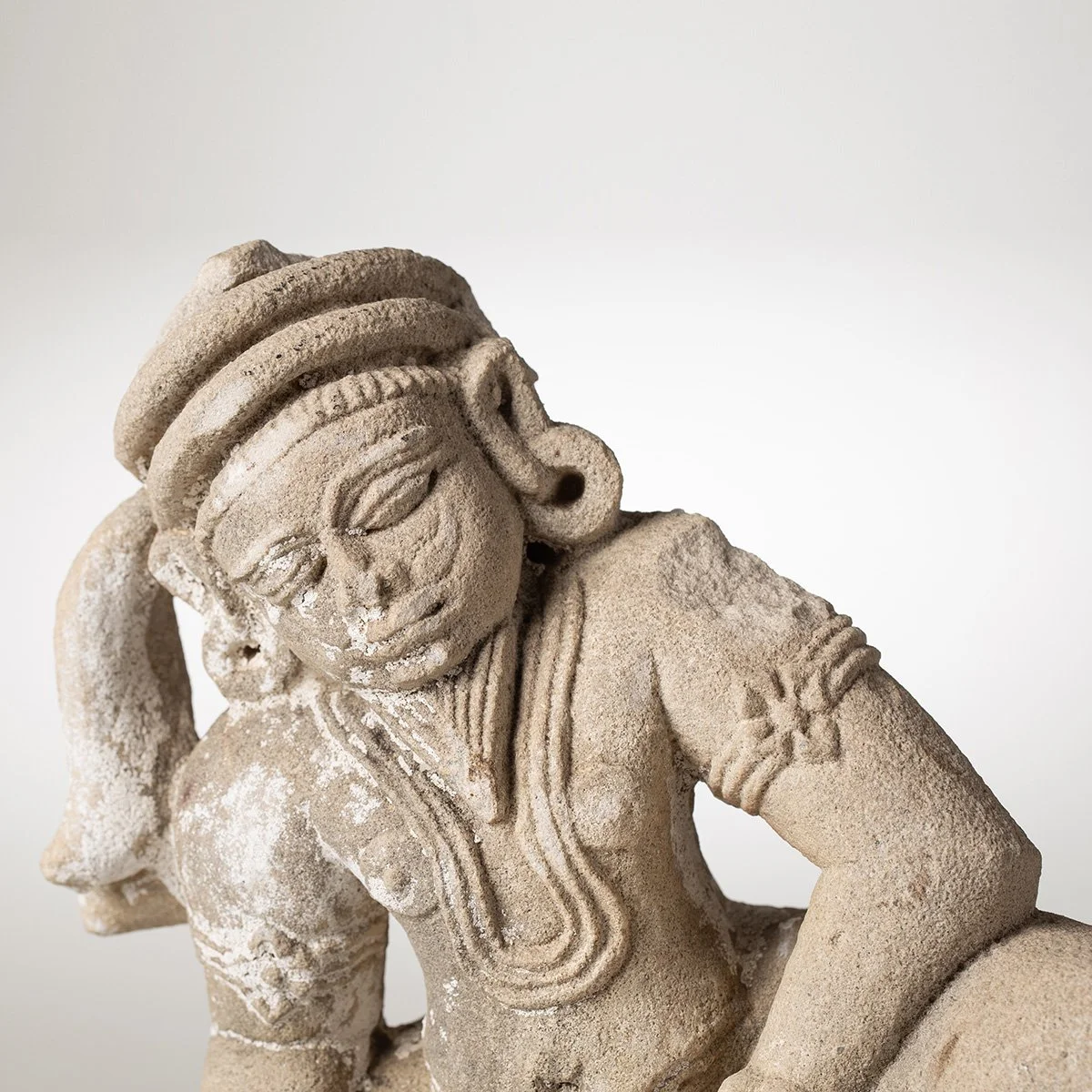 Image 1 of 8
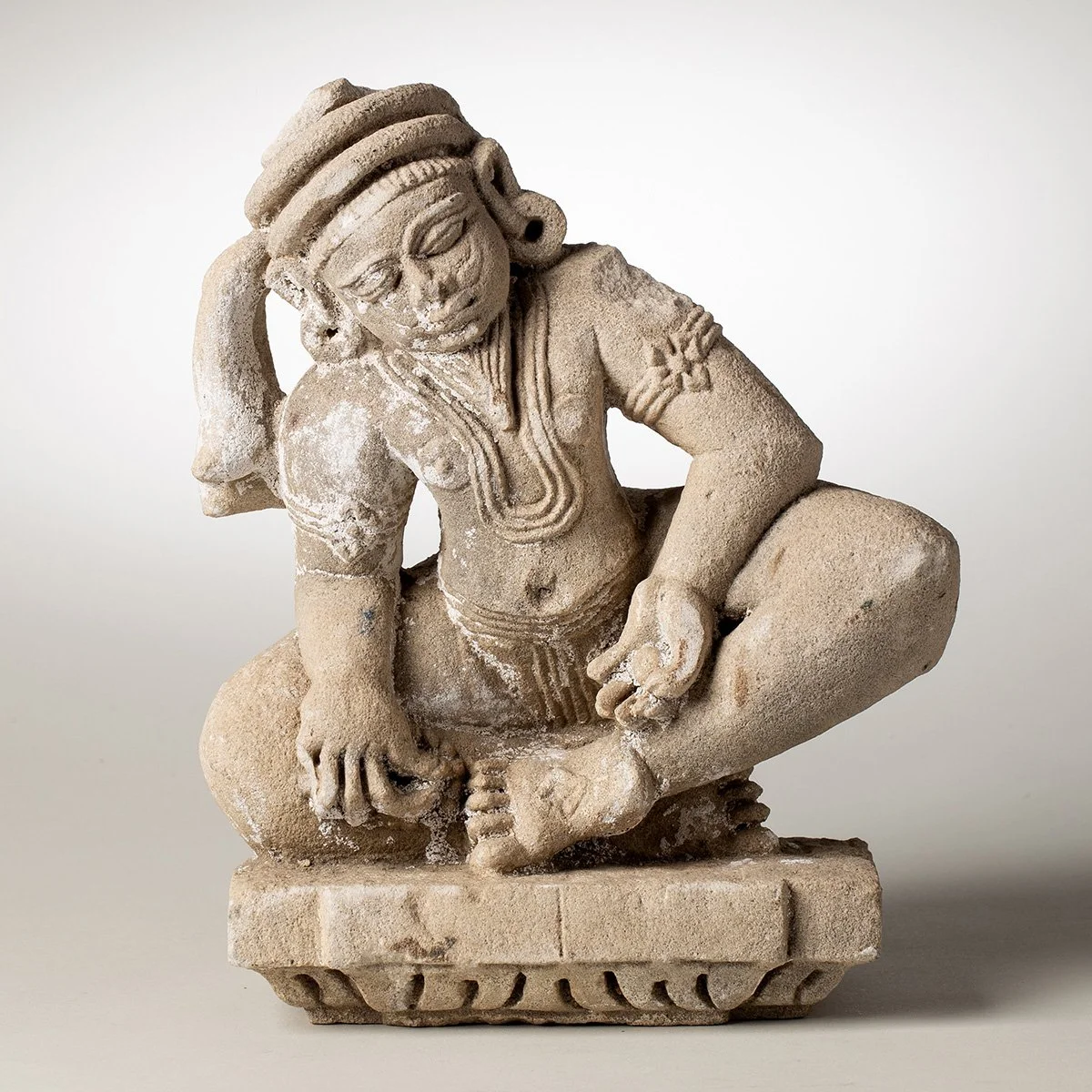 Image 2 of 8
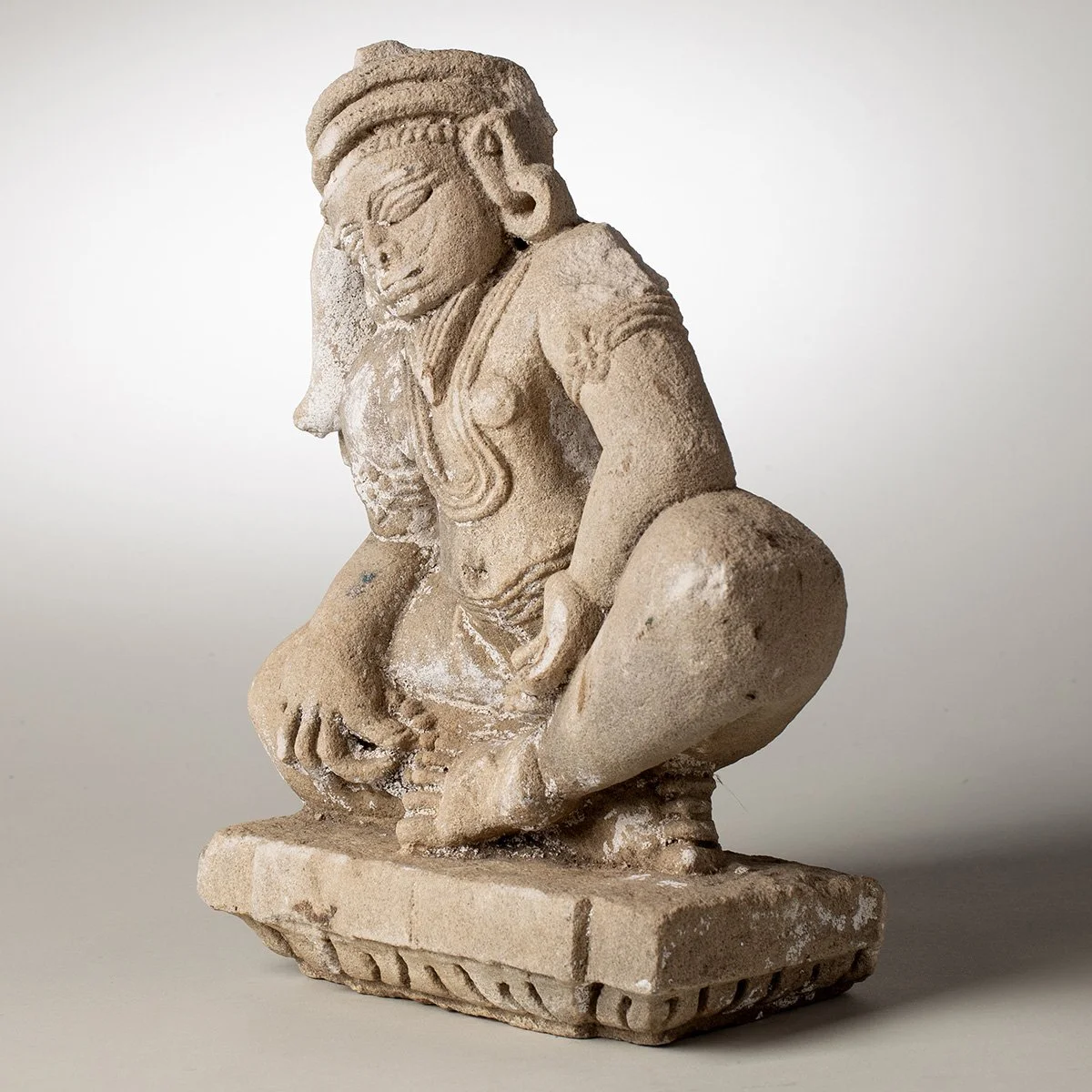 Image 3 of 8
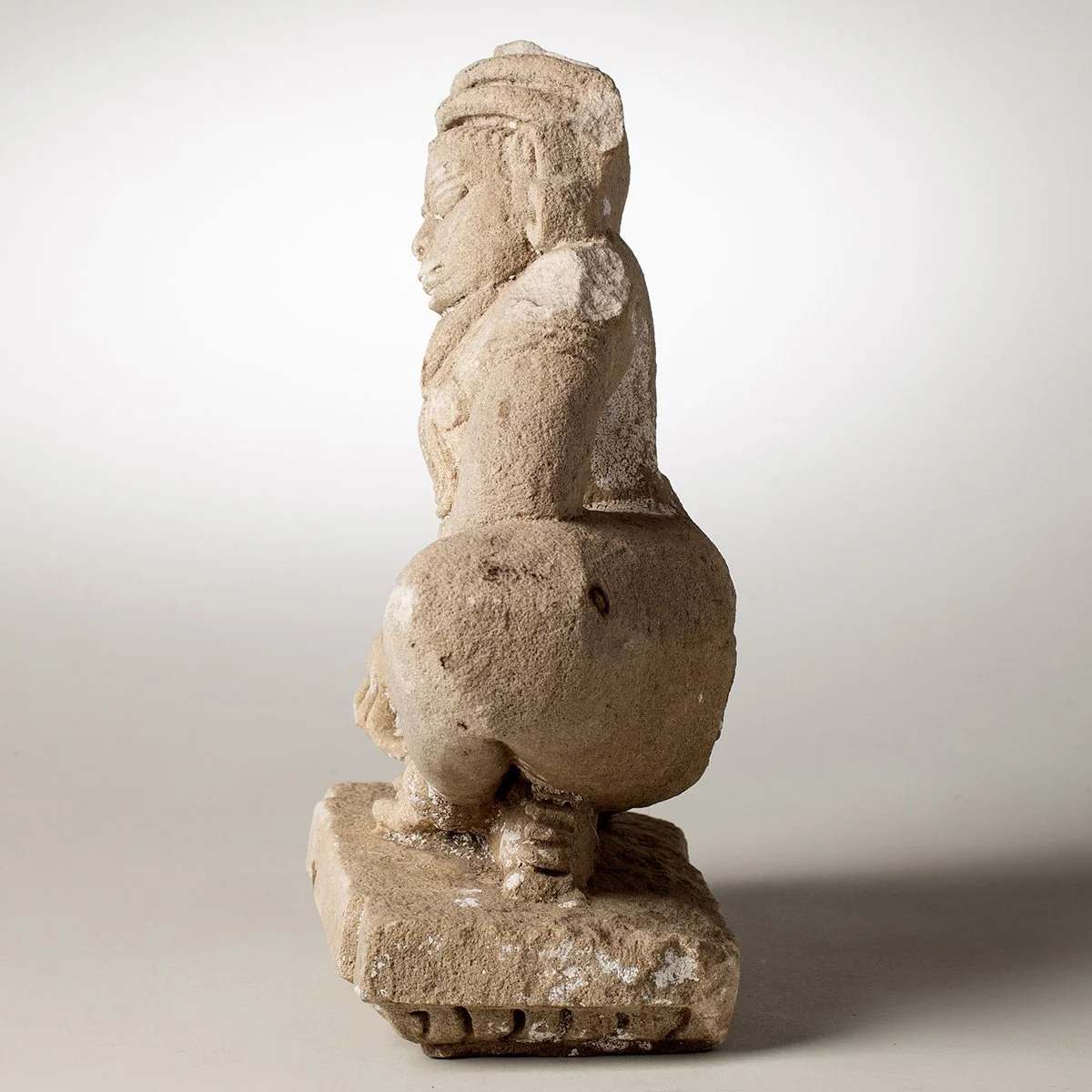 Image 4 of 8
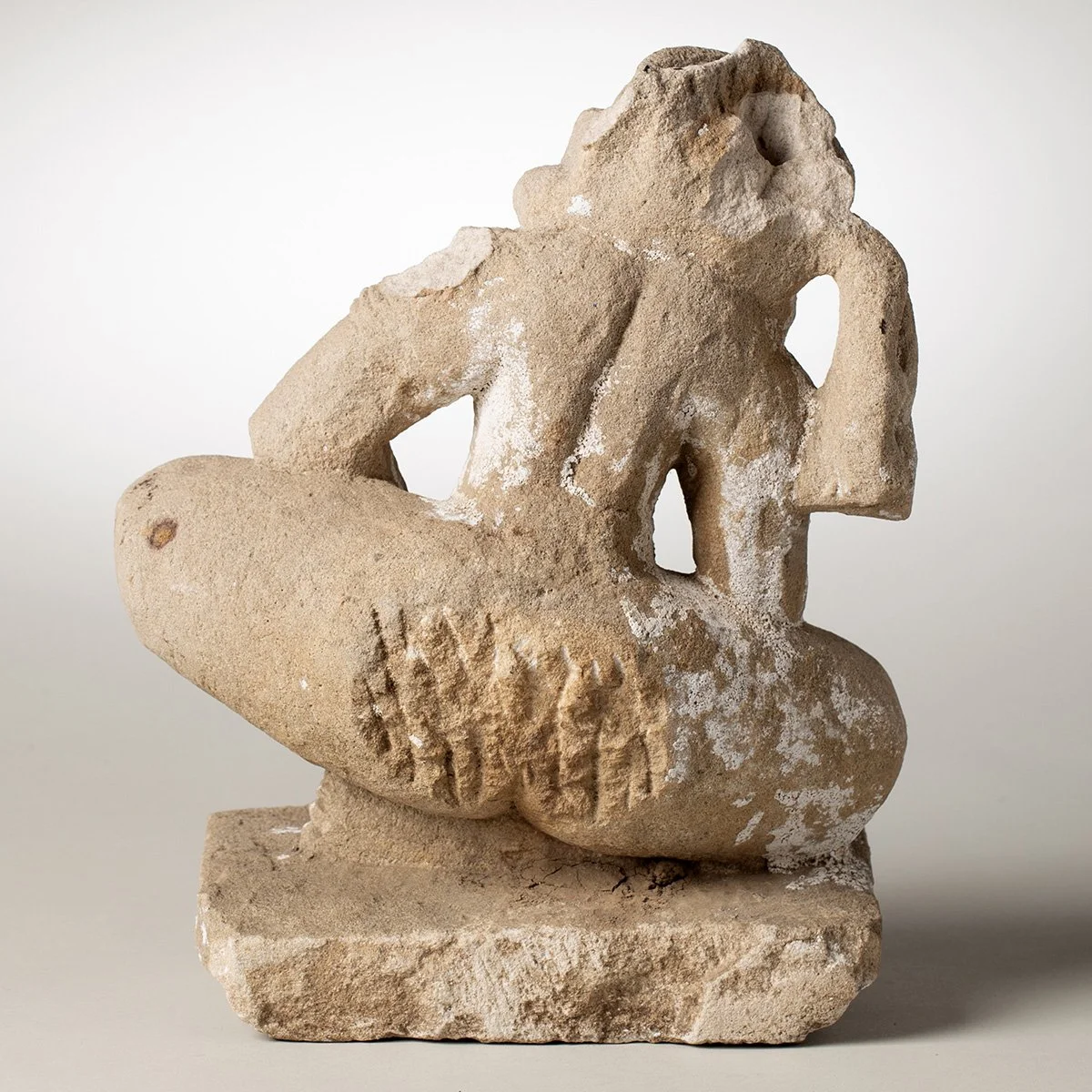 Image 5 of 8
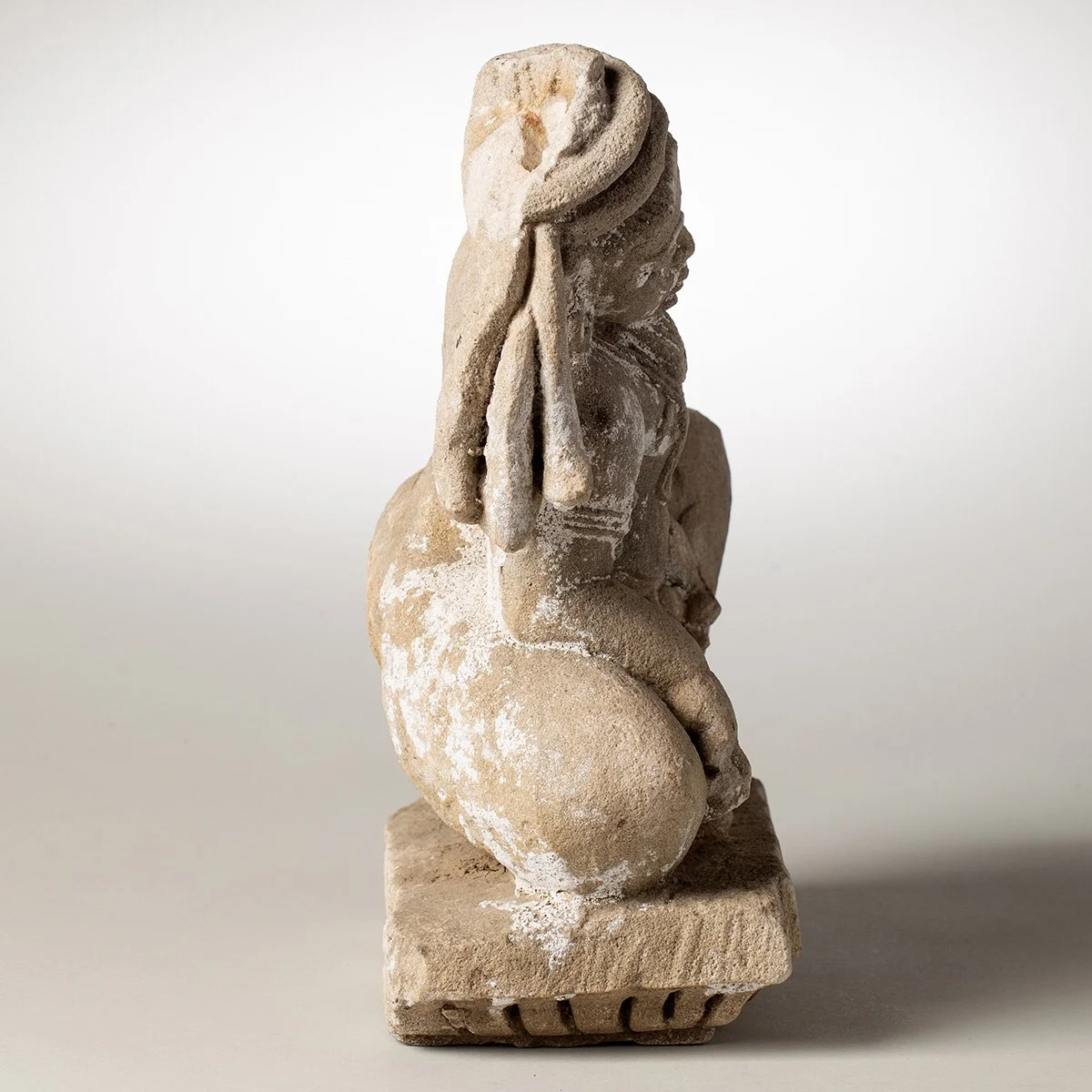 Image 6 of 8
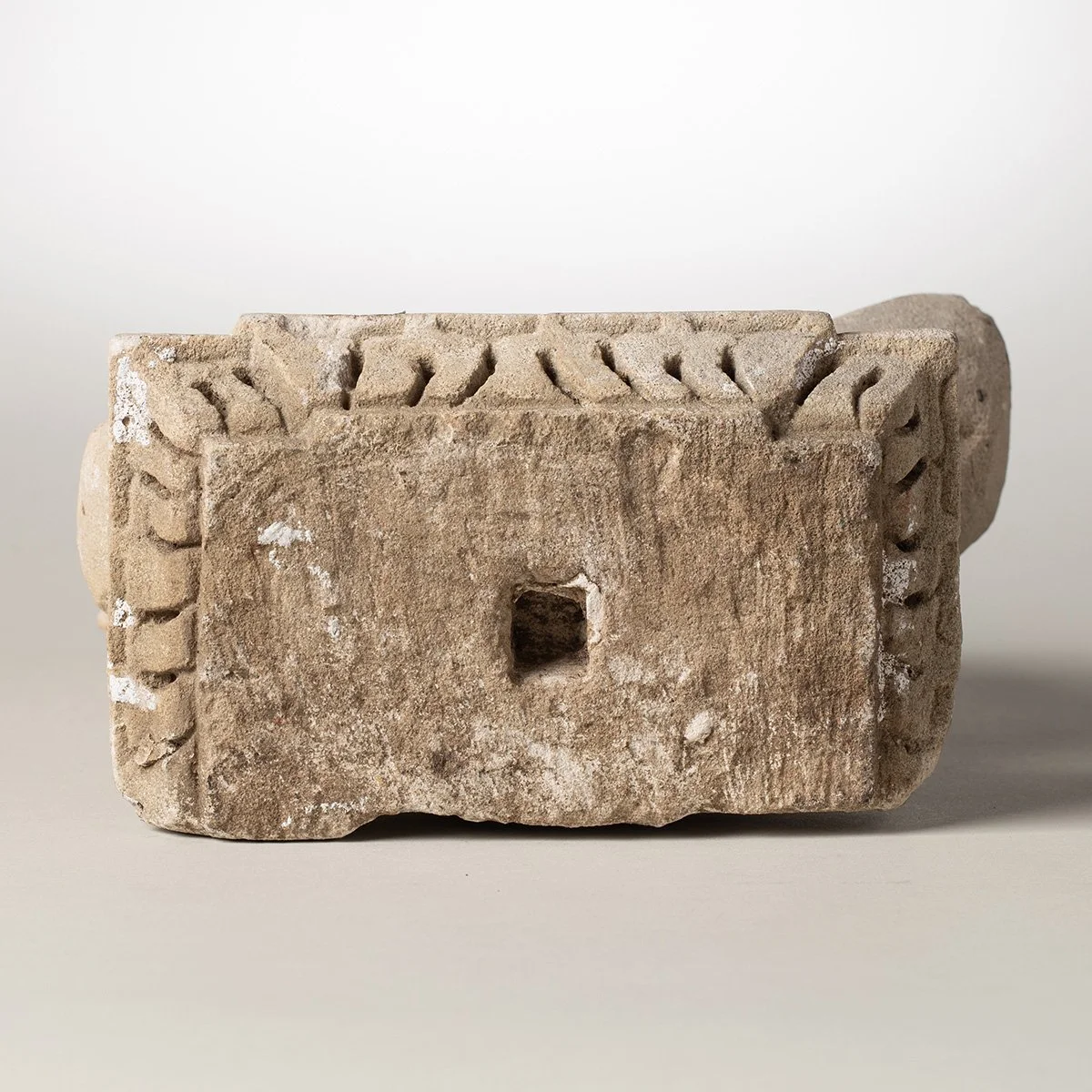 Image 7 of 8
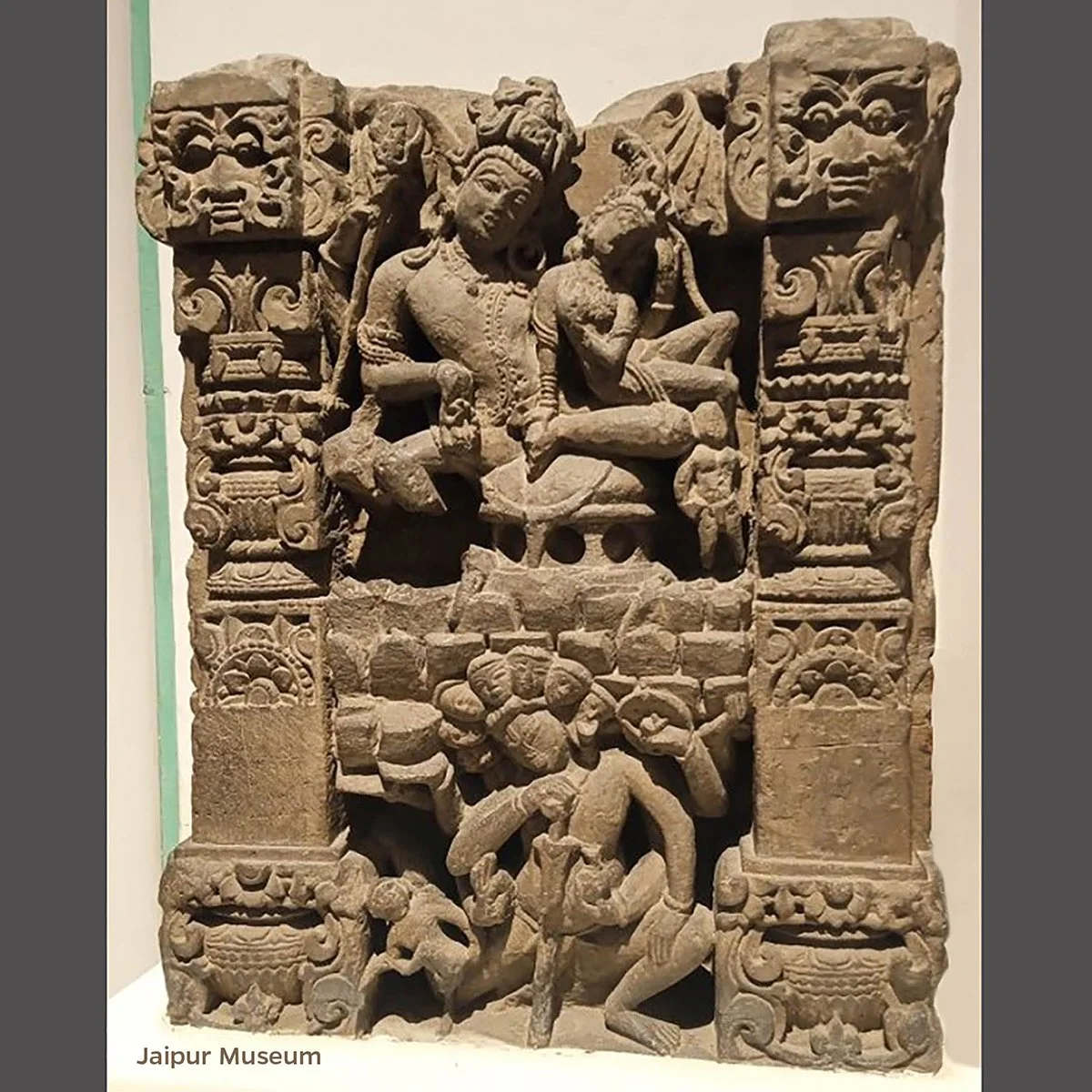 Image 8 of 8