United States, Hopi
1870–1880
Wood, cloth, bear skin, bone, and shells
Height 12 in. (30.5 cm)
Provenance: The Guennol Collection; Brooklyn Museum; Alistair Bradley Martin, acquired in the late 1940s
Exhibited: The Guennol Collection: Cabinet of Wonders, Brooklyn Museum, February 25–May 7, 2000
Published: The Guennol Collection, Volume III, 1991, Alistair Martin, text by Alan Wardwell, pp. 66–67
This Hopi Hon Bear katsina dates to 1870–1880 and comes from the Guennol Collection, one of the best-documented private collections of ancient and ethnographic art assembled in the 20th century. The Hon katsina is understood within Hopi tradition as a powerful bear figure associated with strength, protection, healing knowledge, and the ability to overcome dangerous forces. Its exhibition at the Brooklyn Museum and publication in The Guennol Collection, Volume III, give the work a level of documentation that is especially meaningful for collectors. The figure also belongs to an early period when katsina carvings were closely tied to instruction and traditional use rather than the later market for collectors. Its small scale does not diminish its presence; instead, the concentration of materials and subject gives it a direct visual force.
Unlike many Bear katsina figures where the animal skin is represented through painted surface, this example incorporates bear skin, cloth, bone, and shells into the figure itself. These materials give the work a physical and ceremonial presence closely tied to the subject it represents, while preserving the compact scale of an early instructional katsina figure. The combination of early date, complex materials, Guennol provenance, Brooklyn Museum exhibition history, and published record makes this one of the strongest Hopi katsina figures in the collection. The use of actual bear skin is particularly notable because it gives the figure a material relationship to the bear identity rather than relying only on painted symbolism. Within the broader katsina tradition, the Hon figure is also associated with spring dances, rain-bringing, and the protective force of the bear.
We ship free anywhere in the world, fully insured, packed by hand.
INQUIRE HERE
United States, Hopi
1870–1880
Wood, cloth, bear skin, bone, and shells
Height 12 in. (30.5 cm)
Provenance: The Guennol Collection; Brooklyn Museum; Alistair Bradley Martin, acquired in the late 1940s
Exhibited: The Guennol Collection: Cabinet of Wonders, Brooklyn Museum, February 25–May 7, 2000
Published: The Guennol Collection, Volume III, 1991, Alistair Martin, text by Alan Wardwell, pp. 66–67
This Hopi Hon Bear katsina dates to 1870–1880 and comes from the Guennol Collection, one of the best-documented private collections of ancient and ethnographic art assembled in the 20th century. The Hon katsina is understood within Hopi tradition as a powerful bear figure associated with strength, protection, healing knowledge, and the ability to overcome dangerous forces. Its exhibition at the Brooklyn Museum and publication in The Guennol Collection, Volume III, give the work a level of documentation that is especially meaningful for collectors. The figure also belongs to an early period when katsina carvings were closely tied to instruction and traditional use rather than the later market for collectors. Its small scale does not diminish its presence; instead, the concentration of materials and subject gives it a direct visual force.
Unlike many Bear katsina figures where the animal skin is represented through painted surface, this example incorporates bear skin, cloth, bone, and shells into the figure itself. These materials give the work a physical and ceremonial presence closely tied to the subject it represents, while preserving the compact scale of an early instructional katsina figure. The combination of early date, complex materials, Guennol provenance, Brooklyn Museum exhibition history, and published record makes this one of the strongest Hopi katsina figures in the collection. The use of actual bear skin is particularly notable because it gives the figure a material relationship to the bear identity rather than relying only on painted symbolism. Within the broader katsina tradition, the Hon figure is also associated with spring dances, rain-bringing, and the protective force of the bear.
We ship free anywhere in the world, fully insured, packed by hand.
INQUIRE HERE


 Image 1 of 8
 Image 2 of 8
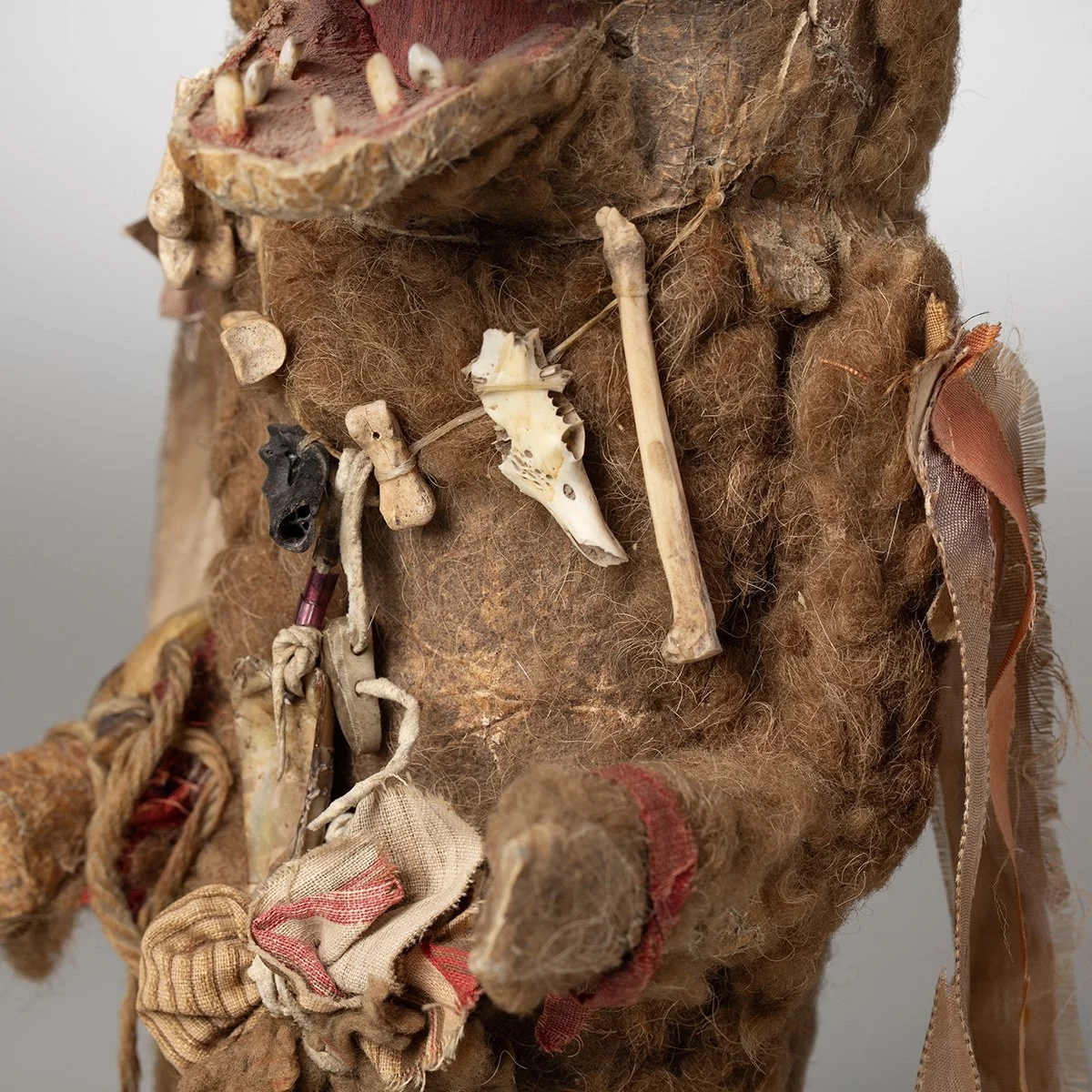 Image 3 of 8
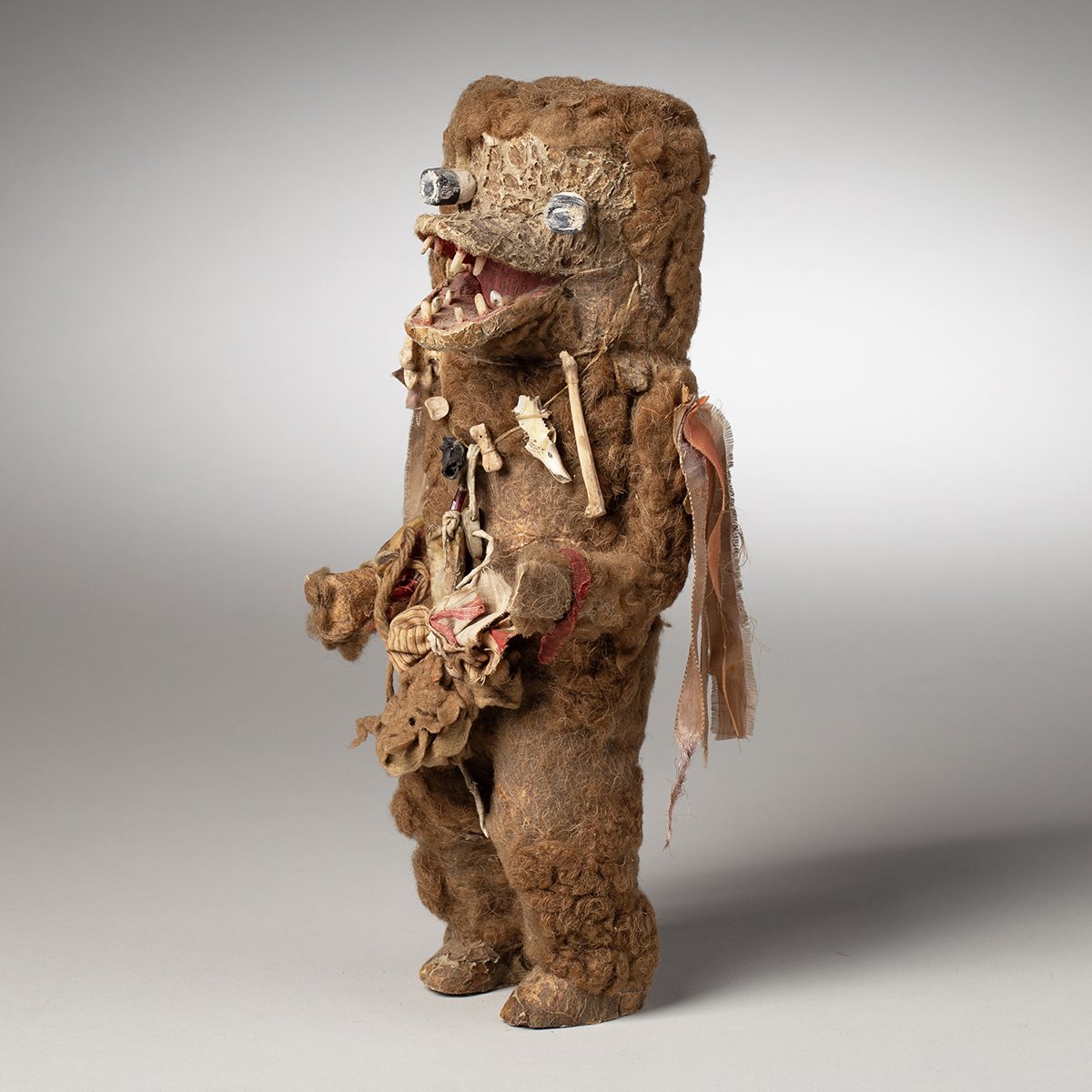 Image 4 of 8
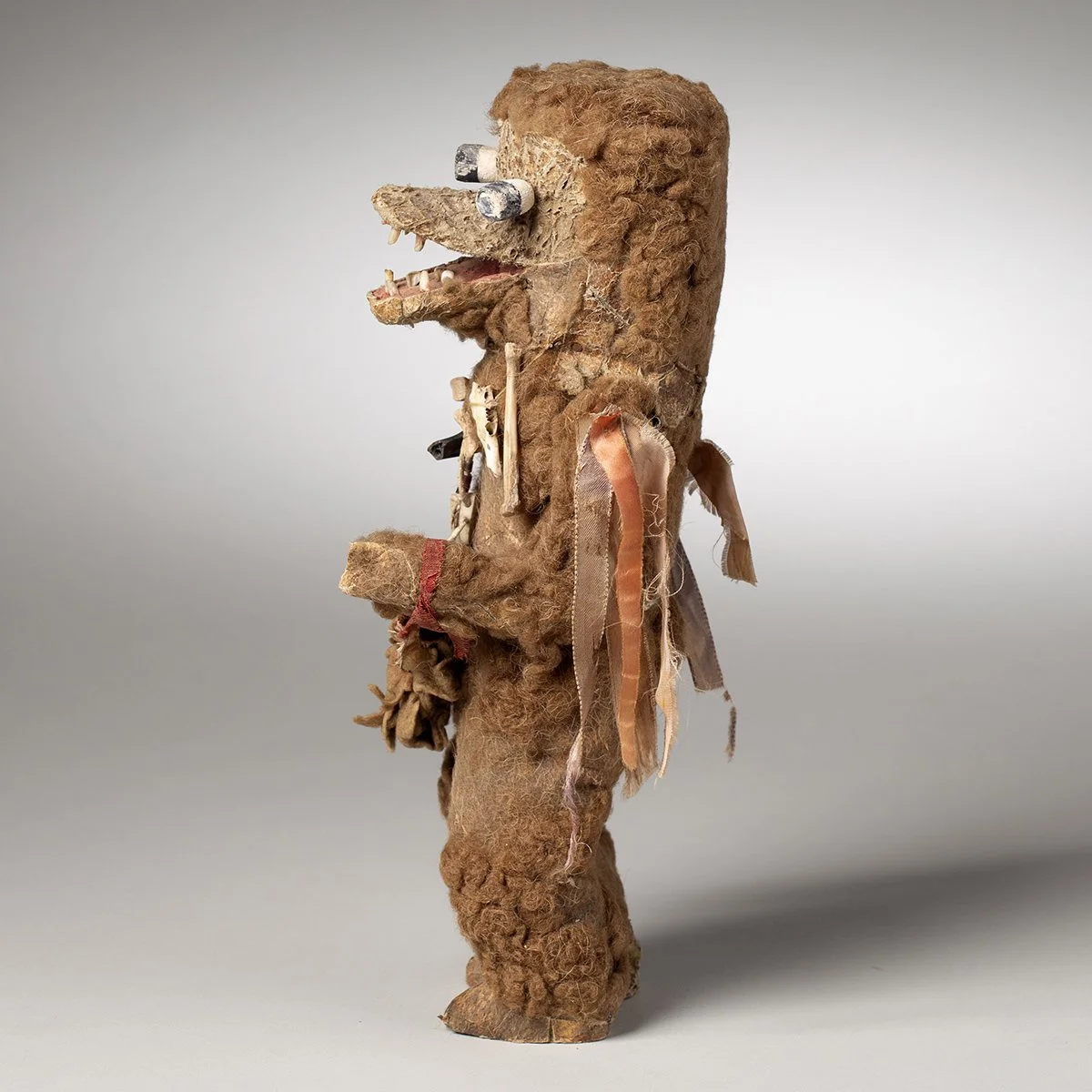 Image 5 of 8
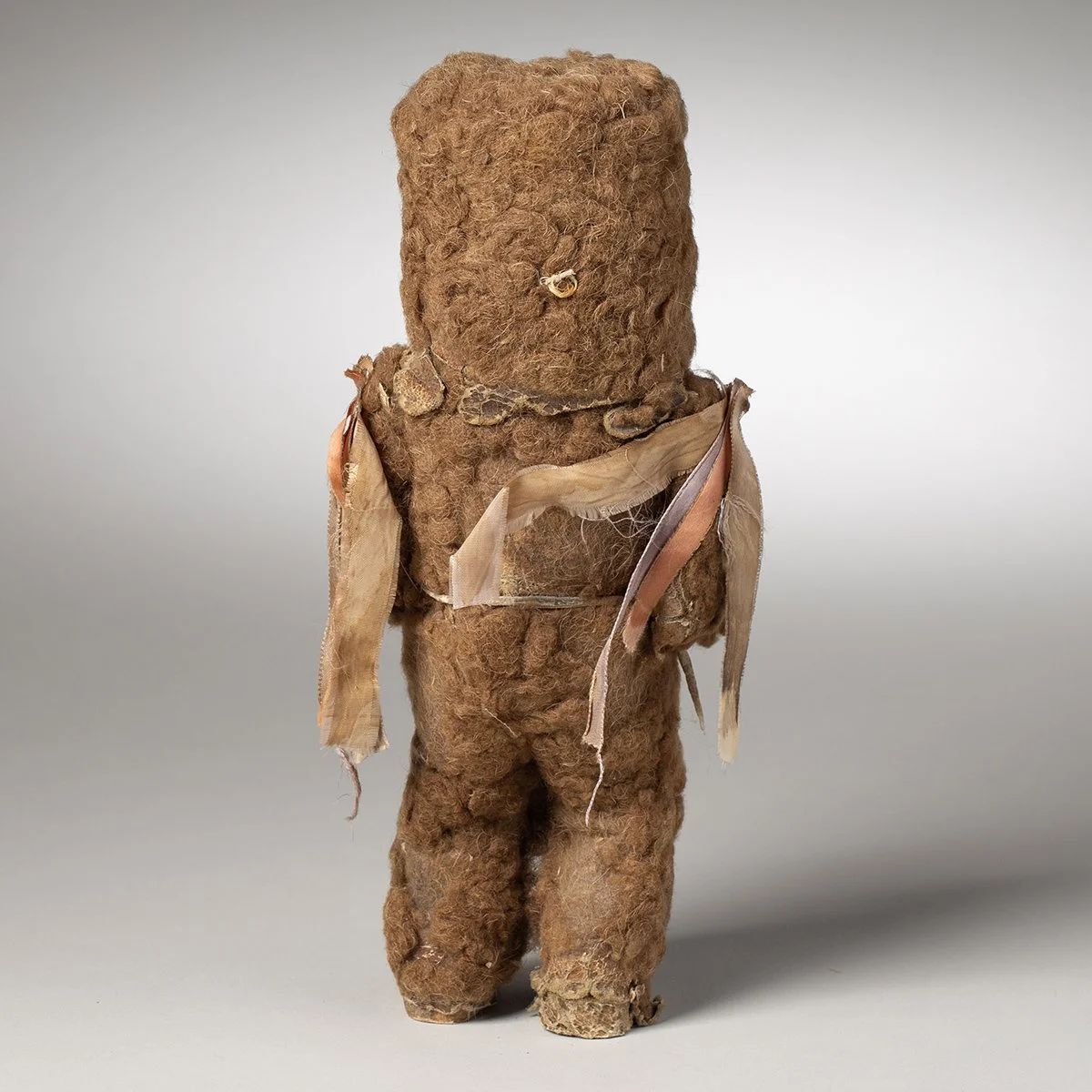 Image 6 of 8
 Image 7 of 8
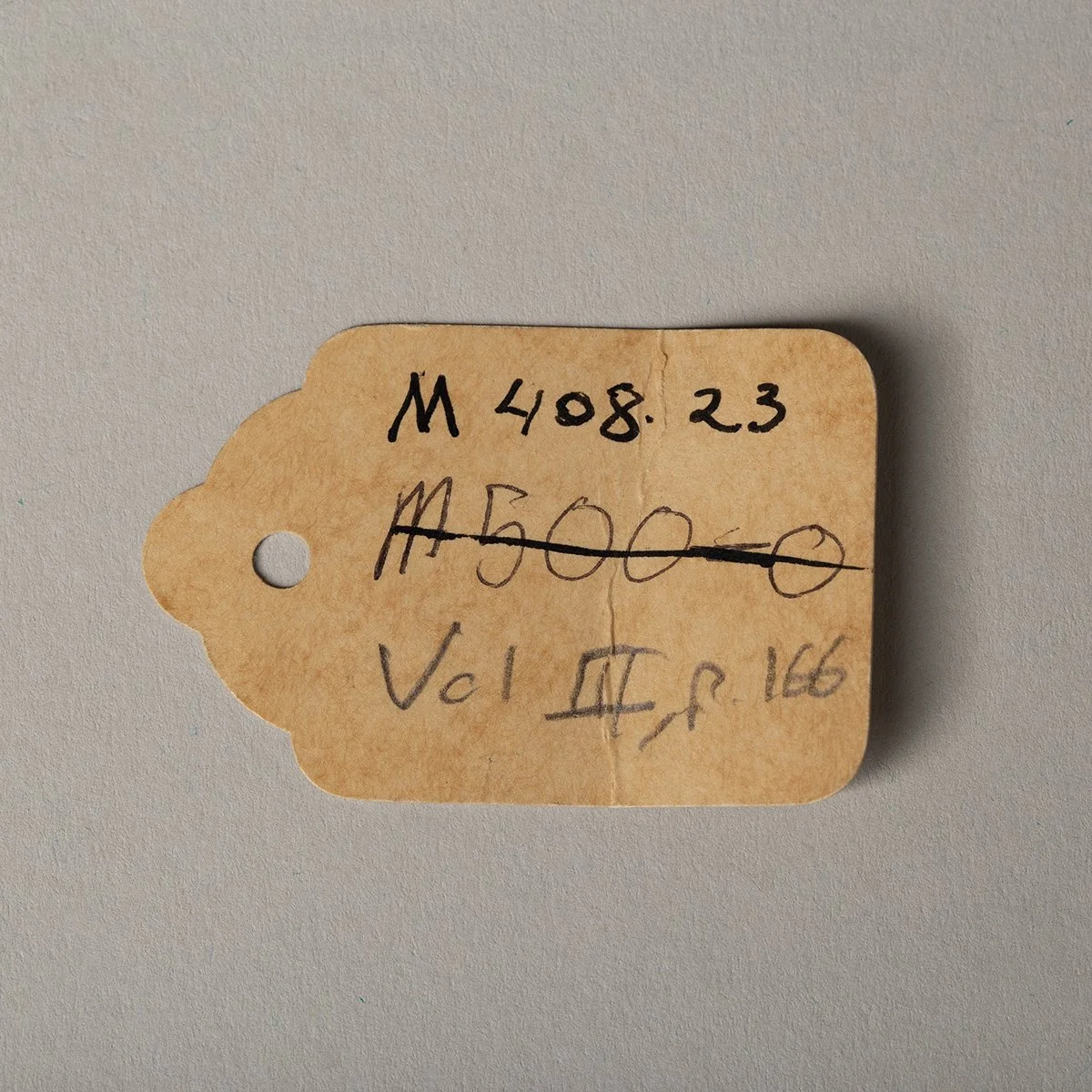 Image 8 of 8