

 Image 1 of 4
 Image 2 of 4
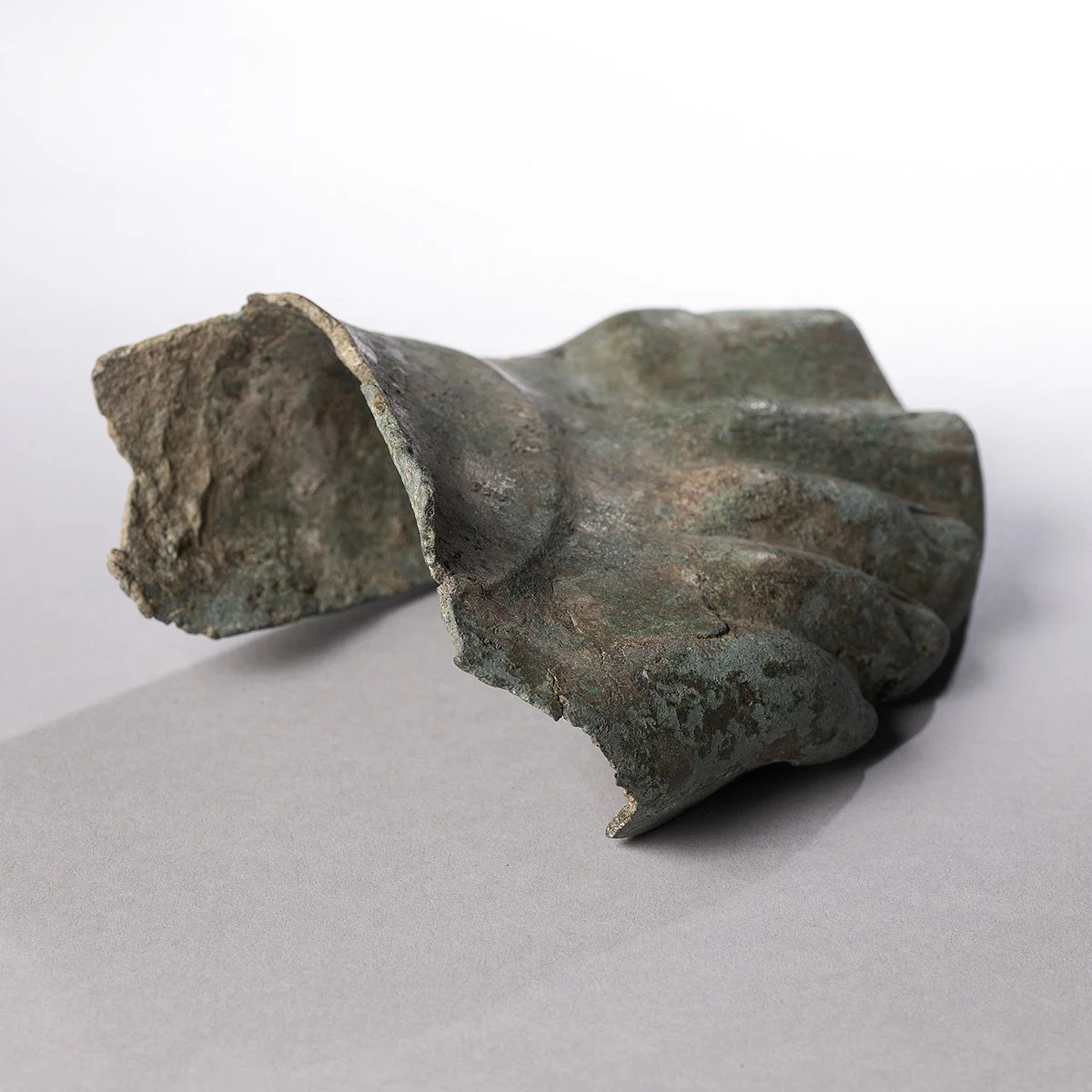 Image 3 of 4
 Image 4 of 4
Roman
100–200 AD
Bronze
Height: 4¼ in (10.8 cm), Width: 5½ in (14 cm)
Provenance: Palmyra Heritage, New York; Private Collection, New York; Fortuna Fine Art, New York
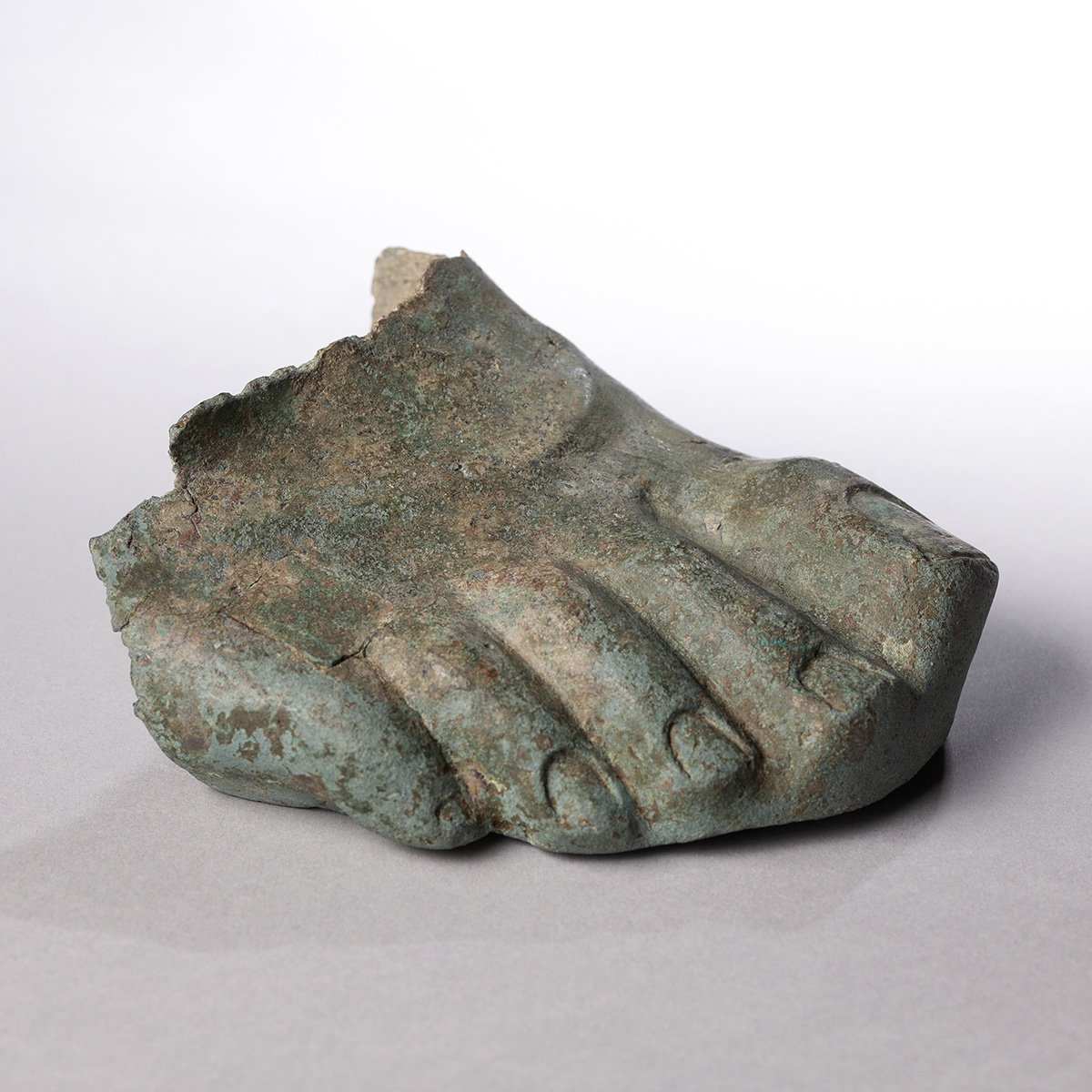
Votive feet in bronze and terracotta were among the most common anatomical offerings deposited at healing sanctuaries across the Roman world, dedicated to gods such as Asclepius, Apollo, and local healing deities in exchange for cures or in anticipation of them. The practice of anatomical votives was widespread from the Hellenistic period onward and continued through the Imperial era, with bronze examples generally associated with donors of greater means. This foot is rendered at life-size, placing it among the more substantial surviving examples of the type.
The casting captures the articulation of the toes, the arch, and the lateral profile with the straightforward naturalism typical of Roman votive production, without idealization. Surface patination is consistent with burial context, with green and brown tones developed across the bronze over centuries. The piece passed through Fortuna Fine Art, New York, one of the established dealers in ancient art, lending it a well-documented recent ownership history.
We ship free anywhere in the world, fully insured, packed by hand.
Roman
100–200 AD
Bronze
Height: 4¼ in (10.8 cm), Width: 5½ in (14 cm)
Provenance: Palmyra Heritage, New York; Private Collection, New York; Fortuna Fine Art, New York
Votive feet in bronze and terracotta were among the most common anatomical offerings deposited at healing sanctuaries across the Roman world, dedicated to gods such as Asclepius, Apollo, and local healing deities in exchange for cures or in anticipation of them. The practice of anatomical votives was widespread from the Hellenistic period onward and continued through the Imperial era, with bronze examples generally associated with donors of greater means. This foot is rendered at life-size, placing it among the more substantial surviving examples of the type.
The casting captures the articulation of the toes, the arch, and the lateral profile with the straightforward naturalism typical of Roman votive production, without idealization. Surface patination is consistent with burial context, with green and brown tones developed across the bronze over centuries. The piece passed through Fortuna Fine Art, New York, one of the established dealers in ancient art, lending it a well-documented recent ownership history.
We ship free anywhere in the world, fully insured, packed by hand.