

 Image 1 of 4
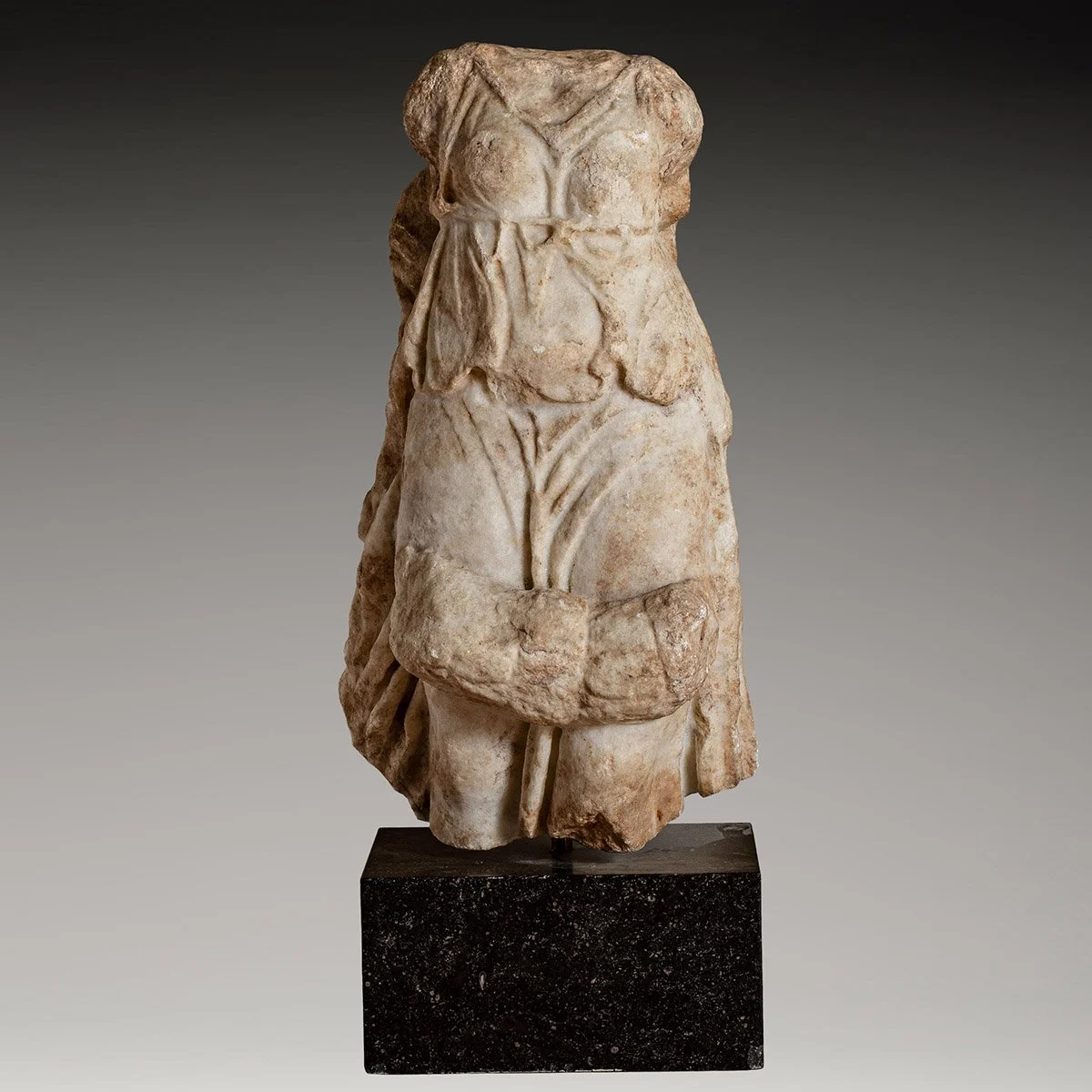 Image 2 of 4
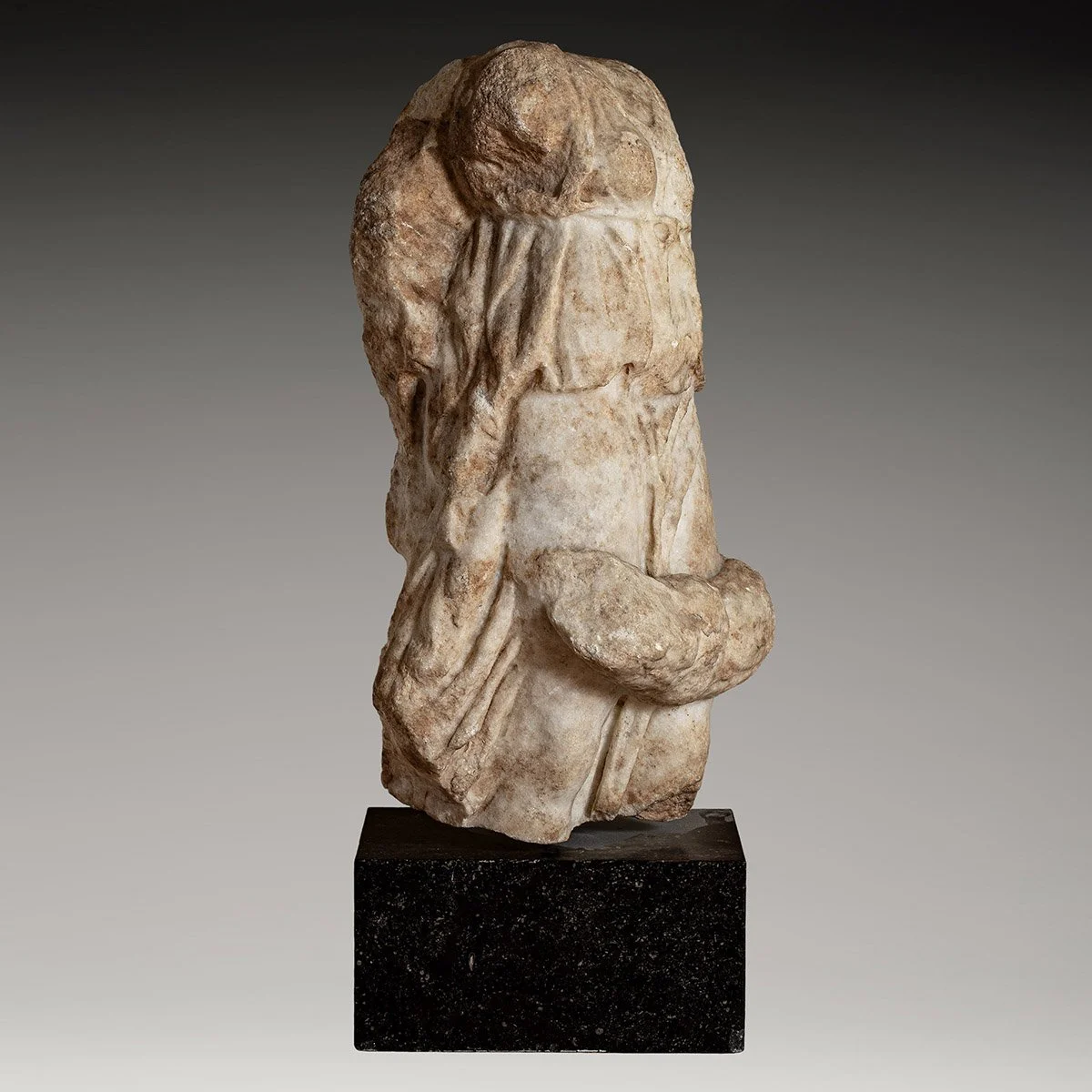 Image 3 of 4
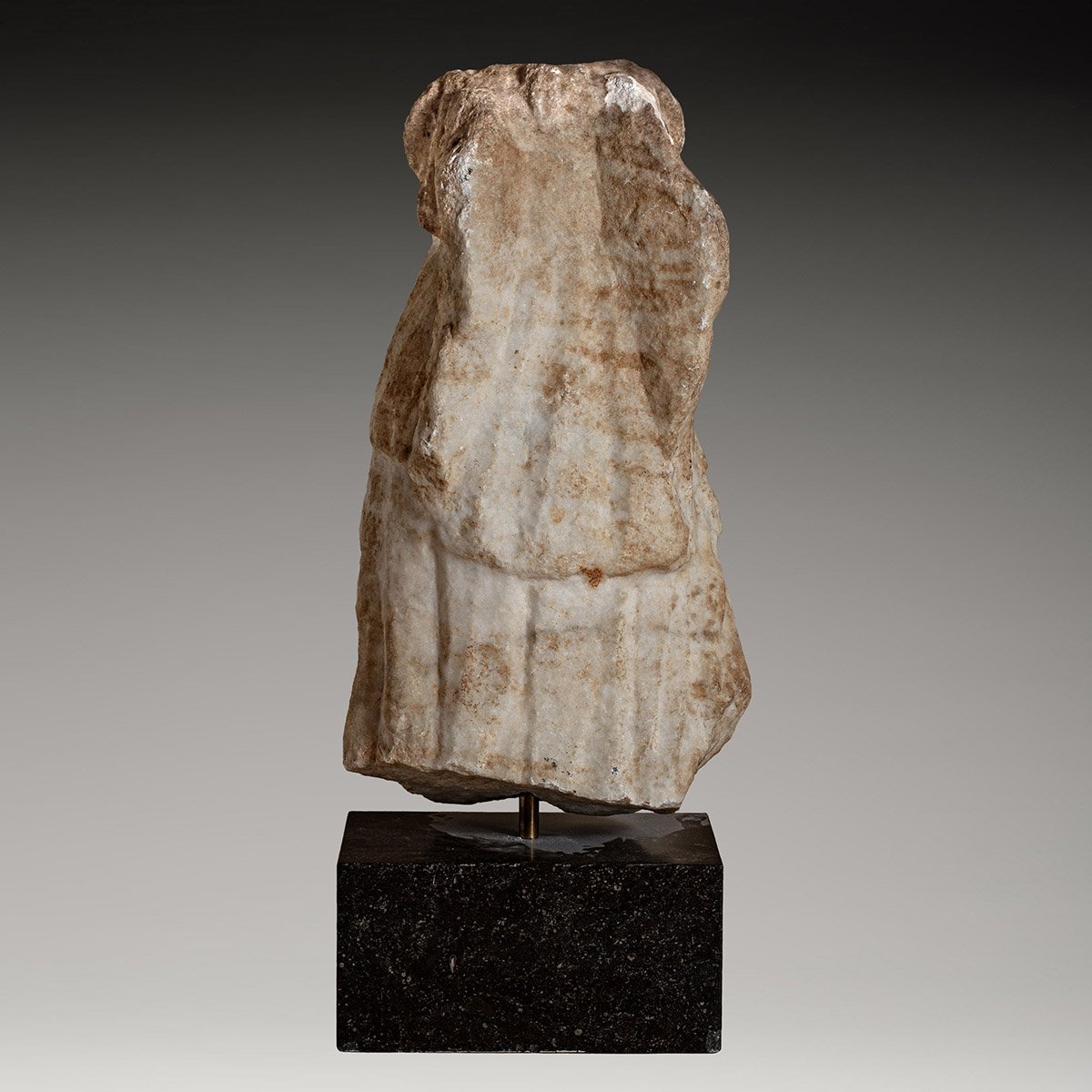 Image 4 of 4
Roman
1st to 3rd century AD
Marble
Height 20 1/2" (52.1 cm); with custom marble base 28 3/4" (73 cm)
Provenance: Private collection, New York City; Palmyra Heritage, New York City
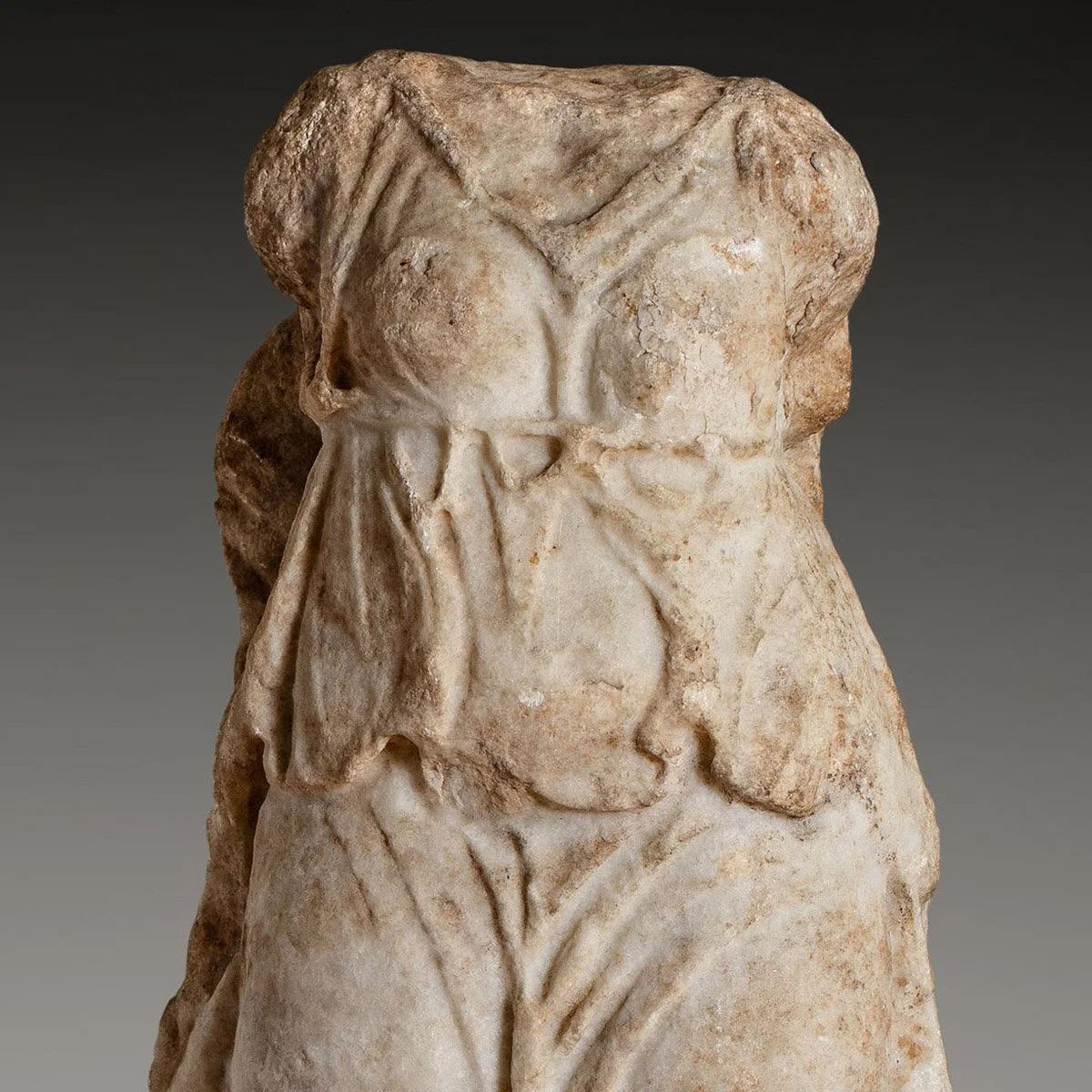
This Roman marble torso represents a goddess or elite female figure, carved in imitation of the Greek Hellenistic sculptural tradition that Roman workshops adopted and refined from the late Republic onward. The drapery treatment follows the so-called wet drapery convention, in which thinly rendered fabric appears to cling to the underlying body, simultaneously concealing and revealing the figure beneath. This technique, originating in 5th century BC Greek sculpture, remained a prestige convention in Roman workshops for several centuries.
The carving demonstrates the Roman sculptor's command of contrasting surface textures, with the fluid folds of the garment worked in deep undercutting that creates strong shadow lines across the torso. The volumetric handling of the drapery reflects the blending of Hellenistic sensuality with the Roman tradition of portraiture and civic commemoration, in which idealized form served both devotional and political purposes. The marble retains areas of original surface polish alongside the natural patination consistent with age and burial.
Roman draped torsos of this type were produced for temple settings, domestic shrines, and public commemoration, the goddess type among the most frequently commissioned subjects in the Roman sculptural repertoire. The figure is presented on a custom marble base that complements the original material and allows for stable freestanding display. The Palmyra Heritage provenance connects the piece to a New York dealer with a documented focus on ancient Mediterranean material.
We ship free anywhere in the world, fully insured, packed by hand.
Roman
1st to 3rd century AD
Marble
Height 20 1/2" (52.1 cm); with custom marble base 28 3/4" (73 cm)
Provenance: Private collection, New York City; Palmyra Heritage, New York City
This Roman marble torso represents a goddess or elite female figure, carved in imitation of the Greek Hellenistic sculptural tradition that Roman workshops adopted and refined from the late Republic onward. The drapery treatment follows the so-called wet drapery convention, in which thinly rendered fabric appears to cling to the underlying body, simultaneously concealing and revealing the figure beneath. This technique, originating in 5th century BC Greek sculpture, remained a prestige convention in Roman workshops for several centuries.
The carving demonstrates the Roman sculptor's command of contrasting surface textures, with the fluid folds of the garment worked in deep undercutting that creates strong shadow lines across the torso. The volumetric handling of the drapery reflects the blending of Hellenistic sensuality with the Roman tradition of portraiture and civic commemoration, in which idealized form served both devotional and political purposes. The marble retains areas of original surface polish alongside the natural patination consistent with age and burial.
Roman draped torsos of this type were produced for temple settings, domestic shrines, and public commemoration, the goddess type among the most frequently commissioned subjects in the Roman sculptural repertoire. The figure is presented on a custom marble base that complements the original material and allows for stable freestanding display. The Palmyra Heritage provenance connects the piece to a New York dealer with a documented focus on ancient Mediterranean material.
We ship free anywhere in the world, fully insured, packed by hand.