Nepal, Kathmandu Valley
18th century
Gilded bronze
Height 6" (15.2 cm); width 4" (10.2 cm); depth 3 1/4" (8.1 cm); weight 1,310 g
Samantabhadra is the Primordial Buddha of the Vajrayana tradition, distinct from the Bodhisattva of the same name, and is understood as the embodiment of the primordial, unaltered state of mind. He is depicted here in yab yum, or union with his consort Samantabhadri, together symbolizing the inseparability of awareness and emptiness that is central to Vajrayana Buddhist philosophy. Unlike most Buddhist figures who are depicted with crowns, jewels, and robes, Samantabhadra is immediately recognizable by their absence, his nakedness signifying the unadorned nature of mind itself.
This bronze was produced in the Kathmandu Valley, where Newar craftsmen supplied the Himalayan world with religious bronzes across several centuries of sustained workshop production. The 18th century represented the final period of Malla patronage before the kingdom's conquest by Prithvi Narayan Shah in 1768, a period of intense artistic production across the valley's three rival city-states of Kathmandu, Patan, and Bhaktapur. The two figures appear to have been cast as a single unit that slots into the lotus platform, which was cast separately, with lugs at the rear indicating an original backing plate now absent.
Samantabhadri rests on Samantabhadra's lap, her arms and legs wrapping around his body, the two figures facing each other directly in a composition that emphasizes their inseparability as a symbolic unit. The double lotus dais on which the figures are seated is cast with careful attention to the layered petal forms characteristic of Newar metalwork of this period. The gilding is largely intact and has developed a warm, softened tone consistent with the documented age of the piece.
We ship free anywhere in the world, fully insured, packed by hand.
Nepal, Kathmandu Valley
18th century
Gilded bronze
Height 6" (15.2 cm); width 4" (10.2 cm); depth 3 1/4" (8.1 cm); weight 1,310 g
Samantabhadra is the Primordial Buddha of the Vajrayana tradition, distinct from the Bodhisattva of the same name, and is understood as the embodiment of the primordial, unaltered state of mind. He is depicted here in yab yum, or union with his consort Samantabhadri, together symbolizing the inseparability of awareness and emptiness that is central to Vajrayana Buddhist philosophy. Unlike most Buddhist figures who are depicted with crowns, jewels, and robes, Samantabhadra is immediately recognizable by their absence, his nakedness signifying the unadorned nature of mind itself.
This bronze was produced in the Kathmandu Valley, where Newar craftsmen supplied the Himalayan world with religious bronzes across several centuries of sustained workshop production. The 18th century represented the final period of Malla patronage before the kingdom's conquest by Prithvi Narayan Shah in 1768, a period of intense artistic production across the valley's three rival city-states of Kathmandu, Patan, and Bhaktapur. The two figures appear to have been cast as a single unit that slots into the lotus platform, which was cast separately, with lugs at the rear indicating an original backing plate now absent.
Samantabhadri rests on Samantabhadra's lap, her arms and legs wrapping around his body, the two figures facing each other directly in a composition that emphasizes their inseparability as a symbolic unit. The double lotus dais on which the figures are seated is cast with careful attention to the layered petal forms characteristic of Newar metalwork of this period. The gilding is largely intact and has developed a warm, softened tone consistent with the documented age of the piece.
We ship free anywhere in the world, fully insured, packed by hand.


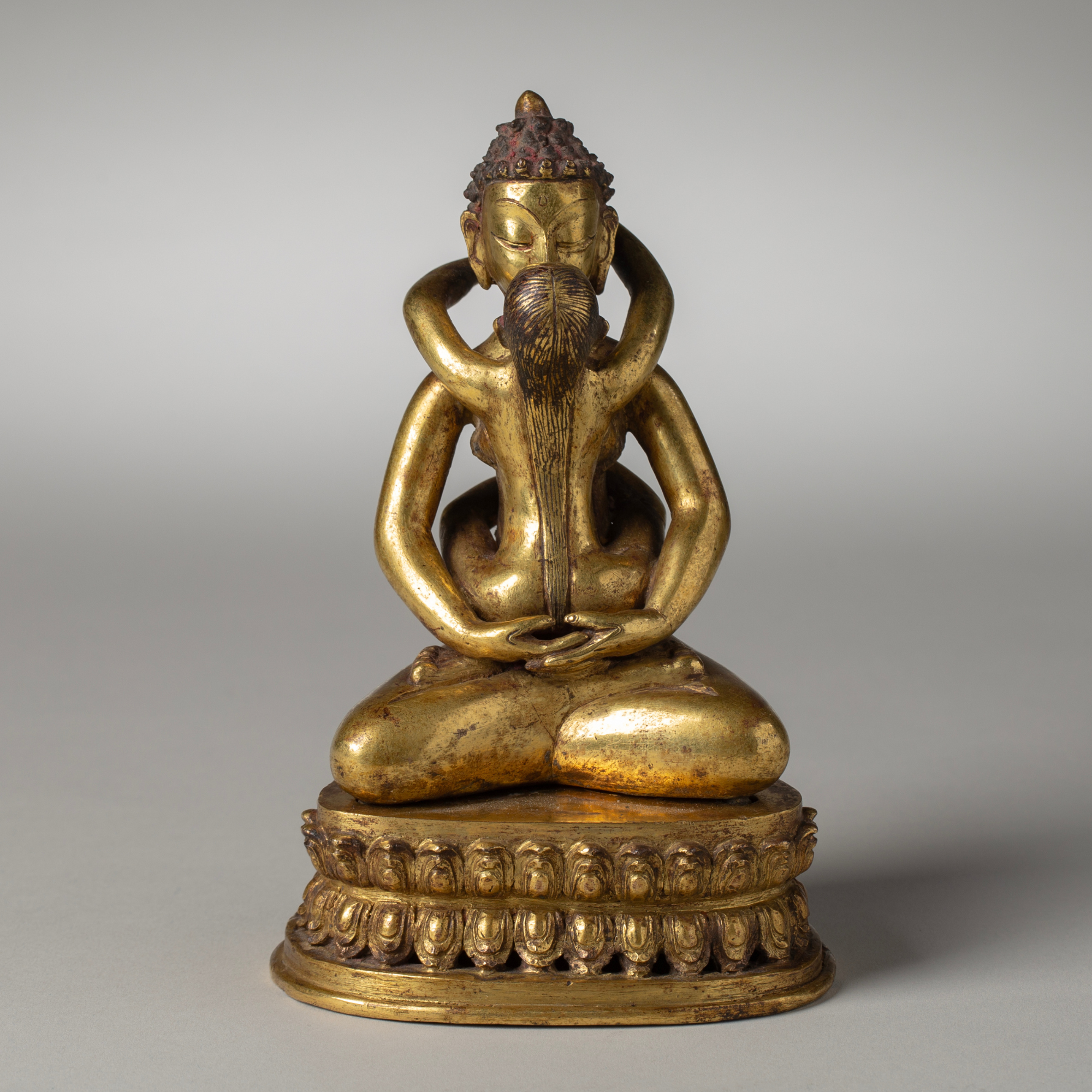 Image 1 of 6
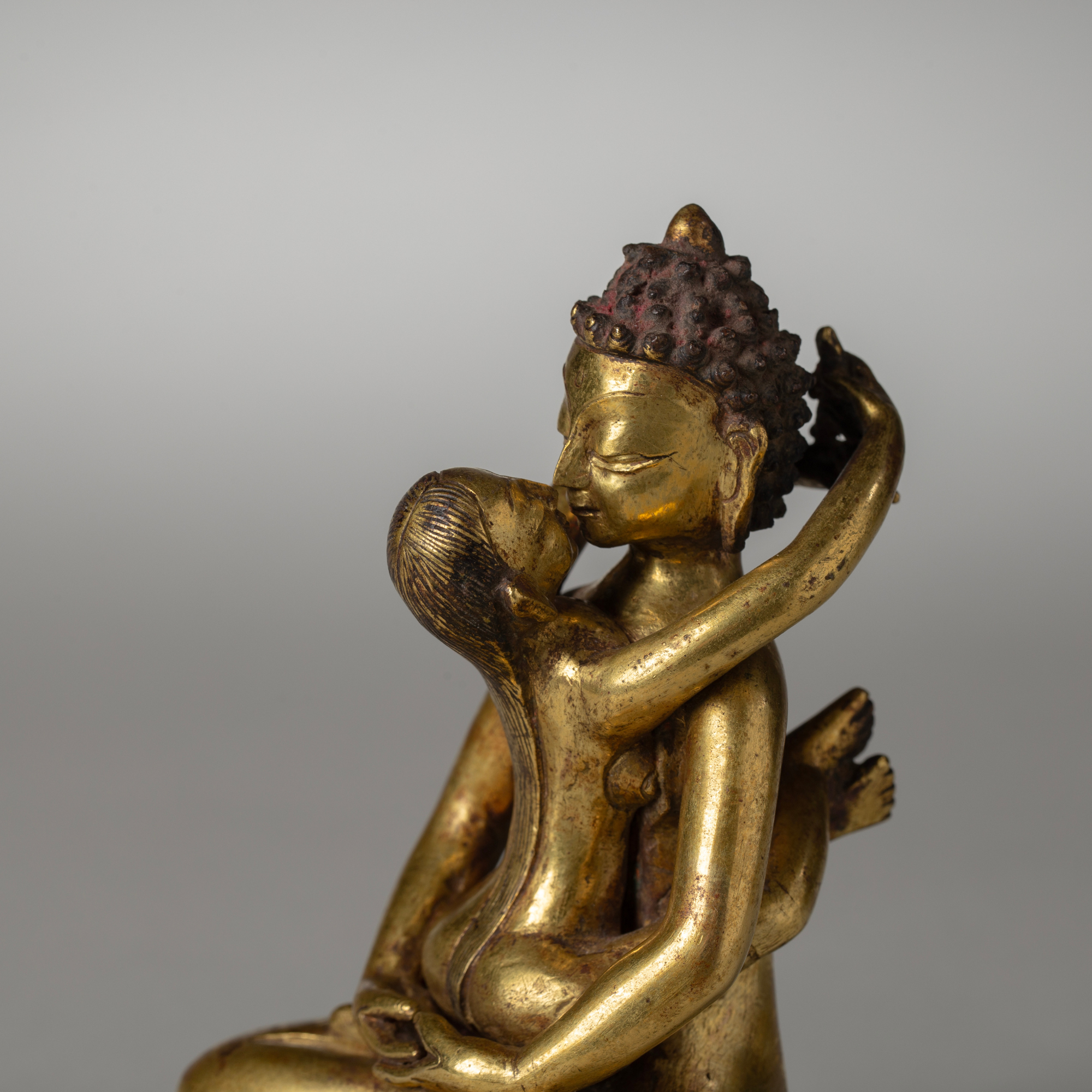 Image 2 of 6
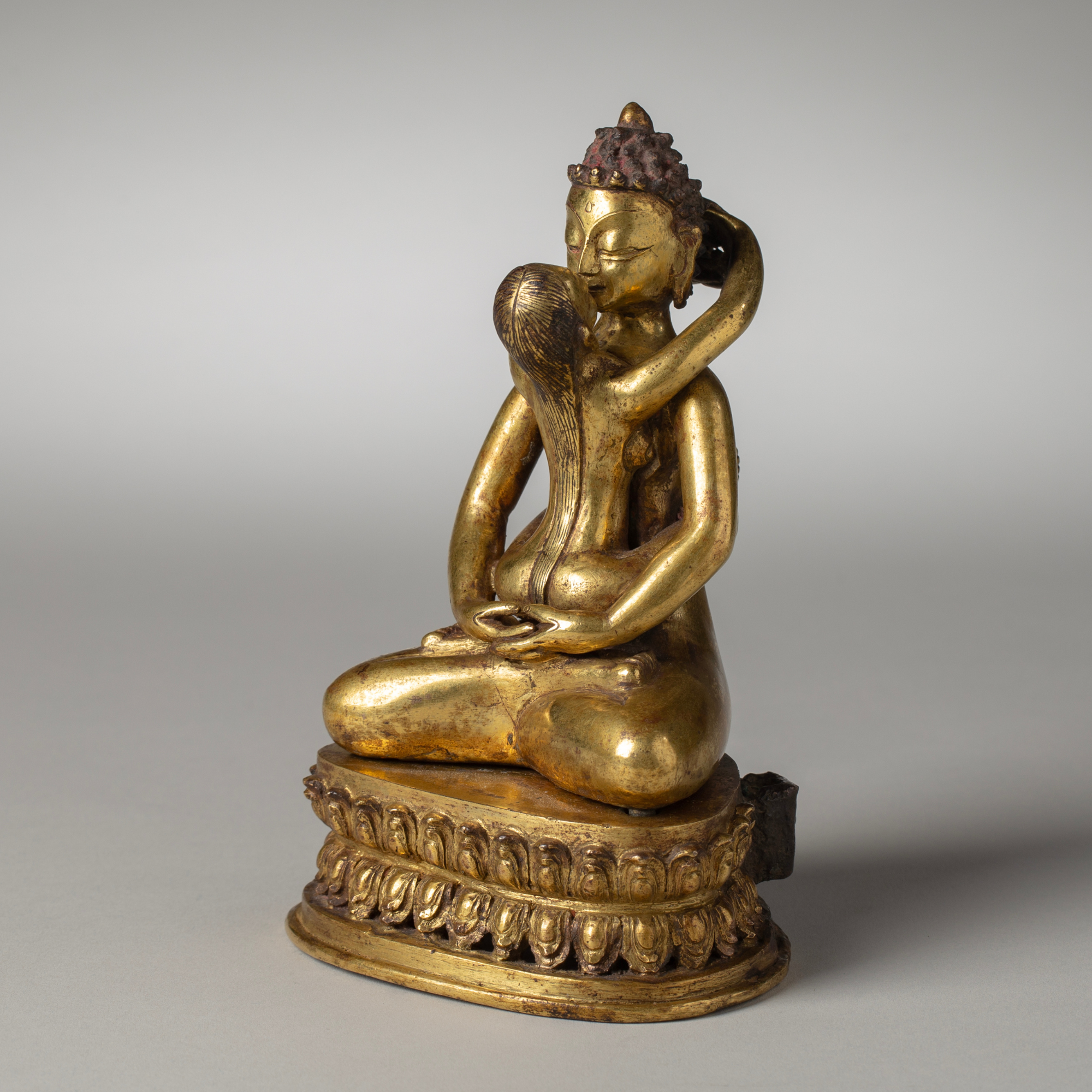 Image 3 of 6
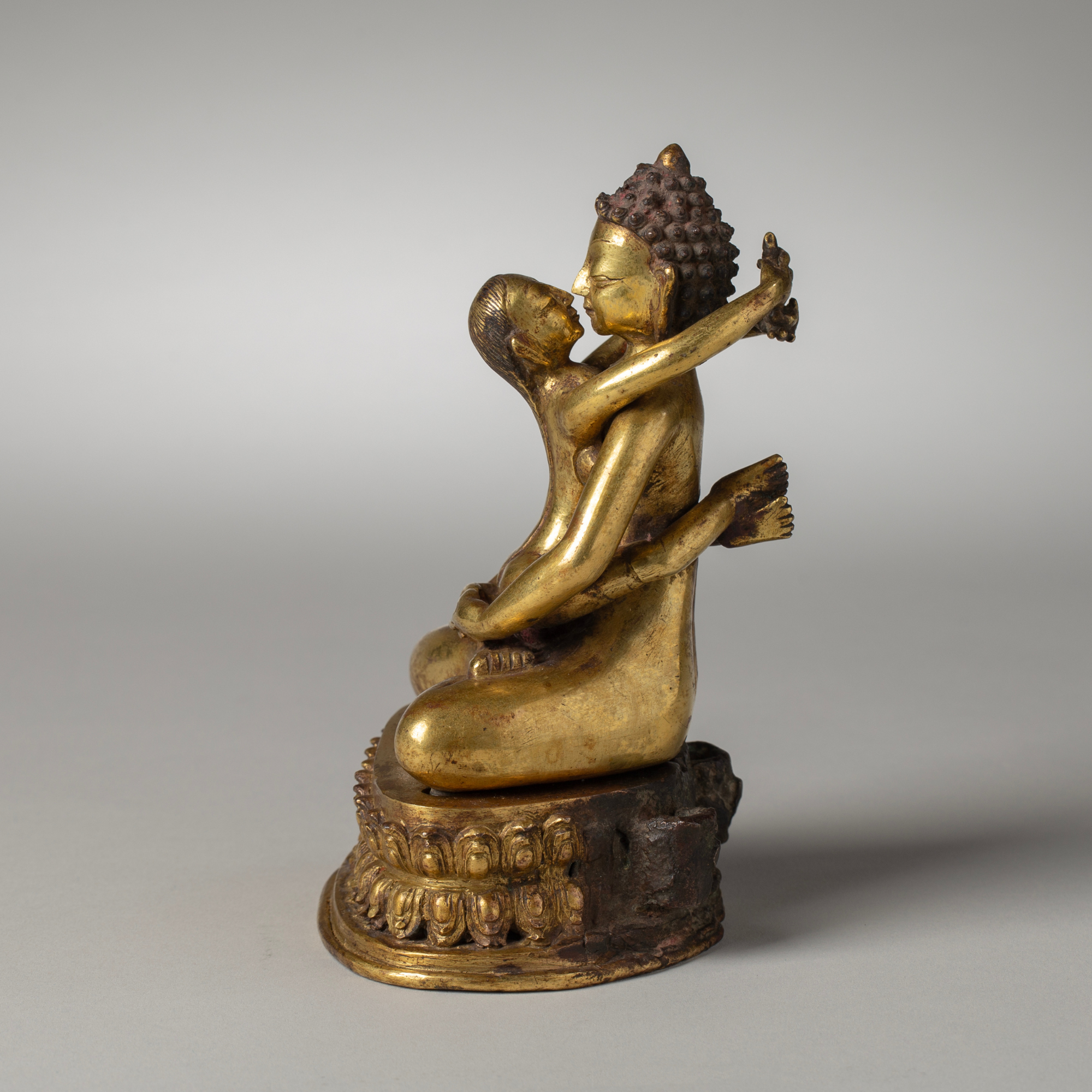 Image 4 of 6
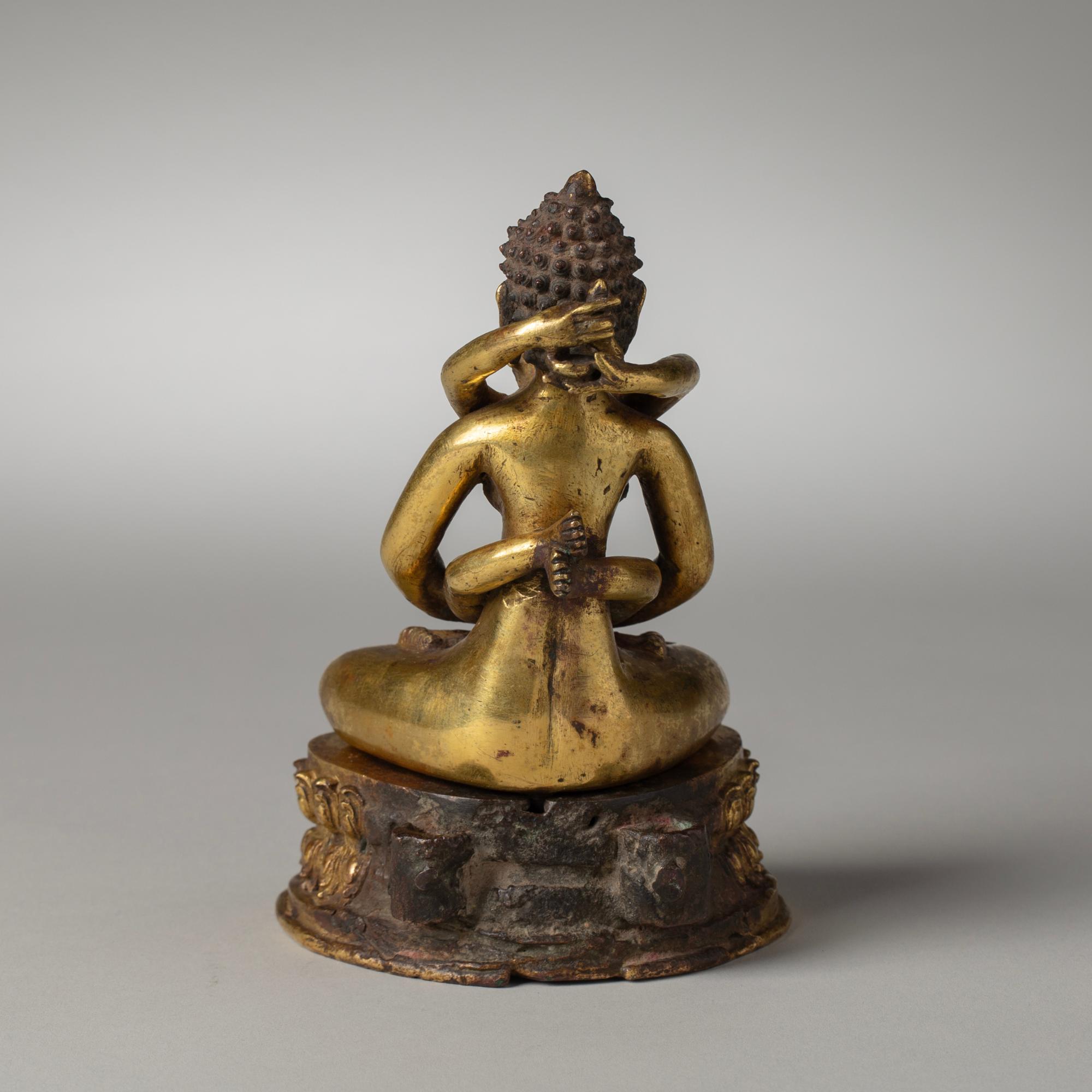 Image 5 of 6
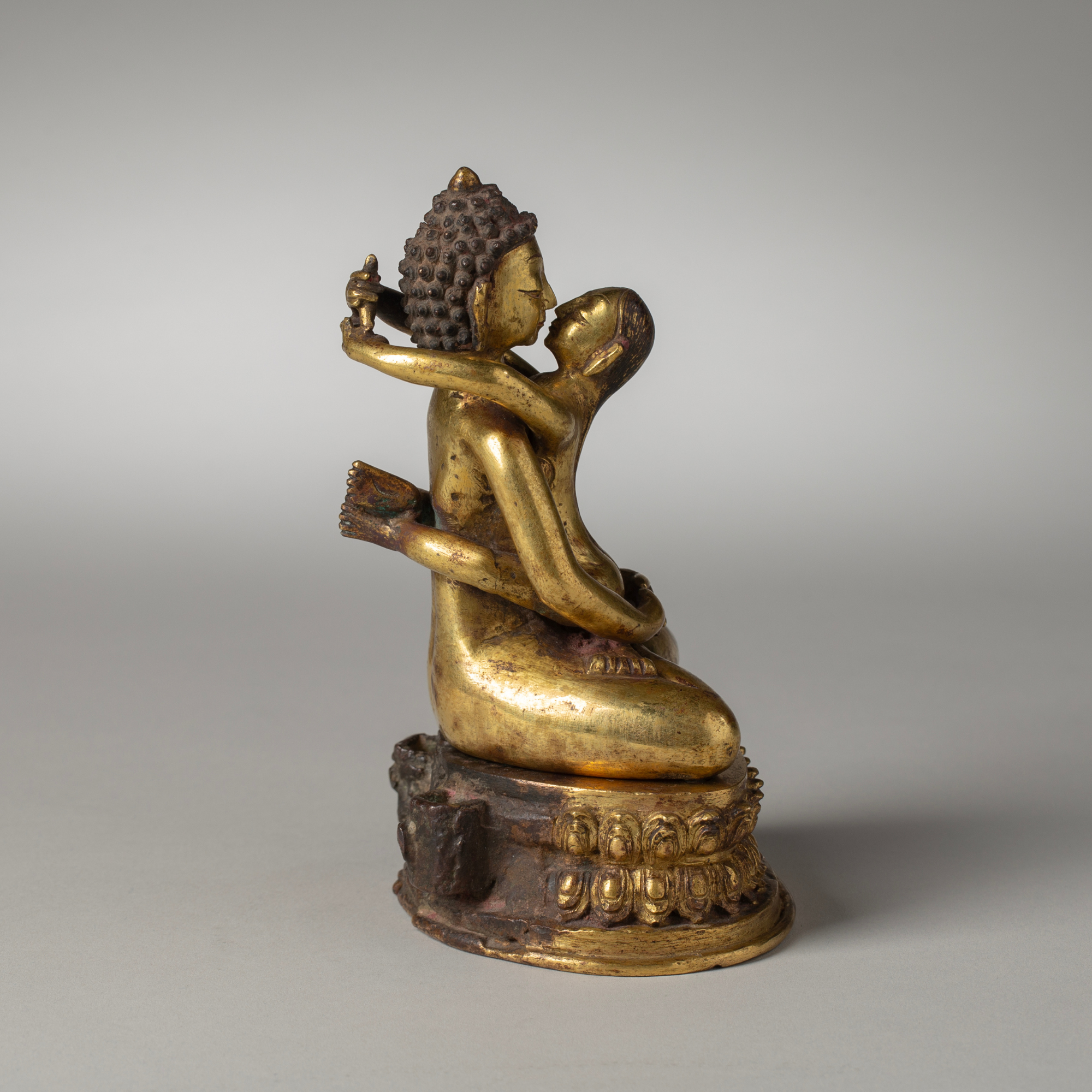 Image 6 of 6