New Mexico
Circa 1830 to 1860
Wood with polychrome decoration
Height 11 1/2 in (29.2 cm)
Provenance: Private collection, Tucson, AZ
This New Mexican devotional bulto depicts San Antonio de Padua, made by the artist known as the Santo Niño Santero, an unidentified santero active in New Mexico during the mid-19th century. The name is a scholarly and market designation used for a distinct body of carved and painted santos from this period. The compact scale, painted surface, and subject reflect the regional santos tradition that flourished in New Mexico during the nineteenth century.
Bultos were carved devotional figures used in churches, home altars, and religious settings throughout New Mexico, belonging to the Spanish Colonial devotional tradition where local santeros created sacred images for communities far from major ecclesiastical art centers. The Santo Niño Santero's work is recognized in the scholarly literature on New Mexican santos as a cohesive and identifiable body of production. The Tucson private collection provenance is consistent with the Southwest collector market for New Mexican religious art.
We ship free anywhere in the world, fully insured, packed by hand.
New Mexico
Circa 1830 to 1860
Wood with polychrome decoration
Height 11 1/2 in (29.2 cm)
Provenance: Private collection, Tucson, AZ
This New Mexican devotional bulto depicts San Antonio de Padua, made by the artist known as the Santo Niño Santero, an unidentified santero active in New Mexico during the mid-19th century. The name is a scholarly and market designation used for a distinct body of carved and painted santos from this period. The compact scale, painted surface, and subject reflect the regional santos tradition that flourished in New Mexico during the nineteenth century.
Bultos were carved devotional figures used in churches, home altars, and religious settings throughout New Mexico, belonging to the Spanish Colonial devotional tradition where local santeros created sacred images for communities far from major ecclesiastical art centers. The Santo Niño Santero's work is recognized in the scholarly literature on New Mexican santos as a cohesive and identifiable body of production. The Tucson private collection provenance is consistent with the Southwest collector market for New Mexican religious art.
We ship free anywhere in the world, fully insured, packed by hand.


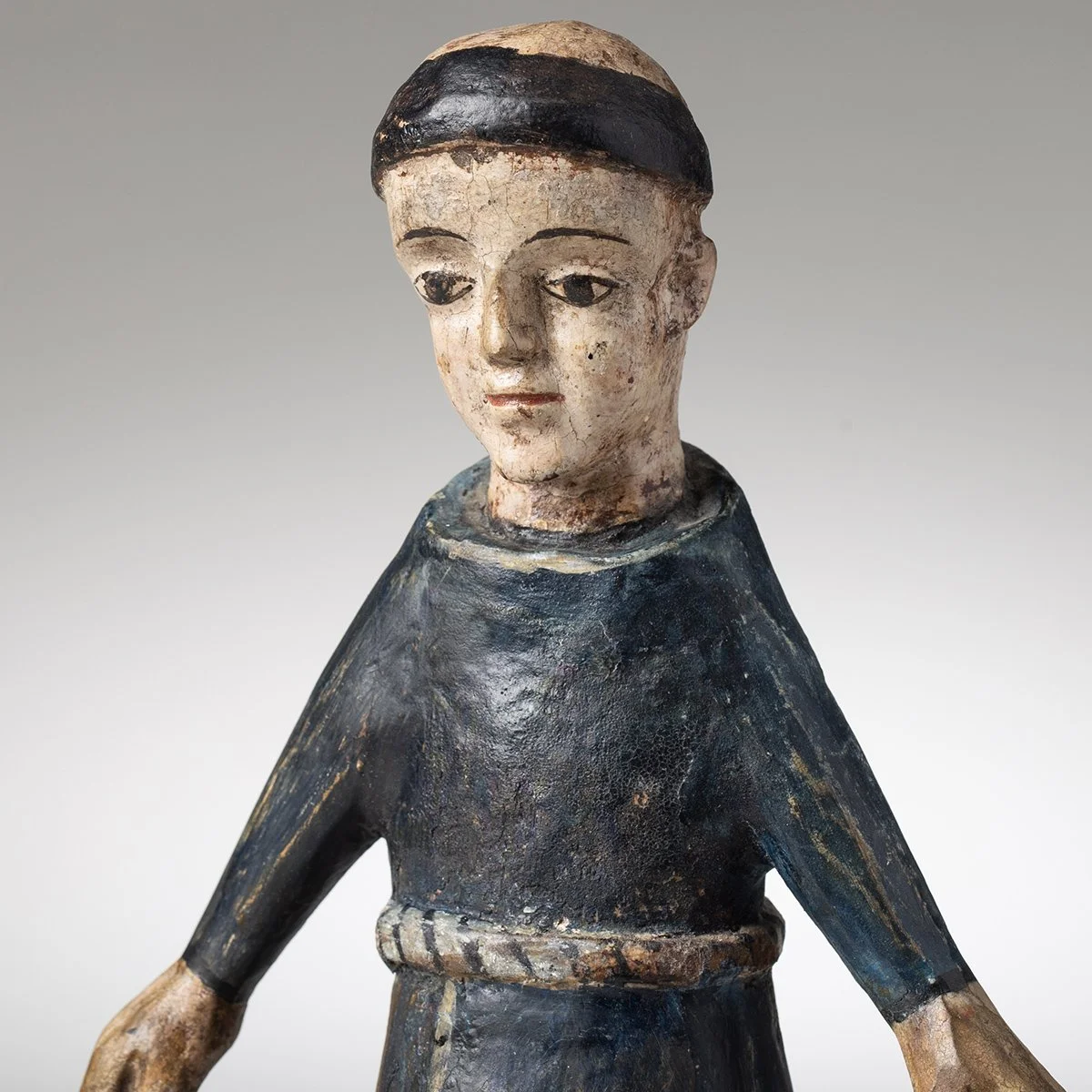 Image 1 of 7
 Image 2 of 7
 Image 3 of 7
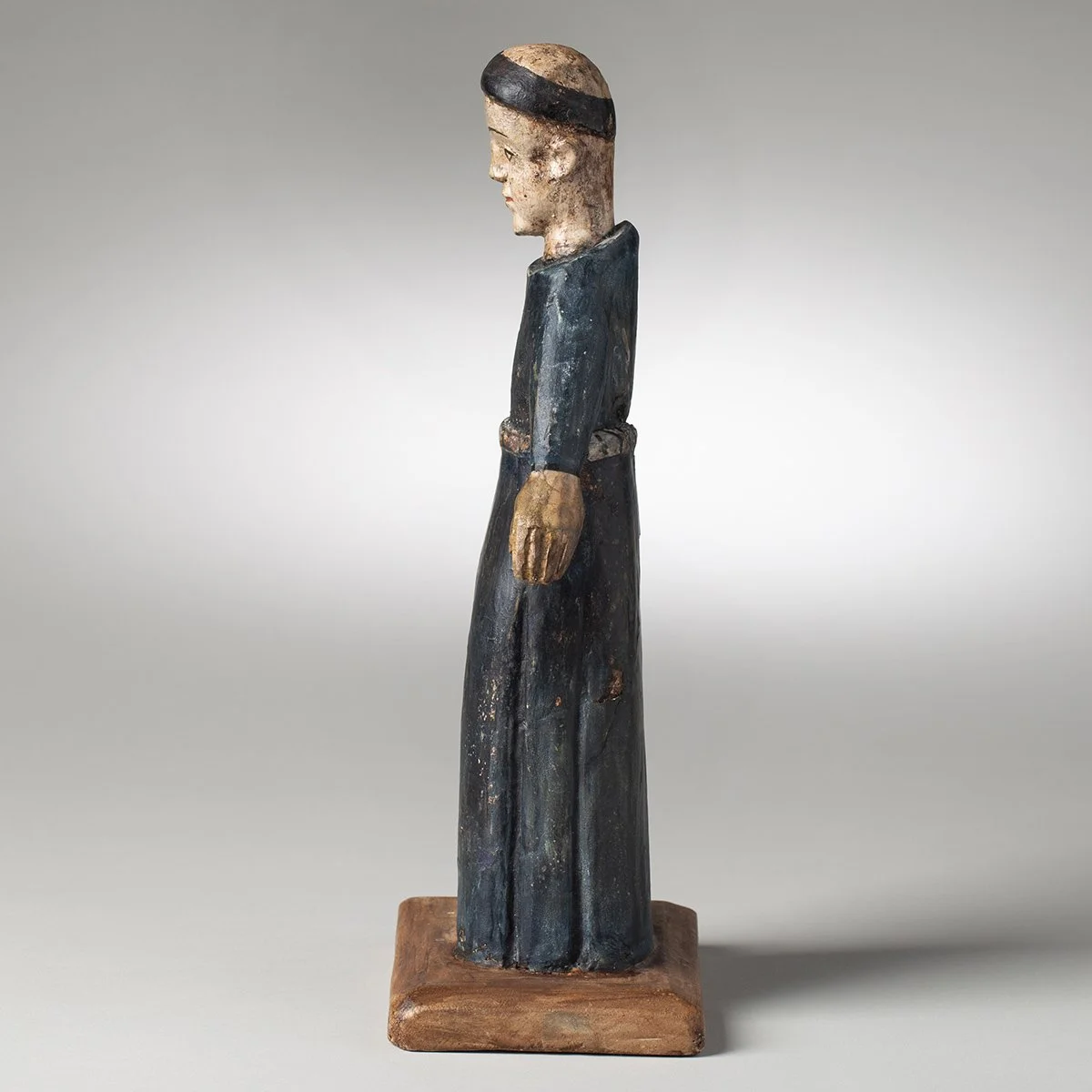 Image 4 of 7
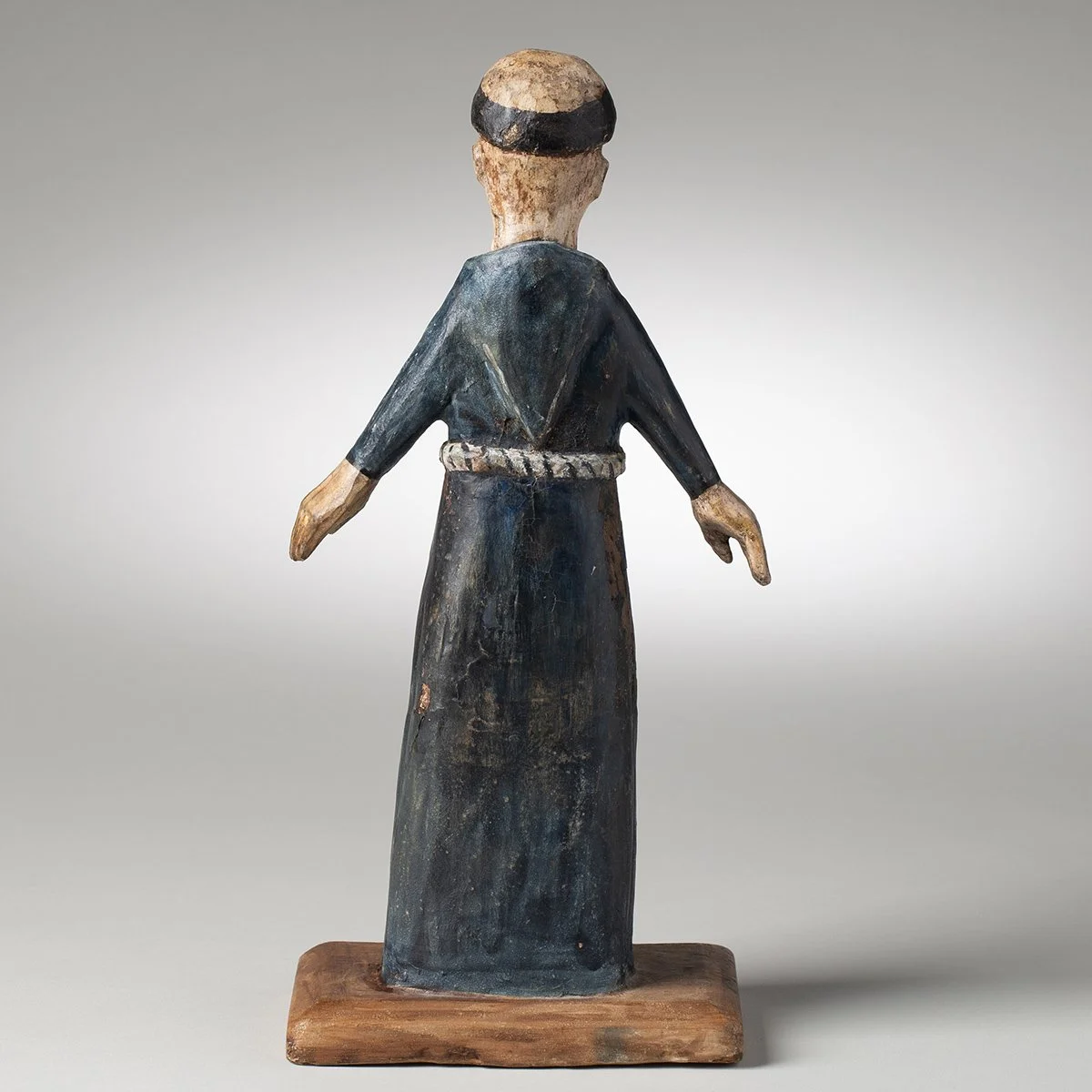 Image 5 of 7
 Image 6 of 7
 Image 7 of 7