Santo Domingo Pueblo, New Mexico
Circa 1930
Ceramic, slip, mineral pigment
Height 5½ in (14 cm); diameter 11 in (27.9 cm)
Provenance: Private collection, Tucson, AZ
Santo Domingo Pueblo dough bowls were produced for domestic use in bread and food preparation, made in large, wide-bodied forms suited to the physical demands of kneading and mixing. The tradition of decorating these utilitarian objects with bold geometric painting reflects the deep integration of visual culture into everyday Pueblo life, where functional objects carried the same decorative seriousness as ceremonial wares. This example dates to circa 1930 and is painted on the interior with geometric forms including arrow or lightning motifs, a compositional vocabulary associated with weather, rain, and the forces that sustain agricultural communities in the Rio Grande Pueblo world.
The interior decoration is organized in bold black mineral pigment on a cream to buff slip ground, with the geometric elements rendered with the direct, unhurried line work characteristic of Santo Domingo ceramic painting of this period. The dark exterior is consistent with the tradition of leaving the outer surface of dough bowls minimally decorated or unslipped, directing visual attention to the functional interior. The Tucson private collection provenance is consistent with Pueblo material entering the Southwest collecting market through Arizona dealers during the mid-twentieth century.
We ship free anywhere in the world, fully insured, packed by hand.
Santo Domingo Pueblo, New Mexico
Circa 1930
Ceramic, slip, mineral pigment
Height 5½ in (14 cm); diameter 11 in (27.9 cm)
Provenance: Private collection, Tucson, AZ
Santo Domingo Pueblo dough bowls were produced for domestic use in bread and food preparation, made in large, wide-bodied forms suited to the physical demands of kneading and mixing. The tradition of decorating these utilitarian objects with bold geometric painting reflects the deep integration of visual culture into everyday Pueblo life, where functional objects carried the same decorative seriousness as ceremonial wares. This example dates to circa 1930 and is painted on the interior with geometric forms including arrow or lightning motifs, a compositional vocabulary associated with weather, rain, and the forces that sustain agricultural communities in the Rio Grande Pueblo world.
The interior decoration is organized in bold black mineral pigment on a cream to buff slip ground, with the geometric elements rendered with the direct, unhurried line work characteristic of Santo Domingo ceramic painting of this period. The dark exterior is consistent with the tradition of leaving the outer surface of dough bowls minimally decorated or unslipped, directing visual attention to the functional interior. The Tucson private collection provenance is consistent with Pueblo material entering the Southwest collecting market through Arizona dealers during the mid-twentieth century.
We ship free anywhere in the world, fully insured, packed by hand.


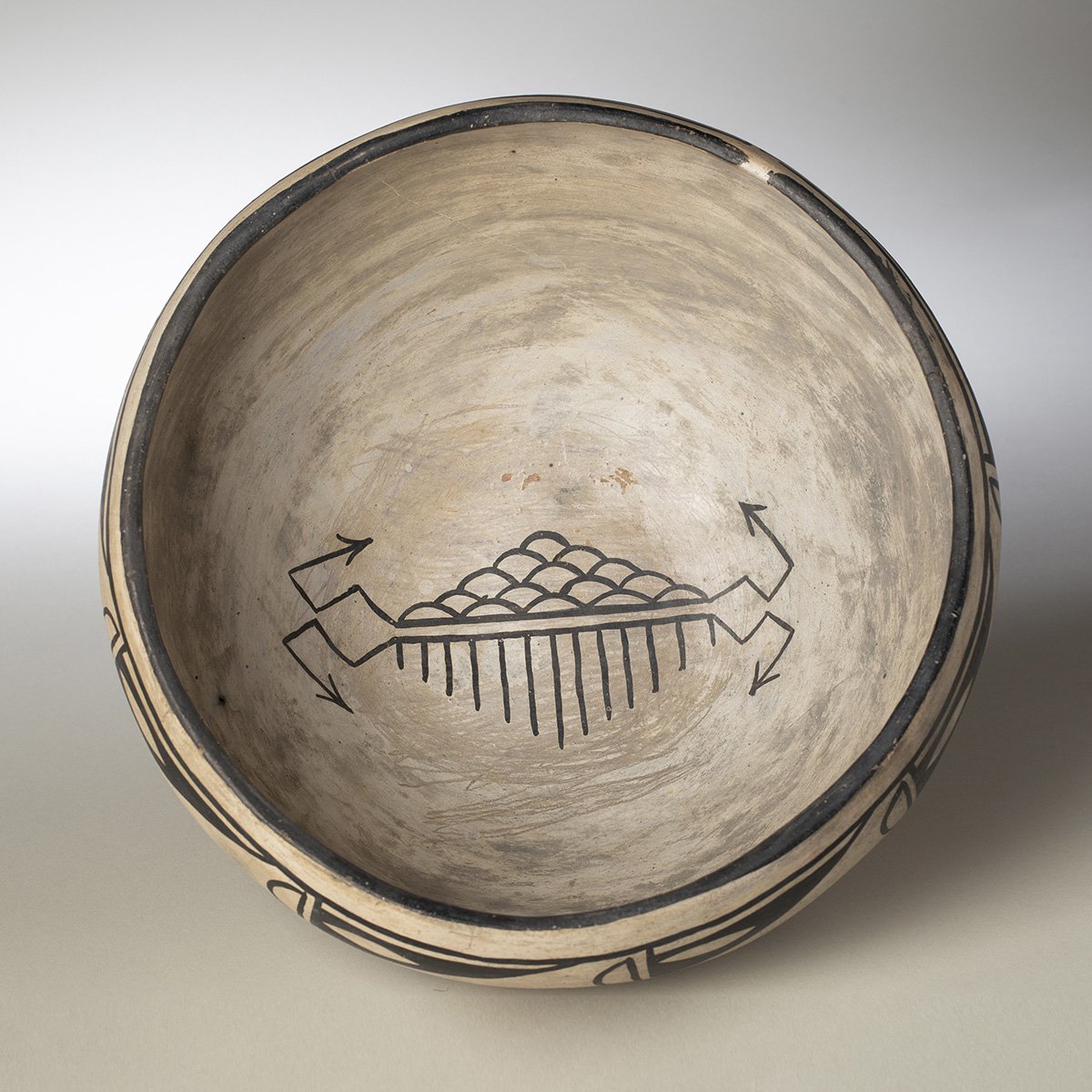 Image 1 of 9
 Image 2 of 9
 Image 3 of 9
 Image 4 of 9
 Image 5 of 9
 Image 6 of 9
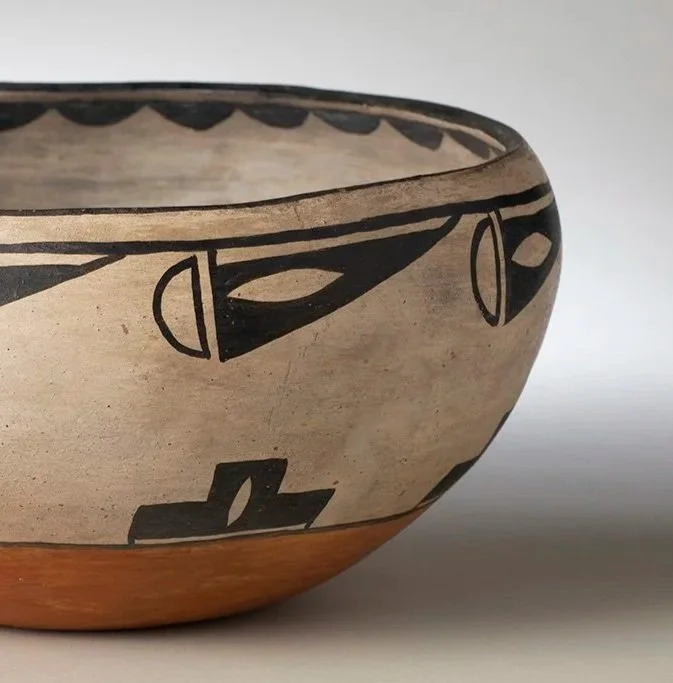 Image 7 of 9
 Image 8 of 9
 Image 9 of 9