

 Image 1 of 3
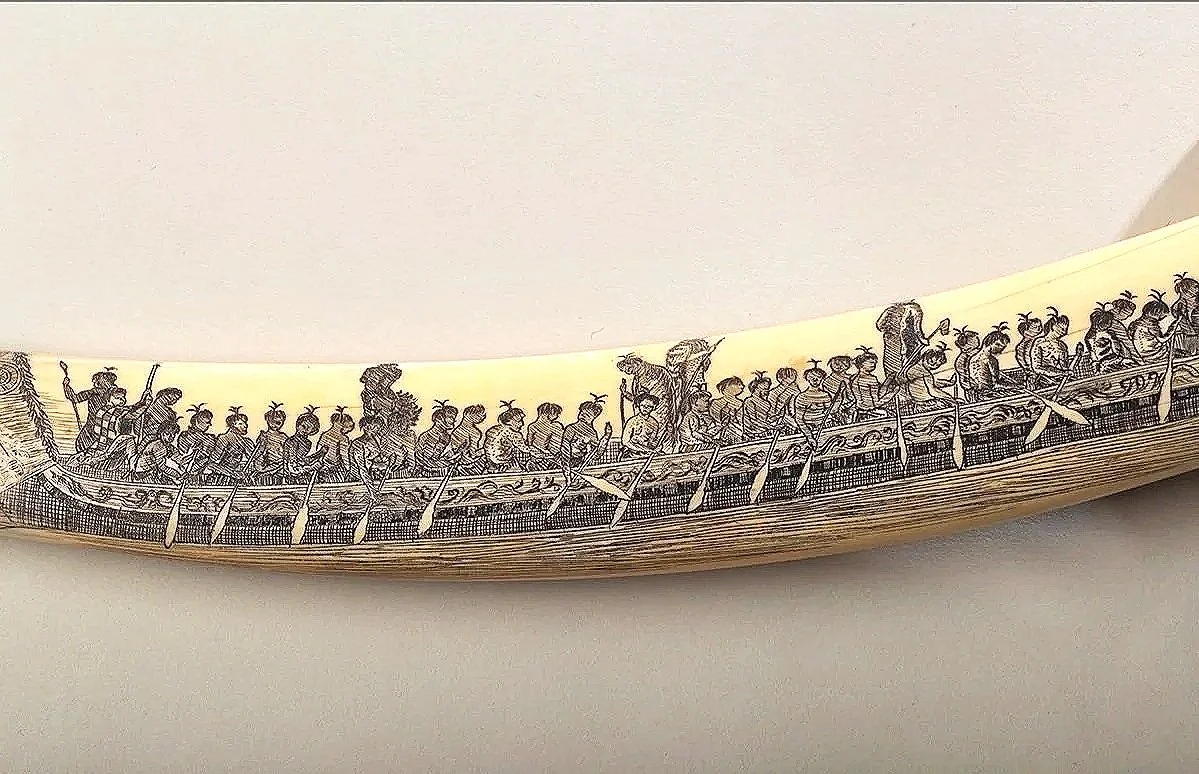 Image 2 of 3
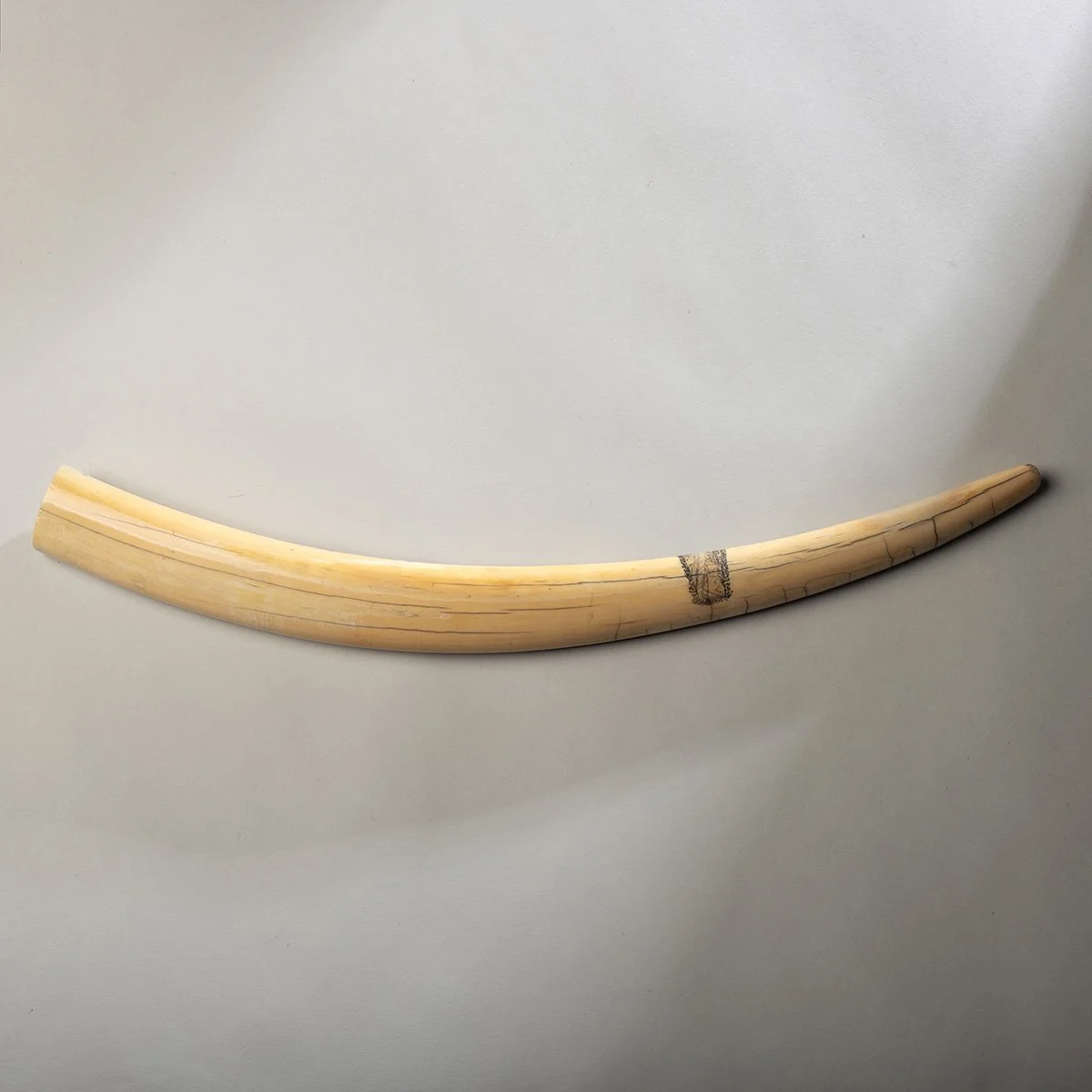 Image 3 of 3
American or European, after Cook voyage imagery
1971
Walrus ivory
Length: 20 in. (50.8 cm)
Provenance: Jim Conley, Los Angeles, CA
This tusk is engraved with a scene of a Māori war canoe derived from imagery associated with Captain Cook's Pacific voyages, a subject that appeared in engraving and print sources circulating widely in the eighteenth and nineteenth centuries. Scrimshaw work on this subject reflects the intersection of maritime and Pacific collecting interests that characterized mid-twentieth-century American folk and decorative art production. The piece is dated 1971 and carries single-owner provenance from Los Angeles.
The engraving covers the outer curve of the tusk, depicting a fully crewed double-hulled war canoe with figures rendered in fine line work against a lightly shaded ground. The ivory retains its natural cream tone with light age color developing along the surface. The form and scale are consistent with decorative scrimshaw production of the period.
We ship free within the United States, fully insured, packed by hand.
American or European, after Cook voyage imagery
1971
Walrus ivory
Length: 20 in. (50.8 cm)
Provenance: Jim Conley, Los Angeles, CA
This tusk is engraved with a scene of a Māori war canoe derived from imagery associated with Captain Cook's Pacific voyages, a subject that appeared in engraving and print sources circulating widely in the eighteenth and nineteenth centuries. Scrimshaw work on this subject reflects the intersection of maritime and Pacific collecting interests that characterized mid-twentieth-century American folk and decorative art production. The piece is dated 1971 and carries single-owner provenance from Los Angeles.
The engraving covers the outer curve of the tusk, depicting a fully crewed double-hulled war canoe with figures rendered in fine line work against a lightly shaded ground. The ivory retains its natural cream tone with light age color developing along the surface. The form and scale are consistent with decorative scrimshaw production of the period.
We ship free within the United States, fully insured, packed by hand.