

 Image 1 of 3
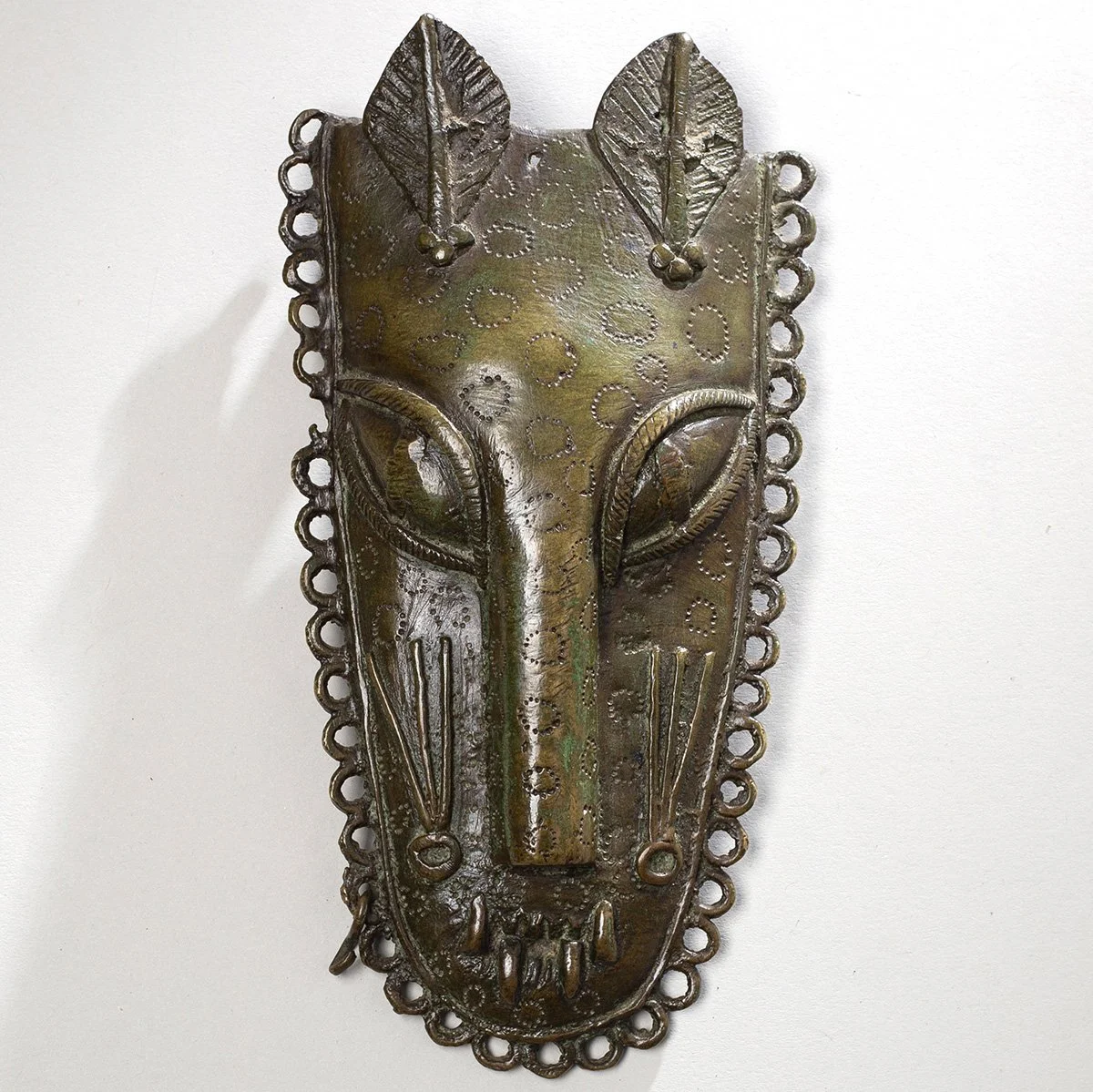 Image 2 of 3
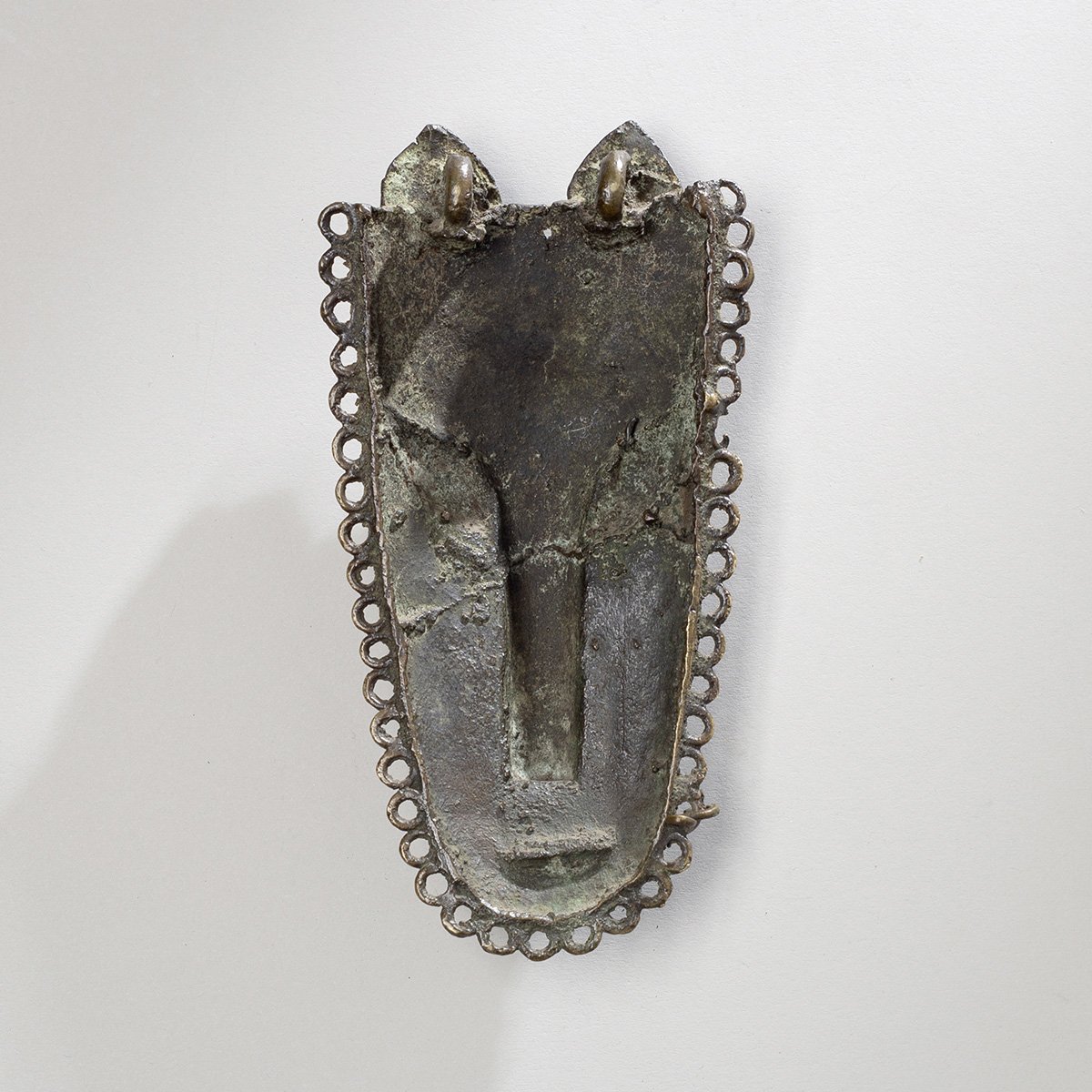 Image 3 of 3
Edo — Benin Kingdom, Nigeria
17th–18th century
Bronze
Height: 6⅝ in (16.8 cm)
Provenance: Peter Adler, London, acquired early 1980s
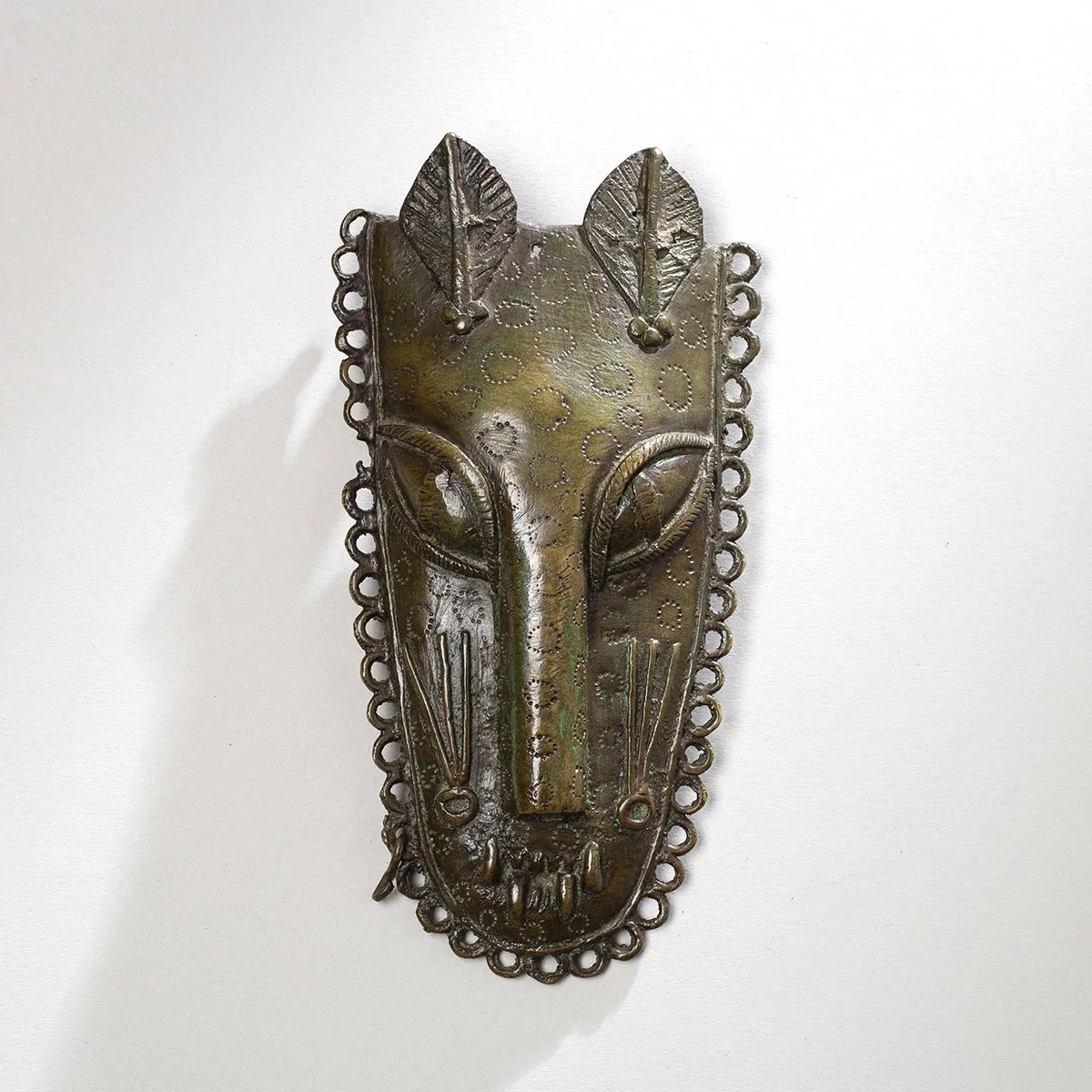
Leopard imagery occupies a central place in the visual language of Benin royal authority, where the animal's power and danger served as a direct analog for the force of the oba. This ornament, cast in the form of a leopard's head, was worn at the waist as part of the ceremonial costume displayed during palace festivals — occasions on which the oba and titleholders appeared in full regalia of coral beads, fine textiles, and cast brass and ivory ornaments to enact the ideology of divine kingship before the court. The relationships between the king, chiefs, and titleholders were made visible through these ritual performances, and the objects worn carried specific meanings within that hierarchical order.
The piece was examined personally by Bill Fagg, curator at the British Museum, who attributed it to the 17th–18th century dating range. It has remained in the collection of Peter Adler, London, since the early 1980s, a provenance that establishes both the attribution history and the collecting context for one of the more significant categories of Benin court metalwork.
We ship free anywhere in the world, fully insured, packed by hand.
Edo — Benin Kingdom, Nigeria
17th–18th century
Bronze
Height: 6⅝ in (16.8 cm)
Provenance: Peter Adler, London, acquired early 1980s
Leopard imagery occupies a central place in the visual language of Benin royal authority, where the animal's power and danger served as a direct analog for the force of the oba. This ornament, cast in the form of a leopard's head, was worn at the waist as part of the ceremonial costume displayed during palace festivals — occasions on which the oba and titleholders appeared in full regalia of coral beads, fine textiles, and cast brass and ivory ornaments to enact the ideology of divine kingship before the court. The relationships between the king, chiefs, and titleholders were made visible through these ritual performances, and the objects worn carried specific meanings within that hierarchical order.
The piece was examined personally by Bill Fagg, curator at the British Museum, who attributed it to the 17th–18th century dating range. It has remained in the collection of Peter Adler, London, since the early 1980s, a provenance that establishes both the attribution history and the collecting context for one of the more significant categories of Benin court metalwork.
We ship free anywhere in the world, fully insured, packed by hand.