Sioux, northern Plains
Circa 1880
Ash wood, porcupine quillwork, silk ribbon, horsehair, mallard head skin, pewter inlay, catlinite
Pipe stem length 25" (63.5 cm); bowl length 9 1/2" (24.1 cm)
Provenance: Santa Fe Trade; Robert Pamplin Jr., Oregon
Publication: "Visions of the People: A Pictorial History of Plains Indian Life," Minneapolis Institute of Arts, p. 135; comparable example, Peabody Museum of Archaeology and Ethnology, Harvard University, 39-30-10/18206
The sacred pipe occupies a central place in Sioux spiritual and ceremonial life, used in prayer, diplomacy, and ritual to draw the universe together and activate communication between the human and spirit worlds. Standing Rock pipes of this type, with their distinctive T-shaped catlinite bowls, represent a specific regional tradition within Sioux pipe production, the form well documented in major institutional collections. The ash stem carved with a series of animal head forms, including elk, turtle, and mountain sheep, encodes the ceremonial relationships between the pipe's owner and the animal spirits invoked through its use.
The stem is wrapped in porcupine quillwork with the addition of silk ribbon, horsehair, and mallard head skin, the quill wrapping composed of a red field with alternating purple bars framed in orange, a technically demanding combination of materials and colors consistent with high-quality Sioux pipe decoration of the period. The T-shaped catlinite bowl is inlaid at each end with rings of pewter, adding a further layer of material significance to an already elaborately composed object. A comparable example is held at the Peabody Museum of Archaeology and Ethnology at Harvard University, and this pipe is illustrated in the landmark publication "Visions of the People" at the Minneapolis Institute of Arts.
We ship free anywhere in the world, fully insured, packed by hand.
Sioux, northern Plains
Circa 1880
Ash wood, porcupine quillwork, silk ribbon, horsehair, mallard head skin, pewter inlay, catlinite
Pipe stem length 25" (63.5 cm); bowl length 9 1/2" (24.1 cm)
Provenance: Santa Fe Trade; Robert Pamplin Jr., Oregon
Publication: "Visions of the People: A Pictorial History of Plains Indian Life," Minneapolis Institute of Arts, p. 135; comparable example, Peabody Museum of Archaeology and Ethnology, Harvard University, 39-30-10/18206
The sacred pipe occupies a central place in Sioux spiritual and ceremonial life, used in prayer, diplomacy, and ritual to draw the universe together and activate communication between the human and spirit worlds. Standing Rock pipes of this type, with their distinctive T-shaped catlinite bowls, represent a specific regional tradition within Sioux pipe production, the form well documented in major institutional collections. The ash stem carved with a series of animal head forms, including elk, turtle, and mountain sheep, encodes the ceremonial relationships between the pipe's owner and the animal spirits invoked through its use.
The stem is wrapped in porcupine quillwork with the addition of silk ribbon, horsehair, and mallard head skin, the quill wrapping composed of a red field with alternating purple bars framed in orange, a technically demanding combination of materials and colors consistent with high-quality Sioux pipe decoration of the period. The T-shaped catlinite bowl is inlaid at each end with rings of pewter, adding a further layer of material significance to an already elaborately composed object. A comparable example is held at the Peabody Museum of Archaeology and Ethnology at Harvard University, and this pipe is illustrated in the landmark publication "Visions of the People" at the Minneapolis Institute of Arts.
We ship free anywhere in the world, fully insured, packed by hand.


 Image 1 of 10
 Image 2 of 10
 Image 3 of 10
 Image 4 of 10
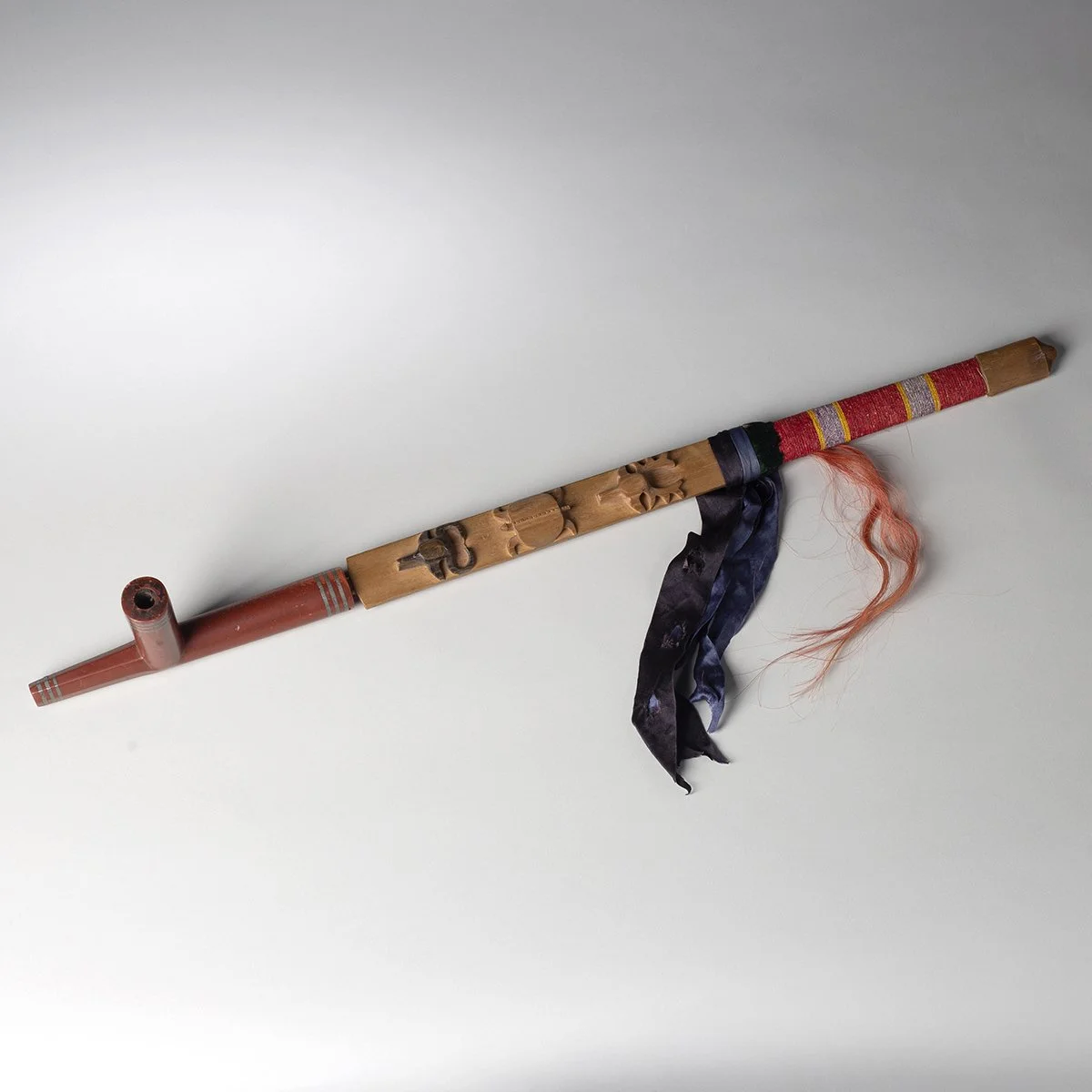 Image 5 of 10
 Image 6 of 10
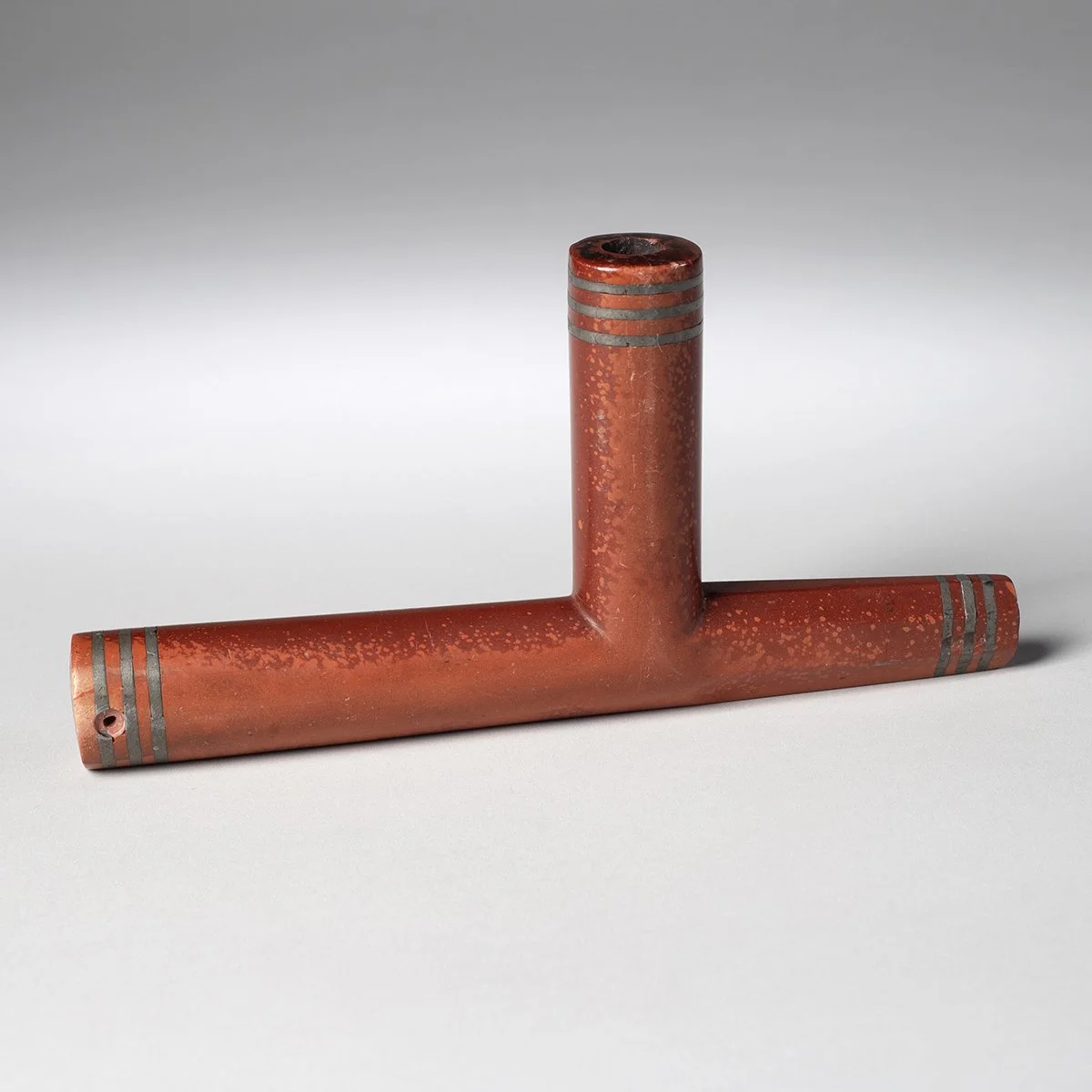 Image 7 of 10
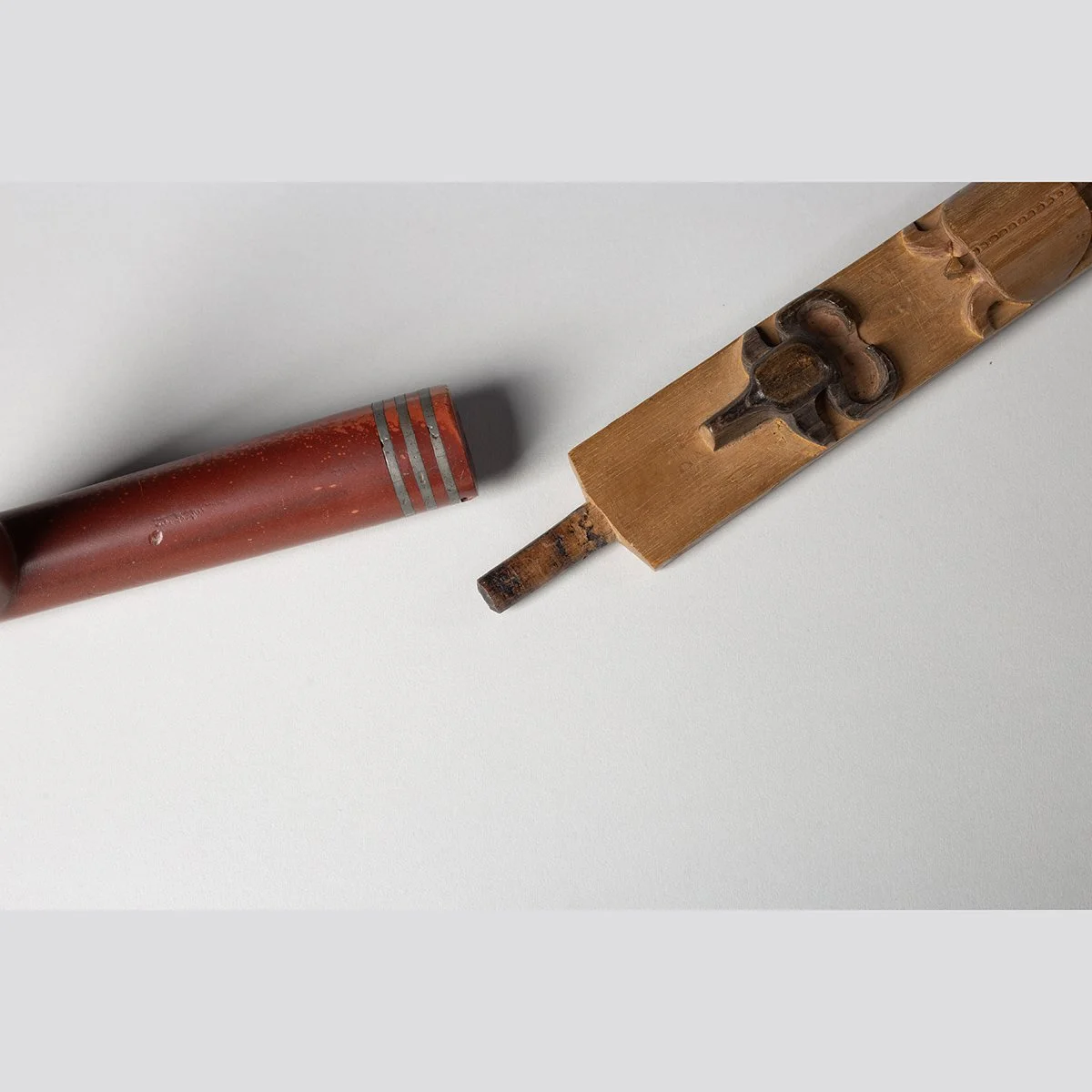 Image 8 of 10
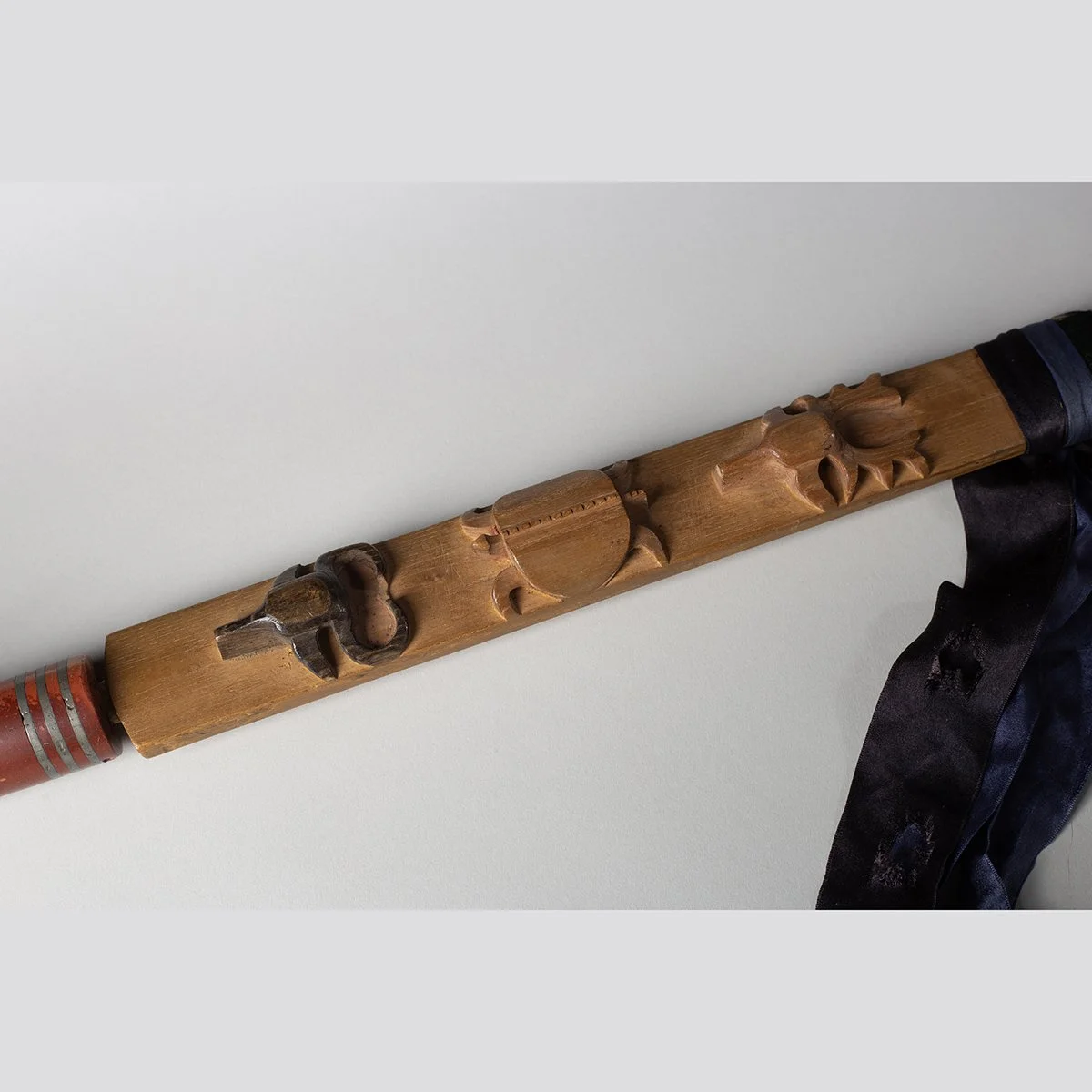 Image 9 of 10
 Image 10 of 10