New Georgia, Western Province, Solomon Islands
Circa 1930 - 1950
Wood, nautilus shell inlay, natural pigments
Height: 7 1/4 in ( 18.415 cm)
Provenance: Jim Conley, Los Angeles CA
Essential to transportation, fishing, and, in former times, ritualized warfare and head-hunting, canoes in the Western Solomon Islands were also an important vehicle of artistic expression. Massive war canoes, or tomako, measured up to fifty feet, or fifteen meters, in length and, according to early accounts, held a crew of thirty-five men. Their tall, elegantly curved prows and sterns were inlaid with white shell and adorned with vertical rows of cowrie shells.
The centerpiece of these impressive canoes was a separately carved figurehead, called a toto-isu or nguzu-nguzu, depending on the island of origin. The figurehead was attached to the canoe prow at the waterline, so that it dipped into the sea as the vessel rode the ocean swells, intimately connecting it to the waters through which the canoe moved.
Drawing primarily from sight, but also from speech, hearing, and smell, the figurehead called upon its faculties to observe, intercept, react, and interact with any malicious maritime spirit encountered during the voyage. It served as a supernatural guardian, protecting the crew during hazardous journeys and helping to ensure the success of expeditions in the pursuit of enemy heads.
The aim of ritualized head-hunting in the region was to acquire mana, or spiritual power, from the individual who was killed. This power could in turn be channeled into the construction and consecration of war canoes, and into the overall protection and health of the home village.
We ship free anywhere in the world, fully insured, packed by hand.
New Georgia, Western Province, Solomon Islands
Circa 1930 - 1950
Wood, nautilus shell inlay, natural pigments
Height: 7 1/4 in ( 18.415 cm)
Provenance: Jim Conley, Los Angeles CA
Essential to transportation, fishing, and, in former times, ritualized warfare and head-hunting, canoes in the Western Solomon Islands were also an important vehicle of artistic expression. Massive war canoes, or tomako, measured up to fifty feet, or fifteen meters, in length and, according to early accounts, held a crew of thirty-five men. Their tall, elegantly curved prows and sterns were inlaid with white shell and adorned with vertical rows of cowrie shells.
The centerpiece of these impressive canoes was a separately carved figurehead, called a toto-isu or nguzu-nguzu, depending on the island of origin. The figurehead was attached to the canoe prow at the waterline, so that it dipped into the sea as the vessel rode the ocean swells, intimately connecting it to the waters through which the canoe moved.
Drawing primarily from sight, but also from speech, hearing, and smell, the figurehead called upon its faculties to observe, intercept, react, and interact with any malicious maritime spirit encountered during the voyage. It served as a supernatural guardian, protecting the crew during hazardous journeys and helping to ensure the success of expeditions in the pursuit of enemy heads.
The aim of ritualized head-hunting in the region was to acquire mana, or spiritual power, from the individual who was killed. This power could in turn be channeled into the construction and consecration of war canoes, and into the overall protection and health of the home village.
We ship free anywhere in the world, fully insured, packed by hand.


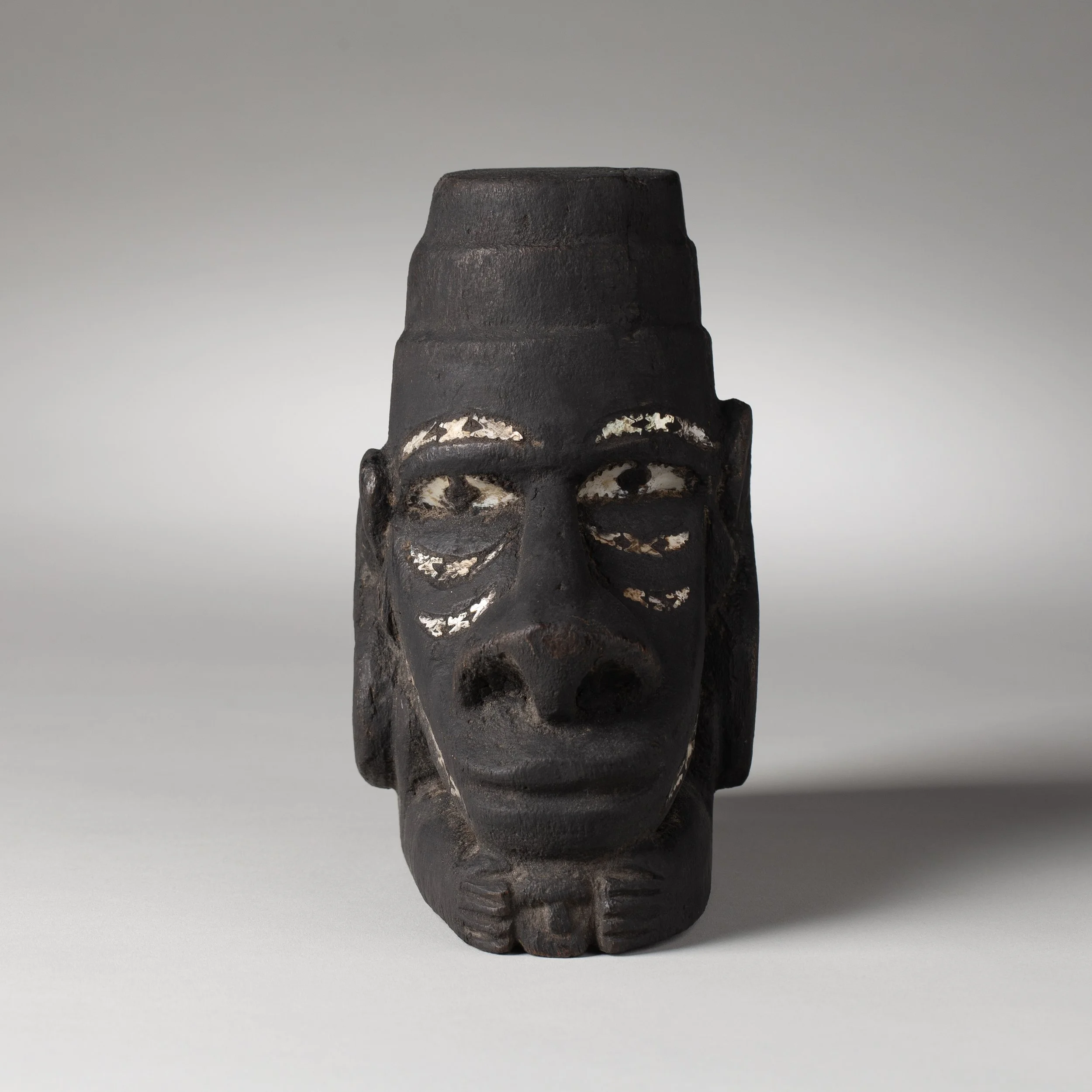 Image 1 of 6
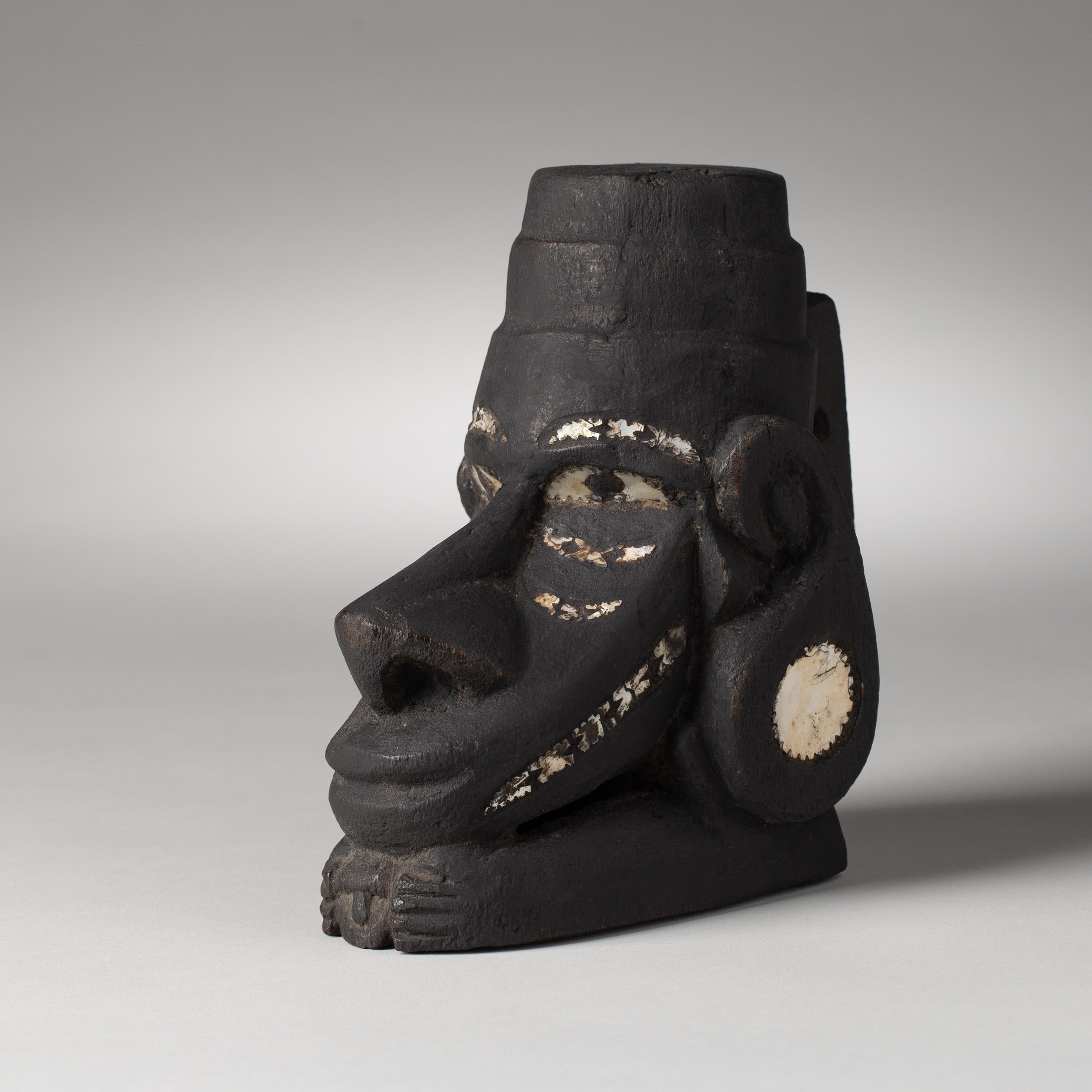 Image 2 of 6
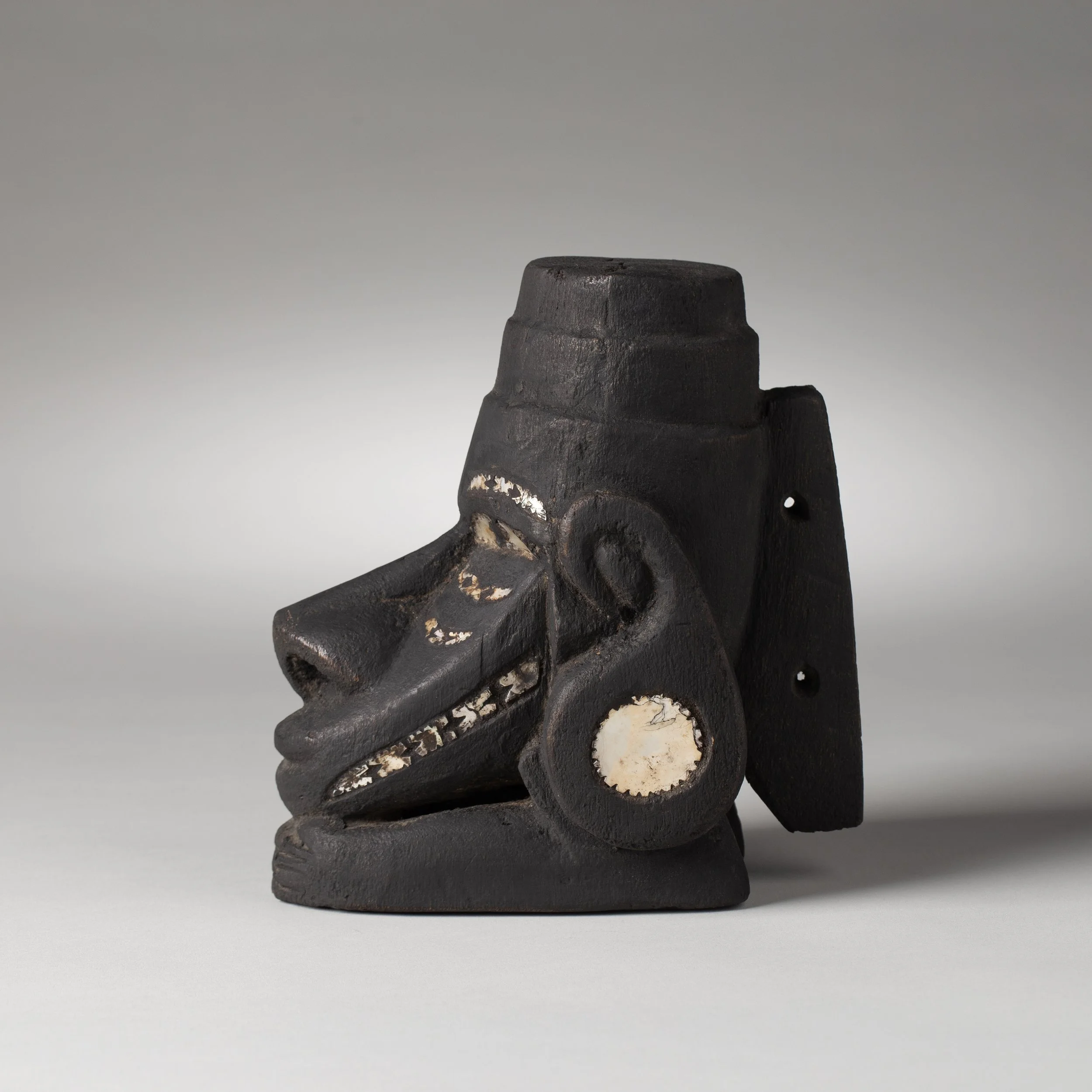 Image 3 of 6
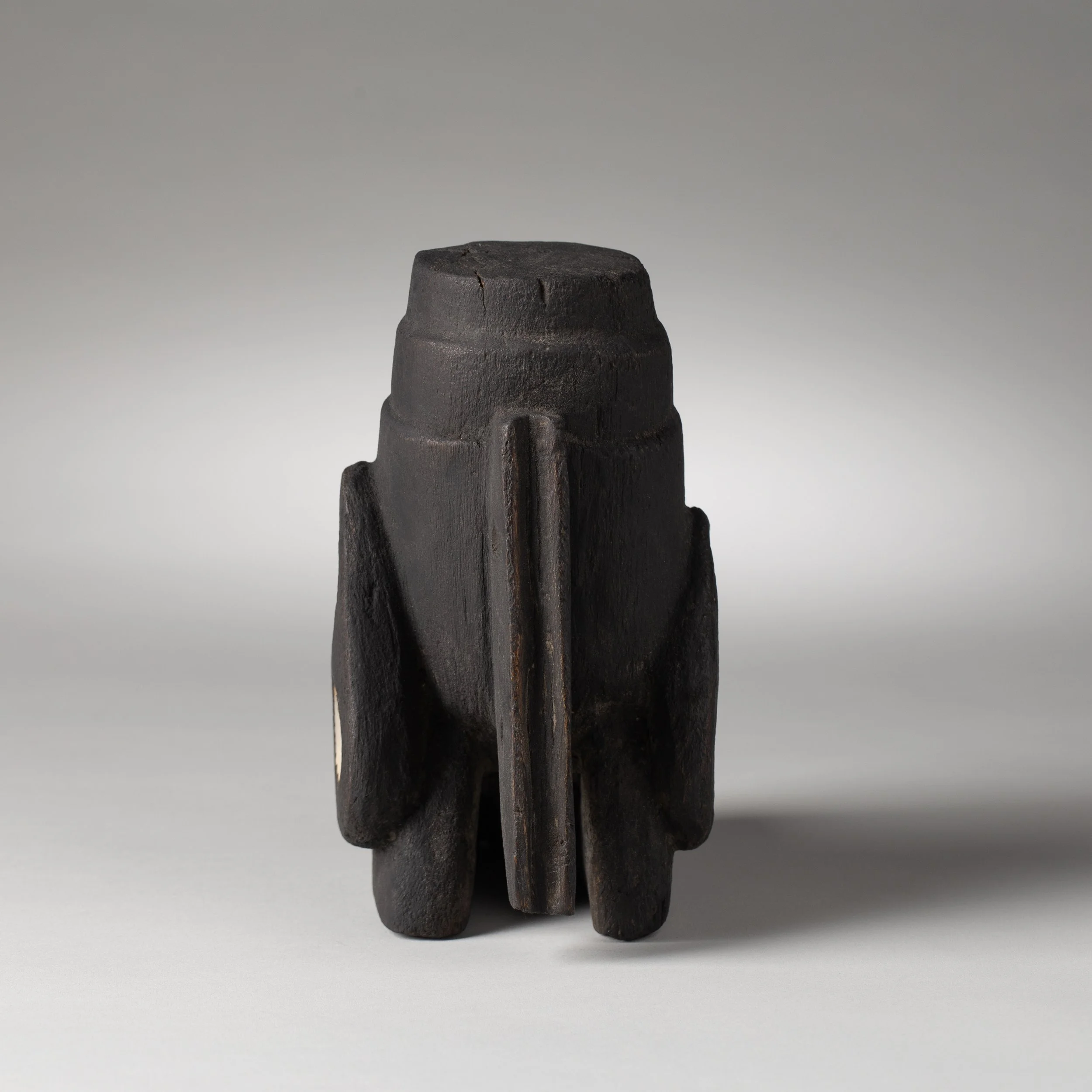 Image 4 of 6
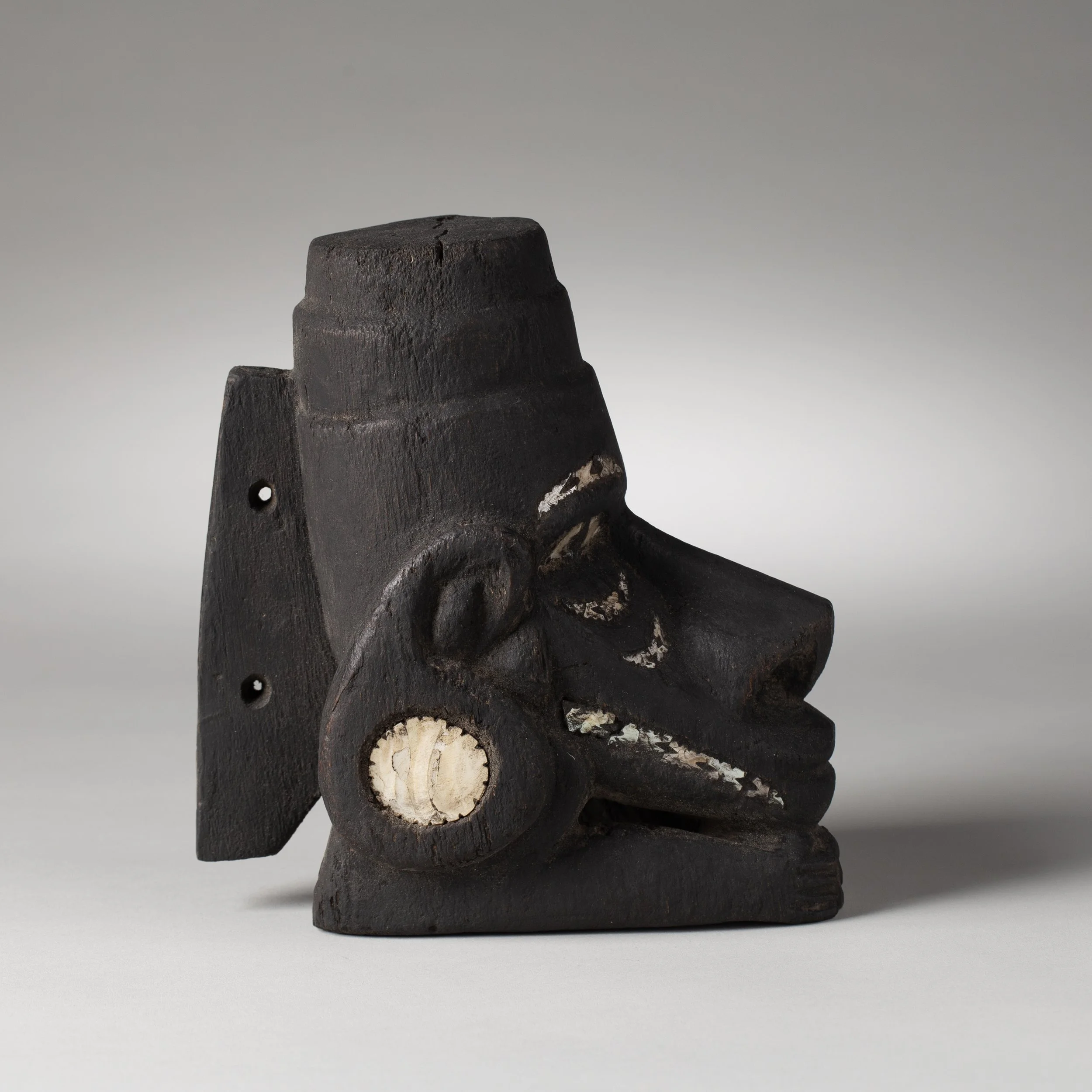 Image 5 of 6
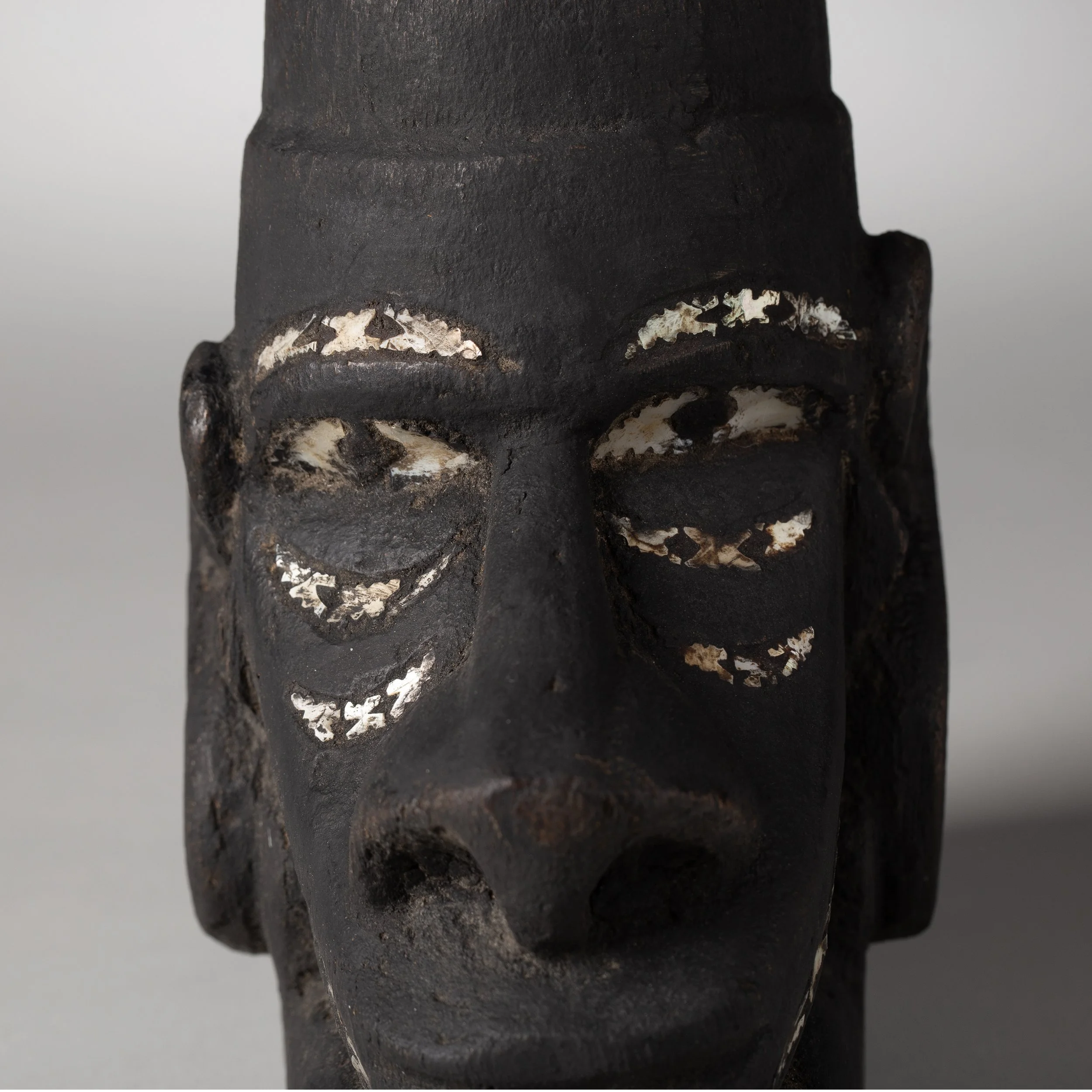 Image 6 of 6