Western Province, Solomon Islands
Mid-19th century or earlier
Wood, nautilus shell inlay, paranarium glue
Height: 27 in (69 cm)
Provenance: Private collection, Scotland; Chris and Anna Thorpe Collection, Sydney, Australia
Publication: War Art and Ritual — Shields from the Pacific, no. 139
The lave-lave war shields of the Western Solomon Islands were the primary defensive weapon of the region's warriors, small enough to deflect and parry incoming arrows and strikes rather than provide full bodily cover, and so closely associated with their owners that 19th-century accounts describe warriors as nearly inseparable from them. Proficiency with the shield was the result of a formal apprenticeship with experienced fighters, during which specific shield techniques were practiced and refined over years. The great majority of surviving lave-lave shields are constructed from tightly woven wicker, and only approximately a dozen wooden examples are known to exist — held in institutions including the British Museum and the Australian Museum.
This shield belongs to that small group of wooden lave-lave, and is distinguished further by the application of nautilus shell inlay along its borders and at the central motif, which depicts a chiefly pectoral pendant of a type associated with high rank across the Western Solomons. The luminous shell set into the dark wood surface, secured with paranarium glue, marks this as an object made for a warrior of standing. This is a shield that functioned simultaneously as a practical defensive weapon and as an emblem of the status of its owner. The publication in War Art and Ritual — Shields from the Pacific (no. 139) places this shield within the documented scholarly literature on Pacific war shields, confirming its recognition as a significant example of the type.
The provenance through a Scottish private collection and the Chris and Anna Thorpe Collection in Sydney, a holding that has contributed numerous important Sepik and Oceanic pieces across this inventory, traces a clear and continuous collecting history for this shield from the United Kingdom through the specialist Australian market. The combination of wooden construction, shell inlay, chiefly iconography, and published status makes this one of the most fully documented wooden lave-lave to appear outside an institutional context. At 27 inches, the scale is consistent with the form as used in the field, the object retaining the proportions and material integrity of active ceremonial and martial use.
We ship free anywhere in the world, fully insured, packed by hand.
INQUIRE HERE
Western Province, Solomon Islands
Mid-19th century or earlier
Wood, nautilus shell inlay, paranarium glue
Height: 27 in (69 cm)
Provenance: Private collection, Scotland; Chris and Anna Thorpe Collection, Sydney, Australia
Publication: War Art and Ritual — Shields from the Pacific, no. 139
The lave-lave war shields of the Western Solomon Islands were the primary defensive weapon of the region's warriors, small enough to deflect and parry incoming arrows and strikes rather than provide full bodily cover, and so closely associated with their owners that 19th-century accounts describe warriors as nearly inseparable from them. Proficiency with the shield was the result of a formal apprenticeship with experienced fighters, during which specific shield techniques were practiced and refined over years. The great majority of surviving lave-lave shields are constructed from tightly woven wicker, and only approximately a dozen wooden examples are known to exist — held in institutions including the British Museum and the Australian Museum.
This shield belongs to that small group of wooden lave-lave, and is distinguished further by the application of nautilus shell inlay along its borders and at the central motif, which depicts a chiefly pectoral pendant of a type associated with high rank across the Western Solomons. The luminous shell set into the dark wood surface, secured with paranarium glue, marks this as an object made for a warrior of standing. This is a shield that functioned simultaneously as a practical defensive weapon and as an emblem of the status of its owner. The publication in War Art and Ritual — Shields from the Pacific (no. 139) places this shield within the documented scholarly literature on Pacific war shields, confirming its recognition as a significant example of the type.
The provenance through a Scottish private collection and the Chris and Anna Thorpe Collection in Sydney, a holding that has contributed numerous important Sepik and Oceanic pieces across this inventory, traces a clear and continuous collecting history for this shield from the United Kingdom through the specialist Australian market. The combination of wooden construction, shell inlay, chiefly iconography, and published status makes this one of the most fully documented wooden lave-lave to appear outside an institutional context. At 27 inches, the scale is consistent with the form as used in the field, the object retaining the proportions and material integrity of active ceremonial and martial use.
We ship free anywhere in the world, fully insured, packed by hand.
INQUIRE HERE


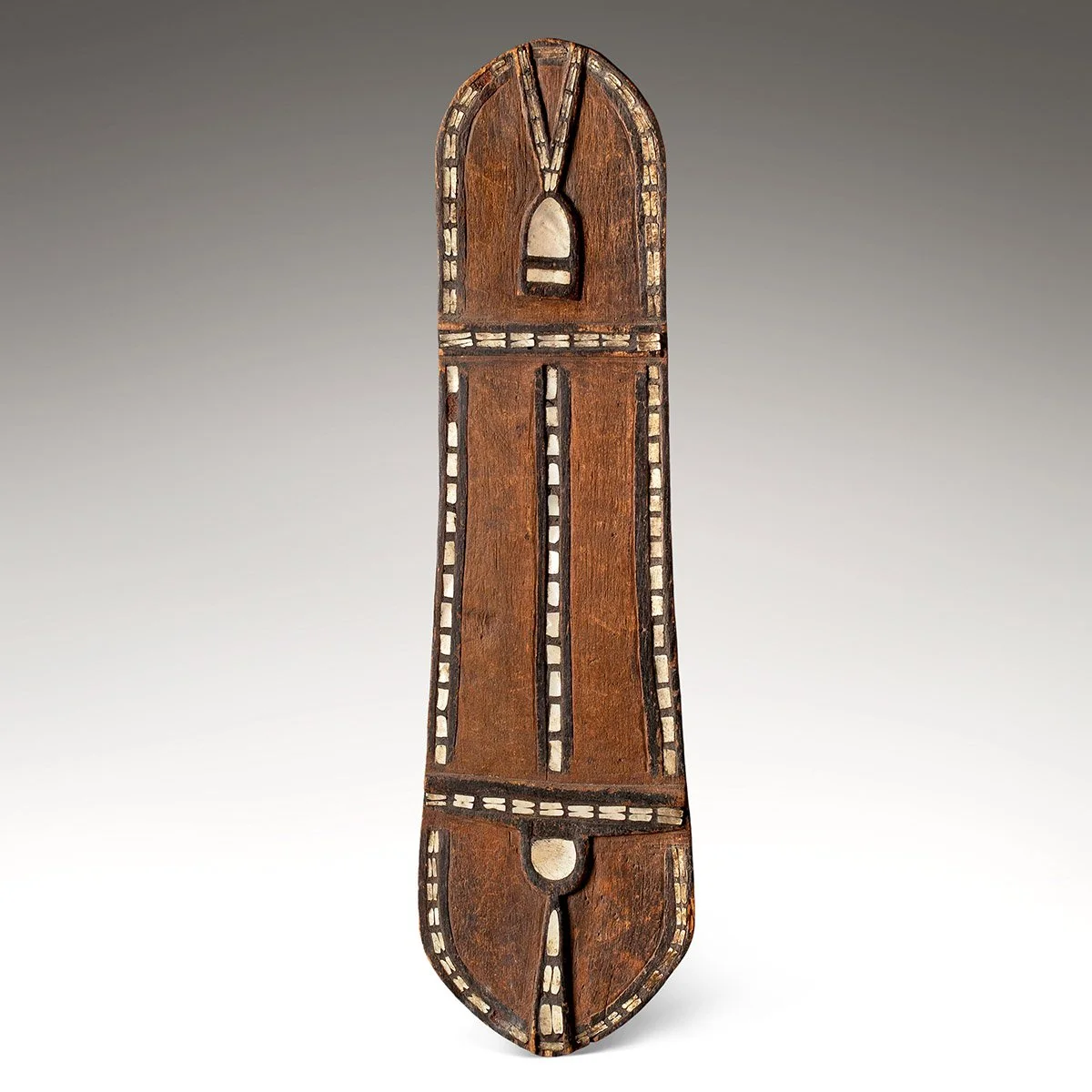 Image 1 of 6
 Image 2 of 6
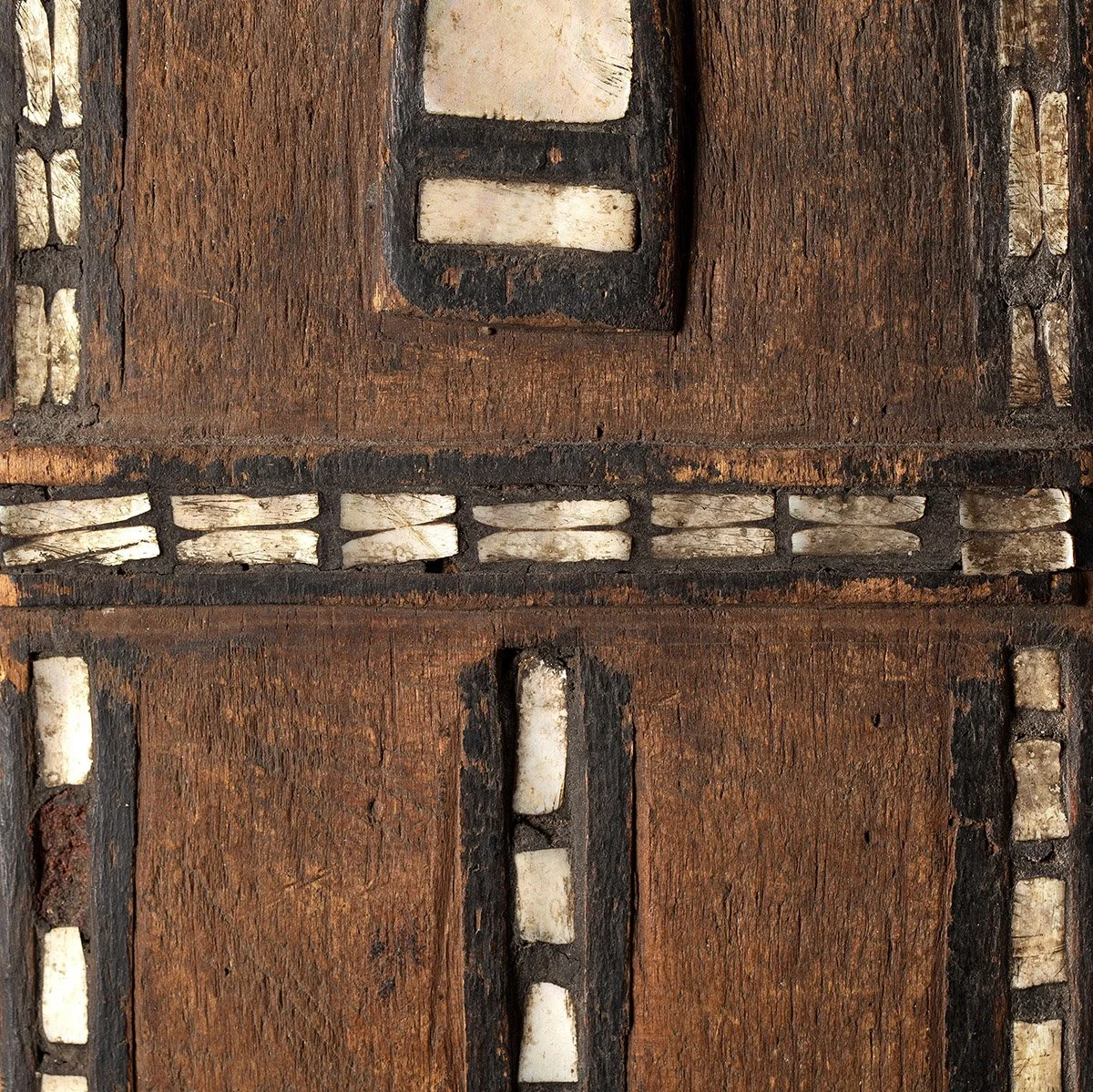 Image 3 of 6
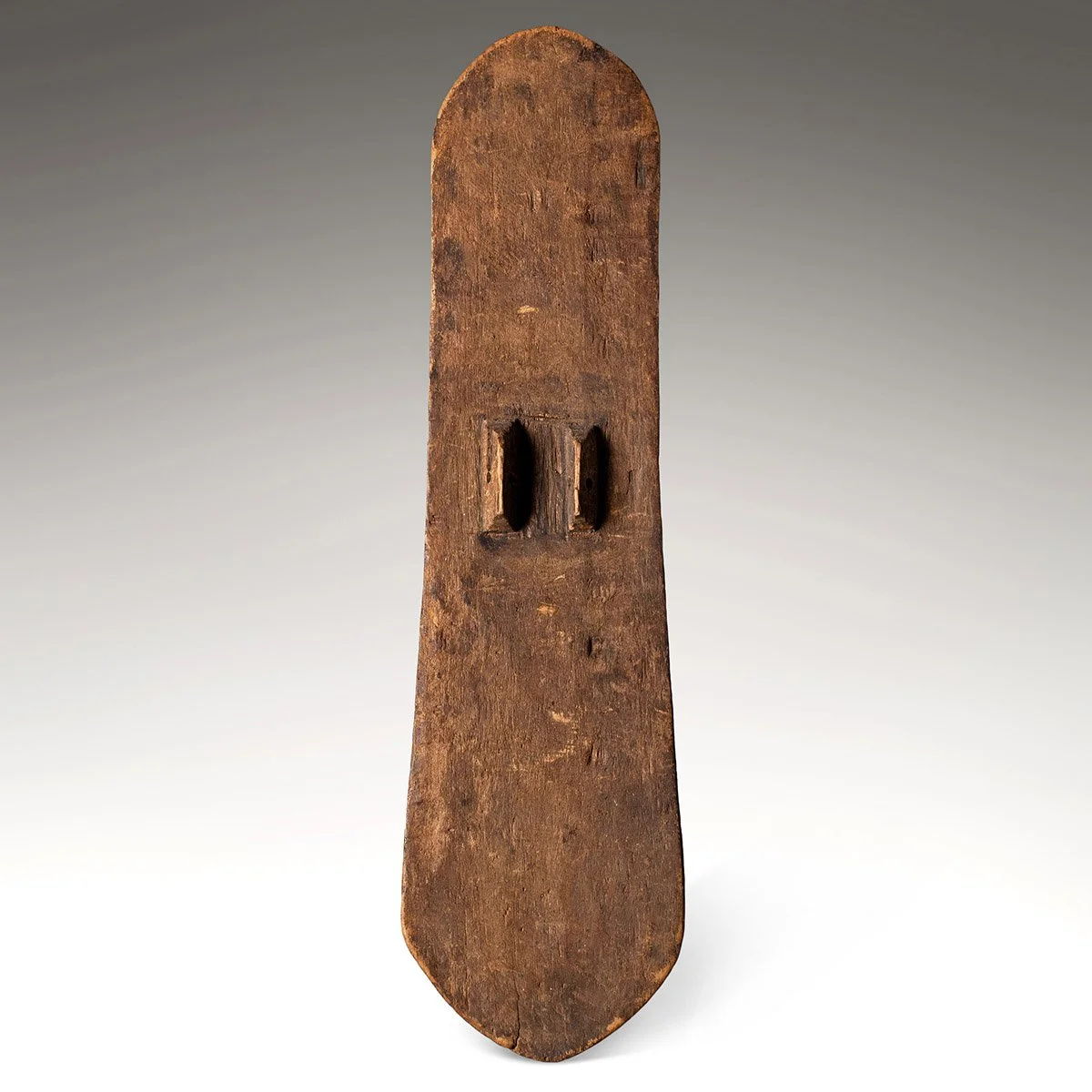 Image 4 of 6
 Image 5 of 6
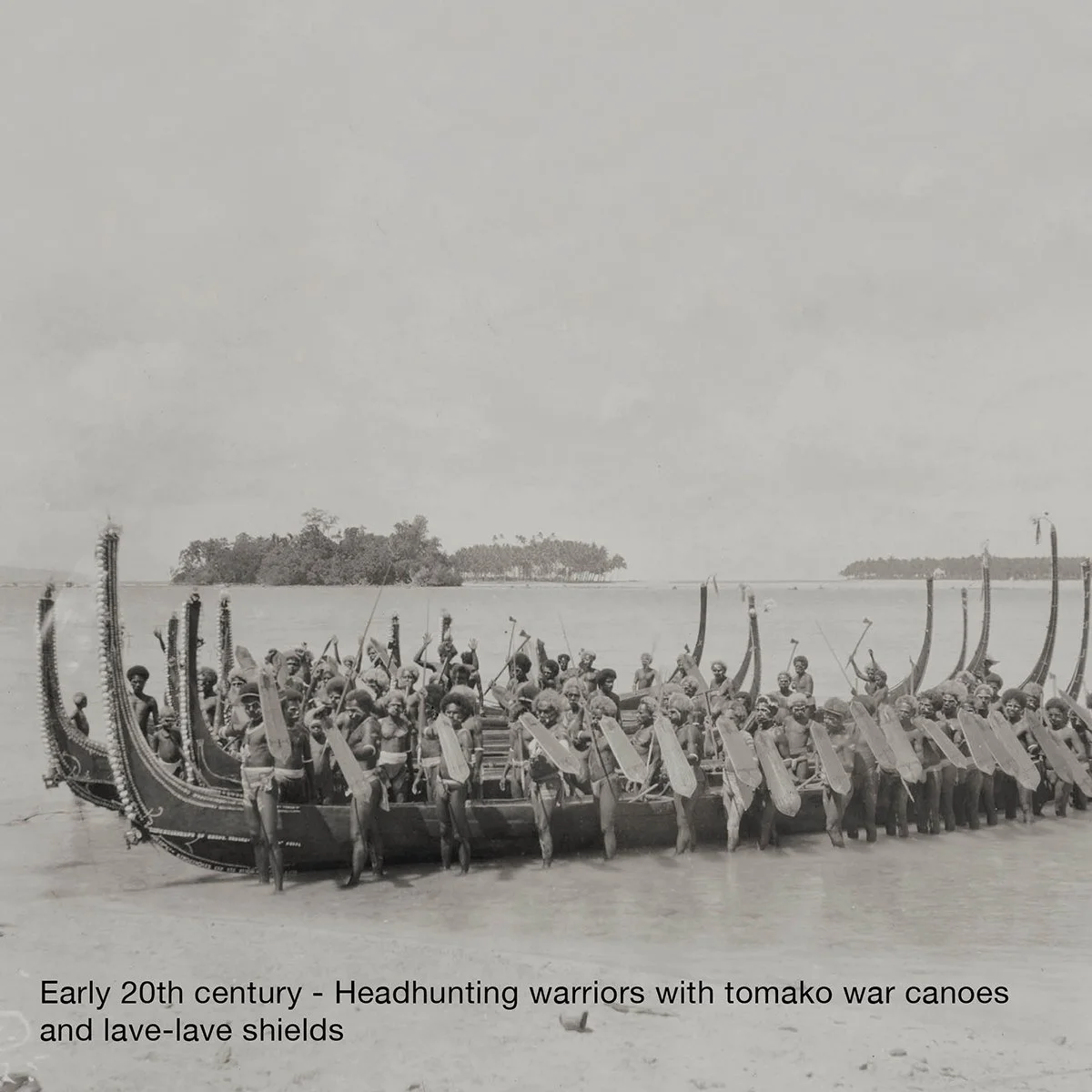 Image 6 of 6