

 Image 1 of 4
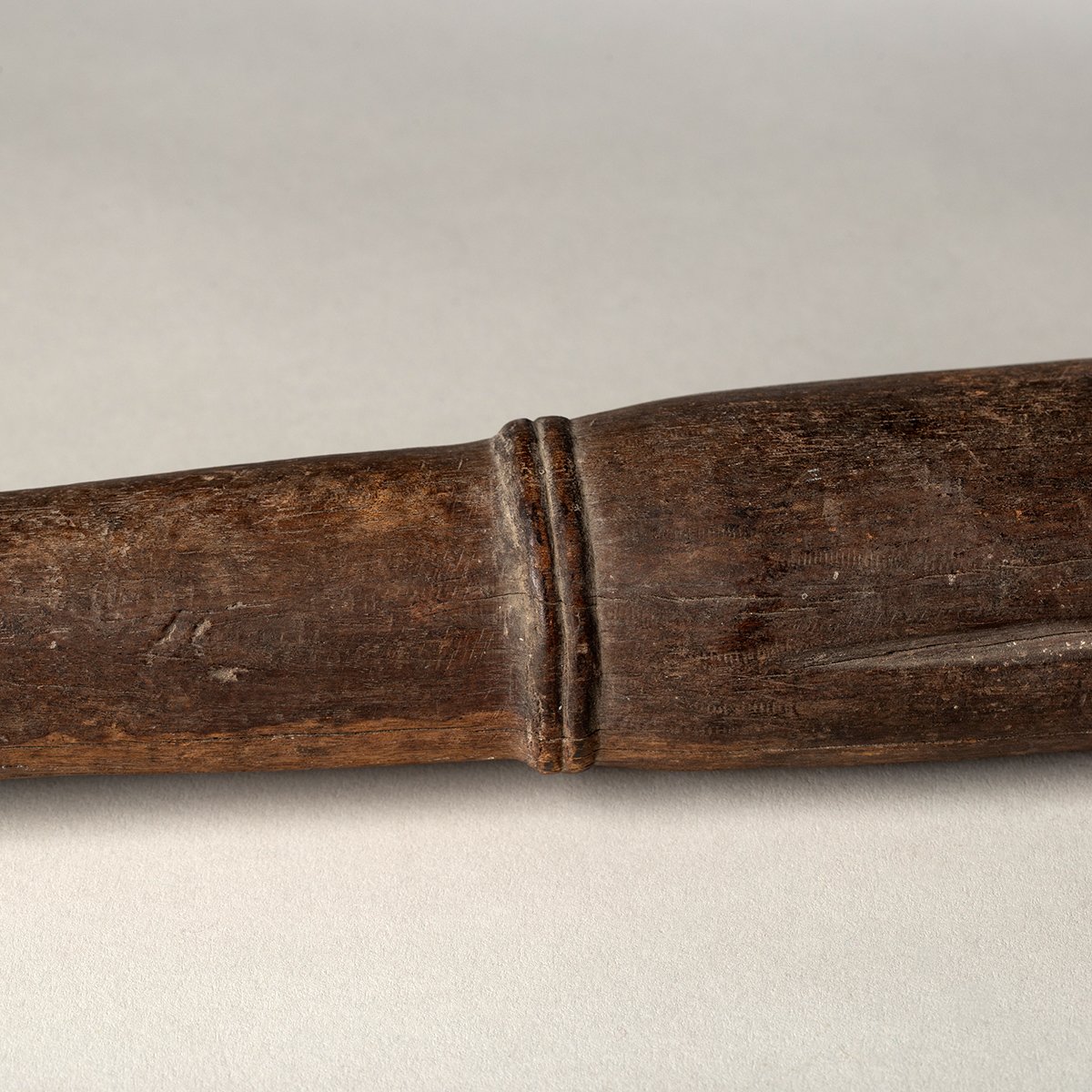 Image 2 of 4
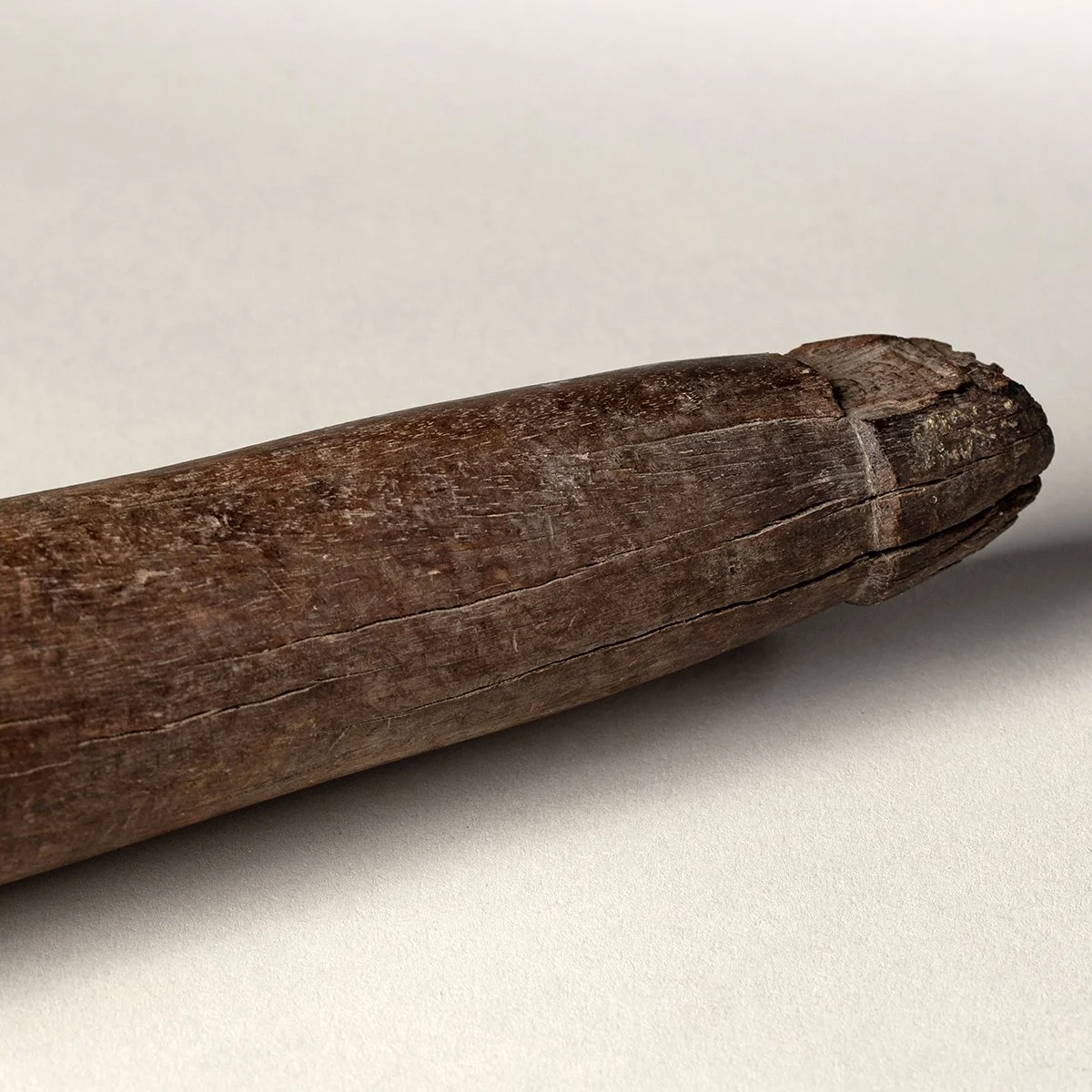 Image 3 of 4
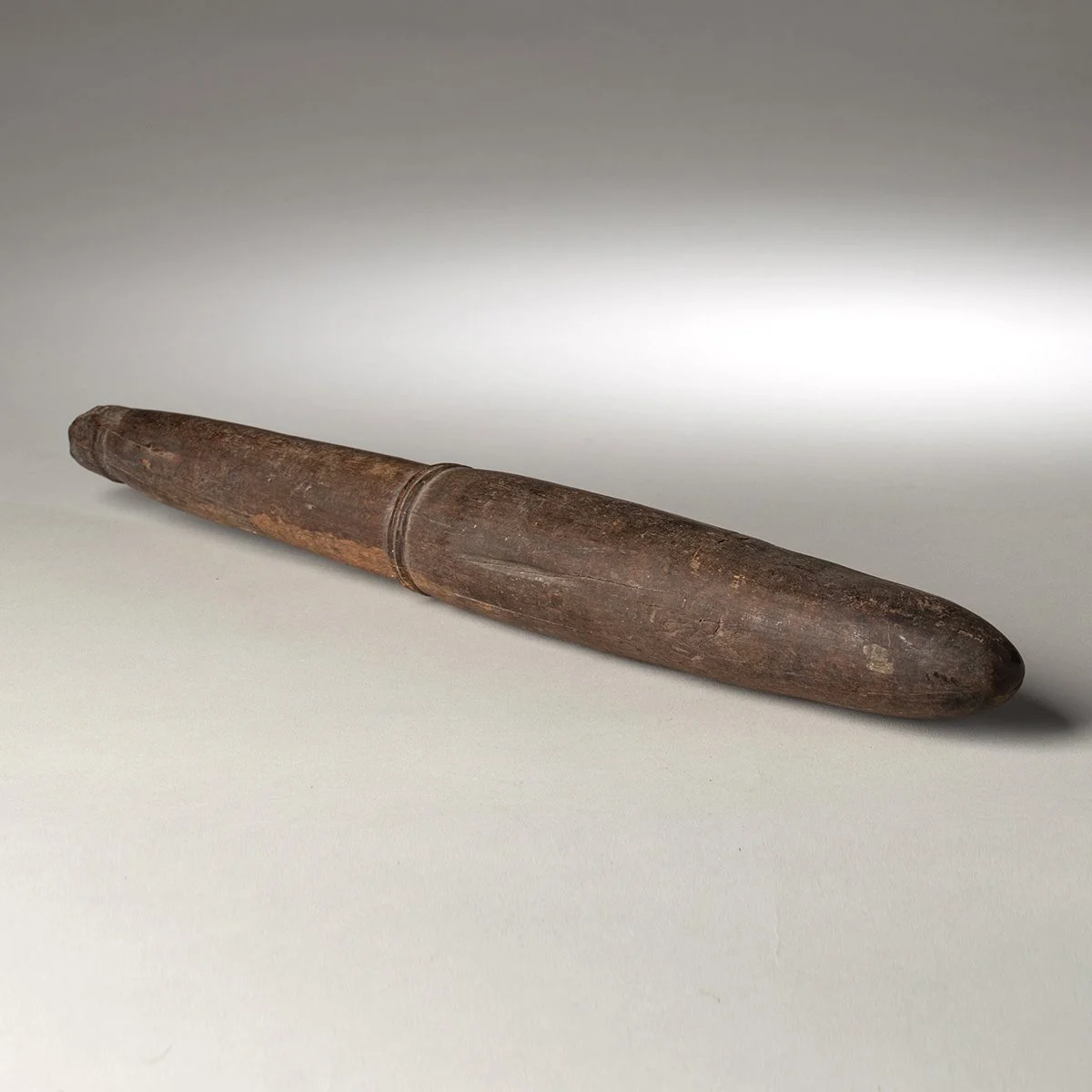 Image 4 of 4
Solomon Islands
Early 19th century
Wood
Length: 21⅝ in (54.9 cm)
Provenance: William Ohly (1883–1955), Berkeley Galleries, London, and Abbey Museum, Hertfordshire, UK; thence by descent
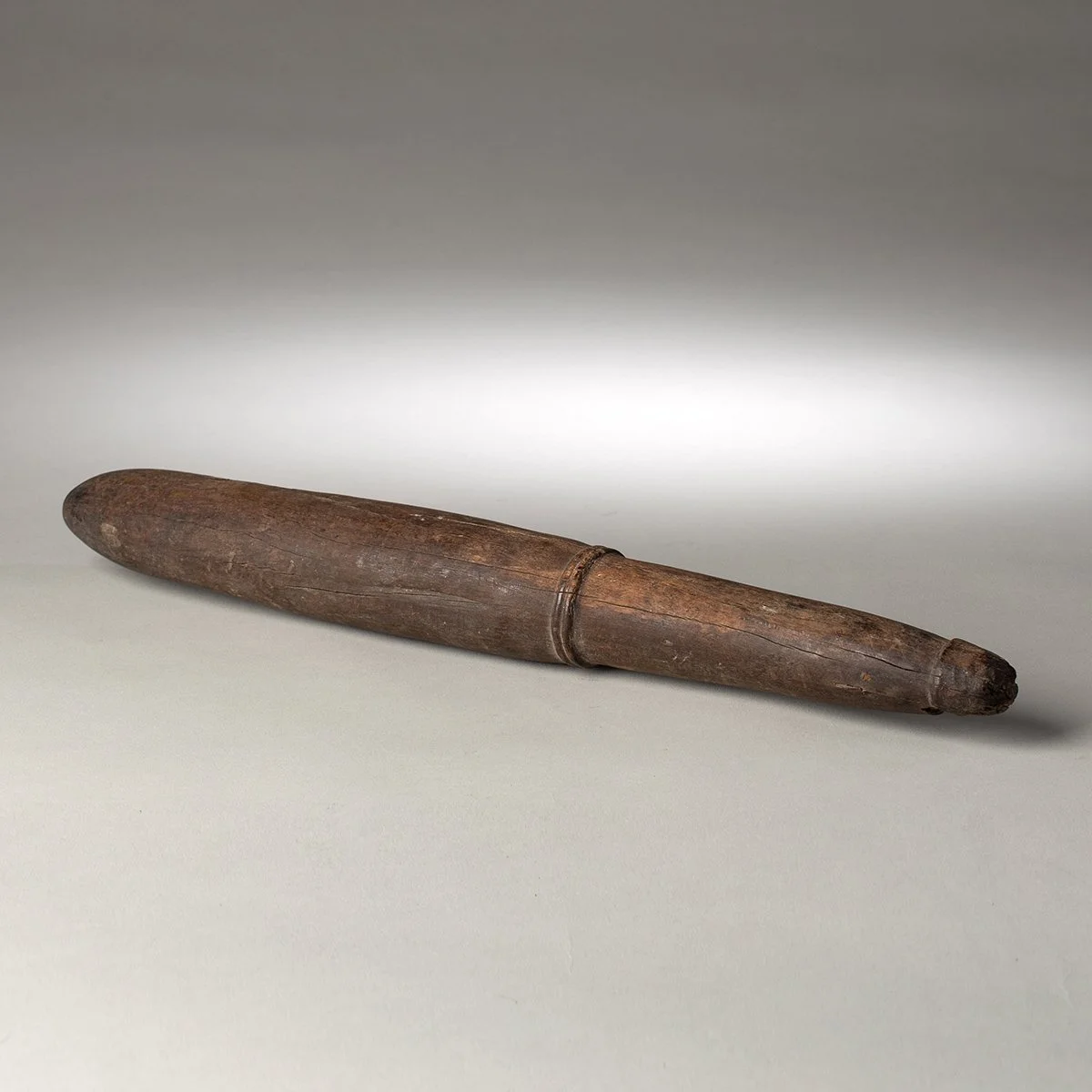
Tapa beaters were essential tools in the preparation of barkcloth across the Pacific, used to soften and work the inner bark of the paper mulberry or breadfruit tree into a pliable textile surface through sustained rhythmic beating. The elongated wooden form of this example is shaped for sustained grip and repeated use, its profile worn smooth through handling over a long period of use. Barkcloth produced in the Solomons served both practical and ceremonial purposes, and the tools used to make it were functional objects of considered form.
The piece passed through William Ohly's Berkeley Galleries and the Abbey Museum in Hertfordshire, two of the most significant institutional contexts for the collection and display of Pacific material in mid-twentieth century Britain. Ohly, a practicing sculptor and printmaker, brought a maker's eye to the objects he collected, and tools of this type, which were valued for their form as much as their function, were consistent with his collecting sensibility. The wood has darkened to a deep warm tone throughout, the surface carrying the patina of age and extended use.
We ship free anywhere in the world, fully insured, packed by hand.
Solomon Islands
Early 19th century
Wood
Length: 21⅝ in (54.9 cm)
Provenance: William Ohly (1883–1955), Berkeley Galleries, London, and Abbey Museum, Hertfordshire, UK; thence by descent
Tapa beaters were essential tools in the preparation of barkcloth across the Pacific, used to soften and work the inner bark of the paper mulberry or breadfruit tree into a pliable textile surface through sustained rhythmic beating. The elongated wooden form of this example is shaped for sustained grip and repeated use, its profile worn smooth through handling over a long period of use. Barkcloth produced in the Solomons served both practical and ceremonial purposes, and the tools used to make it were functional objects of considered form.
The piece passed through William Ohly's Berkeley Galleries and the Abbey Museum in Hertfordshire, two of the most significant institutional contexts for the collection and display of Pacific material in mid-twentieth century Britain. Ohly, a practicing sculptor and printmaker, brought a maker's eye to the objects he collected, and tools of this type, which were valued for their form as much as their function, were consistent with his collecting sensibility. The wood has darkened to a deep warm tone throughout, the surface carrying the patina of age and extended use.
We ship free anywhere in the world, fully insured, packed by hand.