

 Image 1 of 5
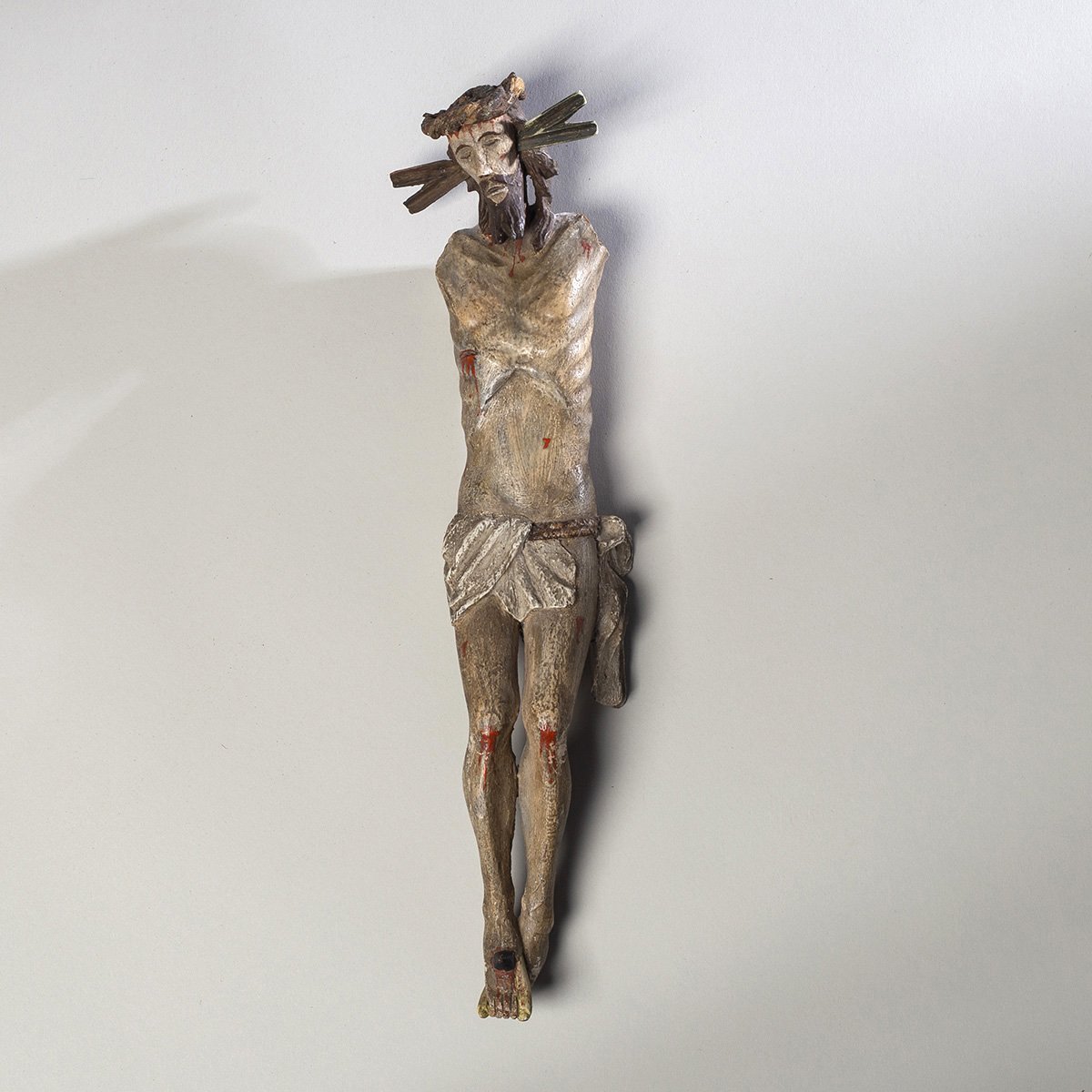 Image 2 of 5
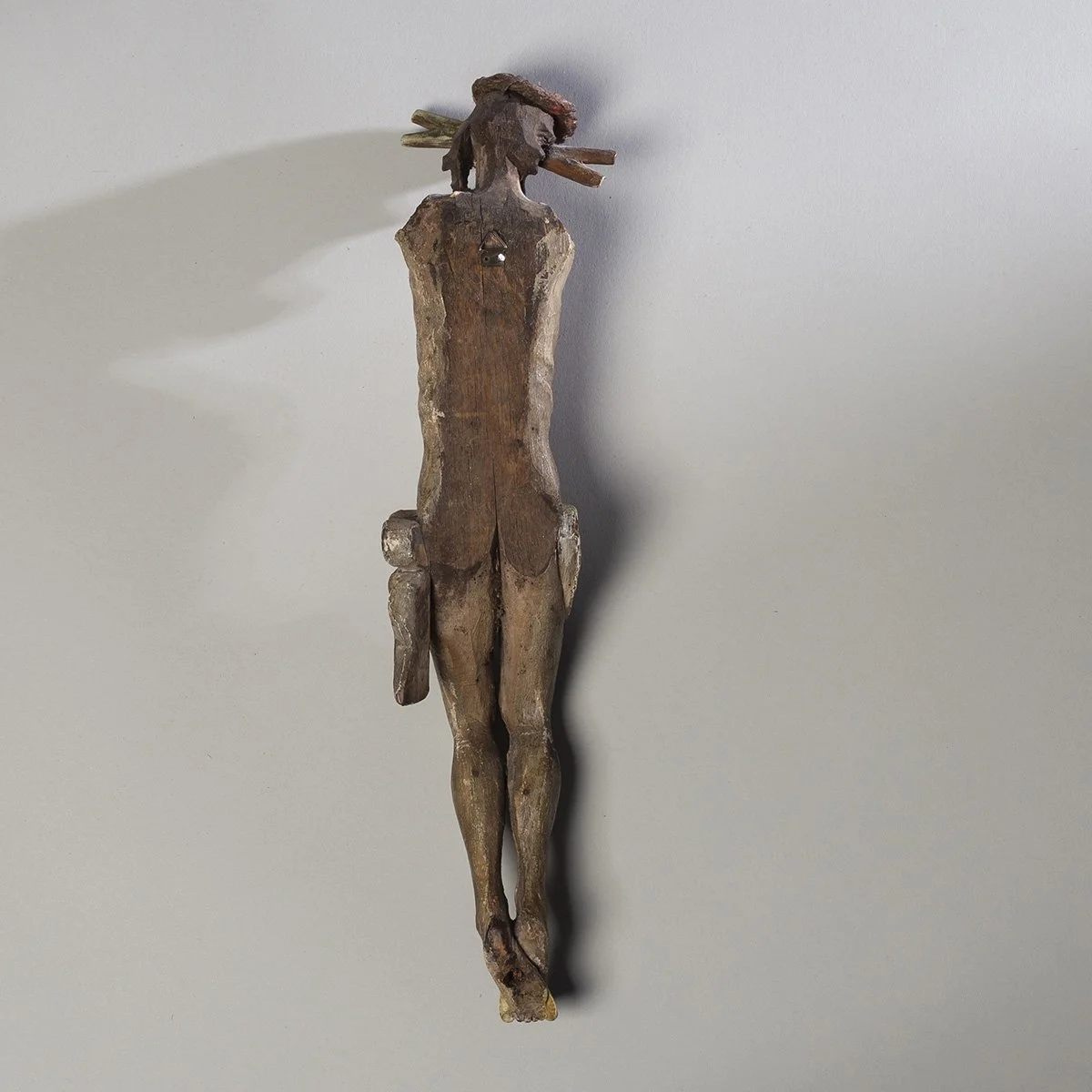 Image 3 of 5
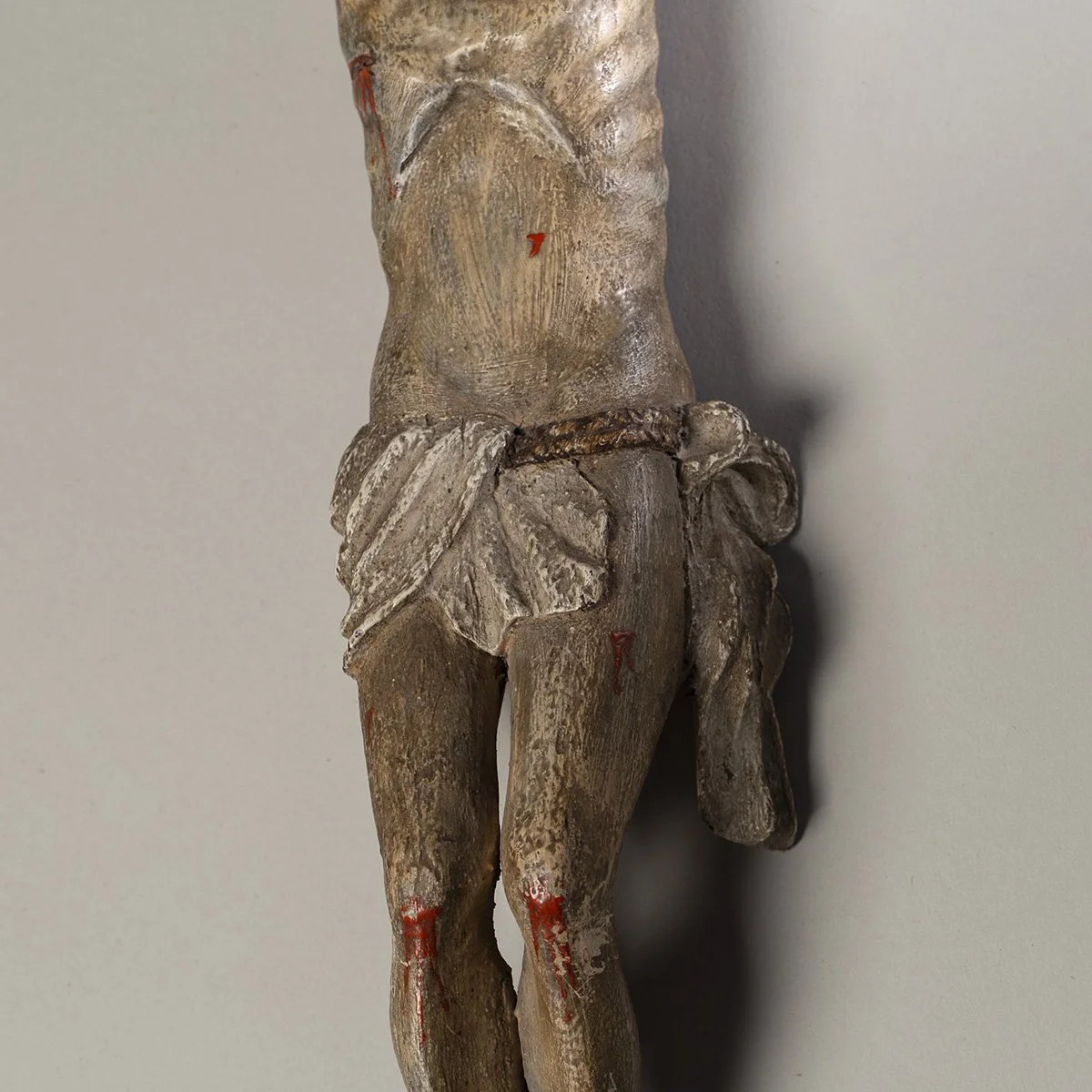 Image 4 of 5
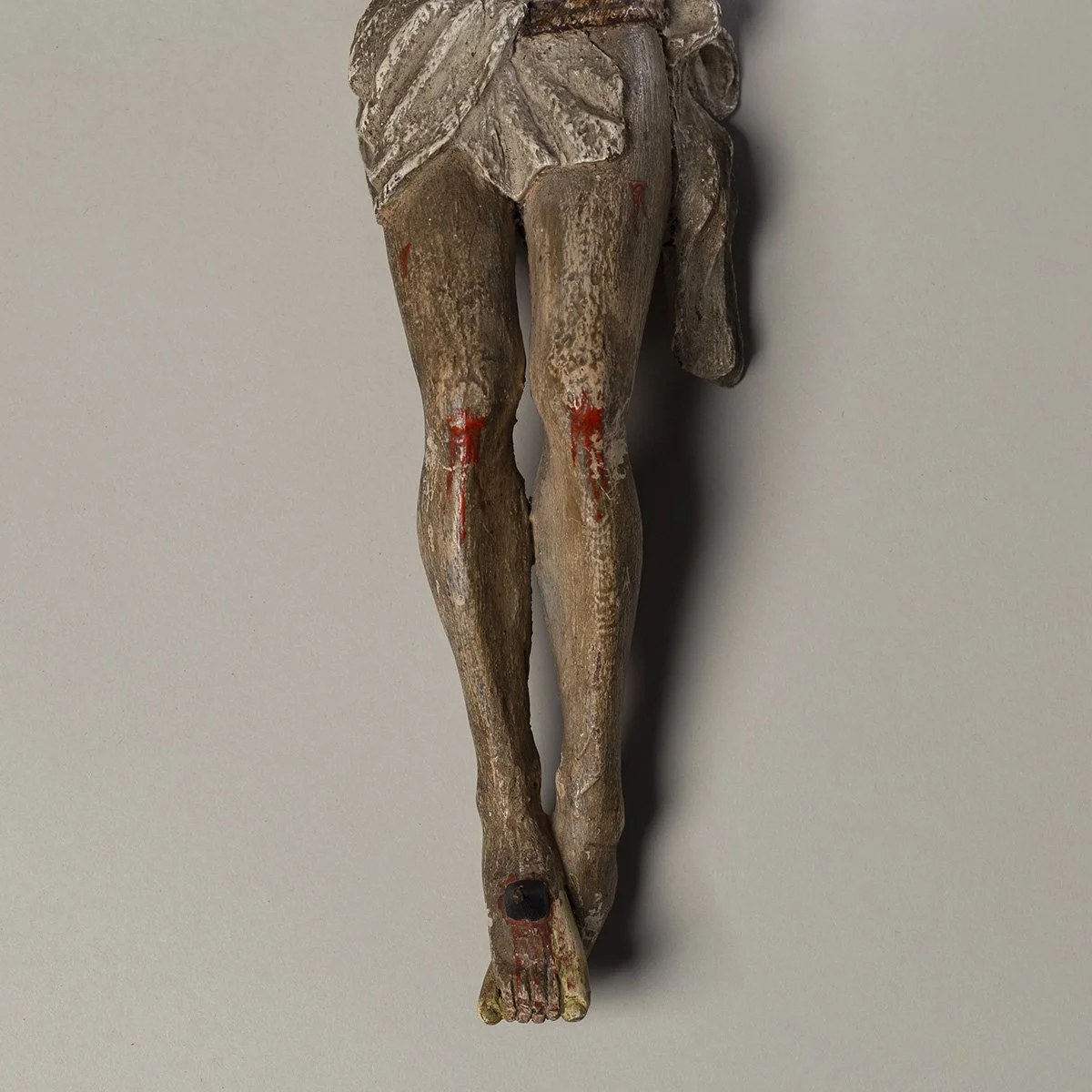 Image 5 of 5
South Germany
18th century
Carved wood, polychrome
Height 14 in (35.6 cm)
Provenance: Finnish trade
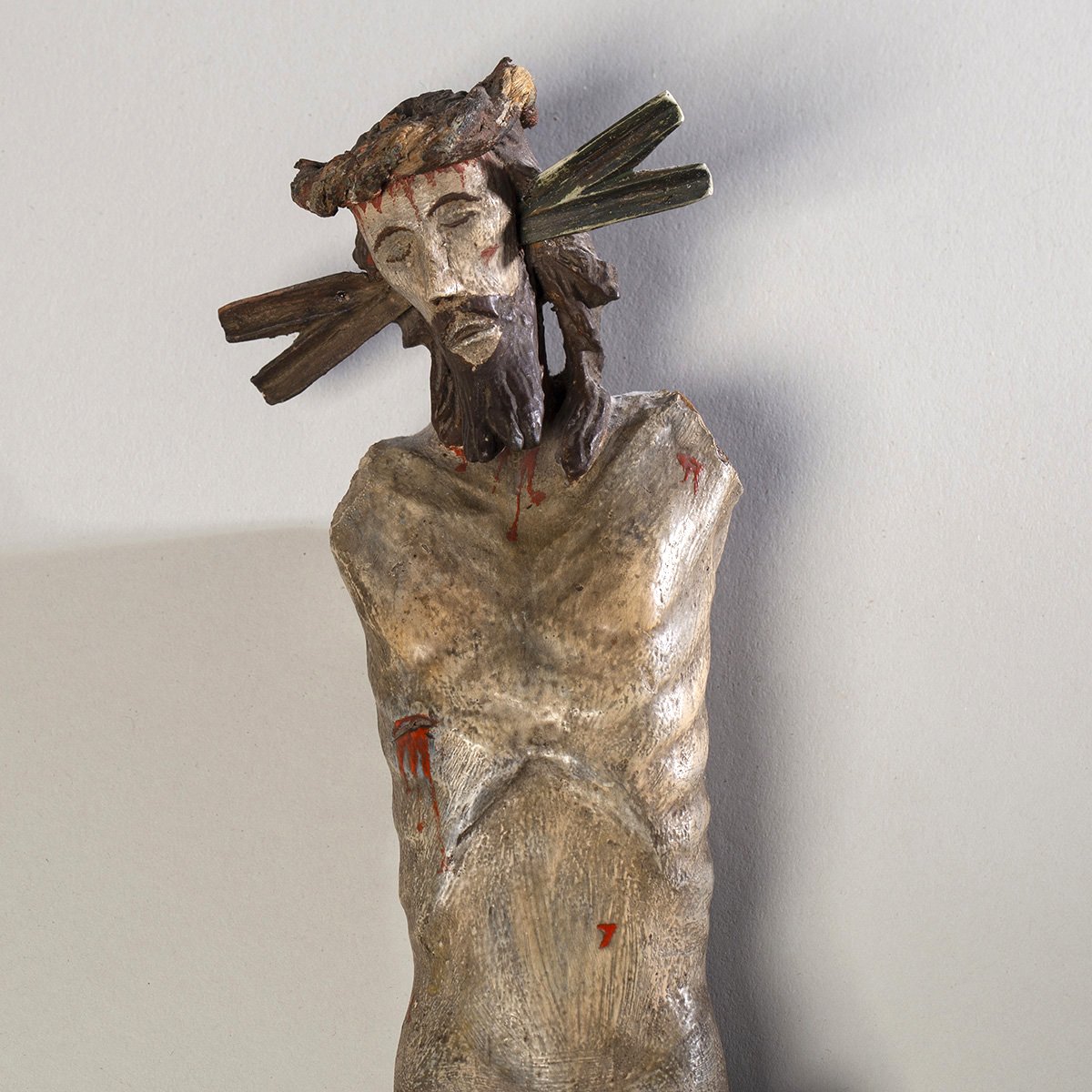
This South German carved wood corpus depicts Christ on the cross with the naturalistic rendering of anatomy, suffering, and facial expression characteristic of the German and Austrian Catholic carving tradition at its height in the eighteenth century. The polychrome surface retains original pigmentation across the body, loincloth, and crown of thorns, with the painted wounds and blood rendered with the devotional intensity characteristic of South German religious carving. The figure is carved in the round with careful attention to the musculature and posture of the crucified body.
South German and Austrian wood carving of the 18th century produced some of the finest examples of European religious sculpture, with regional workshops serving both large ecclesiastical commissions and the domestic devotional market. Corpus figures of this quality were typically produced for altarpiece settings or private chapel use, their scale and finish indicating a significant rather than purely domestic commission. The Finnish trade provenance is consistent with the movement of Central European religious objects through Scandinavian dealer networks.
We ship free anywhere in the world, fully insured, packed by hand.
South Germany
18th century
Carved wood, polychrome
Height 14 in (35.6 cm)
Provenance: Finnish trade
This South German carved wood corpus depicts Christ on the cross with the naturalistic rendering of anatomy, suffering, and facial expression characteristic of the German and Austrian Catholic carving tradition at its height in the eighteenth century. The polychrome surface retains original pigmentation across the body, loincloth, and crown of thorns, with the painted wounds and blood rendered with the devotional intensity characteristic of South German religious carving. The figure is carved in the round with careful attention to the musculature and posture of the crucified body.
South German and Austrian wood carving of the 18th century produced some of the finest examples of European religious sculpture, with regional workshops serving both large ecclesiastical commissions and the domestic devotional market. Corpus figures of this quality were typically produced for altarpiece settings or private chapel use, their scale and finish indicating a significant rather than purely domestic commission. The Finnish trade provenance is consistent with the movement of Central European religious objects through Scandinavian dealer networks.
We ship free anywhere in the world, fully insured, packed by hand.