Sa'dan Toraja, Sulawesi, Indonesia
Mid to late 19th century
Dark hardwood, natural pigments, dark tree resin
Height 62" (157.5 cm)
Provenance: Gary Spratt, San Francisco, acquired early 1970s; Dutch family collection
Tau tau figures are ancestral effigies central to the Sa'dan Toraja funerary tradition of highland Sulawesi, carved to represent the deceased and placed in cliff-face burial galleries where they maintained a visible connection between the living family, their lineage, and the ancestral realm. The production of a tau tau was reserved for individuals of high social rank, and the figures were understood as continuing presences that required care and attention after placement. The realistic carving style of this example, with its strong linear definition at the collarbone, knees, and limbs, is associated with mid to late 19th century Toraja sculptural production.
This figure is carved from dark dense hardwood and retains natural pigments and dark tree resin markings on the backs of the calves, applied in patterns resembling tattoos that added a further layer of bodily and ceremonial identity to the figure. Tattoo-like markings of this type are documented on Toraja funerary figures and connect the carved surface to the broader Toraja tradition of bodily marking as an indicator of status and identity. The scale of the figure, at 62 inches, is consistent with life-size tau tau intended for placement in the open-air galleries of cliff burial sites.
The Gary Spratt provenance, with acquisition in San Francisco in the early 1970s, places the figure within the period of active collecting of Indonesian ethnographic material by American and European collectors, well before contemporary frameworks governing the export of cultural heritage material from Indonesia. The Dutch family collection provenance reflects the longer European collecting history of Toraja material that began during the colonial period in the Dutch East Indies. Together the two provenance points provide a documented chain of ownership spanning over half a century from field collection to the present.
We ship free anywhere in the world, fully insured, packed by hand.
INQUIRE HERE
Sa'dan Toraja, Sulawesi, Indonesia
Mid to late 19th century
Dark hardwood, natural pigments, dark tree resin
Height 62" (157.5 cm)
Provenance: Gary Spratt, San Francisco, acquired early 1970s; Dutch family collection
Tau tau figures are ancestral effigies central to the Sa'dan Toraja funerary tradition of highland Sulawesi, carved to represent the deceased and placed in cliff-face burial galleries where they maintained a visible connection between the living family, their lineage, and the ancestral realm. The production of a tau tau was reserved for individuals of high social rank, and the figures were understood as continuing presences that required care and attention after placement. The realistic carving style of this example, with its strong linear definition at the collarbone, knees, and limbs, is associated with mid to late 19th century Toraja sculptural production.
This figure is carved from dark dense hardwood and retains natural pigments and dark tree resin markings on the backs of the calves, applied in patterns resembling tattoos that added a further layer of bodily and ceremonial identity to the figure. Tattoo-like markings of this type are documented on Toraja funerary figures and connect the carved surface to the broader Toraja tradition of bodily marking as an indicator of status and identity. The scale of the figure, at 62 inches, is consistent with life-size tau tau intended for placement in the open-air galleries of cliff burial sites.
The Gary Spratt provenance, with acquisition in San Francisco in the early 1970s, places the figure within the period of active collecting of Indonesian ethnographic material by American and European collectors, well before contemporary frameworks governing the export of cultural heritage material from Indonesia. The Dutch family collection provenance reflects the longer European collecting history of Toraja material that began during the colonial period in the Dutch East Indies. Together the two provenance points provide a documented chain of ownership spanning over half a century from field collection to the present.
We ship free anywhere in the world, fully insured, packed by hand.
INQUIRE HERE


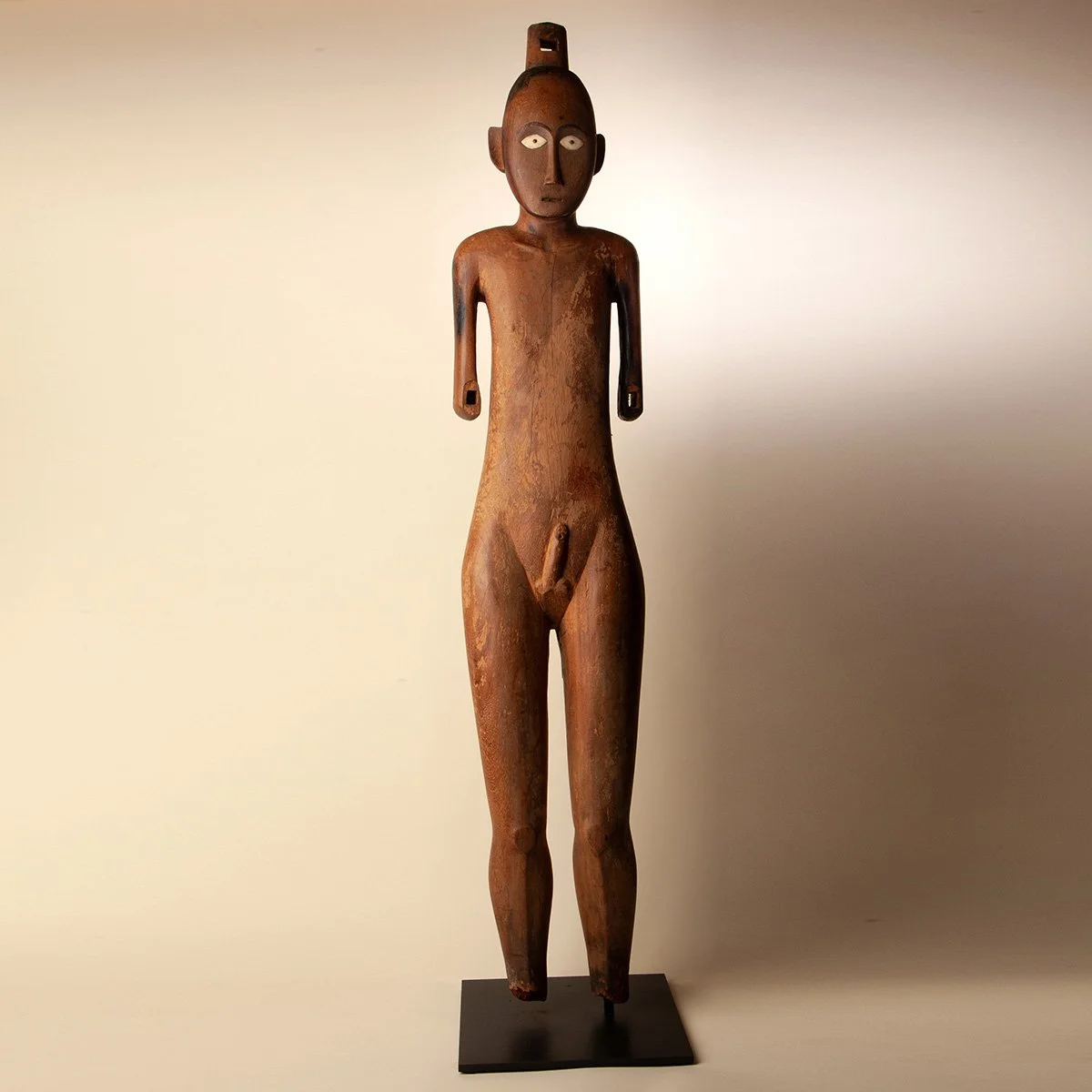 Image 1 of 10
 Image 2 of 10
 Image 3 of 10
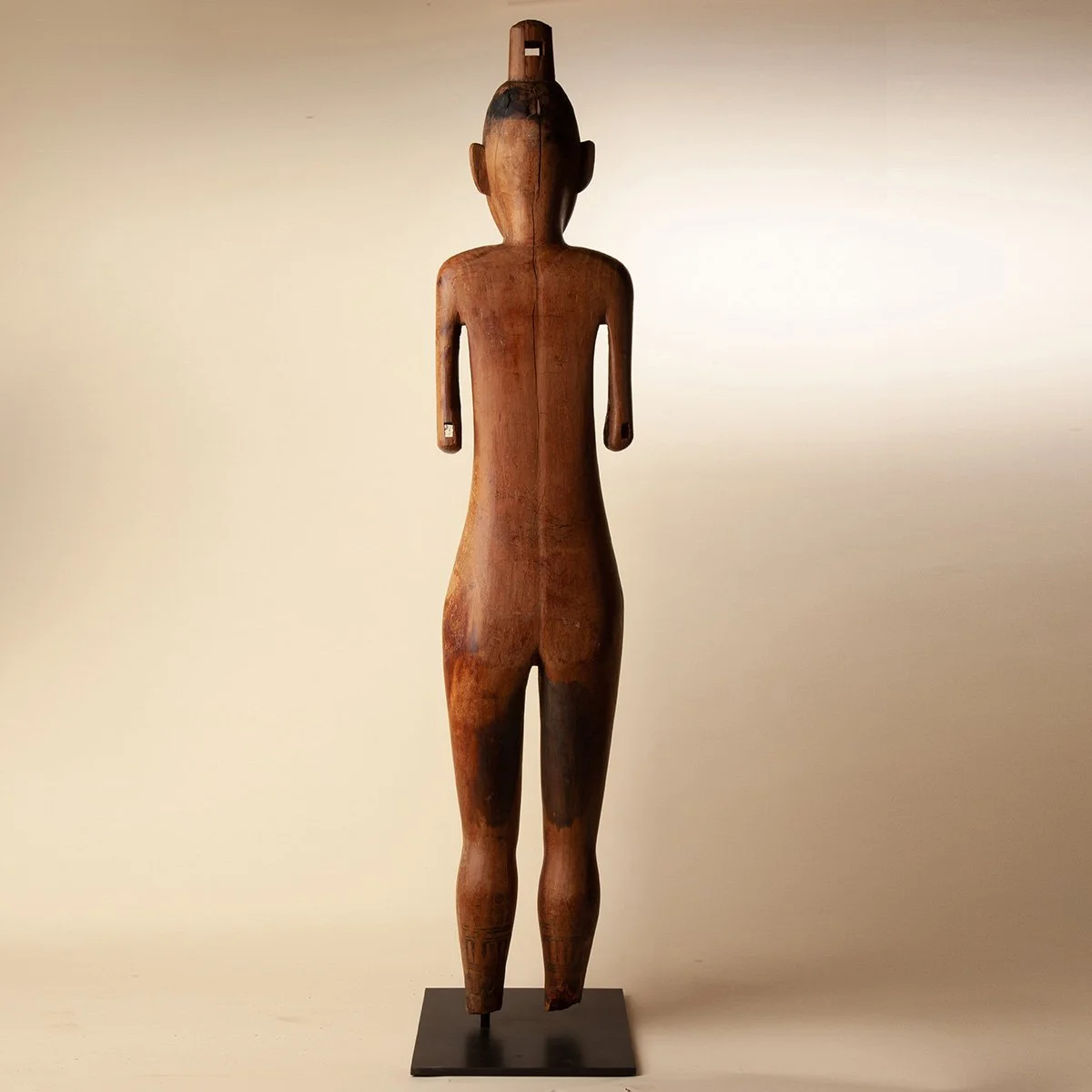 Image 4 of 10
 Image 5 of 10
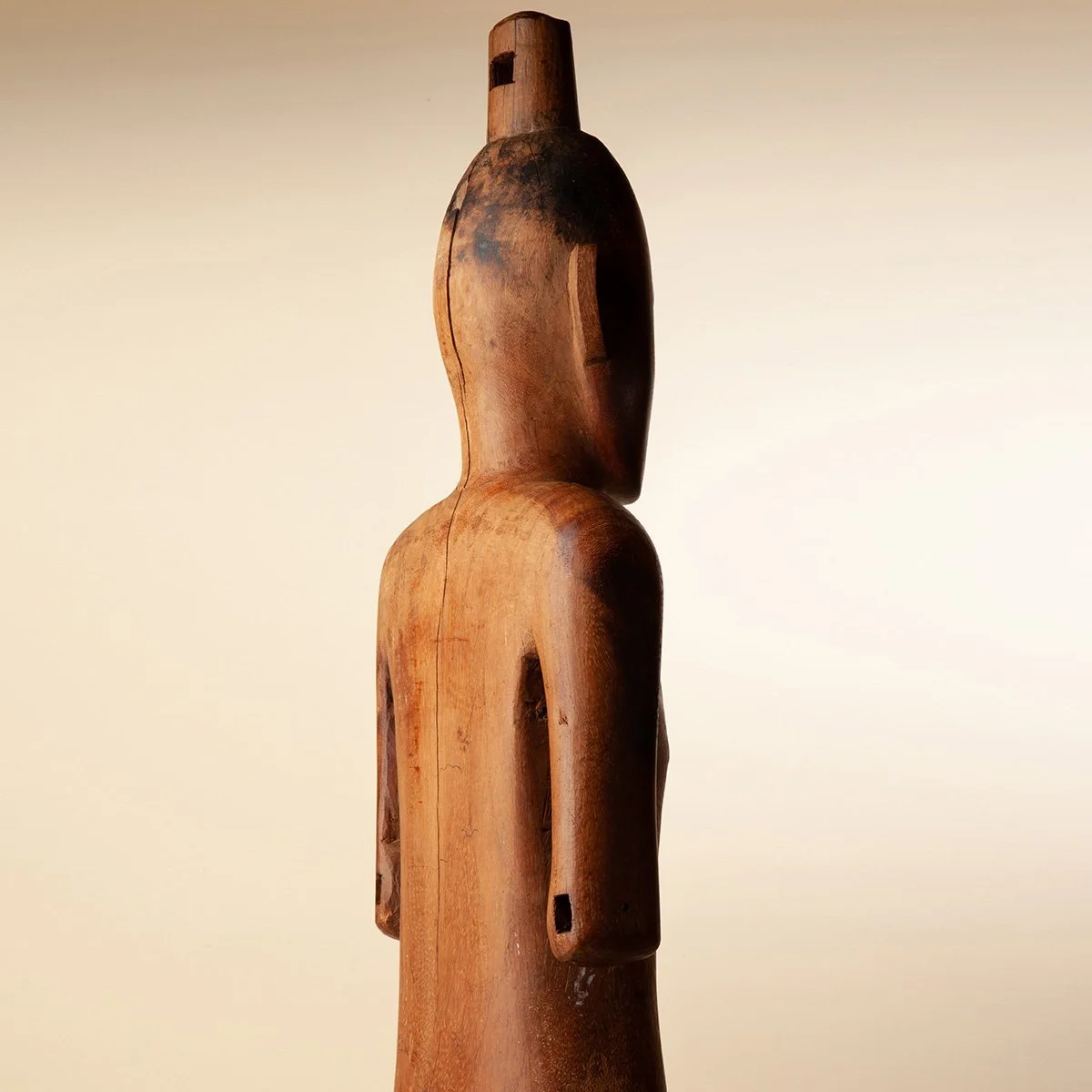 Image 6 of 10
 Image 7 of 10
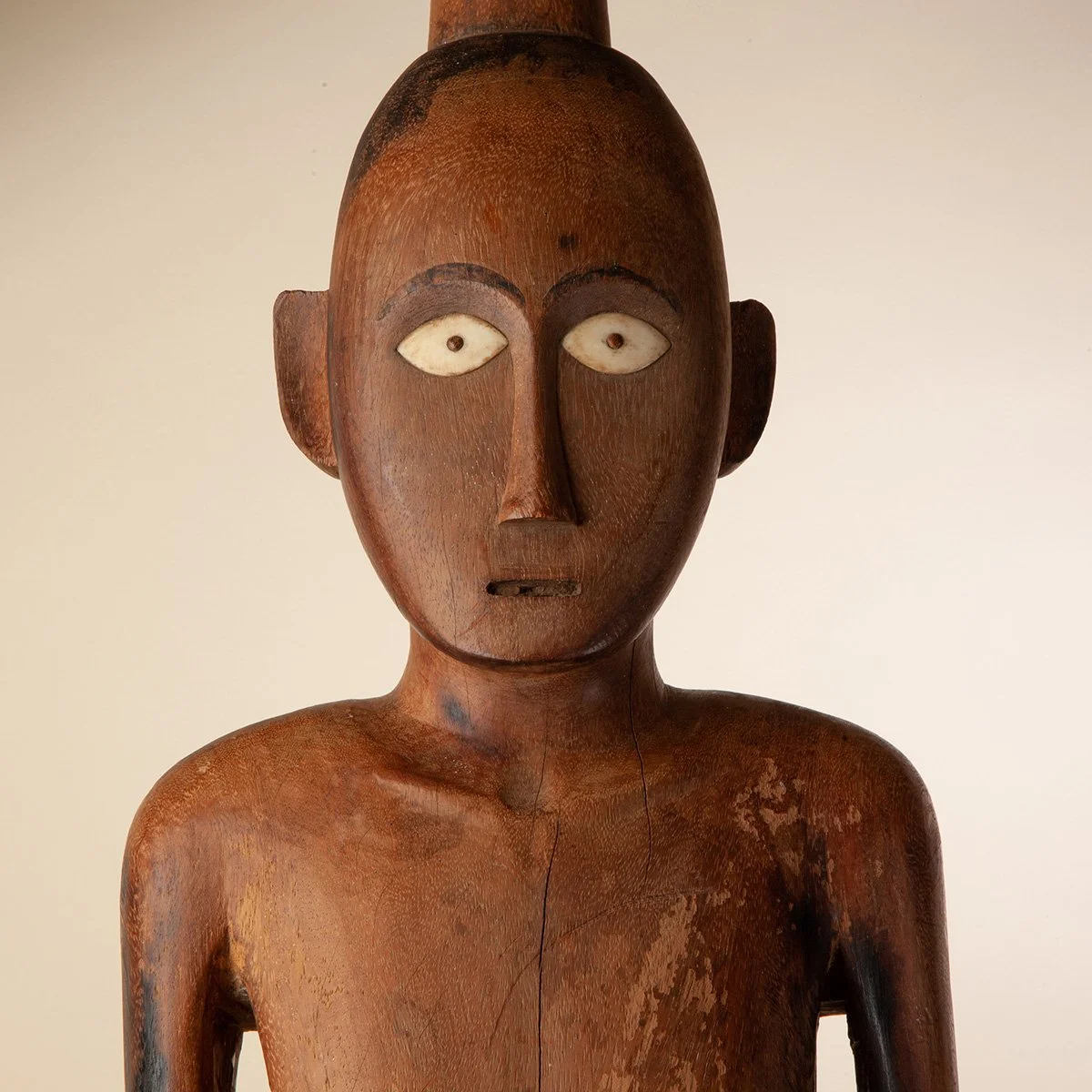 Image 8 of 10
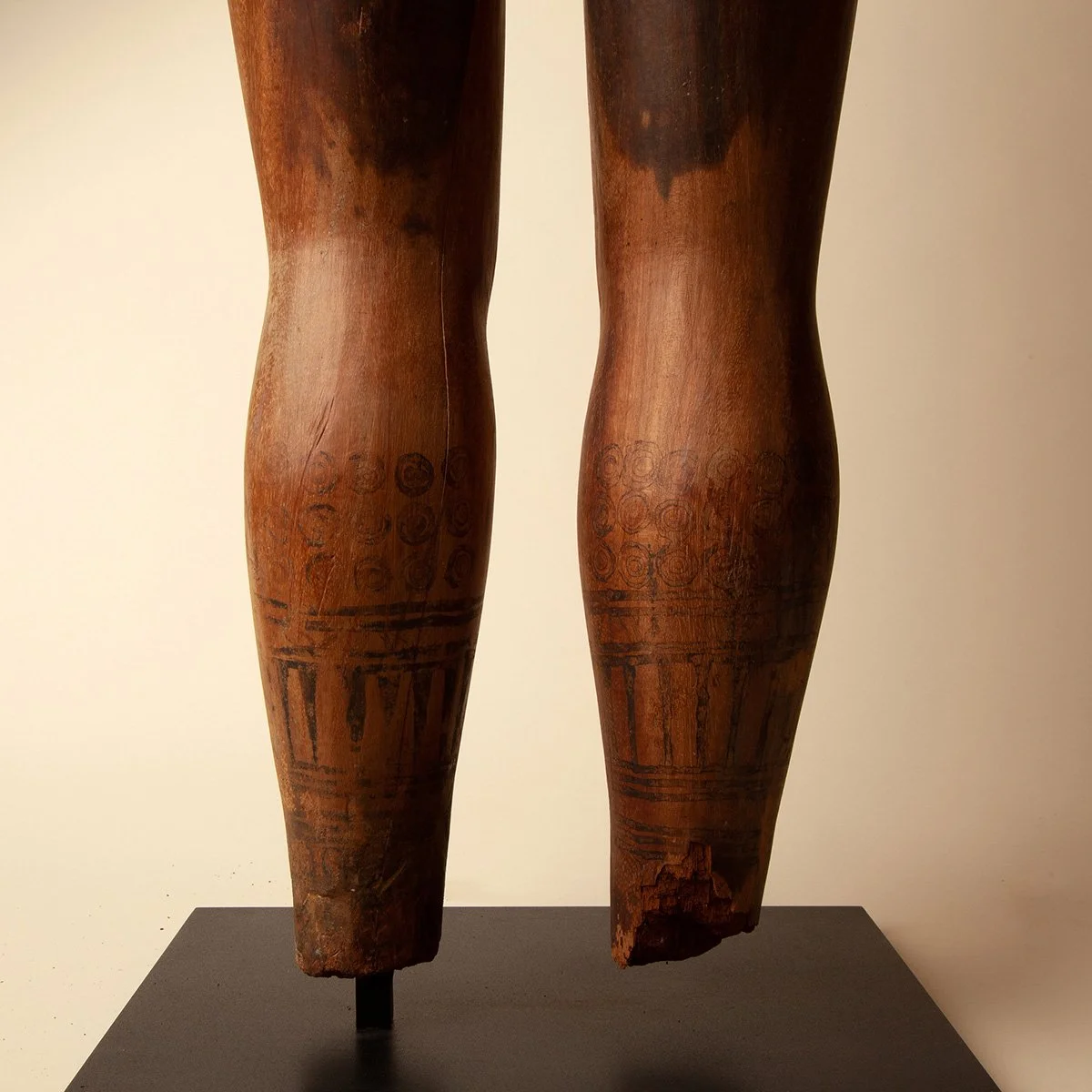 Image 9 of 10
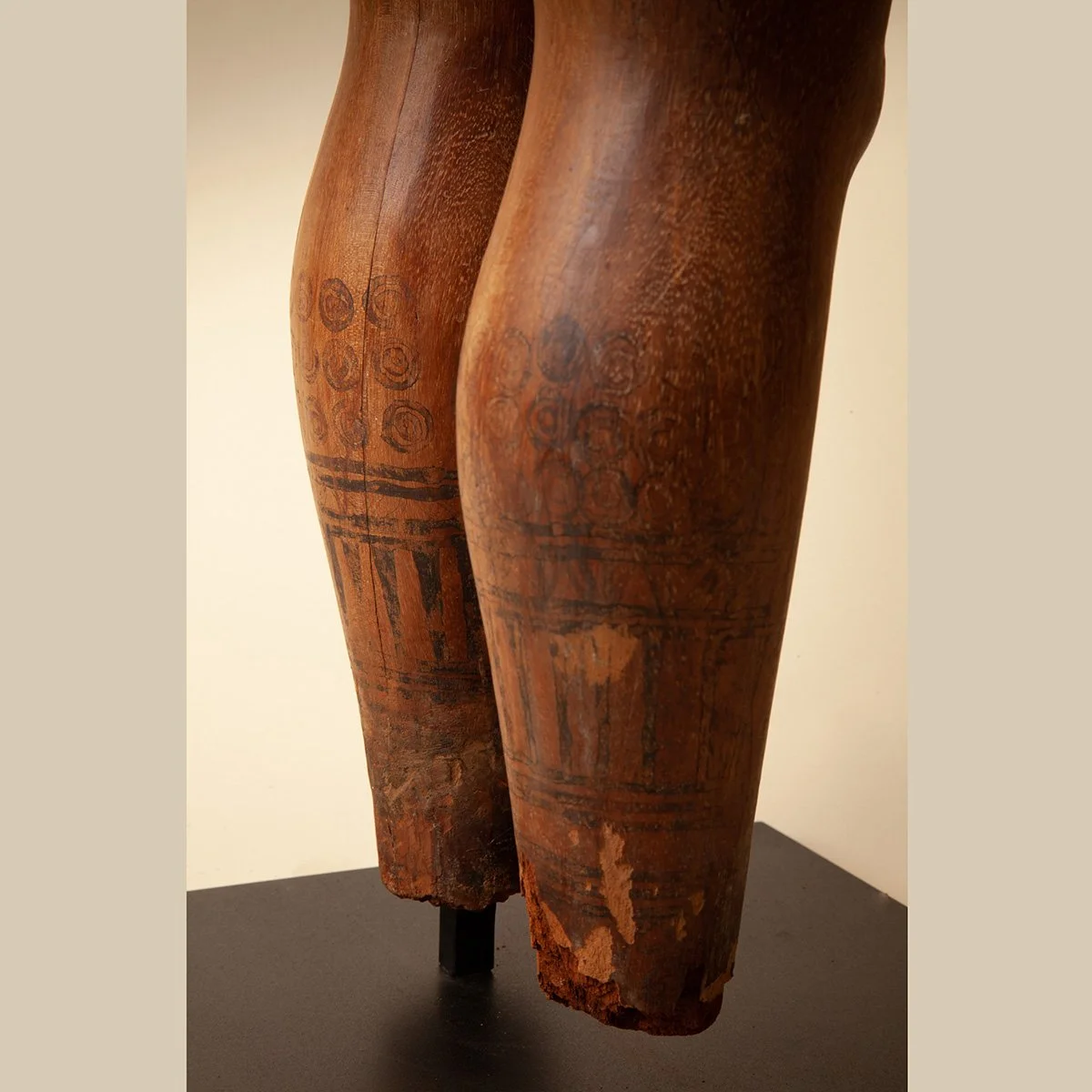 Image 10 of 10