

 Image 1 of 2
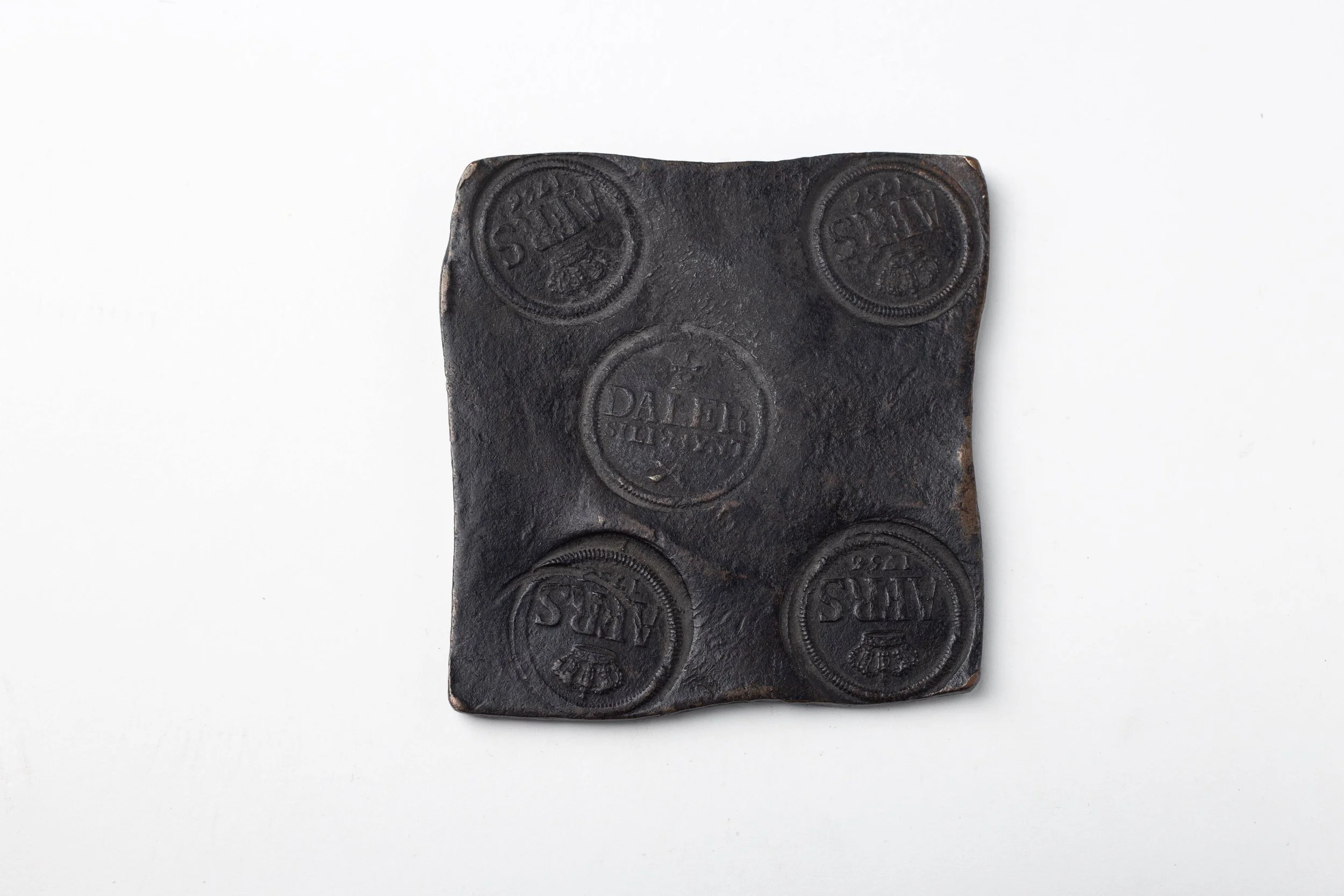 Image 2 of 2
Sweden
1756
Copper
3½ × 3½ in. (8.9 × 8.9 cm); approximately 454 grams
Provenance: Private collection, North Carolina; 19th-century collection label present on reverse
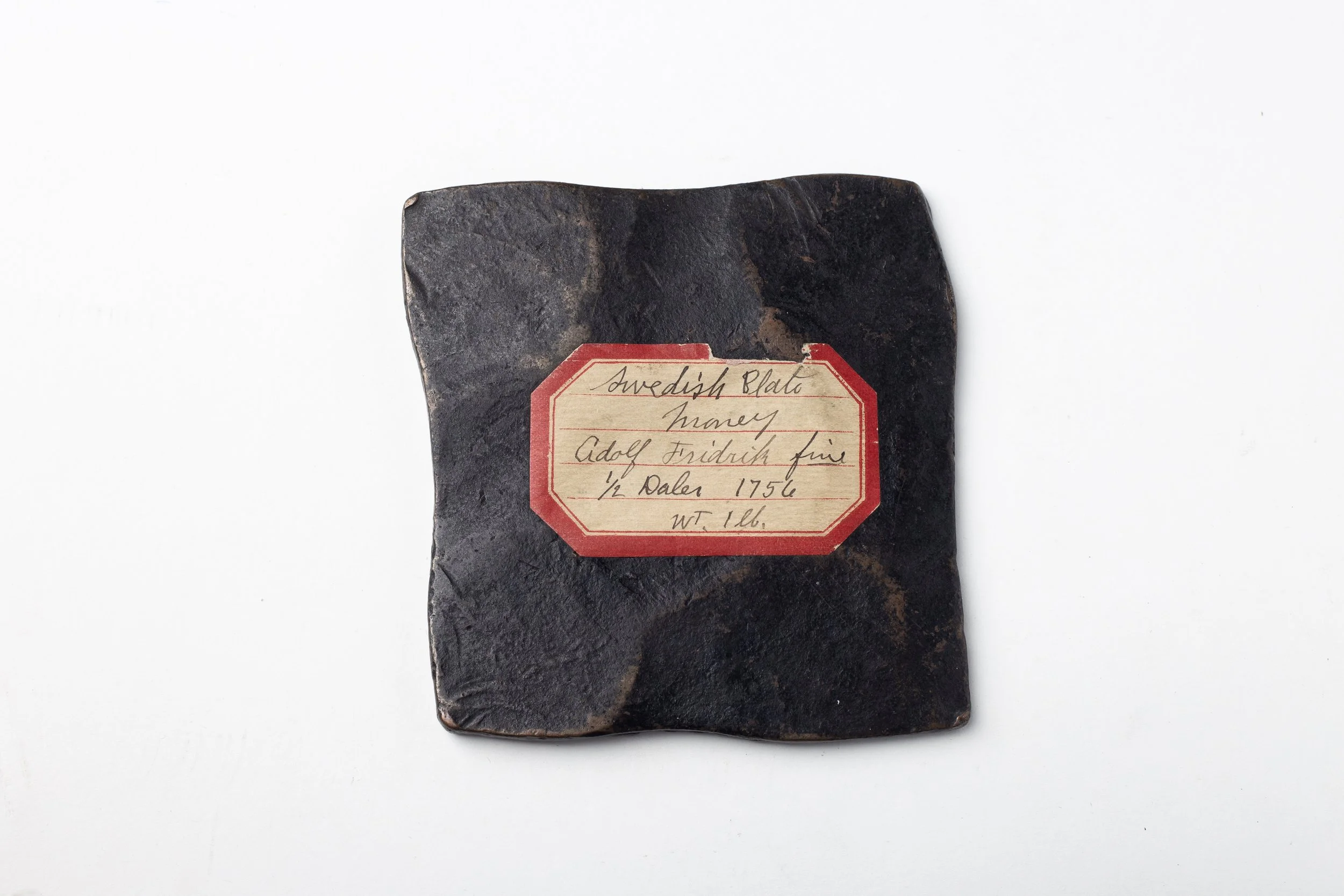
Swedish plate money (plåtmynt) was introduced in 1644 during the reign of Queen Christina as a response to Sweden's copper surplus and silver scarcity, producing some of the largest coins ever struck, hammered flat and stamped with five marks, one in each corner and one in the center. Production ceased in 1776, and the majority of pieces were subsequently melted down, with most surviving examples believed to derive from the 1783 shipwreck of the Nicobar. The 19th-century collection label on the reverse documents the piece's presence in a North American collection during that period, adding a layer of ownership history to an already well-contextualized object.
We ship free anywhere in the world, fully insured, packed by hand.
Sweden
1756
Copper
3½ × 3½ in. (8.9 × 8.9 cm); approximately 454 grams
Provenance: Private collection, North Carolina; 19th-century collection label present on reverse
Swedish plate money (plåtmynt) was introduced in 1644 during the reign of Queen Christina as a response to Sweden's copper surplus and silver scarcity, producing some of the largest coins ever struck, hammered flat and stamped with five marks, one in each corner and one in the center. Production ceased in 1776, and the majority of pieces were subsequently melted down, with most surviving examples believed to derive from the 1783 shipwreck of the Nicobar. The 19th-century collection label on the reverse documents the piece's presence in a North American collection during that period, adding a layer of ownership history to an already well-contextualized object.
We ship free anywhere in the world, fully insured, packed by hand.