Tahitian, Society Islands, French Polynesia
18th century or earlier
Basalt
Height: 6 5/8 in. (16.8 cm); Diameter: 4 3/4 in. (12.1 cm)
Provenance: Private collection, Whitby, UK; Adam Prout, London
The penu is a stone pounder used across the Society Islands for processing breadfruit and taro into mahi, the fermented paste equivalent to Hawaiian poi. This example carries a tradition of Cook voyage association, though as Dr. Adrienne Kaeppler notes in Artificial Curiosities (1978), her monumental study of objects collected on Cook's voyages, such attributions are frequently circumstantial and should be understood as part of a collecting tradition rather than verified documentation. The piece dates to the eighteenth century or earlier and passes through two UK collections before entering the market.
The form is the cross-bar type, with a flat horizontal top grip, a waisted neck, and a broad flared base suited to sustained pounding work, consistent with documented Society Islands penu typology. The basalt is dense and even-grained, ground to a consistent surface across the body with no evidence of later alteration. The piece carries the surface character and patina consistent with an eighteenth-century or earlier example.
We ship free anywhere in the world, fully insured, packed by hand.
Tahitian, Society Islands, French Polynesia
18th century or earlier
Basalt
Height: 6 5/8 in. (16.8 cm); Diameter: 4 3/4 in. (12.1 cm)
Provenance: Private collection, Whitby, UK; Adam Prout, London
The penu is a stone pounder used across the Society Islands for processing breadfruit and taro into mahi, the fermented paste equivalent to Hawaiian poi. This example carries a tradition of Cook voyage association, though as Dr. Adrienne Kaeppler notes in Artificial Curiosities (1978), her monumental study of objects collected on Cook's voyages, such attributions are frequently circumstantial and should be understood as part of a collecting tradition rather than verified documentation. The piece dates to the eighteenth century or earlier and passes through two UK collections before entering the market.
The form is the cross-bar type, with a flat horizontal top grip, a waisted neck, and a broad flared base suited to sustained pounding work, consistent with documented Society Islands penu typology. The basalt is dense and even-grained, ground to a consistent surface across the body with no evidence of later alteration. The piece carries the surface character and patina consistent with an eighteenth-century or earlier example.
We ship free anywhere in the world, fully insured, packed by hand.


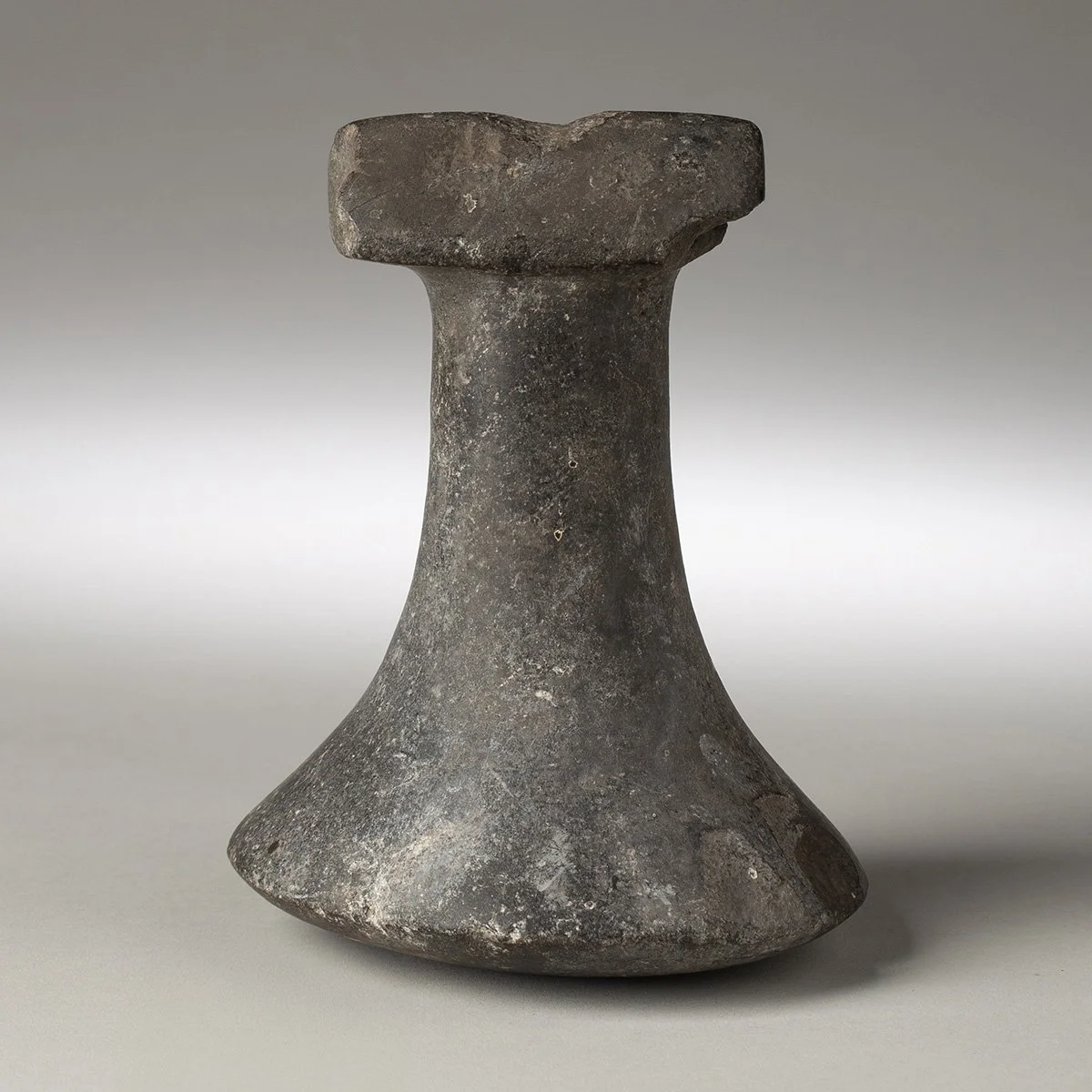 Image 1 of 6
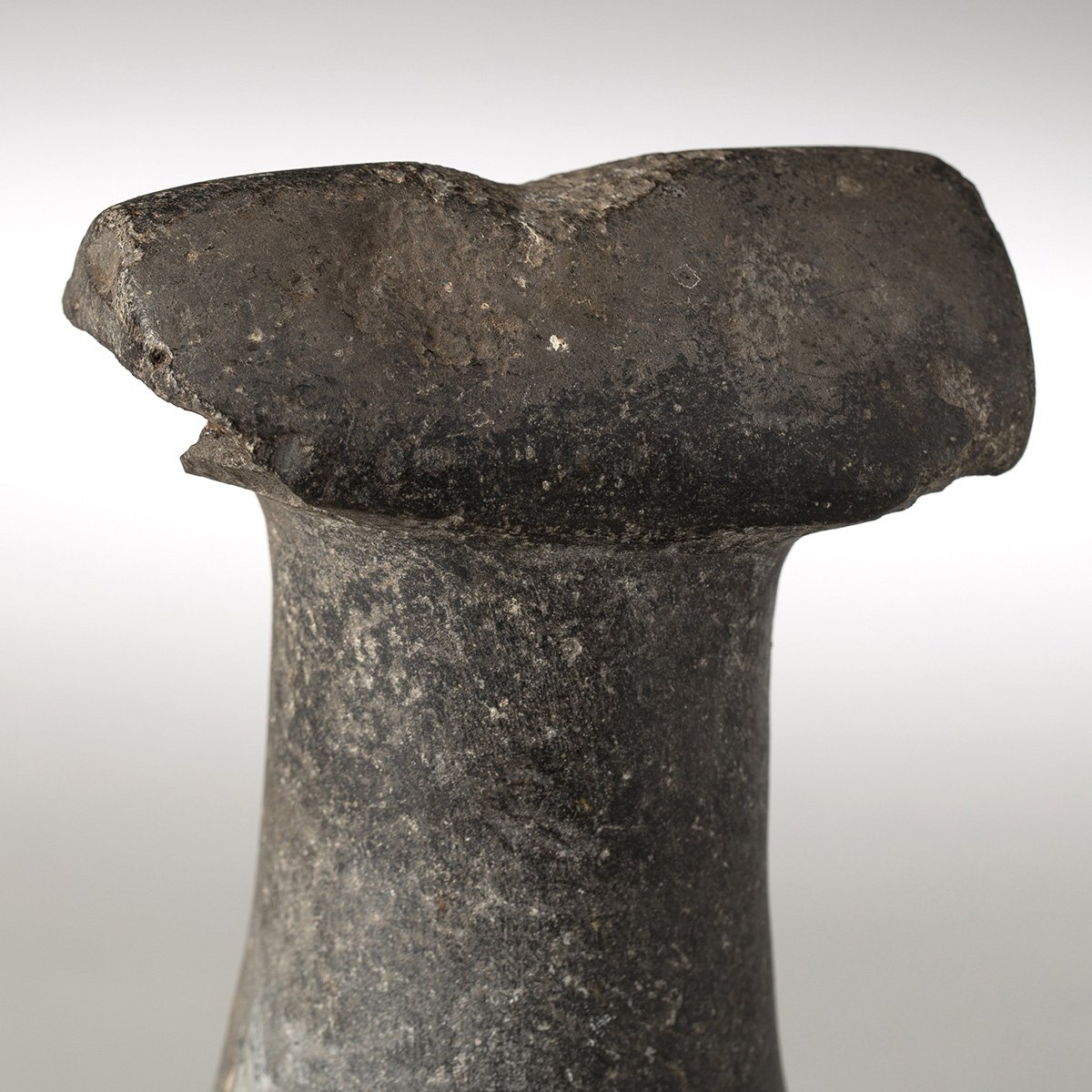 Image 2 of 6
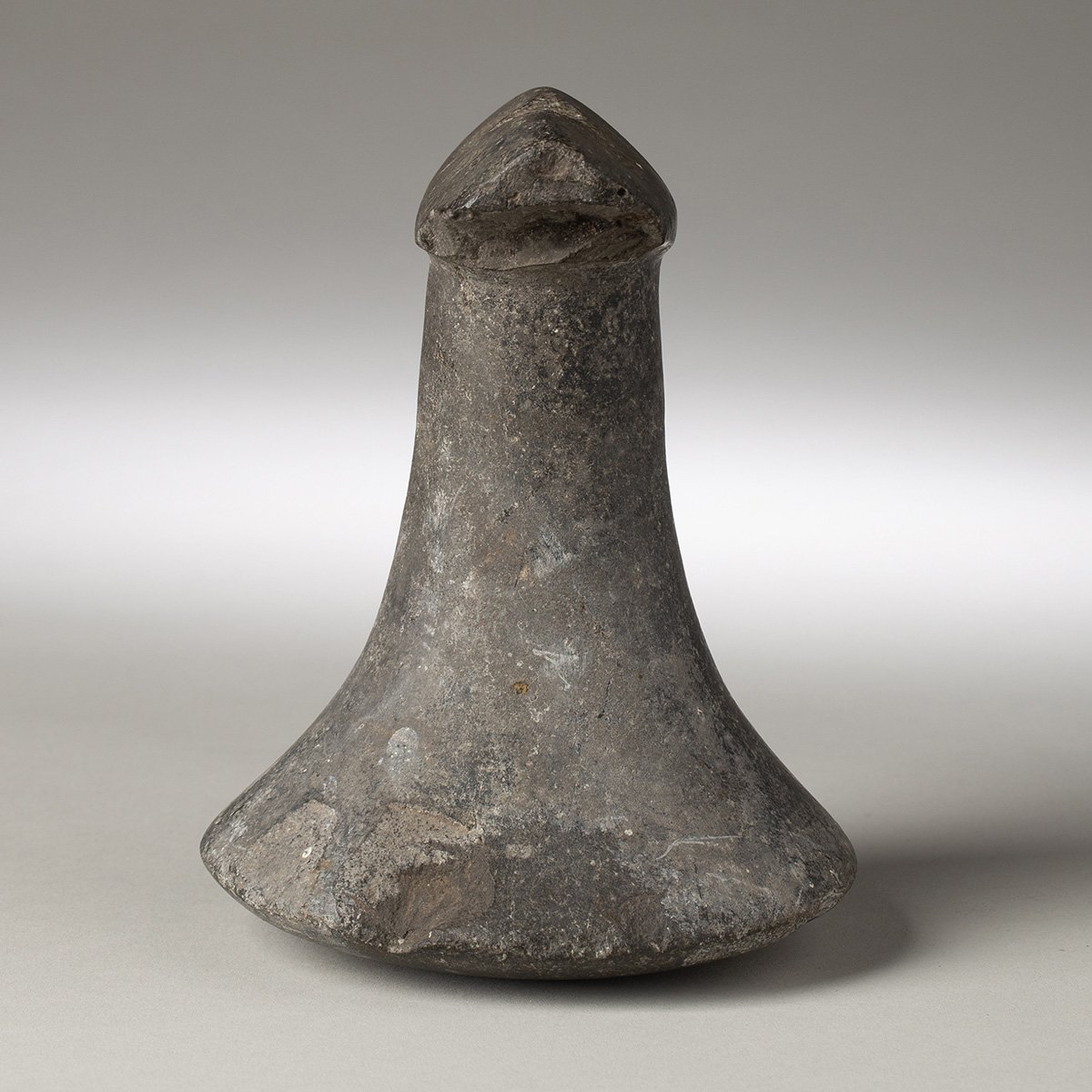 Image 3 of 6
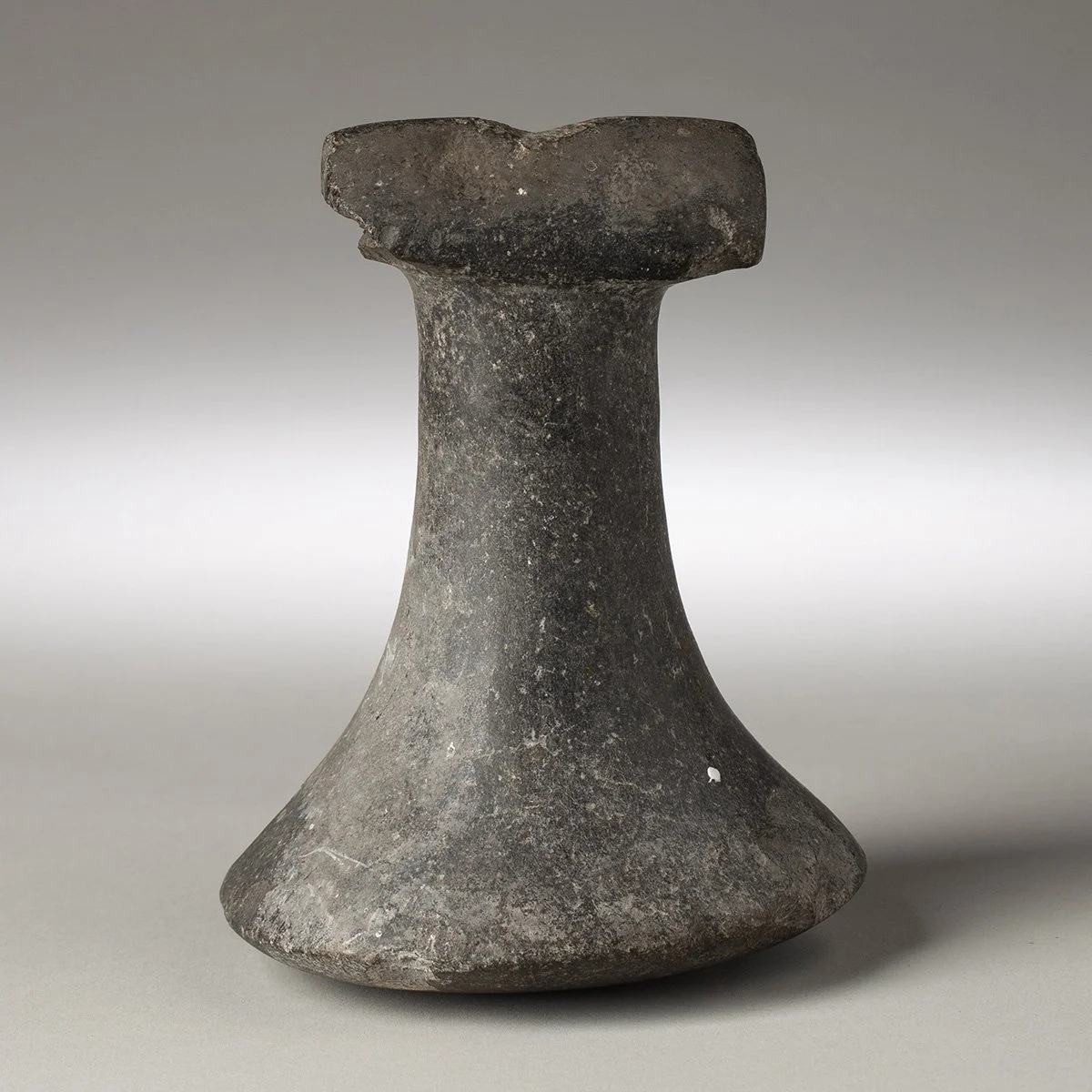 Image 4 of 6
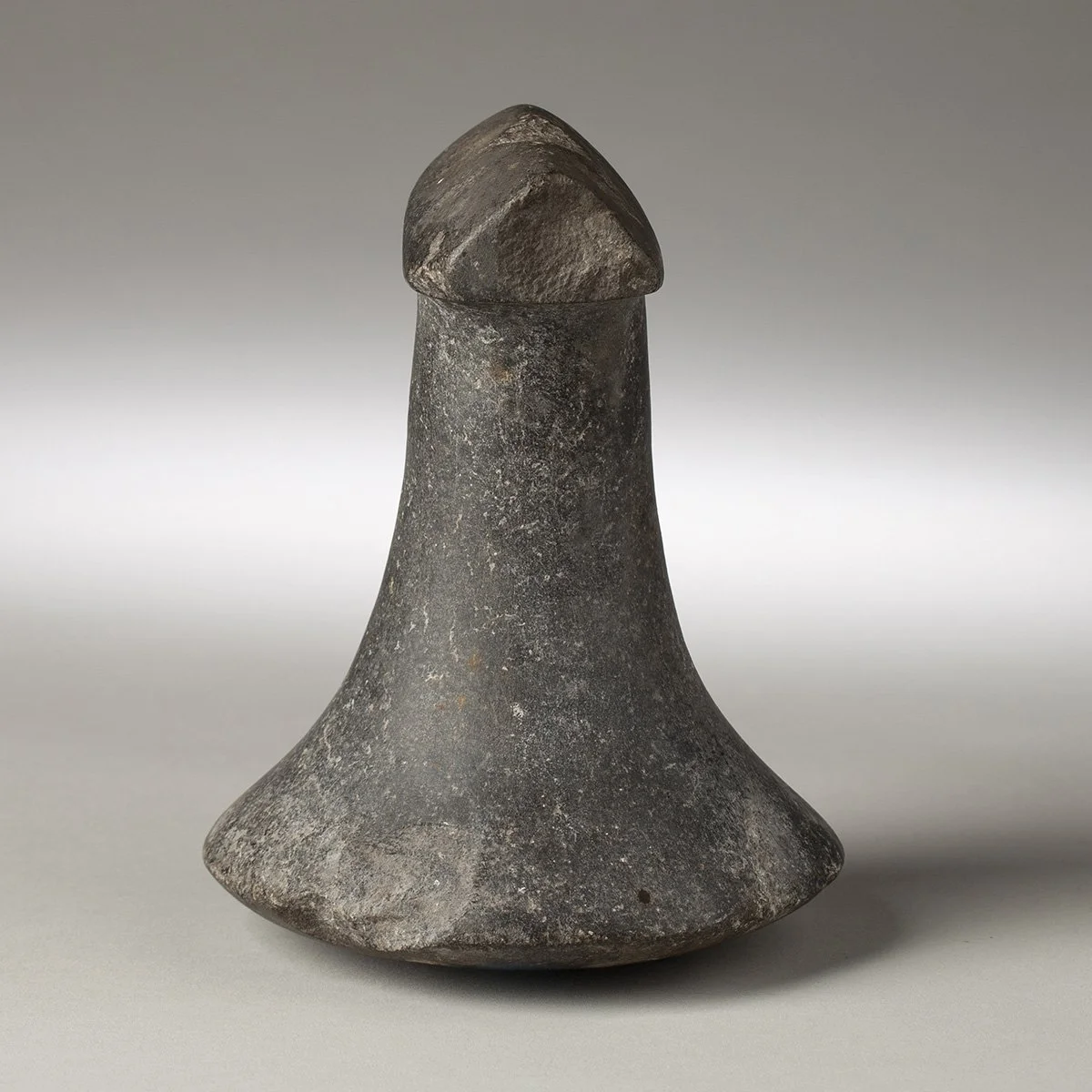 Image 5 of 6
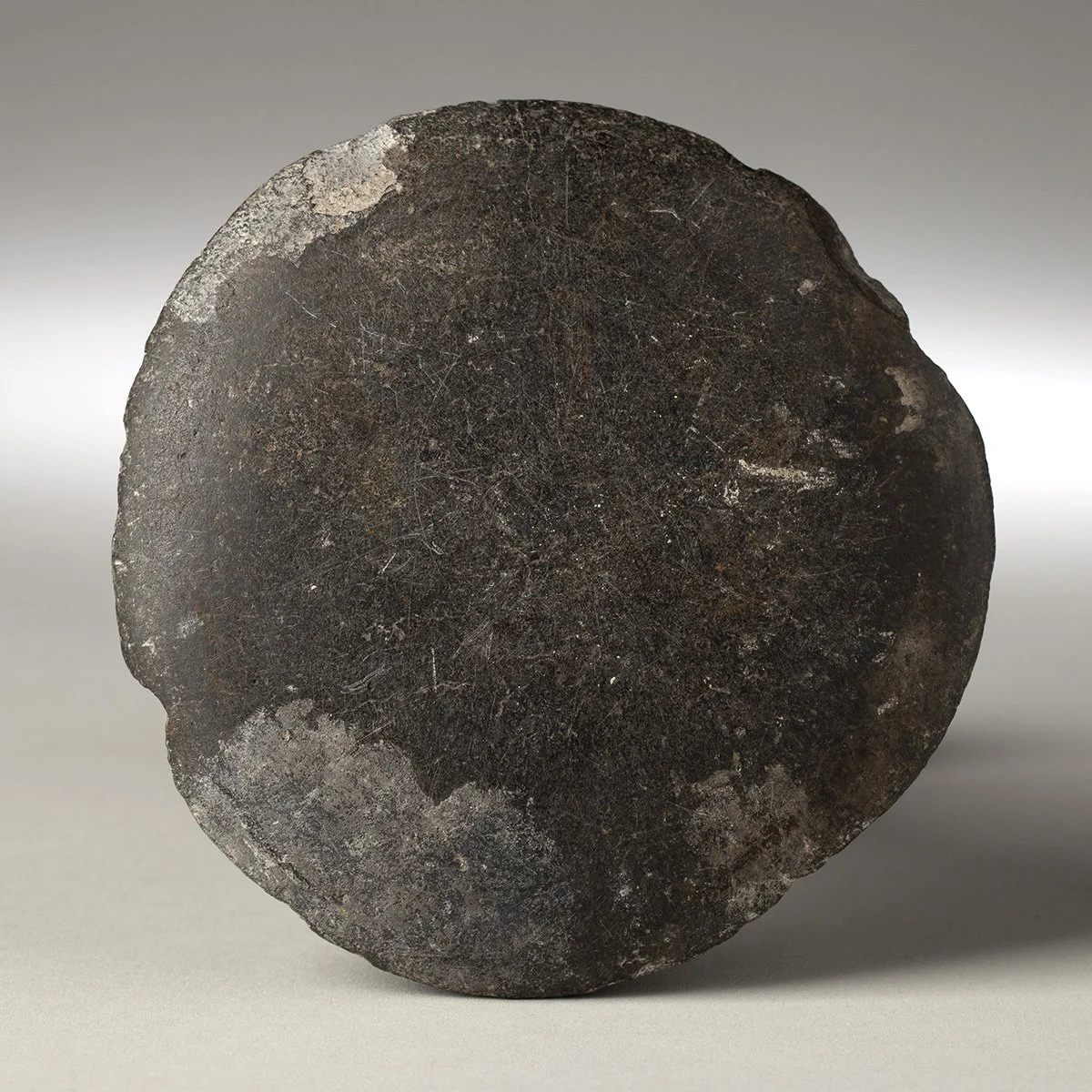 Image 6 of 6