Tahitian, Society Islands, French Polynesia; basalt likely quarried on Raiatea
18th century or earlier
Basalt
Length: 9 1/4 in. (23.5 cm); Width: 1 3/4 in. (4.4 cm)
Provenance: Donald Stanley Marshall, Salem, MA
The toki, or adze blade, was a primary woodworking tool across the Society Islands, used for canoe construction, timber shaping, and general carpentry throughout the pre-contact and early contact periods. Raiatea, known in Polynesian tradition as Hawaiki, was a significant source of fine-grained basalt used for adze production and a center from which stone tools were distributed across the wider Society Islands group. This example dates to the eighteenth century or earlier and carries provenance through Donald Stanley Marshall, a Pacific scholar associated with the Peabody Museum in Salem, Massachusetts.
The blade is ground to a broad, wedge-shaped profile tapering from a thick butt to a sharp working edge, with a slightly curved cross-section suited to hafting. An old collection label is present on the surface, consistent with early twentieth-century museum or scholarly collection practice. The basalt is dense and even-grained throughout, with no evidence of later alteration to the form.
We ship free anywhere in the world, fully insured, packed by hand.
Tahitian, Society Islands, French Polynesia; basalt likely quarried on Raiatea
18th century or earlier
Basalt
Length: 9 1/4 in. (23.5 cm); Width: 1 3/4 in. (4.4 cm)
Provenance: Donald Stanley Marshall, Salem, MA
The toki, or adze blade, was a primary woodworking tool across the Society Islands, used for canoe construction, timber shaping, and general carpentry throughout the pre-contact and early contact periods. Raiatea, known in Polynesian tradition as Hawaiki, was a significant source of fine-grained basalt used for adze production and a center from which stone tools were distributed across the wider Society Islands group. This example dates to the eighteenth century or earlier and carries provenance through Donald Stanley Marshall, a Pacific scholar associated with the Peabody Museum in Salem, Massachusetts.
The blade is ground to a broad, wedge-shaped profile tapering from a thick butt to a sharp working edge, with a slightly curved cross-section suited to hafting. An old collection label is present on the surface, consistent with early twentieth-century museum or scholarly collection practice. The basalt is dense and even-grained throughout, with no evidence of later alteration to the form.
We ship free anywhere in the world, fully insured, packed by hand.


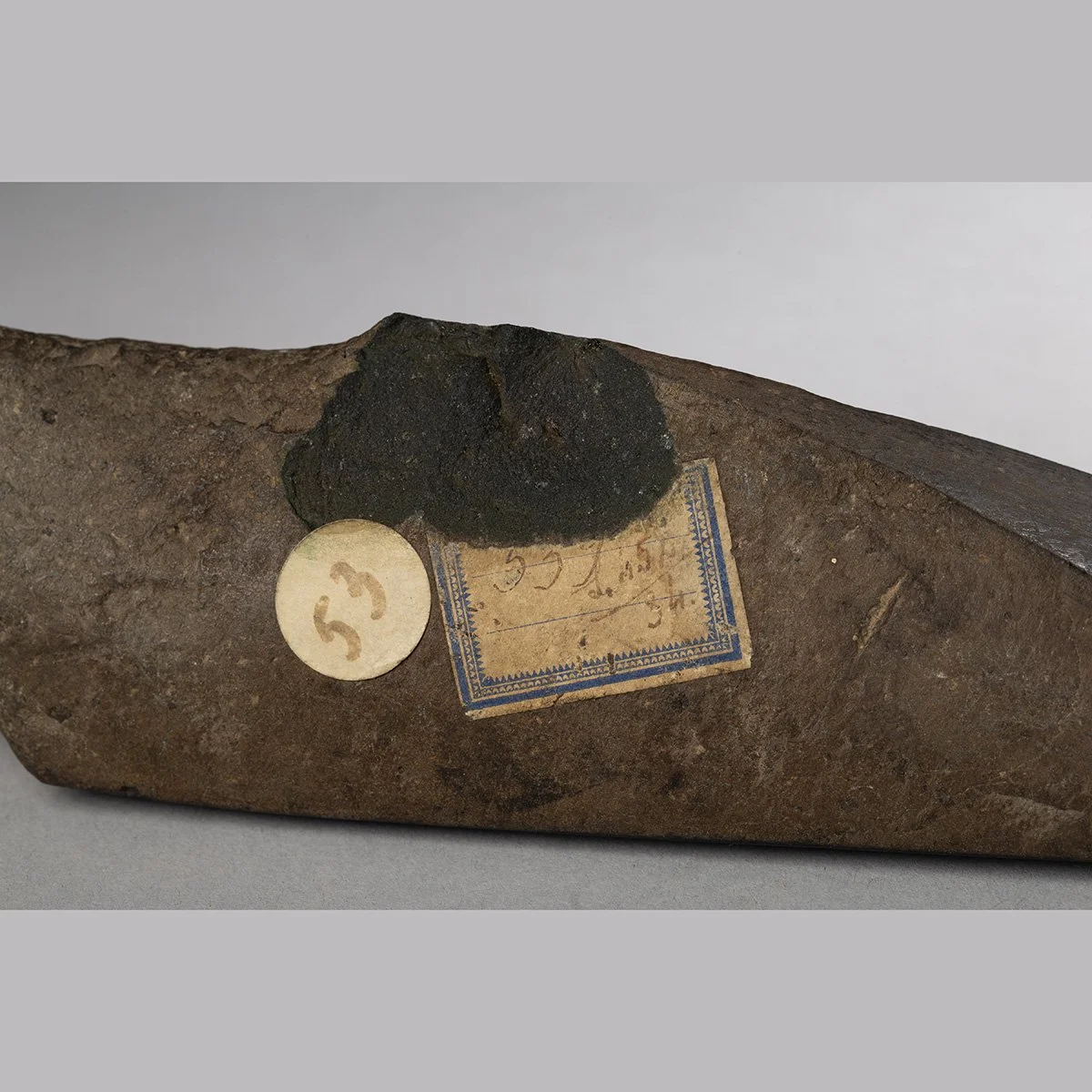 Image 1 of 7
 Image 2 of 7
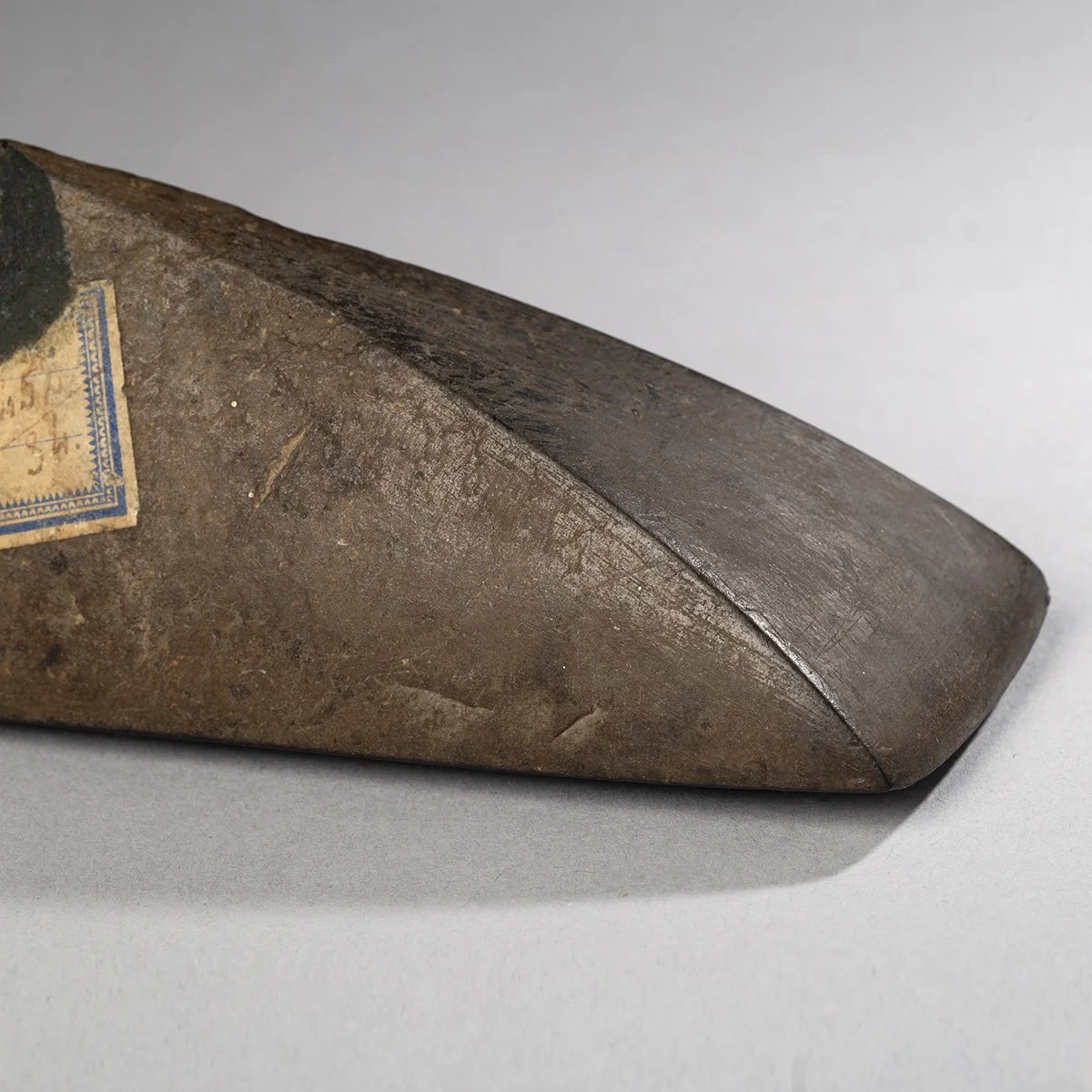 Image 3 of 7
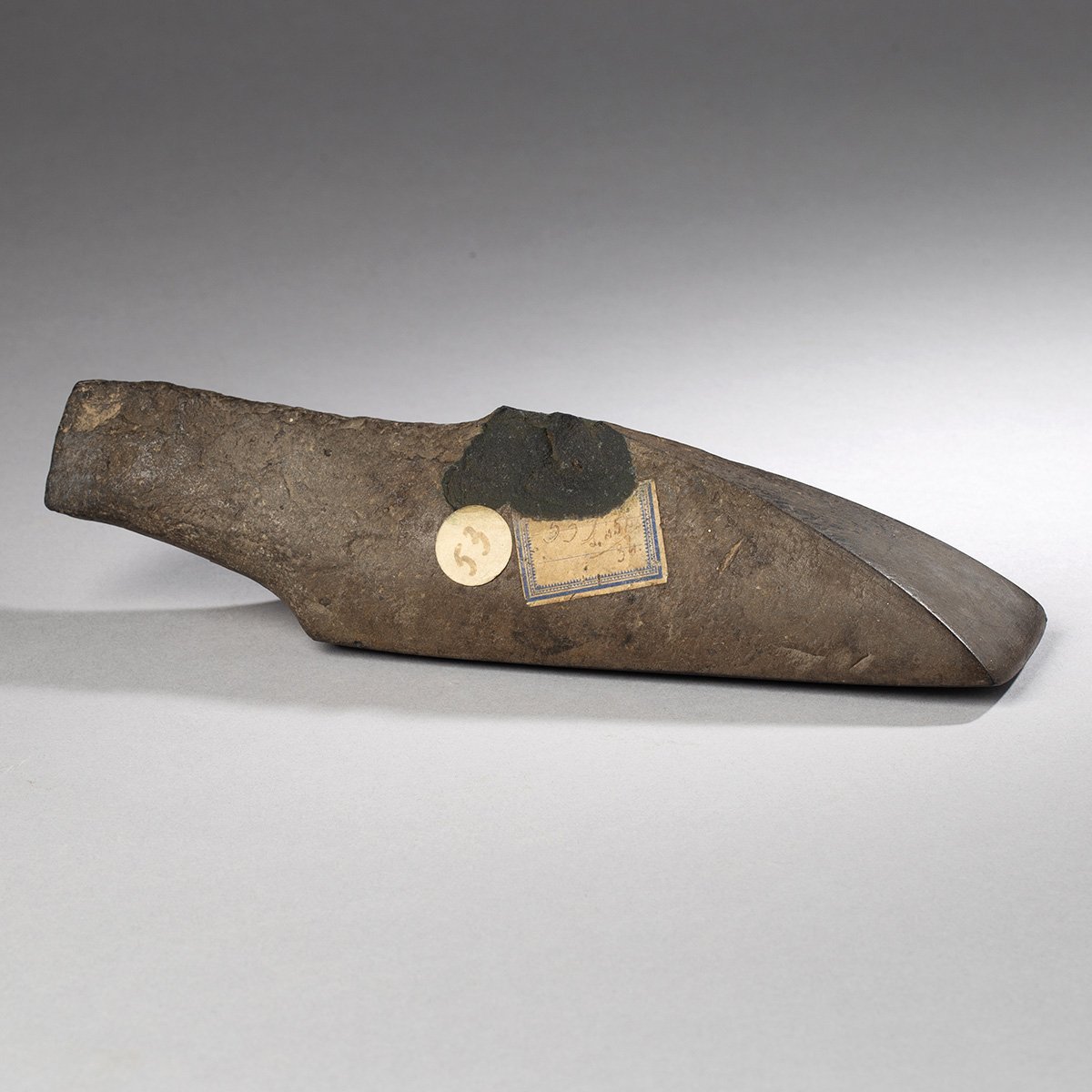 Image 4 of 7
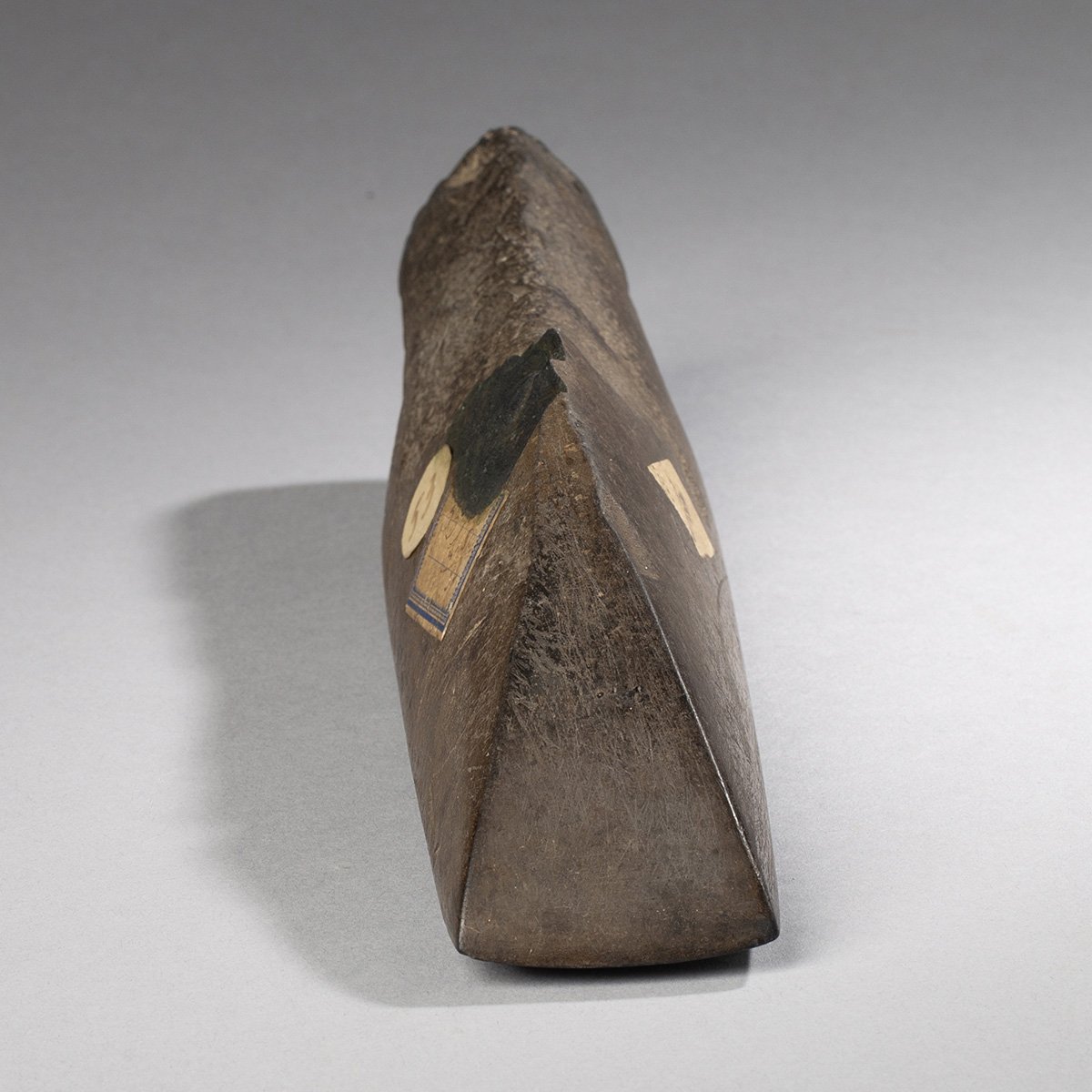 Image 5 of 7
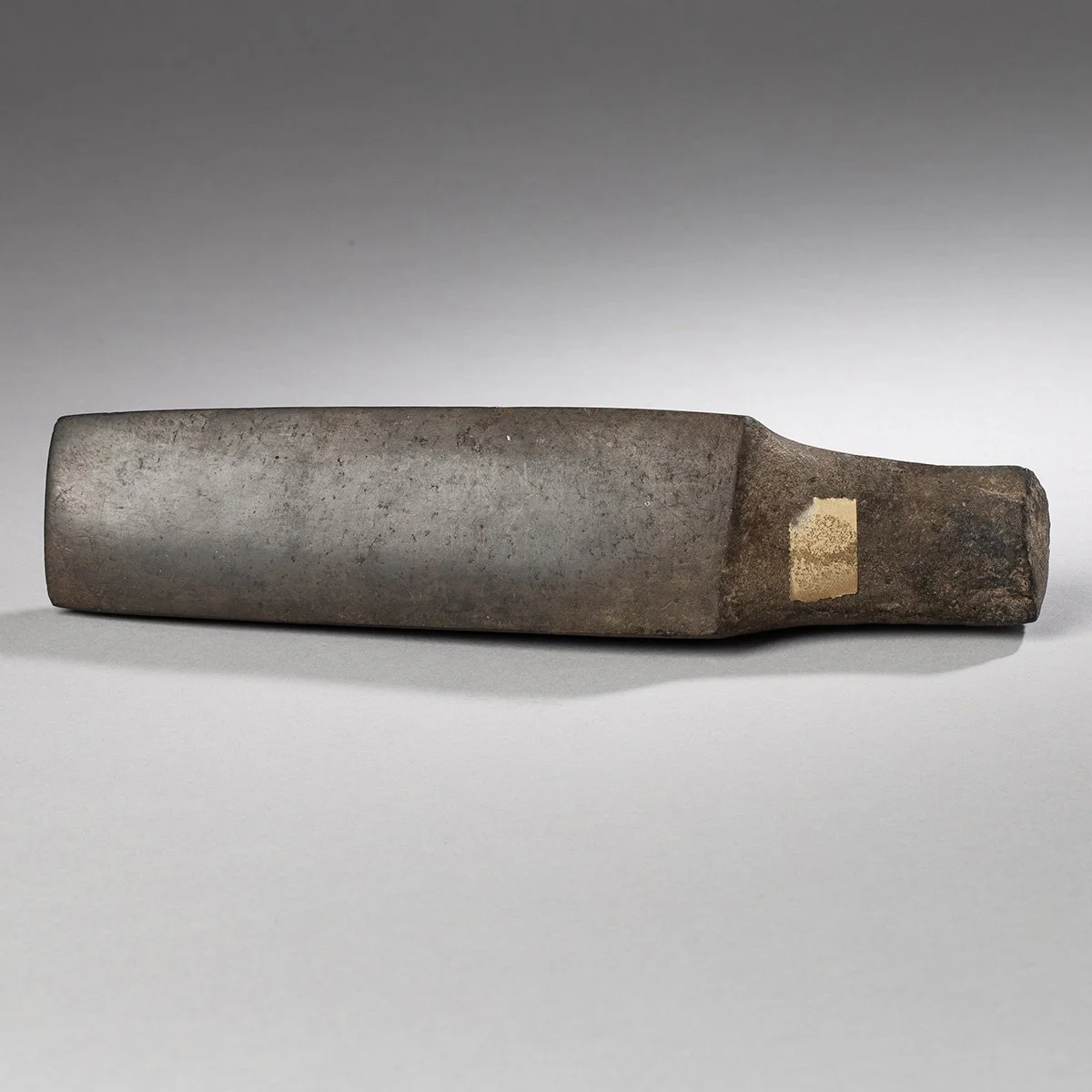 Image 6 of 7
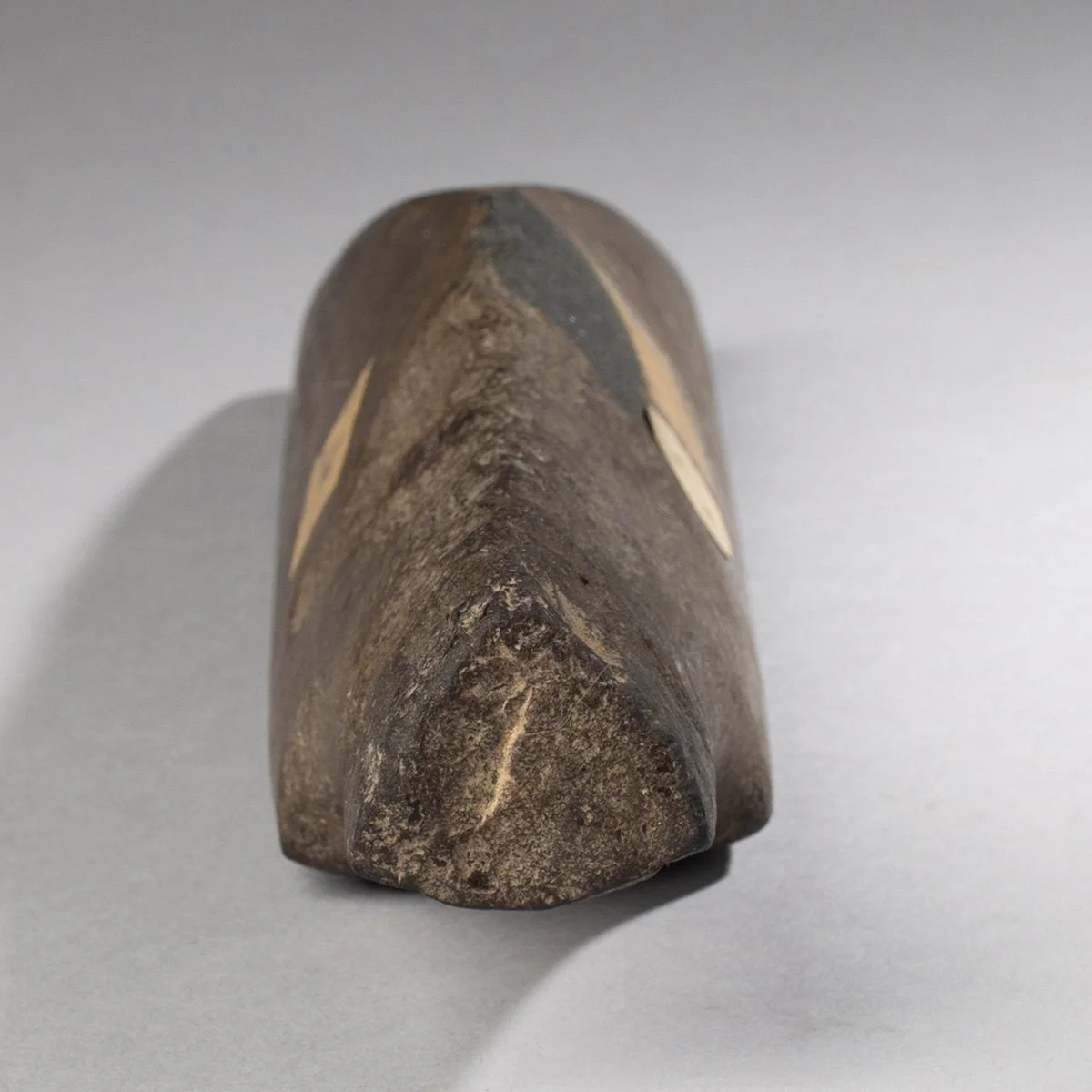 Image 7 of 7