Taino, Greater Antilles
Chican Ostionoid period, 1200 to 1500 AD
Manatee bone
Length 10 ½ in (26.7 cm)
Provenance: Alfred Carada, Miami, Florida
The handle is carved as a crouching zemi with a skeletal head, the eye sockets cut deep and round, the mouth open on a bared row of teeth. Disc ornaments sit at the ears, the arms fold across the chest with the hands meeting at the center, and a second pair of limbs is drawn up beneath in a squatting posture with the elbows and knees pressed outward. A drilled perforation passes through the body between the lower limbs, and the crown is worked with a dense pattern of fine incisions.
Below the figure the shaft flattens into a long tapering blade, incised with a line running down the center and crossing arcs toward the tip, the whole punctuated by small drilled points. The bone retains its natural grain and has darkened to a deep brown across the blade, with lighter tone held in the carving of the head. The tip and the working face show wear consistent with repeated use.
Doctor John Scott is Professor Emeritus of Art History at the University of Florida and a specialist in the art of the Caribbean and ancient Latin America. He is the author of The Art of the Taino from the Dominican Republic, published in 1985, and contributed to Before Cortés, published by the Metropolitan Museum of Art in 1970. He examined and authenticated this spatula in 2019, and his letter accompanies the piece.
We ship free anywhere in the world, fully insured, packed by hand.
Taino, Greater Antilles
Chican Ostionoid period, 1200 to 1500 AD
Manatee bone
Length 10 ½ in (26.7 cm)
Provenance: Alfred Carada, Miami, Florida
The handle is carved as a crouching zemi with a skeletal head, the eye sockets cut deep and round, the mouth open on a bared row of teeth. Disc ornaments sit at the ears, the arms fold across the chest with the hands meeting at the center, and a second pair of limbs is drawn up beneath in a squatting posture with the elbows and knees pressed outward. A drilled perforation passes through the body between the lower limbs, and the crown is worked with a dense pattern of fine incisions.
Below the figure the shaft flattens into a long tapering blade, incised with a line running down the center and crossing arcs toward the tip, the whole punctuated by small drilled points. The bone retains its natural grain and has darkened to a deep brown across the blade, with lighter tone held in the carving of the head. The tip and the working face show wear consistent with repeated use.
Doctor John Scott is Professor Emeritus of Art History at the University of Florida and a specialist in the art of the Caribbean and ancient Latin America. He is the author of The Art of the Taino from the Dominican Republic, published in 1985, and contributed to Before Cortés, published by the Metropolitan Museum of Art in 1970. He examined and authenticated this spatula in 2019, and his letter accompanies the piece.
We ship free anywhere in the world, fully insured, packed by hand.


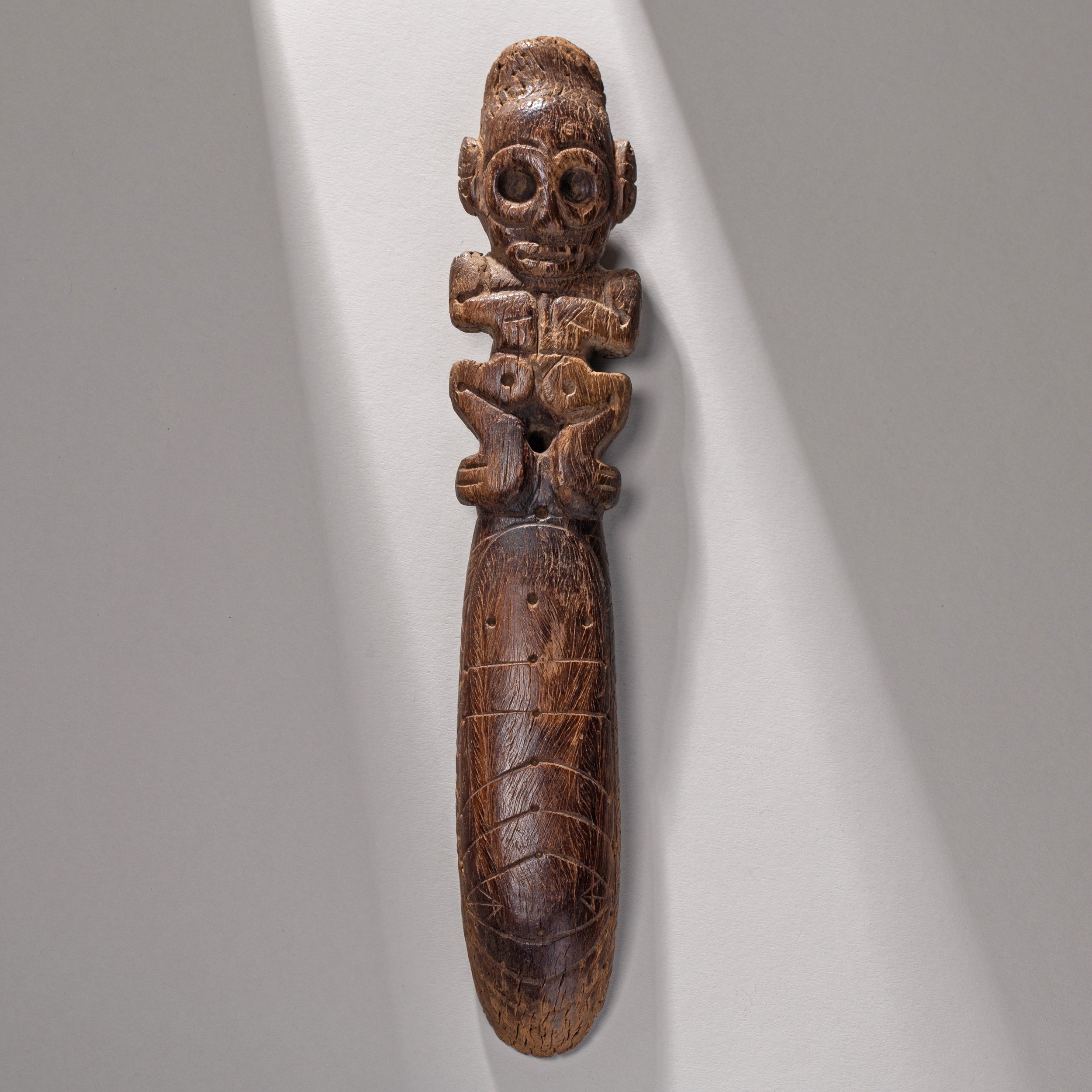 Image 1 of 6
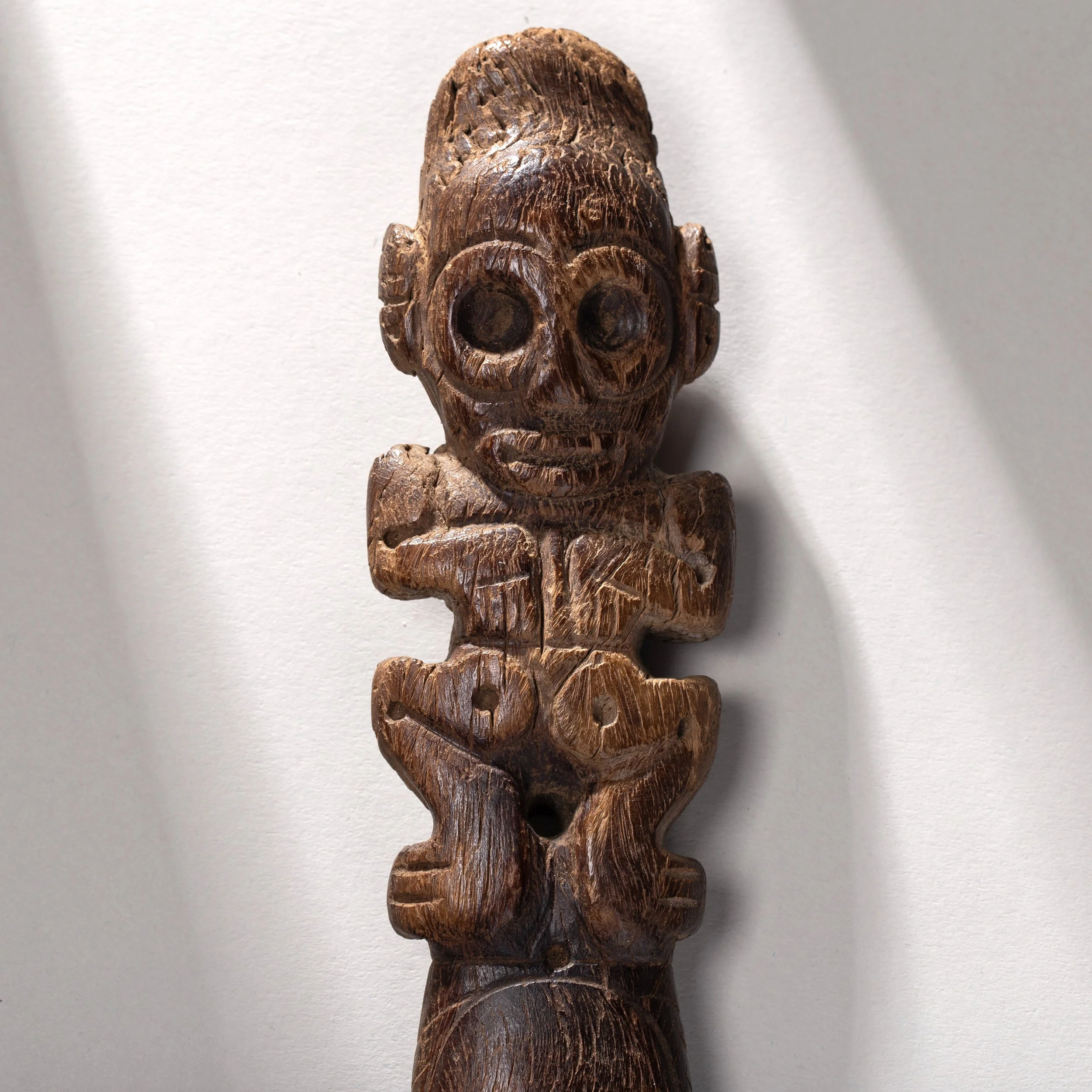 Image 2 of 6
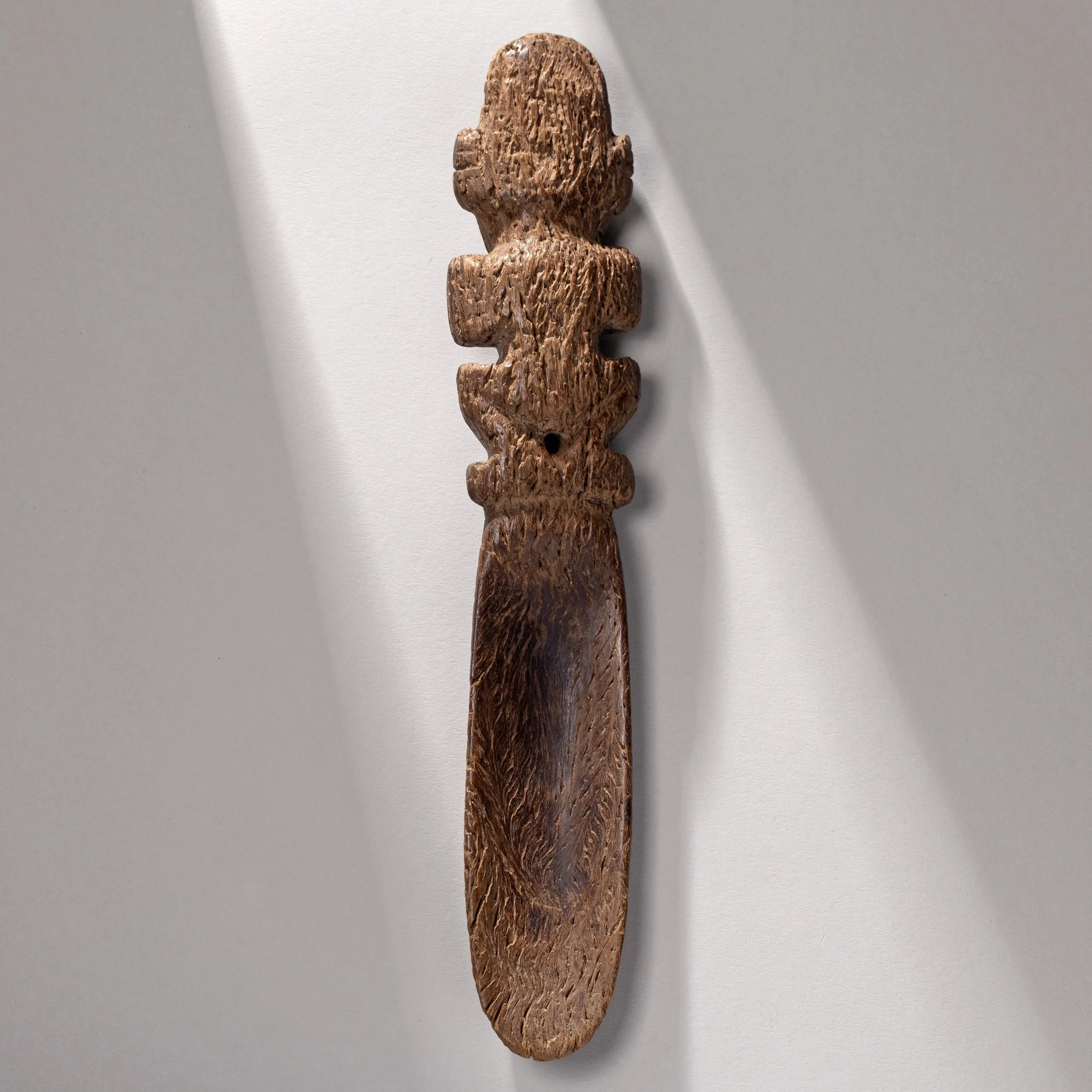 Image 3 of 6
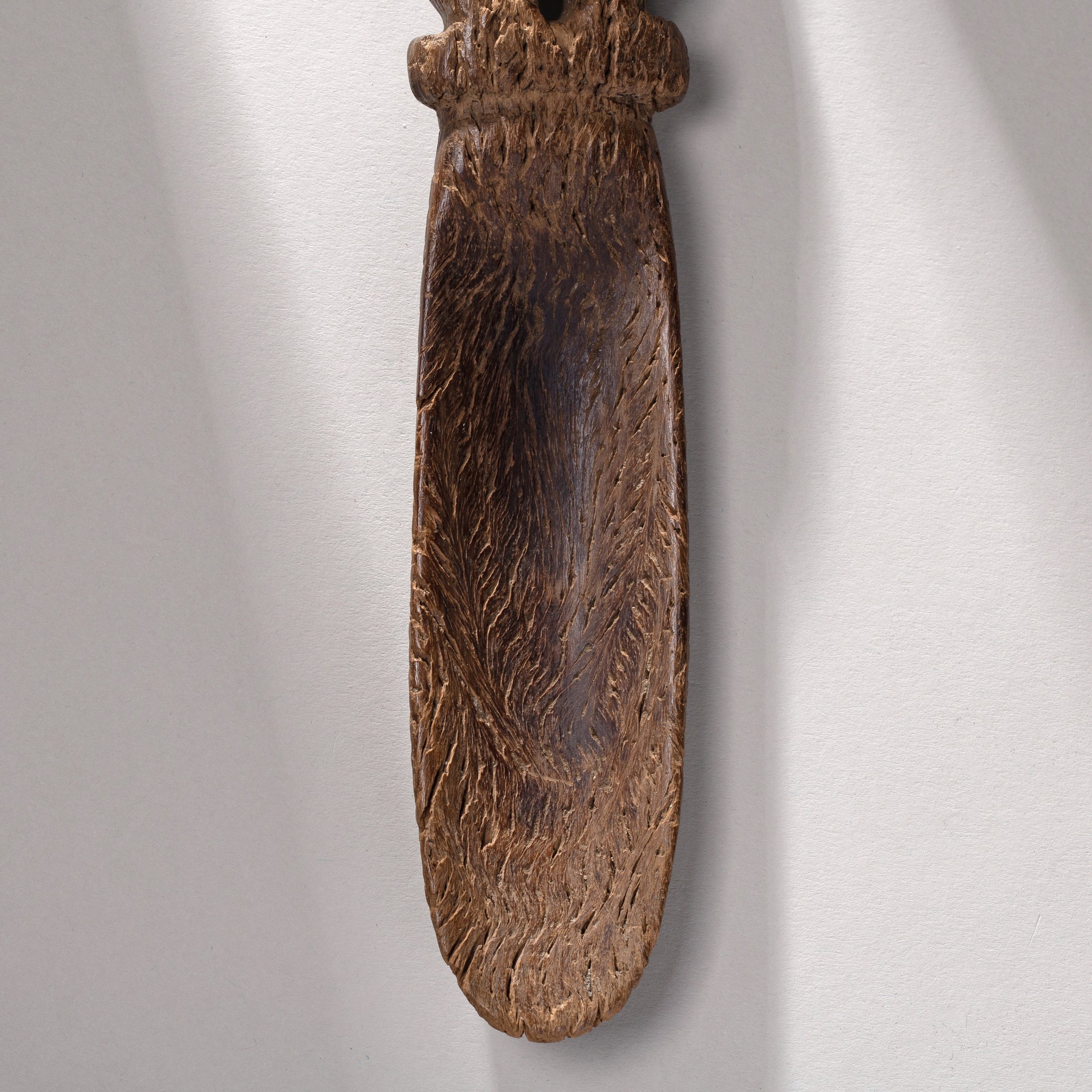 Image 4 of 6
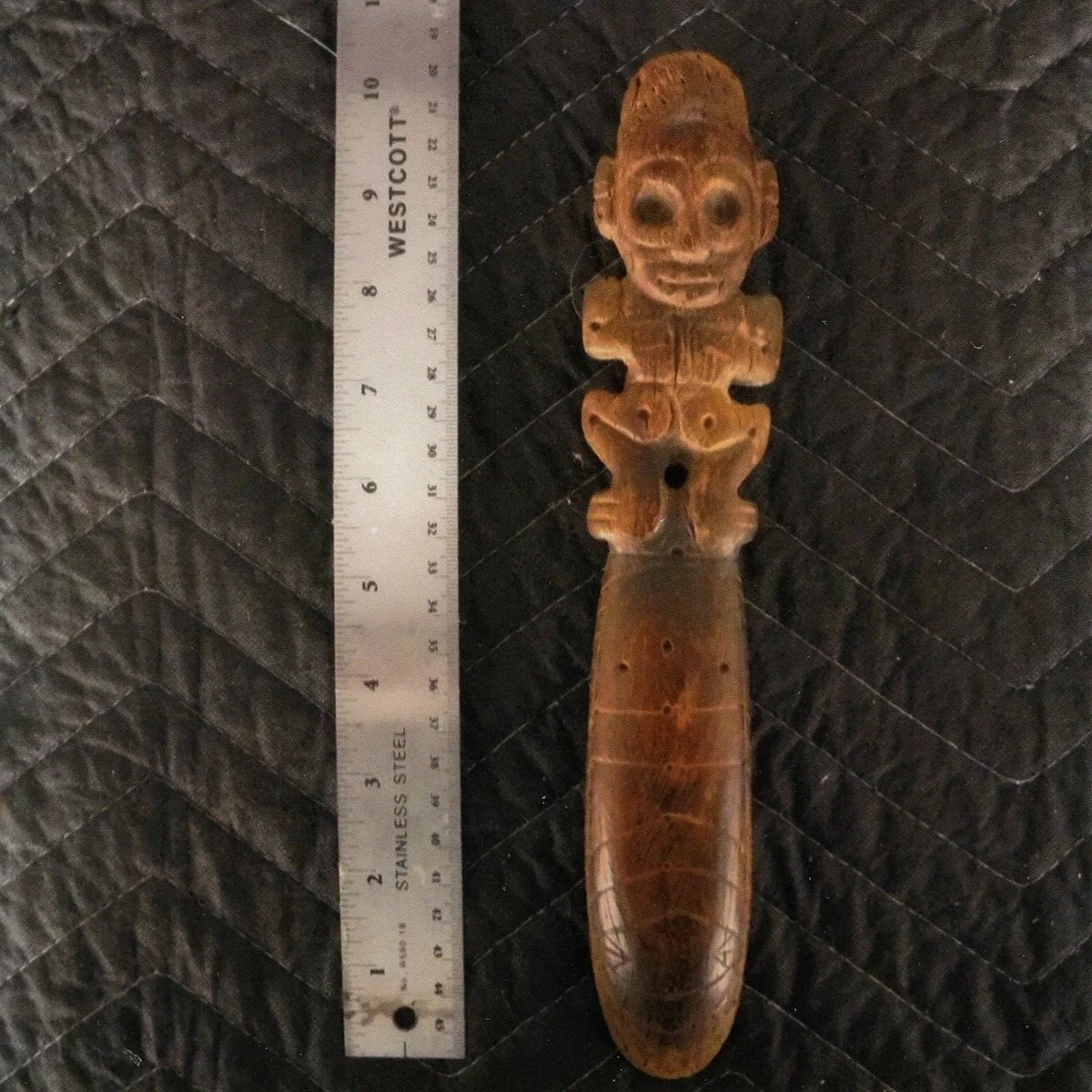 Image 5 of 6
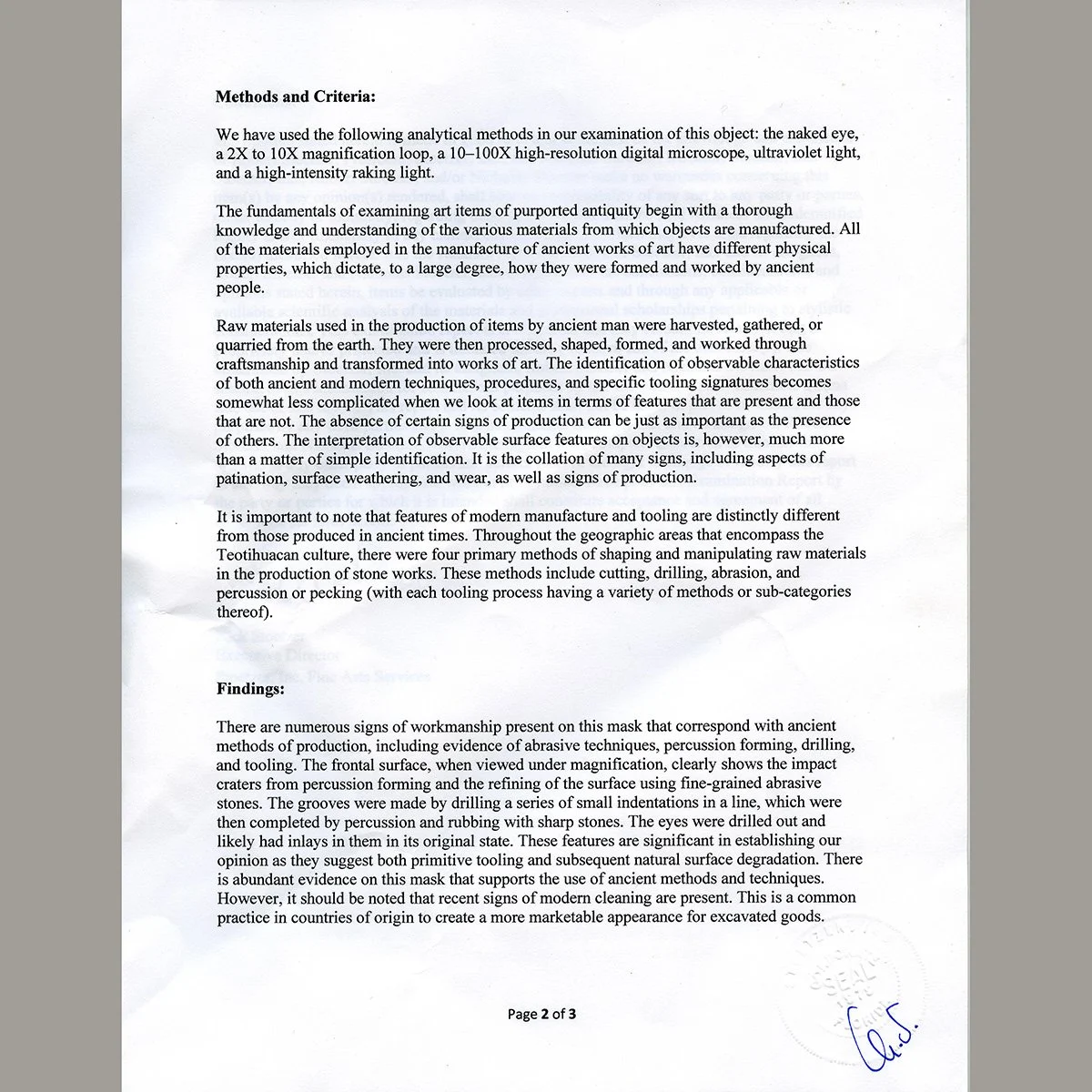 Image 6 of 6