Huon Gulf, eastern Papua New Guinea
19th century
Wood
Height: 4¾ in (12.1 cm); Length: 19⅝ in (49.8 cm)
Provenance: André Fourquet, Paris; old label present on interior
Bowls from the Tami Islands of the Huon Gulf were among the most widely traded objects in the western Pacific, distributed through extensive inter-island exchange networks that connected coastal and island communities across a broad region. Their production was a specialist activity concentrated on the Tami Islands, and finished bowls moved outward as prestige objects, their value tied to the quality of the carving and the reputation of their makers. Nineteenth-century examples with intact surface and figurative carving represent the tradition before the disruption of production by missionary contact in the late 1800s.
The exterior of the bowl carries a carved figurative panel at the center, depicting a human figure in the characteristic Tami style — frontal, symmetrical, with clearly articulated limbs. The bowl form is elongated and shallow, the rim clean and the interior smooth, consistent with use as a food vessel in ceremonial contexts. The Paris provenance through André Fourquet and the presence of an old interior label together suggest early entry into a European collection.
We ship free anywhere in the world, fully insured, packed by hand.
Huon Gulf, eastern Papua New Guinea
19th century
Wood
Height: 4¾ in (12.1 cm); Length: 19⅝ in (49.8 cm)
Provenance: André Fourquet, Paris; old label present on interior
Bowls from the Tami Islands of the Huon Gulf were among the most widely traded objects in the western Pacific, distributed through extensive inter-island exchange networks that connected coastal and island communities across a broad region. Their production was a specialist activity concentrated on the Tami Islands, and finished bowls moved outward as prestige objects, their value tied to the quality of the carving and the reputation of their makers. Nineteenth-century examples with intact surface and figurative carving represent the tradition before the disruption of production by missionary contact in the late 1800s.
The exterior of the bowl carries a carved figurative panel at the center, depicting a human figure in the characteristic Tami style — frontal, symmetrical, with clearly articulated limbs. The bowl form is elongated and shallow, the rim clean and the interior smooth, consistent with use as a food vessel in ceremonial contexts. The Paris provenance through André Fourquet and the presence of an old interior label together suggest early entry into a European collection.
We ship free anywhere in the world, fully insured, packed by hand.


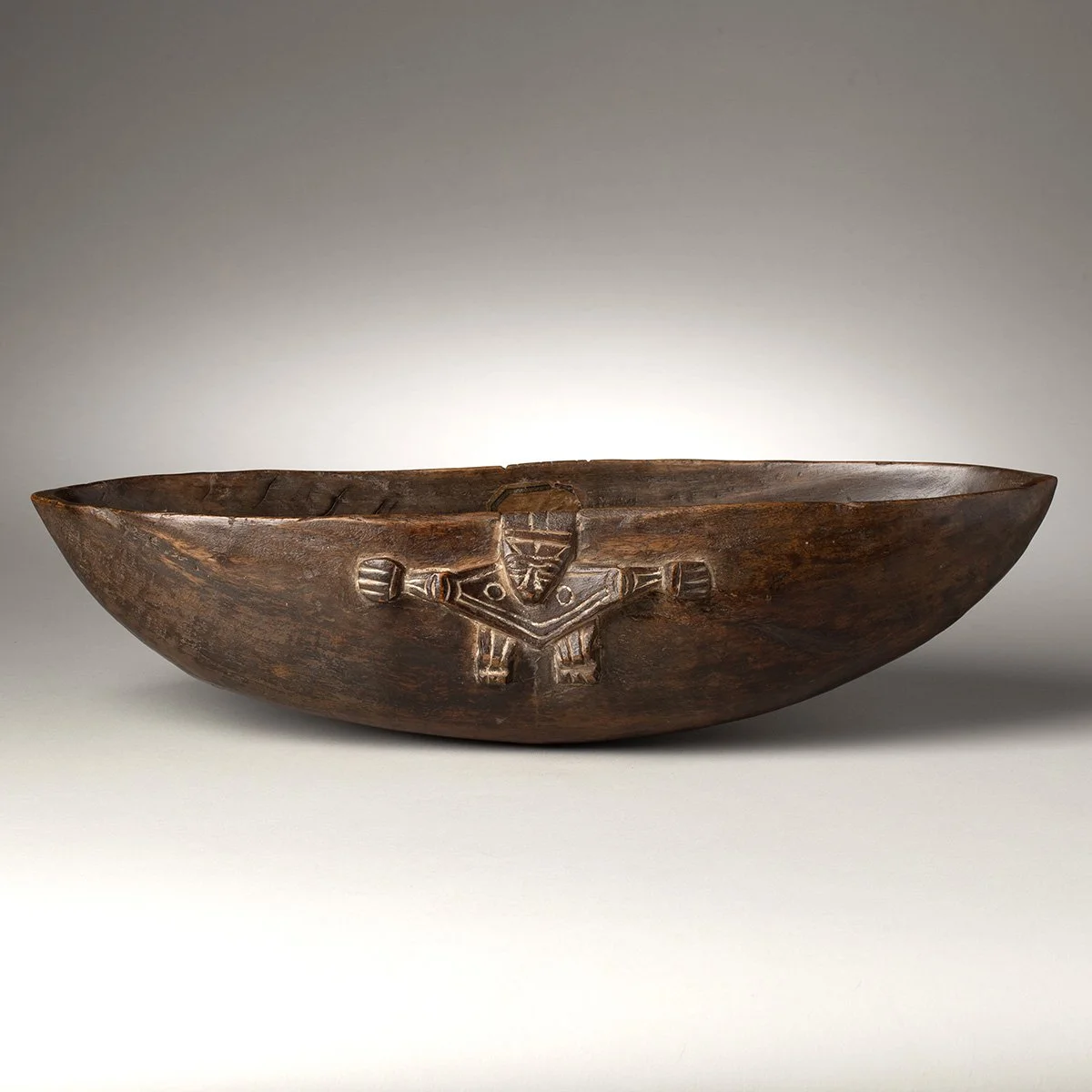 Image 1 of 9
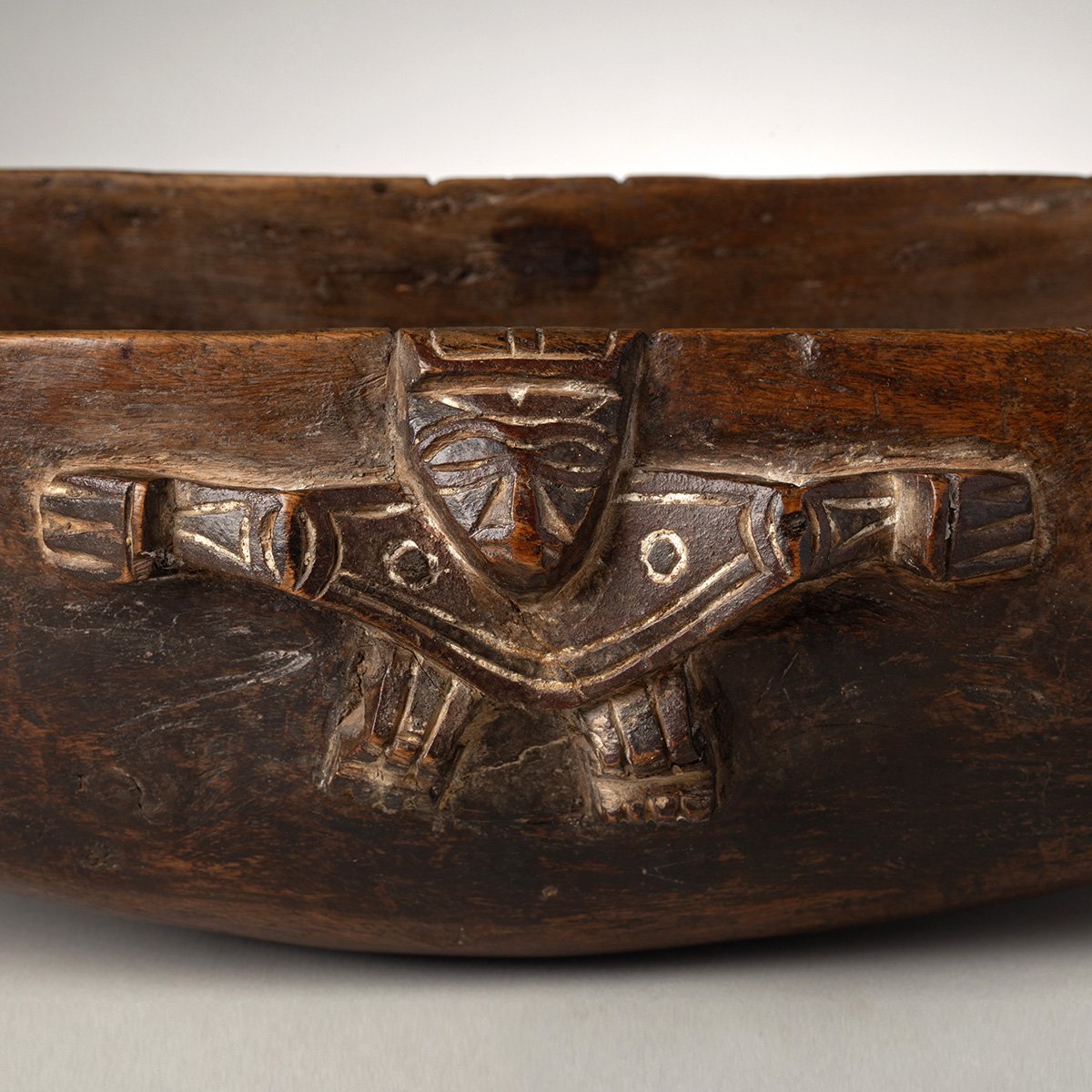 Image 2 of 9
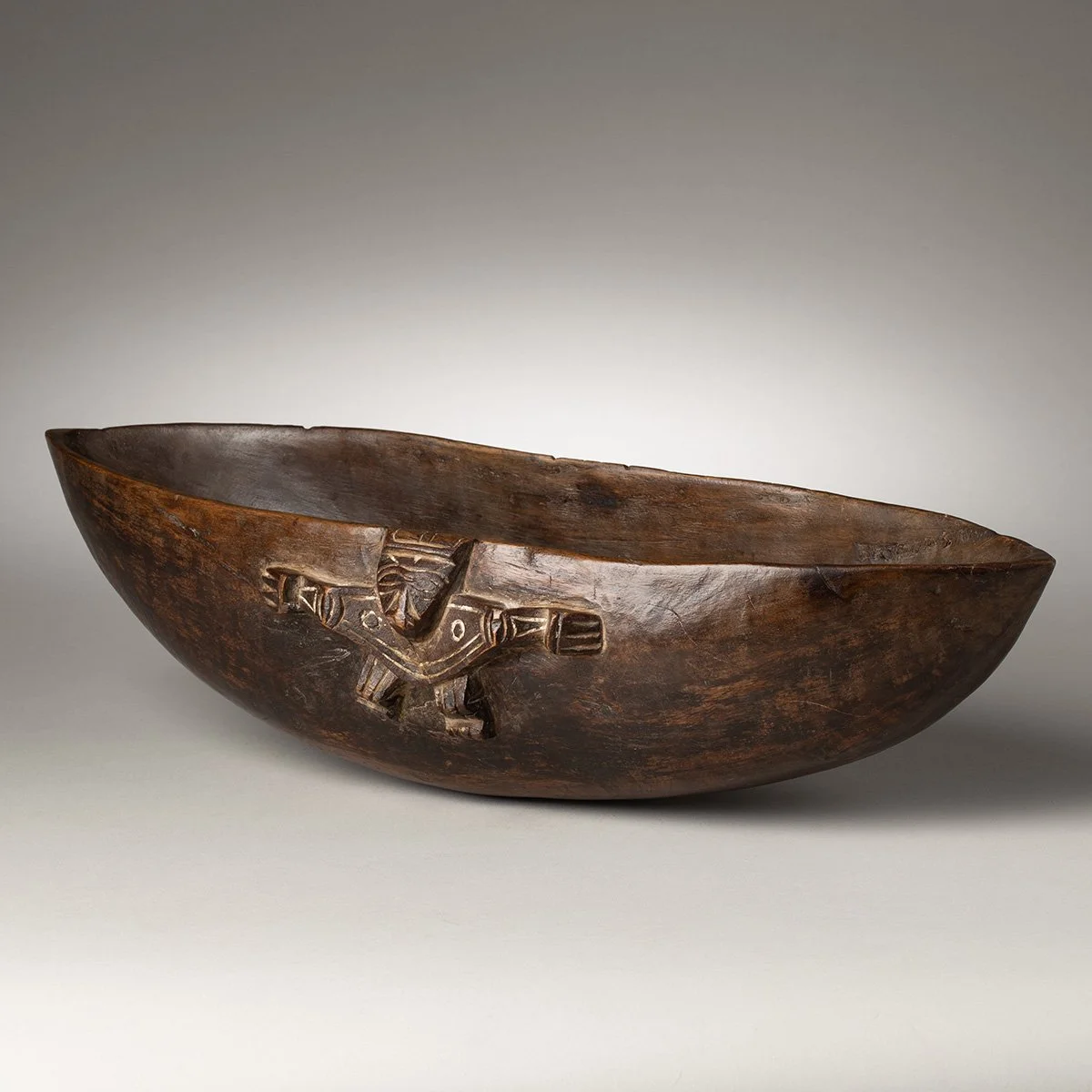 Image 3 of 9
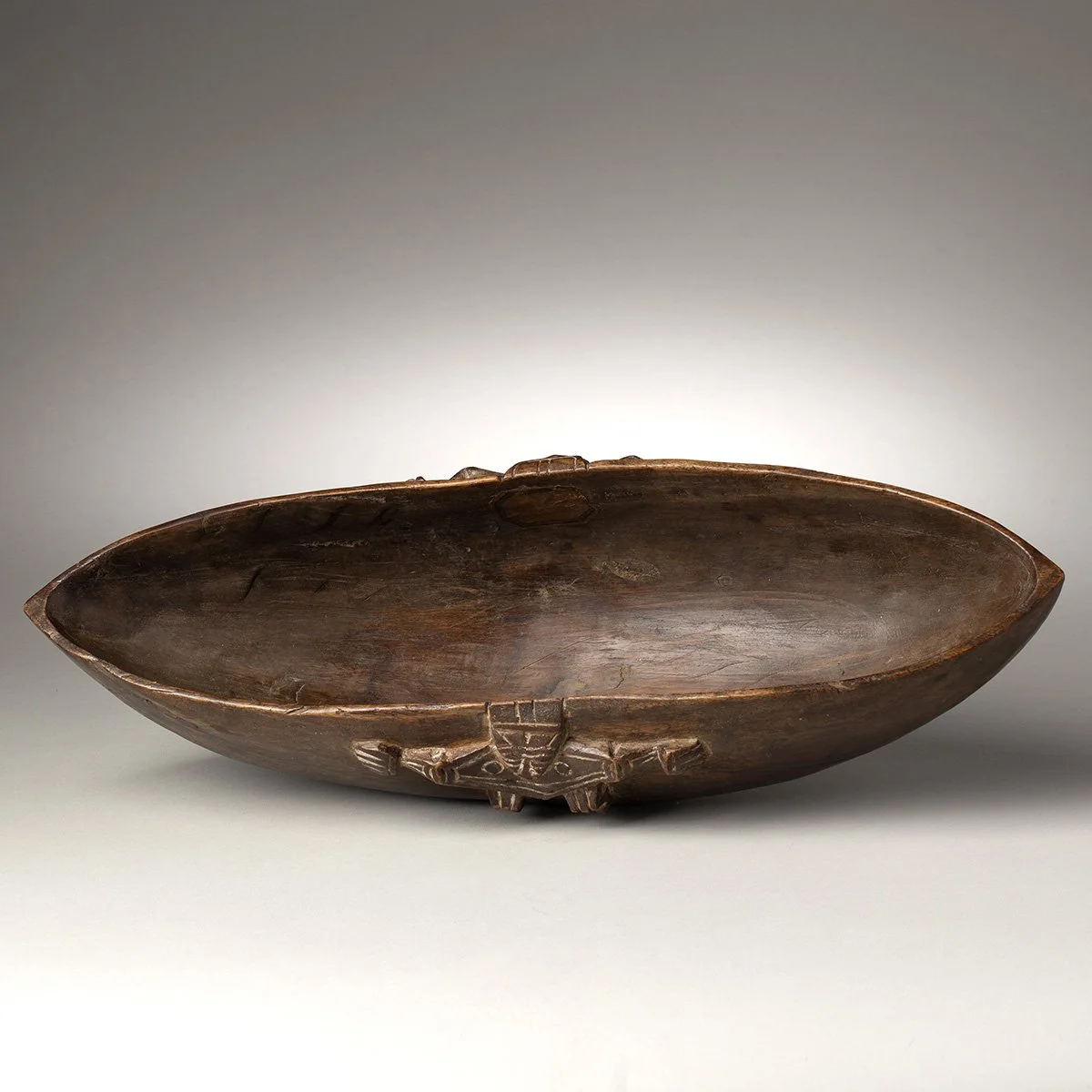 Image 4 of 9
 Image 5 of 9
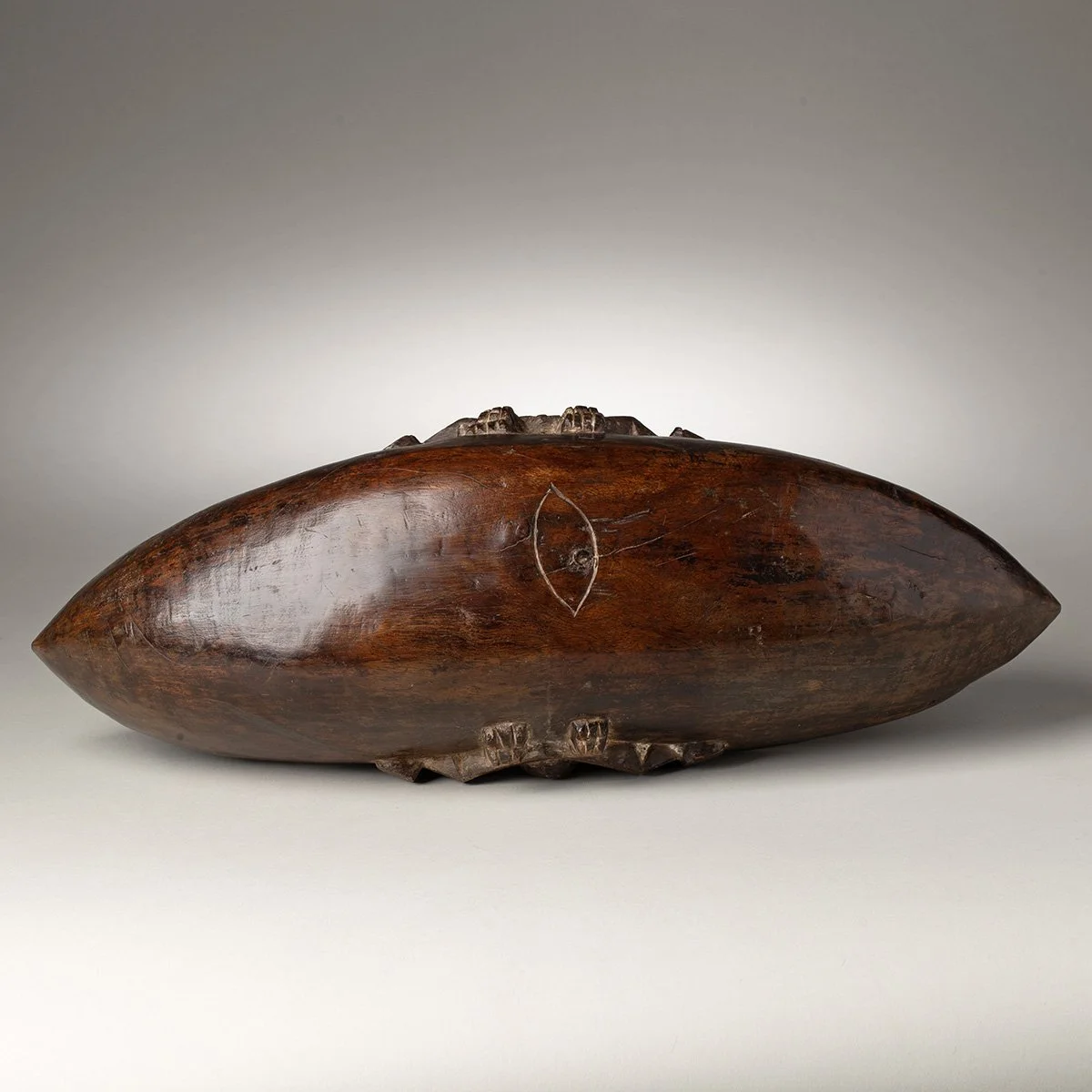 Image 6 of 9
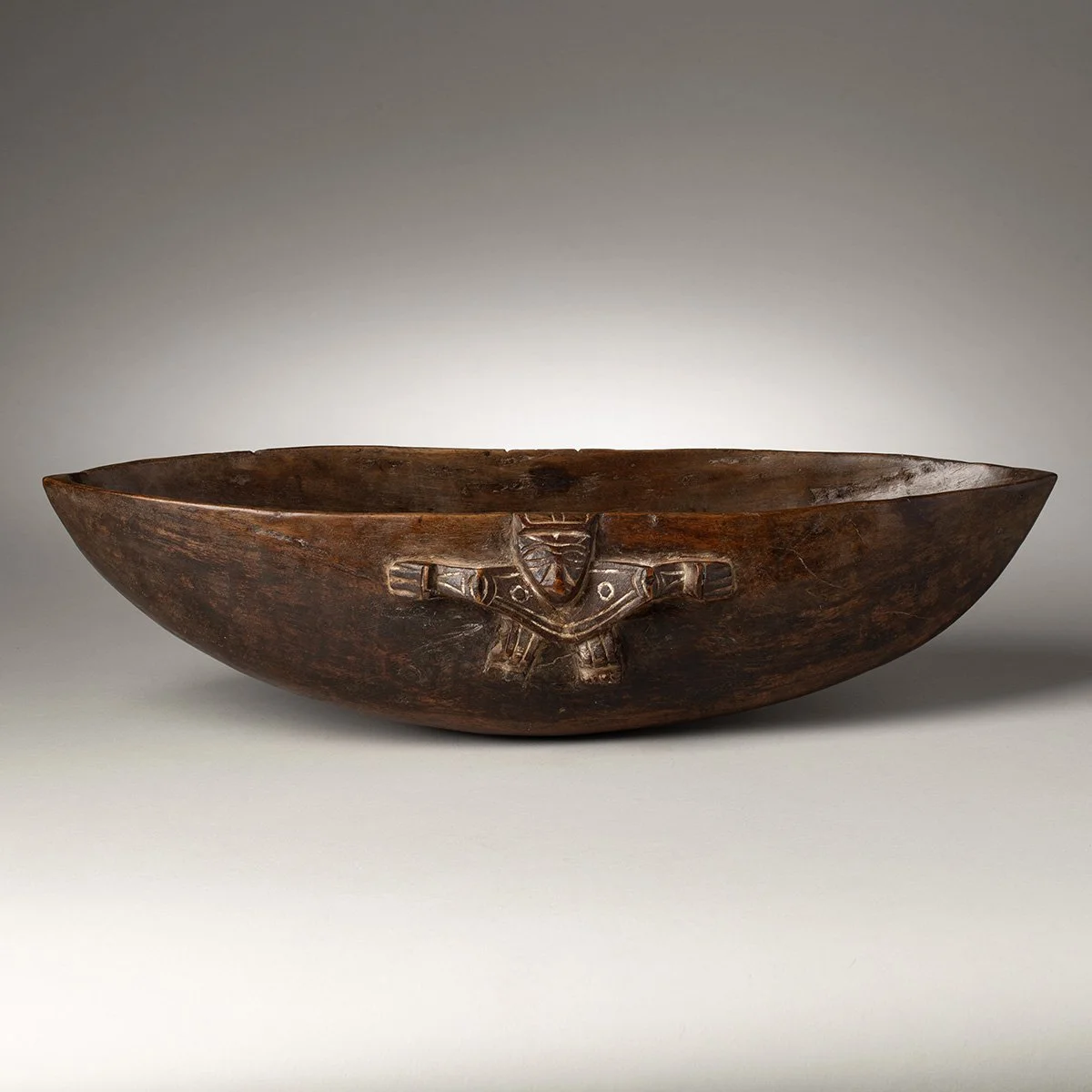 Image 7 of 9
 Image 8 of 9
 Image 9 of 9