

 Image 1 of 2
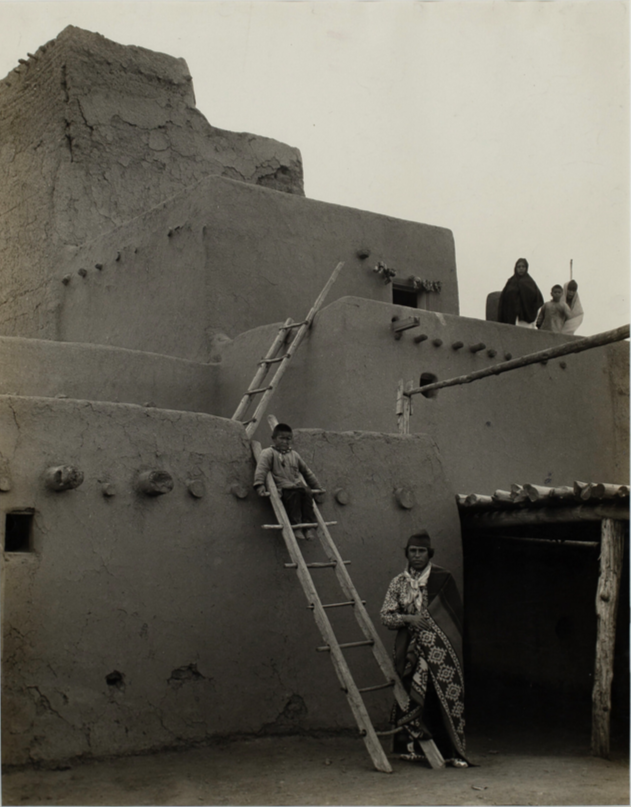 Image 2 of 2
United States — New Mexico
1940s
Gelatin silver print, archival frame
Frame: 21 × 25 in (53.3 × 63.5 cm) | Image: 15 × 19 in (38.1 × 48.3 cm)
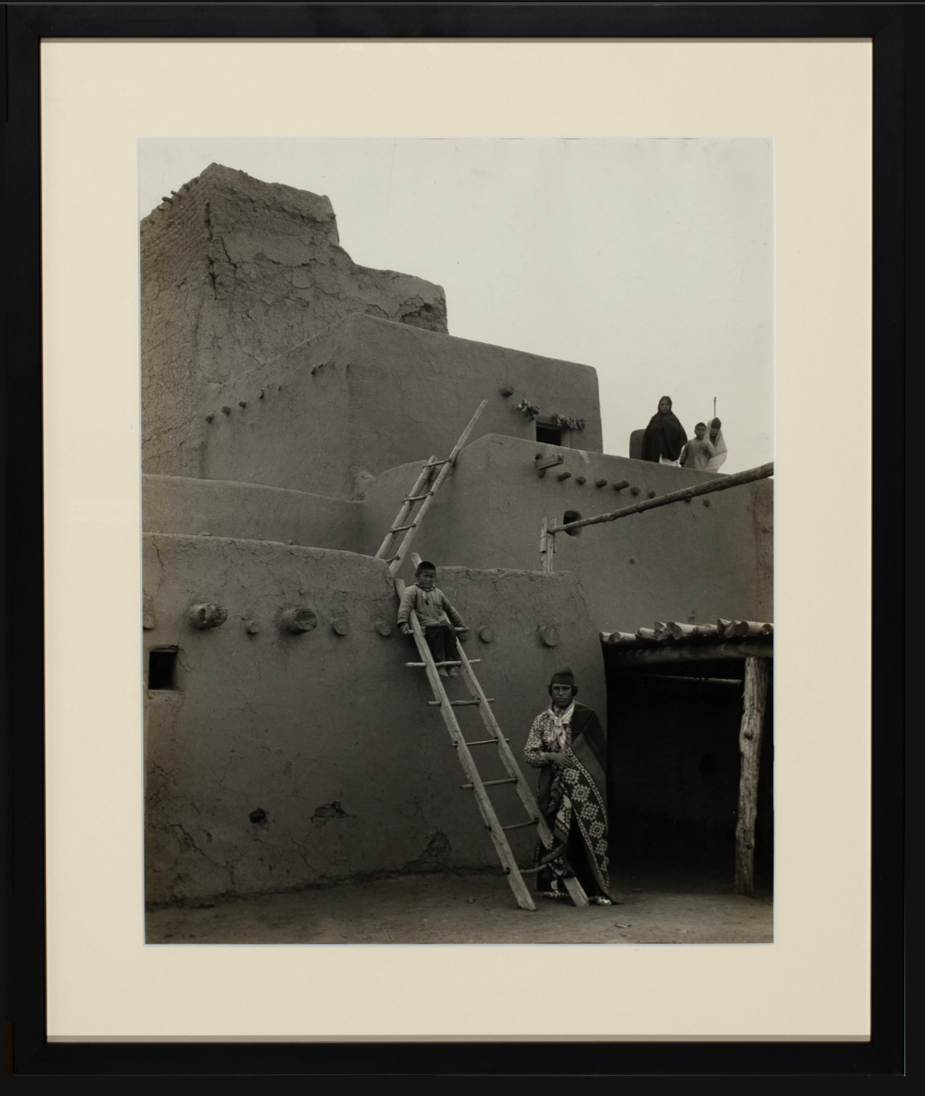
Taos Pueblo is one of the oldest continuously inhabited communities in North America, with multi-story adobe construction dating back over a thousand years. This photograph focuses on the stepped terracing and thick earthen walls of the North Pueblo, with a wooden ladder rising against the façade and a single figure standing at its base. The image belongs to a mid-twentieth century documentary tradition that concentrated sustained attention on the architecture and community life of the Southwest's Pueblo peoples.
Though the photographer remains unattributed, the compositional approach is consistent with photographers such as Laura Gilpin and Ernest Knee, who worked Taos extensively during this period. The 1940s represented an active decade for this kind of documentation, as the broader American documentary movement turned attention toward indigenous communities of the Southwest. The figures' placement at the base of the ladder gives the architecture its scale without reducing the image to portraiture.
We ship free anywhere in the world, fully insured, packed by hand.
United States — New Mexico
1940s
Gelatin silver print, archival frame
Frame: 21 × 25 in (53.3 × 63.5 cm) | Image: 15 × 19 in (38.1 × 48.3 cm)
Taos Pueblo is one of the oldest continuously inhabited communities in North America, with multi-story adobe construction dating back over a thousand years. This photograph focuses on the stepped terracing and thick earthen walls of the North Pueblo, with a wooden ladder rising against the façade and a single figure standing at its base. The image belongs to a mid-twentieth century documentary tradition that concentrated sustained attention on the architecture and community life of the Southwest's Pueblo peoples.
Though the photographer remains unattributed, the compositional approach is consistent with photographers such as Laura Gilpin and Ernest Knee, who worked Taos extensively during this period. The 1940s represented an active decade for this kind of documentation, as the broader American documentary movement turned attention toward indigenous communities of the Southwest. The figures' placement at the base of the ladder gives the architecture its scale without reducing the image to portraiture.
We ship free anywhere in the world, fully insured, packed by hand.