Teotihuacan culture, Mexico
AD 600 to 900
Green fluorite
Height 4 3/4" (12.1 cm)
Provenance: Frida Kahlo, Mexico City; Ron Messick, Santa Fe, New Mexico, 1994; private collection, Connecticut
Root marks and environmental deposits consistent with excavated condition.
References: Berrin and Pasztory, Teotihuacan: Art from the City of the Gods, Fine Arts Museums of San Francisco, 1993; Carballo, Hirth, and Arroyo, Teotihuacan: The World Beyond the City, Dumbarton Oaks, 2020; Headrick, The Teotihuacan Trinity, University of Texas Press, 2007
Three-dimensional stone masks depicting a conventionalized human face are among the most studied objects in Teotihuacan's sculptural tradition, their geometrically rendered horizontal brows, triangular noses, and oval eyes and mouths functioning as standardized symbolic types rather than individual portraits. The perforations at the sides on the reverse indicate the mask was intended to be attached to another object; the absence of eye and mouth perforations and the weight of the stone suggest it was not worn by living people but was instead affixed to a perishable sculpture, deity bundle, or mortuary assemblage. Some scholars have proposed that these stony faces functioned as metaphors for maize seeds, connecting them to the Mesoamerican maize deity and the cycle of planting and regeneration.
This mask is carved from green fluorite, a material less commonly encountered in the Teotihuacan lapidary corpus than the more frequently used listwanite or onyx, giving it a distinct position within the known group of Teotihuacan stone masks. The surface retains root marks and substantial environmental deposits consistent with in-ground deposition over an extended period. The carving follows the classical Teotihuacan canon with confident execution across the facial planes.
The provenance of this mask connects it directly to Frida Kahlo, the Mexican painter who assembled one of the most significant private collections of Pre-Columbian objects in 20th century Mexico, housed at her home La Casa Azul in Coyoacán. Kahlo's collection reflected both her personal identification with indigenous Mexican culture and her broader engagement with Mesoamerican material as a source of aesthetic and spiritual reference in her own work. The subsequent holding by Ron Messick of Santa Fe and the Connecticut private collection provide a documented chain of ownership from Kahlo's collection to the present.
CIRAM authentication document available
We ship free anywhere in the world, fully insured, packed by hand.
Teotihuacan culture, Mexico
AD 600 to 900
Green fluorite
Height 4 3/4" (12.1 cm)
Provenance: Frida Kahlo, Mexico City; Ron Messick, Santa Fe, New Mexico, 1994; private collection, Connecticut
Root marks and environmental deposits consistent with excavated condition.
References: Berrin and Pasztory, Teotihuacan: Art from the City of the Gods, Fine Arts Museums of San Francisco, 1993; Carballo, Hirth, and Arroyo, Teotihuacan: The World Beyond the City, Dumbarton Oaks, 2020; Headrick, The Teotihuacan Trinity, University of Texas Press, 2007
Three-dimensional stone masks depicting a conventionalized human face are among the most studied objects in Teotihuacan's sculptural tradition, their geometrically rendered horizontal brows, triangular noses, and oval eyes and mouths functioning as standardized symbolic types rather than individual portraits. The perforations at the sides on the reverse indicate the mask was intended to be attached to another object; the absence of eye and mouth perforations and the weight of the stone suggest it was not worn by living people but was instead affixed to a perishable sculpture, deity bundle, or mortuary assemblage. Some scholars have proposed that these stony faces functioned as metaphors for maize seeds, connecting them to the Mesoamerican maize deity and the cycle of planting and regeneration.
This mask is carved from green fluorite, a material less commonly encountered in the Teotihuacan lapidary corpus than the more frequently used listwanite or onyx, giving it a distinct position within the known group of Teotihuacan stone masks. The surface retains root marks and substantial environmental deposits consistent with in-ground deposition over an extended period. The carving follows the classical Teotihuacan canon with confident execution across the facial planes.
The provenance of this mask connects it directly to Frida Kahlo, the Mexican painter who assembled one of the most significant private collections of Pre-Columbian objects in 20th century Mexico, housed at her home La Casa Azul in Coyoacán. Kahlo's collection reflected both her personal identification with indigenous Mexican culture and her broader engagement with Mesoamerican material as a source of aesthetic and spiritual reference in her own work. The subsequent holding by Ron Messick of Santa Fe and the Connecticut private collection provide a documented chain of ownership from Kahlo's collection to the present.
CIRAM authentication document available
We ship free anywhere in the world, fully insured, packed by hand.


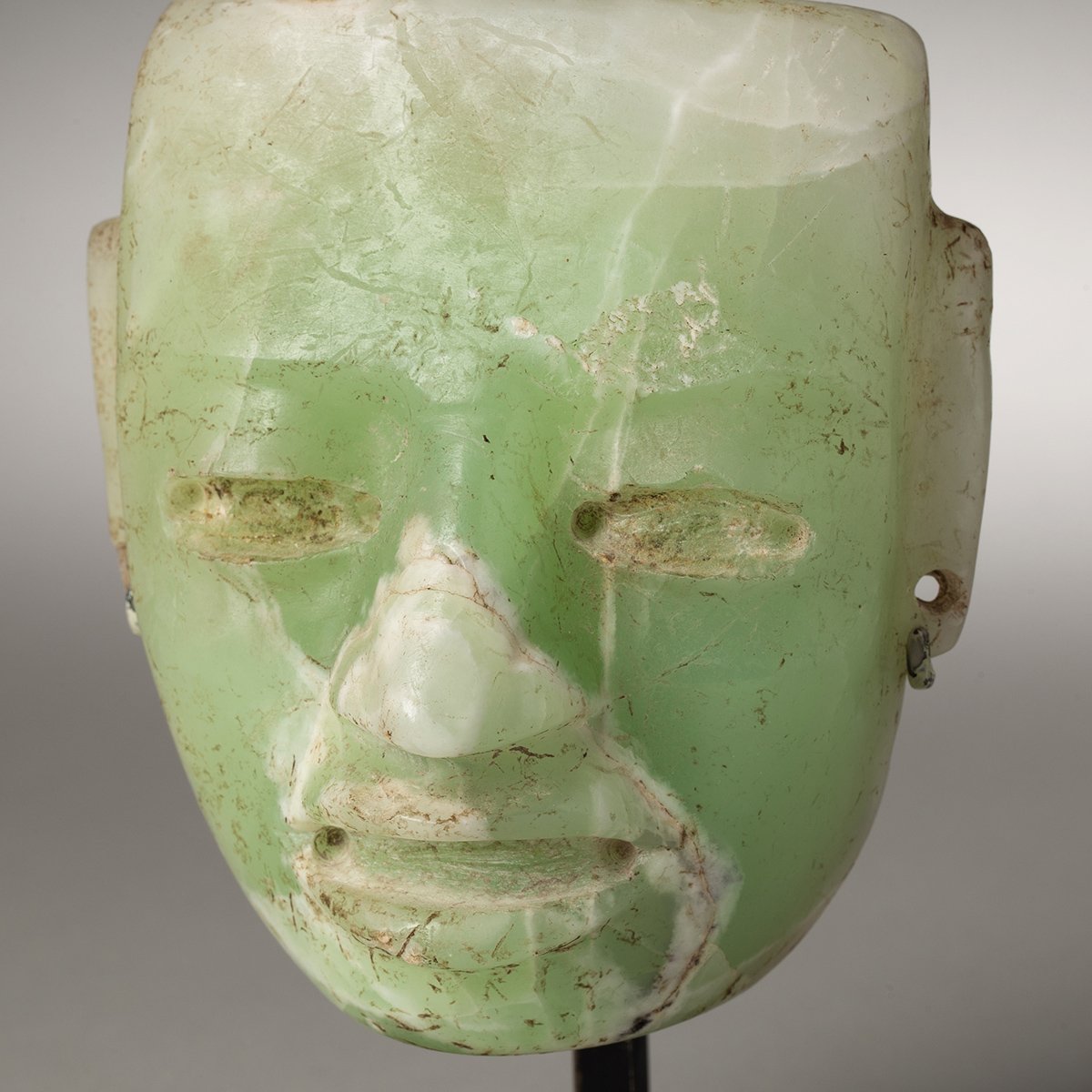 Image 1 of 6
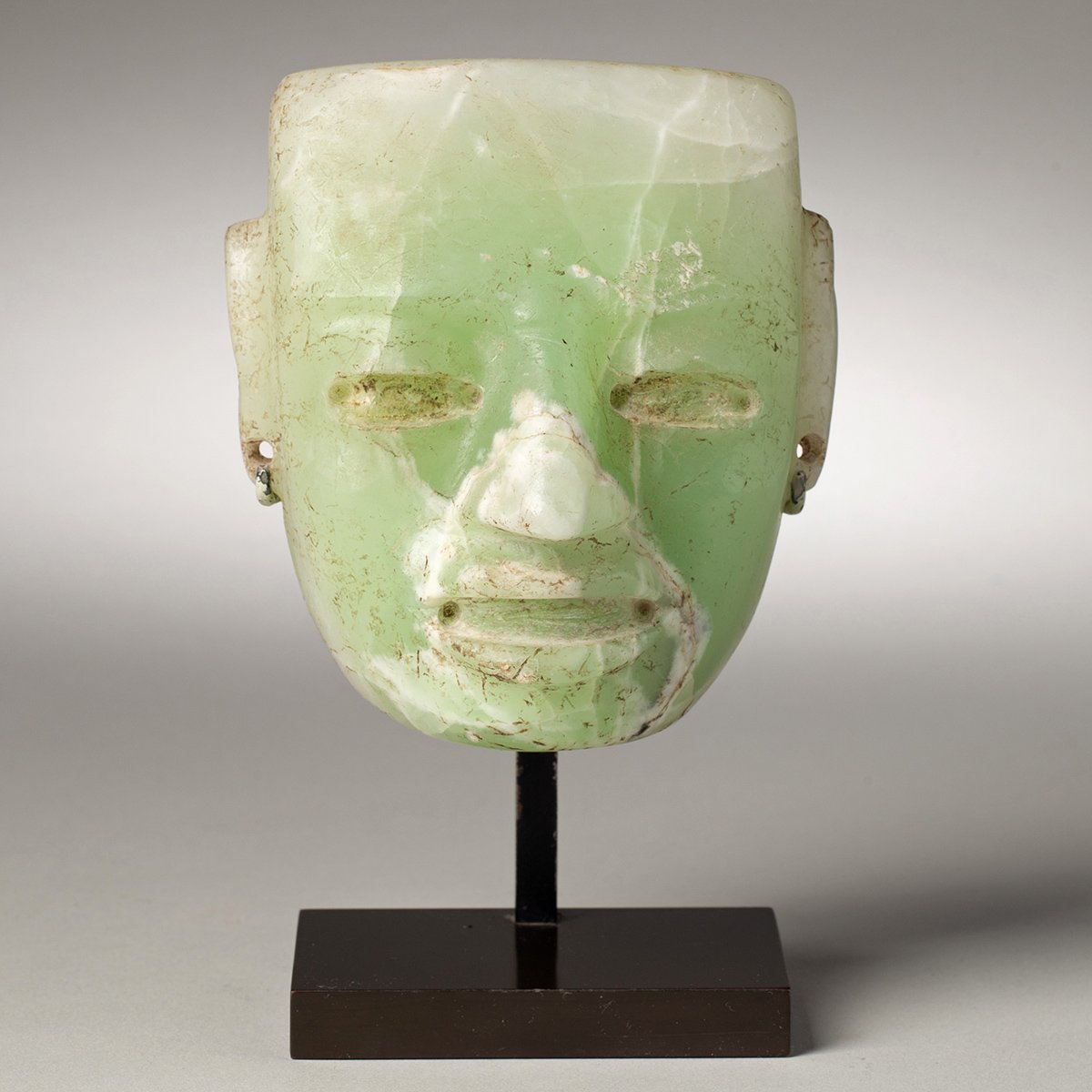 Image 2 of 6
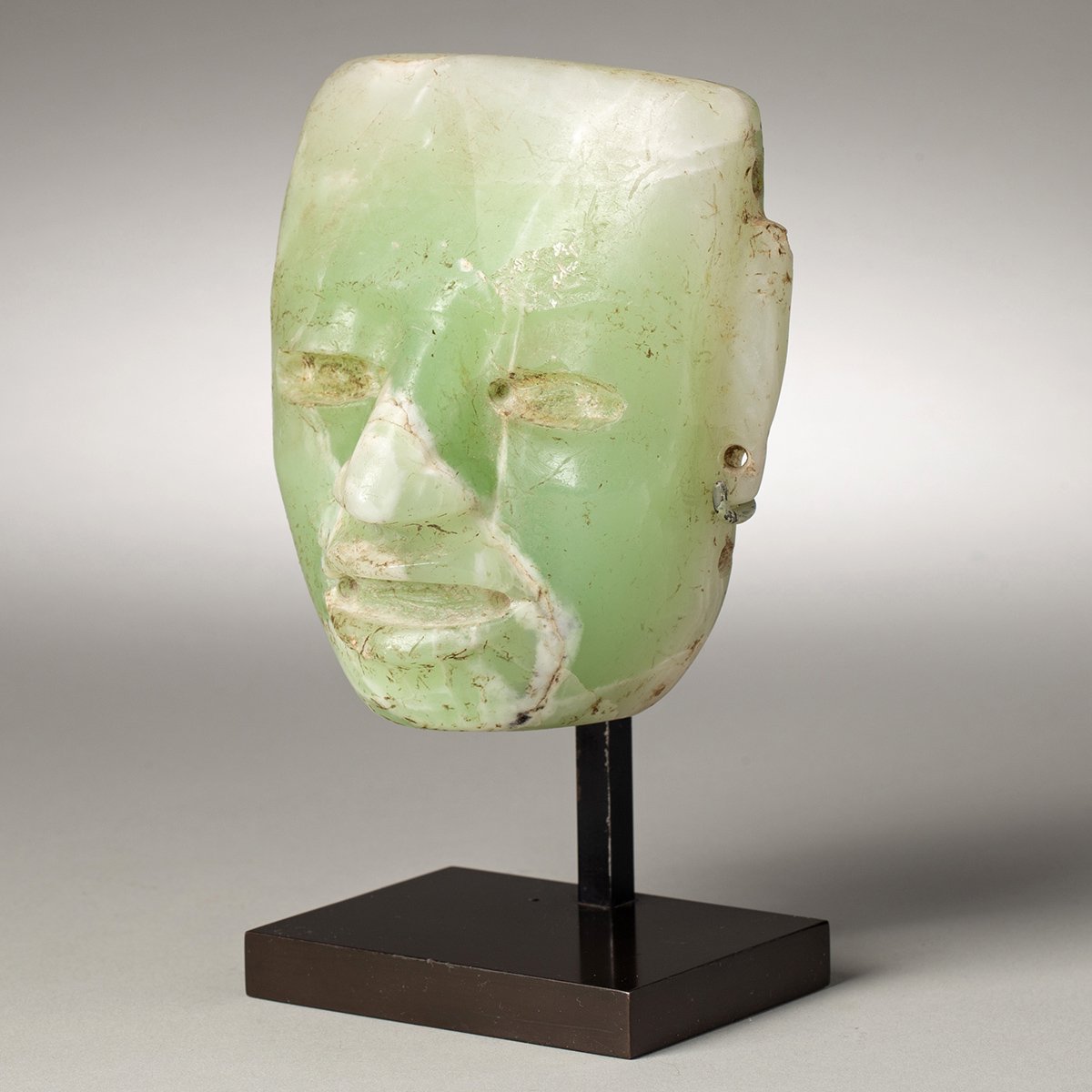 Image 3 of 6
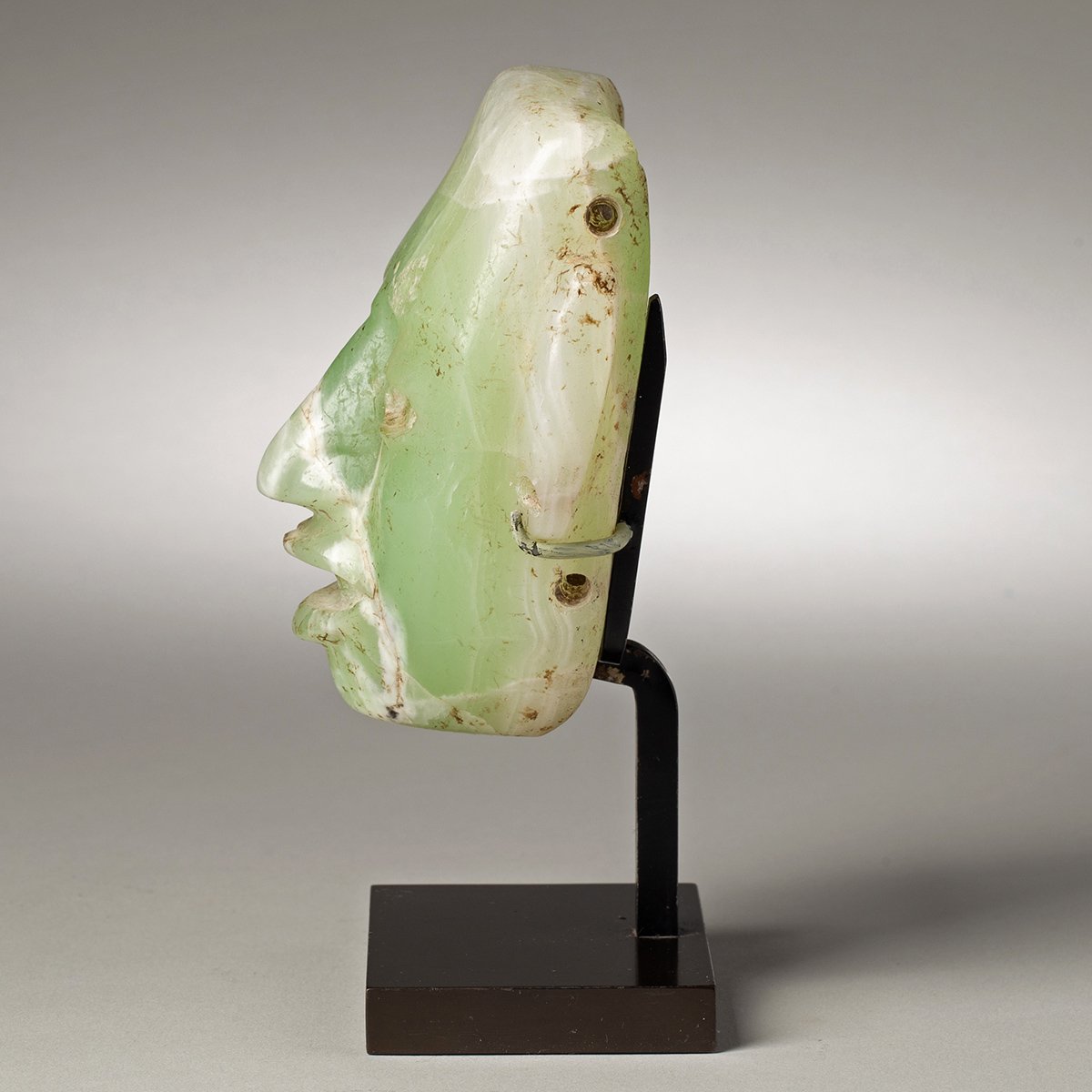 Image 4 of 6
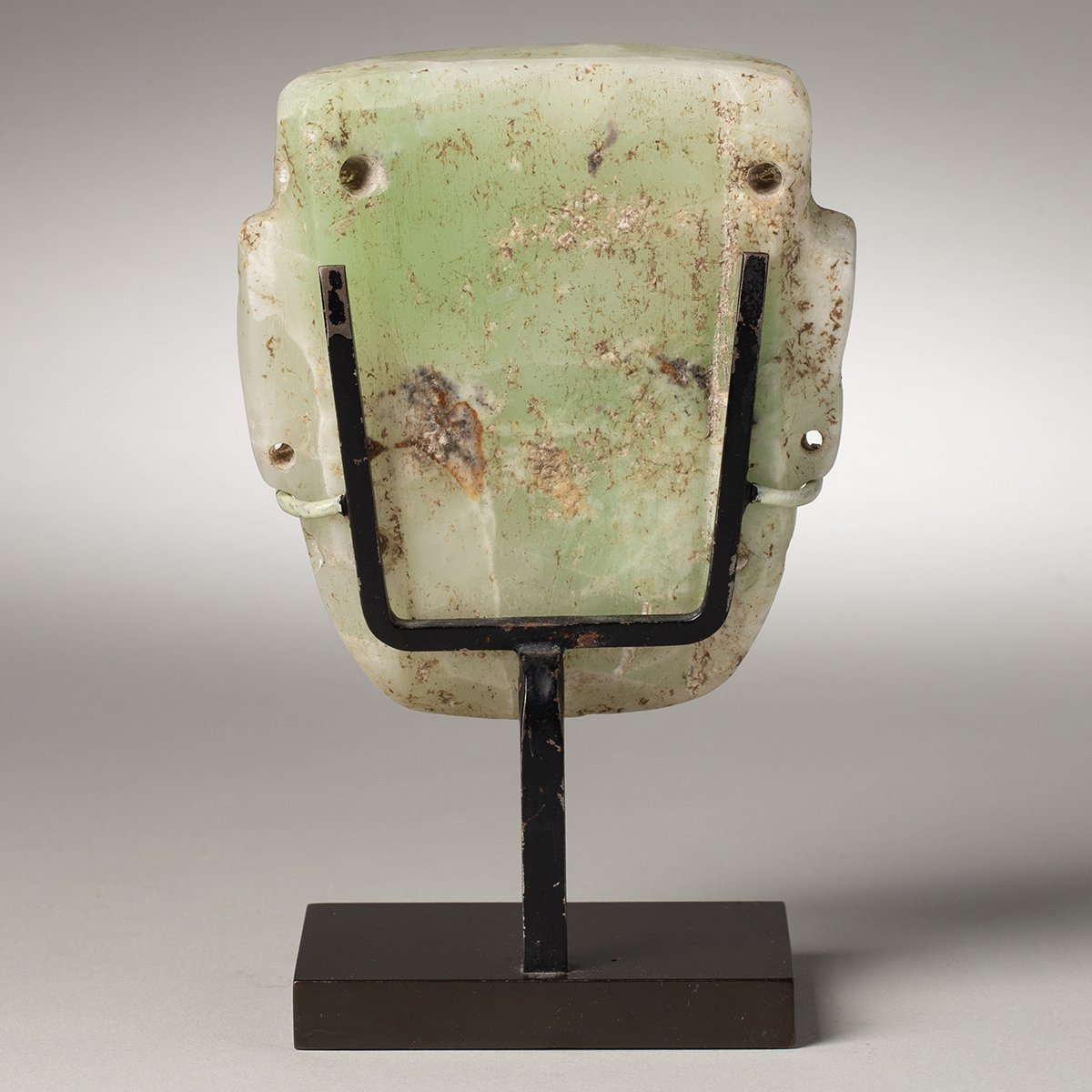 Image 5 of 6
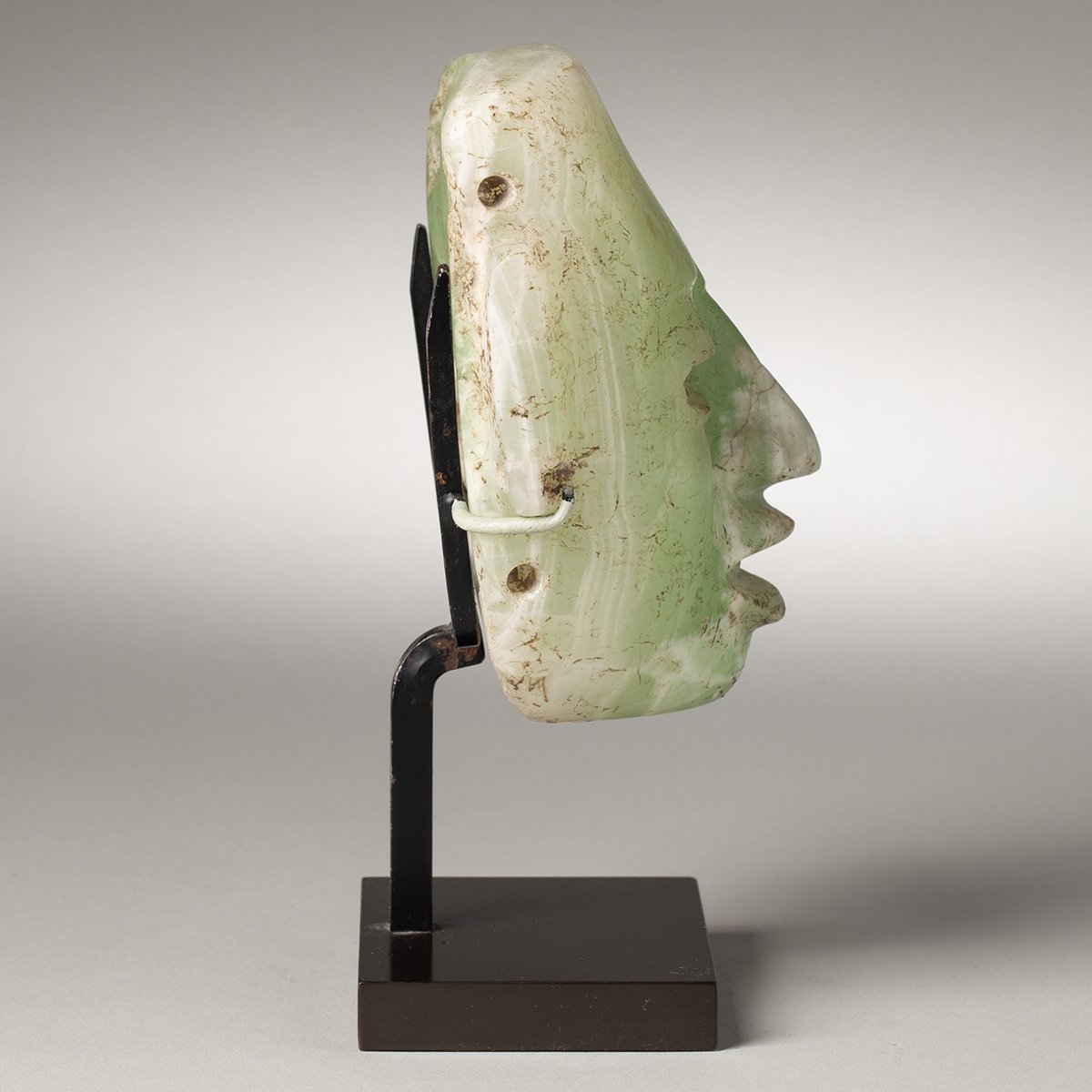 Image 6 of 6