Teotihuacan culture, Mexico
AD 200 to 750
Listwanite stone, traces of iron pyrite
Height 8" (20.3 cm); width 9 1/2" (24 cm); weight 5.2 kg
Provenance: Axel Mejia Mata, Anaheim, California
CIRAM report included
Teotihuacan, located approximately 50 kilometers northeast of Mexico City, was among the largest and most systematically planned cities in the ancient world, estimated to have held a population of over 125,000 at its peak around AD 600. The city's ceremonial core, organized along the Avenue of the Dead and anchored by the Pyramids of the Sun and Moon, produced a lapidary tradition that was collected and venerated by later Mesoamerican cultures, including the Aztecs, who deposited Teotihuacan stone masks as offerings at the Templo Mayor centuries after the city's decline. Stone masks represent the highest achievement of Teotihuacan sculptural production and are among the most studied objects in Mesoamerican art history.
This mask is carved from listwanite, a warm amber stone related to serpentine and characterized by veins of magnesite, quartzite, and calcite, traditionally quarried by Teotihuacan artisans from deposits in the neighboring Puebla region. The facial features follow the classical Teotihuacan canon: a broad forehead, horizontal brow line, wide set ovoid eyes, fleshy modeled lips parted as if in speech, and large rectangular ears with pierced lobes. The orange staining visible around the eye sockets is consistent with the former presence of iron pyrite inlays, which Teotihuacan artists polished to a mirror like surface understood as a portal to other cosmic realms.
Recent scholarship has moved away from the long held funerary interpretation of these masks, as none have been recovered from documented burial contexts at the site. Current studies suggest they functioned as centerpieces of perishable shrine constructions, attached to wooden armatures representing deities in transformation, supported by microscopic traces of fabric, feathers, and wood found in soil surrounding masks excavated in situ. Five attachment holes drilled from one side are present, one at the crown and one above and below each ear, consistent with this mode of display and use.
We ship free anywhere in the world, fully insured, packed by hand.
Teotihuacan culture, Mexico
AD 200 to 750
Listwanite stone, traces of iron pyrite
Height 8" (20.3 cm); width 9 1/2" (24 cm); weight 5.2 kg
Provenance: Axel Mejia Mata, Anaheim, California
CIRAM report included
Teotihuacan, located approximately 50 kilometers northeast of Mexico City, was among the largest and most systematically planned cities in the ancient world, estimated to have held a population of over 125,000 at its peak around AD 600. The city's ceremonial core, organized along the Avenue of the Dead and anchored by the Pyramids of the Sun and Moon, produced a lapidary tradition that was collected and venerated by later Mesoamerican cultures, including the Aztecs, who deposited Teotihuacan stone masks as offerings at the Templo Mayor centuries after the city's decline. Stone masks represent the highest achievement of Teotihuacan sculptural production and are among the most studied objects in Mesoamerican art history.
This mask is carved from listwanite, a warm amber stone related to serpentine and characterized by veins of magnesite, quartzite, and calcite, traditionally quarried by Teotihuacan artisans from deposits in the neighboring Puebla region. The facial features follow the classical Teotihuacan canon: a broad forehead, horizontal brow line, wide set ovoid eyes, fleshy modeled lips parted as if in speech, and large rectangular ears with pierced lobes. The orange staining visible around the eye sockets is consistent with the former presence of iron pyrite inlays, which Teotihuacan artists polished to a mirror like surface understood as a portal to other cosmic realms.
Recent scholarship has moved away from the long held funerary interpretation of these masks, as none have been recovered from documented burial contexts at the site. Current studies suggest they functioned as centerpieces of perishable shrine constructions, attached to wooden armatures representing deities in transformation, supported by microscopic traces of fabric, feathers, and wood found in soil surrounding masks excavated in situ. Five attachment holes drilled from one side are present, one at the crown and one above and below each ear, consistent with this mode of display and use.
We ship free anywhere in the world, fully insured, packed by hand.


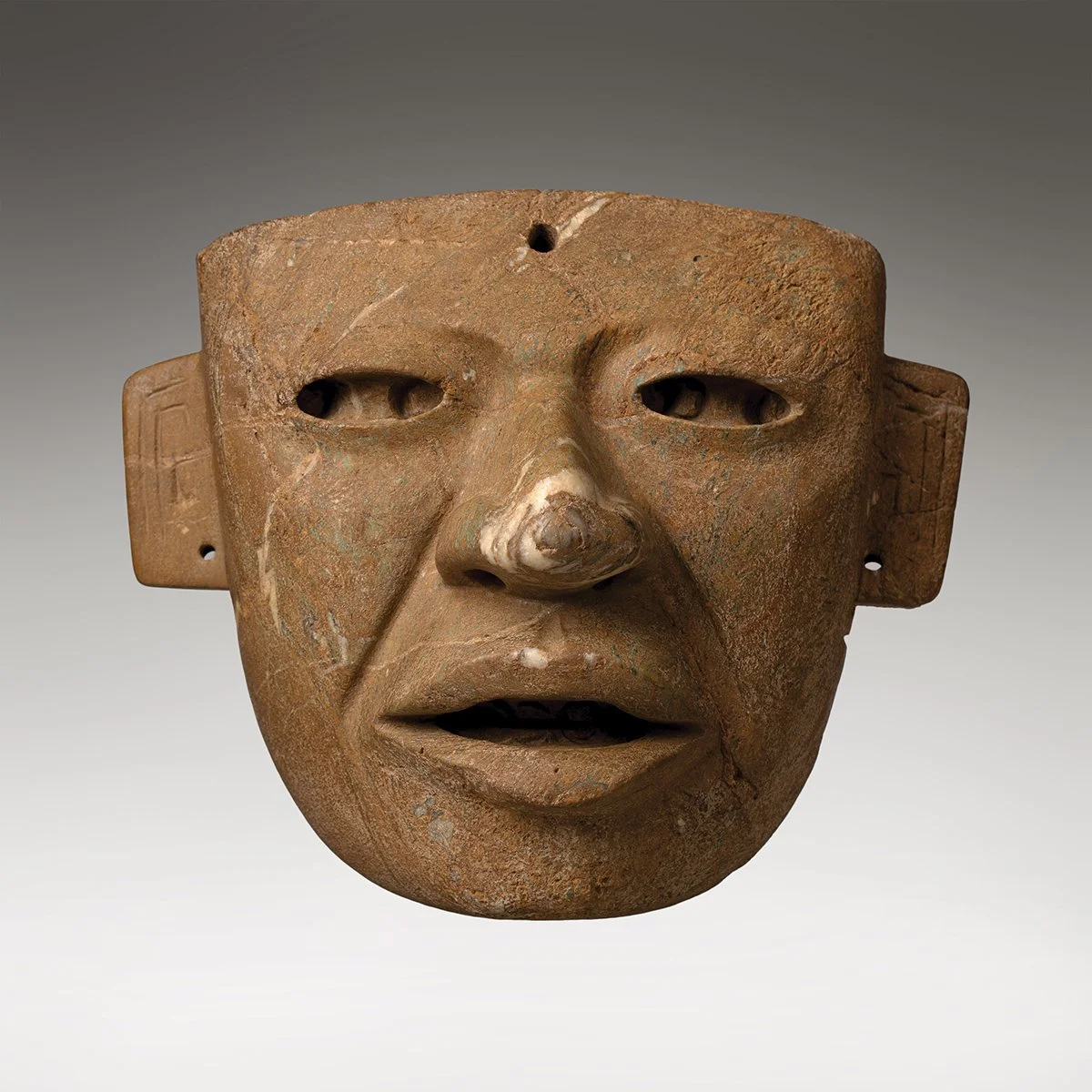 Image 1 of 14
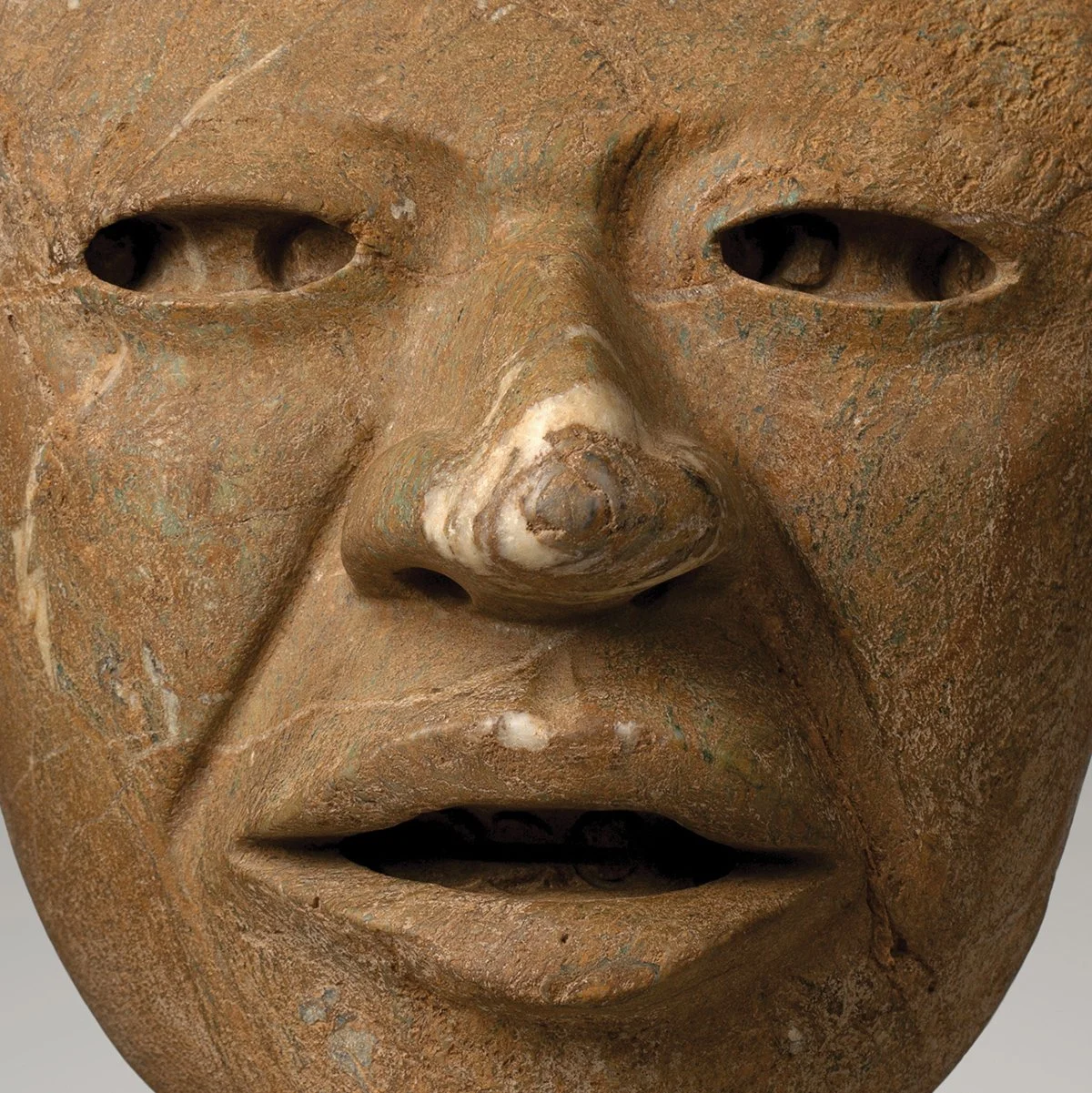 Image 2 of 14
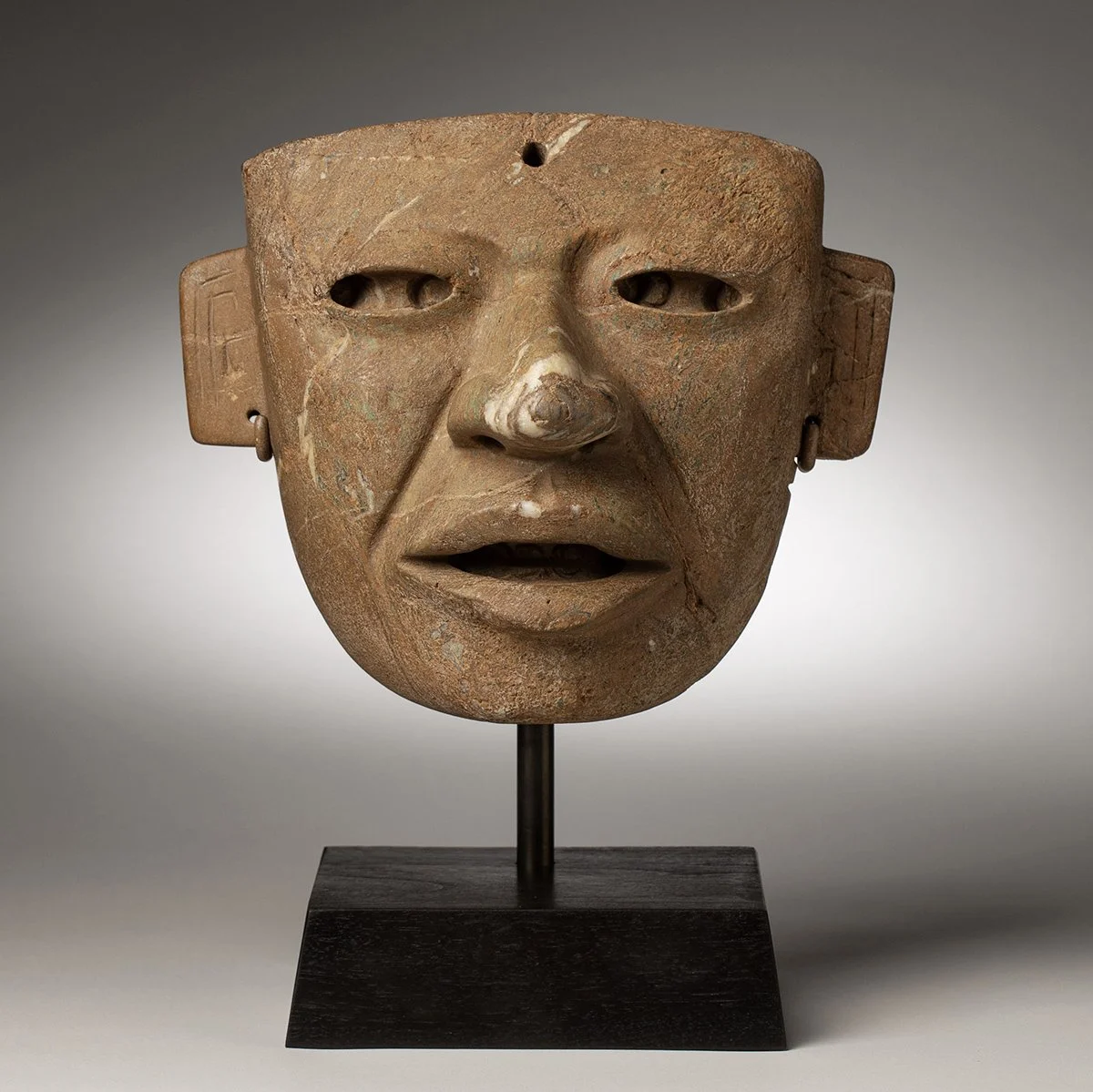 Image 3 of 14
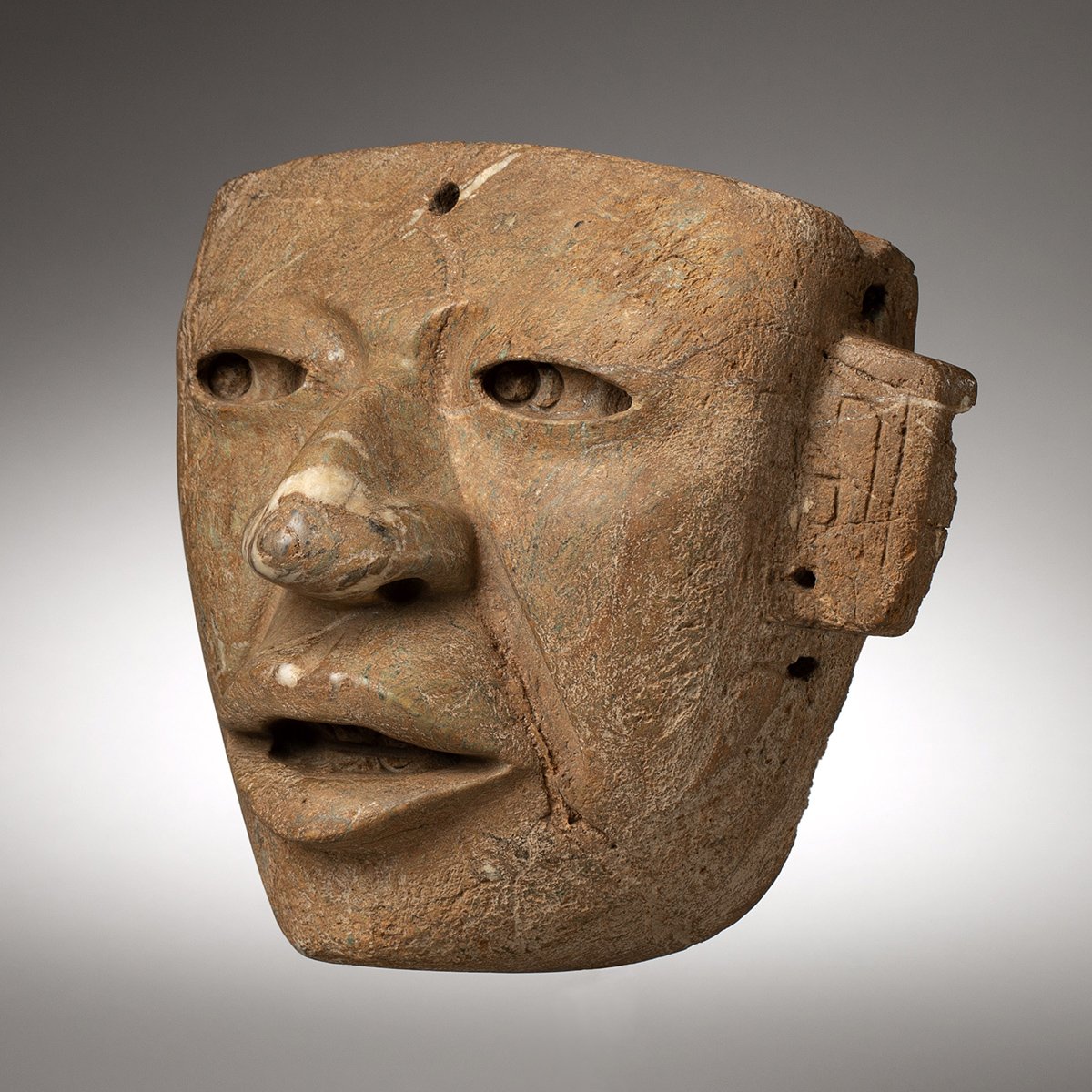 Image 4 of 14
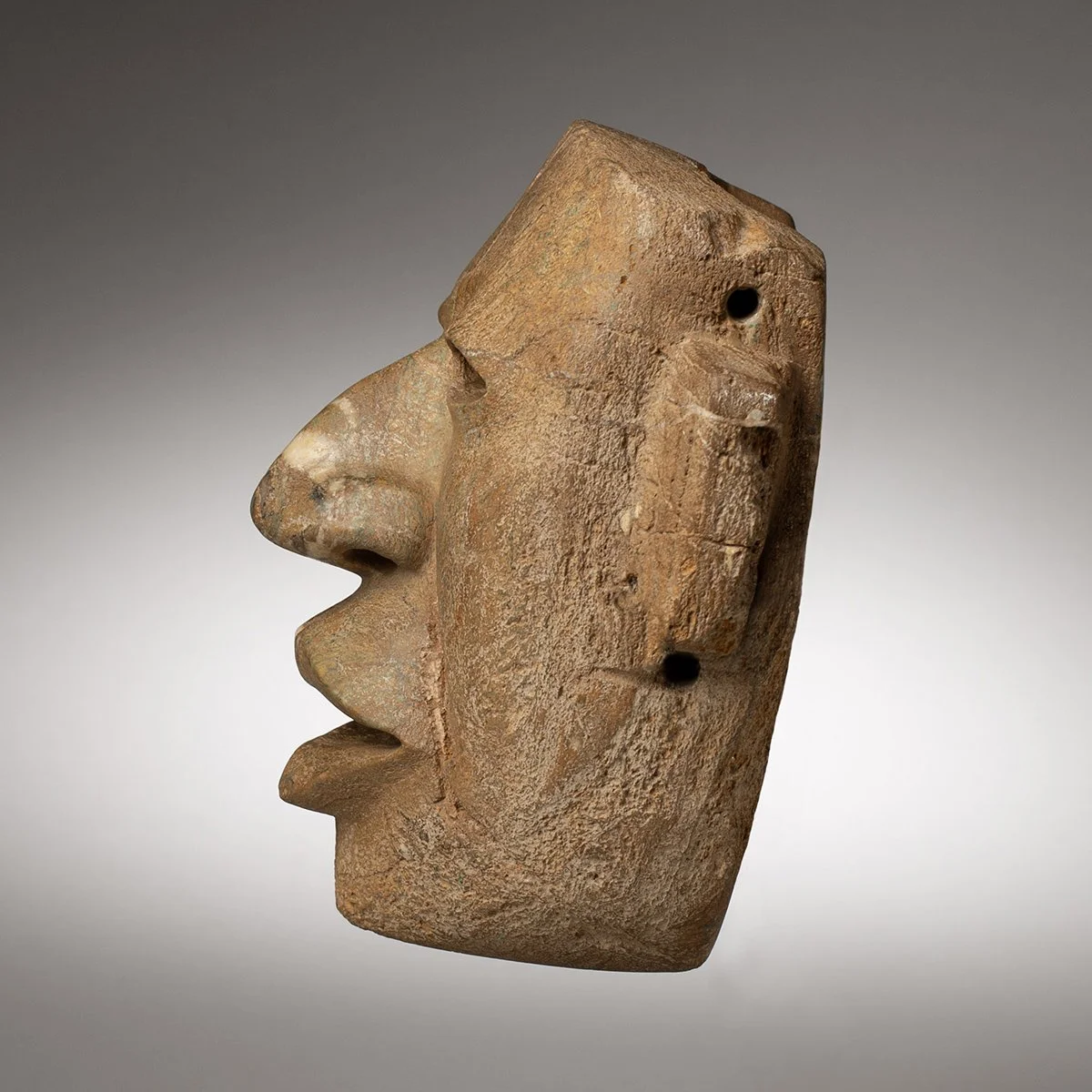 Image 5 of 14
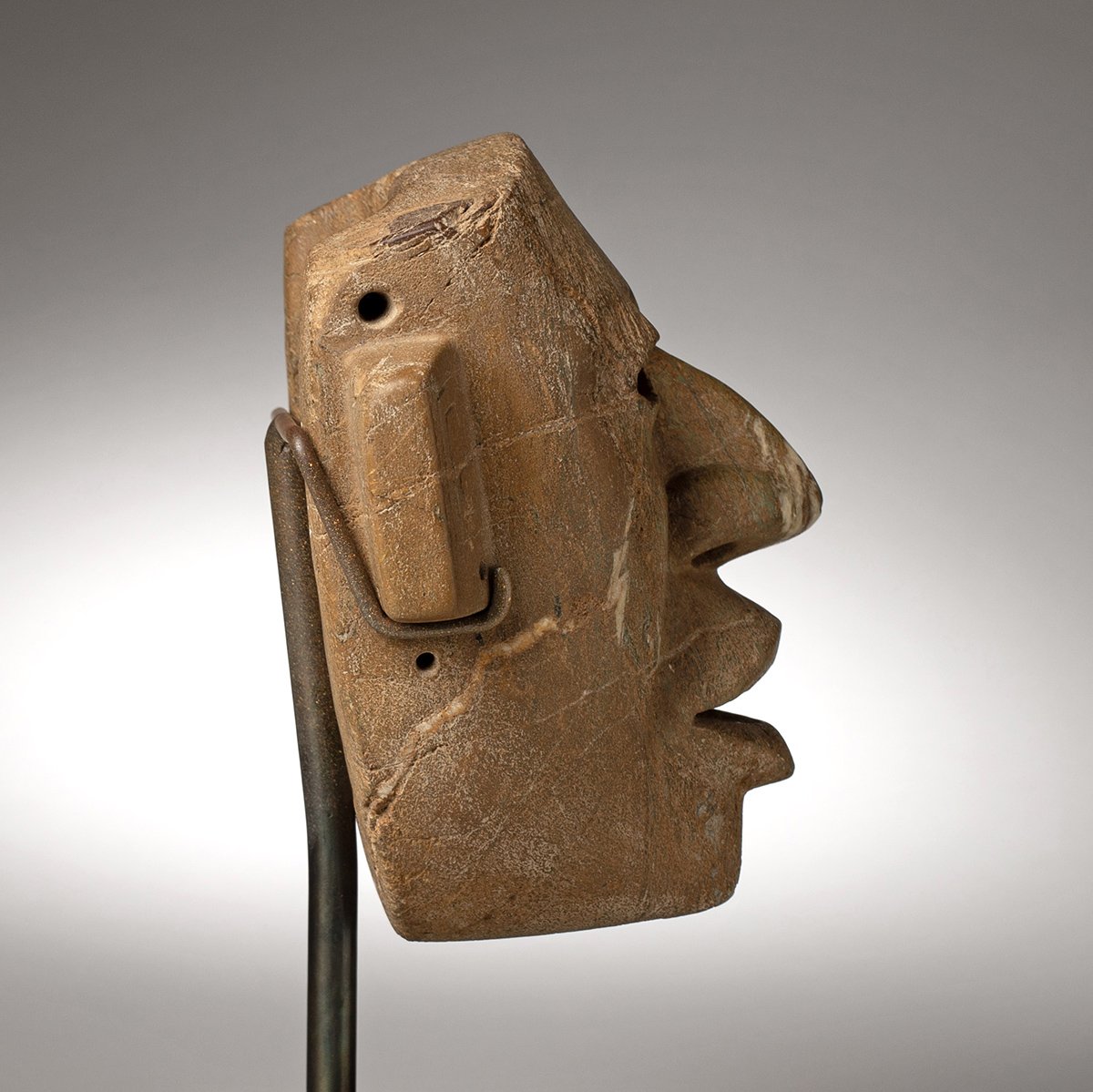 Image 6 of 14
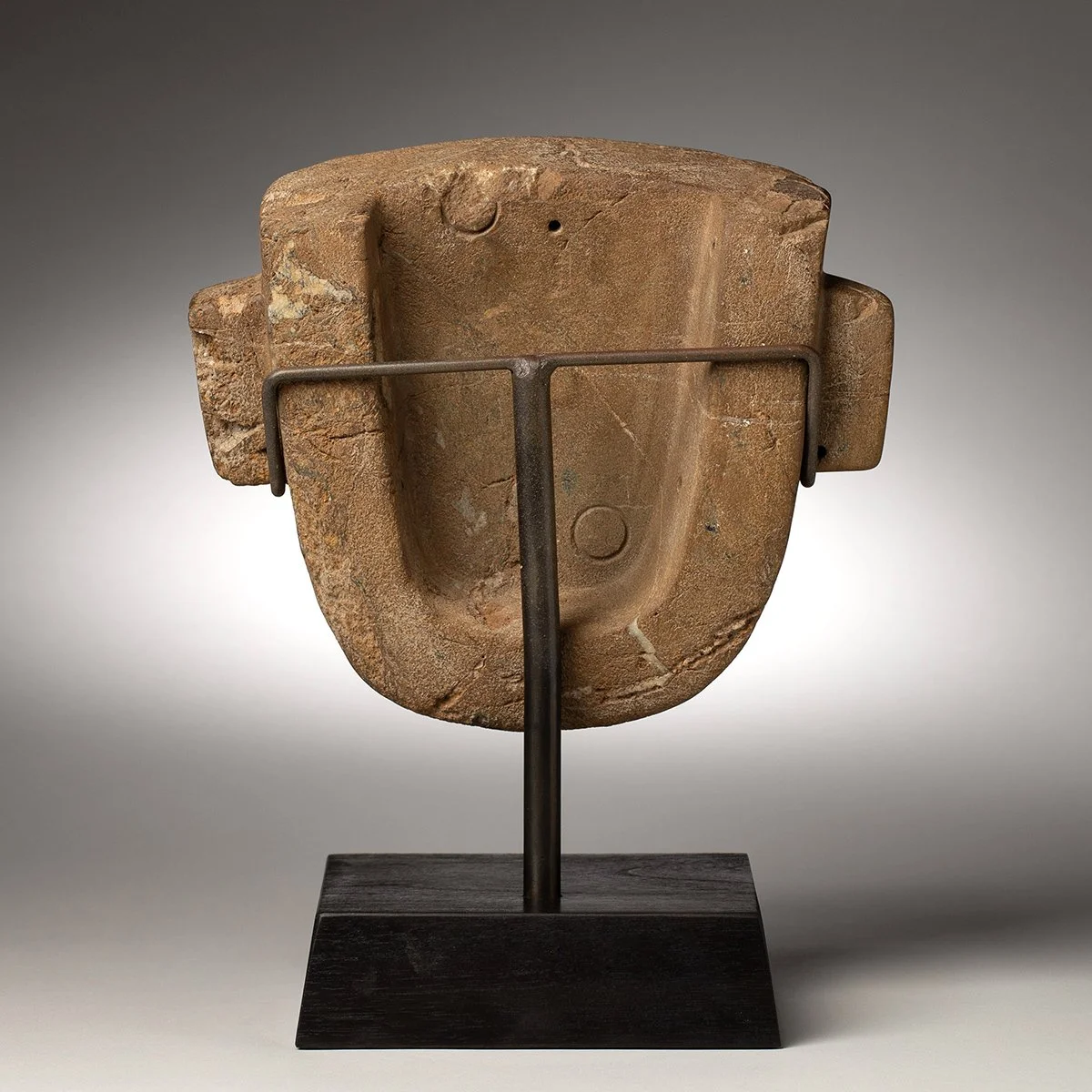 Image 7 of 14
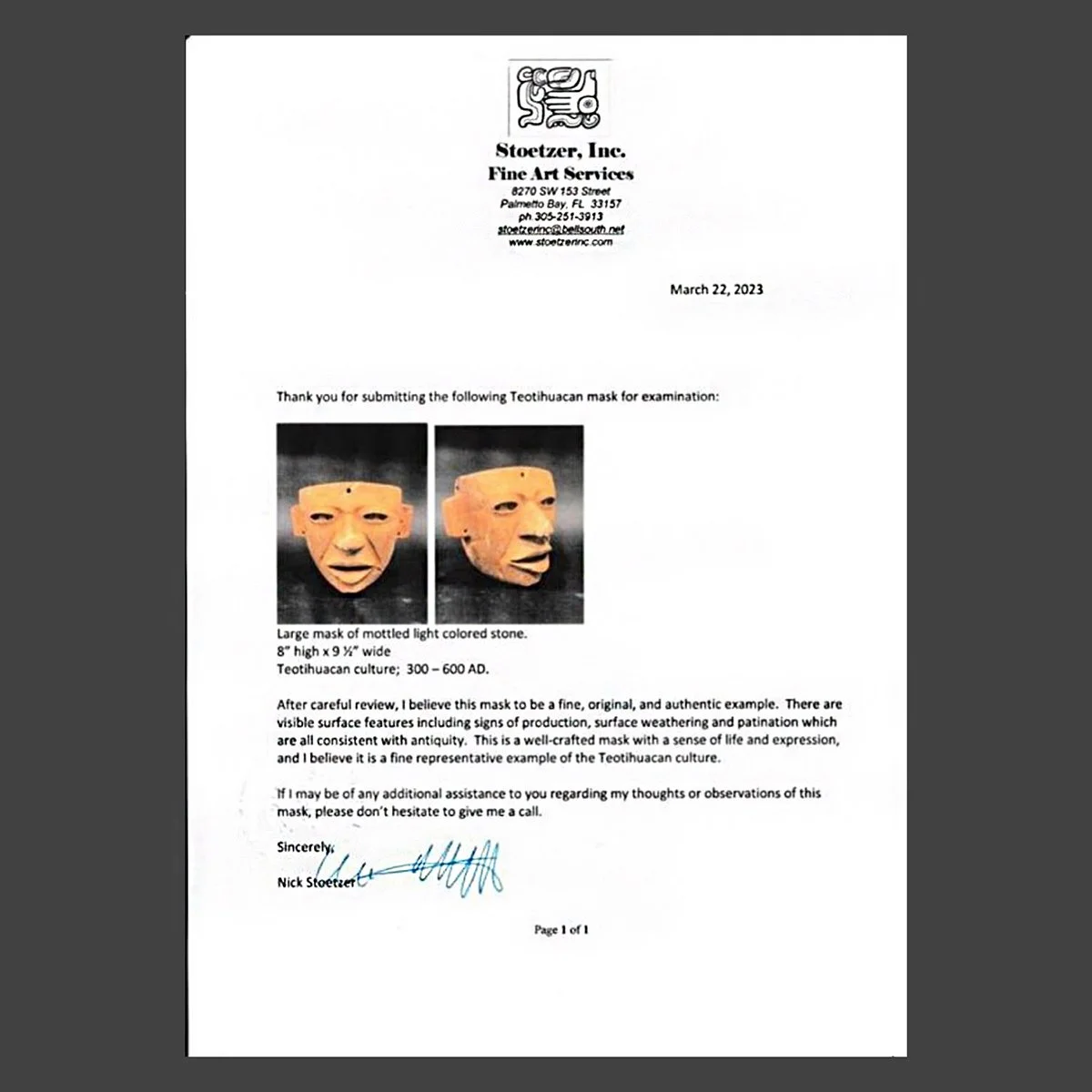 Image 8 of 14
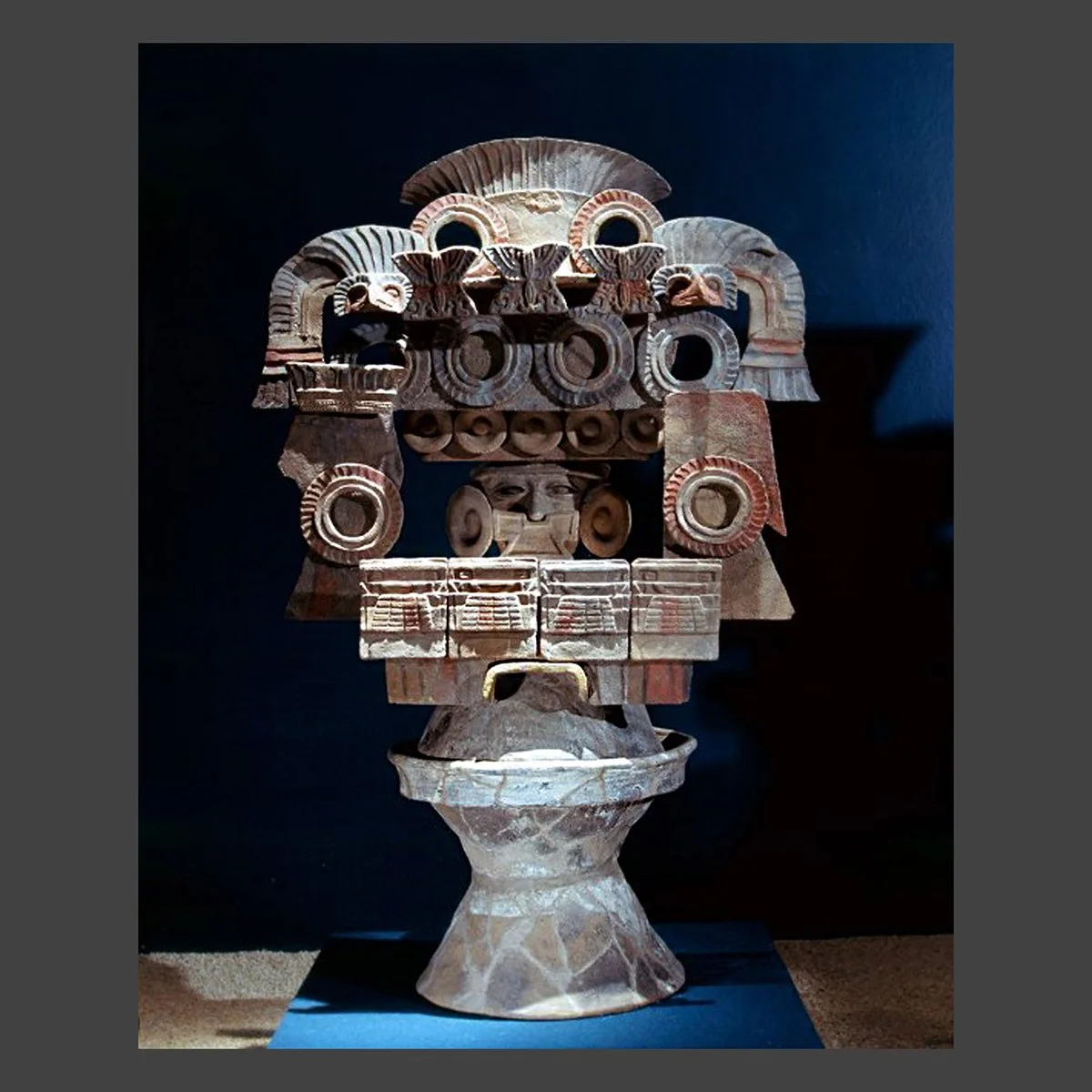 Image 9 of 14
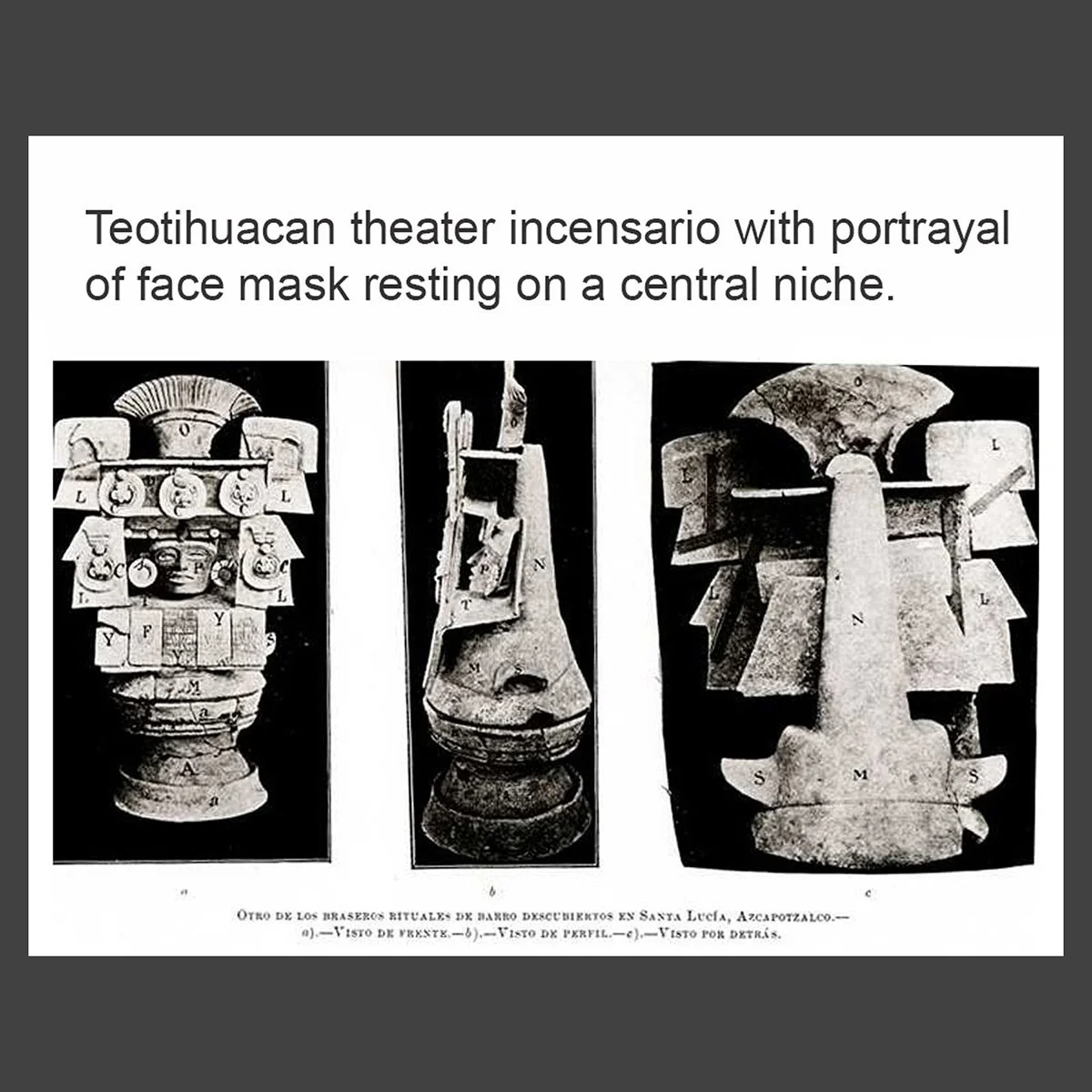 Image 10 of 14
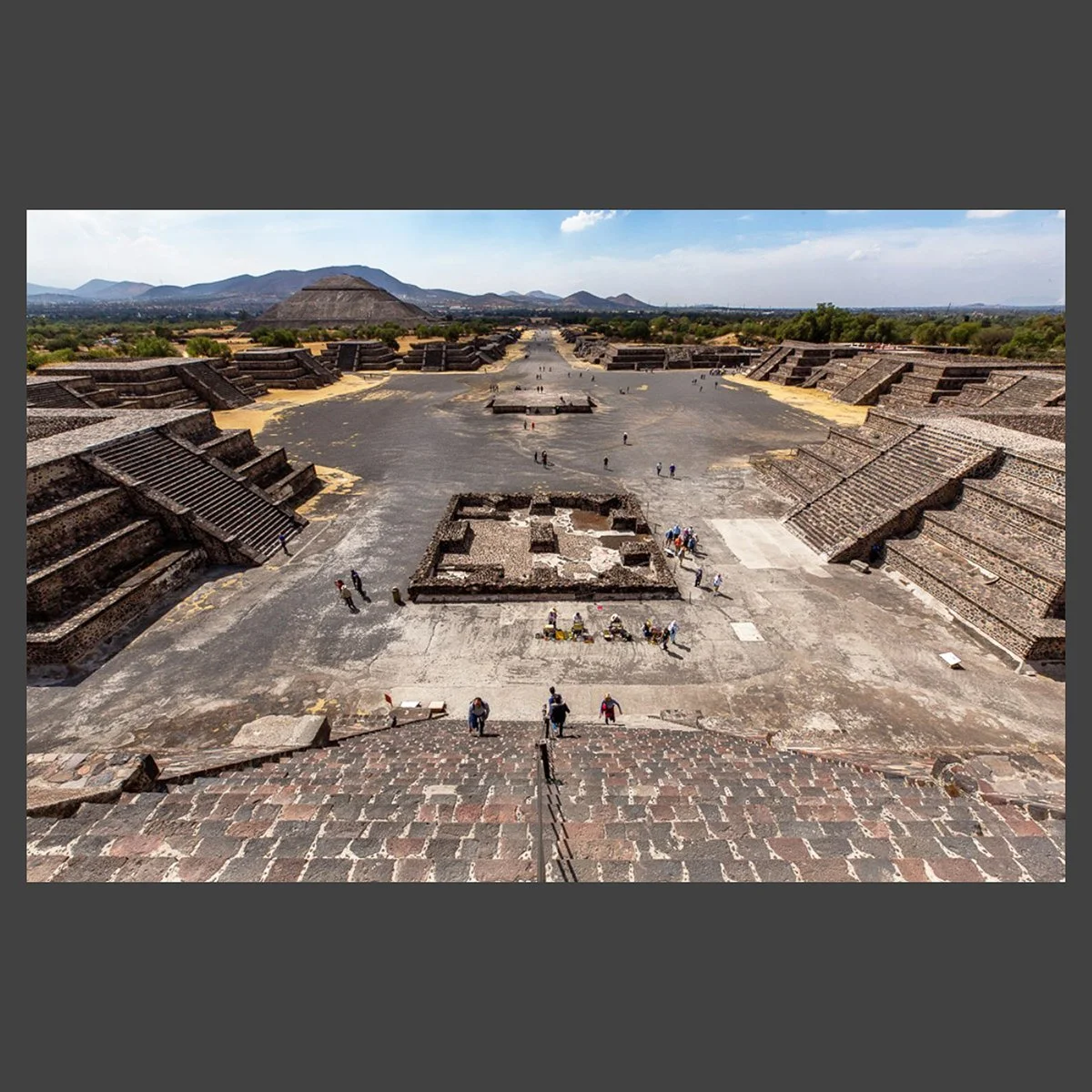 Image 11 of 14
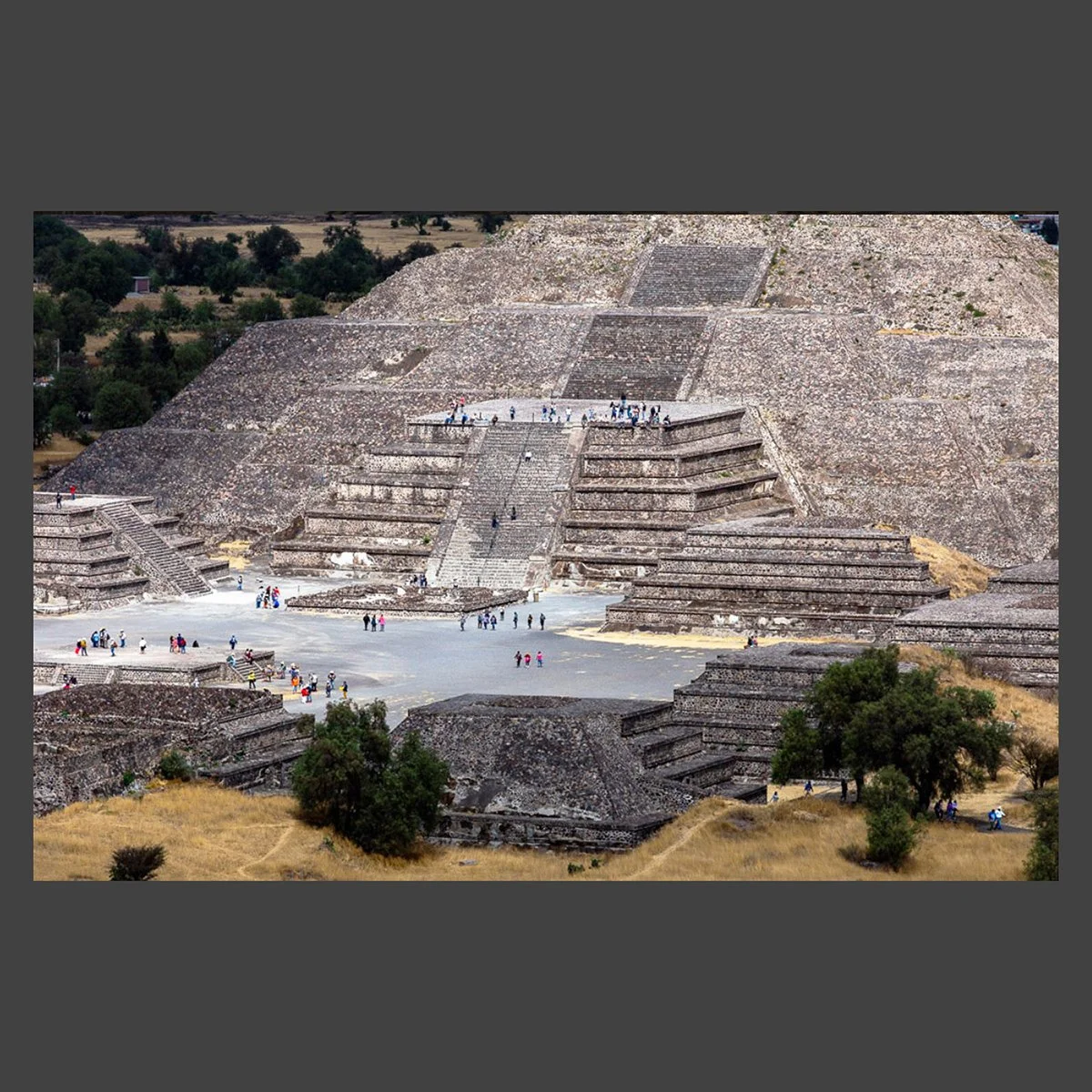 Image 12 of 14
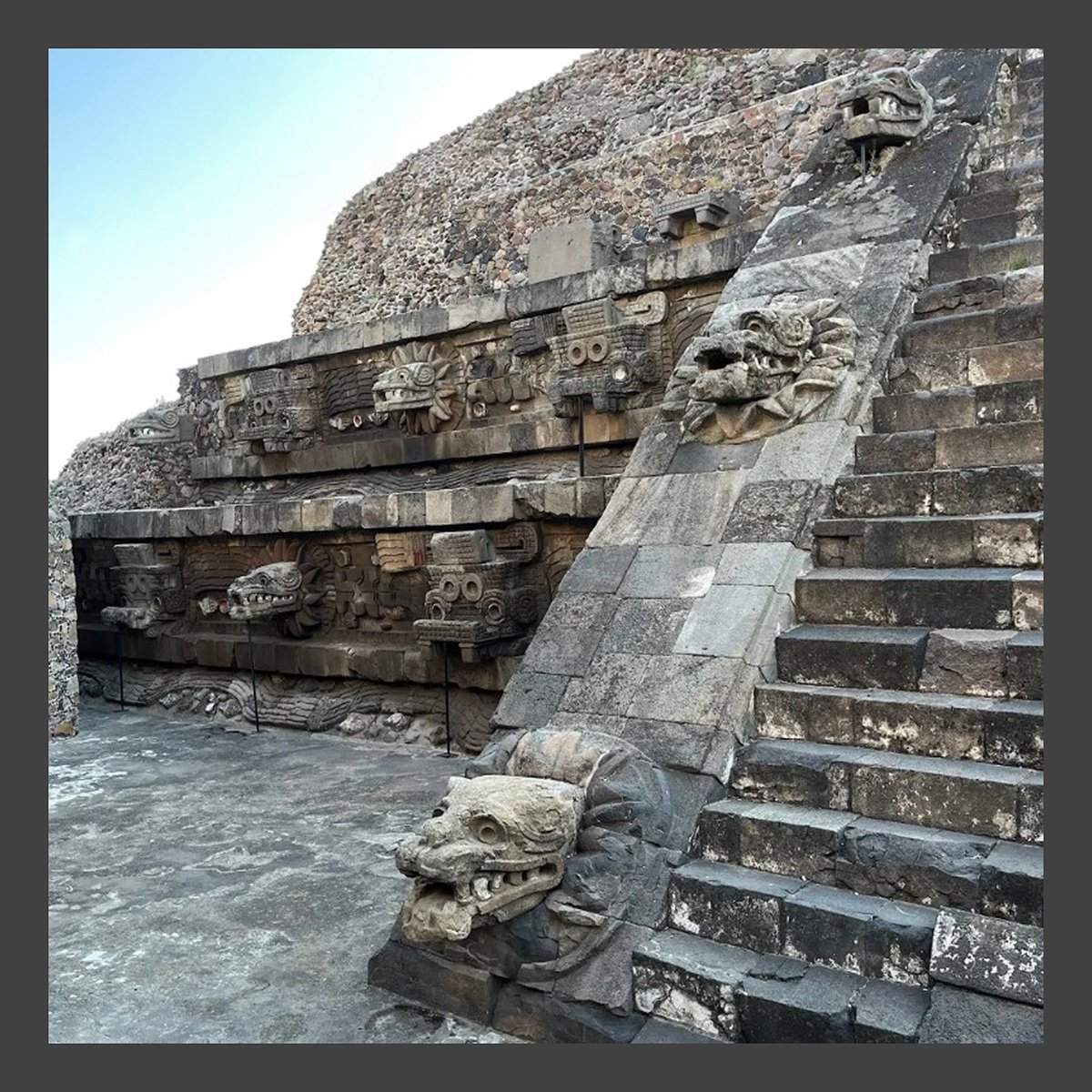 Image 13 of 14
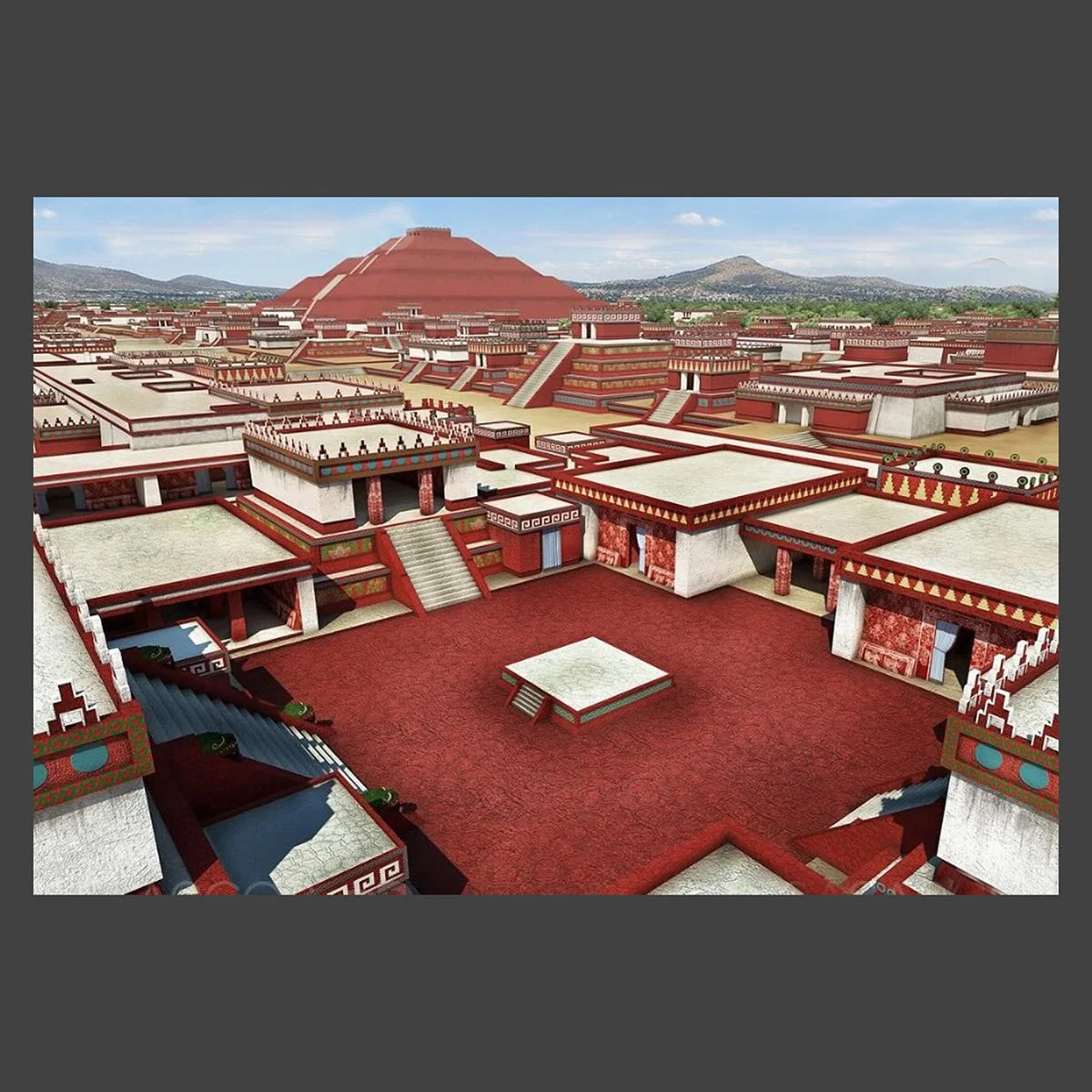 Image 14 of 14