Thai Rattanakosin Gilt Bronze Seated Buddha
Thailand, Early Rattanakosin period
18th century
Gilt bronze
Height 18 1/4 in (46.4 cm), Width 13 1/2 in (34.3 cm)
Provenance: Steve Farr, Dallas, TX; Paul van Katwijk, Dallas, TX
This seated gilt bronze depicts the Buddha Shakyamuni in the dhyanasana position upon an ornately cast three-tiered base, his left hand held in dhyana mudra above his lap and his right hand forming the bhumisparsha mudra, the gesture of touching the earth to call upon it to witness his enlightenment over the evil Mara. The monastic sanghati robe is worn leaving the right shoulder bare, with a long section of folded cloth falling from the left shoulder to just beside the navel. The sculptor has rendered three subtle folds around the Buddha's neck representing the three virtues of conduct, concentration, and wisdom, while tightly curled hair ringlets and a flame of enlightenment rising from the ushnisha complete the canonical iconography of the type.
The surface patina is polished and well worn, with only traces of gilt remaining, consistent with a bronze cast in the early Rattanakosin period around 1782. The artistic influences of the preceding Ayutthaya Kingdom (1351 to 1767) remain clearly visible in this representation, depicting the Buddha free of ornamentation and in simple monk's robes. The Rattanakosin period carried on the sculptural traditions of the Ayutthaya period, which was itself a continuation of the Sukhothai period (1238 to 1438), historically Thailand's first kingdom, creating an unbroken lineage of Thai Buddhist bronze casting that this figure embodies.
We ship free anywhere in the world, fully insured, packed by hand.
Thai Rattanakosin Gilt Bronze Seated Buddha
Thailand, Early Rattanakosin period
18th century
Gilt bronze
Height 18 1/4 in (46.4 cm), Width 13 1/2 in (34.3 cm)
Provenance: Steve Farr, Dallas, TX; Paul van Katwijk, Dallas, TX
This seated gilt bronze depicts the Buddha Shakyamuni in the dhyanasana position upon an ornately cast three-tiered base, his left hand held in dhyana mudra above his lap and his right hand forming the bhumisparsha mudra, the gesture of touching the earth to call upon it to witness his enlightenment over the evil Mara. The monastic sanghati robe is worn leaving the right shoulder bare, with a long section of folded cloth falling from the left shoulder to just beside the navel. The sculptor has rendered three subtle folds around the Buddha's neck representing the three virtues of conduct, concentration, and wisdom, while tightly curled hair ringlets and a flame of enlightenment rising from the ushnisha complete the canonical iconography of the type.
The surface patina is polished and well worn, with only traces of gilt remaining, consistent with a bronze cast in the early Rattanakosin period around 1782. The artistic influences of the preceding Ayutthaya Kingdom (1351 to 1767) remain clearly visible in this representation, depicting the Buddha free of ornamentation and in simple monk's robes. The Rattanakosin period carried on the sculptural traditions of the Ayutthaya period, which was itself a continuation of the Sukhothai period (1238 to 1438), historically Thailand's first kingdom, creating an unbroken lineage of Thai Buddhist bronze casting that this figure embodies.
We ship free anywhere in the world, fully insured, packed by hand.


 Image 1 of 7
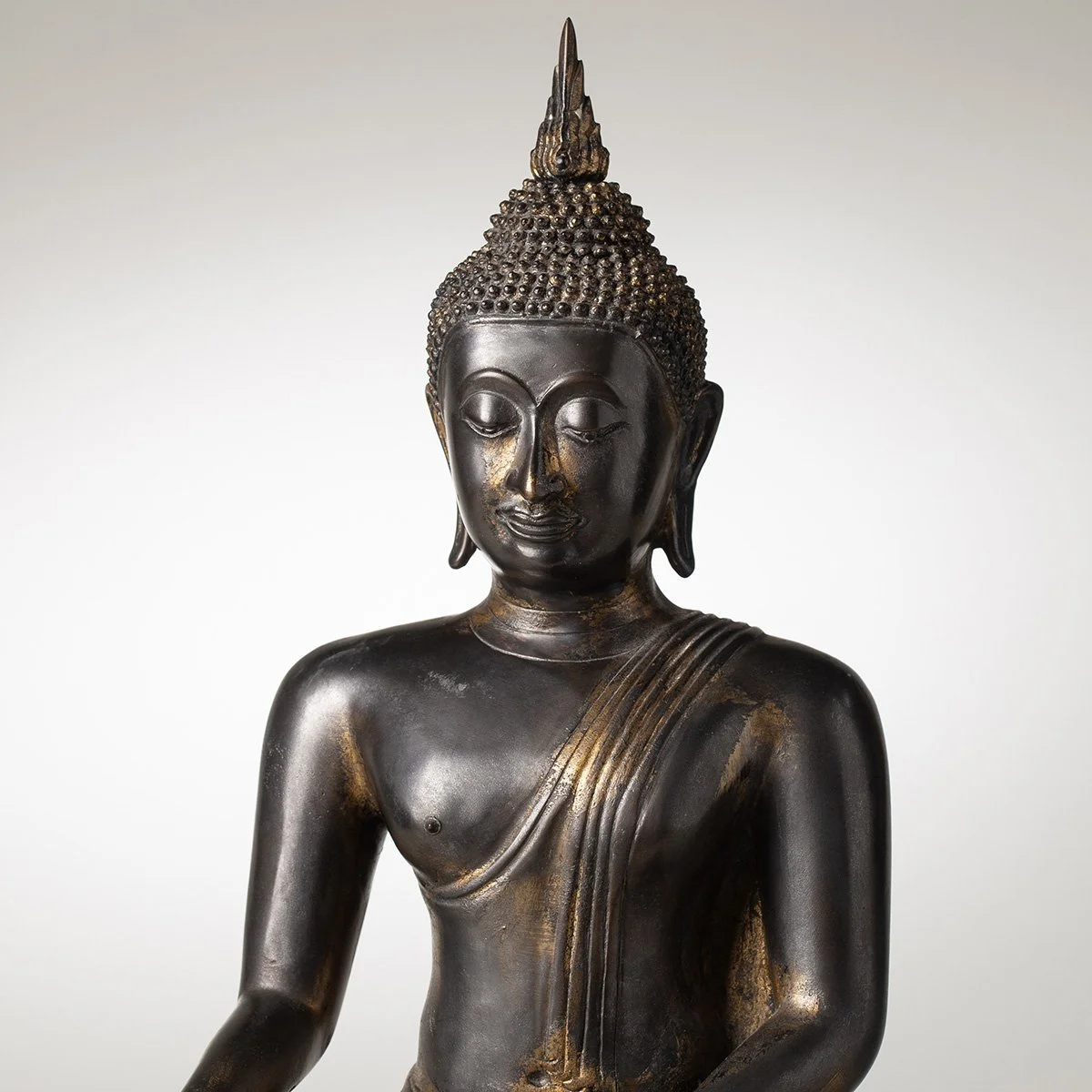 Image 2 of 7
 Image 3 of 7
 Image 4 of 7
 Image 5 of 7
 Image 6 of 7
 Image 7 of 7