Thule culture, Alaska
1600 or before
Ivory
Height 3 1/4" (8.3 cm)
Provenance: Paul and Mary Thiry, Seattle, WA
Publication: Thiry, Paul and Mary, Eskimo Artifacts Designed For Use, Superior Publishing, Seattle, 1977, p. 179
Dolls and human figures produced by the Thule culture, ancestral to all contemporary Inuit peoples across the Arctic, served ceremonial and social functions within the community, used in ritual contexts, as protective objects, and as teaching tools passed between generations. Figures dating to 1600 or before represent the pre-contact or early contact period of Thule culture in Alaska, predating the sustained European presence that began to alter material production from the 18th century onward. Objects of this age and type in private collections are increasingly scarce, most having entered institutional holdings during the early decades of systematic Arctic collecting.
This figure is carved from ivory with a broadly modeled head, defined facial features including drilled eyes and mouth, and a simplified torso, the form consistent with Thule figural production of the pre-contact period. The ivory has developed a deep amber patina through centuries of age, the surface smooth and consistent with an object of considerable antiquity. Published in Paul and Mary Thiry's Eskimo Artifacts Designed For Use (Superior Publishing, Seattle, 1977, p. 179), the piece carries both scholarly documentation and firm provenance within the Thiry collection.
We ship free within the United States, fully insured, packed by hand.
Thule culture, Alaska
1600 or before
Ivory
Height 3 1/4" (8.3 cm)
Provenance: Paul and Mary Thiry, Seattle, WA
Publication: Thiry, Paul and Mary, Eskimo Artifacts Designed For Use, Superior Publishing, Seattle, 1977, p. 179
Dolls and human figures produced by the Thule culture, ancestral to all contemporary Inuit peoples across the Arctic, served ceremonial and social functions within the community, used in ritual contexts, as protective objects, and as teaching tools passed between generations. Figures dating to 1600 or before represent the pre-contact or early contact period of Thule culture in Alaska, predating the sustained European presence that began to alter material production from the 18th century onward. Objects of this age and type in private collections are increasingly scarce, most having entered institutional holdings during the early decades of systematic Arctic collecting.
This figure is carved from ivory with a broadly modeled head, defined facial features including drilled eyes and mouth, and a simplified torso, the form consistent with Thule figural production of the pre-contact period. The ivory has developed a deep amber patina through centuries of age, the surface smooth and consistent with an object of considerable antiquity. Published in Paul and Mary Thiry's Eskimo Artifacts Designed For Use (Superior Publishing, Seattle, 1977, p. 179), the piece carries both scholarly documentation and firm provenance within the Thiry collection.
We ship free within the United States, fully insured, packed by hand.


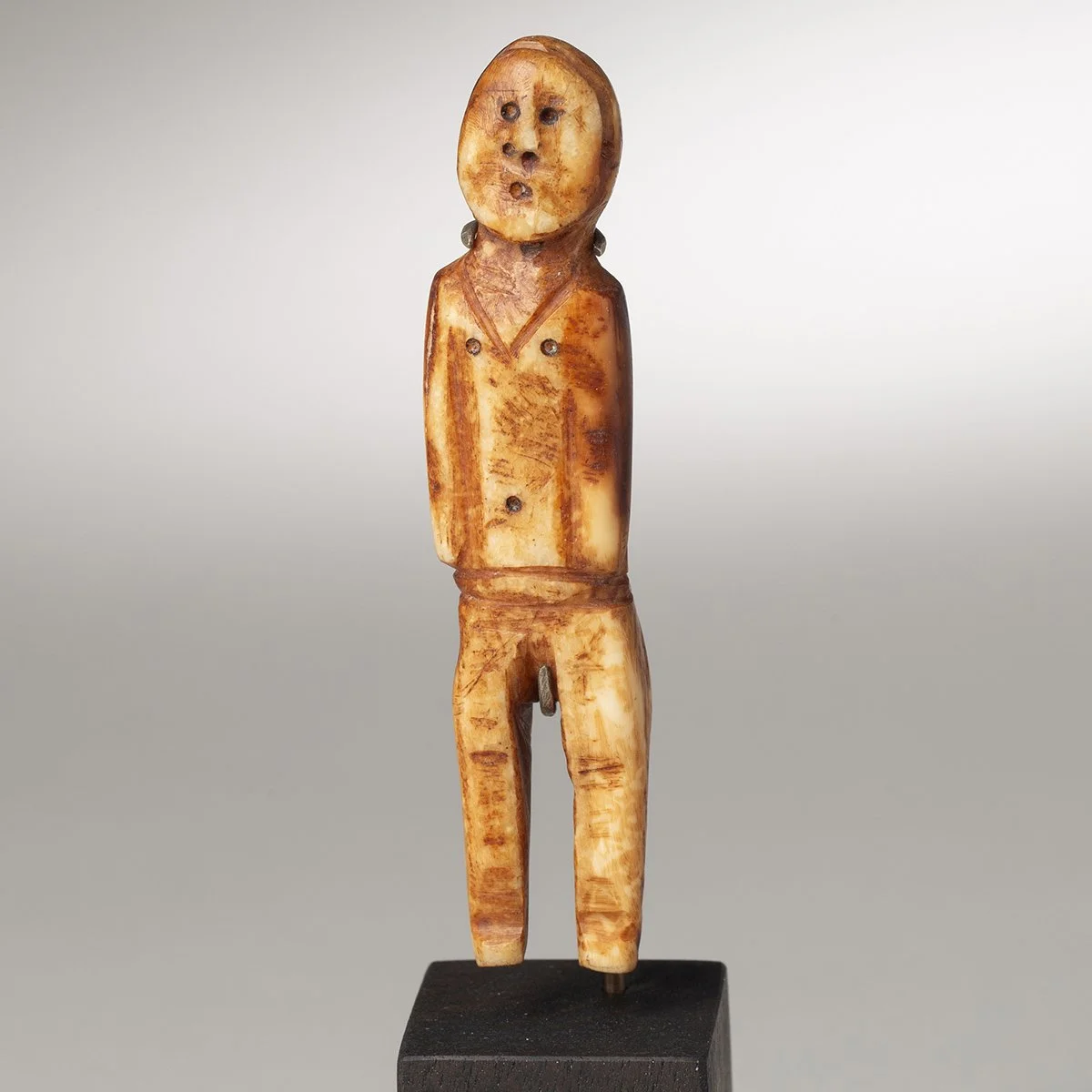 Image 1 of 7
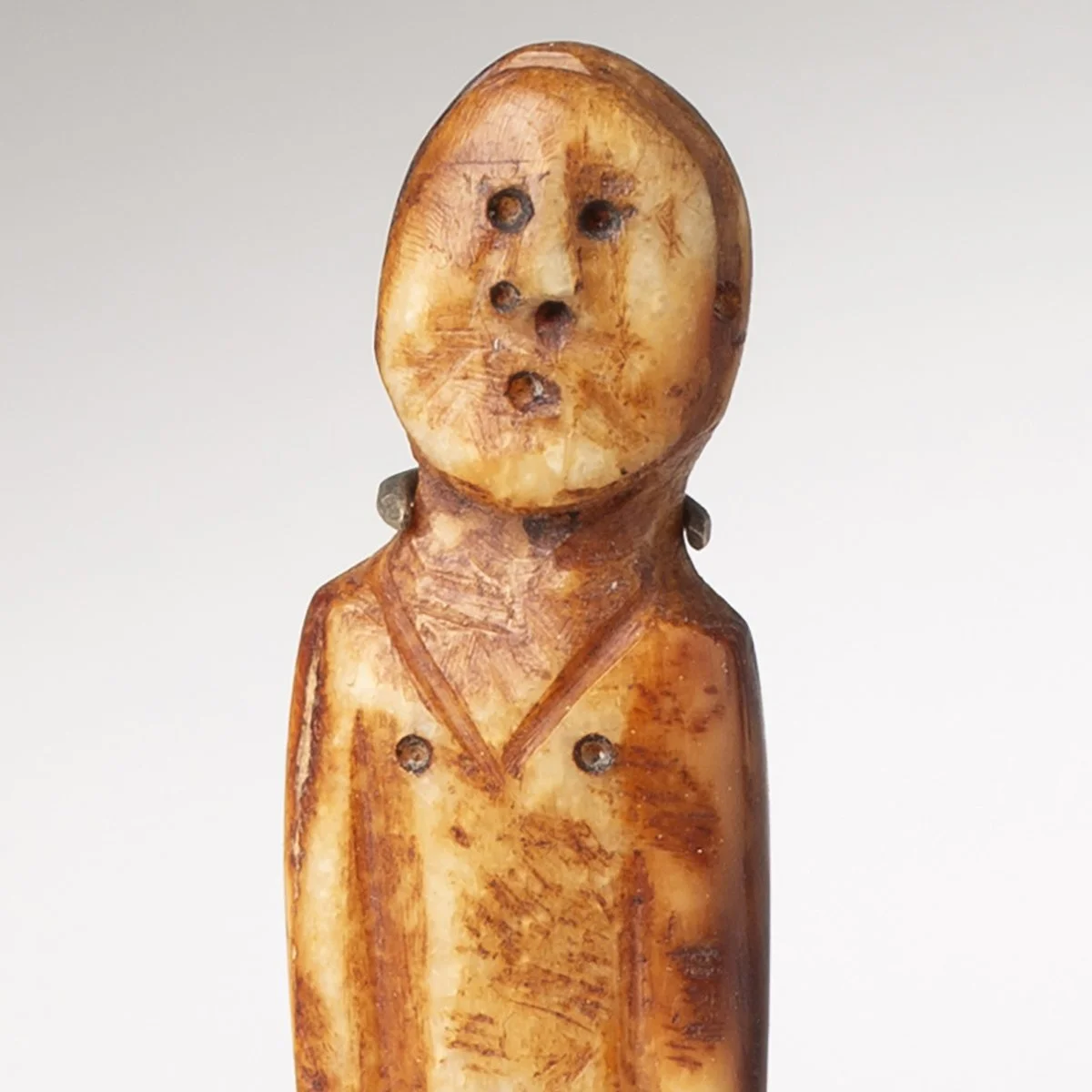 Image 2 of 7
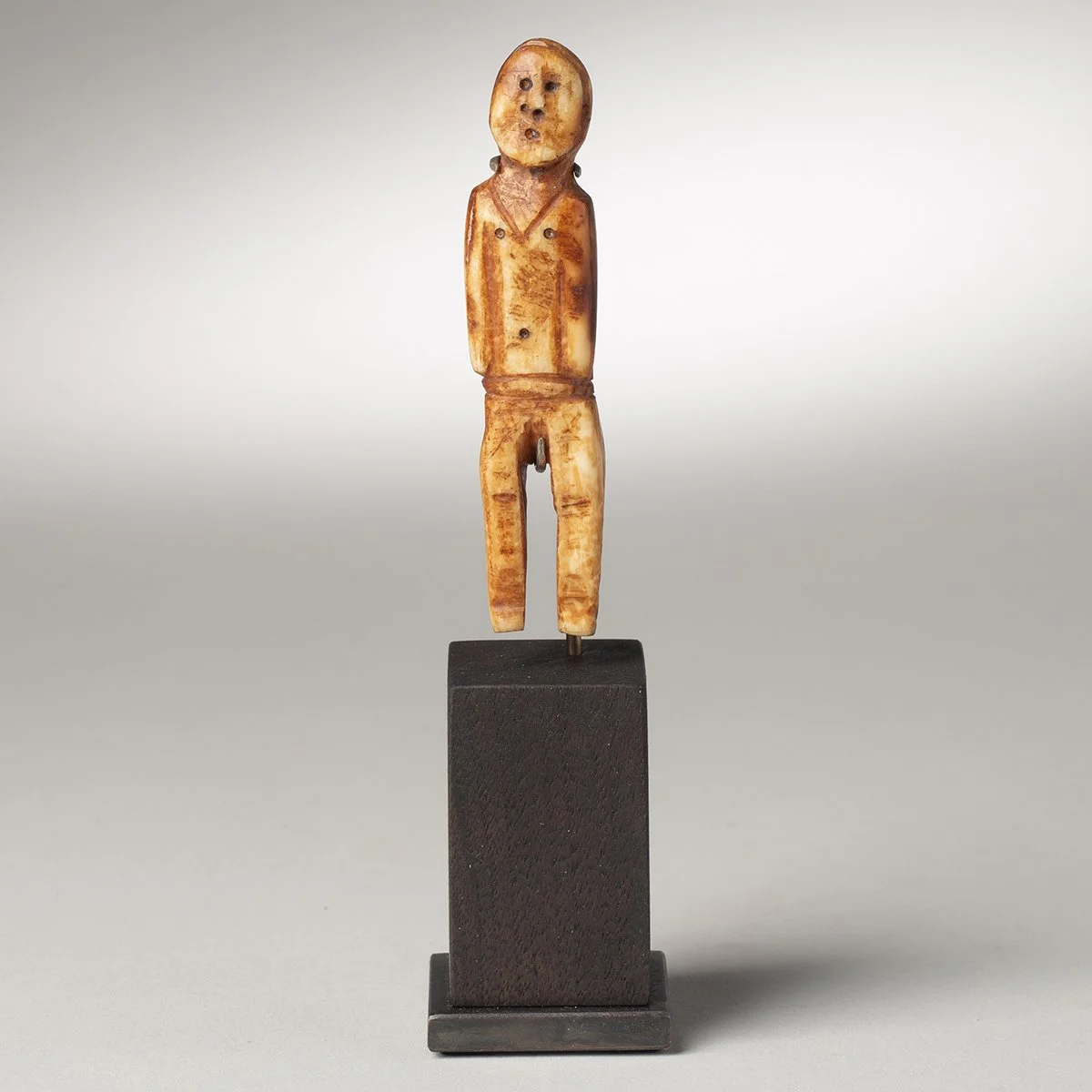 Image 3 of 7
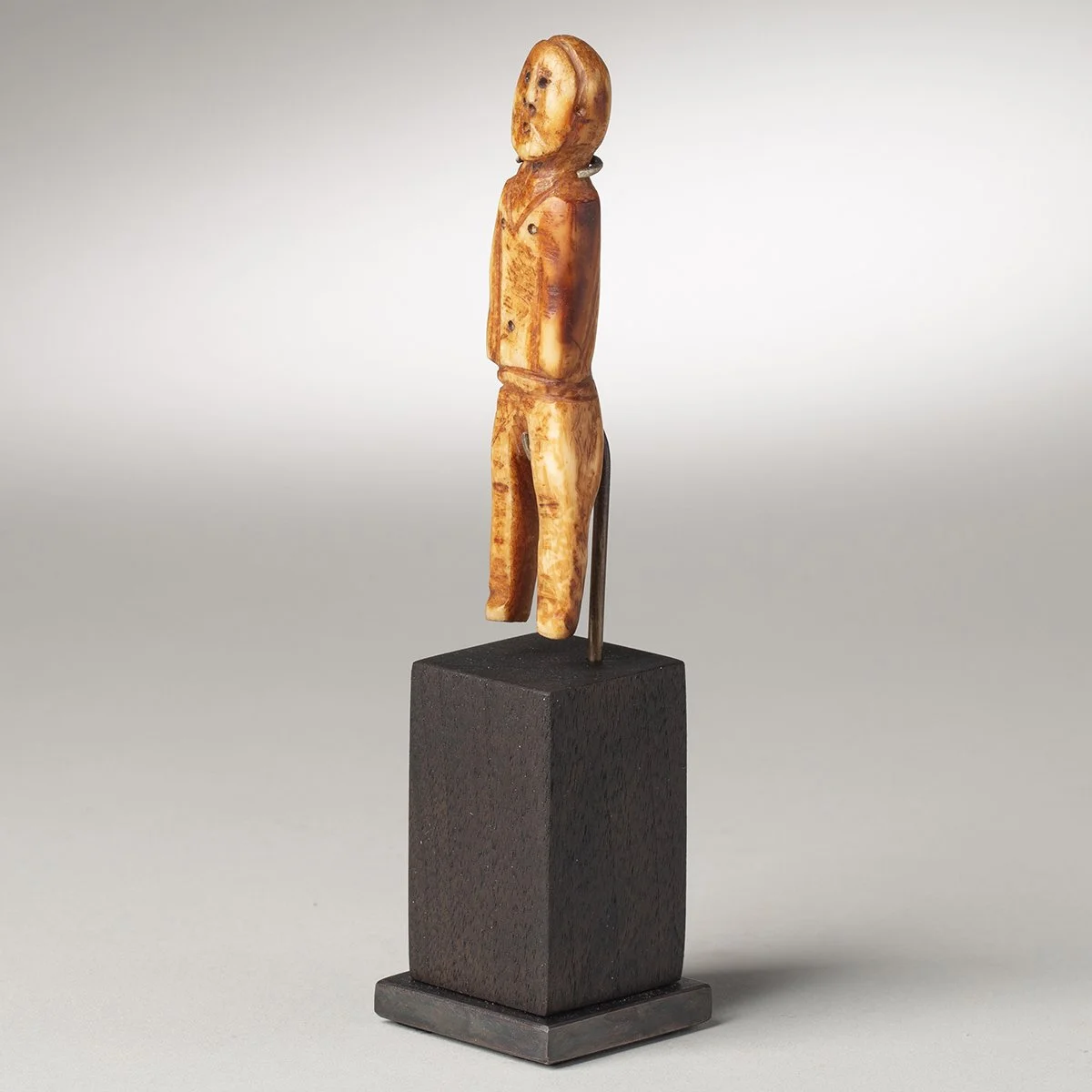 Image 4 of 7
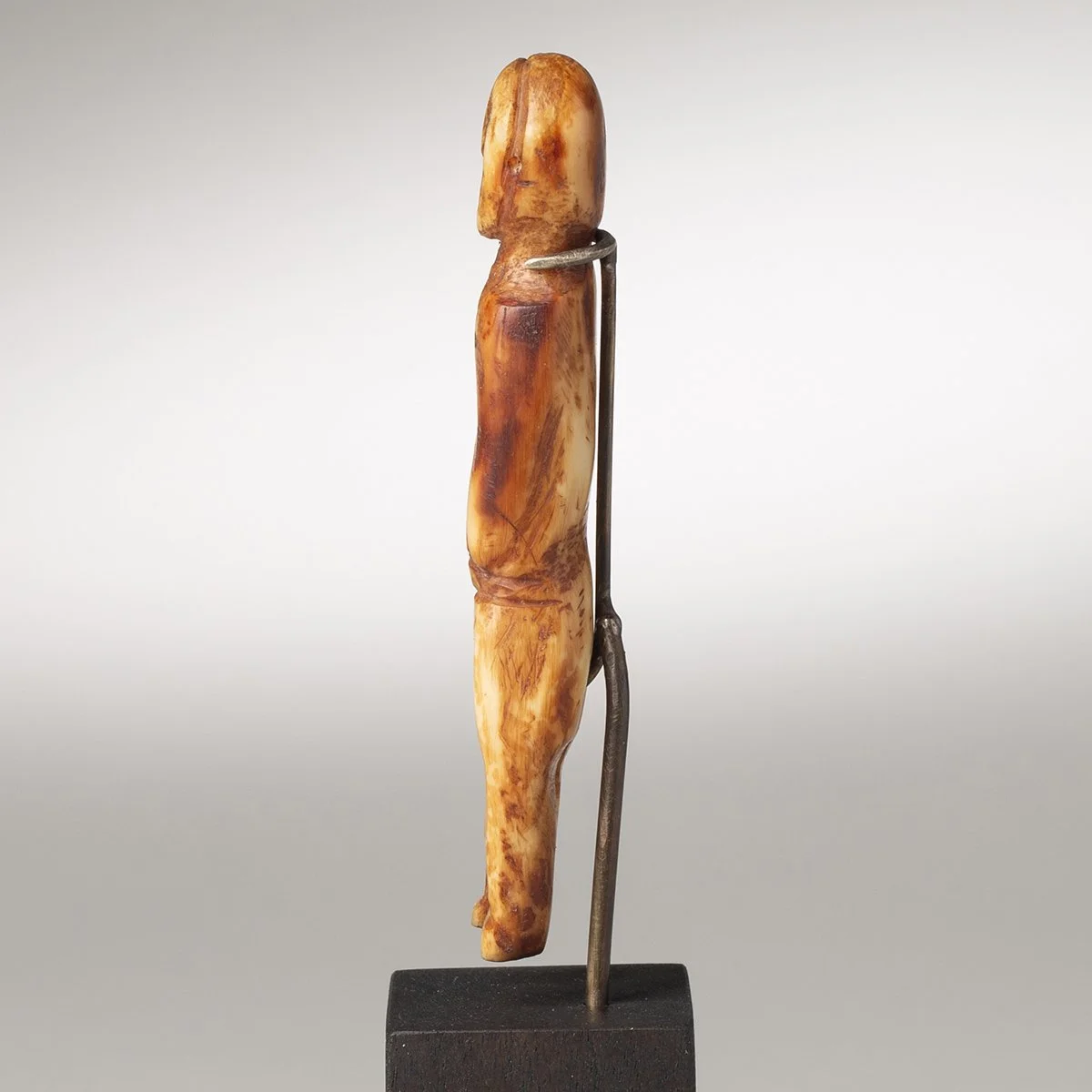 Image 5 of 7
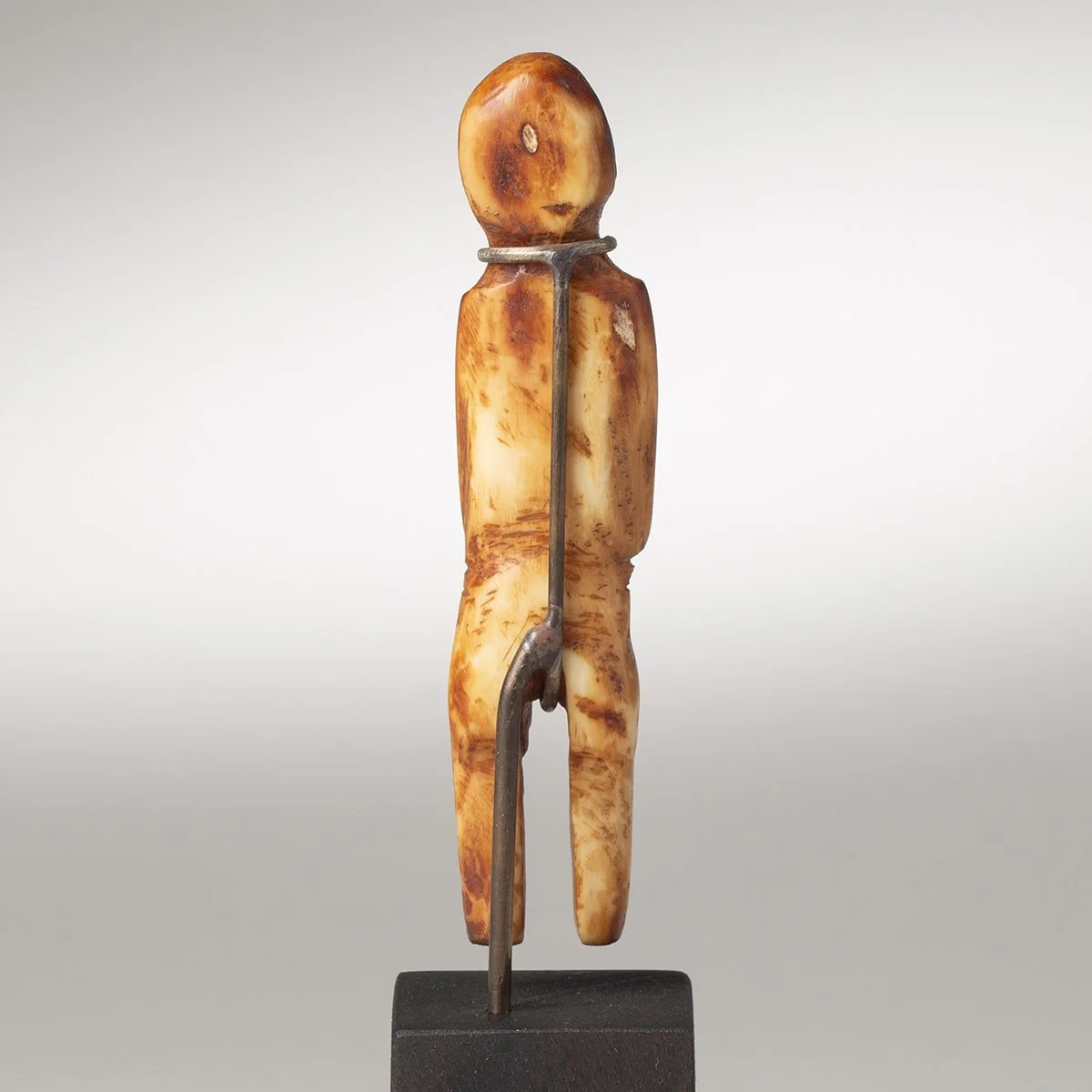 Image 6 of 7
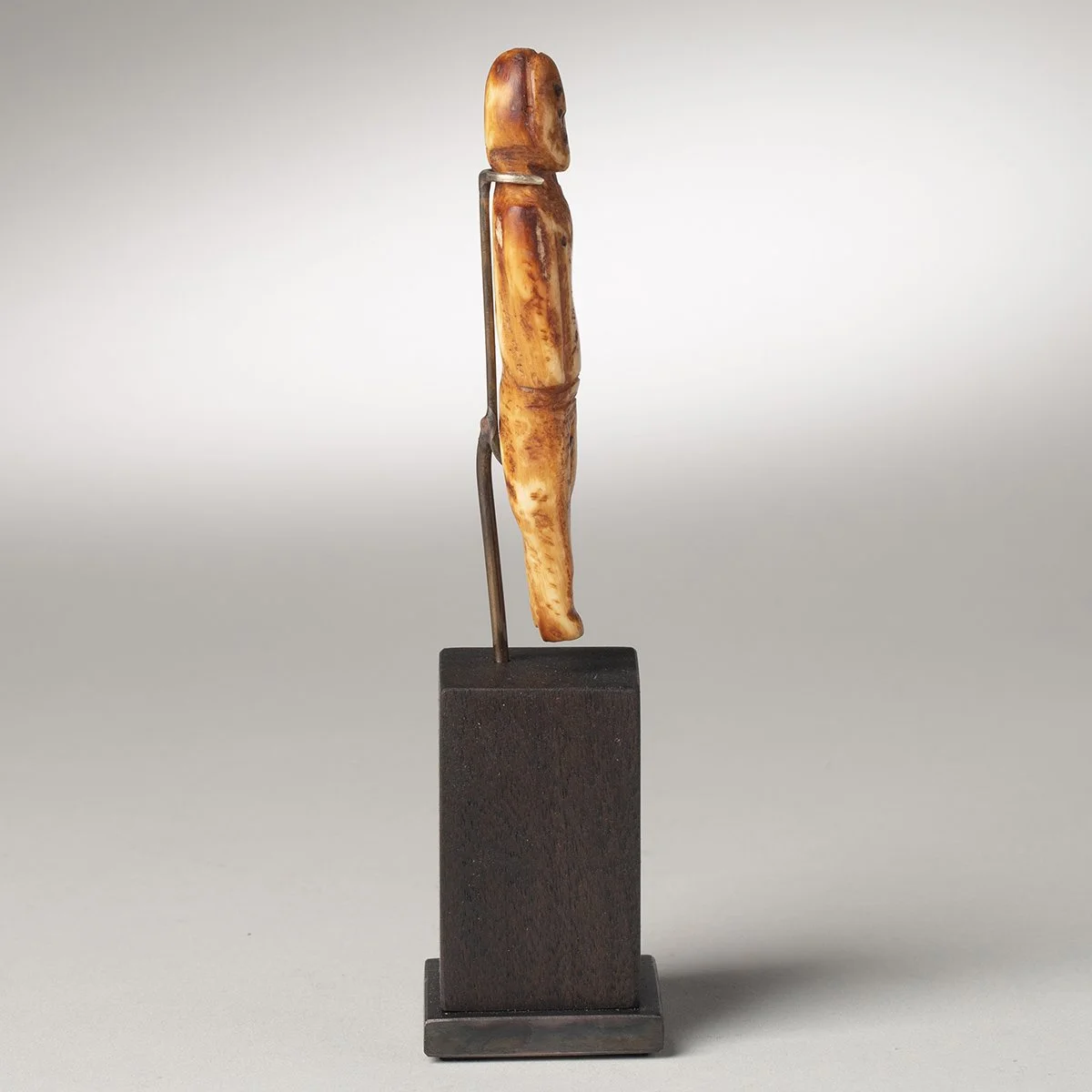 Image 7 of 7