

 Image 1 of 5
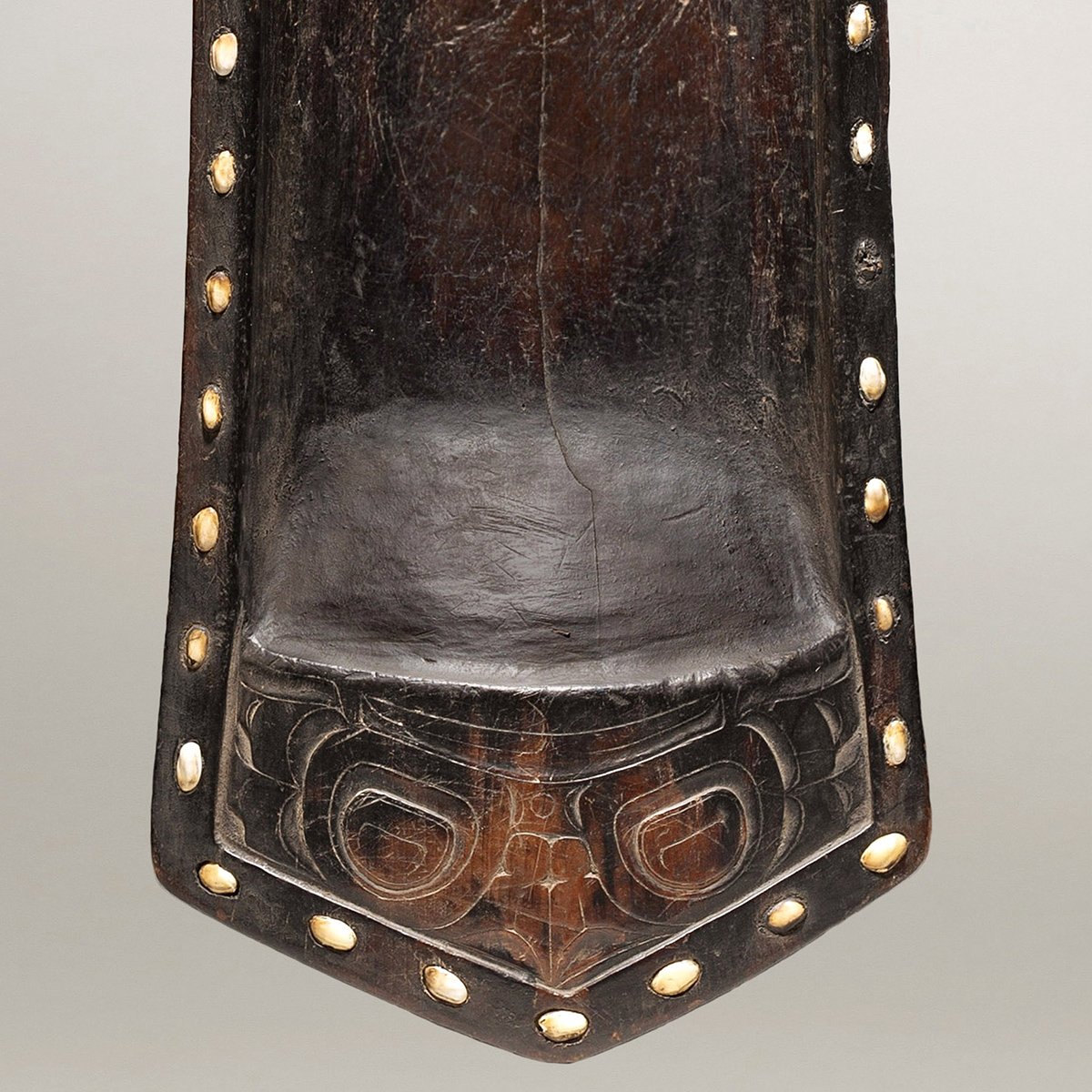 Image 2 of 5
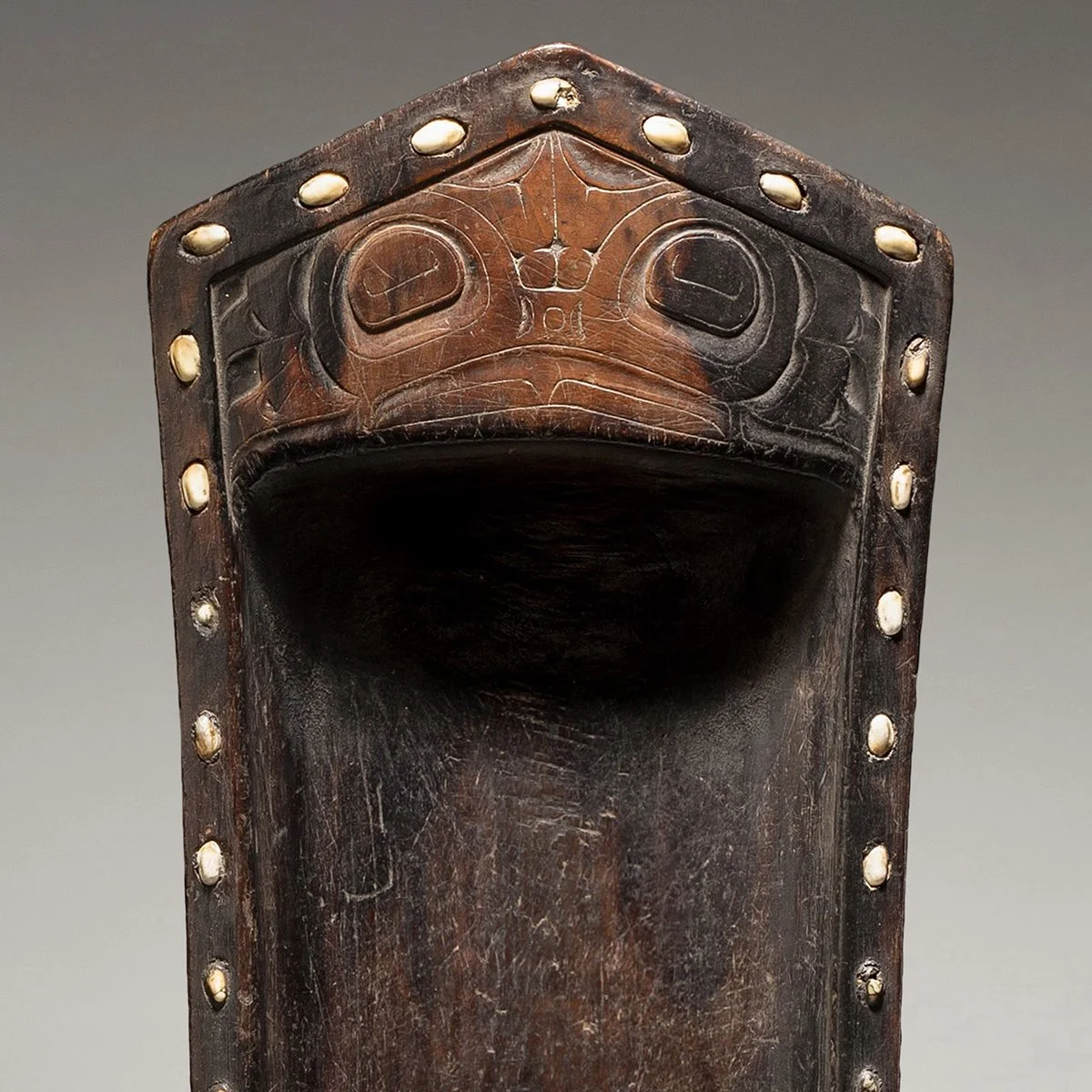 Image 3 of 5
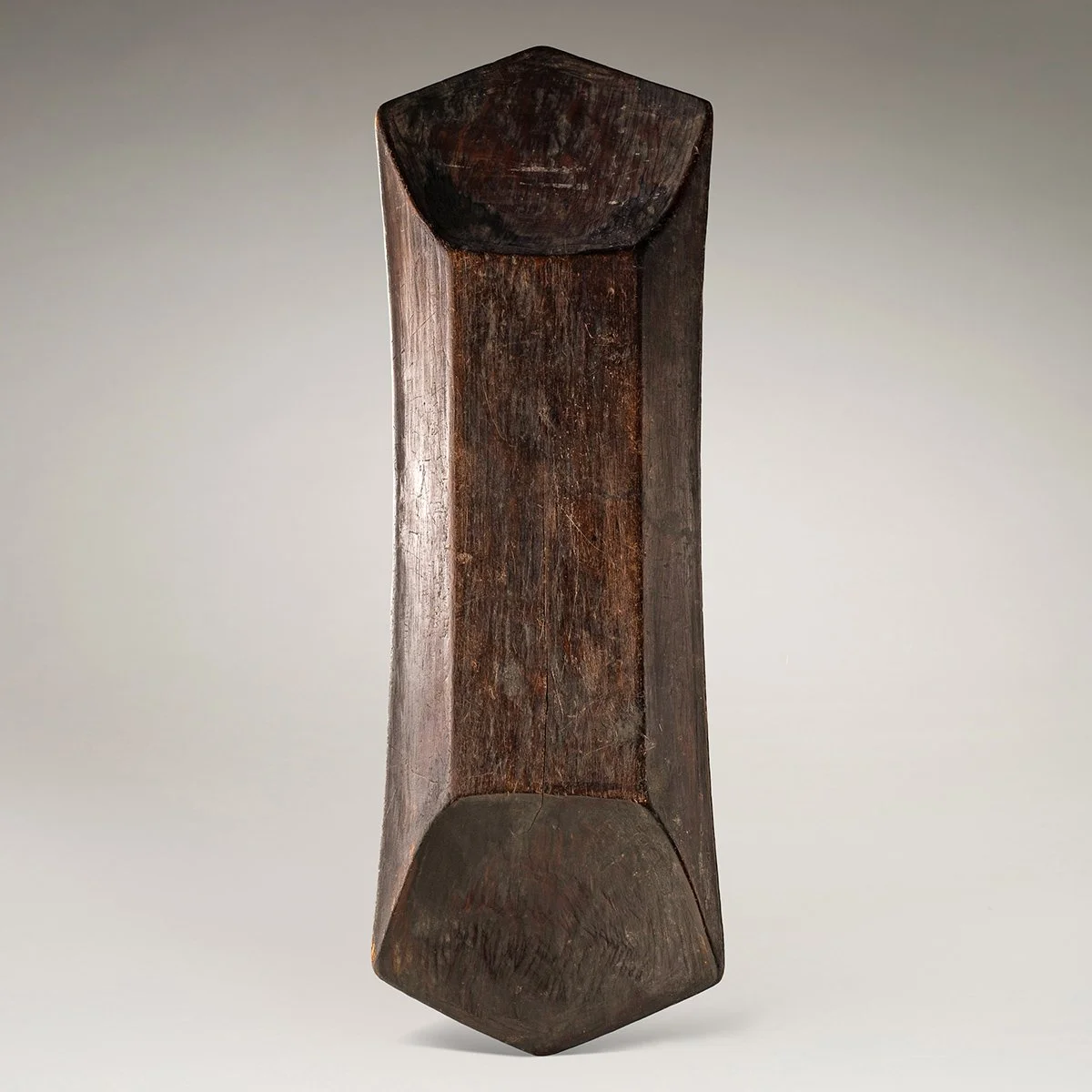 Image 4 of 5
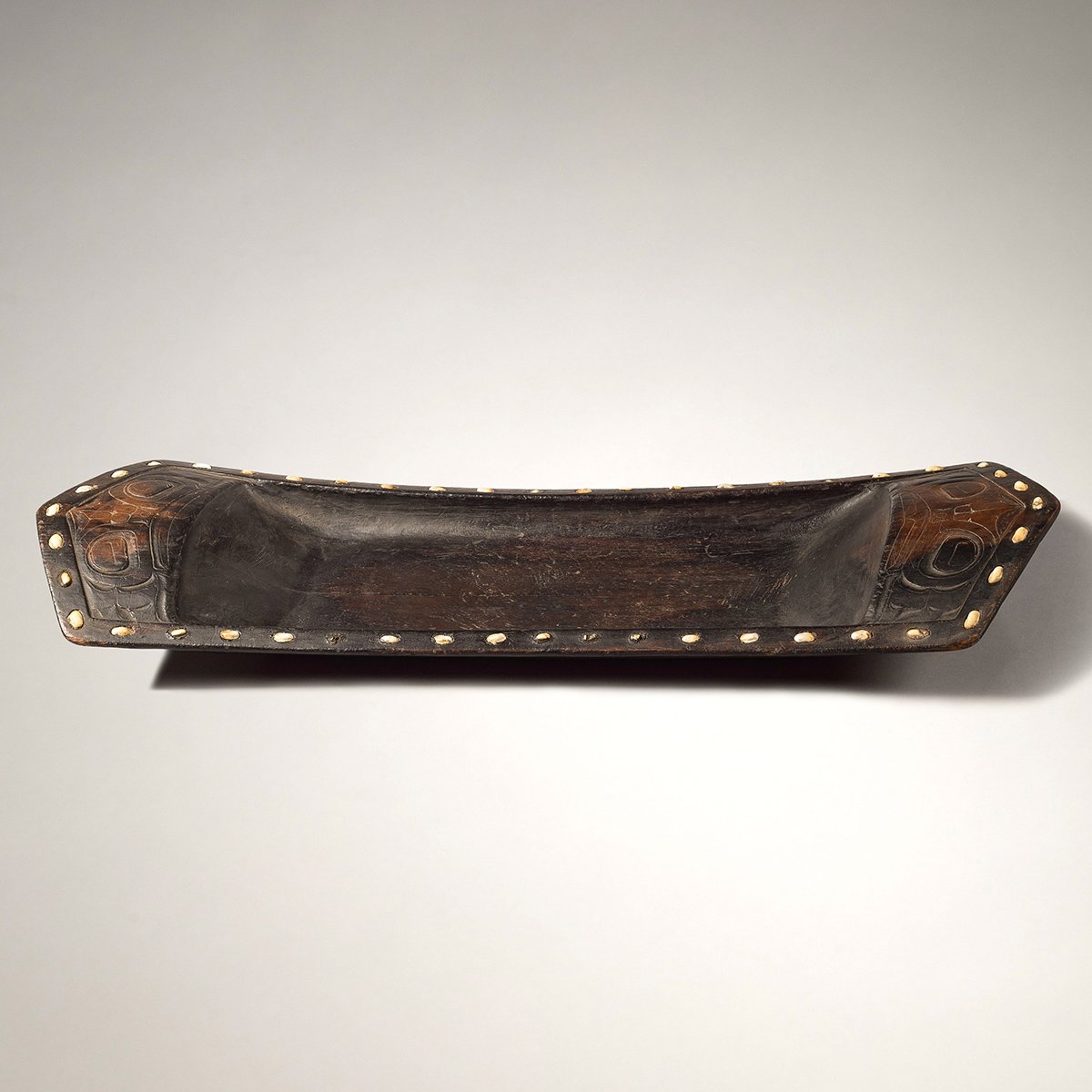 Image 5 of 5
Tlingit, coastal Alaska and British Columbia
Circa 1780 to 1820
Alderwood, turban snail shell opercula
Length 38" (96.5 cm)
Provenance: Paul and Mary Thiry Collection, Seattle, Washington; Art Loss Register certificate #S00257110
Elongated shallow trays of this type are among the most formally considered food serving vessels of the Northwest Coast, their flat bottoms and undercut rims recalling the profile of a river canoe, a form that reflected the central role of canoes in the gathering and transport of food. Used during potlatch feasting, these trays were designed to serve smoked fish, often dipped in candlefish oil or oolachan, and were adorned with carved family crests embodying ancestral figures that marked the hereditary rank of both host and guest. The size and elaboration of feast trays corresponded directly to the status of the chief who presented them and the rank of the guest they served.
A pair of abstract formline faces depicting ancestral family crests adorn each end panel, and forty-five turban snail shell opercula inlays line the tray's upper rim, a detail that required both technical precision and access to materials associated with chiefly wealth. The alderwood surface has developed a rich dark patina through sustained use across multiple generations of potlatch ceremony, the original light color of the wood now entirely transformed. Anthropologist Claude Lévi-Strauss described objects of this type as "living boxes," endowed with a vitality that derived from their accumulated ceremonial history.
The Paul and Mary Thiry Collection of Seattle is a recognized provenance in the field of Northwest Coast art, the same collection from which the Kwakwaka'wakw Dzunukwa gikamt chief's mask in the current holdings was also acquired. The Art Loss Register certificate #S00257110 provides additional documentation of clear title. At 38 inches in length, this tray is among the larger documented examples of the form and reflects the scale associated with high ranking chiefly use.
We ship free anywhere in the world, fully insured, packed by hand.
Tlingit, coastal Alaska and British Columbia
Circa 1780 to 1820
Alderwood, turban snail shell opercula
Length 38" (96.5 cm)
Provenance: Paul and Mary Thiry Collection, Seattle, Washington; Art Loss Register certificate #S00257110
Elongated shallow trays of this type are among the most formally considered food serving vessels of the Northwest Coast, their flat bottoms and undercut rims recalling the profile of a river canoe, a form that reflected the central role of canoes in the gathering and transport of food. Used during potlatch feasting, these trays were designed to serve smoked fish, often dipped in candlefish oil or oolachan, and were adorned with carved family crests embodying ancestral figures that marked the hereditary rank of both host and guest. The size and elaboration of feast trays corresponded directly to the status of the chief who presented them and the rank of the guest they served.
A pair of abstract formline faces depicting ancestral family crests adorn each end panel, and forty-five turban snail shell opercula inlays line the tray's upper rim, a detail that required both technical precision and access to materials associated with chiefly wealth. The alderwood surface has developed a rich dark patina through sustained use across multiple generations of potlatch ceremony, the original light color of the wood now entirely transformed. Anthropologist Claude Lévi-Strauss described objects of this type as "living boxes," endowed with a vitality that derived from their accumulated ceremonial history.
The Paul and Mary Thiry Collection of Seattle is a recognized provenance in the field of Northwest Coast art, the same collection from which the Kwakwaka'wakw Dzunukwa gikamt chief's mask in the current holdings was also acquired. The Art Loss Register certificate #S00257110 provides additional documentation of clear title. At 38 inches in length, this tray is among the larger documented examples of the form and reflects the scale associated with high ranking chiefly use.
We ship free anywhere in the world, fully insured, packed by hand.