

 Image 1 of 5
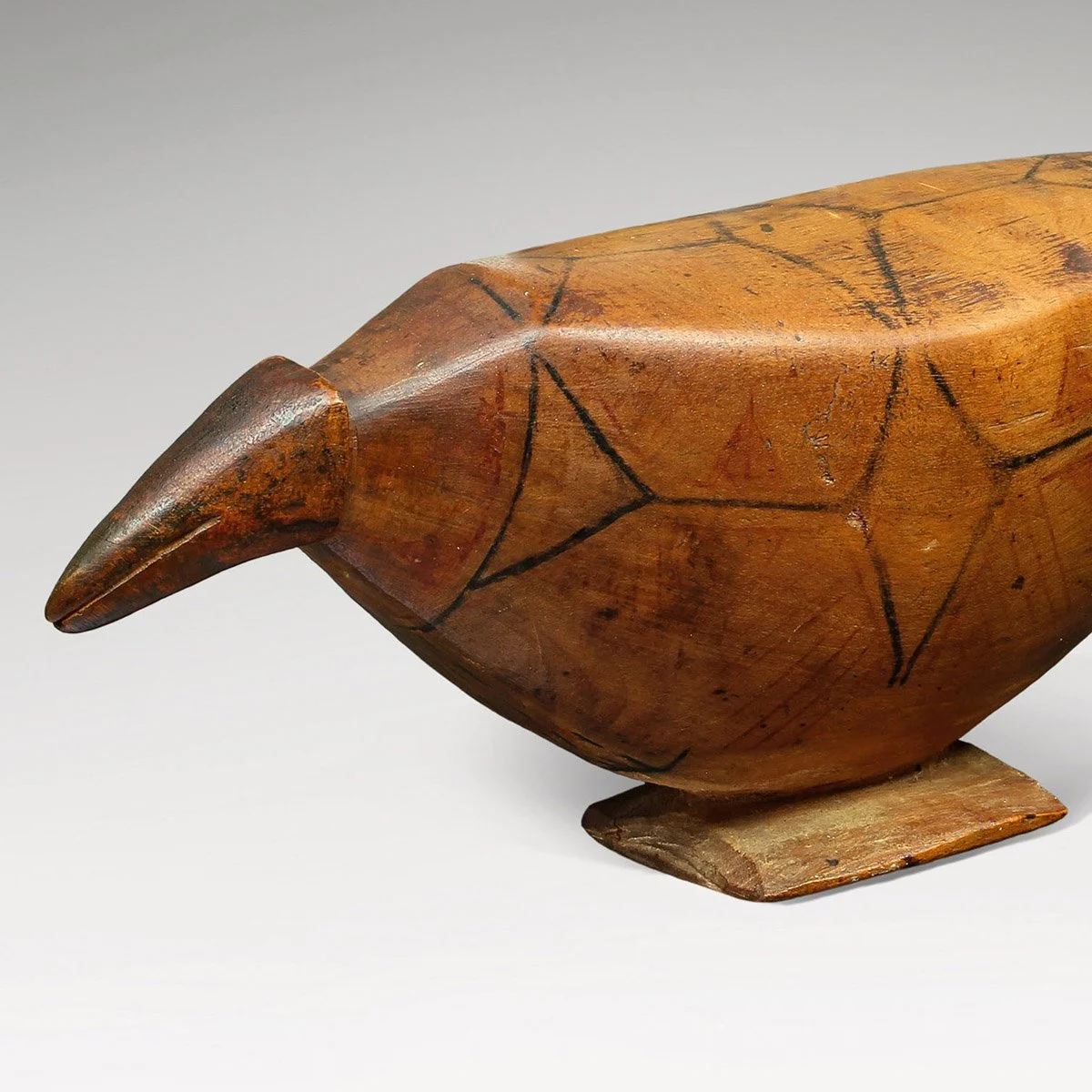 Image 2 of 5
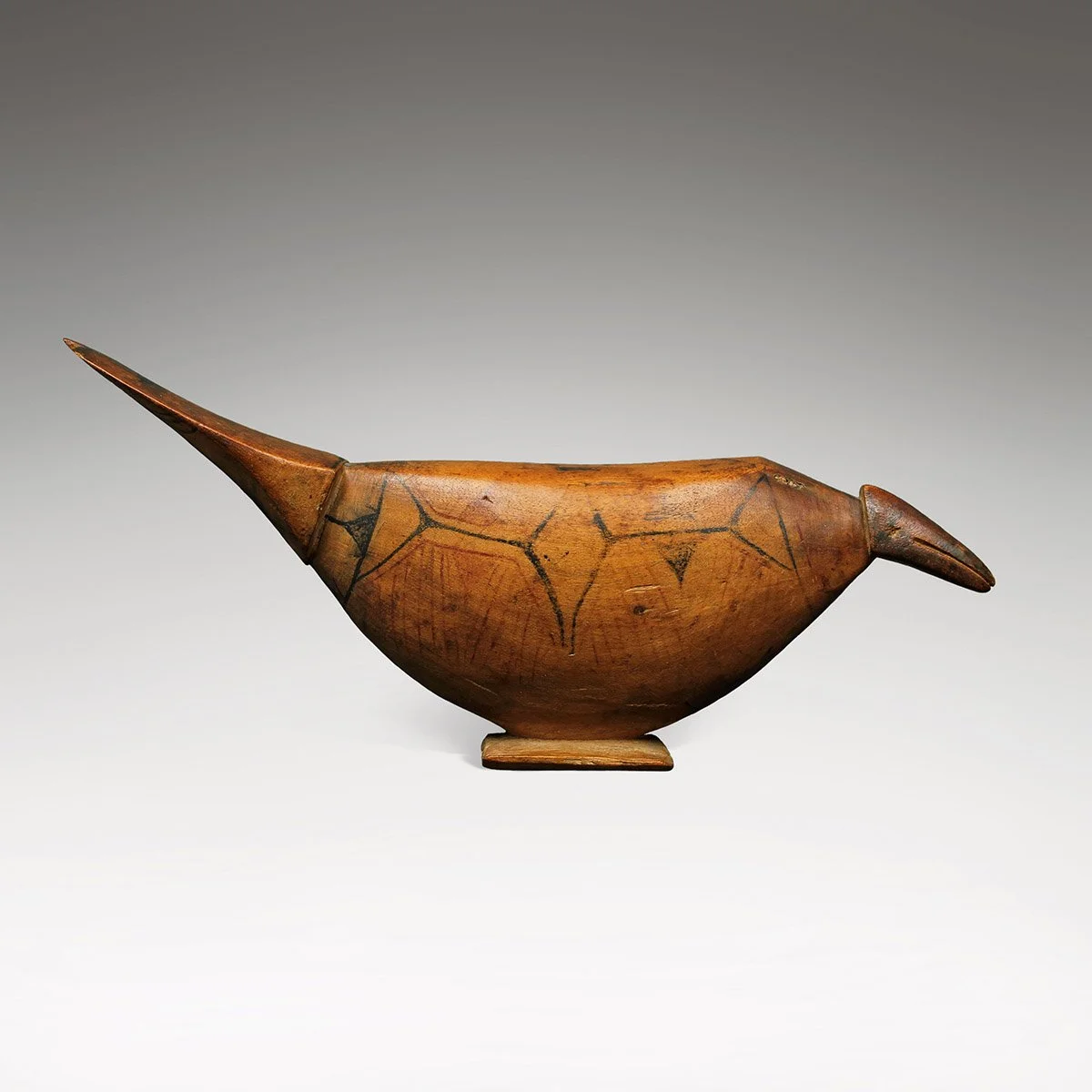 Image 3 of 5
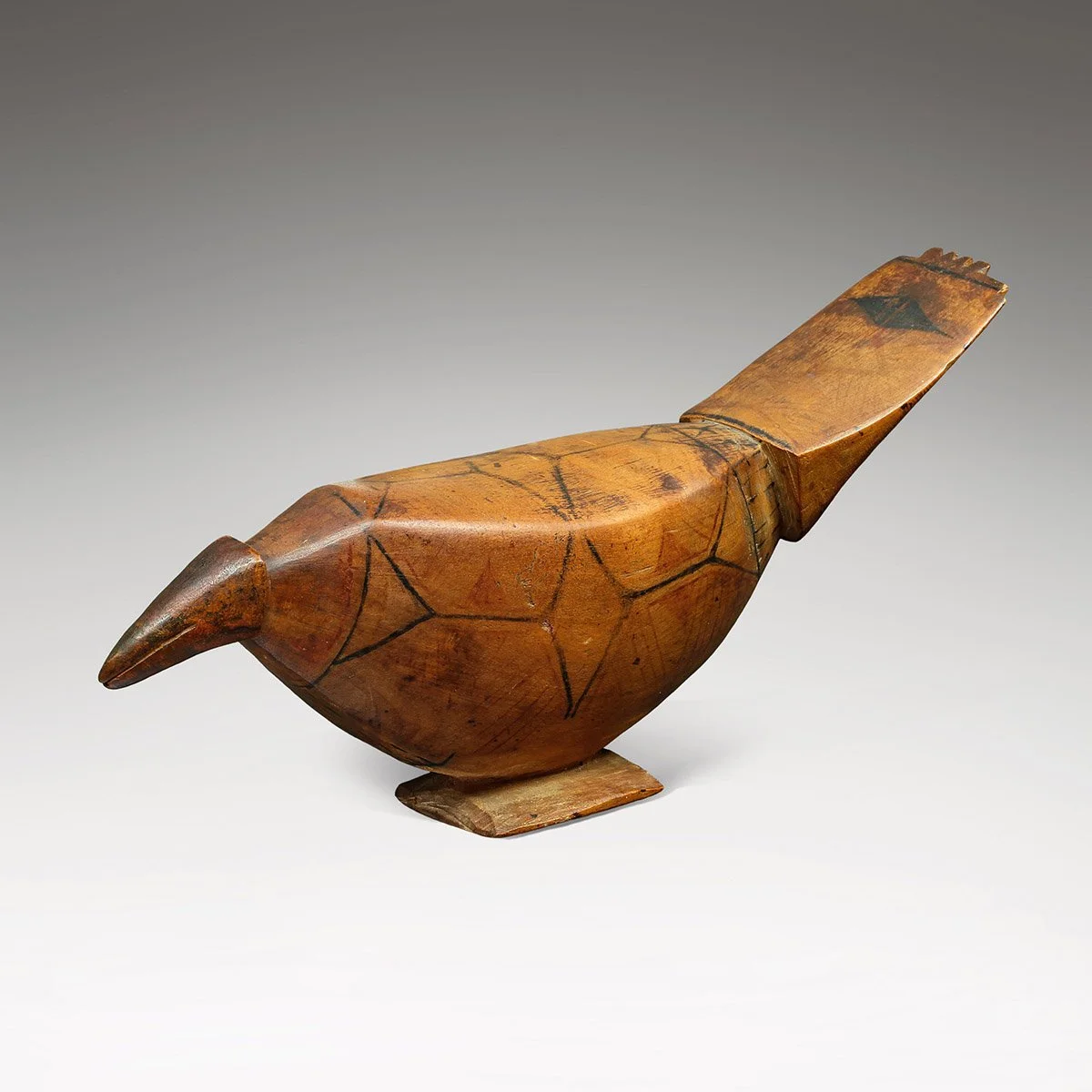 Image 4 of 5
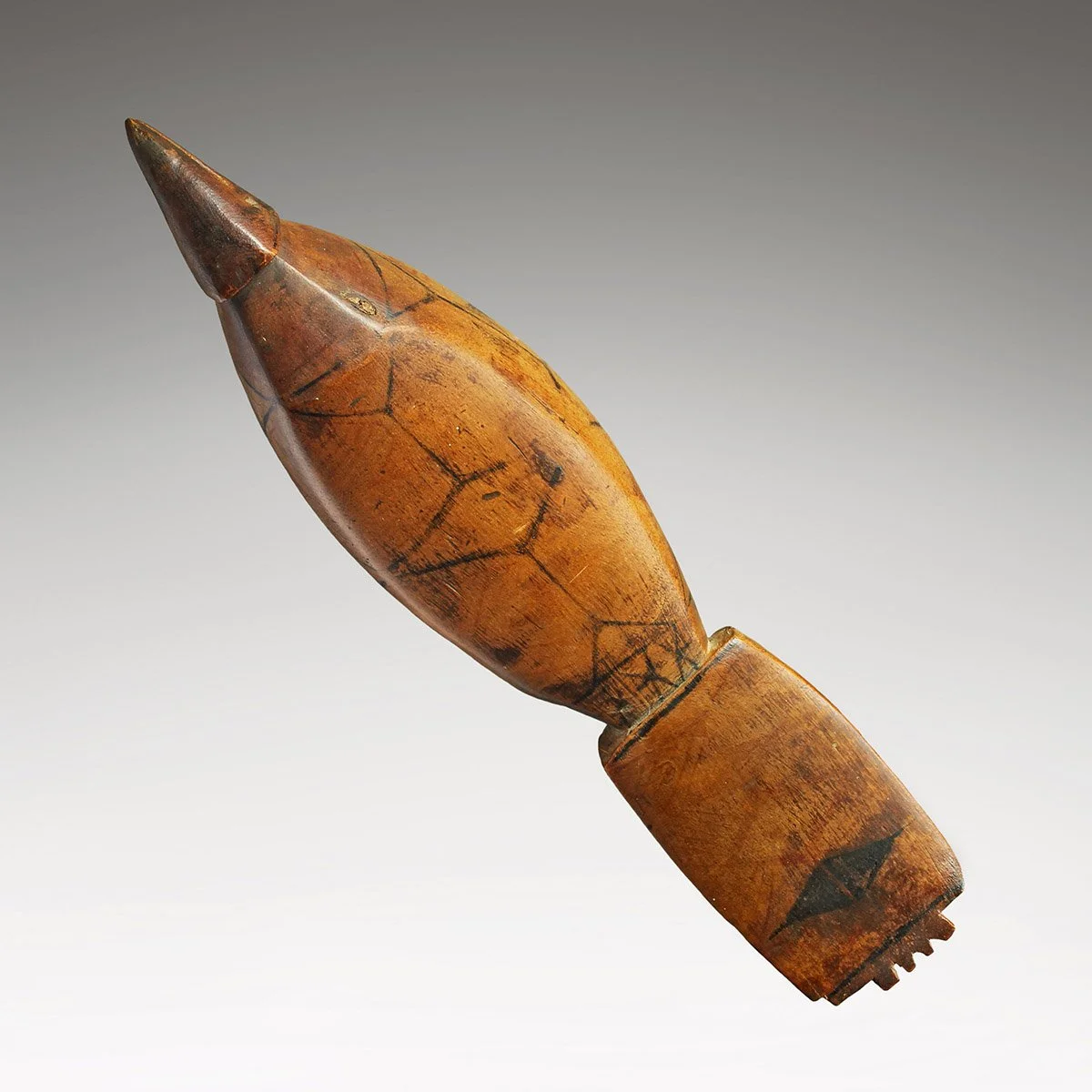 Image 5 of 5
Nendö or Reef Islands, Temotu Province, Eastern Solomon Islands; Polynesian Outlier / Parapolynesian culture
19th century
Wood, native pigments
Length: 12 1/4 in / 31 cm
Ben Hunter, Auckland, New Zealand
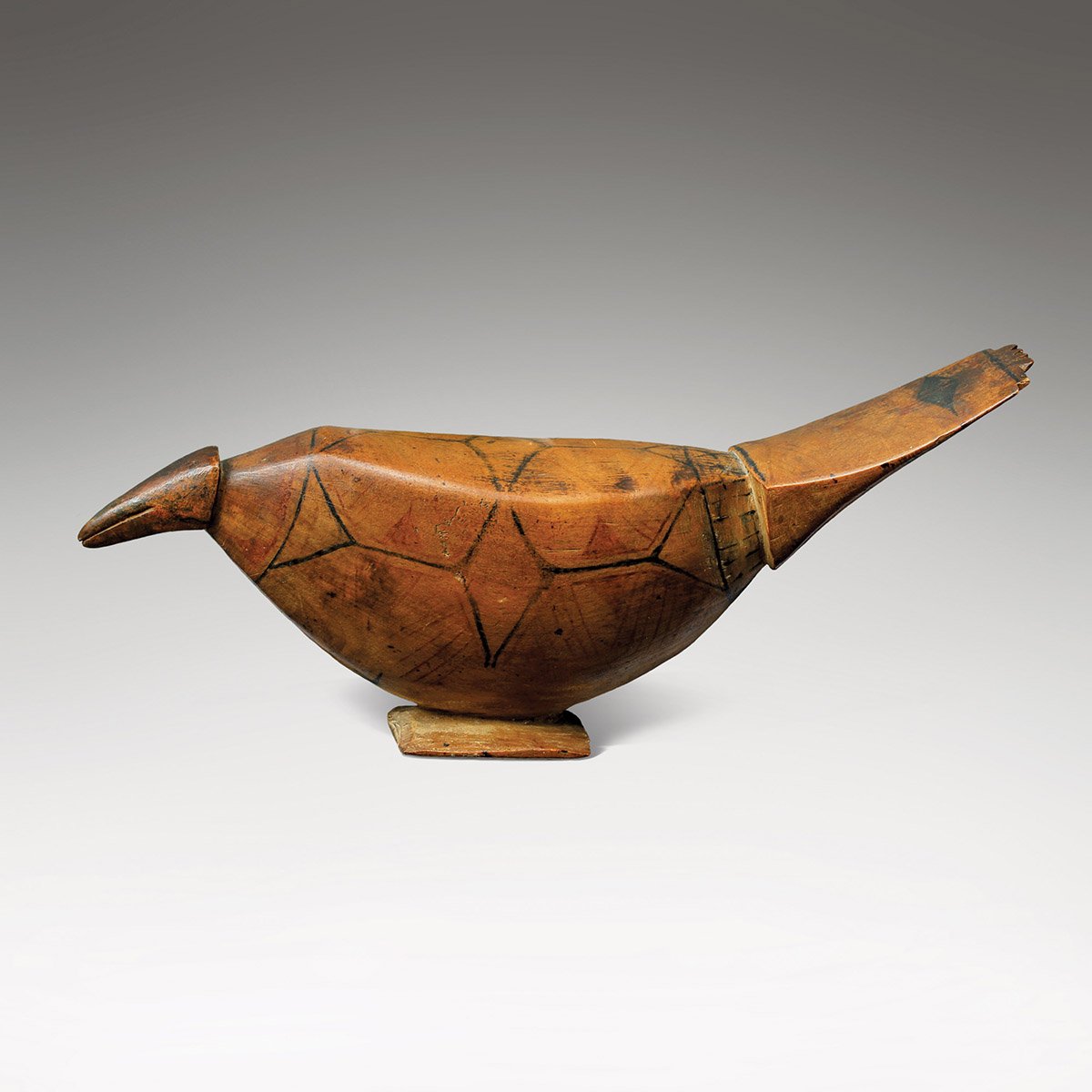
A 19th-century tulonga headrest from Nendö or the Reef Islands in Temotu Province, Eastern Solomon Islands. This region belongs to the Polynesian Outliers, island communities settled by Polynesian-speaking populations within the broader Solomon Islands. The headrest takes a restrained avian form, likely representing a stylized frigate bird, an image closely associated with seafaring, ritual life, and ancestral presence in the region.
The surface is painted with red and black geometric motifs understood to relate to fish, hermit crab tracks, and feathers. Headrests of this type were associated with the sacred men’s house and senior initiated men, and could serve as the resting place or physical image of a personal tutelary deity, or dukna. Its spare form, painted surface, and ritual function make it a strong featured work from the Eastern Solomon Islands.
We ship free anywhere in the world, fully insured, packed by hand.
Nendö or Reef Islands, Temotu Province, Eastern Solomon Islands; Polynesian Outlier / Parapolynesian culture
19th century
Wood, native pigments
Length: 12 1/4 in / 31 cm
Ben Hunter, Auckland, New Zealand
A 19th-century tulonga headrest from Nendö or the Reef Islands in Temotu Province, Eastern Solomon Islands. This region belongs to the Polynesian Outliers, island communities settled by Polynesian-speaking populations within the broader Solomon Islands. The headrest takes a restrained avian form, likely representing a stylized frigate bird, an image closely associated with seafaring, ritual life, and ancestral presence in the region.
The surface is painted with red and black geometric motifs understood to relate to fish, hermit crab tracks, and feathers. Headrests of this type were associated with the sacred men’s house and senior initiated men, and could serve as the resting place or physical image of a personal tutelary deity, or dukna. Its spare form, painted surface, and ritual function make it a strong featured work from the Eastern Solomon Islands.
We ship free anywhere in the world, fully insured, packed by hand.