

 Image 1 of 5
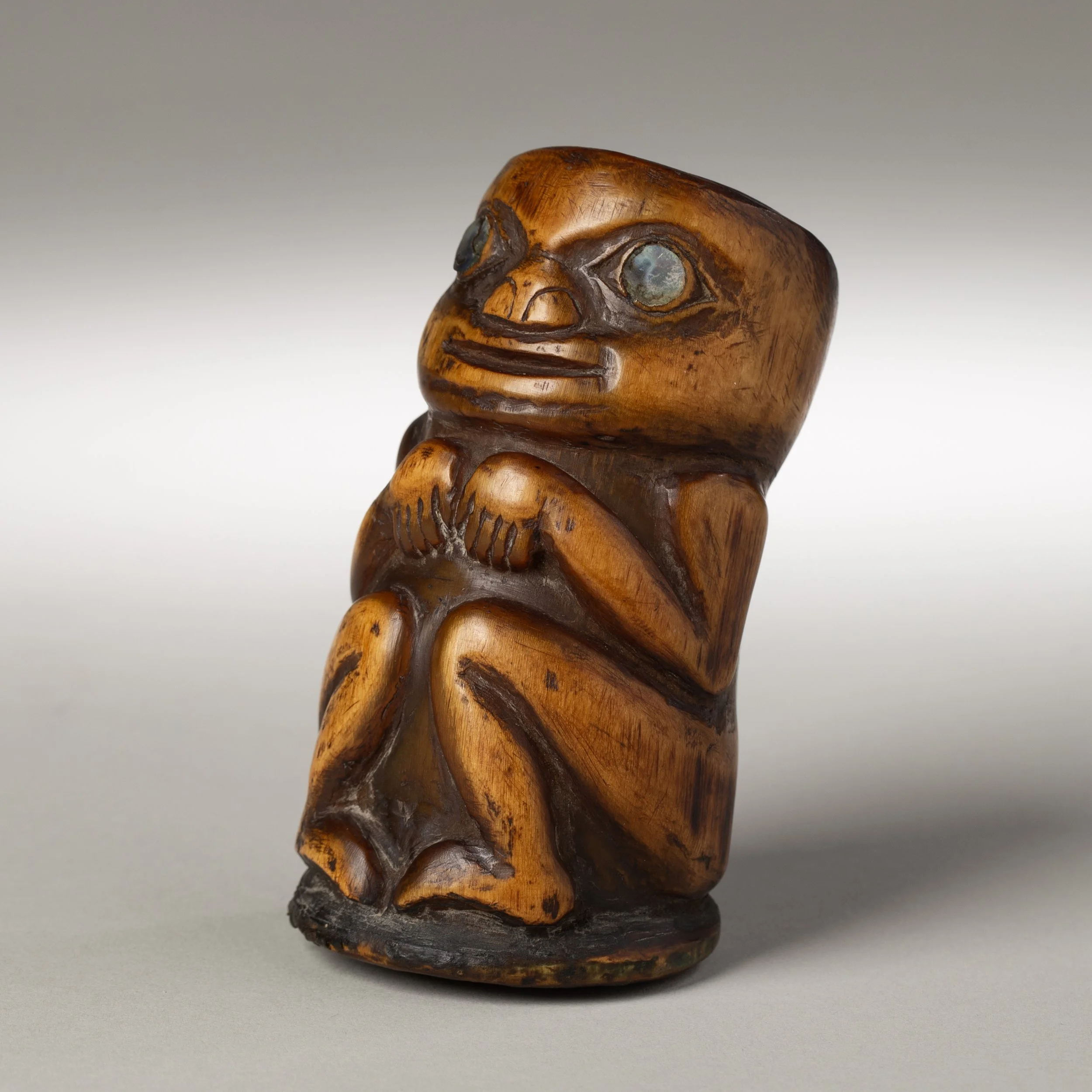 Image 2 of 5
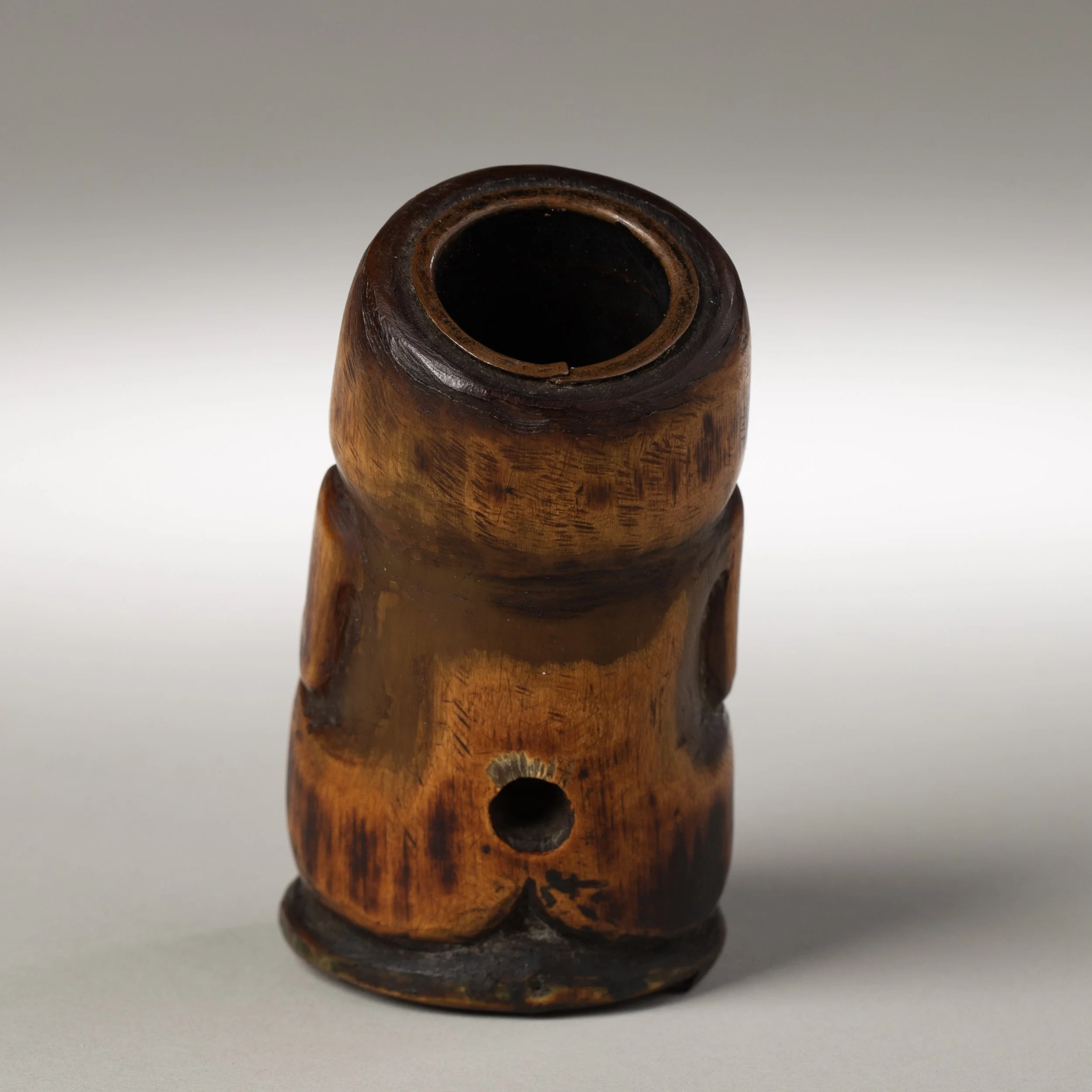 Image 3 of 5
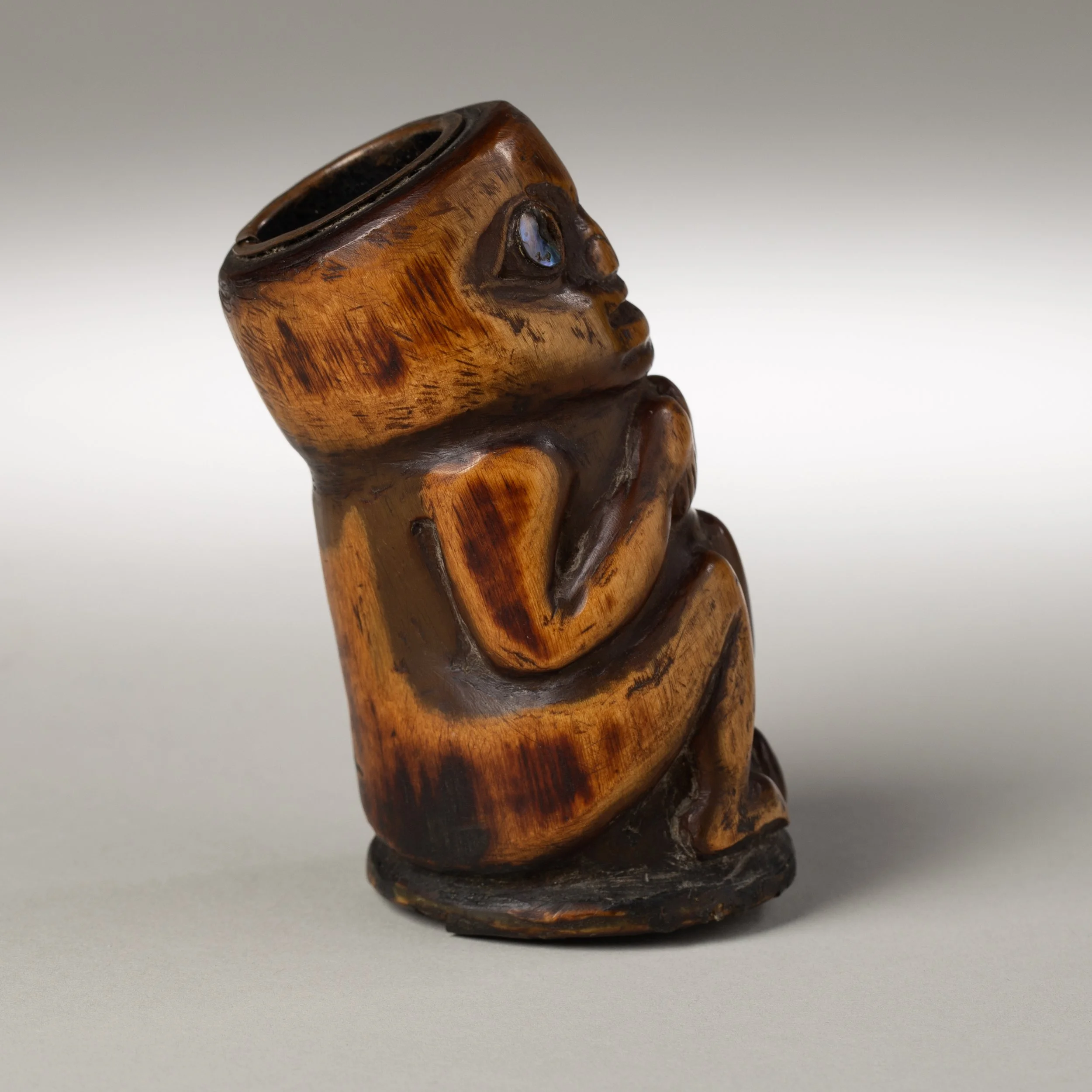 Image 4 of 5
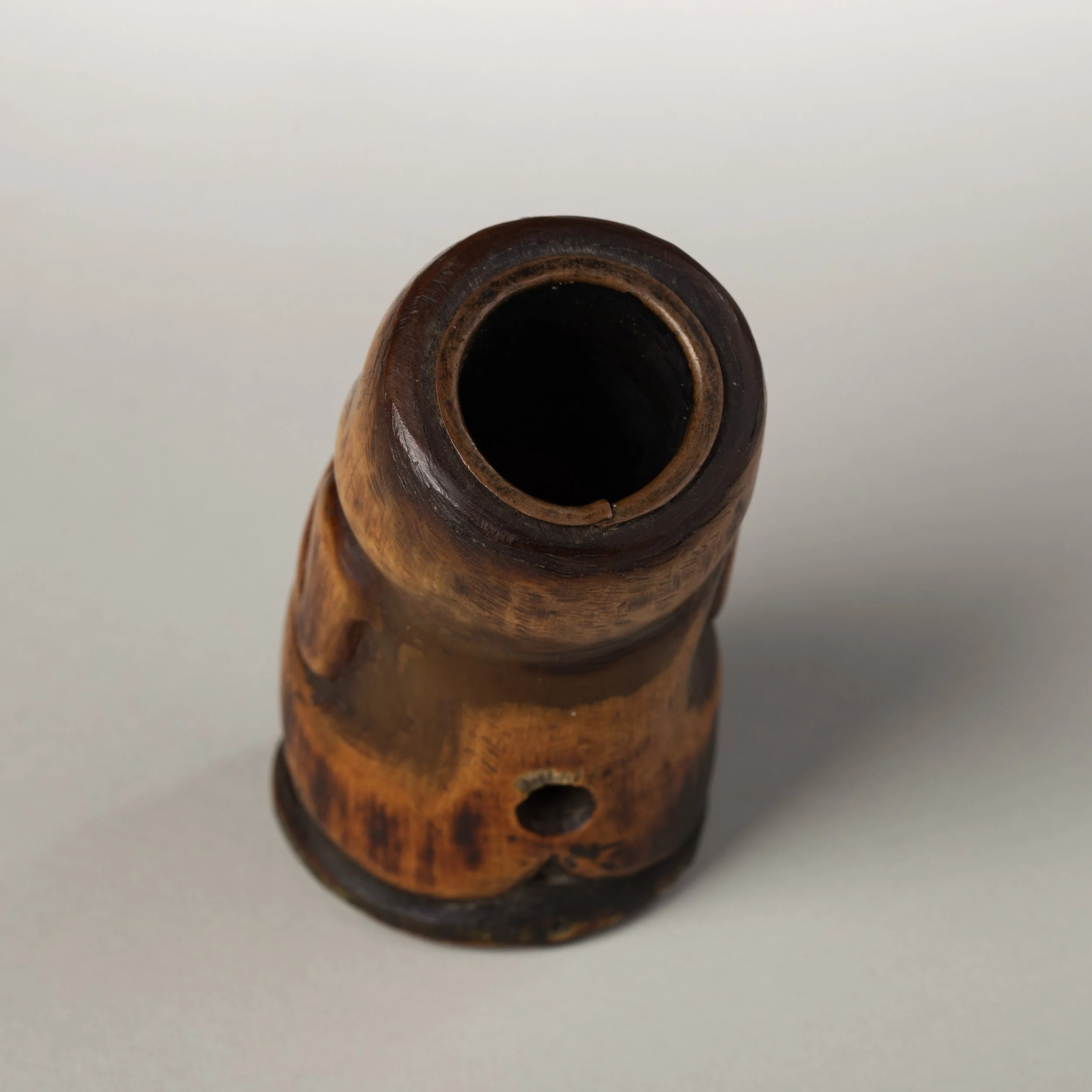 Image 5 of 5
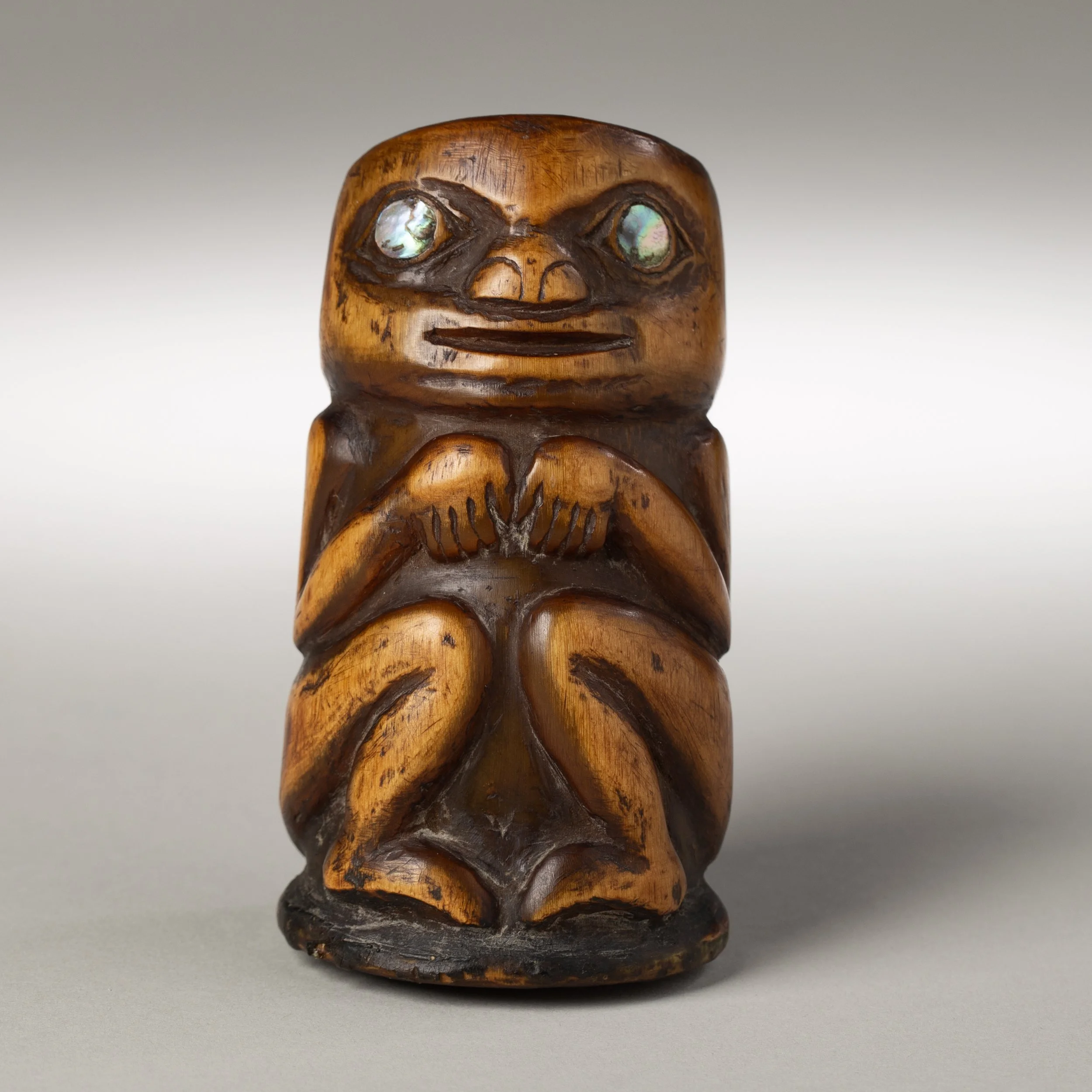
Possibly used by a shaman, this example with classic iconography shows a well-used smoked patina.
19th century
Height: 4 1/4 inches (10.79 cm)
Provenance: Paul and Mary Thiry, Seattle, WA
Rare Haida Shaman’s Pipe
Haida Gwaii, British Columbia
Elk bone, abalone shell, copper
19th century
Height: 4.25 inches (10.75 cm)
Provenance: Collected in the late 19th century by French mining engineer Hippolyte Thiry; by descent to his son, architect Paul Thiry (1904–1993), and Mary Thiry, Seattle, Washington
For the Haida and neighboring Tlingit peoples, tobacco pipes were far more than personal items; they were sacred instruments used to bridge the earthly and spirit worlds. During pivotal community gatherings, such as house raisings, funerals, and other ceremonial occasions, the smoke rising from these pipes carried the thoughts, intentions, and prayers of the living directly to the ancestors and spirits. Interestingly, the leaf they burned was Nicotiana rustica, the harsh, utilitarian tobacco carried in the holds of European ships for sailor’s use and coastal trade.While the act of smoking emerged after European maritime contact, tobacco itself was not new to the Northwest Coast. For generations prior, Haida communities carefully cultivated native tobacco to be used exclusively as snuff, chewed together with lime rendered from burned and pulverized clamshells; the tobacco transforming its role only when new trade networks introduced the pipe.
Many Northwest Coast tobacco pipes were historically carved from the walnut wood of trade musket stocks and polished black argillite. However, this beautifully crafted pipe appears to be aspecial exception, sculpted instead from the dense leg bone of an elk. The bone’s fine grain and hardness allowed the Haida artist to achieve great sculptural precision, and evidence of the pipe’s extensive shamanic use and handling are revealed by the warm, polished patina deeply worn into the pipes tightly grained surface.
Perhaps the most unusual aspect of this tobacco pipe lies in its singular, isolated human form—a notable departure from regional carving traditions. Many examples of secondary human imagery can be seen incorporated into argillite and wooden pipes made for the purpose of sale such as the panel-form ship pipes, and pipes carved to emulate European clay pipes. Human figures also appear as peripheral images in certain Haida pipes made for traditional use but were seldom the primary figure of a pipe. Perhaps this is because most pipes were fashioned to display the complex hereditary crest emblems of the owner rather than individual ancestors or hero figures from Haida mythology. This powerful shaman’s pipe breaks from that crowded tradition and presents instead a singular figure ofmonumental presence. Carved in classic crouching pose in Haida formline style, the figure’s well-defined eyes are inlaid with iridescent abalone shell, yet another unusual feature for a Haida pipe. Once the property of a high-status seer, the pipe remains more than a mere artifact, for it is imbued with the touch and the breath of a revered individual who long agonegotiated the border between his community and the Haida cosmos.
We ship free anywhere in the world, fully insured, packed by hand.
Possibly used by a shaman, this example with classic iconography shows a well-used smoked patina.
19th century
Height: 4 1/4 inches (10.79 cm)
Provenance: Paul and Mary Thiry, Seattle, WA
Rare Haida Shaman’s Pipe
Haida Gwaii, British Columbia
Elk bone, abalone shell, copper
19th century
Height: 4.25 inches (10.75 cm)
Provenance: Collected in the late 19th century by French mining engineer Hippolyte Thiry; by descent to his son, architect Paul Thiry (1904–1993), and Mary Thiry, Seattle, Washington
For the Haida and neighboring Tlingit peoples, tobacco pipes were far more than personal items; they were sacred instruments used to bridge the earthly and spirit worlds. During pivotal community gatherings, such as house raisings, funerals, and other ceremonial occasions, the smoke rising from these pipes carried the thoughts, intentions, and prayers of the living directly to the ancestors and spirits. Interestingly, the leaf they burned was Nicotiana rustica, the harsh, utilitarian tobacco carried in the holds of European ships for sailor’s use and coastal trade.While the act of smoking emerged after European maritime contact, tobacco itself was not new to the Northwest Coast. For generations prior, Haida communities carefully cultivated native tobacco to be used exclusively as snuff, chewed together with lime rendered from burned and pulverized clamshells; the tobacco transforming its role only when new trade networks introduced the pipe.
Many Northwest Coast tobacco pipes were historically carved from the walnut wood of trade musket stocks and polished black argillite. However, this beautifully crafted pipe appears to be aspecial exception, sculpted instead from the dense leg bone of an elk. The bone’s fine grain and hardness allowed the Haida artist to achieve great sculptural precision, and evidence of the pipe’s extensive shamanic use and handling are revealed by the warm, polished patina deeply worn into the pipes tightly grained surface.
Perhaps the most unusual aspect of this tobacco pipe lies in its singular, isolated human form—a notable departure from regional carving traditions. Many examples of secondary human imagery can be seen incorporated into argillite and wooden pipes made for the purpose of sale such as the panel-form ship pipes, and pipes carved to emulate European clay pipes. Human figures also appear as peripheral images in certain Haida pipes made for traditional use but were seldom the primary figure of a pipe. Perhaps this is because most pipes were fashioned to display the complex hereditary crest emblems of the owner rather than individual ancestors or hero figures from Haida mythology. This powerful shaman’s pipe breaks from that crowded tradition and presents instead a singular figure ofmonumental presence. Carved in classic crouching pose in Haida formline style, the figure’s well-defined eyes are inlaid with iridescent abalone shell, yet another unusual feature for a Haida pipe. Once the property of a high-status seer, the pipe remains more than a mere artifact, for it is imbued with the touch and the breath of a revered individual who long agonegotiated the border between his community and the Haida cosmos.
We ship free anywhere in the world, fully insured, packed by hand.